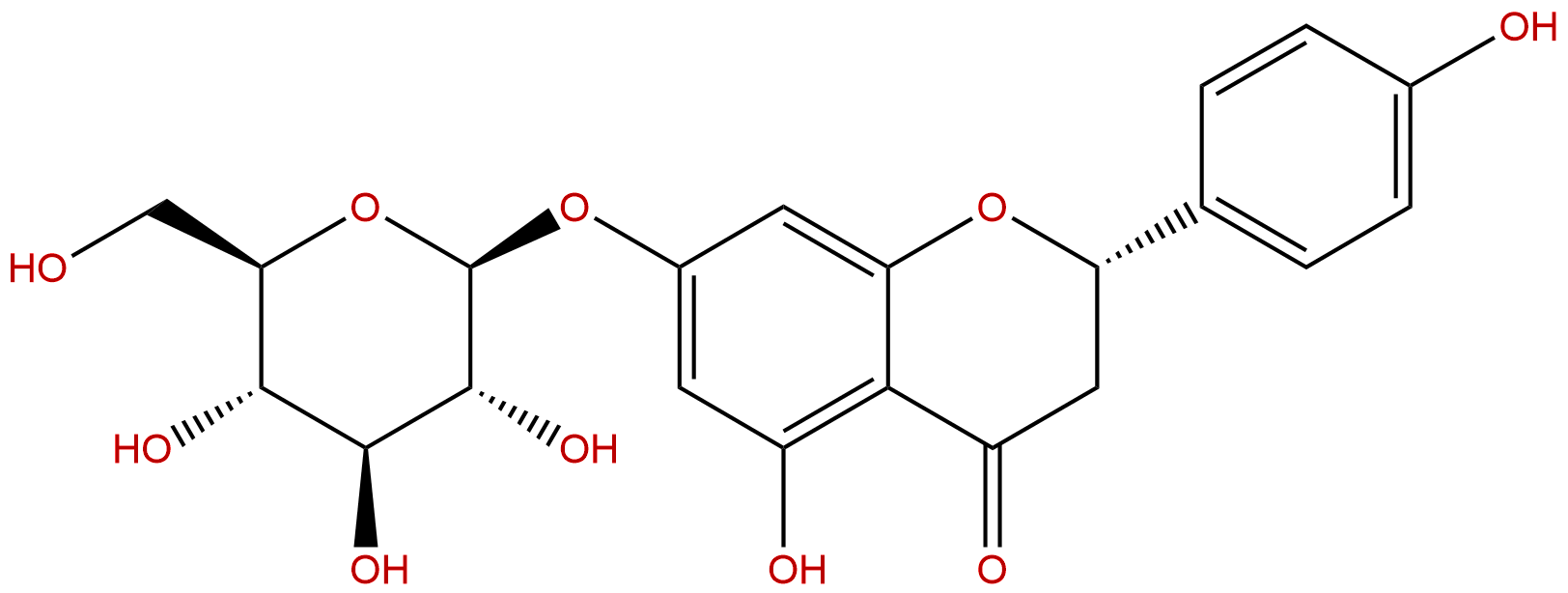


Product name: Naringenin-7-O-β-D-glucoside
Synonym name: Prunin
Catalogue No.: BP3263
Cas No.: 529-55-5
Formula: C21H22O10
Mol Weight: 434.397
Botanical Source:
Physical Description: Powder
Type of Compound: Flavonoids
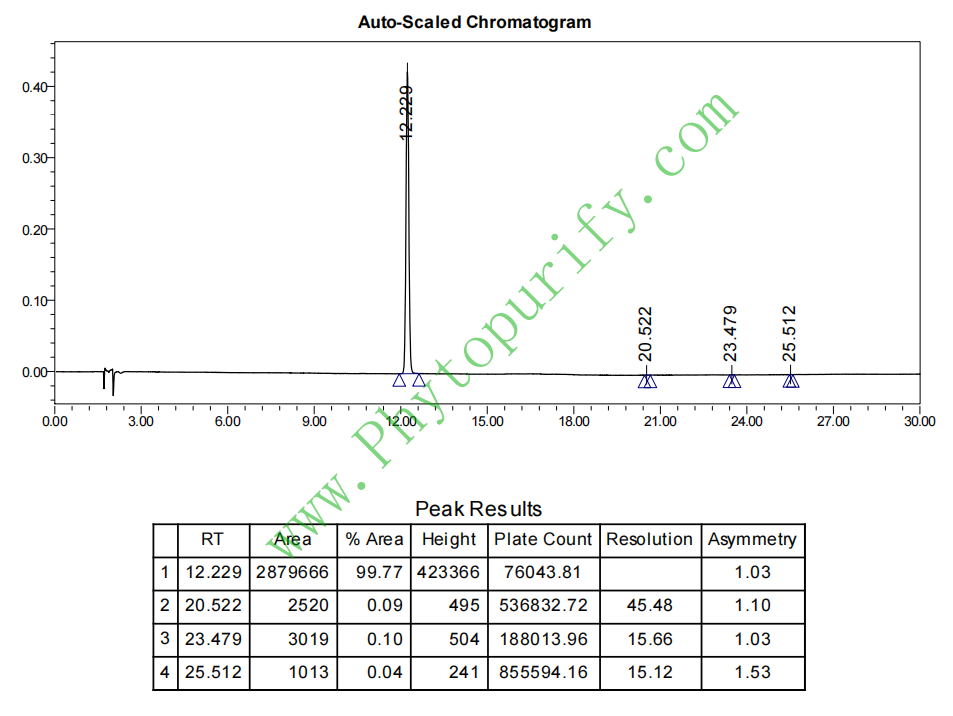
Purity: 95%~99%
Analysis Method: HPLC-DAD or/and HPLC-ELSD
Identification Method: Mass, NMR
Packing: Brown vial or HDPE plastic bottle
The product could be supplied from milligrams to grams. Inquire for bulk scale.
We provide solution to improve the water-solubility of compounds, thereby facilitating the variety of activity tests and clinic uses.
For Reference Standard and R&D, Not for Human Use Directly.
HPLC of Naringenin-7-O-β-D-glucoside
Storage conditions:Short-term storage at 2~8℃, long-term storage at -20 ~ -80℃
166.1400
.2553
.2136
2.5894
.5122
.2353
Low
73.0030
4.0018
No
No
No
No
No
No
0.0
Yes
No
Yes
No
Flavonoids, as a widely distributed class of secondary metabolites in nature, have become an important treasure trove for drug research and functional food development due to their diverse biological activities. Among them, flavanone compounds, with their unique C6-C3-C6 skeleton structure, exhibit various pharmacological effects such as anti-inflammatory, antioxidant, anti-tumor, and cardiovascular protection, and are increasingly receiving attention in the field of natural product pharmacology. Prunin, also known as Naringenin-7-O - β - D-glucoside, is a glycoside compound formed by the glycosylation modification of naringenin at the 7th hydroxyl group (CAS number: 529-55-5). As a key precursor and one of the main metabolites of (S) - naringin, cherry glucoside not only retains some of naringin's activity, but its glycosidic structure significantly improves water solubility and bioavailability, bringing new opportunities for its medicinal development.
In recent years, with the deepening of research on the pathogenesis of chronic inflammatory diseases, especially arthritis, the search for highly efficient and low toxicity anti-inflammatory natural products has become a research hotspot. Arthritis, as a complex disease characterized by synovial inflammation, cartilage destruction, and bone erosion, involves abnormal activation of various inflammatory mediators and signaling pathways such as tumor necrosis factor - α (TNF - α), interleukins (such as IL-1 β, IL-6), nuclear factor kappa B (NF - κ B) signaling pathways, and matrix metalloproteinases (MMPs). Although traditional nonsteroidal anti-inflammatory drugs and anti rheumatic drugs are effective, long-term use often accompanies adverse reactions in the gastrointestinal, liver, kidney, and cardiovascular systems. Therefore, discovering anti arthritis lead compounds with multi-target and low toxicity characteristics from natural products has important scientific significance and clinical value. This article aims to systematically review the chemical properties, plant sources, pharmacological activities, especially the anti arthritis effect and related molecular mechanisms of cherry glycoside, and to prospect its pharmacological and clinical application prospects, in order to provide comprehensive scientific references for the in-depth research and development of this compound.
The chemical name of cherry glucoside is 5,7,4 '- trihydroxyflavanone-7-O - β - D-glucopyranoside, with a molecular formula of C21H22O10 and a molecular weight of 434.3970. Its basic skeleton is flavanone, which is 2,3-dihydro-2-phenylchromenone. Specifically, the A ring has one hydroxyl group at positions 5 and 7, while the B ring has one hydroxyl group at position 4 '(i.e., a 4' - hydroxyflavanone structure). Its structural feature is that the 7-position phenolic hydroxyl group of (S) - naringenin is linked to a molecule of β - D-glucopyranose through an O-glycosidic bond, forming a monoglucoside. This glycosidic structure is the key that distinguishes it from its aglycone naringin, and deeply affects its physicochemical and biological properties.
In terms of physicochemical properties, the introduction of glycosidic bonds significantly enhances the polarity and hydrophilicity of the molecule. Its theoretical lipid water partition coefficient (LogP) is 0.2553, indicating that it has good hydrophilicity; The topologically polar surface area (TPSA) is as high as 166.14 Å ², further confirming its strong polarity characteristics. Its water solubility (2.5894) has been significantly improved compared to the almost insoluble naringin glycoside, which is beneficial for its dissolution, absorption, and distribution in organisms. However, its high polarity and molecular weight also limit its transmembrane ability, especially its ability to pass through the blood-brain barrier through passive diffusion is low, and its predicted distribution in the central nervous system is limited. In terms of preliminary safety prediction, based on the computational model, the inhibitory risk of cherry glycoside on hERG potassium channels is "no", and the predicted value of Ames mutagenicity test is 0.0, indicating that it may have low risks of cardiac toxicity and genetic toxicity, providing preliminary positive signals for its safety evaluation.
Cherry glycoside is widely present in various plants such as Rosaceae, Rutaceae, and Leguminosae, and its name "Prunin" comes from its discovery in Prunus plants of the Rosaceae family. Common natural sources include but are not limited to: cherries (especially the core and skin), citrus fruits (such as grapefruit and orange skin and flesh), tomatoes, apricots, peaches, and various medicinal plants such as astragalus and licorice. In plants, cherry glycoside is not only a storage and transport form of naringin, but also often serves as an intermediate in the biosynthesis of other more complex flavonoids.
The extraction of cherry glycosides from plant materials is usually carried out using solvent extraction method. Due to its good hydrophilicity, solvent systems with medium polarity have higher efficiency. Common methods include:
1. Alcohol extraction method Using methanol, ethanol, or water alcohol mixed solvents with different ratios for reflux extraction or ultrasound assisted extraction. Ethanol is more commonly used for large-scale extraction due to its safety and environmental friendliness.
2. Hot water extraction method By utilizing its water solubility, it can be directly extracted with hot water, but a large amount of impurities such as polysaccharides and proteins may be extracted, making the subsequent purification steps more complex.
3. Modern extraction techniques Microwave assisted extraction, supercritical fluid extraction (using entrainers such as ethanol), etc. can improve extraction efficiency, shorten time, and reduce solvent usage.
After concentration, the extract needs to undergo a series of separation and purification steps to obtain high-purity cherry glycosides. The commonly used methods include:
- Macroporous resin column chromatography By utilizing adsorption and molecular sieve action, commonly used models such as AB-8 and D101 can effectively enrich flavonoid glycosides and remove impurities such as sugars and pigments.
- Silica gel column chromatography Preliminary separation was carried out using gradient elution systems such as chloroform methanol and ethyl acetate methanol.
- High performance liquid chromatography (HPLC)Especially for preparative HPLC, it is the most effective method to obtain high-purity cherry glycosides (commonly used for standard preparation). C18 reverse phase chromatography columns are often used, with methanol water or acetonitrile water (containing a small amount of formic acid or acetic acid to adjust pH) as the mobile phase.
- recrystallization Recrystallization in a suitable solvent system (such as methanol water) can further improve purity.
The pharmacological activity research of cherry glycoside reveals its multifaceted biological effects, among which anti-inflammatory, antioxidant, and related metabolic regulatory effects are particularly prominent.
1. Anti inflammatory and immune regulatory activity
Numerous in vitro and in vivo studies have confirmed that cherry glycosides have significant anti-inflammatory effects. In the lipopolysaccharide (LPS) - induced macrophage (such as RAW 264.7) inflammation model, cherry glycosides can dose dependently inhibit the production of inflammatory mediators such as nitric oxide (NO) and prostaglandin E2 (PGE2). In acute inflammation models such as rat paw swelling induced by carrageenan or Freund's complete adjuvant, cherry glycoside exhibits good anti-inflammatory effects. Its anti-inflammatory activity is closely related to its regulation of key inflammatory factors and enzymes.
2. Antioxidant activity
The phenolic hydroxyl structure of cherry glycoside endows it with excellent free radical scavenging ability and antioxidant potential. It can effectively scavenge DPPH free radicals, ABTS free radical cations, and exhibit iron ion reduction/antioxidant capabilities. Its antioxidant effect is not limited to directly clearing free radicals, but can also alleviate oxidative stress damage by upregulating the endogenous antioxidant defense system of cells, such as activating the nuclear factor E2 related factor 2 (Nrf2) pathway, promoting the expression of superoxide dismutase (SOD), glutathione peroxidase (GPx), and heme oxygenase-1 (HO-1).
3. Anti arthritis activity
This is one of the most promising pharmacological activity directions of cherry glycosides. In collagen induced arthritis (CIA) rat models or interleukin-1 β - induced joint chondrocyte models, cherry glycoside intervention can significantly reduce joint swelling, synovial hyperplasia, inflammatory cell infiltration, and cartilage and bone destruction. Its function is reflected in multiple aspects: inhibiting abnormal proliferation of synovial fibroblasts; Reduce the levels of pro-inflammatory cytokines (such as TNF - α, IL-1 β, IL-6) in joint fluid; Reduce the activity of matrix degrading enzymes such as MMP-3 and MMP-13 in joint tissue and serum, thereby protecting the extracellular matrix of articular cartilage cells from excessive degradation.
4. Metabolic regulatory activity
Research has shown that cherry blossom glycosides have the effects of lowering blood sugar and combating dyslipidemia. In the animal model of diabetes, it can improve insulin resistance and reduce fasting blood glucose. Its mechanism may be related to regulating the activity of key enzymes of liver gluconeogenesis, enhancing glucose uptake in peripheral tissues and protecting the function of pancreatic islet β cells. At the same time, it can reduce the levels of serum total cholesterol, triglyceride and low-density lipoprotein cholesterol in hyperlipidemia model animals, which has potential prevention and treatment value for metabolic inflammatory diseases such as atherosclerosis.
5. Antibacterial activity
Cherry glycoside exhibits certain inhibitory activity against certain Gram positive and Gram negative bacteria, and its mechanism may be related to the disruption of bacterial cell membrane integrity, inhibition of bacterial biofilm formation, or interference with bacterial metabolism.
The anti-inflammatory and anti arthritis effects of cherry glycoside are not achieved through a single target, but involve multi-target regulation of multiple key inflammatory signaling pathways and effector molecules, forming a synergistic network.
1. Inhibit the NF - κ B signaling pathway
Nuclear factor kappa B (NF - κ B) is the core transcription factor in inflammatory response. In the classical pathway, stimuli such as TNF - α or IL-1 β can activate the I κ B kinase complex (IKK), leading to the phosphorylation and degradation of inhibitory protein I κ B α, thereby releasing p65/p50 dimers into the nucleus and initiating downstream inflammatory gene transcription. Research has shown that cherry glycosides can inhibit the activity of IKK β, prevent the phosphorylation and degradation of I κ B α, thereby inhibiting the nuclear translocation of NF - κ B p65 subunit and its binding activity with DNA. This directly leads to downregulation of downstream genes such as TNF - α, IL-1 β, IL-6, COX-2, and iNOS, reducing the production of inflammatory mediators from the source.
2. Regulating the MAPK signaling pathway
The mitogen activated protein kinase (MAPK) pathway, including p38, JNK, and ERK, plays an important role in inflammation and stress responses. Cherry glycoside has been shown to inhibit LPS or IL-1 β - induced phosphorylation activation of p38 and JNK, thereby affecting the activity of transcription factors such as AP-1, further inhibiting the expression of MMPs (such as MMP-3, MMP-13) and inflammatory factors. MMP-3 and MMP-13 are key enzymes that degrade type II collagen and proteoglycans in articular cartilage, and their activity is inhibited, which is an important mechanism for cherry glycosides to protect cartilage structure.
3. Regulating the inflammatory cytokine network
Cherry glycoside can directly downregulate the expression and secretion of various pro-inflammatory cytokines:
- TNF-αInhibit its production and block its initial amplification effect in the inflammatory cascade reaction.
- IL-1βInhibit the expression of its precursor pro-IL-1 β and the maturation process mediated by caspase-1.
- IL-6 Inhibit its transcription and release, alleviate acute phase reactions and immune cell activation.
Meanwhile, studies suggest that cherry glycosides may promote the production of anti-inflammatory cytokines such as IL-10, thereby restoring the pro-inflammatory/anti-inflammatory balance.
4. Inhibit cyclooxygenase-2 (COX-2) and inducible nitric oxide synthase (iNOS)
COX-2 is the rate limiting enzyme that catalyzes the production of prostaglandin inflammatory mediators from arachidonic acid, while iNOS catalyzes the production of a large amount of NO. Cherry glycosides can inhibit the expression of COX-2 and iNOS at the transcriptional level by suppressing pathways such as NF - κ B, thereby reducing the excessive production of PGE2 and NO and relieving inflammation and pain.
5. Activate the Nrf2/HO-1 antioxidant pathway
In addition to direct antioxidant effects, cherry glycoside can also promote the expression of its downstream antioxidant enzyme HO-1 by activating the Nrf2 signaling pathway. HO-1 and its metabolites (such as carbon monoxide and bilirubin) have strong anti-inflammatory and cell protective effects, and can form negative feedback regulation with pro-inflammatory pathways such as NF - κ B, synergistically reducing oxidative stress and inflammatory damage in arthritis.
In summary, cherry glycoside forms a multi-target and multi-level anti-inflammatory network by acting on multiple key signaling nodes such as NF - κ B, MAPK, and Nrf2, which may be an important molecular basis for its effective intervention in complex inflammatory diseases such as arthritis.
Although cherry glycoside exhibits excellent pharmacological activity, its potential as a drug still requires systematic pharmacological evaluation.
1. Absorption, distribution, metabolism, and excretion (ADME)
- absorb Cherry glycosides are classified as Class III or IV drugs (high solubility, low permeability) in the Biopharmaceutical Classification System (BCS). Its hydrophilic glycoside structure is beneficial for dissolution in the gastrointestinal tract, but its ability to passively diffuse and absorb through small intestinal epithelial cells is limited. Its absorption may depend on active transport mechanisms such as sodium dependent glucose transporter 1 (SGLT1) on small intestinal epithelial cells, or it may first be hydrolyzed into naringin by β - glucosidase secreted by intestinal microbiota, which is absorbed with higher lipid solubility and subsequently undergoes II binding reactions such as glucuronidation in the intestinal wall and liver.
- distribution After absorption, cherry glycoside and its metabolites (mainly various binding products) are widely distributed in tissues such as plasma, liver, and kidneys. Due to its high polarity and molecular weight, its ability to penetrate the blood-brain barrier is predicted to be low, which limits its therapeutic potential for central nervous system diseases, but may also reduce related central side effects.
- Metabolism Cherry glycoside undergoes extensive phase II metabolism in the body, mainly through glucuronidation and sulfation in the liver and intestines, generating corresponding complexes. Its glycosidic bonds may also be hydrolyzed by glucosidase in specific tissues or sites. The concentration of prototype drugs in the bloodstream is usually low.
- excretion Metabolites are mainly excreted through the kidneys with urine, and some enter the intestine through bile, possibly undergoing enterohepatic circulation.
2. Advantages and challenges of pharmaceutical properties
- Advantage:
- Good water solubility Solved the problem of poor solubility of most flavonoid glycosides, facilitating the production of various dosage forms such as oral and injection solutions.
- Preliminary safety prediction is good The calculation prediction suggests a low risk of cardiac toxicity (hERG inhibition) and genetic toxicity (Ames).
- Multi-target effect It may have comprehensive treatment advantages for complex diseases such as arthritis.
- challenge:
- Oral bioavailability may be low Due to poor permeability and first pass metabolism, the absorption of the prototype drug is limited. Improving bioavailability is the key to development.
- Rapid metabolism Easy to be metabolized and have a short half-life in the body, dosage form optimization (such as sustained-release formulations) or structural modification should be considered.
- The mechanism of action still needs to be further explored Although multiple targets are known, their direct interactions with targets and precise structure-activity relationships require further research.
3. Prospects for dosage forms and administration strategies
To improve its medicinal properties, the following strategies can be considered:
- Prodrug design Modify glucose or other hydroxyl groups to prepare prodrugs with higher lipid solubility, improve absorption, and then convert them into active forms in vivo.
- New drug delivery system Using delivery technologies such as nanoparticles, liposomes, microemulsions, and solid dispersions to improve their solubility, stability, and membrane permeability, achieving targeted delivery (such as joint targeting).
- combination therapy The combination of anti arthritis drugs with complementary mechanisms of action (such as low-dose methotrexate) may produce synergistic effects, reducing their respective dosages and toxicity.
Based on its clear anti-inflammatory, antioxidant, cartilage protective, and metabolic regulatory activities, cherry glycoside has broad clinical application potential in multiple disease fields.
1. Osteoarthritis and rheumatoid arthritis
This is the most direct application direction of cherry glycoside. As a natural anti-inflammatory agent with multi-target properties, it is expected to be developed as an adjuvant or alternative therapeutic drug for relieving joint pain, swelling, and delaying the process of cartilage degeneration. Especially for early or mild patients, it can be used as a nutritional supplement/functional food ingredient for primary prevention and disease course management. Combined use with existing drugs may reduce the dosage of nonsteroidal anti-inflammatory drugs or glucocorticoids, thereby reducing the risk of side effects such as gastrointestinal bleeding and osteoporosis.
2. Diseases related to metabolic syndrome
Its hypoglycemic and lipid regulating effects suggest that it has value in the prevention and treatment of metabolic diseases such as type 2 diabetes, non-alcoholic fatty liver disease, atherosclerosis, etc. These diseases are often accompanied by chronic low-grade inflammation, and the anti-inflammatory effect of cherry glycosides may complement their metabolic regulatory effects.
3. Other inflammatory diseases
Its broad-spectrum anti-inflammatory activity may also have therapeutic potential for other inflammatory diseases such as colitis, dermatitis, periodontitis, etc.
Future research focus and challenges:
1. High quality preclinical and clinical research Currently, most research is still at the stage of cell and animal models. It is urgent to conduct standardized pharmacological and long-term toxicological studies, and ultimately advance them to clinical trials to confirm their effectiveness and safety in humans.
2. In depth study on the mechanism of action Using techniques such as chemical biology, molecular docking, gene knockout, etc., to identify the protein targets it directly acts on and draw a more accurate signal network map.
3. Improved bioavailability As mentioned earlier, solving its absorption and metabolism bottlenecks through pharmaceutical or chemical means is the key to transforming it into actual drugs.
4. Sustainable supply and quality control of raw materials Develop efficient and environmentally friendly extraction and purification processes, establish quality standards based on HPLC fingerprint technology, and ensure the stability and uniformity of raw materials.
5. Exploring structural modifications Using it as the parent nucleus, rational structural modifications (such as glycosylation and hydroxyl derivatization) are expected to obtain derivatives with stronger activity and better pharmacokinetic properties.
Cherry glycoside (naringin-7-O - β - D-glucoside), as a naturally occurring flavonoid glycoside, exhibits great potential as a leading compound for anti-inflammatory, antioxidant, and especially anti arthritis effects due to its unique chemical structure. While retaining some of naringin's biological activity, it significantly improves water solubility. The core of its pharmacological action lies in the synergistic inhibition of key pro-inflammatory signaling pathways such as NF - κ B and MAPK through a multi-target approach, downregulating the expression of effector molecules such as TNF - α, IL-1 β, IL-6, COX-2, iNOS, and MMPs, thereby exerting anti-inflammatory, immune regulatory, and bone soft protective effects in disease models such as arthritis. Despite facing challenges in terms of oral bioavailability and systemic metabolism, these obstacles are expected to be overcome through the optimization of modern medicinal chemistry and pharmaceutical strategies.
With the continuous deepening of understanding of the mechanisms of chronic inflammatory diseases and the increasing preference for natural and low toxicity treatment options, the research value of cherry glycosides and their derivatives is becoming increasingly prominent. In the future, through in-depth interdisciplinary cooperation and linking the chain from basic research to product development, cherry glycoside is expected to develop from a potential natural product into an innovative drug or functional health product for the prevention and treatment of arthritis and related metabolic diseases, contributing its unique value to human health.
