


Synonym name:
Catalogue No.: BP0172
Cas No.: 115909-22-3
Formula: C36H48O19
Mol Weight: 784.761
Botanical Source: roots of Scrophularia scopolii and Verbascum spinosum
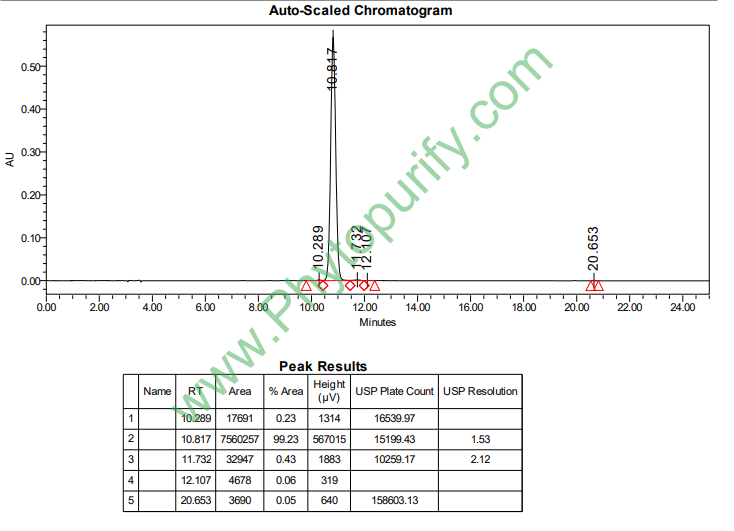
Purity: 95%~99%
Analysis Method: HPLC-DAD or/and HPLC-ELSD
Identification Method: Mass, NMR
Packing: Brown vial or HDPE plastic bottle
Can be supplied from milligrams to grams.
For Reference Standard and R&D, Not for Human Use Directly.
Inquire for bulk scale.
Description:
Angoroside C has anti-inflammatory effect , it can significantly inhibit LPS-induced PGE(2), NO and TNF-alpha in a concentration-dependent manner; it also exhibits cytotoxic and cytostatic activities against several kinds of cancer cells. Angoroside C has beneficial effects against ventricular remodeling, the mechanism is likely to be related to decreasing the level of Ang Ⅱ, attenuating the mRNA expressions of ET-1 and TGF-β1.
References:
Life Sci. 2004 Apr 2;74(20):2515-26.
Phenylpropanoid glycosides from Scrophularia scorodonia: in vitro anti-inflammatory activity.
Five phenylpropanoid glycosides isolated from Scrophularia scorodonia L. (Scrophulariaceae), namely angoroside A (1), Angoroside C (2), angoroside D (3), acteoside (4) and isoacteoside (5), had been evaluated as potential inhibitors of some macrophage functions involved in the inflammatory process.
METHODS AND RESULTS:
These compounds have been tested in two experimental systems: ionophore-stimulated mouse peritoneal macrophages and human platelets serve as source of COX-1 and 5-LOX, and mouse peritoneal macrophages stimulated with E. coli LPS are the means of testing for COX-2, NO and TNF-alpha activity. None of compounds assayed had a significant effect on LTC(4)-release from calcium ionophore-stimulated mouse peritoneal macrophages. However, the release of PGE(2) by mouse peritoneal macrophages stimulated with calcium ionophore was inhibited by most of these compounds. In the TXB(2)-release assay, acteoside (4), angoroside A (1) and Angoroside C (2) showed a significant effect. These five compounds, except Angoroside C (2) significantly inhibited LPS-induced PGE(2), NO and TNF-alpha in a concentration-dependent manner. In LPS-stimulated macrophages, the phenylpropanoid glycoside Angoroside C (2) only had activity on NO.
CONCLUSIONS:
These results indicate that the pharmacology of these compounds may participate in the anti-inflammatory effect of Scrophularia scorodonia.
Phytomedicine. 2015 Jul 15;22(7-8):705-12.The effect of angoroside C on pressure overload-induced ventricular remodeling in rats.
Our previous study reveals that total rough extract of Radix Scrophulariae has a beneficial effect on ventricular remodeling. HYPOTHESIS: After carrying out a series of preliminary experiments, we speculated that Angoroside C may be the effective agent. STUDY DESIGN: After oral administration, the effect of Angoroside C on ventricular remodeling was evaluated by using a pressure-overloaded rat model, some related indexes were detected in vivo.
METHODS AND RESULTS:
A model of pressure overloaded ventricular remodeling was produced by abdominal aortic constriction (AAC) in rats. The sham-operated rats underwent an identical surgical procedure except for AAC. AAC rats were randomly divided into five groups: model control group, three Angoroside C treated groups (7.5, 15 and 30 mg·kg(-1)) and captopril treated group (40 mg·kg(-1)). The rats were orally administered with the corresponding drugs or drinking water for 4 weeks. The levels of blood pressure (BP), left ventricular weight index (LVWI) and heart weight index (HWI) were detected. Myocardium tissue was stained with hematoxylin and eosin or picric acid/sirius red for cardiomyocyte cross-section area or collagen content measurements respectively. The concentrations of angiotensin Ⅱ (Ang Ⅱ), hydroxyproline (Hyp), matrix metalloproteinase 2 (MMP-2), MMP-9 and tissue inhibitor of metalloproteinase-1 (TIMP-1) in myocardium or serum were determined. Real-time RT-PCR was performed to detect the mRNA expressions of endothelin 1 (ET-1), transforming growth factor β1 (TGF-β1). Angoroside C significantly reduced the BP, LVWI and HWI, decreased the content of Ang Ⅱ, Hyp, diminished cross sectional area of cardiomyocytes and ameliorated collagen deposition. Additionally, it markedly reduced collagen I and III expressions and regulated matrix metalloproteinase-2, 9 and inhibitors of metalloproteinase expressions. Angoroside C also down regulated the gene expressions of ET-1 and TGF-β1mRNA in myocardium.
CONCLUSIONS:
Angoroside C has beneficial effects against ventricular remodeling. The mechanism is likely to be related to decreasing the level of Ang Ⅱ, attenuating the mRNA expressions of ET-1 and TGF-β1.
HPLC of Angoroside C
Storage conditions:Short-term storage at 2~8℃, long-term storage at -20 ~ -80℃
282.2100
.1253
.1215
4.8320
.5470
.0867
Low
79.4550
5.2884
Yes
No
No
No
No
No
0.0
Yes
Yes
No
Yes
Heart failure is the terminal stage of various cardiovascular diseases, with complex pathological and physiological processes involving multiple links such as excessive activation of the neuroendocrine system, myocardial fibrosis, and ventricular remodeling. Although significant progress has been made in modern drug treatment, the incidence rate, rehospitalization rate and mortality rate of heart failure are still high, and it is urgent to develop new, efficient and safe therapeutic drugs. In this context, searching for natural products with cardioprotective activity from traditional medicinal plants has become one of the important strategies for new drug development.
Angoroside C (CAS number: 115909-22-3) is derived from the traditional Chinese medicine Xuanshen(Scrophularia ningpoensis A iridoid glycoside compound isolated from Hemsl. Xuanshen, as a classic formula for clearing heat, cooling blood, nourishing yin, and reducing gunpowder, has a long history of clinical application in traditional Chinese medicine. Modern pharmacological research has also confirmed its multiple activities such as anti-inflammatory, antioxidant, and cardiovascular protection. Angroside C, as one of the main active ingredients of Scrophularia ningpoensis, has attracted much attention in recent years due to its outstanding anti-inflammatory and anti-tumor effects, especially in improving ventricular remodeling. Research has shown that Angeloside C can significantly inhibit the production of inflammatory mediators such as prostaglandin E2 (PGE2), nitric oxide (NO), and tumor necrosis factor - α (TNF - α) induced by lipopolysaccharide (LPS) in a concentration dependent manner, and exhibits cytotoxicity against various cancer cells. More importantly, it has shown beneficial effects on ventricular remodeling caused by pressure overload or myocardial infarction in animal models, indicating its enormous value as a potential candidate drug for anti heart failure.
This article aims to systematically review the chemical structure, plant origin, pharmacological activity, mechanism of action, pharmacological evaluation, and clinical application prospects of Angroside C, in order to provide comprehensive scientific references for the in-depth research and development of this natural product.
Angroside C is a phenylethanoid glycoside compound, whose chemical structure is composed of an acteoside and an additional glucose unit connected by a glycosidic bond, belonging to the disaccharide chain phenylethanoid glycoside. Its molecular formula is C34H44O20 and its molecular weight is 784.7610. Its structural core contains caffeoyl, phenethyl, and two glucosyl groups, and the unique physicochemical properties and biological activity are determined by its multi hydroxyl and polyphenolic hydroxyl structural characteristics.
From the analysis of the parameters related to drug properties, the logarithmic value of the lipid water partition coefficient (LogP) of Angoroside C is 0.1253, indicating its good hydrophilicity. Its topological polar surface area (TPSA) is as high as 282.2100 Å ², which is closely related to the presence of multiple hydroxyl and sugar groups in its molecule, and also indicates that it has more hydrogen bond donor and acceptor sites. The water solubility value is 4.8320 (usually referring to logS or related solubility indicators), further confirming its good water solubility. These properties may make its distribution within living organisms more inclined towards hydrophilic environments. However, higher TPSA and polarity also result in lower ability to cross the blood-brain barrier, which to some extent limits its direct effects on central nervous system related diseases, but may also reduce the risk of central nervous system side effects. In addition, preliminary pharmacological screening showed that Angeloside C had no significant inhibitory effect on hERG potassium channels (hERG inhibition: No), and the Ames test result was 0.0, suggesting that it may not have mutagenicity and potential cardiotoxicity risks, providing preliminary positive signals for its safety.
Angroside C is mainly derived from the plant Scrophularia in the family Scrophulariaceae(Scrophularia ningpoensis Dry roots of Hemsl. Xuanshen is mainly produced in Zhejiang, Sichuan, Hubei and other places in China. Among them, "Zhejiang Xuanshen" produced in Zhejiang has the best quality and is a high-quality resource plant for Angroside C. In addition, in other plants of the same genus such as Scrophularia buergeriana It has also been detected in (Northern Scrophularia), but the content may vary.
The extraction of Angroside C from Scrophularia ningpoensis is usually carried out by solvent extraction combined with modern chromatographic techniques for separation and purification. The standard procedure is as follows:
1. Extract After crushing the dried roots of Xuanshen, methanol, ethanol, or their aqueous solutions (such as 70% ethanol) are commonly used for heating reflux extraction or ultrasound assisted extraction. Ethanol aqueous solution is a commonly used extraction solvent due to its low cost, low toxicity, and high extraction efficiency.
2. Enrichment and preliminary separation The extract obtained by vacuum concentration of the extract is often enriched and purified using macroporous adsorption resins (such as D101, AB-8, etc.). Strong polar impurities such as polysaccharides and proteins are washed away with water first, and then gradient elution is performed with different concentrations of ethanol (such as 30% -70%). Angoroside C is usually enriched in the medium polarity elution site.
3. Refined and purified Further separate and purify the fraction rich in Angeloside C using methods such as silica gel column chromatography, reverse phase silica gel column chromatography (such as ODS-C18), and preparative high-performance liquid chromatography (HPLC) to obtain high-purity Angeloside C monomer compounds. High performance liquid chromatography-mass spectrometry (HPLC-MS) and nuclear magnetic resonance (NMR) techniques are key methods for identifying its chemical structure.
Optimizing the extraction process (such as solvent ratio, temperature, time) and adopting combined separation techniques are key to improving the yield and purity of Angoroside C.
A large number of pharmacological studies both in vitro and in vivo have confirmed that Angeloside C has multiple biological activities, mainly including anti-inflammatory, anti-tumor, and cardiovascular protective effects.
anti-inflammatory activity Angoroside C exhibits strong anti-inflammatory potential. In the LPS induced macrophage (such as RAW264.7 cells) inflammation model, Angeloside C can significantly inhibit the production of key inflammatory mediators PGE2, NO, as well as pro-inflammatory cytokines TNF - α, interleukin-6 (IL-6), etc. in a concentration dependent manner. This anti-inflammatory effect is the basis for its treatment of a variety of inflammatory related diseases, including cardiovascular diseases (atherosclerosis, myocarditis) and some cancers.
Antitumor activity Angoroside C exhibits cytotoxicity and growth inhibitory effects on various human cancer cell lines. It has been reported that it can inhibit the proliferation and induce apoptosis of liver cancer, breast cancer, colon cancer and other cells. Its anti-tumor mechanism may involve inducing cell cycle arrest, activating apoptotic pathways, and inhibiting tumor cell invasion and metastasis. It is worth noting that its role may be related to the regulation of certain drug transporters, such as ABCB1 (P-glycoprotein) and ABCG2 (breast cancer resistant protein), which are closely related to tumor multidrug resistance.
Cardiovascular protective activity - improving ventricular remodeling This is the most distinctive pharmacological activity of Angroside C. Ventricular remodeling is the core pathological process in the occurrence and development of heart failure, characterized by myocardial cell hypertrophy, apoptosis, interstitial fibrosis, and changes in cardiac geometry. In animal models of ventricular remodeling and heart failure induced by abdominal aortic constriction (AAC) or coronary artery ligation, administration of Angroside C can:
The multiple pharmacological activities of Angroside C stem from its regulation of multiple signaling pathways and molecular targets. According to existing research, its mechanism of action is complex and interconnected.
The core pathway of anti-inflammatory and cardiac protection:
Potential interactions with related disease targets:
Based on its chemical structure and activity, it is speculated that Angoroside C may interact with multiple other targets that are associated with the pathological processes of heart failure, neurodegenerative diseases, and tumors
The benefits of Angroside C on ventricular remodeling are likely achieved through the synergistic effects of multiple targets and pathways mentioned above:Reduce Ang II levels and decrease mRNA expression of ET-1 and TGF - β 1 It is a key link that has been proven, and these effects collectively lead to inflammation inhibition, fibrosis reduction, and cardiomyocyte protection, ultimately delaying or reversing the process of ventricular remodeling.
Although Angroside C has shown good pharmacological activity in preclinical studies, its successful development as a drug depends on its pharmacological properties, including pharmacokinetic properties, oral bioavailability, metabolic stability, and safety.
pharmacokinetics Currently, there is relatively limited pharmacokinetic research on the Angeloside C system. Due to its high molecular weight and polarity (high TPSA), predicting its oral absorption may face challenges, and its bioavailability may be low. The prototype drug may be affected by hydrolysis (glycosidic bond cleavage) and microbial metabolism during intestinal absorption. After entering the bloodstream, due to its low LogP value and low blood-brain barrier permeability, it is mainly distributed in the blood and various tissues and organs throughout the body, making it difficult to enter the central nervous system. The phenolic hydroxyl and glycosidic bonds in the structure of Angroside C make it prone to II binding reactions (such as glucuronidation and sulfation), as well as possible gut microbiota metabolism. Its excretion pathway may mainly be through the kidneys and bile. Detailed in vivo pharmacokinetic studies are needed in the future to clarify its absorption, distribution, metabolism, and excretion (ADME) characteristics.
Challenges and optimization of drug development:
Angroside C, as a natural product with clear anti-inflammatory and anti ventricular remodeling activities, has a clinical application prospect mainly focused on the cardiovascular field, especially in the prevention and treatment of heart failure.
As a candidate drug for anti heart failure Angroside C exhibits unique advantages in targeting ventricular remodeling, a key target for heart failure treatment. It may serve as a supplement or adjuvant to existing standard treatments for heart failure, such as ACEI/ARB, beta blockers, MRA, SGLT2 inhibitors, particularly suitable for patient populations with distinct inflammatory and fibrotic features. Its multi-target mechanism of action may bring synergistic benefits.
Other potential indications:
Future research directions and challenges:
Angroside C is a highly valuable natural active compound discovered from the traditional Chinese medicine Scrophularia ningpoensis. It has emerged in the field of new drug development for heart failure treatment due to its significant anti-inflammatory effects and clear improvement in ventricular remodeling. Its multi-target and multi pathway mode of action conforms to the concept of systemic therapy for complex diseases. Although there are challenges in drug formulation, especially in oral bioavailability, these challenges are expected to be gradually overcome with the advancement of modern pharmaceutical chemistry, pharmacology, and pharmacology technologies through structural optimization, dosage form innovation, and in-depth mechanism research. The in-depth study of Angroside C not only contributes to the development of new cardiovascular treatment drugs, but also serves as a typical case for interpreting the scientific connotation of traditional Chinese medicine, achieving modernization and internationalization of traditional Chinese medicine. In the future, we look forward to more translational medicine research to promote the transition of Angeloside C from the laboratory to clinical practice, bringing new treatment options for patients with major diseases such as heart failure.
