| Catalog No | Package | Original Price | Price | Inventory | Quantity | Operating |
|---|---|---|---|---|---|---|
| BP3910-5mg | 5mg | $350.00 | Sign in |
|


Storage conditions:Short-term storage at 2~8℃, long-term storage at -20 ~ -80℃
175.3700
.0243
.0241
2.4907
.5308
.5478
Low
62.2008
4.8168
No
No
No
No
No
No
0.0
Yes
Yes
Yes
Yes
Natural products, as an important source of drug discovery, play an irreplaceable role in the long-term struggle between humans and diseases. Iridoid glycosides are a class of monoterpene secondary metabolites widely present in nature, and have attracted much attention due to their structural diversity and extensive biological activity. Harpagide and its derivatives are important members of the iridoid glycoside family, originally derived from the medicinal plant Harpagide(Harpagophytum procumbens It is isolated and identified from devil's claws, and has various pharmacological activities such as anti-inflammatory, analgesic, and antioxidant. In recent years, with the continuous advancement of separation technology and activity screening methods, a series of acylated derivatives of harpagoside have been discovered. Among them, 6 '- O-Cinnamoyl harpagoside (CAS number: 1245572-24-0) has attracted widespread interest from researchers due to its unique chemical structure and potential biological activity.
6 '- O-cinnamoyl-rhamnoside is a product in which the hydroxyl group at the 6' - position of the glucose unit in the rhamnoside molecule is replaced by cinnamoyl. This structural modification significantly alters the physicochemical properties and biological activity spectrum of the parent compound. From the perspective of chemical taxonomy, this compound belongs to the acylated iridoid glycoside subclass of the iridoid glycoside class. Its molecule contains both hydrophilic glycosides and hydrophobic cinnamoyl side chains. This amphiphilic structural feature provides a structural basis for it to cross biofilm barriers and interact with multiple biological targets. In recent years, significant progress has been made in the study of the phytochemistry, pharmacological activity, and mechanism of action of this compound, revealing its potential application value in anti-inflammatory, neuroprotective, anti-tumor, and metabolic regulation.
This article aims to systematically review the research progress on the chemical structure characteristics, plant sources, extraction and separation methods, pharmacological activity, mechanism of action, and pharmacological evaluation of 6 '- O-cinnamoyl harpagoside, in order to provide reference for the in-depth research and development of this natural product.
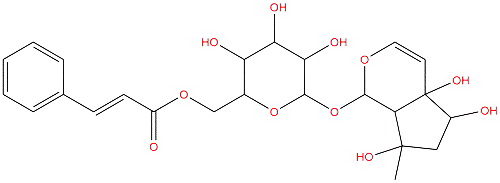
The chemical structure of 6 '- O-cinnamoyl rhamnoside consists of three parts: the cyclohexene ether terpene core (rhamnoside), the glucose group, and the cinnamoyl side chain. Its molecular formula is C ₂₄ H ∝₀ O ₁₁, and its molecular weight is 494.4930. The parent nucleus of cyclohexene ether terpenes is a typical cyclopentane pyran skeleton, with a hemiacetal hydroxyl group (C-1 position) and an epoxy bridge structure (C-6, C-7 positions), which endow the compound with unique chemical reactivity and biological activity. The glucose group is connected to the C-1 position of the parent nucleus through a β - glycosidic bond, while the cinnamoyl group (C ₆ H ₅ - CH=CH-CO -) is connected to the 6 '- hydroxyl group of glucose through an ester bond.
From a stereochemical perspective, the compound has multiple chiral centers, including C-1, C-5, C-6, C-7, C-8, and C-9 positions on the iridoid parent nucleus, as well as multiple chiral carbon atoms on the glucose unit. The double bond in the cinnamoyl side chain is usually in the trans configuration (E configuration), which is a common configuration in natural cinnamic acid derivatives. This complex three-dimensional structure enables the compound to interact specifically with various biomolecules.
According to the calculated chemical parameters, the oil-water partition coefficient (LogP) of 6 '- O-cinnamoylcarboside is 0.0243, indicating that the compound has moderate lipophilicity and can achieve a good balance between hydrophilic and hydrophobic environments. Its topological polar surface area (TPSA) is 175.37 Å ², which is much higher than the recommended upper limit of 140 Å ² for oral drugs. This suggests that the compound may have lower oral bioavailability, but at the same time, it also means that it has good water solubility (with a water solubility parameter of 2.4907 mg/mL). The higher TPSA value mainly comes from multiple polar groups such as hydroxyl and ester groups in the molecule, which are also the structural basis for their hydrogen bonding interactions with biological targets.
In terms of medicinal chemical properties, the compound meets some of the conditions in Lipinski's Five Rules: molecular weight less than 500 Da (494.49 Da), LogP less than 5 (0.0243), but the number of hydrogen bond donors (about 6 hydroxyl groups) and hydrogen bond acceptors (11 oxygen atoms) both exceed the limits of the Five Rules (not exceeding 5 and 10, respectively). In addition, the compound does not comply with the restrictions of the Veber rule regarding rotatable bonds (>10) and TPSA (>140 Å ²). These parameters suggest that the compound may belong to a "moderate" drug like molecule and require specific drug delivery systems or structural modifications to improve its drug like properties.
It is worth noting that the compound's blood-brain barrier (BBB) penetration ability was evaluated as "low", consistent with its higher TPSA value and polarity characteristics. This characteristic is both an advantage (reducing central nervous system side effects) and a disadvantage (limiting its direct effect on brain targets) in the treatment of neurodegenerative diseases. In addition, the hERG inhibition risk assessment was negative, and the Ames test result was 0.0, indicating that the compound did not exhibit significant cardiac toxicity or genetic toxicity in the preliminary safety evaluation, providing a favorable safety basis for its subsequent drug development.
6 '- O-cinnamoyl-Habaside is mainly found in plants of the Lamiaceae and Pedaliaceae families. The plant species currently reported to contain this compound include:
Haba Hook Fruit(Harpagophytum procumbens)As a classic source of Habaside compounds, the root tubers of this plant are rich in various Habaside derivatives, including 6 '- O-cinnamoyl Habaside. This plant is native to southern Africa and has traditionally been used to treat inflammatory diseases and pain.
Genus Gymnostemma(Ajuga)Plants As follows:Ajuga decumbens(Muscle Bone Grass) and Ajuga reptans Plants such as creeping bone grass are commonly used in traditional East Asian medicine to treat fever, inflammation, and infections.
Mother in law belongs to(Veronica)Plants As follows:Veronica officinalis(Medicinal Granny Na) and Veronica chamaedrys These plants are used in European and American folk medicine to treat respiratory diseases and skin problems, such as the Stone Silkworm Leaf Granny Na.
Xuanshen genus(Scrophularia)Plants As follows:Scrophularia ningpoensis Xuanshen, a commonly used medicinal herb in traditional Chinese medicine, has the effects of clearing heat, cooling blood, nourishing yin, and reducing fire.
Cornus genus(Cornus)Plants As follows:Cornus officinalis(Cornus officinalis), whose fruit is a traditional kidney tonifying Chinese medicine, contains various iridoid glycosides.
It is worth noting that the content of this compound varies greatly in different plants and is usually present as a secondary component. Its content is influenced by factors such as plant species, growth environment, and harvest season. For example, in Habahooked fruit, the content of 6 '- O-cinnamoyl Habaside is usually lower than its main active ingredients Habaside and Habaroside.
Researchers have developed various methods for the extraction of 6 '- O-cinnamoyl harpagoside, including:
1. Traditional solvent extraction method Dry plant materials are subjected to reflux extraction or cold soaking extraction using methanol or ethanol water mixed solvents (usually 50% -80% ethanol). This method is easy to operate, but the selectivity is poor, and the extract contains a large amount of impurities. To improve the extraction efficiency of target compounds, researchers usually use acidic or neutral conditions to avoid hydrolysis of ester bonds.
2. Ultrasound assisted extraction (UAE)Utilizing the cavitation effect of ultrasound to destroy plant cell walls, accelerate solvent permeation and solute diffusion. This method can significantly shorten the extraction time (usually 30-60 minutes) and improve the extraction efficiency compared to traditional extraction methods, and is suitable for the extraction of thermosensitive compounds.
3. Microwave assisted extraction (MAE)Using microwave radiation to rapidly heat polar solvents and promote the dissolution of target compounds. This method has the advantages of short extraction time (usually 5-15 minutes) and low solvent dosage, but attention should be paid to controlling the microwave power and temperature to prevent hydrolysis of cinnamoyl ester bonds.
4. Supercritical fluid extraction (SFE)Using supercritical CO ₂ as the extraction solvent, adjust the polarity of the solvent by adding entrainers such as ethanol. This method is environmentally friendly and has good selectivity, but the equipment cost is high and the extraction efficiency of polar compounds is limited.
The crude extract after extraction needs to be separated and purified through a series of chromatographic techniques:
1. Liquid liquid extraction Using different solvents such as petroleum ether, ethyl acetate, n-butanol, etc., the crude extract is subjected to fractional extraction, and the target compound is enriched in the extraction sites of moderately polar ethyl acetate or n-butanol.
2. Silica gel column chromatography Preliminary separation is achieved by gradient elution using solvent systems such as chloroform methanol water or ethyl acetate methanol water. This method is low-cost, but the separation efficiency is limited and requires multiple repeated operations.
3. Reverse phase column chromatography Separate using C18 or C8 reverse phase silica gel with methanol water or acetonitrile water as the mobile phase. This method has a good separation effect on moderately polar iridoid glycosides.
4. Preparation type high performance liquid chromatography (Prep HPLC)As the final purification method, a C18 preparation column is used, with acetonitrile water or methanol water as the mobile phase, combined with a UV detector (usually detection wavelength of 210-280 nm) for high-purity separation. This method can obtain the target compound with a purity of>98%, but the yield is low and the cost is high.
5. High speed countercurrent chromatography (HSCCC)Separation is carried out in a two-phase solvent system using the liquid-liquid distribution principle. This method has irreversible adsorption, high sample recovery rate, and is suitable for preparation grade separation.
In practical operation, a combination strategy of multiple methods is usually adopted. For example, ethanol extraction and liquid-liquid extraction enrichment are used first, followed by preliminary separation by silica gel column chromatography and reverse phase column chromatography, and finally high-purity compounds are obtained by preparative HPLC. During the entire separation process, attention should be paid to avoiding light and operating at low temperatures to prevent photolysis of cinnamoyl side chains and hydrolysis of ester bonds.
6 '- O-cinnamoyl-Habaside exhibits significant anti-inflammatory activity in various inflammatory models. In vitro studies have shown that this compound can inhibit the production of nitric oxide (NO) and prostaglandin E ₂ (PGE ₂) in macrophages stimulated by lipopolysaccharide (LPS), with a half maximal inhibitory concentration (IC ₅₀) in the range of 10-50 μ M. Further research has found that the compound can significantly reduce the mRNA expression and protein secretion levels of pro-inflammatory cytokines such as tumor necrosis factor - α (TNF - α), interleukin-1 β (IL-1 β), and interleukin-6 (IL-6).
In an in vivo inflammatory model, 6 '- O-cinnamoyl hababine (orally administered at 20-80 mg/kg) can dose dependently inhibit carrageenan induced paw swelling in rats. Its anti-inflammatory effect is comparable to that of the positive control drug indomethacin, but with fewer gastrointestinal side effects. In addition, in adjuvant arthritis models, the compound can reduce joint swelling, lower levels of inflammatory markers in serum, and improve pathological changes in joint tissue.
It is worth noting that the anti-inflammatory activity of 6 '- O-cinnamoyl harpargide is significantly stronger than that of its parent compound harpargide, indicating that the cinnamoyl side chain plays a key role in enhancing anti-inflammatory activity. Structure activity relationship analysis suggests that the α, β - unsaturated carbonyl structures in cinnamoyl groups may be important pharmacophores that can interact covalently or non covalently with key proteins in inflammatory signaling pathways.
6 '- O-cinnamoyl-Habaside has shown protective effects in neurodegenerative disease models. In the glutamate induced SH-SY5Y neuronal injury model, this compound (1-30 μ M) can significantly improve cell survival rate, reduce lactate dehydrogenase (LDH) release and reactive oxygen species (ROS) levels. In addition, the compound can also inhibit the neurotoxicity induced by β - amyloid protein (A β), reduce the formation of A β aggregates, and promote the depolymerization of formed A β fibers.
In animal models, 6 '- O-cinnamoyl harpagoside (intraperitoneal injection 10-40 mg/kg) can improve learning and memory impairment induced by scopolamine in mice and enhance spatial learning ability in Morris water maze test. Meanwhile, the compound can increase the expression level of brain-derived neurotrophic factor (BDNF) in the hippocampus and enhance the expression of synaptic plasticity related proteins such as PSD-95 and Synapsin I.
Although the compound has a low blood-brain barrier penetration ability, studies have found that 6 '- O-cinnamoyl harpagoside can still exert neuroprotective effects in models of cerebral ischemia-reperfusion injury, which may be related to its indirect impact on central nervous system function by regulating peripheral inflammatory responses, or the existence of an active transport mechanism that has not yet been elucidated.
6 '- O-cinnamoylcarboside exhibits inhibitory effects on the proliferation of various tumor cell lines. The MTT test results showed that the compound had varying degrees of cytotoxicity to liver cancer cells (HepG2, Huh7), breast cancer cells (MCF-7, MDA MB-231), lung cancer cells (A549) and colon cancer cells (HT-29), and the IC ₀ value was generally in the range of 20-80 μ M. It is worth noting that the toxicity of this compound to normal liver cells (L02) and normal fibroblasts (NIH-3T3) is significantly lower than that to tumor cells, showing a certain degree of selectivity.
Further research has found that 6 '- O-cinnamoylcarboside can exert anti-tumor effects by inducing cell cycle arrest and apoptosis. In HepG2 cells, this compound can arrest the cell cycle in the G ₂/M phase, upregulate the expression of pro apoptotic protein Bax, downregulate the expression of anti apoptotic protein Bcl-2, activate caspase-3 and caspase-9, and ultimately lead to mitochondrial pathway apoptosis. In addition, the compound can also inhibit the migration and invasion ability of tumor cells, and reduce the activity of matrix metalloproteinases (MMP-2 and MMP-9).
6 '- O-cinnamoylcarboside has direct free radical scavenging ability. The DPPH free radical scavenging experiment showed that the half maximal scavenging concentration (SC ₅₀) of the compound was about 40 μ M, which was weaker than the positive control vitamin C (SC ₅₀ about 20 μ M), but stronger than harpadine (SC ₅₀>100 μ M). The ABTS ⁺ radical scavenging experiment also yielded similar results. In addition, the compound can enhance the activity of endogenous antioxidant enzymes in cells, such as superoxide dismutase (SOD), glutathione peroxidase (GPx), and catalase (CAT), and reduce the level of malondialdehyde (MDA), thereby alleviating oxidative stress damage.
In addition to the main activities mentioned above, 6 '- O-cinnamoylcarboside also exhibits the following pharmacological effects:
Hepatoprotective activity In the liver injury model induced by carbon tetrachloride (CCl ₄) and acetaminophen (APAP), this compound can reduce serum transaminase (ALT, AST) levels, alleviate liver tissue necrosis and inflammatory infiltration.
Hypoglycemic activity In the streptozotocin (STZ) - induced diabetes mouse model, 6 '- O-cinnamoylhabaside can reduce the fasting blood glucose level, improve insulin resistance, and protect the function of pancreatic β cells.
Antibacterial activity This compound is effective against Staphylococcus aureus(Staphylococcus aureus)And Staphylococcus epidermidis(Staphylococcus epidermidis)Gram positive bacteria have a certain inhibitory effect, with a minimum inhibitory concentration (MIC) of about 100-200 μ g/mL.
The anti-inflammatory effect of 6 '- O-cinnamoyl-Habaside involves the regulation of multiple signaling pathways. Research has shown that this compound primarily exerts anti-inflammatory effects through the following mechanisms:
1. Inhibition of NF - κ B signaling pathway 6 '- O-cinnamoyl harpagoside can inhibit LPS induced phosphorylation and degradation of I κ B α, prevent NF - κ B p65 subunit translocation into the nucleus, and thus reduce transcription of downstream pro-inflammatory genes. Molecular docking studies have shown that this compound may interact with the ATP binding site of I κ B kinase (IKK), inhibiting its kinase activity.
2. MAPK signaling pathway regulation This compound can inhibit the phosphorylation of p38 MAPK and JNK, but has little effect on the phosphorylation of ERK1/2. This selective inhibition may be related to its interaction with specific binding sites of p38 and JNK.
3. Activation of Nrf2/ARE pathway 6 '- O-cinnamoyl harpagoside can promote the dissociation and translocation of nuclear factor E2 related factor 2 (Nrf2) from Keap1 protein to the nucleus, bind to antioxidant response elements (ARE), and upregulate the expression of phase II detoxifying enzymes and antioxidant enzymes. This mechanism may explain the synergistic effect of its antioxidant and anti-inflammatory effects.
4. Inhibition of COX-2 and iNOS activity This compound can directly bind to the active sites of cyclooxygenase-2 (COX-2) and inducible nitric oxide synthase (iNOS), inhibiting their enzymatic activity and reducing the production of PGE ₂ and NO.
The neuroprotective mechanism of 6 '- O-cinnamoyl harpargide mainly includes:
1. Anti excitotoxicity This compound can inhibit glutamate induced overactivation of NMDA receptors, reduce calcium influx, and alleviate neuronal damage caused by calcium overload. In addition, it can regulate the expression of glutamate transporters and promote the clearance of glutamate in synaptic cleft.
2. Anti apoptotic effect By activating the PI3K/Akt signaling pathway, this compound can phosphorylate and inhibit pro apoptotic proteins Bad and caspase-9, while upregulating the expression of anti apoptotic protein Bcl-2, thereby protecting nerve cells from apoptosis.
3. Regulation of neurotrophic factors 6 '- O-cinnamoylcarboside can activate cAMP response element binding protein (CREB), promote transcription and expression of BDNF, thereby activating TrkB receptors and their downstream signaling pathways, enhancing neuronal survival and synaptic plasticity.
The anti-tumor mechanism of this compound involves multiple levels:
1. Cell cycle regulation By upregulating the expression of cell cycle dependent kinase inhibitors (CDKIs) such as p21 and p27, the activity of Cyclin B1/CDK1 complex is inhibited, and tumor cells are arrested in the G ₂/M phase.
2. Apoptosis induction By activating endogenous (mitochondrial) apoptotic pathways, including increasing mitochondrial membrane permeability, releasing cytochrome c, activating caspase-9 and caspase-3, ultimately leading to DNA fragmentation and cell apoptosis. In addition, the compound can enhance the activity of exogenous apoptotic pathways by upregulating the expression of death receptors such as Fas and DR5.
3. Autophagy regulation Research has found that 6 '- O-cinnamoyl-Habaside can induce protective autophagy in tumor cells, while inhibiting autophagy can enhance its cytotoxicity. This discovery suggests that the combination of autophagy inhibitors may enhance the anti-tumor efficacy of this compound.
4. Inhibition of epithelial mesenchymal transition (EMT)This compound can upregulate the expression of E-cadherin and downregulate the expression of N-cadherin and vimentin, thereby inhibiting the migration and invasion ability of tumor cells.
Through techniques such as chemical proteomics and molecular docking, researchers have preliminarily identified the potential molecular targets of 6 '- O-cinnamoyl harpagoside
IKKβAs a key kinase in the NF - κ B signaling pathway, IKK β is considered one of the main targets of the anti-inflammatory effect of this compound. Molecular docking showed that the compound can form hydrogen bonds and hydrophobic interactions with key amino acid residues such as Lys44, Glu61, and Asp166 in the ATP binding pocket of IKK β.
Keap1 This compound can bind to the Kelch domain of Keap1, competitively inhibiting the interaction between Keap1 and Nrf2, thereby activating the Nrf2/ARE pathway.
COX-2 Molecular simulation studies have shown that the cinnamoyl side chain of 6 '- O-cinnamoyl harpagoside can insert into the hydrophobic channel of COX-2 and interact with key residues such as Tyr385 and Ser530, while the glycoside portion forms hydrogen bonds with Arg120 and Glu524.
PI3K/Akt This compound can indirectly activate the PI3K/Akt signaling pathway, but its direct binding target is not yet clear, possibly by regulating upstream receptor or phosphatase activity.
tubulin Some studies suggest that this compound may interact with the colchicine binding site of microtubule proteins, interfere with microtubule dynamics, and thus affect the mitosis of tumor cells.
Based on computational chemistry and in vitro experimental data, a comprehensive evaluation was conducted on the pharmacological properties of 6 '- O-cinnamoyl harpagoside
1. Evaluation of drug properties As mentioned earlier, this compound has some non-compliance with Lipinski's five rules and Veber's rules, mainly due to the excessive number of hydrogen bond donors/acceptors and high TPSA. These features suggest that its oral bioavailability may be low and need to be improved through structural modification or formulation techniques.
2. Safety evaluation The preliminary safety assessment results are relatively optimistic. HERG inhibition risk is negative, indicating low risk of cardiac toxicity; The Ames test result is 0.0, indicating no significant genetic toxicity. In addition, in acute toxicity experiments, the maximum tolerated dose (MTD) of oral administration in mice was greater than 2000 mg/kg, showing a wide safety window.
3. Metabolic stability The in vitro liver microsomal incubation experiment showed that the half-life (t ₁/₂) of 6 '- O-cinnamoyl hababinide in rat and human liver microsomes was 45 minutes and 60 minutes, respectively, with moderate intrinsic clearance rate (CLint). The main metabolic pathways include ester bond hydrolysis (to produce rhamnoside and cinnamic acid), glucuronic acid binding, and hydroxylation reactions. It is worth noting that the hydrolysis of cinnamoyl ester bonds is the main metabolic pathway, which may lead to a decrease in the bioavailability of the compound in vivo.
4. Water solubility and permeability This compound has good water solubility (2.49 mg/mL), which is beneficial for formulation development. However, its Caco-2 cell apparent permeability coefficient (Papp) is relatively low (about 1.5 × 10 ⁻⁶ cm/s), indicating poor intestinal permeability, consistent with its high TPSA value.
At present, there is limited research on the pharmacokinetics of 6 '- O-cinnamoyl harpagoside in vivo, but preliminary data is available:
1. Absorption After oral administration to rats, the absolute bioavailability of the compound is about 5% -10%, much lower than that of intravenous injection. Low bioavailability is mainly attributed to poor intestinal permeability and first pass metabolic effects. Food intake may affect its absorption, but further research is needed to determine the specific effects.
2. Distribution After intravenous injection, the compound is widely distributed in the body, with an apparent distribution volume (Vd) of approximately 1.5 L/kg, indicating its presence in tissues. The plasma protein binding rate is about 70%, mainly binding to albumin. Due to the low penetration ability of the blood-brain barrier, the drug concentration in brain tissue is only 5% -10% of the plasma concentration.
3. Metabolism The liver is the main metabolic organ, and metabolic pathways include ester hydrolysis, glucuronic acid binding, and hydroxylation. The main metabolites are rhamnoside, cinnamic acid, and their complexes. Some metabolites may retain certain biological activity, such as harpagoside, which also has anti-inflammatory activity.
4. Excretion The compound and its metabolites are mainly excreted through urine (about 60%) and bile (about 30%). The renal clearance rate is approximately 0.5 mL/min/kg, indicating the presence of tubular reabsorption. Fecal excretion accounts for about 10% of the administered dose.
To improve the pharmacological properties of 6 '- O-cinnamoyl harpagoside, researchers have proposed the following strategies:
1. Pre drug design Esterification or phosphorylation modification of hydroxyl groups in molecules to improve lipid solubility and intestinal permeability. For example, acetylation prodrugs can significantly improve the permeability of Caco-2 cells and rapidly hydrolyze into the original drug in vivo.
2. Nanoformulations Using carrier systems such as liposomes, polymer nanoparticles, or solid lipid nanoparticles to improve the oral bioavailability and targeting of drugs. Preliminary studies have shown that the oral bioavailability of 6 '- O-cinnamoyl harpargide encapsulated in polylactic acid hydroxyacetic acid copolymer (PLGA) nanoparticles has been increased by 3-5 times.
3. Phospholipid complexes By forming phospholipid complexes, the lipid solubility and transmembrane ability of drugs can be improved. Phospholipid complexes can significantly enhance the oral absorption of this compound in rats, with a relative bioavailability increase of about 2 times.
4. Cyclodextrin inclusion complex Using β - cyclodextrin or its derivatives to encapsulate the compound can improve its water solubility and stability, while potentially enhancing its bioavailability.
Based on existing pharmacological activity studies, 6 '- O-cinnamoyl harpargide has potential clinical application value in the following disease areas:
1. Inflammatory diseases Including rheumatoid arthritis, osteoarthritis, inflammatory bowel disease, etc. Its multi-target anti-inflammatory mechanism and good safety characteristics make it a candidate compound for the treatment of chronic inflammatory diseases. Especially with its low gastrointestinal side effects, it has significant advantages compared to traditional nonsteroidal anti-inflammatory drugs (NSAIDs).
2. Neurodegenerative diseases Such as Alzheimer's disease and Parkinson's disease. Despite its limited ability to penetrate the blood-brain barrier, this compound may still have an indirect protective effect on central nervous system diseases by regulating peripheral inflammatory responses and neurotrophic factor levels. In addition, developing derivatives or formulations that can cross the blood-brain barrier may be a future research direction.
3. Metabolic disorders: Including type 2 diabetes and nonalcoholic fatty liver disease (NAFLD). Its hypoglycemic, hepatoprotective, and antioxidant activities suggest the potential of this compound in the treatment of metabolic syndrome.
4. Tumor adjuvant therapy As a chemotherapy sensitizer or radiation protector, this compound may enhance the efficacy of conventional anti-tumor therapy while reducing its side effects. Its selective cytotoxicity characteristics make it safe in tumor treatment.
Despite exhibiting good pharmacological activity and safety, the clinical translation of 6 '- O-cinnamoylcarboside still faces the following challenges:
1. Low bioavailability Low oral bioavailability is the main obstacle limiting its clinical application. The solution strategy includes developing new drug delivery systems (such as nano formulations, phospholipid complexes) and designing prodrugs.
2. The mechanism of action is unclear Although some molecular targets have been identified, their complete functional network and key targets still need further clarification. Systems pharmacology and chemical proteomics methods can be used to comprehensively elucidate its mechanism of action.
3. Difficulties in large-scale preparation The low content of natural sources and complex separation and purification steps result in high acquisition costs for this compound. The development of biosynthetic or chemical synthesis methods will help solve the problem of raw material supply.
4. Lack of clinical research data Currently, all studies are in the preclinical stage and lack human pharmacokinetic and pharmacodynamic data. Systematic preclinical toxicology studies and phase I clinical trials are required to evaluate its safety and tolerability in humans.
Research on Structure Activity Relationship Systematically study the effects of modification of cinnamoyl side chains (such as substituent changes, double bond configuration changes) on biological activity, and search for derivatives with stronger activity and better drug like properties.
Multi target collaborative mechanism Using network pharmacology and systems biology methods, analyze the multi-target regulatory network of this compound in complex diseases, and elucidate its "multi-target, low affinity" action characteristics.
Drug delivery system development Design oral or injectable nano formulations for specific diseases, improve bioavailability and targeting, and achieve precise delivery to disease sites.
Combination therapy research Explore the synergistic effect of this compound with existing clinical drugs such as metformin, statins, chemotherapy drugs, etc., and develop effective combination therapy regimens.
Analysis of biosynthetic pathways Elucidate the biosynthetic pathway of 6 '- O-cinnamoyl harpagoside in plants, providing a theoretical basis for heterologous expression and metabolic engineering production.
As a naturally occurring acylated cyclohexene ether terpenoid glycoside, 6 '- O-cinnamoyl rhamnoside has attracted widespread attention for its unique chemical structure and multifaceted pharmacological activities. This compound exerts anti-inflammatory, neuroprotective, anti-tumor, and antioxidant biological effects by regulating multiple signaling pathways such as NF - κ B, MAPK, Nrf2/ARE, and PI3K/Akt, demonstrating potential value in treating inflammatory diseases, neurodegenerative diseases, metabolic diseases, and tumors. The preliminary safety evaluation results are encouraging, but pharmacokinetic defects such as low oral bioavailability remain the main bottleneck restricting its clinical translation.
From the perspective of natural product drug discovery, 6 '- O-cinnamoylcarboside represents a promising lead compound in the class of iridoid glycosides. In the future, through structural optimization, formulation innovation, and in-depth mechanism research, it is expected to overcome its existing shortcomings and promote the clinical development of this compound or its derivatives. Meanwhile, the study of this compound also provides an important reference example for the development of other natural acylated cyclohexene ether terpenoid glycosides. With the continuous development of systems pharmacology, chemical biology, and nanomedicine delivery technology, 6 '- O-cinnamoyl harpagoside and its analogues are expected to play a greater role in the era of precision medicine and contribute to human health.
Batch can search by a CAS number,one per line
