


Product name: Harpagide
Synonym name:
Catalogue No.: BP0701
Cas No.: 6926-08-5
Formula: C15H24O10
Mol Weight: 364.347
Botanical Source: Ajuga decumbens Thunb.
Physical Description:
Type of Compound: Iridoids
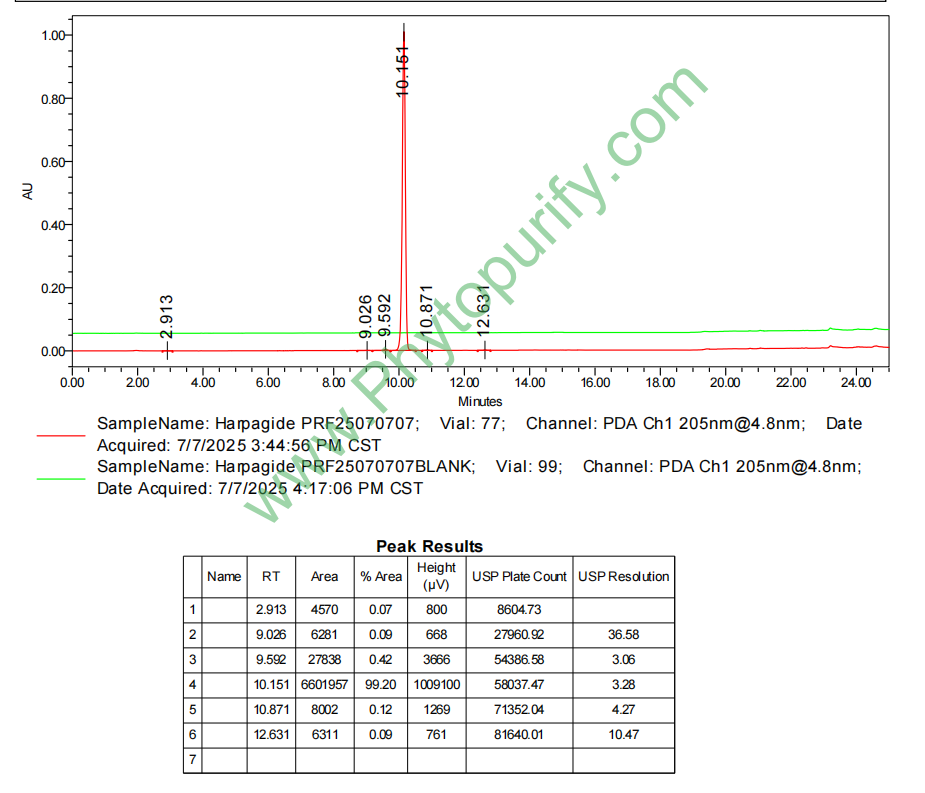
Purity: 95%~99%
Analysis Method: HPLC-DAD or/and HPLC-ELSD
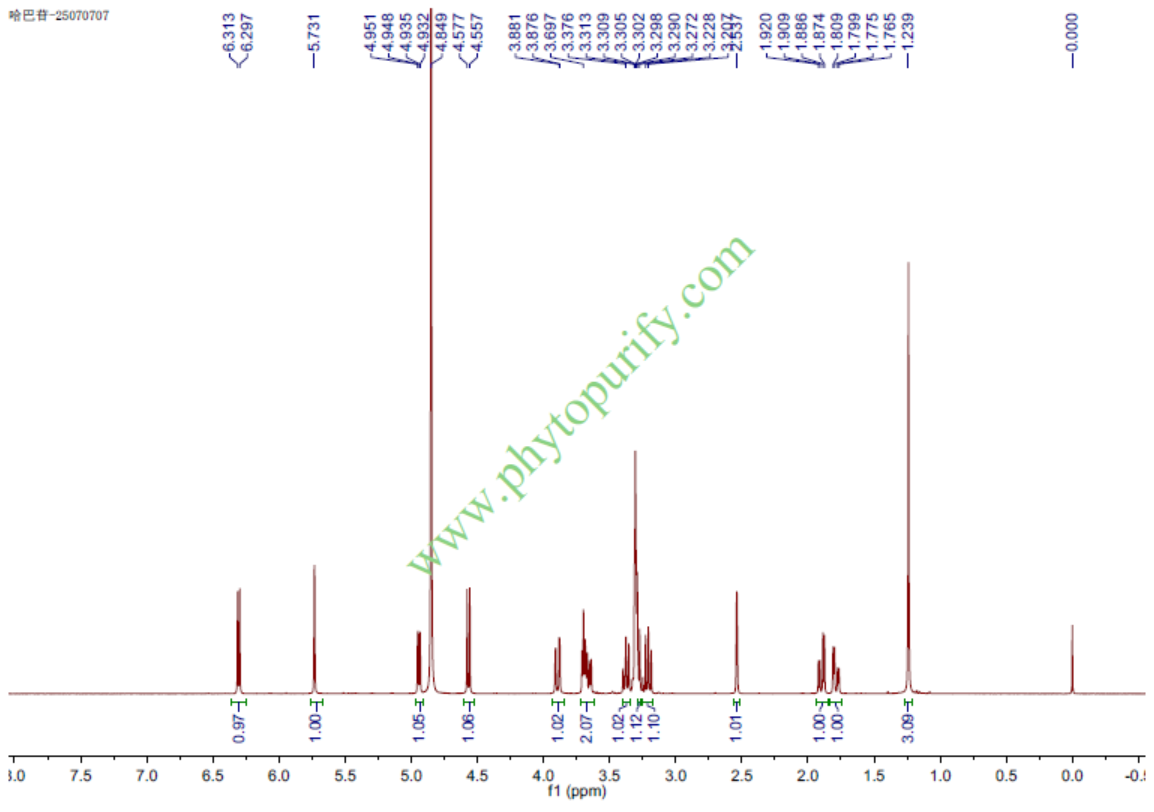
Identification Method: Mass, NMR
Packing: Brown vial or HDPE plastic bottle
Storage: Store in a well closed container, protected from air and light. Put into refrigerate or freeze for long term storage.
The product could be supplied from milligrams to grams
Inquire for bulk scale.
Description:
Harpagide has neuroprotective effect, it can obviously protect acute cerebral ischemia in mice,its therapeutical effects are approached to protecting the activity of brain mitochondria and decreasing protein expression level of caspase-3; harpagide also has a potential for prevention of bone loss in ovariectomized (OVX) mice by regulating the stimulation of osteoblast differentiation and the suppression of osteoclast formation. Harpagide may have anti-inflammatory efficacy.
References:
Bioorg Med Chem. 2011 Aug 15;19(16):4882-6.
Effects of β-glucosidase hydrolyzed products of harpagide and harpagoside on cyclooxygenase-2 (COX-2) in vitro.
Harpagide (1) and harpagoside (2) are two iridoid glycosides existing in many medicinal plants. Although they are believed to be the main bioactive compounds related to the anti-inflammatory efficacy of these plants, the mechanisms of their anti-inflammatory activities remain unclear.
METHODS AND RESULTS:
The results of our present study showed that 1 and 2 had no effects on inhibitions of cyclooxygenase (COX)-1/2 enzyme activity, tumor necrosis factor-α (TNF-α) release, and nitric oxide (NO) production in vitro. However, the hydrolyzed products of 1 and 2 with β-glucosidase treatment showed a significant inhibitory effect on COX-2 activity at 2.5-100 μM in a concentration-dependent manner. Our further study revealed that the hydrolyzed 2 product was structurally the same as the hydrolyzed 1 product (H-Harpagide (3)). The structure of 3 was 2-(formylmethyl)-2,3,5-trihydroxy-5-methylcyclopentane carbaldehyde, with a backbone similar to prostaglandins and COX-2 inhibitors such as celecoxib. All of them have a pentatomic ring with two adjacent side chains.
CONCLUSIONS:
The result of molecular modeling and docking study showed that 3 could bind to the COX-2 active domain well through hydrophobic and hydrogen-bonding interactions, whereas 1 and 2 could not, implying that the hydrolysis of the glycosidic bond of 1 and 2 is a pre-requisite step for their COX-2 inhibitory activity.
Journal of Chinese Pharmaceutical Sciences, 2015, 50(12):1026-31.
Neuro-protective effect of harpagide on acute cerebral ischemic injury in mice and its mechanism involving mitochondria.
To observe the neuro-protective effects of Harpagide on acute cerebral ischemic injury in mice and its mechanism involving mitochondria.
METHODS AND RESULTS:
Acute cerebral ischemia were achieved by operation of MCAO in the left brain, random allocation was taken to divide ICR mice into sham group, model group, nimodipine group and Harpagide(5,10,15 mg·kg-1) groups. Mice were intraperitoneal injected Harpagide immediately after surgeiy. Nerve function score, content of brain water, brain index and the common changes of brain pathological structure in HE staining were measured: Ability of mitochondria Ca2+-Mg2+-AT-Pase and protein expression level of caspase-3 in the MCAO mice' brains was determined: Ultrastructure change of mitochondria under the TEM was observed. Compared with model group, the Harpagide groups could decreased the nerve function score, the content of brain water, brain index and the volume of ischemia in mice with different degrees in MCAO mice (P<0.05, P<0.01). 10 mg·kg-1 of Harpagide could increased the activity of Ca2+-Mg2+-ATPase obviously (P<0.01): And significantly decreased the protein expression level of caspase-3 (P<0.01): Harpagide groups could protect the pathogeny structure and the ultrastructure of mitochondria with different degrees in MCAO mice, decrease edema of mitochondria obviously.
CONCLUSIONS:
Harpagide could obviously protect acute cerebral ischemia in mice, its therapeutical effects are approached to protecting the activity of brain mitochondria and decreasing protein expression level of caspase-3.
HPLC of Harpagide
HNMRof Harpagide
Storage conditions:Short-term storage at 2~8℃, long-term storage at -20 ~ -80℃
169.3000
-1.6697
-1.6697
37.5145
.4379
.4564
Low
27.0059
4.9695
Yes
No
No
No
No
No
0.0
Yes
Yes
Yes
Yes
Harpagide is a natural iridoid glycoside with unique biological activity. Its CAS number is 6926-08-5, molecular formula is C15H24O10, and molecular weight is 364.3470 g/mol. It mainly comes from traditional Chinese medicinal herbs Figwort(Scientific name:Scrophularia ningpoensis Separated from the roots of the family Scrophulariaceae. Xuanshen, as an important traditional Chinese medicine for clearing heat, cooling blood, nourishing yin, and reducing fire, has a medicinal history of over a thousand years. The discovery of Habaside provides a key clue for revealing the modern scientific connotation of the "heat clearing" effect of Scrophularia ningpoensis.
Early research has revealed the potential of harpagoside in the field of antiparasitic treatment, particularly against Trypanosoma brucellosis, which causes African sleeping sickness(T.b. rhodesiense)And Leishmania donovani, which causes visceral leishmaniasis(L. donovani)All showed significant in vitro inhibitory activity, with IC50 values of 21 μ g/mL and 2.0 μ g/mL, respectively. However, in recent years, with further research, the neuroprotection and anti-osteoporosis Activity has gradually become a research hotspot, and its mechanism of action is closely related to multiple key targets related to Alzheimer's disease (AD), such as BACE1, MAPT, etc., transforming it from a traditional anti-inflammatory and antiparasitic component to a highly promising candidate molecule in the fields of neurodegenerative diseases and metabolic bone diseases. This article will systematically review the current research status of harpagoside from its chemical structure, traditional applications, modern pharmacological mechanisms, pharmacological evaluation, and future prospects.
Habaside belongs to the class of iridoid glycosides. Its SMILES structural formula clearly depicts its complex stereochemical characteristics:C[C@]1(O)C[C@@H](O)[C@]2(O)C=CO[C@@H](O[C@@H]3O[C@H](CO)[C@@H](O)[C@H](O)[C@H]3O)[C@@H]21The structure consists of an aglycone and a glucose unit connected by glycosidic bonds. The multiple chiral centers (represented by the @ symbol) and hydroxyl groups (- OH) in a molecule determine its specific spatial conformation and biological activity.
Based on the analysis of the pharmacological parameters, the molecular weight (MW) of Habaside is 364.35 g/mol, which meets the requirement of "MW<500" in Lipinski's Five Rules. The calculated lipid water partition coefficient (LogP/LogD) is -1.6697, indicating that the compound has Extremely strong hydrophilicity This is closely related to the abundance of 10 oxygen atoms and multiple hydroxyl groups in the molecule. The topological polar surface area (TPSA) is as high as 169.30 Å ², far exceeding the threshold (~140 Å ²) commonly believed to be easy to penetrate cell membranes, indicating that its transmembrane permeability may be poor.
The predicted value of its water solubility is 37.5 mg/mL, confirming its good water solubility. However, the high hydrophilicity and large polar surface area are also reflected in its biofilm permeability data: the permeability of Caco-2 cells (simulating intestinal absorption) is only 0.4564 × 10 ⁻⁶ cm/s, which belongs to low-permeability compounds; The prediction of blood-brain barrier (BBB) penetration is' low ', which poses a challenge to its direct role in the central nervous system. In terms of toxicity, Ames test, chromosomal aberration, hERG inhibition and other predictions are all negative or "none", indicating a low risk of genetic toxicity and cardiac toxicity, but experimental verification is needed.
The main plant source of Habaside is Figwort(Scrophularia ningpoensis Hemsl.), Also known as Zhejiang Scrophularia, it is a perennial herbaceous plant of the Scrophularia genus in the family Scrophulariaceae. Xuanshen is used as medicine from its roots and is mainly produced in Zhejiang, Anhui, Hunan and other places. Among them, the quality of "Zhejiang Xuanshen" produced in Zhejiang is the best, and it is one of the "Eight Flavors of Zhejiang" authentic medicinal herbs.
In traditional Chinese medicine theory, Xuanshen has a sweet, bitter, and salty nature, with a slight coldness, and belongs to the lung, stomach, and kidney meridians. Its main functions are Clearing heat and cooling blood, nourishing yin and reducing fire, detoxifying and dispersing nodules In clinical practice, it is commonly used to treat symptoms such as warm pathogenic factors entering the body, sunken pericardium, warm and toxic spots, fever causing injury to the yin, tongue redness and thirst, constipation caused by fluid damage, bone steaming and cough, red eyes, sore throat, scrofula, diphtheria, and abscess and sore toxins. Classic formulas such as "Zengye Tang" (Xuanshen, Ophiopogon japonicus, Shengdi) are used for treating fever, fluid damage, intestinal dryness, and constipation; Xuanmai Ganju Tang is used for sore throat caused by yin deficiency and excessive fire.
The "clearing heat" and "detoxifying" effects in traditional applications, compared to the modern research revealing the efficacy of harpagoside anti-inflammatory、Anti parasitic The activity is highly consistent. The "nourishing yin" effect may be related to what has been discovered in modern research neuroprotection(Nourishing the Brain Marrow) and Regulating bone metabolism There is a potential correlation between the role of the kidney in governing bone and generating marrow. Therefore, Habaside can be regarded as one of the core material foundations for the traditional medicinal effects of Scrophularia ningpoensis, serving as a bridge between traditional experience and modern science.
Habaside has diverse pharmacological activities, mainly covering anti-inflammatory, neuroprotective, anti osteoporosis, and anti parasitic aspects, and its mechanism of action research is constantly deepening.
4.1 Anti inflammatory activity
This is one of the earliest recognized activities of Habaside. Research has shown that harpagoside can significantly inhibit the excessive production of inflammatory mediators (such as NO, PGE2, TNF - α, IL-6) induced by lipopolysaccharides (LPS) and other factors in macrophages. Its mechanism of action may be related to the inhibition of the activation of nuclear factor kappa B (NF - κ B) and mitogen activated protein kinases (MAPKs) signaling pathways. By downregulating the inflammatory response, Habaside has shown improvement effects on various acute and chronic inflammation models (such as arthritis and enteritis), which directly confirms the traditional efficacy of Xuanshen in clearing heat, cooling blood, and detoxifying.
4.2 Neuroprotective activity and its association with Alzheimer's disease (AD) targets
This is currently the most cutting-edge and promising direction in the research of harpagoside. Experimental results have shown that harpagoside has a significant protective effect on acute cerebral ischemic injury in mice, and its therapeutic effect is similar to that achieved by protecting brain mitochondrial function and reducing the expression level of apoptosis key protein caspase-3.
What is even more remarkable is that database information shows interactions between harpagoside and multiple key pathological targets in Alzheimer's disease:
- BACE1 (β - secretase 1)It is a key rate limiting enzyme for the generation of β - amyloid protein (A β). Inhibiting BACE1 activity can reduce the production of A β, which is an important strategy for AD drug development. Habaside may serve as a potential inhibitor of BACE1.
- MAPT (microtubule associated protein tau)Overphosphorylated tau protein can form neurofibrillary tangles (NFTs), which is another core pathological feature of AD. Regulating the phosphorylation level of tau protein is an important pathway for neuroprotection.
- SNCA (alpha synuclein)Although mainly related to Parkinson's disease, its abnormal aggregation also intersects with the pathological process of AD.
- APOE (Apolipoprotein E)The APOE ε 4 allele is the strongest genetic risk factor for AD, affecting A β clearance and tau pathology.
- PSEN1 (Premature Aging Hormone 1)It is the catalytic core of the gamma secretase complex and participates in the generation of A β. PSEN1 mutation is the main cause of familial AD.
Habaside may intervene in the pathological process of AD through multiple targets and pathways: on the one hand, it may inhibit the generation of A β (acting on the BACE1/PSEN1 related pathway), on the other hand, it may protect neurons from A β toxicity, inhibit tau pathology, and may alleviate neuroinflammation through anti-inflammatory effects. This multi-target characteristic may have unique advantages for treating complex diseases such as AD.
4.3 Anti osteoporosis activity
In the ovariectomy (OVX) mouse model, gabardin showed potential in preventing bone loss. The mechanism is bidirectional regulation of bone metabolism:Stimulate osteoblast differentiation Promote bone formation; simultaneously Inhibit osteoclast formation Reduce bone resorption. This "open source and throttling" mode of action makes it promising for the prevention and treatment of postmenopausal osteoporosis.
4.4 Antiparasitic activity
As mentioned earlier, Habaside has an in vitro killing effect on Trypanosoma and Leishmania parasites. The mechanism may be related to interfering with the energy metabolism or membrane structure of parasites, but the specific target remains to be elucidated.
Based on the provided pharmacological parameters, we can conduct a preliminary evaluation of the potential of harpagoside as a candidate drug, combined with the well-known Lipinski's Five Rules(Rule of Five, Ro5) for analysis:
Summary and Evaluation:
Habaside conforms to Ro5 on MW and LogP, but its Excessive number of hydrogen bond donors, and Topological Polarity Surface Area (TPSA) is extremely high (169.3 Å ²)These two points are causing it Poor membrane permeability(Caco-2 has low permeability) and Low blood-brain barrier (BBB) penetration The core reason. Although it has excellent water solubility, it may be difficult to be effectively absorbed by the intestine after oral administration, and even more difficult to enter the central nervous system to exert direct neuroprotective effects.
Other parameters:
- Protein binding rate (PPB)27%, low, means a high proportion of free drugs in the blood, which is beneficial for drug distribution and action.
- Toxicity warning Ames test and hERG inhibition were predicted to be negative, indicating good preliminary safety. However, attention should be paid to its potential impact on serum alanine aminotransferase (ALT), aspartate aminotransferase (AST) and other indicators (parameters show "yes"), indicating the possibility of liver cell effects, and liver toxicity should be given special attention in preclinical studies.
- bioavailability Combined with low permeability (Peff=0.44, Caco-2=0.46) and high water solubility, its oral bioavailability is estimated lower。
Conclusion on drug properties Habaside is a Clear activity, multiple targets, and good preliminary safety The lead compound, but its There are obvious defects in the drug like properties Especially Poor oral absorption and brain entry ability To develop it into an oral or central nervous system medication, it is likely necessary to conduct structural optimization For example, preparing prodrugs (to improve lipid solubility), modifying sugar moieties, or searching for derivatives that are more easily able to penetrate the BBB to improve their pharmacokinetic properties.
Research status:
At present, the research on harpagoside has entered the stage of mechanism exploration and preliminary pharmacological evaluation from early activity screening.
1. basic research Numerous in vitro and animal experiments have confirmed its anti-inflammatory, neuroprotective, anti osteoporosis, and anti parasitic activities. In terms of neuroprotection, research hotspots focus on its regulatory effects on AD related targets and its protective mechanisms against cerebral ischemia-reperfusion injury.
2. mechanism research We are expanding from a single pathway (such as NF - κ B) to multi omics and network pharmacology, aiming to systematically elucidate its multi-target action network.
3. Pharmacokinetic study Relatively weak is a major bottleneck in its conversion to drugs. It is known that its oral bioavailability is low, and the metabolic pathways, main metabolites, and their activities in the body are still unclear.
4. Structural modification Previous studies have attempted to chemically modify Habaside in order to obtain derivatives with higher activity and better drug properties, but there has been no breakthrough progress yet.
Application Prospects:
1. drug development:
- Main challenges: Resolve it Low oral bioavailability and low BBB penetration The problem is crucial. This requires collaboration between pharmaceutical chemists and pharmacologists to overcome bottlenecks through prodrug strategies, nano delivery systems (such as liposomes, polymer micelles), or the development of non oral delivery routes (such as nasal administration).
- Potential areas Given its clear multi-target neuroprotective activity, developed for Alzheimer's disease, Parkinson's disease, stroke The drugs for neurodegenerative and traumatic diseases are its biggest highlight. Secondly, as anti-osteoporosis The natural lead compounds are also worth paying attention to.
2. Health products/functional foods Due to its origin from the traditional medicinal and edible plant Scrophularia, and its anti-inflammatory and bone protecting potential, developing health products to alleviate chronic inflammation and assist bone health is a relatively easier path to achieve.
3. Traditional Chinese Medicine Quality Marker (Q-Marker)Habaside can be used as a medicinal herb for Xuanshen and its related preparations (such as Xuanmai Ganju granules)Key Quality Evaluation Indicators One of them is used to control product quality and ensure consistency in therapeutic efficacy.
4. Agricultural/Veterinary Applications Its antiparasitic activity provides ideas for the development of new plant-based antiparasitic agents.
In short, Habaside is a treasure molecule contained in traditional Chinese medicine, and its rich biological activity, especially its association with AD core targets in the field of neuroprotection, endows it with extremely high research value. Although there are still significant challenges in pharmacokinetics on the road to becoming a drug, with the advancement of drug delivery technology and structural optimization strategies, Habaside and its derivatives are expected to provide new solutions for the prevention and treatment of major health problems such as neurodegenerative diseases in the future. The continuous and in-depth research on it is also a vivid practice to promote the modernization of traditional Chinese medicine and interpret the scientific connotation of traditional Chinese medicine.
