Storage conditions:Short-term storage at 2~8℃, long-term storage at -20 ~ -80℃
195.6000
-.9518
-.9515
9.3742
.4136
.2182
Low
39.5617
4.4142
Yes
No
No
No
No
No
0.0
Yes
Yes
Yes
Yes
Natural products, as an important source of drug discovery, play an irreplaceable role in the long history of human struggle against diseases. From ancient plant therapies to modern target based drug screening, the rich chemical structures found in nature continue to provide novel templates and lead compounds for pharmaceutical research and development. Among numerous biologically active natural products, phenylpropanoid glycosides (PPGs) are an important secondary metabolite widely distributed in the plant kingdom. Due to their diverse pharmacological activities, such as anti-inflammatory, antioxidant, neuroprotective, immunomodulatory, and anti-tumor effects, PPGs have attracted widespread attention from researchers. These compounds are typically linked by a phenylpropanoid group (such as caffeoyl, feruloyl) through glycosidic bonds to one or more sugar groups (such as glucose, xylose), and their structural diversity endows them with a wide spectrum of biological activities.
Sibirioside A, as an important member of the phenylpropanoid glycoside family, was first isolated from the Scrophulariaceae plant Scrophulariaceae(Scrophularia ningpoensis Separation and identification in Hemsl. Xuanshen, as a traditional Chinese medicine, has the effects of clearing heat and cooling blood, nourishing yin and reducing fire, detoxifying and dispersing nodules. It is commonly used in clinical Chinese medicine to treat diseases such as fever and yin damage, sore throat, and abscess and toxin. Modern pharmacological studies have shown that extracts of Radix Scrophulariae have significant anti-inflammatory, antioxidant, antiplatelet aggregation, and microcirculation improvement effects. The discovery of Zhanlong Sword Glycoside A provides an important material basis for interpreting the traditional medicinal effects of Scrophularia ningpoensis. Its chemical structure is unique, consisting of phenylpropane units and a sugar moiety, endowing it with specific physicochemical properties and biological activity.
In recent years, with the gradual deepening of the research on Cephaloside A, its potential in anti-inflammatory, antioxidant and other aspects has become increasingly prominent, especially in the field of diabetes and its complications. Diabetes is a metabolic disease characterized by hyperglycemia. its pathogenesis is complex, involving insulin resistance, islet β cell dysfunction, chronic low-grade inflammation and oxidative stress. Chronic inflammation is considered to be the key factor driving insulin resistance and the development of complications of diabetes. Therefore, it is of great significance for the prevention and treatment of diabetes and its complications to find natural active molecules that can effectively interfere with inflammatory pathways and improve metabolic disorders. Zhanlongjian glycoside A has become a hot topic in natural product pharmacology research due to its clear anti-inflammatory activity and good safety characteristics. The purpose of this article is to systematically review the chemical structure, plant origin, pharmacological activity, mechanism of action, and pharmacological characteristics of stegoside A, in order to provide comprehensive scientific references for the in-depth research and future development of this compound.
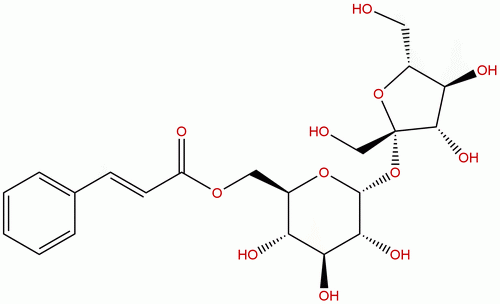
The chemical structure of Sibirioside A belongs to the typical phenylpropanoid glycoside. Its core structure consists of a phenylpropane group (specifically caffeoyl, i.e. 3,4-dihydroxycinnamoyl) connected to a sugar moiety through an ester bond. The sugar moiety is usually β - D-glucose, and the caffeoyl group is attached to the C-4 'or C-6' hydroxyl group of glucose. In addition, in some structurally similar compounds, there may be additional sugar groups (such as xylose) connected to specific positions of glucose through glycosidic bonds, forming disaccharide or trisaccharide structures, thereby increasing the complexity of the structure. The precise structural analysis of stegoside A usually relies on modern analytical techniques such as nuclear magnetic resonance spectroscopy (NMR) and mass spectrometry (MS). Its characteristic chemical shifts and coupling constants can be used to determine the configuration of glycosidic bonds (α or β) and the connection position of acyl groups.
From the perspective of physical and chemical properties, the molecular formula of Zhanlongjian glycoside A is C ₂₁ H ₂₈ O ₁ ₂, with a molecular weight of 472.4430 g/mol. Its molecular structure contains multiple hydroxyl groups (- OH) and ester bonds (- COO -), and the presence of these polar functional groups endows the compound with significant water solubility. According to calculations, its water solubility parameter (LogS) is 9.3742, indicating good solubility in water. This characteristic has positive implications for its absorption, distribution, and subsequent formulation development in living organisms. Meanwhile, its lipid water partition coefficient (LogP) is -0.9518, which is a negative value, further confirming its strong hydrophilicity and difficulty in penetrating the lipid bilayer. The topologically polar surface area (TPSA) is as high as 195.6000 Å ², much higher than the commonly believed passive diffusion threshold (about 140 Å ²), which is closely related to the presence of a large number of polar groups (such as hydroxyl and oxygen atoms) in its molecule. A high TPSA value usually indicates that compounds are difficult to cross cell membranes, especially the blood-brain barrier (BBB), through passive diffusion. In fact, the blood-brain barrier permeability of stegoside A has been evaluated as "low", which to some extent limits its application in the treatment of central nervous system diseases, but may also mean that its peripheral effects are more prominent, reducing central related side effects. In addition, the compound showed negative results in hERG potassium channel inhibition experiments, with an Ames test result of 0.0, indicating a low risk of arrhythmia and genetic toxicity, and preliminary good safety. These physical and chemical parameters together outline the profile of stegoside A as a natural product with high polarity, good water solubility, and high safety, laying the foundation for its subsequent pharmacological research and application development.
Zhanlong Sword Glycoside A was originally derived from the Scrophulariaceae plant Scrophularia(Scrophularia ningpoensis)Obtained through separation. Xuanshen is a traditional Chinese medicine herb with a long history of application, mainly distributed in Zhejiang, Sichuan, Guizhou and other places. In addition to Scrophularia, this compound may also exist in other plants of the same genus or plants containing similar phenylpropanoid glycoside metabolic pathways, such as Rehmannia glutinosa(Rehmannia glutinosa)Cistanche deserticola(Cistanche deserticola)Wait, but black ginseng is its most classic and main source. The content of phenylpropanoid glycosides in plants is influenced by various factors, including variety, origin, harvesting time, growth period, and processing methods. Therefore, in order to obtain high-purity stegoside A, it is crucial to choose suitable plant materials and efficient extraction and separation processes.
The traditional extraction method is usually based on the principle of "similar solubility", utilizing the strong polarity of stegoside A and selecting polar solvents for extraction. The most commonly used solvents are water and ethanol of different concentrations (such as 50% -70% ethanol). Extraction methods include cold soaking, percolation, reflux extraction, and ultrasound assisted extraction. Among them, reflux extraction is widely used due to its high efficiency. After concentration, the extraction solution is usually subjected to liquid-liquid extraction (such as sequential extraction with petroleum ether, ethyl acetate, n-butanol, etc.) for preliminary separation to remove lipid soluble impurities. Due to its high polarity, Jianlin A is mainly enriched in the n-butanol extraction layer or water layer.
Further separation and purification require the use of modern chromatographic techniques. Macroporous adsorption resin (such as D101, HPD100) column chromatography is a commonly used method for separating phenylpropanoid glycosides. By gradient elution with different concentrations of ethanol water system, it can effectively separate stegoside A from impurities such as sugars, other glycosides, and pigments. Subsequently, high-purity monomer compounds can be obtained by refining using silica gel column chromatography, polyamide column chromatography, reverse phase ODS (C18) column chromatography, and preparative HPLC. During the separation process, thin-layer chromatography (TLC) and high-performance liquid chromatography (HPLC) are commonly used for online monitoring to track the elution position of the target compound. In recent years, new separation technologies such as high-speed countercurrent chromatography (HSCCC) have also been applied to the separation of phenylpropanoid glycosides, which have the advantages of high separation efficiency and low sample loss. Finally, the obtained compound was structurally identified by NMR, MS and other spectroscopic methods to confirm its identity as stegoside A. The design of the entire extraction and separation process requires comprehensive consideration of cost, efficiency, purity and environmental friendliness, providing sufficient material support for subsequent pharmacological activity research and potential industrial development.
The pharmacological activities of Cephaloside A mainly focus on its anti-inflammatory, antioxidant and related metabolic diseases, especially diabetes and its complications.
1. Anti inflammatory activity
Inflammation is a defensive response of the body to injury and infection, but excessive or persistent chronic inflammation is the common pathological basis of many diseases (including diabetes, cardiovascular diseases, neurodegenerative diseases). Zhanlongjian glycoside A exhibits significant anti-inflammatory potential. In vitro cell experiments have shown that in a lipopolysaccharide (LPS) - stimulated macrophage model (such as RAW264.7 cells), berberine A can dose dependently inhibit the production of pro-inflammatory factors such as tumor necrosis factor - α (TNF - α), interleukin-6 (IL-6), and nitric oxide (NO). Meanwhile, it can also downregulate the expression of key inflammatory enzymes such as inducible nitric oxide synthase (iNOS, encoded by NOS2 gene) and cyclooxygenase-2 (COX-2, encoded by PTGS2 gene). These effects indicate that berberine A can effectively inhibit the synthesis and release of inflammatory mediators at the transcriptional and translational levels.
2. Antioxidant activity
Oxidative stress is closely related to inflammation and is another important factor leading to cell damage and disease progression. The multiple phenolic hydroxyl groups (derived from the caffeoyl group) in the molecular structure of Zhanlong Sword Glycoside A endow it with excellent free radical scavenging ability. In vitro chemical experiments, such as DPPH and ABTS radical scavenging assays, have confirmed its direct antioxidant activity. In cell models, berberine A can reduce the levels of reactive oxygen species (ROS) induced by hydrogen peroxide (H ₂ O ₂) or other oxidants, and increase the activity of endogenous antioxidant enzymes (such as superoxide dismutase (SOD) and glutathione peroxidase (GSH Px)) in cells, thereby protecting cells from oxidative damage.
3. Role in diabetes research
In view of the central role of inflammation and oxidative stress in the pathogenesis of type 2 diabetes, the anti-inflammatory and antioxidant properties of Cephaloside A make it a candidate molecule for diabetes research. Research shows that Cephaloside A may play an anti diabetes role through the following ways:
- Improving insulin resistance In cell models of insulin resistance (such as HepG2 or 3T3-L1 adipocytes induced by palmitic acid or TNF - α), berberine A can enhance the insulin signaling pathway (such as promoting Akt phosphorylation), improve cell uptake and utilization of glucose, and alleviate insulin resistance.
- Protecting pancreatic beta cells In the model of pancreatic beta cell (such as INS-1 cells) injury induced by high glucose or inflammatory factors (such as IL-1 β, IFN - γ), berberine A can inhibit cell apoptosis, promote insulin secretion, and demonstrate protective effects on beta cell function and survival.
- Inhibition of complications of diabetes The occurrence and development of complications of diabetes, such as diabetes nephropathy, retinopathy and neuropathy, are closely related to hyperglycemia driven inflammation and oxidative stress. By inhibiting the inflammatory pathway and clearing free radicals, Cephaloside A shows potential protective effects on diabetes nephropathy (such as reducing urinary protein and improving renal function indicators) and diabetes peripheral neuropathy (such as improving nerve conduction velocity and alleviating pain) in animal models.
The pharmacological activity of Zhanlongjian glycoside A is not the result of a single target action, but rather achieved through the regulation of multiple signaling pathways and molecular targets. Its core mechanism is closely related to anti-inflammatory and antioxidant effects, mainly involving the following key pathways and targets:
1. NF - κ B signaling pathway
Nuclear factor kappa B (NF - κ B) is the core transcription factor in inflammatory response. In the resting state, NF - κ B (usually a p50/p65 heterodimer encoded by the RELA gene) binds to its inhibitory protein I κ B α and exists in an inactive form in the cytoplasm. When cells are stimulated by LPS, TNF - α, IL-1 β, etc., I κ B kinase (IKK, encoded by genes such as IKBKB) is activated, which phosphorylates I κ B α and leads to its ubiquitination degradation. The released NF - κ B is immediately translocated into the nucleus, initiating the transcription of a series of pro-inflammatory genes such as TNF - α, IL-6, iNOS, COX-2. Research has confirmed that berberine A can inhibit the activity of IKK β, thereby blocking the phosphorylation and degradation of I κ B α, ultimately inhibiting the nuclear translocation and transcriptional activity of NF - κ B. This is one of the core mechanisms by which it exerts anti-inflammatory effects.
2. STAT3 signaling pathway
Signal transducer and activator of transcription factor 3 (STAT3) is another key inflammatory and immune regulatory transcription factor. After binding to cytokines such as IL-6 and their receptors, JAK kinase is activated, which phosphorylates STAT3, causing it to form a dimer and translocate into the nucleus, regulating downstream gene expression. The abnormal activation of STAT3 is closely related to chronic inflammation, autoimmune diseases, and cancer. Zhanlongjian glycoside A has been found to inhibit IL-6-induced STAT3 phosphorylation (Tyr705 site), thereby blocking the STAT3 signaling pathway and reducing the production of inflammatory mediators.
3. Inflammatory bodies and Caspase-1
Inflammatory bodies are intracellular multiprotein complexes that are important components of the innate immune system. Among them, NLRP3 inflammasome is the most representative, and its activation can lead to cleavage activation of Caspase-1 (encoded by the CASP1 gene). Activated Caspase-1 cleaves pro-IL-1 β and pro-IL-18, producing mature IL-1 β and IL-18, triggering a strong inflammatory response; On the other hand, it can induce a pro-inflammatory cell death called "pyroptosis". Research has shown that berberine A can inhibit the assembly and activation of NLRP3 inflammasomes, thereby reducing the activation of Caspase-1 and the secretion of IL-1 β, thus exerting a protective effect in various inflammatory models.
4. Transient receptor potential channel
Transient receptor potential (TRP) channels are a class of non selective cation channels that play important roles in sensory conduction (such as pain and temperature perception) and inflammatory responses. TRPV1 and TRPA1 are two key members that can be activated by various inflammatory mediators and oxidative stress products, leading to calcium influx, pain, and neurogenic inflammation. Cephaloside A was found to inhibit the activity of TRPV1 and TRPA1 channels, which may be the molecular basis of its relieving neuropathic pain and some inflammatory pain in diabetes.
5. Arachidonic acid metabolic pathway
Arachidonic acid metabolism is another important source of inflammatory response. Cyclooxygenase (COX, including COX-1/PTGS1 and COX-2/PTGS2) and lipoxygenase (LOX) are key enzymes in this metabolic pathway. COX-2 is induced to express under inflammatory stimulation, catalyzing the conversion of arachidonic acid into prostaglandins (PGs), such as PGE2, which are important pro-inflammatory substances. Zhanlongjian glycoside A can downregulate the expression of COX-2, thereby reducing the synthesis of prostaglandins and exerting anti-inflammatory effects.
To sum up, Cephaloside A exerts its pharmacological effects through multiple targets and pathways. Its action network involves multiple key nodes such as NF - κ B, STAT3, NLRP3/Caspase-1, TRP channel and arachidonic acid metabolism, which together constitute the molecular basis of its anti-inflammatory, antioxidant and anti diabetes complications.
The evaluation of drug properties is a crucial step in transitioning natural products from laboratory research to clinical applications. The pharmacological characteristics of Zhanlongjianglycoside A have both advantages and challenges.
1. Pharmaceutical advantages
- Good security As mentioned earlier, the results of the Ames test for Zhanlongjian Glycoside A were negative, indicating a low risk of hERG inhibition. Preliminary evidence suggests that it has no genetic toxicity and a low risk of cardiac toxicity. This has laid a solid foundation for its safety evaluation.
- Clear pharmacological activity Its anti-inflammatory and antioxidant activities have been validated in multiple in vitro and in vivo models, and its mechanism of action is relatively clear with clear targets.
- Good water solubility The LogS value is 9.3742, indicating its high solubility in water, which is beneficial for making oral or injectable formulations, as well as facilitating absorption and distribution in the body.
2. Challenges in drug development
- Low oral bioavailability This is a common problem faced by phenylpropanoid glycosides. Due to its large molecular weight (472 Da) and high polarity (negative LogP and high TPSA), it is difficult for it to penetrate the intestinal epithelial cell membrane through passive diffusion. In addition, after oral administration, it may be hydrolyzed by gut microbiota or digestive enzymes (ester and glycosidic bonds), resulting in a low concentration of the prototype drug in the systemic circulation. Therefore, the expected oral bioavailability of stegoside A is low, which limits its development as an oral drug.
- Metabolic stability The ester and glycosidic bonds in molecules are potential metabolic sites. In the liver and intestines, esterases and glycosidases may rapidly hydrolyze it, producing metabolites such as caffeic acid and glucose, thereby losing the activity of the prototype drug. Therefore, improving its metabolic stability is an important direction for drug chemical modification.
- Low blood-brain barrier permeability As mentioned above, its BBB permeability is low, which limits its application in the treatment of central nervous system diseases (such as diabetes encephalopathy, neurodegenerative diseases), but it may not be a disadvantage for the treatment of peripheral diseases (such as diabetes nephropathy, peripheral neuropathy).
3. Pharmacokinetic characteristics
At present, there are relatively limited systematic research reports on the pharmacokinetics of stegoside A in Zhanlong. Based on its physicochemical properties, its pharmacokinetic characteristics can be inferred as follows:
- absorb Poor oral absorption may be mainly through passive diffusion of intestinal epithelial cells or a small amount through carrier mediated transport. The degree of absorption may be influenced by factors such as food and gut microbiota status.
- distribution Due to its good water solubility, it is mainly distributed in extracellular fluid and blood. Due to its high polarity, it is difficult to bind with plasma proteins and may have a smaller distribution volume.
- Metabolism The main metabolic pathways may include: ① hydrolysis by esterases in the intestine and liver, producing caffeic acid and glucosinolates; ② Glycoside bonds are hydrolyzed by glycosidase; ③ The caffeic acid portion may undergo further phase II metabolic reactions such as methylation, sulfation, or glucuronidation.
- excretion The prototype drug and its metabolites may be mainly excreted through the kidneys (urine) and bile (feces).
4. Strategies for improving drug properties
To overcome the above challenges, future research may consider the following strategies:
- Prodrug design Modify the hydroxyl or carboxyl groups in the molecule, such as introducing ester or phosphate groups, to improve lipid solubility and intestinal permeability, which can then be interpreted by enzymes as a prototype drug in vivo.
- nano-formulation Using delivery systems such as liposomes, polymer nanoparticles, and solid lipid nanoparticles to encapsulate berberine A, in order to improve its oral bioavailability, targeting, and stability.
- Structural modification Chemical modification of the phenylpropane group or sugar moiety, such as introducing methyl, ethyl, and other groups, to enhance its metabolic stability or alter its targeting.
- Optimization of administration route For application scenarios that require high bioavailability, non oral administration routes such as injections, transdermal patches, or nasal delivery formulations can be considered.
With its unique anti-inflammatory, antioxidant and potential anti diabetes activities, Cephaloside A shows a promising clinical application prospect in many disease fields.
1. diabetes and its complications
This is the most direct and promising application field of stegoside A in Chinese medicine. By improving insulin resistance, protecting the function of pancreatic islet β cells, and inhibiting inflammation and oxidative stress, Cephaloside A is expected to be developed as a new candidate drug or adjuvant drug for the treatment of type 2 diabetes. What deserves special attention is its potential application in the complications of diabetes, such as nephropathy, neuropathy, and retinopathy. These complications are the main causes of disability and death of diabetes patients, but the existing treatment methods have limited effect. Cephaloside A inhibits inflammation and oxidative stress through multiple targets, which may provide a new therapeutic strategy for delaying or reversing the progress of diabetes complications.
2. Inflammatory diseases
Given its strong anti-inflammatory activity, berberine A also has potential in the treatment of other chronic inflammatory diseases. For example, in rheumatoid arthritis, inflammatory bowel disease (such as Crohn's disease, ulcerative colitis), chronic obstructive pulmonary disease (COPD), atherosclerosis and other diseases, chronic inflammation is the core pathological link. Zhanlongjian glycoside A may exert therapeutic effects in these diseases by inhibiting key pathways such as NF - κ B, STAT3, and NLRP3 inflammasomes.
3. Neuroprotection
Despite its low BBB permeability, it is still possible to achieve its effective concentration in the brain through prodrug design or nano delivery systems. Its antioxidant and anti-inflammatory properties are of great significance in protecting neurons from oxidative stress and neuroinflammatory damage. Therefore, in the treatment of neurodegenerative and cerebrovascular diseases such as Alzheimer's disease, Parkinson's disease, stroke, etc., berberine A or its derivatives are worth further exploration.
4. Future research directions
Despite its broad prospects, the clinical translation of stegoside A still faces many challenges, and future research should focus on the following aspects:
- In depth pharmacokinetic research Conduct systematic pharmacokinetic studies in vivo, clarify its absorption, distribution, metabolism, and excretion (ADME) characteristics, identify its metabolites and activities in vivo, and provide a basis for dosage form design and administration regimens.
- Study on Structure Activity Relationship By synthesizing a series of structural analogues of stegoside A, the relationship between its phenylpropane group, glycosylation type, connection mode and anti-inflammatory and antioxidant activities was systematically studied, providing guidance for structural optimization and lead compound discovery.
- Pharmacodynamic validation in vivo: In a variety of reliable animal disease models (such as db/db mice, STZ induced diabetes rats, collagen induced arthritis rats, etc.), systematically evaluate the efficacy of Cephaloside A, and explore its optimal dosage, route and course of treatment.
- Toxicity evaluation Conduct comprehensive acute, subchronic, and chronic toxicity studies to evaluate the safety of long-term use, including potential effects on important organs such as the liver, kidneys, and heart.
- Formulation development To address the issue of low oral bioavailability, new formulation technologies such as nanoemulsions, liposomes, phospholipid complexes, etc. have been developed to improve their oral absorption and bioavailability.
- Combination therapy research Explore the synergistic effect of Zhanlongjianglycoside A with existing clinical drugs such as metformin, statins, NSAIDs, in order to achieve synergistic and attenuated effects.
Zhanlong Sword Glycoside A, as a phenylpropanoid glycoside active ingredient isolated from traditional Chinese medicine Scrophularia ningpoensis, has occupied a place in the field of natural product pharmacology due to its unique chemical structure and clear pharmacological activity. This article systematically reviews its chemical structure, physicochemical properties, plant origin, extraction methods, pharmacological activity, mechanism of action, medicinal characteristics, and clinical application prospects. Research evidence shows that Cephaloside A exhibits significant anti-inflammatory and antioxidant activities by regulating multiple signaling pathways and molecular targets such as NF - κ B, STAT3, NLRP3/Caspase-1, TRPV1/TRPA1, and shows great therapeutic potential in the fields of diabetes, its complications, and chronic inflammatory diseases.
However, the path from laboratory discovery to clinical application of berberine A conversion is not an easy one. The challenges of low oral bioavailability and poor metabolic stability in drug development are key scientific issues that urgently need to be addressed. In the future, through in-depth structure-activity relationship research, innovative drug delivery system development, and rigorous in vivo pharmacological and toxicological evaluations, it is expected to overcome these obstacles and push this natural product or its optimized derivatives into clinical practice. The study of Zhanlong Jianxin A not only provides modern scientific basis for explaining the traditional pharmacological effects of Xuanshen, but also provides successful examples for exploring innovative drugs for treating metabolic and inflammatory diseases from the treasure trove of traditional Chinese medicine. With the continuous deepening of research, stegoside A is expected to make contributions to human health in the future.
Batch can search by a CAS number,one per line