


Synonym name:
Catalogue No.: BP0702
Cas No.: 19210-12-9
Formula: C24H30O11
Mol Weight: 494.493
Botanical Source: Melittis melissophyllum and Harpagophytum procumbens
Purity: 95%~99%
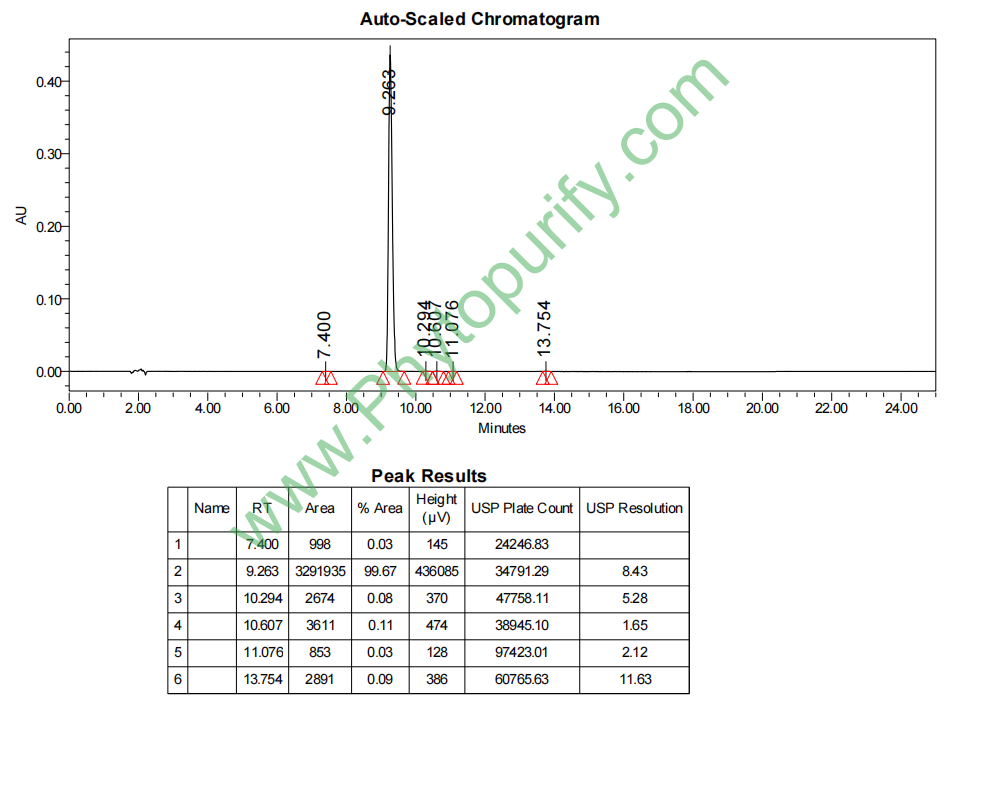
Analysis Method: HPLC-DAD or/and HPLC-ELSD
Identification Method: Mass, NMR
Packing: Brown vial or HDPE plastic bottle
Can be supplied from milligrams to grams.
For Reference Standard and R&D, Not for Human Use Directly.
Inquire for bulk scale.
Description:
Harpagoside has anti-inflammatory effects, it blocks lipopolysaccharide (LPS)-induced bone loss in an inflammatory osteoporosis model, and it does not prevent ovariectomy-mediated bone erosion in a postmenopausal osteoporosis model, it may lead to a partial prevention of obesity-induced atherosclerosis by attenuating inflammatory responses. Harpagoside suppresses lipopolysaccharide-induced iNOS and COX-2 expression through inhibition of NF-κB activation. Harpagoside exerts neuroprotection effect and ameliorates learning and memory deficit appears to be associated, at least in part, with up-regulation of brain-derived neurotrophic factor (BDNF) content as well as activating its downstream signaling pathways, e.g., MAPK/PI3K pathways.
References:
Cytokine, 2015, 76(2):368-74.
Inhibitory effects of harpagoside on TNF-α-induced pro-inflammatory adipokine expression through PPAR-γ activation in 3T3-L1 adipocytes.
Obesity is closely associated with increased production of pro-inflammatory adipokines, including interleukin (IL)-6, plasminogen activator inhibitor (PAI)-1, and adipose-tissue-derived monocyte chemoattractant protein (MCP)-1, which contribute to chronic and low-grade inflammation in adipose tissue. Harpagoside, a major iridoid glycoside present in devil's claw, has been reported to show anti-inflammatory activities by suppression of lipopolysaccharide (LPS)-induced production of inflammatory cytokines in murine macrophages. The present study is aimed to investigate the effects of Harpagoside on both tumor necrosis factor (TNF)-α-induced inflammatory adipokine expression and its underlying signaling pathways in differentiated 3T3-L1 cells.
METHODS AND RESULTS:
Harpagoside significantly inhibited TNF-α-induced mRNA synthesis and protein production of the atherogenic adipokines including IL-6, PAI-1, and MCP-1. Further investigation of the molecular mechanism revealed that pretreatment with Harpagoside activated peroxisome proliferator-activated receptor (PPAR)-γ.
CONCLUSIONS:
These findings suggest that the clinical application of medicinal plants which contain Harpagoside may lead to a partial prevention of obesity-induced atherosclerosis by attenuating inflammatory responses.
J Ethnopharmacol. 2006 Mar 8;104(1-2):149-55.
Harpagoside suppresses lipopolysaccharide-induced iNOS and COX-2 expression through inhibition of NF-kappa B activation.
Preparations of Harpagophytum procumbens, known as devil's claw, are used as an adjunctive therapy for the treatment of pain and osteoarthritis. Pharmacological evaluations have proven the effectiveness of this herbal drug as an anti-inflammatory and analgesic agent.
METHODS AND RESULTS:
The present study has investigated the mechanism of action of Harpagoside, one of the major components of Harpagophytum procumbens, using human HepG2 hepatocarcinoma and RAW 264.7 macrophage cell lines. Harpagoside inhibited lipopolysaccharide-induced mRNA levels and protein expression of cyclooxygenase-2 and inducible nitric oxide in HepG2 cells. These inhibitions appeared to correlate with the suppression of NF-kappaB activation by Harpagoside, as pre-treating cells with Harpagoside blocked the translocation of NF-kappaB into the nuclear compartments and degradation of the inhibitory subunit IkappaB-alpha. Furthermore, Harpagoside dose-dependently inhibited LPS-stimulated NF-kappaB promoter activity in a gene reporter assay in RAW 264.7 cells, indicating that Harpagoside interfered with the activation of gene transcription.
CONCLUSIONS:
These results suggest that the inhibition of the expression of cyclooxygenase-2 and inducible nitric oxide by Harpagoside involves suppression of NF-kappaB activation, thereby inhibiting downstream inflammation and subsequent pain events.
J Nat Prod. 2015 Sep 25;78(9):2167-74.
Harpagoside Inhibits RANKL-Induced Osteoclastogenesis via Syk-Btk-PLCγ2-Ca(2+) Signaling Pathway and Prevents Inflammation-Mediated Bone Loss.
Harpagoside (HAR) is a natural compound isolated from Harpagophytum procumbens (devil's claw) that is reported to have anti-inflammatory effects; however, these effects have not been investigated in the context of bone development.
METHODS AND RESULTS:
The current study describes for the first time that HAR inhibits receptor activator of nuclear factor κB ligand (RANKL)-induced osteoclastogenesis in vitro and suppresses inflammation-induced bone loss in a mouse model.HAR also inhibited the formation of osteoclasts from mouse bone marrow macrophages (BMMs) in a dose-dependent manner as well as the activity of mature osteoclasts, including filamentous actin (F-actin) ring formation and bone matrix breakdown. This involved a HAR-induced decrease in extracellular signal-regulated kinase (ERK) and c-jun N-terminal kinase (JNK) phosphorylation, leading to the inhibition of Syk-Btk-PLCγ2-Ca(2+) in RANKL-dependent early signaling, as well as the activation of c-Fos and nuclear factor of activated T cells cytoplasmic 1 (NFATc1), which resulted in the down-regulation of various target genes. Consistent with these in vitro results, HAR blocked lipopolysaccharide (LPS)-induced bone loss in an inflammatory osteoporosis model. However, HAR did not prevent ovariectomy-mediated bone erosion in a postmenopausal osteoporosis model.
CONCLUSIONS:
These results suggest that HAR is a valuable agent against inflammation-related bone disorders but not osteoporosis induced by hormonal abnormalities.
HPLC of Harpagoside
Storage conditions:Short-term storage at 2~8℃, long-term storage at -20 ~ -80℃
Harpagoside (CAS number: 19210-12-9) is an important natural product, mainly isolated from the plant Harpagophytum procumbens (commonly known as devil's claws). This compound, as a monoglycosidic diterpenoid lactone, has attracted widespread attention due to its significant anti-inflammatory, anticancer, and neuroprotective activities. In recent years, with the advancement of natural product pharmacology and molecular biology techniques, the biological activity and mechanism of action of harpagoside have been extensively studied, demonstrating its potential application value in the prevention and treatment of various diseases. This article aims to systematically review the chemical structure and physicochemical properties, plant sources and extraction methods, pharmacological activity and mechanism of action, pharmacological evaluation and pharmacokinetic characteristics of harpagoside, and explore its clinical application prospects and future research directions.
Habaroside is a glycoside compound containing a diterpenoid lactone skeleton, with a molecular formula of C22H28O11 and a molecular weight of 494.4930. Its structural characteristic is a cyclic diterpenoid lactone connected to a glucose residue through a glycosidic bond, with high polarity. In terms of physical and chemical properties, the LogP value of harpagoside is 0.0140, indicating its strong hydrophilicity. The TPSA (topological polar surface area) is 175.3700, indicating its high molecular surface polarity and water solubility of 2.4353, indicating that the compound has good solubility in water. The low permeability of the blood-brain barrier suggests limited direct penetration ability of the central nervous system. The hERG channel inhibition experiment showed a negative result, indicating a low risk of cardiac toxicity associated with harpagoside. The Ames mutagenicity test result is 0.0, indicating a low risk of genetic toxicity.
Harpagophytum procumbens, commonly known as devil's claws, is a plant endemic to southern Africa. This plant is named after its unique hooked fruit and has traditionally been used to treat symptoms such as rheumatoid arthritis, indigestion, and pain. Habaroside, as one of the main active ingredients of this plant, has a higher content in the roots.
The extraction method usually uses solvent extraction combined with chromatographic separation technology. Common extraction solvents include ethanol, water, and their mixed solvent systems. The extraction steps generally include crushing plant roots, using reflux or ultrasound assisted extraction, followed by purification through liquid-liquid distribution and column chromatography (such as silica gel, C18 reverse phase column), and finally qualitative and quantitative analysis through high performance liquid chromatography (HPLC). In recent years, green and efficient technologies such as supercritical CO2 extraction and microwave-assisted extraction have also been applied to the extraction of harpagoside, improving extraction efficiency and purity.
The earliest pharmacological effect of harpagoside was its significant anti-inflammatory activity. In vitro experiments have shown that harpagoside can effectively inhibit the activity of cyclooxygenases COX-1 and COX-2, reduce the production of prostaglandins, and thus alleviate inflammatory reactions. At the same time, harpagoside significantly inhibits lipopolysaccharide (LPS) - induced nitric oxide (NO) production and inducible nitric oxide synthase (iNOS) protein expression in macrophages and liver cancer cells HepG2, reducing the release of inflammatory mediators. In animal models, harpagoside has shown good anti-inflammatory and analgesic effects, especially in relieving pain related to rheumatoid arthritis and chronic inflammation.
Harpagoside has inhibitory effects on many cancer cell lines, especially in liver cancer, colon cancer and breast cancer cells. Its anti-cancer mechanism involves regulating cell cycle related proteins, activating apoptotic signaling pathways, and inhibiting the tumor associated inflammatory microenvironment. Habaroside can downregulate the expression of oncogenes, inhibit the NF - κ B signaling pathway, reduce the release of pro-inflammatory cytokines, and thus inhibit tumor growth and metastasis.
The research on harpagoside in the field of neuroprotection is increasing day by day. It can effectively resist the neurotoxicity induced by β - amyloid peptide (A β) and alleviate neurodegeneration. In vitro neural cell models have shown that harpagoside inhibits neuronal apoptosis by regulating the anti apoptotic protein BCL2 and reducing the expression of activated caspase 3 (CASP3). In addition, harpagoside can activate the nuclear factor erythroid 2-related factor 2 (NRF2) signaling pathway, enhance cellular antioxidant capacity, and alleviate oxidative stress damage. Its regulatory effect on acetylcholinesterase (ACHE) also suggests its potential application value in cognitive dysfunction.
The multi-target mechanism of action of harpagoside is the basis of its multiple pharmacological activities. The main targets and their related signaling pathways include:
The synergistic regulation of these targets endows harpagoside with a wide range of biological effects, particularly therapeutic potential in inflammation, tumors, and neurodegenerative diseases.
The pharmacological parameters of harpagoside show that it has good safety and low risk of toxic side effects. Its molecular weight is moderate, polarity is high, and water solubility is good, but its blood-brain barrier penetration is low, which limits its ability to directly act on the central nervous system. HERG channel inhibition is negative and Ames test shows no mutagenicity, indicating a low risk of cardiac toxicity and genetic toxicity, which meets the safety medication standards.
In terms of pharmacokinetics, gabagoside has good oral efficacy and stable absorption in vivo. However, due to its strong polarity and poor blood-brain barrier permeability, it may be necessary to improve the bioavailability of the central nervous system through drug carriers or structural modifications. The metabolic pathways mainly involve the liver enzyme system, and the activity and safety of metabolites still need further research. There is still a lack of systematic research on the distribution, half-life, and excretion characteristics in the body. In the future, it is necessary to strengthen relevant pharmacokinetic studies to guide clinical applications.
Based on the multiple pharmacological activities of harpagoside, its clinical application prospects are broad. Firstly, as a natural anti-inflammatory ingredient, harpagoside can be used as an adjuvant therapy for rheumatoid arthritis, chronic inflammation, and related pain, with good safety and tolerability. Secondly, its anti-cancer potential provides new ideas for adjuvant therapy of tumors, especially in the treatment of solid tumors such as liver cancer, which has potential value. In addition, the neuroprotective effect of harpagoside provides a new therapeutic target for neurodegenerative diseases such as Alzheimer's disease, Parkinson's disease, etc. Although its blood-brain barrier permeability is low, it is expected to enhance the efficacy of the central nervous system through strategies such as nanocarriers and structural optimization.
Future research needs to focus on the pharmacokinetic optimization, formulation development, and clinical trial validation of harpagoside, especially its application in neurodegenerative diseases. Meanwhile, in-depth analysis of its multi-target synergistic mechanism will help promote the translation of harpagoside into clinical drugs.
Habaroside, as a natural diterpenoid glycoside derived from Harpagophytum procumbens, exhibits great medicinal potential due to its significant anti-inflammatory, anticancer, and neuroprotective activities. Its multi-target and multi pathway mechanism of action provides a valuable example for the pharmacological research of natural products. Although there are still certain challenges in pharmacokinetics and clinical applications, with the development of modern drug research and development technology, harpagoside is expected to become an important candidate drug for the treatment of inflammation, tumors, and neurodegenerative diseases. In the future, we should strengthen its structural optimization, mechanism research, and clinical validation to promote its clinical translation and benefit patients.
