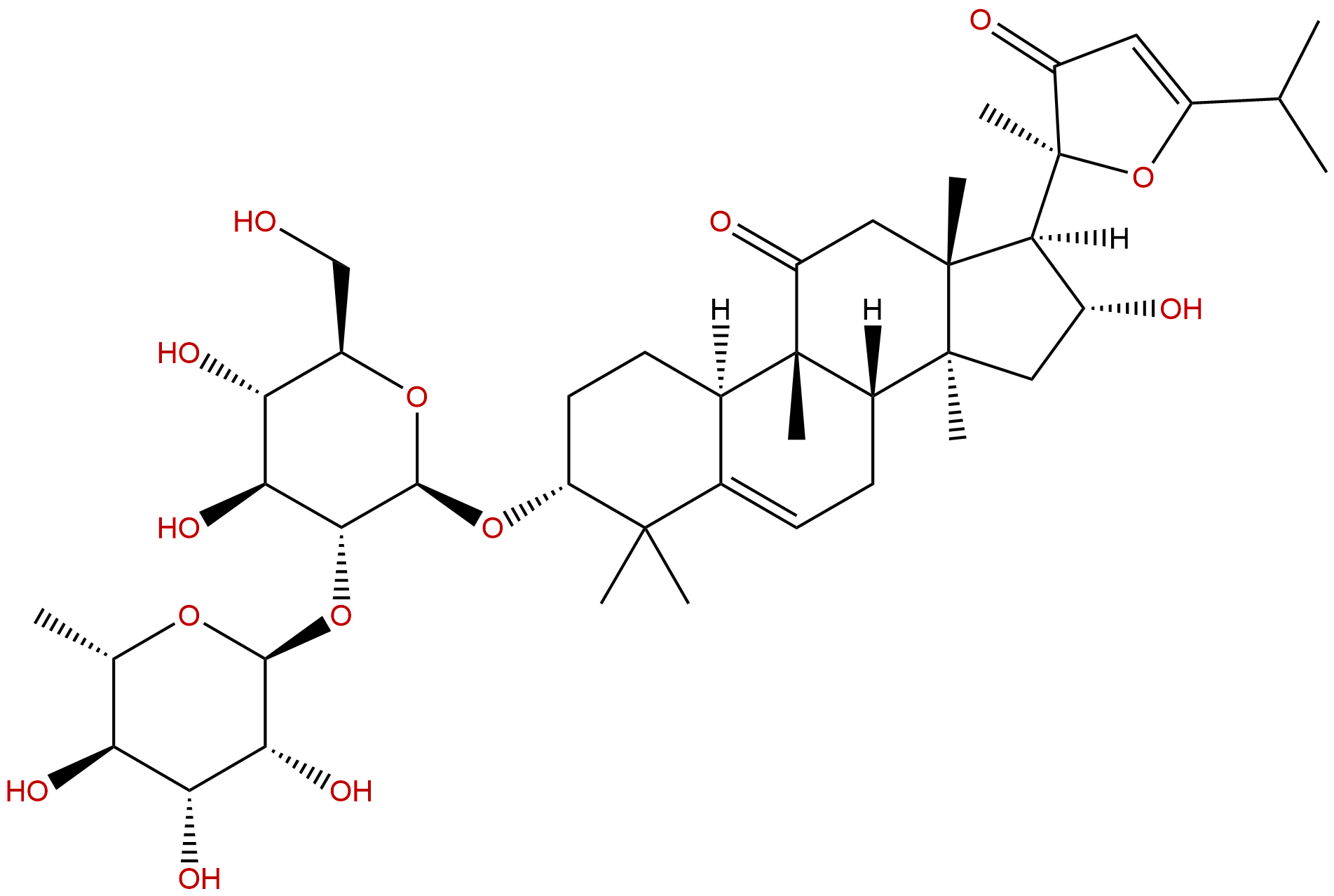


Product name: Picfeltarraenin IB
Synonym name:
Catalogue No.: BP3314
Cas No.: 97230-46-1
Formula: C42H64O14
Mol Weight: 792.96
Botanical Source:
Physical Description: Powder
Type of Compound: Triterpenoids
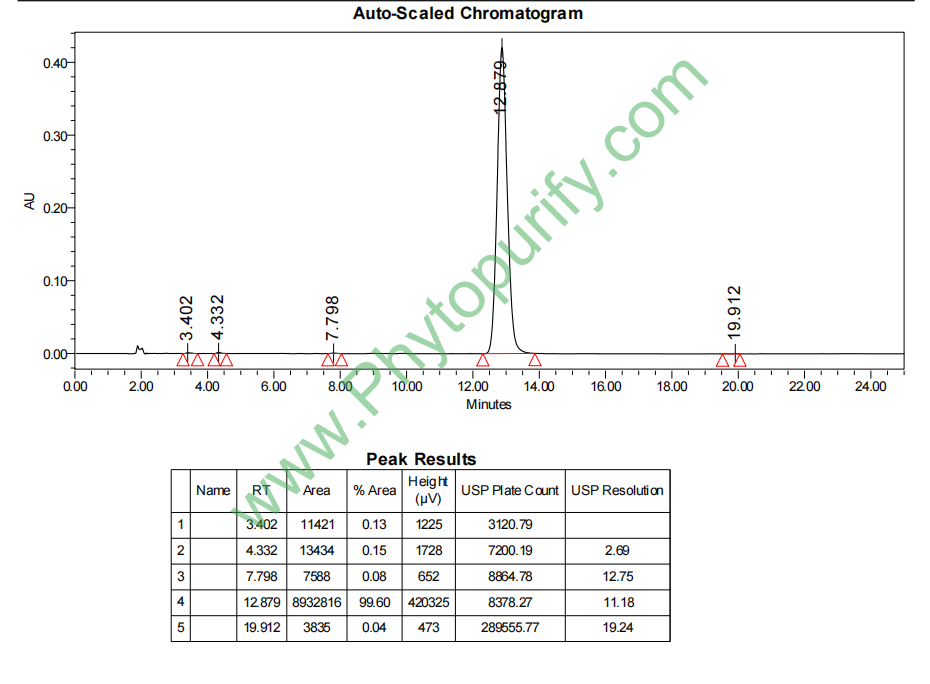
Purity: 95%~99%
Analysis Method: HPLC-DAD or/and HPLC-ELSD
Identification Method: Mass, NMR
Packing: Brown vial or HDPE plastic bottle
The product could be supplied from milligrams to grams. Inquire for bulk scale.
We provide solution to improve the water-solubility of compounds, thereby facilitating the variety of activity tests and clinic uses.
For Reference Standard and R&D, Not for Human Use Directly.
Description:
Picfeltarraenin IA and Picfeltarraenin IB are Potential PI3K and EGFR Inhibitors, they also show stronger AChE inhibition than the known AChE inhibitor Tacrine.
References:
J Nat Prod. 1998 Jun 26;61(6):757-61.
Complement-inhibiting cucurbitacin glycosides from Picria fel-terrae.
Four cucurbitacin glycosides were isolated from Picriafel-terrae and identified by MS and NMR spectroscopy as picfeltarraenin IA (1), Picfeltarraenin IB (2), picfeltarraenin IV (4), and a new compound picfeltarraenin VI (3) (picfeltarraegenin I 3-O-beta-D-xylopyranoside).
METHODS AND RESULTS:
All four compounds acted as inhibitors on both the classical and alternative pathways of the complement system, with compound 3 exhibiting the highest inhibitory activity (IC50 29 +/- 2 microM and 21 +/- 1 microM, respectively). Compounds 1-4 showed no antiviral, antibacterial, or antifungal activities.
CONCLUSIONS:
Picfeltarraenin IA and Picfeltarraenin IB were tested in an in vitro human tumor cell line panel, but displayed no cytotoxic activity.
Pharmacogn Mag. 2013 Oct-Dec; 9(Suppl 1): S25–S31.
Bioassay- and liquid chromatography/mass spectrometry-guided acetylcholinesterase inhibitors from Picriafel-terrae
Picria fel-terrae is a traditional Chinese medicine.
METHODS AND RESULTS:
A new approach to the search for acetylcholinesterase (AChE) inhibitors from Picria fel-terrae is presented. Bioassay- and LC-MS-guided fractionation of the ethyl acetate extract was from traditional Chinese medicine P.fel-terrae. Following primary extraction, the ethyl acetate extracts fraction of P.fel-terrae showed strong AChE inhibitory activities. So the sample was separated using highperformance liquid chromatography (HPLC). The effluent was split towards two identical 96-well fraction collectors, and the presence of the biologically interesting portion and chromatographic fractions could be readily detected by analyzing selected ion chromatograms through an electrophoresis-electrospray ionization mass spectrometry (ESIMS) system for accurate mass measurement. One 96-well plate was used for a bioassay (AChE-inhibitory assay) and detected the bioactivity and position of the relevant peak in the chromatogram. The positive well in the second 96-well plate was used for identification by LC-(+) ESIMS.
CONCLUSIONS:
As abovementioned, the AChE inhibitory constituents from P.fel-terrae by LC-bioassay-ESIMS were rapid identified. Liquid chromatography/ mass spectrometry (LC-MS) screening detected the presence of six active compounds, identified as picfeltarraenin IA (1), Picfeltarraenin IB (2), picfeltarraenin IV (3), picfeltarraenin X (4), picfeltarraenin XI (5), and one unknown compound. The structures were further determined by 13C NMR. The six compounds expressed stronger AChE inhibition than the known AChE inhibitorTacrine. Above all, the value of this LC-bioassay-ESIMS methodology is highlighted by the finding and structure elucidation of the active constituents from many other structural families of natural products.
HPLC of Picfeltarraenin IB
Storage conditions:Short-term storage at 2~8℃, long-term storage at -20 ~ -80℃
221.9000
2.5376
2.5372
.0542
.5882
.7142
Low
71.2257
6.2176
No
No
No
No
No
No
0.0
Yes
No
No
Yes
Picfeltarraenin IB (CAS number: 97230-46-1) is a natural triterpenoid compound with significant biological activity. Its molecular formula is C42H64O14, with a molecular weight of approximately 792.96 g/mol. This compound was originally derived from the Scrophulariaceae plant Scrophularia angustifolia(Picriafel-terrae It was isolated from Lour., but subsequent studies have also confirmed its presence in the traditional Chinese medicine Scrophularia(Scrophularia ningpoensis)In the middle. As one of the hot molecules in natural product chemistry and pharmacology research, bitter ginseng glycoside IB has attracted much attention due to its diverse biological activities.
Existing research indicates that bitter ginseng glycoside IB is an effective Acetylcholinesterase inhibitors Its inhibitory activity is even stronger than the classical drug Tacrine. This suggests its potential value in the research of neurodegenerative diseases such as Alzheimer's disease. However, what is even more remarkable is the enormous potential it has demonstrated in the field of cancer research. Research suggests that bitter ginseng glycoside IB and its analogues (such as bitter ginseng glycoside IA) are potential PI3K and EGFR inhibitors These two kinases are key signaling molecules in cells, playing a central role in the occurrence and development of various cancers. Their abnormal activation is closely related to the proliferation, survival, invasion, and metastasis of tumor cells. Therefore, targeting PI3K and EGFR has become an important strategy for modern tumor targeted therapy.
In addition, database information further revealed that bitter ginseng glycoside IB may exert anti-tumor effects by regulating a series of key tumor related targets, including TP53, CASP3, MYC, BAX, and CDKN1A. These targets involve core biological processes such as cell apoptosis, cell cycle regulation, oncogene and tumor suppressor gene networks, suggesting that bitter ginseng glycoside IB may intervene in tumor progression through multiple targets and pathways. This article will provide a systematic and professional scientific interpretation of this promising natural compound from the aspects of its chemical structure, plant origin, pharmacological mechanism, medicinal evaluation, and research prospects.
The chemical structure of bitter ginseng glycoside IB is the material basis for its biological activity. From the molecular formula C42H64O14, it can be seen that it is a large molecular compound containing 42 carbon atoms, 64 hydrogen atoms, and 14 oxygen atoms. The SMILES string provides a detailed description of the connection order and stereoconfiguration of atomsCC(C)C1=CC(=O)[C@](C)([C@H]2[C@H](O)C[C@@]3(C)[C@@H]4CC=C5[C@@H](CC[C@@H](O[C@@H]6O[C@H](CO)[C@@H](O)[C@H](O)[C@H]6O[C@@H]6O[C@@H](C)[C@H](O)[C@@H](O)[C@H]6O)C5(C)C)[C@]4(C)C(=O)C[C@]23C)O1The frequent occurrence of "@" and "@ @" symbols in this string indicates the presence of multiple chiral centers in the molecule, with a specific three-dimensional configuration. This complex stereochemical feature is crucial for its precise identification and binding with biological targets.
From its structure, it can be inferred that bitter ginseng glycoside IB is composed of a triterpenoid aglycone(possibly derivatives of oleanane or ursolic acid) and one or more Glycosyl Connected by glycosidic bonds. The SMILES string contains multiple sugar ring structures (such as O [C @ @ H] 6O)C@H...), indicating that it is a triterpenoid saponin with a high degree of glycosylation. The introduction of sugar groups usually significantly improves the water solubility of the parent aglycone and may affect its biological activity and targeting.
The key pharmacological parameters provide us with a quantitative perspective on their physicochemical properties:
- Molecular weight (MW):792.96 g/mol, Significantly exceeding the recommended upper limit of 500 g/mol in Lipinski's five rules, indicating that oral absorption may face challenges.
- Lipid water partition coefficient (LogP/LogD)Approximately 2.54. This value is within the ideal range (LogP is generally considered to be between 1-3), indicating that the compound has a certain degree of lipophilicity but is not completely hydrophobic, which is beneficial for crossing the cell membrane.
- Topological Polarity Surface Area (TPSA)Up to 221.90 Å ². The higher the TPSA value, the stronger the polarity of the molecule, which may indicate better water solubility. However, the ability to penetrate biological membranes (such as intestinal epithelial cell membranes and blood-brain barriers) through passive diffusion will decrease. The high TPSA value is mainly attributed to the large number of hydroxyl and glycosidic bond oxygen atoms in the molecule.
- Water solubility 0.0542 (usually measured in mg/mL or mol/L, where the value is lower), despite having multiple hydrophilic groups, the large molecular skeleton may limit its full dissolution in water.
- Permeability The permeability of Caco-2 cells is 0.7142, while Peff is 0.5882, both at relatively low levels, confirming the difficulty of transmembrane permeability caused by their large molecules and high polarity.
- Blood-brain barrier (BBB) penetrability Evaluated as' low '. This is consistent with high TPSA and molecular weight, which means it is less likely to enter the central nervous system. This is a disadvantageous factor for its brain action as an AChE inhibitor, but it may also reduce the potential risk of side effects in the central nervous system.
- Plasma protein binding rate (PPB)71.23%, belonging to the moderate to high level. High protein binding can affect the concentration of free drugs, thereby affecting their efficacy and distribution.
- Toxicity warning The results of Ames test (0.0) and chromosome aberration test (none) are negative, indicating that it is not mutagenic. HERG inhibition is' no ', reducing the risk of causing QT interval prolongation in the heart. However, it should be noted that in its liver toxicity indicators, serum alkaline phosphatase (Ser_LK) and alanine aminotransferase (Ser_LT) show "yes", indicating a potential risk of liver injury that needs to be closely monitored in subsequent development.
The bitter ginseng glycoside IB mainly comes from plants in the Scrophulariaceae family. The database clearly indicates that its source plant is Figwort(Ningpo Figwort), scientific name Scrophularia ningpoensis Xuanshen is an important member of traditional Chinese medicine in China. It is known as "Zhejiang Xuanshen" because it is a genuine medicinal herb produced in Ningbo, Zhejiang (formerly known as "Mingzhou"). Its dried roots are used as medicine and were first recorded in the "Shennong Bencao Jing". It is classified as a medium grade product with a bitter, salty, and slightly cold taste, and belongs to the lung, stomach, and kidney meridians.
In traditional Chinese medicine theory, black ginseng has Clearing heat and cooling blood, nourishing yin and reducing fire, detoxifying and dispersing nodules The efficacy. In clinical practice, it is commonly used to treat diseases such as warm pathogens entering the body, sunken pericardium, warm and toxic spots, fever causing injury to the yin, tongue redness and thirst, constipation caused by fluid damage, bone steaming and cough, red eyes, sore throat, diphtheria, scrofula, and abscess. Among them, the efficacy of "detoxification and detoxification" is similar to the anti-inflammatory and anti-tumor effects in modern medicine. Traditionally used to treat "scrofula" (similar to lymph node tuberculosis or tumors) and "carbuncles and sores" (infectious inflammation), it suggests that its medicinal herbs may contain anti-inflammatory and anti proliferative active ingredients.
Modern plant chemistry research has isolated and identified various active ingredients from Scrophularia ningpoensis, including cyclohexene ether terpenoid glycosides (such as habagoside and geniposide), phenylethanolic glycosides (such as verbascoside), and triterpenoid saponins. Ku Xuan Shen Glycoside IB, as one of the triterpenoid saponins, may be one of the material bases for the traditional medicinal effects of Xuan Shen, especially its "dispersing" effect. From the same plant, bitter black ginseng(Picriafel-terrae)The compound was isolated from the middle, which also confirms the chemical similarity of plants in the Scrophulariaceae family. The in-depth study of bitter ginseng glycoside IB is a typical case of interpreting and excavating the value of traditional Chinese medicine treasure trove in modern scientific language.
The pharmacological activity research of bitter ginseng glycoside IB mainly focuses on antitumor and neuroprotection The mechanism of action involves multi-target regulation in two fields.
1. Neuroprotective potential as an AChE inhibitor:
The description clearly states that bitter ginseng glycoside IB is a Acetylcholinesterase inhibitors And its inhibitory activity is stronger than that of tacrine. AChE is a key enzyme that degrades the neurotransmitter acetylcholine. In the brains of Alzheimer's disease patients, excessive AChE activity leads to a decrease in acetylcholine levels, which is closely related to cognitive dysfunction. Therefore, AChE inhibitors are the first-line drugs for treating this disease. The activity of bitter ginseng glycoside IB provides preliminary evidence for its application in the field of neurodegenerative diseases. However, as mentioned earlier, its poor BBB penetration limits its direct application as an AChE inhibitor in the brain, which may require structural modifications or novel drug delivery systems to improve brain targeting.
2. As a potential PI3K/EGFR inhibitor, its anti-tumor mechanism:
This is currently the most concerned pharmacological direction of bitter ginseng glycoside IB. PI3K/Akt/mTOR and EGFR/RAS/MAPK are two extremely important intracellular signaling pathways for promoting survival and proliferation, which frequently undergo abnormal activation in various cancers. Ku Xuan Shen Glycoside IB has been identified as a potential dual inhibitor of PI3K and EGFR, indicating that it can simultaneously intervene in these two key pathways, thereby more effectively inhibiting the growth and survival of tumor cells, and may overcome drug resistance caused by single pathway inhibition.
3. Anti tumor network regulation mechanism based on target information:
The five target information provided by the database (TP53, CASP3, MYC, BAX, CDKN1A) outline a more detailed molecular network of the possible effects of bitter ginseng glycoside IB. These targets do not exist in isolation, but form a core network that regulates cell fate (proliferation, apoptosis, and cell cycle arrest):
- TP53 The famous tumor suppressor gene is known as the "guardian of the genome". It can respond to stress signals such as DNA damage, activate downstream target genes, induce cell cycle arrest (via p21/CDKN1A, etc.) or cell apoptosis (via BAX, PUMA, etc.). TP53 function is inactivated in many tumors. If bitter ginseng glycoside IB can stabilize or activate the p53 pathway, it will strongly inhibit tumors.
- CASP3 Cysteine protease-3 is a key protease in the execution stage of cell apoptosis. Once activated by upstream signals such as the mitochondrial apoptosis pathway, CASP3 will cleave multiple substrates, leading to irreversible cell death. Promoting CASP3 activation is one of the endpoints of many anti-tumor drugs.
- MYC A proto oncogene that encodes the transcription factor c-Myc. It drives cell proliferation, metabolic reprogramming, and immortalization. C-Myc is overexpressed in many cancers, and its inhibition can lead to tumor cell growth arrest and apoptosis.
- BAX Pro apoptotic proteins in the Bcl-2 family. Under the stimulation of apoptotic signals, BAX forms pores on the outer membrane of mitochondria, leading to the release of cytochrome C, which in turn activates CASP9 and CASP3, triggering apoptosis. BAX is an important pro apoptotic effector molecule downstream of p53.
- CDKN1A P21, also known as cyclin dependent kinase inhibitor. It is induced by p53 and can widely inhibit the activity of various Cyclin CDK complexes, thereby blocking cells in the G1 phase and providing time for DNA repair. If repair fails, it leads to apoptosis.
Mechanism of action integration speculation:
Ku Xuan Shen Glycoside IB may release its activation of downstream pro survival pathways and inhibition of apoptosis signals by inhibiting PI3K/Akt and EGFR signaling. Meanwhile, it may directly or indirectly affect the aforementioned target network. For example:
-Inhibiting the PI3K/Akt pathway can weaken Akt's inhibitory regulation of p53 (such as MDM2 phosphorylation), thereby Stabilize and activate p53。
-Activated p53 can be transcriptionally upregulated CDKN1A (p21)Leading to cell cycle arrest; Simultaneously increase BAX Proteins that promote apoptosis.
-Activation of BAX can induce mitochondrial pathway apoptosis, ultimately leading to activation CASP3 Execute the apoptosis program.
-In addition, inhibition of EGFR/MAPK or PI3K/Akt pathways may also indirectly inhibit MYC The transcription or stability is regulated to suppress the oncogenic program driven by it.
Therefore, bitter ginseng glycoside IB may play a role as a "network regulator" by acting on upstream kinases (PI3K/EGFR), triggering a series of cascade reactions, ultimately synergistically regulating cell cycle checkpoint (p21) and apoptosis executor (BAX/CASP3), while inhibiting oncogene (MYC) function, and relying on the participation of core tumor suppressor gene (TP53) to achieve a multi pronged inhibitory effect on tumor cells. This multi-target mode of action may give it unique advantages in combating complex and heterogeneous tumors.
Based on the provided pharmacological parameters, we can conduct a preliminary evaluation of the potential of bitter ginseng glycoside IB as a candidate drug, combined with the famous Lipinski's Five Rules(Rule of Five, Ro5) for analysis.
Lipinski's Five Rules Compliance Analysis:
This rule is commonly used to predict the oral bioavailability of small molecule compounds, with the following criteria: ① Molecular weight MW<500; ② Lipid water partition coefficient LogP<5; ③ The number of hydrogen bond donors HBD is less than 5; ④ The number of hydrogen bond acceptors HBA is less than 10. The situation of bitter ginseng glycoside IB is as follows:
- MW (792.96) > 500 Serious exceedance.
- LogP (2.54) < 5: Compliant.
- HBD From the structural formula, it can be inferred that there are multiple hydroxyl groups (- OH) present, and the number is likely to exceed 5.
- HBA The molecule contains 14 oxygen atoms (all of which can serve as hydrogen bond acceptors), along with possible nitrogen atoms (if any), far exceeding 10.
Therefore, bitter ginseng glycoside IB is significantly higher Violating three of Lipinski's rules(MW、HBD、HBA)。 This strongly indicates its Oral bioavailability may be low Ro5 is mainly suitable for small molecules absorbed through passive diffusion, while large molecule triterpenoid saponins such as bitter ginseng glycoside IB may involve more complex mechanisms of absorption, such as active transport or endocytosis, but the efficiency is usually not high.
Specific parameter interpretation and evaluation:
1. Absorption and penetration High MW (792.96), high TPSA (221.9), and lower Caco-2/Peff values all point to it Poor intestinal absorption and low membrane permeability This is the biggest obstacle to its development as an oral formulation.
2. distribution BBB penetration is' low ', as mentioned earlier, which limits the application of the central nervous system. 71.23% of PPB means that only about 29% of drugs exist in free form, which may affect their efficacy.
3. Metabolism and toxicity:
-Ames and chromosomal aberration negativity are important safety advantages.
-HERG inhibition negativity reduces the risk of cardiac toxicity.
-However,Positive for liver toxicity markers (Ser_LK, Ser_LT)It is a signal that requires high vigilance. This suggests that bitter ginseng glycoside IB or its metabolites may cause damage to liver cells. In drug development, this is a key issue that must be thoroughly studied and avoided.
4. solubility The water solubility value is relatively low, and it may be necessary to increase its solubility and dissolution rate through salt formation, the use of solubilizers, or special dosage forms (such as nanocrystals, liposomes) during formulation.
Comprehensive evaluation conclusion:
Ku Xuan Shen Glycoside IB is a compound with Significant multi-target anti-tumor activity The lead compound, but its Pharmaceutical properties face severe challenges Especially with difficulties in oral absorption, excessive molecular weight, and potential liver toxicity. It is unlikely to be developed directly as a traditional small molecule oral drug. Future research directions may include:
- structural optimization By using medicinal chemical methods to modify the structure, simplify the structure, reduce molecular weight, optimize LogP and TPSA while retaining or enhancing activity, in order to improve its drug like properties. For example, exploring glycoside derivatives or simplifying sugar chains.
- Develop a new drug delivery system Using nanotechnology (such as nanoparticles, micelles, liposomes), prodrug strategies, or targeted delivery systems to improve solubility, stability, and bioavailability, and potentially achieve tumor targeting and reduce systemic toxicity.
- Explore non oral administration routes If administered by injection (intravenous, local), bypassing the absorption barrier, but its systemic toxicity, especially liver toxicity, needs to be fully evaluated.
At present, research on bitter ginseng glycoside IB is still in progress Preclinical stage Mainly focused on activity screening, preliminary mechanism exploration, and separation preparation. Its discovery as a dual inhibitor of PI3K/EGFR and its potential mechanism of exerting anti-tumor effects through a multi-target (p53, Caspase-3, Myc, Bax, p21) network make it a highlight molecule in natural product anti-tumor research. Its strong AChE inhibitory activity also provides new candidate structures for the field of neuroprotection.
Research Status:
1. Activity verification Its inhibitory activity against AChE has been confirmed at the cellular and/or molecular level, as well as its proliferation inhibitory activity against certain tumor cell lines.
2. Preliminary exploration of mechanism Based on bioinformatics analysis and preliminary experiments, a hypothesis has been proposed that it acts on PI3K/EGFR and downstream apoptosis and cycle related targets. However, further and direct target validation (such as kinase inhibition IC50 determination and eutectic structure analysis) and detailed signaling pathway research are still needed.
3. Source and Preparation The plant source has been identified, but the natural content is usually low. The total synthetic route is highly challenging due to its complex structure, and currently may mainly rely on plant extraction and isolation, which limits large-scale pharmacological research and development. It is necessary to develop efficient extraction and purification processes or seek alternative sources such as microbial synthesis and plant tissue culture.
Application prospects and future directions:
1. As an anti-tumor lead compound This is the most promising direction. Future research needs to:
- Deepen mechanism research Using techniques such as gene knockout/knockdown, reporter genes, immunoprecipitation, proteomics, etc., to identify its direct target (is it indeed PI3K/EGFR?)? )And fully elucidate the signaling pathway network that induces apoptosis and cycle arrest.
- Study on Structure Activity Relationship Systematically study the effects of its glycoside structure, sugar group type, quantity, and connection mode on activity and drug formation, and guide rational structural optimization.
- In vivo efficacy evaluation Evaluate the anti-tumor efficacy of PDX alone or in combination with existing chemotherapy/targeted drugs in various human tumor xenograft (PDX) or allogeneic transplantation mouse models.
- Security system evaluation Focus on evaluating its potential hepatotoxicity and exploring the mechanism of toxicity, providing a basis for structural modification to avoid toxic groups.
2. As a neuroprotective agent Although BBB penetration is poor, AChE inhibitors with peripheral effects can be developed through structural modification or used to treat peripheral neuropathy. If improved brain delivery is achieved through formulation methods, it may also be used for central nervous system diseases.
3. Develop new formulations Given its inherent pharmaceutical defects, combining it with advanced drug delivery technologies is an inevitable trend. For example, preparing tumor targeted nano formulations of bitter ginseng glycoside IB may simultaneously address its solubility, stability, targeting, and toxicity issues.
4. Explore other activities Natural products often have multiple effects. In addition to anti-tumor and AChE inhibition, it is worth exploring its activities in anti-inflammatory and immune regulation, and expanding its application scope.
Summary
Ku Xuan Shen Glycoside IB is a triterpenoid saponin with unique chemical structure and diverse biological activities discovered from traditional Chinese medicine Xuan Shen. It is like a "multi toothed key" that can intervene in multiple key signaling locks (PI3K/EGFR, p53, Myc, etc.) in tumor cells, demonstrating promising multi-target anti-tumor prospects. However, its enormous molecular weight and complex structure also pose significant bottlenecks in terms of drug efficacy. Future research needs to find a balance between "efficacy" and "medicine": on the one hand, through basic research, we need to deeply reveal the microscopic mechanisms of its miraculous effects; On the other hand, through medicinal chemistry and pharmaceutical methods, it is "modified" and "packaged" to overcome its shortcomings, ultimately transforming it from a potential "natural active ingredient" into a truly clinically applicable "candidate drug". This path is full of challenges, but it is also the charm and value of modern research on natural products. The continuous exploration of bitter black ginseng glycoside IB may not only provide new weapons for tumor treatment, but also further enrich our understanding of the scientific connotation of black ginseng, a traditional Chinese medicine.
