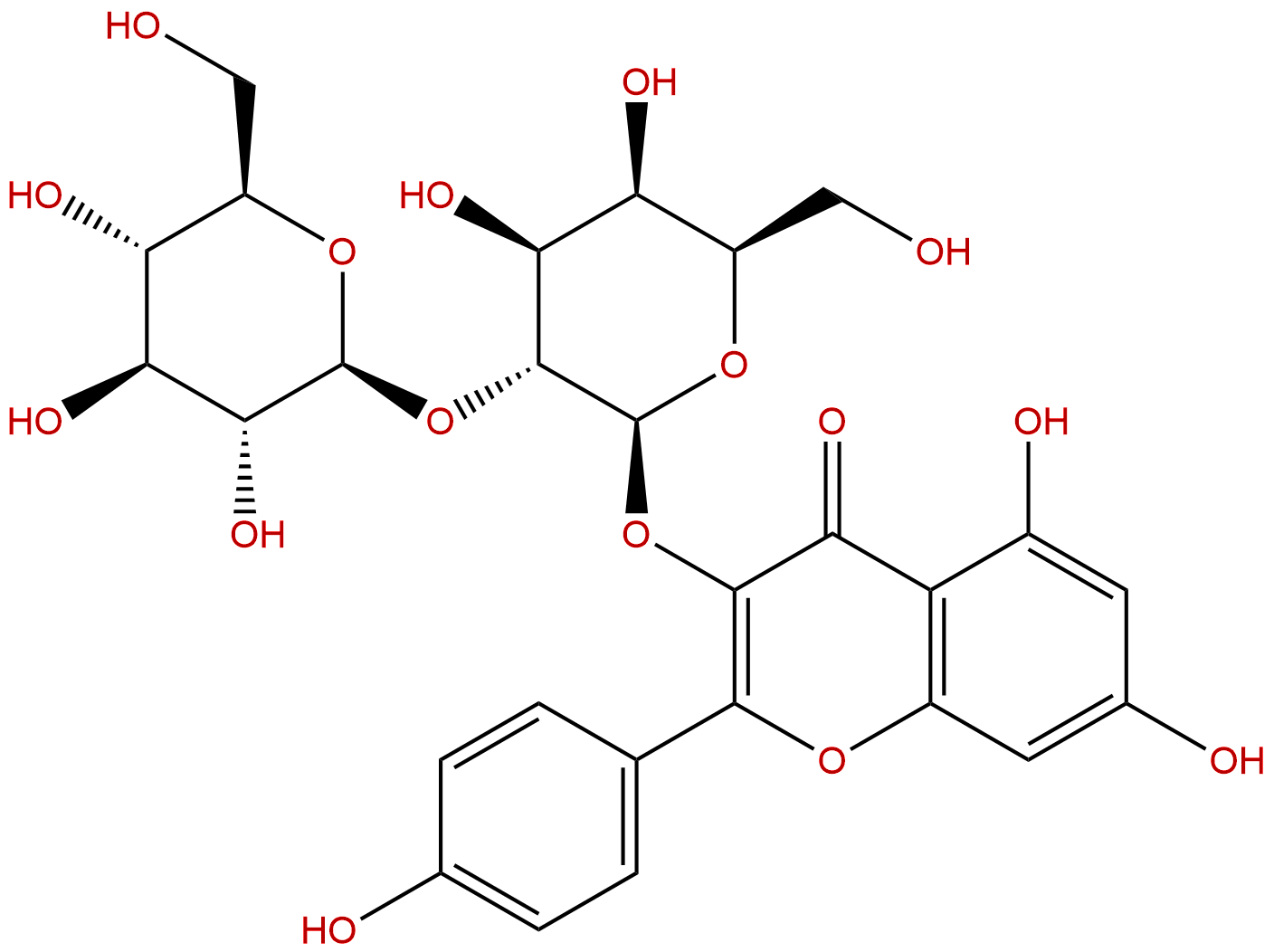


Product name: Panasenoside
Synonym name:
Catalogue No.: BP3459
Cas No.: 31512-06-8
Formula: C27H30O16
Mol Weight: 610.521
Botanical Source: Panax ginseng
Physical Description: Powder
Type of Compound:
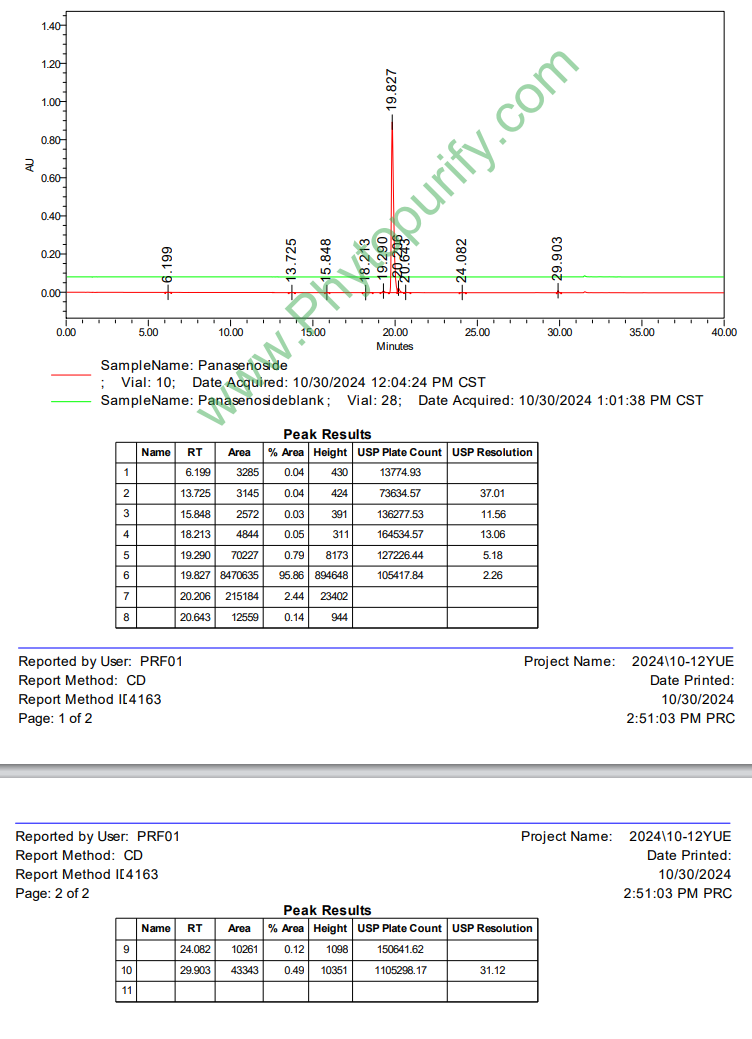
Purity: 95%~99%
Analysis Method: HPLC-DAD or/and HPLC-ELSD
Identification Method: Mass, NMR
Packing: Brown vial or HDPE plastic bottle
The product could be supplied from milligrams to grams. Inquire for bulk scale.
We provide solution to improve the water-solubility of compounds, thereby facilitating the variety of activity tests and clinic uses.
For Reference Standard and R&D, Not for Human Use Directly.
HPLC of Panasenoside
Storage conditions:Short-term storage at 2~8℃, long-term storage at -20 ~ -80℃
269.4300
-.8821
-.9751
3.3851
.3554
.1511
Low
76.6793
4.6839
Yes
No
No
No
Yes
No
1.2
Yes
Yes
Yes
Yes
Ginsenoside (CAS number: 31512-06-8) is a flavonoid compound isolated from the traditional precious medicinal plant Panax ginseng. Its chemical name is Kaempferol 3-O-beta-D-glucosylgalactoside, which belongs to the natural product class of flavonol glycosides. This compound has attracted much attention in plant chemistry and pharmacology research, not only due to its unique chemical structure, but also because it exhibits significant α - glucosidase inhibitory activity and potential antioxidant effects. Ginseng, as the "king of all herbs", has a history of thousands of years of application in traditional East Asian medicine, and the study of its active ingredients has always been a hot topic in natural medicinal chemistry. As one of the representative non saponin active ingredients in ginseng, the discovery of ginsenosides provides a new perspective for a deeper understanding of the "multi-component, multi-target" characteristics of ginseng. In recent years, with the increase of the incidence rate of oxidative stress related diseases (such as metabolic syndrome, neurodegenerative diseases, etc.), the value of basic research and transformation application of ginsenoside, which has a clear role in the regulation of antioxidant target pathways, has become increasingly prominent. This article will systematically summarize the scientific connotation of this natural product from its chemical characteristics, plant sources, pharmacological mechanisms, medicinal evaluation, and research prospects.
The molecular formula of ginseng flavonoid glycoside is C27H30O16, with a molecular weight of 610.5210 g/mol. Its structural parent nucleus is Kaempferol, which belongs to trihydroxyflavones. The characteristic of this compound is that its 3rd hydroxyl group is connected to a disaccharide group - β - D-glucosyl-β - D-galactopyranosyl (2-O-beta-D-glucopyranosyl-beta-D-galactopyranosyl) through a glycosidic bond. This structural characteristic classifies it as glycosyloxyflavonoids and disaccharide derivatives.
From the analysis of medicinal parameters, its physicochemical properties exhibit typical polar natural glycoside characteristics:
- Lipophilic nature The calculated LogP value is -0.8821 and LogD value is -0.9751, indicating that the compound has high hydrophilicity, which is mainly attributed to the presence of multiple hydroxyl and sugar groups in its molecule. According to the Lipinski Rule of Five, oral medications typically require a LogP ≤ 5, and ginsenosides are much lower than this upper limit, which complies with the rule. However, their extremely low LogP may affect their transmembrane absorption.
- Polar Surface Area The topological polar surface area (TPSA) is as high as 269.43 Å ², much higher than the threshold typically considered easy to penetrate cell membranes (below approximately 140 Å ²). High TPSA is a property of glycoside compounds, which means that their molecular surfaces have a large number of hydrogen bond donors and acceptors, which can affect their membrane permeability.
- solubility The water solubility parameter is 3.3851 (usually expressed in log mol/L), indicating good solubility in water, which is consistent with its hydrophilic structure.
- molecular weight:610.52 g/mol, Slightly higher than the 500 Da upper limit recommended by Lipinski's rules. This suggests that its oral bioavailability may face challenges, as an increase in molecular weight typically hinders passive diffusion absorption.
Overall, ginseng flavonoid glycosides are a type of flavonoid glycoside with medium molecular weight, high polarity, and good water solubility. Their glycosylation structure plays a key role in affecting their biological activity, stability, and in vivo metabolism.
The main plant source of flavonoid glycosides in ginseng is the Araliaceae plant, Panax ginseng C.A. Mey. Ginseng is mainly distributed in Northeast China, the Korean Peninsula, and the Far East of Russia, and is a globally renowned tonic and strong medicine. In traditional Chinese medicine theory, ginseng has a slightly warm nature, a sweet taste, and a slightly bitter taste. It belongs to the spleen, lungs, heart, and kidney meridians and has the effects of greatly tonifying qi, restoring meridians, strengthening the spleen and benefiting the lungs, generating fluids and nourishing blood, and calming the mind and improving intelligence. In clinical practice, it is commonly used to treat diseases such as body deficiency and desire to leave, cold limbs and weak meridians, spleen deficiency and insufficient food intake, lung deficiency, wheezing and cough, fluid damage and thirst, internal heat and thirst reduction, qi and blood deficiency, chronic illness and deficiency, palpitations and insomnia, impotence and uterine coldness.
Traditionally, the medicinal parts of ginseng are its dried roots and rhizomes, and research on its active ingredients has long focused on ginsenosides. However, modern plant chemistry research has shown that ginseng is a complex "natural chemical reservoir" that contains not only saponins but also various components such as polysaccharides, flavonoids, polyacetylenes, and volatile oils. Flavonoids, as important secondary metabolites in ginseng, although their content is relatively low compared to saponins, their biological activity cannot be ignored. The isolation and identification of ginseng flavonoid glycosides have enriched the diversity of active ingredients in ginseng and partially explained the extensive traditional efficacy of ginseng based on chemical substances. For example, its antioxidant and alpha glucosidase inhibitory activities may be related to the modern biological mechanisms involved in ginseng's traditional functions such as "generating fluids and quenching thirst" and "intelligence", which involve combating oxidative stress and regulating glucose metabolism.
Although the pharmacological activity research of ginseng flavonoid glycosides is currently in its early stages, it has shown clear targets and pathways of action, and its core pharmacological effects revolve around antioxidant open.
Main pharmacological activities:
1. α - glucosidase inhibitory activity The existing description clearly states that ginseng flavonoid glycosides have the activity of inhibiting alpha glucosidase. Alpha glucosidase is a key enzyme located at the brush border of the small intestine, responsible for breaking down oligosaccharides and disaccharides into absorbable monosaccharides. Inhibiting the enzyme activity can delay the digestion and absorption of carbohydrates and reduce the peak blood sugar after meals, which is one of the important strategies for treating type 2 diabetes. This activity suggests that ginseng flavonoid glycosides have potential application value in regulating sugar metabolism.
2. antioxidant activity This is the most highly regarded activity of ginseng flavonoid glycosides. Its antioxidant effect is not simply the direct clearance of free radicals, but rather through Regulating the endogenous antioxidant defense system in cells To achieve this, it is a more efficient and long-lasting antioxidant mechanism.
Mechanism of action and target analysis:
According to database information, the targets of ginseng flavonoid glycosides include NRF2, CAT, GPX1, HMOX1, and SOD2. These targets together constitute the core signaling network of cellular antioxidant stress - the NRF2/ARE pathway.
Core regulatory factor: NRF2 (NF-E2-related factor 2)
NRF2 is a central regulatory factor of cellular antioxidant response. Under normal circumstances, NRF2 binds to the cytoplasmic chaperone protein Keap1 and is degraded by ubiquitination, maintaining low levels. When cells are subjected to oxidative stress or certain compounds (such as ginsenoside) stimulation, NRF2 dissociates from Keap1 and is transported to the nucleus. In the nucleus, NRF2 binds to antioxidant response elements (ARE) and initiates gene transcription of a series of downstream antioxidant enzymes and phase II detoxifying enzymes.
Downstream effect targets:
Integration of action pathways:
Ginseng flavonoid glycosides may activate the NRF2 signaling pathway through direct or indirect action. Activated NRF2 upregulates the expression of target genes such as SOD2, CAT, GPX1, HMOX1, etc. SOD2 first converts superoxide anions into H ₂ O ₂, followed by the synergistic clearance of H ₂ O ₂ by CAT and GPX1, while HMOX1 enhances overall antioxidant capacity by producing biliverdin/bilirubin. This multi-target, networked mechanism of action enables cells to systematically enhance their antioxidant defense levels, thereby resisting oxidative damage caused by excessive accumulation of reactive oxygen species (ROS).
Association with diseases:
Oxidative stress is a common pathological basis for various chronic diseases, including:
- Neurodegenerative diseases(such as Alzheimer's disease, Parkinson's disease): Neurons are particularly sensitive to oxidative damage.
- Metabolic diseases(such as diabetes and atherosclerosis): Hyperglycemia and lipid abnormalities can lead to mitochondrial dysfunction and ROS overproduction.
- cardiovascular disease Oxidative stress is involved in endothelial dysfunction, inflammation, and plaque instability.
- Aging The free radical theory of aging suggests that ROS accumulation is an important cause of aging.
Ginseng flavonoid glycosides enhance the antioxidant capacity of cells by activating the NRF2 pathway, theoretically having potential preventive and therapeutic effects on diseases closely related to oxidative stress. Its α - glucosidase inhibitory activity provides the possibility of a dual mechanism for its application in the management of diabetes and its complications.
Based on the provided pharmacological parameters, combined with Lipinski's five rules, drug likeness, and preliminary toxicity data, the potential of ginsenoside as a drug is evaluated as follows:
1. Lipinski's Five Rules Compliance Analysis:
-Molecular weight (MW): 610.52>500 Da,Violation of 1 item。
-Lipid water partition coefficient (calculated LogP): -0.88<5,Comply with。
-Hydrogen bond donor (HBD): Based on the structural formula (multiple OH), it is estimated that there are>5,Possible violation of one item(Rule requirement ≤ 5).
-Hydrogen bond acceptors (HBAs): Based on the structural formula (multiple O atoms), it is estimated that there are>10 HBAs,Violation of 1 item(Rule requirement ≤ 10).
-The number of rotatable keys is relatively large, which may affect the conformational flexibility.
- Conclusion Ginseng flavonoid glycosides may violate multiple of Lipinski's five rules (molecular weight, hydrogen bond donor acceptor), indicating their Oral bioavailability may be low The high TPSA (269.43 Å ²) further confirms the prediction of poor membrane permeability.
2. Key parameters of absorption, distribution, metabolism, and excretion (ADME):
- absorb The permeability of Caco-2 cells is 0.1511, which is a very low value, indicating poor permeability of intestinal epithelial cells and possible poor oral absorption. The effective permeability (Peff) of 0.3554 is also at a relatively low level.
- distribution The blood-brain barrier (BBB) penetration is predicted to be "low", which is consistent with high TPSA and polarity characteristics, indicating that it is difficult to freely enter the central nervous system. Treatment of central nervous system diseases may require structural modifications or special delivery systems. The plasma protein binding rate (PPB) is 76.68%, which is moderately high and may affect its free drug concentration and distribution volume.
- Metabolism and excretion As glycoside compounds, they are likely to be first hydrolyzed by glycosidases in gut microbiota or epithelial cells in the body, producing aglycones (kaempferol) and glycosides. The metabolism (such as glucuronidation and sulfation) and excretion pathways of aglycones will determine their ultimate fate. This suggests that its in vivo efficacy may be partially attributed to its metabolites.
3. Preliminary toxicity assessment:
- Genotoxicity The Ames test value is 1.2 (usually>1.5 or 2.0 is considered risky, but the threshold varies depending on the method), indicating a low risk of mutagenicity; However, the labeling of "chromosome aberration" as "present" requires high vigilance and confirmation through more standardized experiments, such as in vitro mammalian cell chromosome aberration testing.
- cardiotoxicity HERG inhibition is' no ', indicating a lower risk of inducing QT interval prolongation in the heart, which is a positive signal.
- Organ toxicity Serum biochemical indicators suggest an impact on alkaline phosphatase (ALK), gamma glutamyltransferase (GGT), aspartate aminotransferase (AST), and alanine aminotransferase (ALT) (marked as "Yes"), which may suggest potential liver effects and require further in vivo toxicological studies to evaluate liver toxicity.
- Other No skin sensitization, respiratory sensitization, or phototoxicity.
Summary of potential for drug development:
The advantage of ginseng flavonoid glycoside as a lead compound lies in its clear Multi target antioxidant mechanism and Preliminary indication of good safety (no risk of heart hERG)However, its medicinal properties face significant challenges:Low expected oral bioavailability(Originating from high molecular weight, high polarity, low permeability), and existing Potential genetic toxicity and hepatotoxicity risk signals Therefore, it Not suitable for direct development as oral small molecule drugs。
Future development strategies may include:
1. Prodrug strategy Modify its sugar or phenolic hydroxyl groups to prepare precursor drugs with higher lipid solubility, in order to enhance absorption and convert them back into active forms in vivo.
2. Simplification and optimization of structure Starting from its glycoside kaempferol or simpler glycoside analogues, structural modification is carried out to improve the properties of the drug while maintaining NRF2 activation activity.
3. New drug delivery system Using techniques such as nano formulations (such as liposomes, polymer nanoparticles), phospholipid complexes, or cyclodextrin inclusion complexes to improve their solubility, stability, and transmembrane transport capacity.
4. As a functional food or health supplement ingredient Given its natural origin and antioxidant activity, and with fully validated safety, it can be considered for development as a dietary supplement with health benefits.
Research status:
At present, there is relatively limited public research literature on ginseng flavonoid glycosides, and their activity data mostly comes from preliminary screening and database inclusion. Most of the research is still stuck in Discovery and Identification Stage Regarding it In depth pharmacological evaluation, detailed mechanism elucidation, systematic pharmacokinetic and toxicological studies Still very lacking. The known α - glucosidase inhibitory activity and antioxidant activity through the NRF2 pathway are its main research highlights. Compared with star compounds such as quercetin and kaempferol glycoside, which belong to the same flavonoid class, the research depth and breadth of ginseng flavonoid glycosides as specific disaccharides need to be expanded.
Application prospects and future directions:
1. Deepening mechanism research Future research needs to confirm the activation effect of ginsenoside on the NRF2 pathway in cell and animal models, and clarify whether it directly acts on the Keap1-NRF2 protein interaction or indirectly activates through mild oxidative stress. At the same time, we should explore the synergistic effect of its α - glucosidase inhibitory activity and antioxidant activity in the diabetes model.
2. Study on Structure Activity Relationship Systematically study the effects of its glycosyl portion (type and connection mode of disaccharides) and glycoside portion (hydroxyl substitution mode) on biological activity (NRF2 activation, enzyme inhibition) and drug formation (permeability, metabolic stability), providing a basis for rational structural optimization.
3. In vitro and in vivo pharmacokinetics and toxicity evaluation Conduct standardized ADME research to clarify its oral absorption, distribution, metabolic conversion (especially hydrolysis of glycosidic bonds), and excretion processes. Complete standard genetic toxicity tests (such as micronucleus assay), subacute/chronic toxicity tests, and comprehensively evaluate their safety.
4. Development Strategy Transformation Due to its inherent limitations in medicinal properties, non-traditional development pathways should be actively explored. For example, consider it as NRF2 pathway activator template derived from natural products Used for designing and synthesizing better novel small molecule modulators. Alternatively, by combining modern formulation technology, local administration types (such as cosmetic ingredients used for skin antioxidant and anti-aging purposes) or specific targeted delivery systems can be developed.
5. Integration of multi omics and network pharmacology Using network pharmacology to predict its potential other targets and pathways, combined with transcriptomics, proteomics and other technologies, comprehensively reveal its multidimensional pharmacological action network, and deeply explain its association with the efficacy of traditional ginseng.
Conclusion:
Ginseng flavonoid glycoside is a flavonoid glycoside compound with clear biological activity discovered from the traditional medicinal herb ginseng. It exerts its potential in preventing and treating oxidative stress-related diseases by acting on key targets such as NRF2, regulating the endogenous antioxidant defense system. Although its current pharmacological parameters suggest challenges in developing oral small molecule drugs, it remains an excellent candidate Lead compounds and biological tool molecules The value is significant. Future research should focus on deepening its mechanism of action, clarifying structure-activity relationships, and using modern medicinal chemistry and pharmacology methods to overcome its delivery bottlenecks. The study of ginseng flavonoid glycosides not only helps to reveal the modern scientific connotation of ginseng's "nourishing" effects, but also provides an example for discovering active molecules that regulate important cellular pathways from complex natural products.
