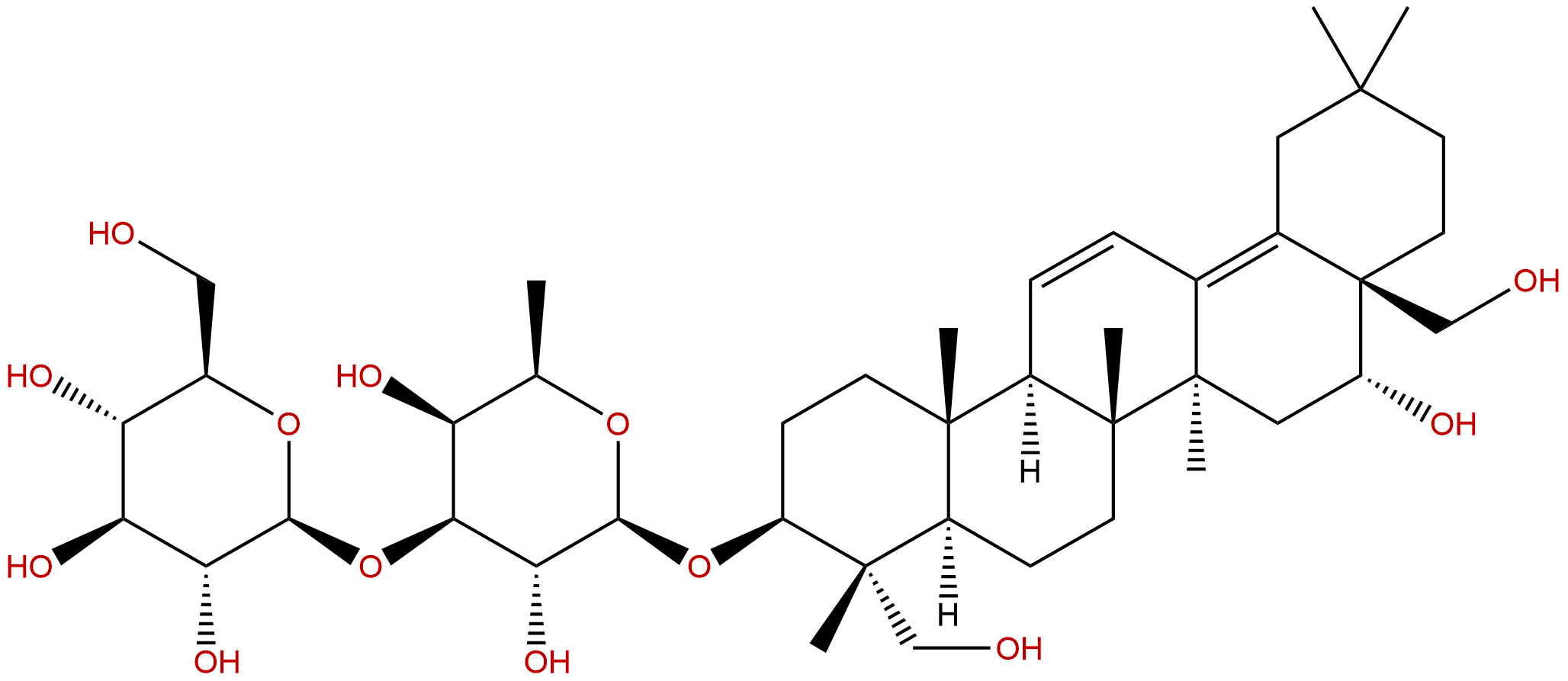


Product name: Saikosaponin B2
Synonym name:
Catalogue No.: BP1240
Cas No.: 58316-41-9
Formula: C42H68O13
Mol Weight: 780.993
Botanical Source: Bupleurum falcatum
Physical Description: Powder
Type of Compound: Triterpenoids
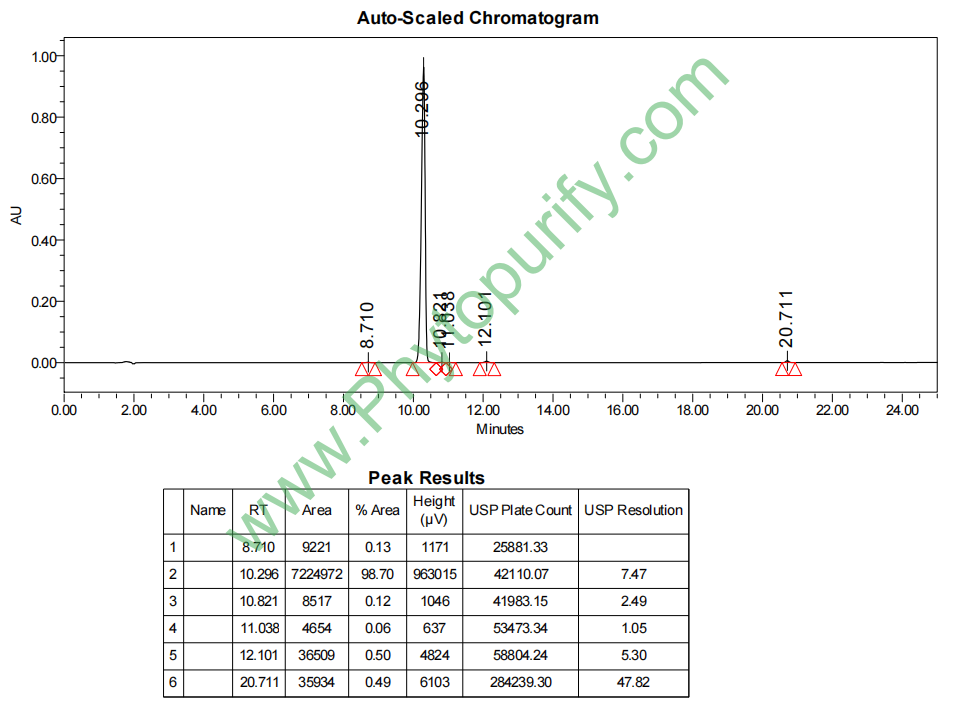
Purity: 95%~99%
Analysis Method: HPLC-DAD or/and HPLC-ELSD
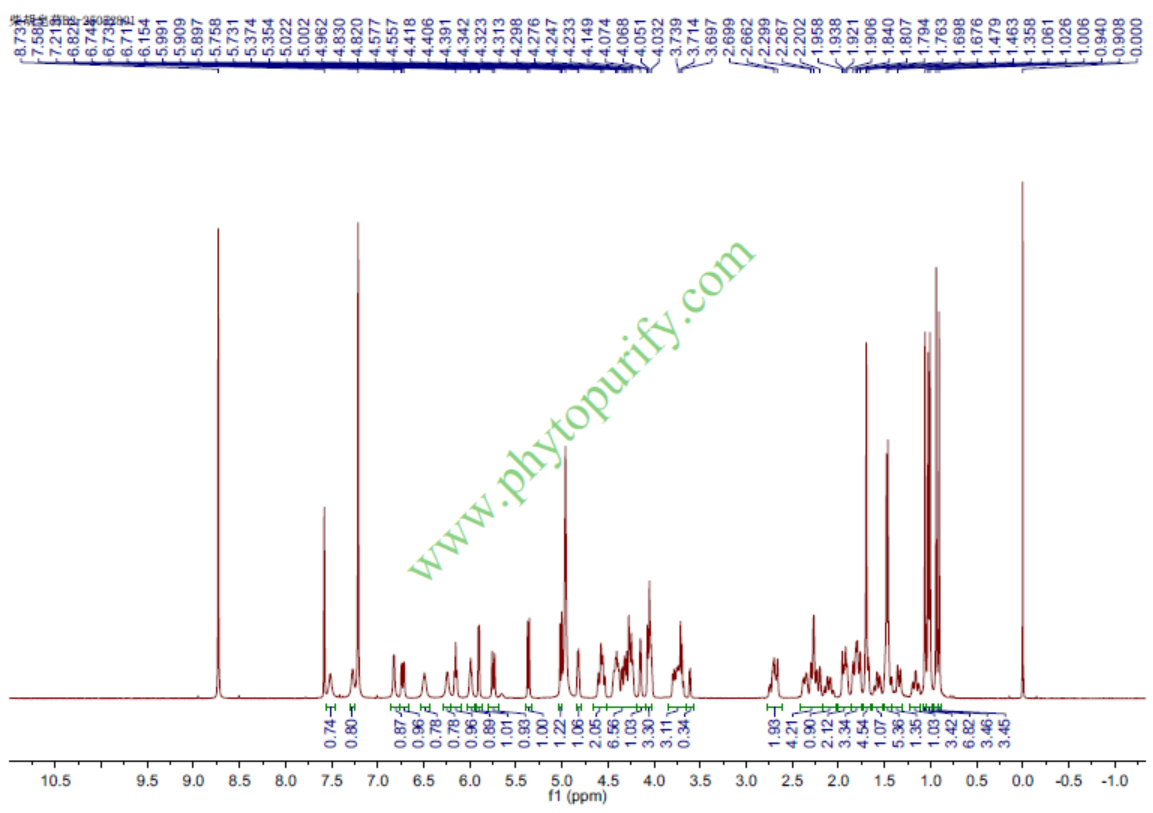
Identification Method: Mass, NMR
Packing: Brown vial or HDPE plastic bottle
Storage: Store in a well closed container, protected from air and light. Put into refrigerate or freeze for long term storage.
Whenever possible, you should prepare and use solutions on the same day. However, if you need to make up stock solutions in advance, we recommend that you store the solution as aliquots in tightly sealed vials at -20℃. Generally, these will be useable for up to two weeks.
The product could be supplied from milligrams to grams, up to kilograms
Inquire for bulk scale.
Descriptions:
Saikosaponin B2(SSb2) is an efficient inhibitor of early entry, including neutralization of virus particles, preventing viral attachment, and inhibiting viral entry/fusion, SSb2 may be of value for development as an antagonist of entry and could be explored as prophylactic treatment during the course of liver transplantation.[1]
Saikosaponin B2 can induce differentiation and apoptosis in cultured b16 melanoma cell line: 347.[2]
Saikosaponin B2 induces apoptosis of cultured B16 melanoma cell line through down-regulation of PKC activity.[3]
References:
[1] Lin L T, Chung C Y, Hsu W C, et al. J Hepatol, 2015, 62(3):541–8.
[2] Zong Z P, Fujikawa-Yamamoto K, Tanino M, et al. Melanoma Res, 1997, 7(7).
[3] Zong Z P, Fujikawa-Yamamoto K, Tanino M, et al.Biochem Bioph Res Co, 1996, 219(2):480-5.
[4] Jun L I, Jiang H, Zhang Y P, et al.Chinese Pharm J, 2011, 46(1):61-3.
HPLC of Saikosaponin B2
HNMR of Saikosaponin B2
Storage conditions:Short-term storage at 2~8℃, long-term storage at -20 ~ -80℃
218.9900
2.7152
2.7151
.0436
.5777
.5870
Low
72.6527
6.0658
No
No
No
No
No
No
0.0
Yes
No
No
Yes
Natural products, as an important source of drug discovery, play an irreplaceable role in the long history of human fight against diseases. Chaihu, as a core medicinal herb in traditional Chinese medicine known for its ability to harmonize Shaoyang, soothe liver and relieve depression, has been extensively studied in modern pharmacology, revealing its complex chemical composition and wide-ranging biological activities. Saikosaponin B2 (SSB2) is considered the main active ingredient in the pharmacological effects of Bupleurum chinense, and is increasingly becoming a hot topic in natural product pharmacology research due to its significant potential in antiviral, anti-inflammatory, and anti-tumor fields. SSB2 is a triterpenoid saponin isolated from the roots of Chaihu, and its unique chemical structure endows it with diverse biological activities. In recent years, with the rapid development of molecular biology and cell biology technologies, the role of SSB2 in anti liver cancer and its multi-target mechanism have been deeply explored, demonstrating its enormous value as a novel anti-cancer lead compound or adjuvant therapy drug. This article aims to systematically review the chemical properties, plant sources, pharmacological activities, and multidimensional molecular mechanisms of Chaihu saponin B2, especially its anti liver cancer effect. It also evaluates and prospects its pharmacological properties and clinical application prospects, in order to provide comprehensive scientific references for the in-depth research and development of this compound.
The chemical name of saikosaponin B2 is (3 β, 4 α, 16 β) -13,28-Epoxy-16,23-dihydroolean-11-en-3-yl β - D-glucopyranosyl - (1 → 2) - β - D-glucopyranosyl - (1 → 3) - β - D-glucopyranoside, and its CAS number is 58316-41-9. Structurally, SSB2 belongs to the oleanane type pentacyclic triterpenoid saponin, and its glycoside is Saikogenin F. Its structural feature is that a trisaccharide chain is connected to the C-3 hydroxyl group of the glycoside, which is composed of one molecule of fucose (Fuc) and two molecules of glucose (Glc) connected by specific glycosidic bonds (β - D-Glc - (1 → 2) - β - D-Glc - (1 → 3) - β - D-Fuc). In addition, its glycoside moiety has a characteristic 13,28-epoxide bridge structure and a hydroxyl group at C-16 position, which are crucial for its biological activity.
In terms of physical and chemical properties, the molecular weight of SSB2 is 780.9930, which is a medium to large molecule. The calculated lipid water partition coefficient (LogP) is 2.7152, indicating that the compound has a certain degree of lipophilicity, but not high lipid solubility. The topologically polar surface area (TPSA) is as high as 218.99 Å ², which is mainly attributed to the presence of multiple hydroxyl groups and oxygen atoms on the sugar ring in the molecule, resulting in high molecular polarity. The theoretically calculated water solubility value is relatively low (about 0.0436 mg/mL), indicating limited solubility in water, which may be a limiting factor for its oral bioavailability. In the preliminary drug screening, SSB2 showed lower potential to cross the blood-brain barrier, which is consistent with its larger TPSA and polarity. Importantly, preliminary in vitro safety assessments showed that SSB2 had no significant inhibitory effect on hERG potassium channels (hERG inhibition: No), and the Ames test result was 0.0, indicating a low risk of genotoxicity and providing preliminary safety evidence for its further development.
Chaihu saponin B2 mainly comes from the dried roots of various plants in the Bupleurum genus of the Umbelliferae family, among which the medicinal authentic products are Bupleurum chinense DC. and Bupleurum scorzonerifolium Willd. Chaihu saponins usually coexist in various structurally similar forms in plants, including not only SSB2 but also Chaihu saponins A, D, C, etc. Their content is significantly affected by species, origin, harvest season, and processing methods.
Efficient and high-purity extraction of SSB2 from plant materials is the foundation for its pharmacological research. The traditional extraction method mainly adopts solvent extraction, commonly using methanol, ethanol, or ethanol water systems with different ratios for reflux extraction or ultrasound assisted extraction of Chaihu root powder. After the crude extract is concentrated under reduced pressure, the hydrophilic and lipophilic properties of saikosaponin are utilized. Macroporous adsorption resins (such as D101 and AB-8) are commonly used for enrichment and purification. Different concentrations of ethanol aqueous solutions are used for gradient elution to preliminarily separate saponin components from other impurities.
In order to obtain high-purity SSB2, it is necessary to rely on efficient chromatographic separation techniques. Conventional column chromatography techniques, such as silica gel column chromatography and reverse phase silica gel (such as ODS) column chromatography, are key steps in the separation and purification process, often using chloroform methanol water or ethyl acetate methanol water systems as mobile phases for gradient elution. Modern preparative high-performance liquid chromatography (Prep HPLC), especially the reverse phase C18 column combined with acetonitrile water or methanol water mobile phase system, has become the standard method for obtaining chromatographically pure SSB2. In recent years, liquid-liquid distribution chromatography techniques such as high-speed countercurrent chromatography (HSCCC) have also been applied in the separation and purification of saikosaponin homologues due to their advantages of irreversible adsorption and high recovery rate. The optimization of the extraction and separation process aims to improve the yield and purity of SSB2, in order to meet the needs of further in vitro and in vivo pharmacological and mechanistic research.
Chaihu saponin B2 exhibits a wide range of pharmacological activities, with research mainly focused on antiviral, anti-inflammatory, and anti-tumor fields.
1. Antiviral activity:
SSB2 first gained widespread attention as an invasive inhibitor of hepatitis C virus (HCV) infection. Research has shown that SSB2 can effectively inhibit the invasion of HCV into host cells in a dose-dependent manner. Its mechanism of action is different from direct antiviral drugs, and may be achieved by interfering with the binding of virus particles to cell surface receptors or inhibiting the membrane fusion process between the virus and cells. This discovery provides new lead compounds for the development of novel anti HCV infection strategies.
2. Anti inflammatory and immune regulatory activity:
SSB2 has good anti-inflammatory effects. In various animal models of acute and chronic inflammation, SSB2 can significantly inhibit the production of inflammatory factors and the infiltration of inflammatory cells. Its function is closely related to the regulation of classic inflammatory signaling pathways such as nuclear factor kappa B (NF - κ B) and mitogen activated protein kinase (MAPK). In addition, SSB2 can also regulate the function of immune cells, and can affect the activation and differentiation of macrophages, T lymphocytes, etc., which is consistent with the description of its effect of "regulating immunity" in traditional medicine.
3. Anti tumor activity (focus: anti liver cancer):
The anti-tumor effect of SSB2 has been the most concerned research direction in recent years, especially in the prevention and treatment of liver cancer, showing multifaceted effectiveness.
* Inhibition of liver cancer cell proliferation: In vitro experiments have confirmed that SSB2 can significantly inhibit the proliferation of various human liver cancer cell lines (such as HepG2, Huh7, SMMC-7721), and its inhibitory effect is time-dependent and concentration dependent.
* Inducing cell cycle arrest: SSB2 can block liver cancer cells at specific stages of the cell cycle (such as G0/G1 phase or G2/M phase) by regulating the expression of cyclins and cyclin dependent kinases (CDKs), preventing cell mitosis.
* Inducing cell apoptosis: SSB2 is an effective inducer of apoptosis in liver cancer cells. It can upregulate the expression of pro apoptotic proteins (such as Bax) and downregulate the expression of anti apoptotic proteins (such as Bcl-2), leading to a decrease in mitochondrial membrane potential, release of cytochrome C, and activation of the caspase cascade reaction, ultimately triggering programmed cell death.
* Inhibition of invasion and metastasis: Migration and invasion are key steps in the malignant progression of liver cancer. Research has shown that SSB2 can effectively inhibit the migration and invasion ability of liver cancer cells, and its mechanism involves downregulating the expression of matrix metalloproteinases (MMPs, such as MMP-2 and MMP-9) and inhibiting the epithelial mesenchymal transition (EMT) process.
* Anti angiogenesis: Tumor neovascularization provides nutrients for its growth and metastasis. SSB2 can exert anti-tumor angiogenesis by inhibiting the expression of vascular endothelial growth factor (VEGF) and its downstream signaling pathways, thereby suppressing endothelial cell proliferation and luminal formation.
* In vivo anti-tumor effect: In a nude mouse model of liver cancer transplantation, administration of SSB2 significantly inhibited tumor growth and weight, with minimal impact on mouse body weight, indicating its in vivo anti-tumor activity and potential safety window.
The anti liver cancer effect of saikosaponin B2 is not achieved through a single target, but through a complex multi-target and multi pathway network that works synergistically. Based on existing research, its core mechanism of action is closely related to the following key molecular targets and pathways:
Regulating apoptosis balance (targeting BCL2 family): SSB2 downregulates the expression of anti apoptotic protein BCL2 and may also affect other members of the BCL2 family, disrupting the balance of mitochondrial apoptosis pathways and promoting the execution of cell apoptosis.
Inhibition of survival signaling pathways (targeting STAT3, PIK3CA/Akt, RELA/NF - κ B):
Interference with DNA metabolism and telomere maintenance (targeting TOP1, TOP2A, TERT):
Regulating stress and metabolic adaptation (targeting HIF1A, MAPK1):
In summary, SSB2 forms a synergistic network pharmacology effect by simultaneously acting on multiple key targets and pathways, ultimately leading to a comprehensive anti-tumor outcome of inhibiting liver cancer cell proliferation, inducing apoptosis, and suppressing invasion and metastasis.
Although saikosaponin B2 has shown good pharmacological activity in vitro and preclinical models, its pharmacological development still faces some challenges, mainly related to its physicochemical properties and pharmacokinetic behavior.
Drug Evaluation:
As mentioned earlier, SSB2 has a high molecular weight (>500) and high TPSA, which may limit its membrane permeability. The moderate LogP value and low theoretical water solubility make it possible for its Biopharmaceutical Classification System (BCS) classification to belong to Class II (low solubility, high permeability) or Class IV (low solubility, low permeability), which typically indicates poor oral absorption and high variability. Its low blood-brain barrier permeability limits its therapeutic application in central nervous system related diseases, but for peripheral acting drugs, this may reduce central side effects. The preliminary in vitro safety data (no hERG inhibition, Ames negative) is a positive signal, but comprehensive toxicological evaluation (such as acute toxicity, long-term toxicity, reproductive toxicity, etc.) still needs to be systematically carried out in subsequent development.
Pharmacokinetic studies:
At present, pharmacokinetic studies on the SSB2 system are relatively limited, but based on the commonality of saikosaponin compounds, their PK behavior can be preliminarily inferred. After oral administration, saponins may be affected by acid hydrolysis and intestinal microbiota metabolism in the gastrointestinal tract. Their glycosyl portion may be gradually hydrolyzed to generate secondary glycosides, and the activity of these metabolites may be different from that of the prototype drug. In terms of absorption, due to its large polarity and molecular size, passive diffusion absorption efficiency may not be high, and intestinal transporters may be needed. Animal experiments have shown that the absolute bioavailability of saikosaponin components is generally low after oral administration. In vivo distribution studies have shown that saikosaponin components are mainly distributed in organs with abundant blood flow such as the liver, kidneys, and lungs, which is consistent with the target organ distribution of SSB2 for anti liver cancer. Metabolism mainly occurs in the liver and may involve phase I (such as CYP450 enzyme system) and phase II (such as glucuronidation, sulfation) metabolic reactions. The main excretion pathways are bile and urine. To improve its bioavailability, formulation improvement strategies such as creating new drug delivery systems such as nanoparticles, liposomes, microemulsions, or solid dispersions are important directions for future research.
Chaihu saponin B2, as a natural compound with multi-target anti liver cancer activity, has broad clinical application prospects, but the transformation still needs to overcome many challenges.
Potential application directions:
1. Adjuvant therapy or combination therapy for liver cancer: The multi-target nature of SSB2 may provide advantages in overcoming tumor heterogeneity and drug resistance. In the future, it can be explored to combine it with existing standard treatment drugs for liver cancer, such as targeted drugs like sorafenib and lenvatinib, or chemotherapy drugs, in order to produce synergistic effects, reduce toxicity, or reverse drug resistance.
2. Chemical prevention of liver cancer: Given its anti-inflammatory and immune regulating activities, SSB2 may be used for chemoprevention in the progression of chronic liver diseases (such as viral hepatitis and fatty liver) to liver cancer, delaying or preventing the development of precancerous lesions.
3. Developed as a novel anti HCV adjuvant drug: Its unique HCV invasion inhibition mechanism provides ideas for the development of new antiviral drugs, which may be used for early intervention of HCV infection or in combination with other direct antiviral drugs.
Challenges and Prospects Faced:
1. Improve bioavailability: This is the primary challenge for SSB2 to enter clinical practice. Future research needs to focus on significantly improving oral absorption or developing suitable injectable formulations through prodrug design, novel drug delivery systems (nanotechnology, etc.), or finding absorption enhancers.
2. In depth mechanism research: Although multiple potential targets have been identified, further biochemical and structural biology evidence is needed for the direct interactions between SSB2 and these targets, such as whether they bind directly. The upstream and downstream relationships regulated by its complex signal network also require more refined analysis.
3. System preclinical development: It is necessary to complete systematic pharmacological (in more clinical models such as human tumor xenograft models and genetically engineered mouse models), pharmacokinetic (ADME), and toxicological (GLP standards) evaluations in accordance with the standards of innovative drug development, and clarify the safe and effective dosage window.
4. Exploring structural optimization: Using it as the parent nucleus for structural modification, improving its solubility, metabolic stability, and targeting while retaining or enhancing its core activity, is an important topic in the field of medicinal chemistry.
5. Conduct clinical research: Ultimately, rigorous clinical trials (stages I-IV) are needed to validate its safety, pharmacokinetic characteristics, and actual efficacy in liver cancer patients in humans.
Chaihu saponin B2, as one of the active ingredients in traditional Chinese medicine Chaihu, is a successful example of modern natural product drug research. From the traditional efficacy of "soothing the liver and relieving depression" to the molecular mechanisms of antiviral, anti-inflammatory, and multi-target anti liver cancer revealed by modern science, it reflects the profound value of the treasure trove of traditional Chinese medicine. The current research has preliminarily outlined the multidimensional network of SSB2, which inhibits liver cancer cell growth, induces apoptosis, and inhibits metastasis by regulating multiple key targets and pathways such as BCL2, STAT3, PI3K/Akt, NF - κ B, and HIF-1 α. Although there are challenges in drug development, especially in oral bioavailability, its unique multi-target mode of action and good preliminary safety characteristics make it a highly promising lead compound for anti liver cancer. In the future, through interdisciplinary cooperation and the combination of modern pharmacology, medicinal chemistry, and systems biology methods, it is expected to overcome its existing shortcomings, promote the transition of saikosaponin B2 from laboratory research to clinical application, provide new treatment options for liver cancer patients, and also provide useful references for the development of innovative drugs based on natural products.
