Introduction/Overview
Inflammation is a complex and highly coordinated defensive physiological response initiated by the body in response to infection, tissue damage, or autoimmune stimuli. Moderate inflammatory response helps to clear pathogens and repair damaged tissues, however, uncontrolled or chronic inflammatory processes are the core pathological basis of various major diseases such as rheumatoid arthritis, inflammatory bowel disease, neurodegenerative diseases, metabolic syndrome, and even cancer. For a long time, nonsteroidal anti-inflammatory drugs (NSAIDs) and glucocorticoids have been the main means of clinical anti-inflammatory treatment. However, the former suffers from gastrointestinal and cardiovascular side effects caused by the inhibition of cyclooxygenase (COX), while the latter is significantly limited in its long-term use due to extensive adverse reactions such as immune suppression and metabolic disorders. Therefore, searching for anti-inflammatory lead compounds with novel structures, unique mechanisms of action, and higher safety from nature has always been a hot topic in natural product pharmacology research.
Chaihu(Bupleurum chinense DC., as a widely used surface clearing medicine in traditional Chinese medicine, was first recorded in the "Shennong Bencao Jing" and has the effects of dispersing and reducing fever, soothing the liver and relieving depression, and elevating yang qi. Modern pharmacological research has confirmed that Chaihu and its main active ingredient, Saikosaponins, have significant pharmacological activities such as anti-inflammatory, hepatoprotective, antiviral, anti-tumor, and immunomodulatory effects. Chaihu saponins belong to the oleanane type triterpenoid saponins, and their structure is composed of glycosides (Saikogenin) connected to sugar chains (mainly glucose, xylose, fucose, etc.) through glycosidic bonds. Among numerous saikosaponin, saikosaponin D (SSD) has attracted much attention due to its strong biological activity. However, SSD can be metabolized by gut microbiota or liver enzymes both in vitro and in vivo, removing its glycosylated portion and generating its main secondary glycosides and aglycones, including Saikogenin D (SGD).
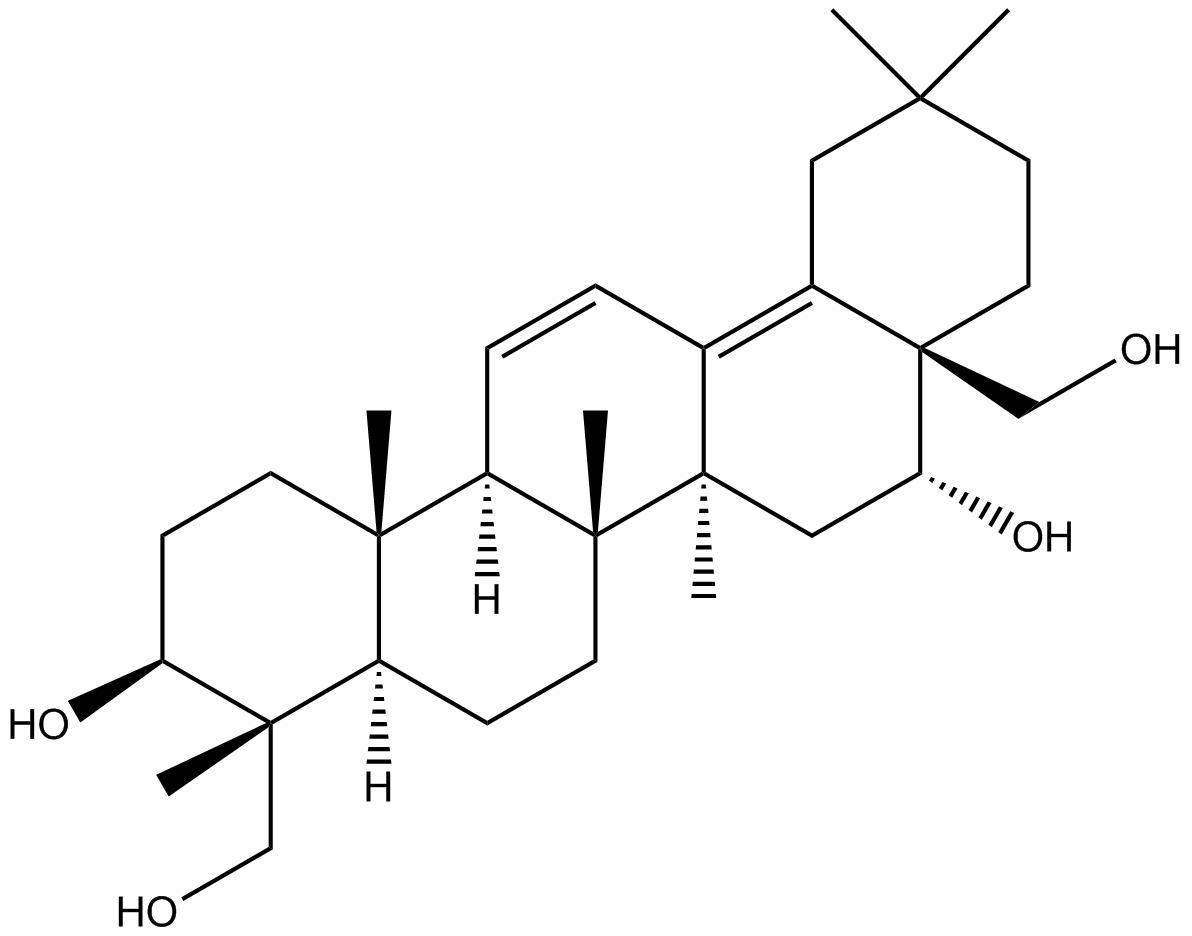
Saikogenin D (CAS number: 5573-16-0) is the glycoside form of saikosaponin D and belongs to the pentacyclic triterpenoid class. Although SSD research is more extensive, increasing evidence suggests that SGD, as one of the main active metabolites of SSD in vivo, also exhibits unique pharmacological activities, especially in the field of anti-inflammatory. The mechanism of action of SGD is both related and different from that of SSD. Unlike SSD, which extensively inhibits inflammatory pathways through multiple pathways, SGD has been found to activate cyclooxygenase (COX), promoting the conversion of arachidonic acid to specific epoxyeicosadecanoic acid (EpETrEs) and dihydroxyeicosaenoic acid (DiHETrEs), which in turn inhibit the production of prostaglandin E2 (PGE2). This seemingly contradictory mode of action - activating COX while inhibiting PGE2- reveals that SGD may exert anti-inflammatory effects by regulating the "metabolic transition" of lipid mediator metabolism, providing a unique molecular basis for its development as a novel anti-inflammatory drug. In addition, SGD can also affect downstream signaling pathways by regulating intracellular calcium ion concentration ([Ca ² ⁺] i). This article aims to provide a comprehensive and in-depth review of the chemical structure, plant origin, pharmacological activity, mechanism of action, medicinal properties, and clinical application prospects of saikosaponin D, in order to provide a systematic reference for the subsequent research and development of this natural product.
Chemical structure and physicochemical properties
The chemical name of Saikogenin D is (3 β, 16 β) -3,16,23,28-tetrahydroxyoleanan-11,13 (18) - diene, belonging to the oleanane type pentacyclic triterpenoid compounds. Its core skeleton is composed of six isoprene units, forming five ring systems A, B, C, D, and E. Among them, the A/B, B/C, and C/D rings are all trans fused, while the D/E ring is cis fused. This specific ring system fusion gives the molecule a rigid three-dimensional conformation. The structural feature of SGD lies in the presence of multiple hydroxyl functional groups attached to its parent nucleus: located at C-3 (β - OH), C-16 (β - OH), C-23 (- CH ₂ OH), and C-28 (- CH ₂ OH). In addition, a conjugated double bond system (Δ ¹¹, ¹³ ⁽¹⁸⁾) is formed between its C-11 and C-13 (18) positions, which is an important structural feature that distinguishes saikosaponin from other oleanane type triterpenoids and serves as the structural basis for its UV absorption and partial biological activity. Compared with the parent compound SSD, SGD completely lacks the sugar chain connected to the C-3 hydroxyl group (usually β - D-glucose - (1 → 3) - β - D-fucose), resulting in a significant decrease in molecular weight (472.71 Da), weakened polarity, and enhanced lipophilicity.
From the perspective of physical and chemical properties, the molecular formula of SGD is C ∝₀ H ₄₈ O ₄, with a molecular weight of 472.7100. Its lipid water partition coefficient (LogP) is 4.6361, indicating that the compound has strong lipophilicity and is easy to penetrate biological membranes. The topological polar surface area (TPSA) is 80.92 Å ², which is lower than the recommended upper limit for oral drugs (140 Å ²), indicating its good oral absorption potential. However, its water solubility is extremely low, only 0.0017 mg/mL, which poses a major challenge for its formulation development. The stability of SGD is affected by pH, temperature, and light, especially under acidic or alkaline conditions, where conjugated double bonds and multiple hydroxyl groups in its molecules may undergo isomerization, dehydration, or oxidation reactions. It is worth noting that the prediction of pharmacological parameters shows that SGD has a high blood-brain barrier (BBB) penetration ability, suggesting that it may play a role in central nervous system diseases; At the same time, the predicted hERG inhibition risk is "no", and the Ames test mutagenicity prediction is 0.0, indicating a low risk of cardiac and genetic toxicity, which provides a positive signal for its safety evaluation.
Plant sources and extraction methods
Chaihu saponin D is mainly derived from the Apiaceae family and the genus Chaihu(Bupleurum)Plants, among which Bupleurum chinense DC. (Bupleurum chinense) and Bupleurum scorzonerifolium Willd. (Bupleurum chinense) is the main source. In addition, in Bupleurum falcatum L. It has also been found in other plants of the Bupleurum genus, such as Mishima Bupleurum. SGD does not exist in large quantities in plants in free form, but rather as a glycoside of saikosaponin (especially SSD). It is mainly stored in the form of saponins in roots, stems, leaves, and other parts of the plant, with the roots being the most abundant.
There are two main ways to obtain SGD: direct extraction and separation, and chemical/biological transformation.
-
Direct extraction and separation Due to the extremely low natural content of SGD in plants, direct extraction is not the main method. Usually, ethanol or methanol is used for reflux extraction of Chaihu medicinal materials to obtain total saponin extracts. Subsequently, extract and enrich saponins using n-butanol. Trace amounts of SGD can be isolated from total saponins through repeated silica gel column chromatography, ODS (octadecylsilane bonded silica gel) reverse phase column chromatography, and preparative high-performance liquid chromatography (pre HPLC) techniques. The process steps are cumbersome and the yield is extremely low, making it unsuitable for large-scale preparation.
-
Hydrolysis conversion method This is currently the most important and economical method to obtain SGD. The principle is to use acids, bases, or enzymes to hydrolyze the glycosidic bonds of abundant saikosaponin (such as SSD), releasing the glycoside SGD.
- Acid hydrolysis Heating SSD or total saponins rich in SSD under acidic conditions (such as dilute hydrochloric acid or sulfuric acid in methanol/water solution) at reflux can break glycosidic bonds. This method is simple to operate and cost-effective, but the reaction conditions are harsh, which may cause dehydration, cyclization, or conformational changes in the conjugated double bonds of SGD molecules, resulting in by-products (such as saikosaponin A, F, G, etc.), reducing the purity and yield of the target product.
- Enzymatic hydrolysis Using specific glycoside hydrolases (such as β - glucosidase, β - fucosidase, or snail enzyme) to selectively hydrolyze the sugar group at the end of SSD under mild conditions (37-50 ° C, pH 4.5-6.0). This method has mild reaction conditions, few side reactions, high product purity, and can effectively maintain the natural configuration of SGD. However, the high cost and long reaction time of enzymes limit their industrial application.
- Alkaline hydrolysis Under alkaline conditions (such as alcohol solutions of sodium hydroxide or potassium hydroxide), hydrolysis can also break ester bonds (if present), but for saponins such as SSD, which are mainly connected by glycosidic bonds, alkaline hydrolysis efficiency is usually lower than acid hydrolysis.
In recent years, with the promotion of green chemistry concepts, some new extraction techniques such as microwave-assisted extraction, ultrasound assisted extraction, and supercritical fluid extraction have also been attempted for the extraction of saikosaponin. However, they are mostly used to improve the extraction rate of total saponins. For the specific preparation of SGD, hydrolysis conversion method is still the mainstream. The future research focus is on developing efficient, mild, environmentally friendly, and controllable enzymatic or chemical catalytic hydrolysis technologies to achieve high-purity and large-scale preparation of SGD.
Pharmacological activity research
Although the pharmacological activity research of saikosaponin D is not as in-depth as its parent SSD, it has been revealed to have potential value in multiple aspects such as anti-inflammatory, anti-tumor, neuroprotective, and immune regulation, among which anti-inflammatory activity is the core of its research.
1. Anti inflammatory activity
The anti-inflammatory effect of SGD is its most concerned pharmacological activity. Research has confirmed that SGD exhibits inhibitory effects in various inflammatory models.
* In vitro anti-inflammatory In the lipopolysaccharide (LPS) - stimulated macrophage model (such as RAW264.7 cells), SGD can significantly inhibit the production of pro-inflammatory cytokines such as tumor necrosis factor - α (TNF - α), interleukin-6 (IL-6), and nitric oxide (NO). Its mechanism of action is related to the inhibition of the activation of the nuclear factor kappa B (NF - κ B) signaling pathway, specifically manifested as the inhibition of the activity of I κ B kinase (IKK β/IKBKB), the prevention of phosphorylation and degradation of I κ B α, thereby reducing the nuclear translocation of p65 (RELA) subunit, and ultimately downregulating the expression of inflammatory related genes such as inducible nitric oxide synthase (iNOS/NOS2) and COX-2.
* Anti inflammatory in the body In both the carrageenan induced rat paw swelling model and the xylene induced mouse ear swelling model, SGD showed dose-dependent anti-inflammatory effects, effectively reducing local edema. In more complex chronic inflammation models, such as the collagen induced arthritis (CIA) model, SGD has also been reported to alleviate joint swelling, bone erosion, and cartilage destruction, as well as reduce serum levels of TNF - α and IL-6.
2. Antitumor activity
SGD exhibits cytotoxic or proliferative inhibitory effects on various tumor cell lines.
* Inducing apoptosis SGD can induce tumor cell apoptosis by activating caspase family proteases (such as CASP1) and mitochondrial pathways. For example, in human liver cancer cell HepG2, SGD treatment leads to a decrease in mitochondrial membrane potential, release of cytochrome c, and activation of caspase-9 and caspase-3, triggering an apoptotic cascade reaction.
* Inhibition of proliferation and migration SGD can inhibit the proliferation and migration of tumor cells by regulating the STAT3 signaling pathway. The sustained activation of STAT3 is a hallmark of various cancers, and SGD can inhibit the phosphorylation of STAT3, downregulate the expression of downstream target genes such as Cyclin D1 and MMP-9, thereby blocking the cell cycle in G0/G1 phase and inhibiting cell invasion.
* Reverse drug resistance Preliminary studies suggest that SGD may partially reverse multidrug resistance (MDR) by inhibiting the activity or expression of P-glycoprotein (P-gp), increasing the accumulation of chemotherapy drugs in drug-resistant tumor cells.
3. Neuroprotective and analgesic activity
Given the high blood-brain barrier penetration of SGD, its role in the central nervous system deserves attention.
* neuroprotection In the neuronal injury model induced by glutamate or glucose deprivation/reperfusion (OGD/R), SGD can reduce neuronal mortality, alleviate oxidative stress damage, and inhibit inflammatory response. The mechanism may be related to activating the Nrf2/ARE antioxidant pathway and inhibiting NF - κ B-mediated neuroinflammation.
* analgesia The anti-inflammatory effect of SGD is closely related to its analgesic effect. In addition, SGD has been found to regulate transient receptor potential (TRP) channels such as TRPV1 and TRPA1. TRPV1 and TRPA1 are key ion channels mediating pain signaling. SGD may exert analgesic effects by directly or indirectly affecting the activity of these channels. Its characteristic of increasing [Ca ² ⁺] i may also be involved in regulating neuronal excitability.
4. Other activities
- immunomodulation SGD has a bidirectional regulatory effect on immune cell function. At low concentrations, it may enhance the proliferation of T cells and B cells, while at high concentrations, it exhibits inhibitory effects. Its regulation of cytokines such as IL-6 and TNF also reflects its immunomodulatory potential.
- Hepatoprotective effect As one of the main active ingredients of Bupleurum chinense, SGD also inherits some hepatoprotective activities. In the acute liver injury model induced by carbon tetrachloride (CCl ₄), SGD can reduce serum transaminase (ALT, AST) levels, alleviate liver cell necrosis and inflammatory infiltration.
Mechanism of action and molecular targets
The pharmacological activity of SGD, especially its unique anti-inflammatory mechanism, involves multiple complex signaling pathways and molecular targets. Its core lies in the precise regulation of lipid metabolism and intervention in intracellular signaling networks.
1. Unique "COX Activation PGE2 Inhibition" Anti inflammatory Axis
This is the most significant feature that distinguishes SGD from traditional NSAIDs and most anti-inflammatory natural products. Traditional NSAIDs inhibit the activity of COX-1 and/or COX-2, blocking the synthesis of all prostaglandins (PGs), including the gastrointestinal protective prostaglandin I2 (PGI2) and the pro-inflammatory prostaglandin E2 (PGE2), leading to side effects. And the mode of action of SGD is even more ingenious:
* Activate COX SGD has been found to activate cyclooxygenase (COX), including COX-1 and COX-2. This activation does not exacerbate inflammation, but rather directs the metabolic flow of arachidonic acid (AA) towards a 'non classical' pathway.
* Metabolic conversion In the presence of SGD, activated COX preferentially catalyzes the formation of epoxyeicosadecanoic acid (EpETrEs, such as 11,12-EpETrE and 14,15-EpETrE) from AA, rather than traditional PGH2. These EpETrEs are subsequently rapidly hydrolyzed by soluble epoxide hydrolases (sEH) to the corresponding dihydroxyeicosaenoic acid (DiHETrEs, such as 11,12-DiHETrE and 14,15-DiHETrE).
* Inhibition of PGE2 production The generated EpETrEs and DiHETrEs serve as key lipid mediators, significantly reducing the production of pro-inflammatory cytokine PGE2 by feedback inhibition or competitive inhibition of downstream PGE synthase (mPGES-1). This "metabolic diversion" mechanism enables SGD to specifically downregulate PGE2 while maintaining COX activity (possibly retaining some beneficial PGs), achieving anti-inflammatory effects and theoretically having higher safety.
2. Regulation of calcium signaling and TRP channels
SGD can cause an increase in intracellular calcium ion concentration ([Ca ² ⁺] i). This effect is mainly due to its activation of IP3 receptors on the endoplasmic reticulum (ER), leading to the release of Ca ² ⁺ stored within the ER. The elevated [Ca ² ⁺] i acts as a second messenger, which can further activate downstream calcium dependent signaling proteins such as calmodulin (CaM) and calmodulin dependent protein kinase (CaMK), thereby affecting cell proliferation, differentiation, apoptosis, and inflammatory response. In addition, the regulatory effect of SGD on TRPV1 and TRPA1 channels has also received much attention. These channels are not only pain receptors, but also involved in the transmission of inflammatory signals. SGD may regulate the open state of these channels through direct binding or indirect changes in [Ca ² ⁺] i, thereby exerting analgesic and anti-inflammatory effects.
3. Inhibition of classical inflammatory signaling pathways
In addition to its unique regulation of lipid metabolism, SGD also directly acts on classical inflammatory signaling pathways.
* NF - κ B pathway SGD inhibits the kinase activity of IKBKB (IKK β), preventing the phosphorylation and ubiquitination degradation of I κ B α, causing NF - κ B dimers (p50/p65) to remain in the cytoplasm and unable to enter the nucleus to initiate the transcription of pro-inflammatory genes (such as TNF - α, IL-6, iNOS, COX-2).
* STAT3 pathway SGD can inhibit the activity of Janus kinase (JAK), thereby reducing the phosphorylation of STAT3 at the key tyrosine site (Tyr705). Inactivated STAT3 cannot form dimers and merge into the nucleus, resulting in downregulation of downstream target genes (such as IL-6, Cyclin D1, Bcl xL), exerting anti-inflammatory and anti-tumor effects.
* CASP1 and Jiao Sheng The regulation of CASP1 (caspase-1) by SGD is also worth noting. CASP1 is a key effector molecule of inflammasomes such as NLRP3, responsible for cleaving pro-IL-1 β and pro-IL-18 into mature forms and inducing pyroptosis. SGD may alleviate inflammation by inhibiting the activation of CASP1, reducing the release of IL-1 β and IL-18.
In summary, the mechanism of action of SGD is multi-target and multi pathway. Its core anti-inflammatory mechanism is achieved through the metabolic conversion of "COX-activated-PGE2 inhibition", supplemented by inhibition of classical pathways such as NF - κ B and STAT3, as well as regulation of calcium signaling and TRP channels, forming a complex and precise pharmacological network of action.
Evaluation of drug properties and pharmacokinetics
Based on the provided pharmacological parameters and existing literature, conduct a preliminary evaluation of the pharmacological properties and pharmacokinetic characteristics of SGD.
1. Evaluation of drug properties
- drug-likeness The molecular weight (472.71 Da) and LogP (4.6361) of SGD slightly exceed the ideal range of Lipinski's "Five Rules" (MW<500, LogP<5), but its TPSA (80.92 Å ²) meets the requirements. Overall, SGD has certain drug like properties, but its lipophilicity is strong and its water solubility is extremely poor (0.0017 mg/mL), which is the biggest challenge it faces in drug development. The extremely low water solubility will seriously affect its oral bioavailability, in vivo distribution, and formulation development.
- safety The preliminary toxicity prediction results are relatively optimistic. The risk of hERG inhibition is' no ', indicating a low risk of cardiac toxicity; The Ames test result is 0.0, indicating a low risk of genetic toxicity. However, these are only computer simulation predictions and require rigorous in vitro and in vivo toxicology experiments for verification. In addition, as a sapogenin, SGD usually has lower hemolytic activity than the parent saponin, but its potential impact on the red blood cell membrane still needs to be evaluated.
- Blood-brain barrier penetrability The prediction shows that SGD has high blood-brain barrier penetration, which provides important evidence for its development for the treatment of neuroinflammation, brain tumors, or neurodegenerative diseases such as Alzheimer's disease and Parkinson's disease. However, it is also necessary to be alert to possible central nervous system side effects.
2. Pharmacokinetic characteristics
At present, there are few systematic studies on the pharmacokinetics of SGD, and most of the information comes from metabolic studies of its parent SSD.
* absorb SGD oral absorption may be poor, mainly due to its extremely low water solubility and high lipophilicity. Its LogP value suggests that it may easily penetrate the intestinal epithelial cell membrane, but the dissolution rate is the limiting step. In addition, SGD may undergo degradation or transformation in the gastrointestinal tract through the action of acids and enzymes.
* distribution Due to its high lipophilicity and BBB penetration, SGD may be widely distributed in the body, especially in lipid rich tissues such as the brain and adipose tissue. Its binding rate with plasma proteins may be high.
* Metabolism SGD is a product of SSD that is metabolized and deglycosylated by gut microbiota or liver in vivo. SGD itself may undergo further phase II metabolism, such as binding with glucuronic acid or sulfuric acid, forming more water-soluble complexes that facilitate excretion. In addition, multiple hydroxyl groups and conjugated double bonds in its molecule may also be metabolized by oxidoreductase systems.
* excretion SGD and its metabolites may be mainly excreted through bile and feces. Due to its high molecular weight and lipophilicity, glomerular filtration and excretion may not be the main pathway.
3. Improvement strategy
The following strategies can be adopted to optimize the main deficiencies in SGD drug development:
* Improve water solubility By preparing prodrugs (such as phosphate esters and amino acid esters), using nano formulations (such as liposomes, polymer micelles, nanocrystals), cyclodextrin inclusion complexes, or solid dispersions, the apparent solubility and dissolution rate of SGD can be significantly improved.
* Improve bioavailability In addition to improving solubility, self microemulsifying drug delivery systems (SMEDS) can also be designed or combined with P-glycoprotein inhibitors to increase their absorption and bioavailability.
* Structural modification Selective modification of the C-3, C-16, C-23, or C-28 hydroxyl groups of SGD while maintaining the core pharmacophore group, introducing hydrophilic groups or adjusting LogP values to optimize its pharmacokinetic properties.
Clinical application prospects and prospects
Based on its unique pharmacological activity and preliminary safety evaluation, saikosaponin D has shown promising clinical application prospects in multiple therapeutic fields.
1. Development of new anti-inflammatory drugs
SGD exerts anti-inflammatory effects through the metabolic conversion mechanism of "COX-activated-PGE2 inhibition", providing a new approach for the development of a new generation of anti-inflammatory drugs. Compared with traditional NSAIDs, this mechanism theoretically can avoid gastrointestinal damage and cardiovascular risks caused by comprehensive inhibition of COX. In the future, SGD or its structural analogues are expected to be developed for the treatment of:
* Chronic inflammatory diseases Such as rheumatoid arthritis, osteoarthritis, inflammatory bowel disease (Crohn's disease, ulcerative colitis), etc. Its multi-target properties (simultaneous inhibition of NF - κ B and STAT3) may make it more advantageous in controlling complex inflammatory networks.
* acute inflammation Such as acute lung injury, sepsis, etc. The inhibition of CASP1 by SGD may help alleviate tissue damage caused by inflammatory storms and cell necrosis.
2. Application of central nervous system diseases
The high BBB penetration of SGD opens the door for its application in central nervous system diseases.
* Neurodegenerative diseases The pathogenesis of Alzheimer's disease and Parkinson's disease is closely related to chronic neuroinflammation and oxidative stress. The neuroprotective, anti-inflammatory, and antioxidant effects of SGD make it a potential candidate drug for treating these diseases.
* Neuropathic Pain By regulating TRPV1 and TRPA1 channels, SGD may have therapeutic value for chronic pain, especially neuropathic pain, providing a choice for opioid substitution or supplementation.
* stroke In ischemic stroke models, SGD may exert therapeutic effects by reducing reperfusion injury, inhibiting neuroinflammation, and protecting blood-brain barrier integrity.
3. Anti tumor adjuvant therapy
The anti-tumor activity of SGD, especially its ability to induce apoptosis, inhibit proliferation, and reverse MDR, makes it a promising adjuvant drug for cancer treatment.
* combined chemotherapy The combination of SGD with conventional chemotherapy drugs such as cisplatin, doxorubicin, and paclitaxel may enhance chemotherapy efficacy by synergistically increasing and reversing drug resistance, and may allow for a reduction in chemotherapy drug dosage, thereby reducing its toxic side effects.
* targeted therapy In view of its inhibition of STAT3 pathway, SGD may have specific therapeutic value for STAT3 driven tumors (such as some types of breast cancer, liver cancer, head and neck cancer).
prospect
Despite its broad prospects, the clinical translation of SGD still faces many challenges.
1. Pharmacokinetic optimization The primary task is to address the issues of poor water solubility and low oral bioavailability. Developing advanced drug delivery systems is a future research focus.
2. In depth study on the mechanism of action More advanced chemical biology tools, such as activity-based proteomic analysis (ABPP), are needed to accurately identify the direct protein targets of SGD and elucidate the molecular details of its "COX activation".
3. Toxicological evaluation of the system Although the preliminary prediction of safety is good, comprehensive studies on acute and chronic toxicity, reproductive toxicity, immunotoxicity, and carcinogenicity are still needed, especially focusing on the effects of long-term use on COX-1-dependent physiological functions such as gastrointestinal protection and platelet aggregation.
4. Study on Structure Activity Relationship Systematically synthesize a series of derivatives of SGD, study the effects of hydroxyl modification at different sites, double bond saturation or displacement on activity and pharmacokinetic properties, in order to discover candidate compounds with stronger activity and better properties.
5. Preclinical and clinical research Validate its efficacy and safety on various animal models, and ultimately promote its entry into clinical trials.
Conclusion
Chaihu Saponin D, as an important active metabolite of traditional Chinese medicine Chaihu, is gradually emerging from the halo of maternal saponins, demonstrating its enormous potential as a new star in pharmacological research of natural products. Its unique anti-inflammatory mechanism of "activating cyclooxygenase and inhibiting prostaglandin E2" subverts the traditional understanding of COX inhibitors and opens up a path for the development of anti-inflammatory drugs with new modes of action. Meanwhile, its multifunctionality in anti-tumor, neuroprotective, and analgesic effects further highlights its value as a multi-target lead compound.
However, the road from laboratory discovery to clinical application of SGD is still long and challenging. The extremely low water solubility, unclear pharmacokinetic behavior in vivo, and molecular mechanisms that need to be further explored are the key bottlenecks that urgently need to be overcome in current research. Future research should focus on: using advanced formulation technology to overcome its solubility barriers; Accurately locate its direct target through chemical biology methods; Conduct systematic structure-activity relationship research to optimize its drug properties; And ultimately validate its safety and efficacy in rigorous preclinical and clinical studies.
In depth research on saikosaponin D not only helps to reveal the pharmacological substance basis of traditional Chinese medicine Chaihu, but also provides valuable natural inspiration for modern innovative drug development. We have reason to believe that with the continuous deepening of interdisciplinary research, this "new star" in this ancient plant will eventually shine its due brilliance and contribute to the cause of human health.