Sibiricose A1: Progress and Prospects in Pharmacology Research of Natural Products
Introduction/Overview
Natural products, as an important source of drug discovery, have always played an irreplaceable role in the long history of human fight against diseases. One of the important directions in modern medicinal chemistry and pharmacology research is to isolate and identify small molecule compounds with biological activity from traditional medicinal plants, and elucidate their pharmacological mechanisms of action. Among numerous natural products, oligosaccharide ester compounds have received widespread attention due to their unique structural characteristics and diverse biological activities. Sibiricose A1, a typical oligosaccharide ester, was originally derived from the plant Euphorbia in the family Euphorbia(Polygala tenuifolia Obtained from Willd., it has become a research hotspot in the field of natural product pharmacology in recent years due to its significant anti-inflammatory activity and multi-target regulatory properties.
Yuanzhi, as a traditional Chinese medicine, has the effects of calming the mind, improving intelligence, dispelling phlegm, opening up orifices, reducing swelling, and relieving pain. It has a long history of clinical application in traditional Chinese medicine. Modern pharmacological studies have shown that extracts from Polygala tenuifolia and their active ingredients exhibit significant activities in neuroprotection, anti-inflammatory, antioxidant, antidepressant, and other aspects. As one of the important active ingredients in Polygala tenuifolia, 6-sinapyrylsucrose has a chemical structure composed of sucrose and sinapine linked by ester bonds. This unique structure endows it with biological characteristics different from simple glycosides or phenolic compounds. In recent years, with the deepening understanding of the pathogenesis of inflammation related diseases and the rise of multi-target drug development concepts, 6-glucosinolate sucrose has shown unique therapeutic potential due to its ability to simultaneously regulate multiple inflammation related signaling pathways and target proteins.
This article will provide a systematic review of the research progress of 6-glucosinolate sucrose from multiple dimensions, including chemical structure and physicochemical properties, plant sources and extraction methods, pharmacological activity research, mechanism of action and molecular targets, drug evaluation and pharmacokinetics, clinical application prospects and prospects, in order to provide reference for the in-depth research and development of this natural product.
Chemical structure and physicochemical properties
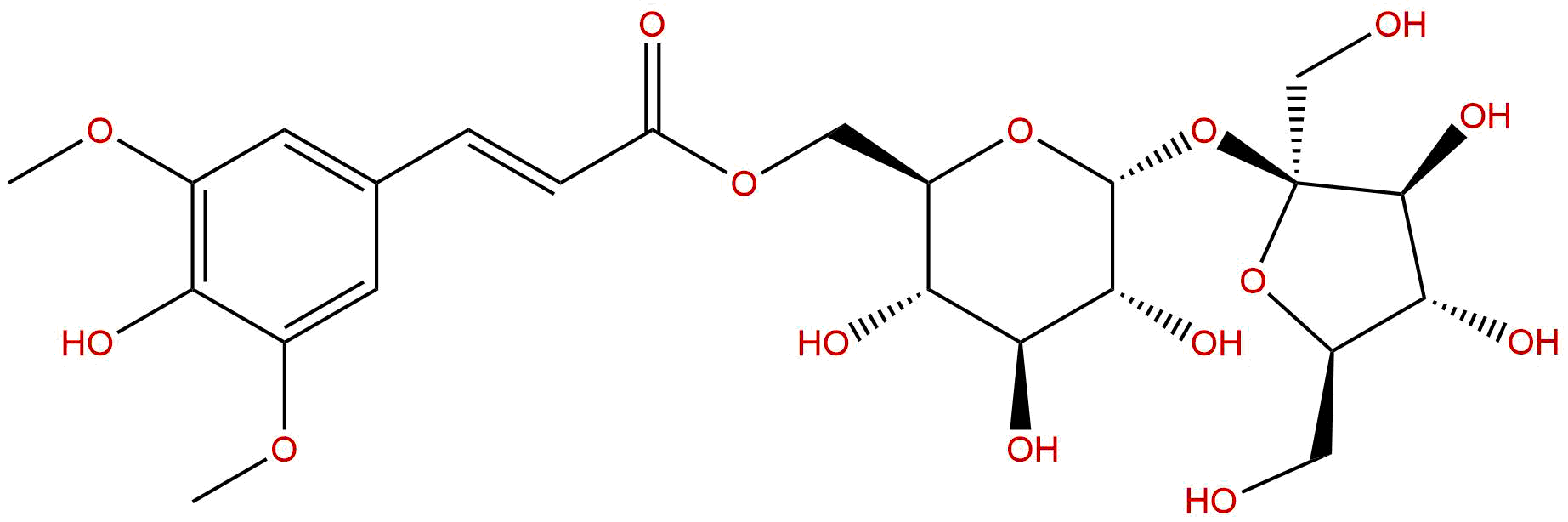
The chemical structure of Sibiricose A1 exhibits typical oligosaccharide ester characteristics. Its molecular skeleton is composed of sucrose (α - D-glucopyranosyl - (1 → 2) - β - D-fructofuranoside) and sinapine (3,5-dimethoxy-4-hydroxycinnamic acid) connected by ester bonds, with the esterification site located at the C-6 hydroxyl group of the glucose unit of sucrose. This structural design allows the molecule to possess both hydrophilic sugar moiety and hydrophobic phenolic ester moiety, forming amphiphilic features. The methoxy and phenolic hydroxyl groups contained in the mustard acid not only endow the molecule with certain antioxidant capacity, but also provide multiple non covalent binding sites for interaction with target proteins.
From the perspective of physical and chemical properties, the molecular weight of 6-glucosinolate sucrose is 548.4940 Da, which belongs to the category of medium-sized natural product molecules. The lipid water partition coefficient (LogP) of the compound is -1.2116, indicating strong hydrophilicity, which is consistent with the presence of multiple hydroxyl and sugar groups in the molecule. The polar surface area (TPSA) is as high as 234.2900 Å ², far exceeding the recommended upper limit of 140 Å ² for oral medications, mainly due to the abundant polar groups such as hydroxyl and ester bonds in the molecule. The water solubility parameter is 11.5018 mg/mL, indicating good water solubility and facilitating dissolution and distribution in the in vivo environment. It is worth noting that the compound has low blood-brain barrier permeability, indicating that it may require special delivery strategies or structural modifications in the treatment of neurological diseases. In addition, the hERG inhibition prediction result was negative, and the Ames test result was 0.0, indicating that the compound did not show significant risks of cardiac toxicity and genetic toxicity in the preliminary safety assessment, which provides favorable conditions for its further drug development.
Plant sources and extraction methods
The main source of 6-glucosinolate sucrose comes from plants in the Eupatoriaceae family, among which Eupatorium is used(Polygala tenuifolia Willd. and Egg Leaf Yuanzhi(Polygala sibirica L. As the main source. Yuanzhi, as a traditional Chinese medicinal herb, has its dried roots recorded in the Pharmacopoeia of the People's Republic of China, which have the effects of calming the mind, improving intelligence, dispelling phlegm, and opening the orifices. Modern plant chemistry research shows that the roots of Polygala tenuifolia contain various active ingredients, including triterpenoid saponins, kaempferol, oligosaccharides, alkaloids, etc. Among them, oligosaccharides are one of the characteristic components of Polygala tenuifolia. The content of 6-glucosinolate sucrose in the roots of Eucommia ulmoides varies depending on factors such as place of origin, harvest season, and processing method, and is usually used as an important indicator component for quality control of Eucommia ulmoides.
Researchers have developed various strategies for the extraction of 6-glucosinolate sucrose. The traditional solvent extraction method usually uses ethanol or methanol as the extraction solvent, and extracts the target compound from the root powder of Eucommia ulmoides by heating reflux or cold soaking. Due to the good water solubility of 6-glucosinolate sucrose, a certain yield can also be obtained by water extraction, but the selectivity is poor. In order to improve extraction efficiency and purity, modern extraction techniques such as ultrasound assisted extraction, microwave-assisted extraction, enzyme assisted extraction, etc. have been gradually introduced. Ultrasound assisted extraction utilizes cavitation effect to disrupt cell wall structure, significantly reducing extraction time and improving the dissolution rate of target compounds. Microwave assisted extraction generates heat through the rapid vibration of polar molecules in a microwave field, accelerating the release of the target compound.
In terms of separation and purification, due to the complex composition of Yuanzhi extract, it is usually necessary to combine multiple chromatographic techniques. Macroporous adsorption resin column chromatography (such as HPD-100, AB-8, etc.) is a commonly used method for preliminary separation, which can effectively enrich oligosaccharide ester components. Subsequently, further purification was carried out by silica gel column chromatography, ODS reverse phase column chromatography, Sephadex LH-20 gel column chromatography, etc. High efficiency preparative liquid chromatography (HPLC) technology has become an important means of obtaining high-purity 6-glucosinolate sucrose due to its high separation efficiency and high purity acquisition ability. In recent years, liquid-liquid distribution chromatography techniques such as high-speed countercurrent chromatography (HSCCC) have also been applied to the separation and purification of this compound, with advantages such as high sample recovery and avoiding irreversible adsorption. By comprehensively utilizing various chromatographic techniques, 6-glucosinolate sucrose monomers with a purity greater than 98% can usually be obtained, meeting the needs of subsequent pharmacological research and structural confirmation.
Pharmacological activity research
The pharmacological activity research of 6-glucosinolate sucrose mainly focuses on anti-inflammatory effects, while there are also studies involving its neuroprotective, antioxidant and other activities. Inflammation is the body's defense response to stimuli such as infection and tissue damage, but excessive or sustained inflammatory reactions are closely related to the occurrence and development of various diseases, including autoimmune diseases, neurodegenerative diseases, cardiovascular diseases, and cancer. Therefore, the search for safe and effective natural products with anti-inflammatory activity has important scientific significance and clinical application value.
In vitro anti-inflammatory activity studies have shown that 6-glucosinolate sucrose exhibits significant ability to inhibit the production of inflammatory mediators. Research has shown that this compound can concentration dependently inhibit the production of nitric oxide (NO) in macrophages stimulated by lipopolysaccharide (LPS), and its mechanism of action is related to the inhibition of inducible nitric oxide synthase (iNOS, encoded by the NOS2 gene) expression. Meanwhile, 6-glucosinolate sucrose can significantly reduce the secretion levels of pro-inflammatory cytokines such as tumor necrosis factor - α (TNF - α) and interleukin-6 (IL-6). In the LPS induced RAW264.7 macrophage inflammation model, treatment with this compound effectively inhibits the expression of cyclooxygenase-2 (COX-2, encoded by the PTGS1 gene), thereby reducing the synthesis of prostaglandin E2 (PGE2). In addition, 6-glucosinolate sucrose also has a regulatory effect on the activity of inflammasome associated protein CASP1 (caspase-1), suggesting that it may affect the maturation and secretion process of IL-1 β.
In terms of in vivo anti-inflammatory activity evaluation, researchers have validated the anti-inflammatory effect of 6-glucosinolate sucrose using various animal models. In the carrageenan induced rat plantar swelling model, gavage administration of 6-glucosinolate sucrose significantly reduced the degree of plantar swelling, and the effect was comparable to that of the positive control drug. In the acetic acid-induced model of increased peritoneal capillary permeability in mice, this compound exhibits significant anti-inflammatory activity and can reduce dye leakage. In addition, in chronic inflammation models such as adjuvant arthritis models, 6-glucosinolate sucrose can reduce joint swelling, lower serum levels of inflammatory factors, and improve pathological changes in joint tissue.
In addition to anti-inflammatory activity, 6-glucosinolate sucrose also exhibits certain neuroprotective effects. In the oxidative stress-induced neuronal damage model, this compound can protect neurons from damage by clearing free radicals and increasing antioxidant enzyme activity. In research related to Alzheimer's disease, 6-glucosinolate sucrose has been found to inhibit the aggregation of β - amyloid protein (A β) and reduce A β - induced neuroinflammatory responses, indicating its potential application value in the treatment of neurodegenerative diseases. In addition, preliminary studies suggest that the compound may have antidepressant like activity, and its mechanism of action may be related to regulating the expression of brain-derived neurotrophic factor (BDNF) and levels of monoamine neurotransmitters.
Mechanism of action and molecular targets
The anti-inflammatory mechanism of 6-glucosinolate sucrose involves multiple signaling pathways and molecular targets, exhibiting characteristics of multi-target regulation. A deep understanding of its mechanism of action is of great significance for elucidating the pharmacological basis of the compound and guiding subsequent drug development.
The nuclear factor kappa B (NF - κ B) signaling pathway is one of the core regulatory pathways of inflammatory response. Research has shown that 6-glucosinolate sucrose can inhibit the phosphorylation of I κ B kinase β (IKBKB) under LPS stimulation, thereby preventing the degradation of I κ B α and allowing NF - κ B (p65 subunit encoded by RELA gene) to remain in the cytoplasm, preventing it from entering the nucleus to initiate the transcription of downstream inflammatory genes. By inhibiting the activation of the NF - κ B pathway, 6-glucosinolate sucrose can downregulate the expression of various inflammation related genes, including genes encoding TNF - α, IL-6, iNOS, and COX-2. This regulatory effect on the NF - κ B pathway is considered one of the core mechanisms by which the compound exerts anti-inflammatory activity.
Signal transducer and activator of transcription factor 3 (STAT3) is another important inflammatory signaling molecule. The abnormal activation of STAT3 is closely related to the occurrence and development of various inflammatory diseases and cancers. Research has found that 6-glucosinolate sucrose can inhibit IL-6-induced STAT3 phosphorylation, block STAT3 dimerization and nuclear translocation, thereby inhibiting its transcriptional activity. Due to the crucial role of the IL-6/STAT3 signaling axis in chronic inflammation and autoimmune diseases, the regulation of this pathway by 6-glucosinolate provides a molecular basis for its treatment of related diseases.
The transient receptor potential (TRP) channel family plays an important role in inflammation and pain perception. TRPV1 and TRPA1 are two important members that can be activated by various inflammatory mediators and participate in the transmission of neurogenic inflammation and pain signals. Research has shown that 6-glucosinolate sucrose can inhibit the activity of TRPV1 and TRPA1, reduce calcium ion influx, and alleviate inflammation related pain and neurogenic inflammatory responses. This regulatory effect on TRP channels provides a new target basis for the application of 6-glucosinolate sucrose in the treatment of inflammatory pain.
In addition, the regulation of inflammasomes by 6-glucosinolate sucrose is also worthy of attention. As a key effector molecule downstream of inflammasomes, CASP1 activation leads to the maturation and secretion of IL-1 β and IL-18. Research has shown that this compound can inhibit the assembly of NLRP3 inflammasomes and the activation of CASP1, thereby reducing the production of IL-1 β. This mechanism further enriches the anti-inflammatory network of 6-glucosinolate sucrose.
Overall, 6-glucosinolate sucrose forms a multi-level anti-inflammatory regulatory network by simultaneously acting on multiple targets such as NF - κ B, STAT3, TRPV1/TRPA1, CASP1, etc. This multi-target mode of action gives it unique advantages in treating complex inflammatory diseases, but it also increases the complexity of studying the mechanism of action. In the future, it is necessary to use methods such as gene knockout, proteomics, and systems pharmacology to further elucidate the interaction relationships between various targets and their relative contributions in different disease models.
Evaluation of drug properties and pharmacokinetics
The pharmacological evaluation of drug candidate molecules is a crucial step in the conversion of natural products into clinical drugs. The physicochemical properties and preliminary pharmacokinetic characteristics of 6-glucosinolate sucrose provide important references for its drug development.
From the perspective of drug properties, the molecular weight of 6-glucosinolate sucrose (548.49 Da) is slightly higher than the Lipinski five rule standard of molecular weight less than 500 Da, but its good water solubility (11.5 mg/mL) and low LogP value (-1.21) indicate that the compound has good water solubility, which is beneficial for the development of oral formulations. The TPSA value (234.29 Å ²) is relatively high, which may affect cell membrane permeability but is also associated with lower toxicity risk. The negative results of hERG inhibition and Ames test further support its preliminary safety.
In terms of pharmacokinetics, although systematic pharmacokinetic studies on 6-glucosinolate sucrose are not yet sufficient, some key characteristics can be inferred based on its structural features and related compound research. This compound contains sugar and ester bonds, and may be metabolized in the gastrointestinal tract by digestive enzymes and gut microbiota. Ester bonds may be hydrolyzed by esterases, releasing sinapine and sucrose, and sinapine itself is also a biologically active phenolic acid compound. This prodrug metabolite relationship may enable 6-glucosinolate sucrose to exert more complex pharmacological effects in vivo. The low permeability of the blood-brain barrier suggests that this compound may require special delivery strategies in the treatment of central nervous system diseases, such as nanocarriers, liposomes, or brain targeted modifications.
Oral bioavailability is a common challenge in the development of natural product drugs. For compounds with high polarity such as 6-glucosinolate sucrose, their oral absorption may be limited. Strategies to improve oral bioavailability include designing prodrugs to improve lipid solubility, using absorption enhancers, and developing novel delivery systems (such as self microemulsifying delivery systems, phospholipid complexes, etc.). In addition, non oral routes such as intravenous injection or transdermal administration may also become alternative options.
In terms of metabolic stability, the ester bond in 6-glucosinolate sucrose is a potential metabolic site that may be hydrolyzed by esterases in plasma or liver. The glycosyl portion may undergo hydrolysis by glycosidase or metabolic transformation by gut microbiota. Phenolic hydroxyl groups may undergo II phase metabolic reactions such as glucuronic acid binding or sulfuric acid binding. These metabolic pathways may result in a shorter half-life of the compound in vivo, requiring the design of a rational dosing regimen or structural modifications to improve metabolic stability.
Clinical application prospects and prospects
Based on the anti-inflammatory activity and multi-target mechanism of action of 6-glucosinolate sucrose, this compound shows potential application prospects in the treatment of various inflammation related diseases.
In the field of inflammatory bowel disease (IBD), including ulcerative colitis and Crohn's disease, 6-glucosinolate sucrose may have therapeutic effects by inhibiting the NF - κ B and STAT3 signaling pathways, reducing the production of pro-inflammatory cytokines, and regulating intestinal immune balance. Its good water solubility is conducive to the development of oral or rectal administration formulations, which directly act on the site of intestinal lesions. In the treatment of rheumatoid arthritis, the regulatory effect of this compound on TRPV1 and TRPA1 may simultaneously alleviate joint inflammation and pain symptoms, with dual therapeutic advantages.
Neuroinflammation is one of the important pathological features in neurodegenerative diseases such as Alzheimer's disease and Parkinson's disease. Although the blood-brain barrier permeability of 6-glucosinolate sucrose is low, effective concentrations in the brain may be achieved through strategies such as nano delivery systems or nasal administration. Its dual antioxidant and anti-inflammatory activities are expected to simultaneously act on multiple pathological stages of neurodegenerative diseases. In addition, the multi-target anti-inflammatory effect of 6-glucosinolate sucrose may provide a new option for treatment in critical diseases such as acute inflammation, sepsis, and acute lung injury.
However, there are still many challenges from laboratory research to clinical application. Firstly, it is necessary to establish efficient and economical synthetic or semi synthetic methods to meet the needs of large-scale production and research. At present, 6-glucosinolate sucrose mainly relies on plant extraction, with limited yield and high cost. The development of chemical synthesis or biosynthetic pathways will help solve the problem of raw material supply. Secondly, systematic pharmacokinetic and toxicological studies are needed to comprehensively evaluate its absorption, distribution, metabolism, excretion characteristics in vivo, as well as the safety of long-term use. Thirdly, it is necessary to use animal models of diseases for a broader pharmacological evaluation, clarifying their therapeutic window and optimal dosing regimen in different diseases. Finally, structural optimization and derivative design are also important research directions. By modifying sugar and phenolic acid moieties or introducing new functional groups, candidate compounds with stronger activity and better pharmacokinetic properties may be obtained.
Conclusion
6-sinapyrylsucrose, as an important active oligosaccharide ester component in Polygala tenuifolia, occupies an important position in natural product pharmacology research due to its unique chemical structure and multi-target anti-inflammatory activity. This compound forms a multi-level anti-inflammatory network by regulating multiple inflammation related targets such as NF - κ B, STAT3, TRPV1/TRPA1, CASP1, etc., demonstrating potential for treating various inflammation related diseases. Its good water solubility, preliminary safety evaluation results, and acceptable pharmacological parameters have laid the foundation for its further development.
However, research on 6-glucosinolate sucrose is still in its early stages, and there are still many issues that need to be addressed between basic research and clinical applications. Future research should focus on the following aspects: in-depth elucidation of its pharmacokinetic characteristics and metabolic pathways in vivo; Using modern medicinal chemistry methods to optimize the structure and improve its drug like properties; Validate its therapeutic effect in a broader range of disease models; Exploring new drug delivery systems to overcome physiological barriers such as the blood-brain barrier; And carry out systematic toxicology and safety evaluations. With the continuous deepening of research, 6-glucosinolate sucrose is expected to become a new candidate drug for the treatment of inflammation related diseases, providing new ideas and examples for the development of natural product drugs.