


Product name: Naringin
Synonym name: Naringenin 7-Rhamnoglucoside; Naringoside; Aurantin; Isohesperidin
Catalogue No.: BP0983
Cas No.: 10236-47-2
Formula: C27H32O14
Mol Weight: 580.539
Botanical Source: Aurantii fructus immaturus
Physical Description:
Type of Compound: Flavonoids
Purity: 95%~99%
Analysis Method: HPLC-DAD or/and HPLC-ELSD
Identification Method: Mass, NMR
Packing: Brown vial or HDPE plastic bottle
Storage: Store in a well closed container, protected from air and light. Put into refrigerate or freeze for long term storage.
Whenever possible, you should prepare and use solutions on the same day. However, if you need to make up stock solutions in advance, we recommend that you store the solution as aliquots in tightly sealed vials at -20℃. Generally, these will be useable for up to two weeks.
The product could be supplied from milligrams to grams
Inquire for bulk scale.
Chengdu Biopurify Phytochemicals Ltd. is a leading company in the research, development, manufacture and marketing of High Quality Phytochemicals and Extracts(especially Active Ingredients from Traditional Chinese Medicine,TCM), Natural Active Pharmaceutical Ingredients worldwide.
The main services:
A. Supply active ingredients and reference standards of TCM, from mgs to kgs scale
B. Custom extraction and purification, target Herb Active Ingredients
C. Custom synthesis and semi-synthesis for Natural Active Ingredients
D. CR(contract research), CM(contract manufacture) and PD(process development) services from lab scale, pilot scale to commercial scale(GMP is also available)
E. TCM compounds library for drug screen,more than 3000 compounds available, many of them are rare and unique.
HPLC of Naringin
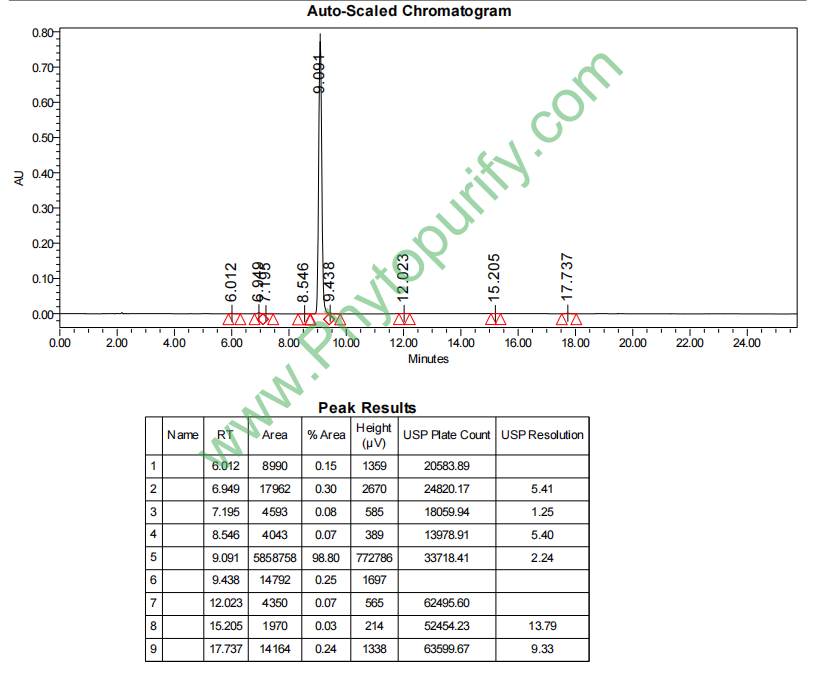
Storage conditions:Short-term storage at 2~8℃, long-term storage at -20 ~ -80℃
225.0600
-.0049
-.0331
4.5537
.4605
.2061
Low
71.6719
4.7383
No
No
No
No
No
No
0.0
Yes
No
Yes
No
Natural products, as an important source of drug discovery, play an irreplaceable role in the long history of human fight against diseases. Flavonoids, as one of the main categories of secondary metabolites in plants, have attracted much attention due to their structural diversity and wide range of biological activities. Naringin, also known as 4 ', 5,7-trihydroxyflavanone-7-rhamnoside, is a typical dihydroflavonoid glycoside compound widely present in Rutaceae plants such as grapefruit (Citrus paradisi), lime (Citrus aurantium), and their related species. Since the first isolation and identification of naringin from grapefruit in the 19th century, research on naringin has spanned over a hundred years. Its unique chemical structure and rich pharmacological activity continue to attract the attention of medicinal chemists, pharmacologists, and clinical researchers.
The biological significance of naringin goes far beyond its sensory properties as a bitter component in citrus fruits. Modern pharmacological studies reveal that naringin has multiple pharmacological effects such as antioxidant, anti-inflammatory, hypolipidemic, anti diabetes, anti-tumor, neuroprotective, bone protective, etc. Its mechanism of action involves multiple signal pathways and molecular targets. Of particular note is that naringin can inhibit the proliferation and invasion of human osteosarcoma cells and induce apoptosis by suppressing zinc finger protein 1 E-box binding protein (Zeb1), providing a new potential strategy for the treatment of osteosarcoma. In addition, the inhibitory effect of naringin on cytochrome P450 enzymes also makes it important in drug drug interaction research.
As the incidence rate of metabolic diseases, cancer, neurodegenerative diseases and other complex diseases continues to rise, the search for natural compounds with multi target characteristics and good safety has become an important direction of new drug research and development. Naringin has shown great potential as a lead compound or dietary supplement due to its broad pharmacological activity spectrum, relatively clear molecular mechanism, and good safety characteristics. This article will systematically review the research progress of naringin from the aspects of chemical structure, plant origin, pharmacological activity, molecular mechanism, medicinal evaluation, and clinical application prospects, in order to provide reference for the in-depth research and development of this natural product.
The chemical structure of Naringin (CAS number 10236-47-2) is composed of naringenin (Naringenin, 4 ', 5,7-trihydroxyflavanone), which is linked to a disaccharide group (α - L-rhamnose - (1 → 2) - β - D-glucose) via a C-7 hydroxyl group. Its molecular formula is C ₂₇ H ∝₂ O ₁₄, and its molecular weight is 580.54 g/mol. From the perspective of structural classification, naringin belongs to the flavonoid glycosides and is a typical representative of dihydroflavonoids. The C2-C3 position in its parent nucleus structure is a saturated bond, which is different from the unsaturated double bond of flavonoids. This structural feature endows flavanones with unique conformational flexibility and biological activity characteristics.
The physicochemical properties of naringin have a decisive impact on its bioavailability and pharmacological behavior. The lipid water partition coefficient (LogP) of this compound is -0.0049, indicating that it has almost moderate lipophilic hydrophilic equilibrium characteristics, but is more inclined towards hydrophilicity. The topological polar surface area (TPSA) is 225.06 Å ², which is much higher than the recommended upper limit of 140 Å ² for oral medications, suggesting that naringin may have membrane permeability limitations. The water solubility parameter is 4.5537, indicating that it has good solubility in aqueous solution, which is consistent with the presence of multiple hydroxyl and sugar groups in its molecule.
In terms of spectroscopic characteristics, naringin exhibits typical flavanone absorption features in the UV visible region: a strong absorption band (band II, caused by the A-ring benzoyl system) appears around 283 nm, while a weak shoulder peak (band I, caused by the B-ring cinnamoyl system) appears at 320-330 nm. In its infrared spectrum, the strong absorption peak at 1640-1650 cm ⁻¹ is attributed to the stretching vibration of the C4 carbonyl group, while the broad peak at 3400-3500 cm ⁻¹ corresponds to the O-H stretching vibration of multiple hydroxyl groups. In the nuclear magnetic resonance hydrogen spectrum, the H-2 and H-3 protons exhibit a typical ABX coupling system, with H-2 (δ 5.3-5.5 ppm) being a double double peak and H-3 (δ 2.7-3.1 ppm) being two sets of double peaks. This feature can be used to distinguish flavanones from other flavonoids.
The stability of naringin is affected by factors such as pH, temperature, and light. Under acidic conditions (pH 2-5), naringin is relatively stable, which is consistent with its presence in citrus fruit juices. However, under alkaline conditions, the C ring of flavanones is prone to undergo ring opening reactions, resulting in the formation of chalcone compounds. In addition, high temperature treatment can lead to hydrolysis of glycosidic bonds, releasing naringin and glycosyl components. These chemical stability characteristics have important guiding significance for the extraction, formulation development, and in vivo metabolism research of naringin.
The distribution of naringin in nature has a high degree of phytochemical classification characteristics, mainly concentrated in citrus plants of the Rutaceae family. Grapefruit (Citrus paradisi) is the most abundant natural source of naringin, with naringin content in its skin and flesh reaching 1-5% of dry weight. The immature fruit of Citrus aurantium (also known as the traditional Chinese medicine "Citrus aurantium") is also an important source of naringin, and its content is usually higher than that of mature fruit. In addition, pomelo (Citrus maxima), sweet orange (Citrus sinensis), and their hybrid varieties also contain varying levels of naringin. It is worth noting that there are significant differences in the distribution of naringin in different tissues of plants. The content of naringin in fruit peels and seeds is usually higher than that in fruit pulp, while the content in leaves and roots is relatively lower.
From the perspective of plant chemical taxonomy, the accumulation of naringin is closely related to the phylogenetic relationship of citrus plants. Generally speaking, varieties with strong bitterness such as grapefruit and lime have higher levels of naringin, while varieties with weaker bitterness such as sweet orange have lower levels. This feature not only provides chemical indicators for the quality evaluation of citrus fruits, but also provides a basis for the selection of raw materials for the industrial production of naringin.
The extraction method of naringin has evolved from traditional solvent extraction to modern green extraction technology. Traditional solvent extraction methods usually use organic solvents such as methanol, ethanol, or acetone, combined with heating reflux or Soxhlet extraction, which have high extraction efficiency but suffer from residual organic solvents and environmental pollution issues. Although the water extraction method is environmentally friendly, its extraction efficiency is relatively low and it is easy to simultaneously extract a large amount of water-soluble impurities. In recent years, green extraction techniques such as ultrasound assisted extraction, microwave-assisted extraction, enzyme assisted extraction, and supercritical fluid extraction have been widely used to optimize the extraction process of naringin.
Ultrasound assisted extraction utilizes the cavitation effect of ultrasound to destroy plant cell walls and promote the dissolution of naringin. It can achieve efficient extraction in a short period of time (usually 15-30 minutes), and the extraction rate can be increased by 20-40% compared to traditional methods. Microwave assisted extraction utilizes the penetration and selective heating properties of microwaves to rapidly raise the temperature of polar solvents, accelerate the dissolution of target compounds, and shorten the extraction time to several minutes. Enzyme assisted extraction uses cellulases, pectinases, and other enzymes to hydrolyze plant cell wall components, reducing mass transfer resistance, and is particularly suitable for the extraction of glycosides such as naringin. Supercritical CO ₂ extraction, as a green and environmentally friendly technology, can be operated at lower temperatures to avoid the degradation of thermosensitive components, but the equipment cost is high and the extraction efficiency of polar compounds is limited.
The purification process after extraction usually includes methods such as macroporous adsorption resin column chromatography, polyamide column chromatography, and preparative high-performance liquid chromatography. Among them, macroporous adsorption resins (such as HPD-100, AB-8, etc.) have become the preferred method for industrial purification of naringin due to their large adsorption capacity, mild desorption conditions, and reusability. By optimizing parameters such as sample concentration, elution solvent (usually ethanol water system), and flow rate, naringin products with a purity of over 90% can be obtained.
The antioxidant activity of naringin is one of its most classic and widely studied pharmacological effects. As a polyphenolic compound, the phenolic hydroxyl groups on the A and B rings of naringin molecules can effectively scavenge free radicals, including hydroxyl radicals (· OH), superoxide anion radicals (O ₂⁻ ·), peroxynitrite (ONOO ⁻), and 1,1-diphenyl-2-trinitrophenylhydrazine radicals (DPPH ·). In vitro experiments have shown that the DPPH free radical scavenging ability of naringin is concentration dependent, and its IC50 value is usually in the range of 10-50 μ M. Although weaker than potent antioxidants such as quercetin, it is superior to many synthetic antioxidants.
The antioxidant mechanism of naringin is not limited to direct free radical scavenging, but also includes chelation of transition metal ions (such as Fe ² ⁺, Cu ² ⁺), activation of endogenous antioxidant enzyme systems (such as superoxide dismutase SOD, glutathione peroxidase GPx, catalase CAT), and upregulation of the nuclear factor E2 related factor 2 (Nrf2) signaling pathway. In cell models, naringin pretreatment significantly reduces oxidative stress-induced intracellular reactive oxygen species (ROS) levels, alleviates the production of lipid peroxidation product malondialdehyde (MDA), and restores glutathione (GSH) levels. In animal models, naringin has shown protective effects against various oxidative stress-related disease models, such as liver injury, kidney injury, myocardial ischemia-reperfusion injury, etc.
The role of naringin in lipid metabolism and sugar metabolism regulation makes it a hot molecule in the study of metabolic diseases. In terms of lowering blood lipids, naringin can significantly reduce serum total cholesterol (TC), triglycerides (TG), and low-density lipoprotein cholesterol (LDL-C) levels in high-fat diet induced hyperlipidemia model animals, while increasing high-density lipoprotein cholesterol (HDL-C) levels. The mechanism involves inhibiting the activity of 3-hydroxy-3-methylglutaryl-CoA reductase (HMG CoA reductase), upregulating the expression of low-density lipoprotein receptor (LDLR), promoting the conversion of cholesterol to bile acids, and inhibiting the activity of fatty acid synthase (FAS).
In terms of anti diabetes, naringin can improve insulin resistance and glucose metabolism disorder through various ways. Naringin can activate AMP activated protein kinase (AMPK), promote the translocation of glucose transporter 4 (GLUT4) to the cell membrane, and enhance glucose uptake in skeletal muscle and adipocytes. In addition, naringin can also inhibit sodium glucose cotransporter 2 (SGLT2), reduce renal reabsorption of glucose, and lower blood glucose levels. It is worth noting that naringin's regulatory effect on glucokinase (GCK) is also involved in its hypoglycemic effect. GCK, as a key enzyme in glucose metabolism, upregulation of its activity can promote liver phosphorylation and utilization of glucose.
The antitumor activity of naringin has been confirmed in a variety of cancer models, including breast cancer, lung cancer, liver cancer, colon cancer, prostate cancer and osteosarcoma. Its anti-tumor mechanism involves multiple levels: inducing cell cycle arrest (usually G0/G1 or G2/M arrest), activating apoptotic signaling pathways (including mitochondrial and death receptor pathways), inhibiting tumor cell migration and invasion, reversing epithelial mesenchymal transition (EMT), and regulating the tumor microenvironment.
Of particular note is that naringin has a significant inhibitory effect on human osteosarcoma cells. Research has found that naringin can inhibit the proliferation and invasion of osteosarcoma cells and induce apoptosis by suppressing the expression of zinc finger protein 1 E-box binding protein (Zeb1). Zeb1 is a key transcription factor in the EMT process, and its abnormal expression is closely related to the invasion, metastasis, and poor prognosis of various malignant tumors. The inhibitory effect of naringin on Zeb1 may be achieved by regulating the TGF - β/Smad signaling pathway or miRNA network, providing a new approach for targeted therapy of osteosarcoma.
The anti-inflammatory activity of naringin is closely related to its antioxidant activity, but it also involves independent molecular mechanisms. Naringin can inhibit the production of pro-inflammatory cytokines (such as TNF - α, IL-1 β, IL-6) and nitric oxide (NO) in macrophages induced by lipopolysaccharide (LPS), and its mechanism involves inhibiting the activation of nuclear factor kappa B (NF - κ B) and mitogen activated protein kinase (MAPK) signaling pathways. In addition, naringin can also exert anti-inflammatory effects by activating the Nrf2/ARE pathway and upregulating the expression of antioxidant enzymes such as heme oxygenase-1 (HO-1).
The regulatory effect of naringin on bone metabolism has received increasing attention in recent years. In osteoblasts, naringin can promote the expression of osteogenic differentiation markers such as alkaline phosphatase ALP, osteocalcin OCN, Runx2, and enhance the formation of mineralized nodules. In osteoclasts, naringin can inhibit the differentiation of osteoclasts induced by receptor activator of nuclear factor kappa B ligand (RANKL) and reduce the formation of bone resorption cavities. These effects suggest that naringin may have therapeutic potential for bone metabolism diseases such as osteoporosis.
The pharmacological activity of naringin originates from its interactions with multiple molecular targets, which involve multiple biological processes such as signal transduction, gene expression regulation, and metabolic enzyme activity. A deep understanding of the molecular mechanism of naringin is of great significance for elucidating its pharmacological spectrum, predicting potential side effects, and guiding structural optimization.
The activation of AMPK signaling pathway by naringin is one of the core mechanisms of its metabolic regulation. AMPK, as a cellular energy receptor, plays a crucial role in maintaining energy homeostasis. Naringin promotes AMPK phosphorylation activation by increasing the intracellular AMP/ATP ratio or directly binding to the gamma subunit of AMPK. Activated AMPK further phosphorylates downstream target proteins, including acetyl CoA carboxylase (ACC), HMG CoA reductase, and mammalian rapamycin target protein (mTOR), thereby inhibiting fatty acid and cholesterol synthesis, promoting fatty acid oxidation, and glucose uptake.
The inhibition of NF - κ B signaling pathway by naringin is an important basis for its anti-inflammatory and anti-tumor activities. Naringin can inhibit the activity of I κ B kinase (IKK), prevent the phosphorylation and degradation of I κ B α, and thus inhibit the nuclear translocation and transcriptional activity of NF - κ B. In addition, naringin can directly interact with the p65 subunit, interfering with its binding to DNA. Inhibition of the NF - κ B pathway leads to downregulation of downstream pro-inflammatory cytokines, anti apoptotic proteins, and cell cycle regulators.
In terms of anti-tumor effects, the inhibitory mechanism of naringin on Zeb1 is particularly noteworthy. Zeb1 is a key transcription factor in the EMT process, and its expression is regulated by multiple signaling pathways such as TGF - β/Smad, Wnt/β - catenin, and PI3K/Akt. Naringin may downregulate Zeb1 transcription by inhibiting TGF - β receptor activity or interfering with Smad complex formation. In addition, naringin can promote the degradation of Zeb1 mRNA by upregulating miR-200 family members (such as miR-200a, miR-200b, miR-200c). The downregulation of Zeb1 expression leads to the recovery of epithelial markers such as E-cadherin, as well as the downregulation of stromal markers such as N-cadherin and vimentin, thereby inhibiting the invasion and metastasis of tumor cells.
The inhibitory effect of naringin on cytochrome P450 enzyme is the focus of its drug drug interaction research. Naringin and its metabolite naringin can inhibit the activity of various CYP450 subtypes such as CYP3A4, CYP2C9, and CYP1A2. Among them, the inhibitory effect on CYP3A4 is the most significant, which explains the phenomenon of interactions between grapefruit juice and various drugs such as calcium channel blockers, statins, immunosuppressants, etc. The inhibitory mechanism of naringin on CYP3A4 involves two ways: competitive inhibition and mechanistic inactivation, and its inhibition constant (Ki) is usually in the micromolar range.
The inhibitory effect of naringin on SGLT2 provides a new molecular basis for its anti diabetes activity. SGLT2 is the main transport protein responsible for glucose reabsorption in the proximal convoluted tubules of the kidney. Its inhibitors (such as daggligin, enggligin, etc.) have become important drugs for the treatment of type 2 diabetes. As a natural SGLT2 inhibitor, naringin has weaker inhibitory activity than synthetic drugs, but it is safer and can be used as a lead compound for structural optimization.
In recent years, the epigenetic regulation of naringin has gradually received attention. Naringin can inhibit histone deacetylase (HDAC) activity, especially HDAC1 and HDAC3 subtypes, leading to increased histone acetylation levels, chromatin structure relaxation, and promotion of tumor suppressor gene transcription. In addition, naringin can regulate the activity of DNA methyltransferase (DNMT) and affect the methylation status of gene promoter regions. These epigenetic regulatory effects may be involved in the anti-tumor and anti-inflammatory activities of naringin.
The pharmacological parameters of naringin provide important references for its drug development. The molecular weight of 580.54 Da exceeds the threshold of Lipinski's five rule for molecular weight<500 Da, indicating the possibility of oral absorption disorders. The LogP value is -0.0049, which meets the requirement of LogP<5, but the lower lipid solubility may limit its transmembrane permeability. The TPSA is 225.06 Å ², much higher than the recommended upper limit of 140 Å ², indicating that naringin may be difficult to passively diffuse through the cell membrane. The water solubility parameter of 4.5537 indicates that it has good water solubility, which is beneficial for formulation development.
In terms of safety, the hERG inhibition risk of naringin is negative, indicating a low risk of cardiac toxicity. The Ames test result is 0.0, indicating that it has no mutagenicity. These safety parameters provide favorable conditions for the further development of naringin. However, the inhibitory effect of naringin on CYP450 enzyme is not only a part of its pharmacological activity, but also poses a risk of drug drug interactions, which requires special attention in clinical applications.
The oral bioavailability of naringin is relatively low, which is closely related to its physicochemical properties. After oral administration, naringin is partially metabolized by gut microbiota in the gastrointestinal tract and hydrolyzed into naringin and glycosyl components. Naringin, as the main form of absorption, undergoes phase II metabolism in the liver and intestinal wall after being absorbed by small intestinal epithelial cells, mainly producing glucuronic acid conjugates and sulfate conjugates. The peak plasma concentration (Cmax) of naringin and its metabolites usually reaches 1-4 hours after oral administration, but there are significant individual differences, which are influenced by various factors such as gut microbiota composition, food composition, and genetic factors.
The tissue distribution study of naringin shows that its metabolite naringin can be widely distributed in tissues such as liver, kidney, heart, lung, and brain. Although naringin has low blood-brain barrier permeability (BBB parameter is low), its metabolite naringin may enter the central nervous system through passive diffusion or transporter mediated pathways, providing a pharmacokinetic basis for naringin's neuroprotective effects.
The elimination of naringin is mainly achieved through two pathways: bile excretion and renal excretion. In the liver, naringin and its metabolites are excreted through bile into the intestine, and some can be re hydrolyzed and absorbed by gut microbiota, forming the enterohepatic circulation. The renal excretion is mainly composed of metabolic products such as glucuronic acid complexes and sulfate complexes, and the renal excretion of the prototype drug is relatively low. The half-life (t ₁/₂) of naringin is about 2-4 hours, but there are significant individual differences, which are influenced by dosage, administration route, and individual metabolic capacity.
Given the low oral bioavailability of naringin, various formulation strategies have been used to improve its absorption and bioavailability. New drug delivery systems such as liposomes, nanoparticles, solid dispersions, phospholipid complexes, and cyclodextrin inclusion complexes have been studied for the delivery of naringin. Among them, phospholipid complexes can significantly improve the lipid solubility and transmembrane permeability of naringin by forming non covalent complexes, and oral bioavailability can be increased by 2-4 times. Nanocrystallization technology can improve the dissolution rate and saturation solubility of naringin by reducing drug particle size and increasing specific surface area, thereby enhancing its oral absorption.
Naringin shows a broad application prospect in the prevention and treatment of metabolic diseases such as type 2 diabetes and dyslipidemia. It exerts its hypoglycemic effect through multi-target mechanisms such as activating AMPK, inhibiting SGLT2, and regulating GCK, which are complementary to the mechanisms of existing hypoglycemic drugs such as metformin and SGLT2 inhibitors. Preclinical studies have confirmed the effectiveness of naringin in diabetes animal models, but the clinical trial evidence is still insufficient. Future research should focus on the intervention effect of naringin in pre diabetes population, as well as its combined use strategy with conventional hypoglycemic drugs.
In terms of lowering blood lipids, the HMG CoA reductase inhibitory activity of naringin gives it a statin like effect, but its strength of action is weaker and it is more suitable as a dietary supplement or adjuvant therapy drug. It is worth noting that the inhibitory effect of naringin on CYP3A4 may interact with statins such as simvastatin and atorvastatin, increasing the blood concentration and muscle toxicity risk of statins. This drug drug interaction requires special attention in clinical applications.
The inhibitory effect of naringin on the proliferation and invasion of osteosarcoma cells, especially through the mechanism of inhibiting Zeb1, provides a new potential strategy for the treatment of osteosarcoma. Osteosarcoma is the most common primary malignant bone tumor in adolescents and children, and the current standard treatment (surgery combined with chemotherapy) has limited efficacy and serious toxic side effects. As a natural product, naringin has the advantage of high safety and can be used as a candidate drug for adjuvant therapy of osteosarcoma. However, its efficacy and in vivo pharmacokinetic characteristics in animal models of osteosarcoma still need further validation.
In addition to osteosarcoma, the inhibitory effect of naringin on other types of tumors (such as breast cancer, lung cancer, liver cancer, colon cancer, etc.) also deserves further study. Especially the reversal effect of naringin on the EMT process may be of great significance in inhibiting tumor metastasis. Future research should focus on the combined use of naringin and chemotherapy drugs (such as cisplatin, paclitaxel, doxorubicin, etc.) to explore their synergistic anti-tumor effects and potential for reducing chemotherapy toxicity.
The antioxidant and anti-inflammatory activities of naringin make it have potential application value in neurodegenerative diseases (such as Alzheimer's disease, Parkinson's disease), cardiovascular diseases (such as atherosclerosis, myocardial ischemia-reperfusion injury) and bone metabolic diseases (such as osteoporosis). In the Alzheimer's disease model, naringin can reduce the aggregation and deposition of β - amyloid protein (A β), inhibit the excessive phosphorylation of tau protein, and improve cognitive function. In the osteoporosis model, naringin increases bone density and strength by promoting osteogenic differentiation and inhibiting osteoclast activity.
Despite the rich pharmacological activity and good safety of naringin, its clinical translation still faces multiple challenges. Firstly, the low oral bioavailability is the main bottleneck restricting its clinical application, requiring the development of efficient delivery systems or structural modifications to improve absorption. Secondly, the inhibitory effect of naringin on CYP450 enzyme is not only a part of its pharmacological activity, but also poses a risk of drug drug interactions, and a reasonable medication monitoring strategy needs to be established in clinical applications. Thirdly, although the multi-target action characteristics of naringin are beneficial for the treatment of complex diseases, they also increase the complexity of the mechanism of action research, requiring the integrated application of systems biology and network pharmacology methods.
Future research directions should focus on the following aspects: firstly, optimizing the structure of naringin skeleton, improving its oral bioavailability and targeting through prodrug design, glycosylation modification, or introduction of specific functional groups; The second is to further elucidate the molecular targets and signaling network of naringin, especially its interaction mechanism with key targets such as Zeb1, AMPK, SGLT2, etc; The third is to carry out high-quality clinical research to verify the efficacy and safety of naringin in specific diseases (such as diabetes and osteosarcoma); The fourth is to explore the synergistic effect between naringin and existing drugs, and develop compound formulations or combination therapy based on naringin.
Naringin, as a flavonoid glycoside abundant in citrus fruits, has become an important molecule in the field of natural product research due to its unique chemical structure and extensive pharmacological activity. From antioxidant, hypolipidemic, anti diabetes to anti-tumor, bone protection, naringin's multi-target action characteristics make it show great potential in the prevention and treatment of metabolic diseases, tumors and degenerative diseases. In particular, the discovery that naringin inhibits the proliferation and invasion of osteosarcoma cells by suppressing Zeb1 has opened up new directions for its application in the treatment of bone tumors.
However, the clinical translation of naringin still faces challenges such as low oral bioavailability and drug drug interaction risks. Future research needs to deepen the elucidation of its molecular mechanism, and promote the transition of naringin from laboratory research to clinical application through structural optimization, formulation innovation, and clinical validation. As researchers in the field of natural product pharmacology, we have reason to believe that naringin, an ancient and novel natural molecule, will radiate new vitality in the era of precision medicine and personalized treatment, and make greater contributions to human health.
