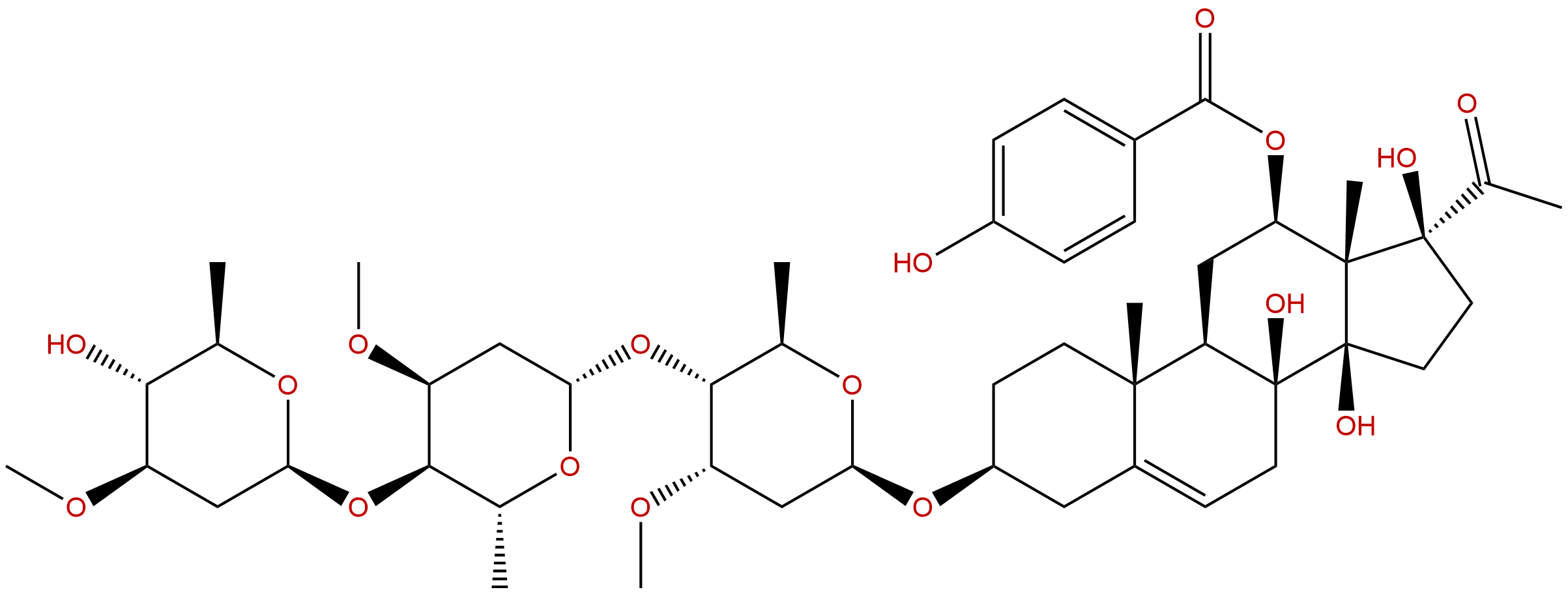


Product name: Otophylloside A
Synonym name: Qingyangshengenin A
Catalogue No.: BP3299
Cas No.: 106644-33-1
Formula: C49H72O17
Mol Weight: 933.098
Botanical Source:
Physical Description:
Type of Compound:
Purity: 95%~99%
Analysis Method: HPLC-DAD or/and HPLC-ELSD
Identification Method: Mass, NMR
Packing: Brown vial or HDPE plastic bottle
The product could be supplied from milligrams to grams. Inquire for bulk scale.
We provide solution to improve the water-solubility of compounds, thereby facilitating the variety of activity tests and clinic uses.
For Reference Standard and R&D, Not for Human Use Directly.
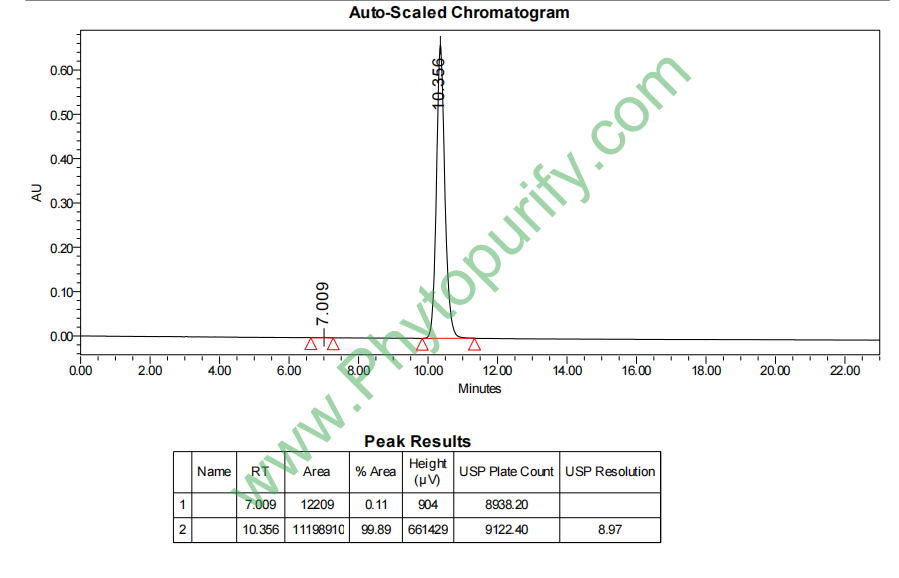
HPLC of Otophylloside A
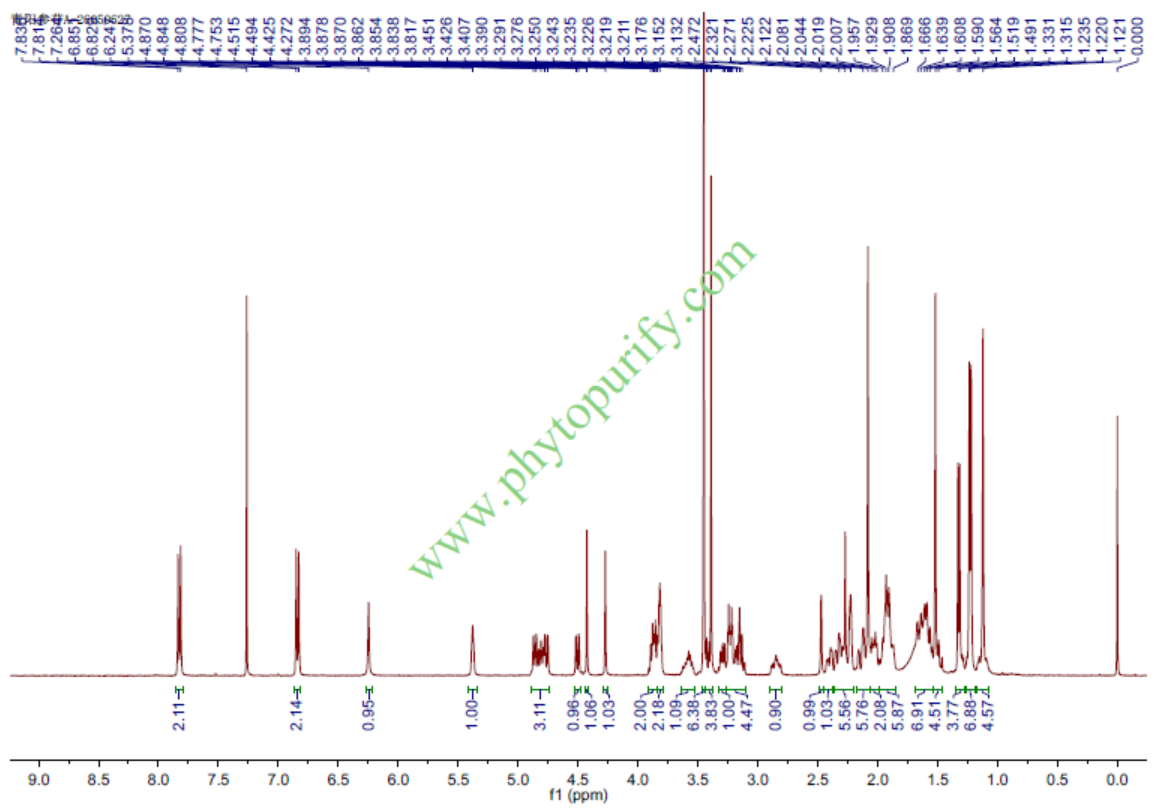
HNMR of Otophylloside A
Storage conditions:Short-term storage at 2~8℃, long-term storage at -20 ~ -80℃
227.5900
2.9128
2.9067
.0351
1.0998
1.8274
Low
76.5127
6.3532
No
No
Yes
No
No
No
0.0
Yes
No
Yes
Yes
Epilepsy is a chronic disease of the central nervous system characterized by abnormal excessive discharge of brain neurons, with a global prevalence of approximately 0.5% -1%, which imposes a heavy burden on patients, families, and society. Despite the wide variety of antiepileptic drugs (AEDs) available, approximately 30% of patients still have poor response to drug therapy and develop drug-resistant epilepsy. Therefore, searching for novel anti epileptic lead compounds with novel structures, unique mechanisms of action, and minimal side effects from natural products has always been an important direction in drug development. Otophylloid A, a C21 steroid glycoside isolated from the traditional antiepileptic medicinal plant Qingyang Shen, has attracted the attention of pharmacological researchers in recent years due to its significant activity and unique multi-target action characteristics in various epilepsy models. This article aims to systematically review the chemical properties, plant sources, pharmacological activities, mechanisms of action, pharmacological evaluation, and clinical application prospects of Qingyang ginseng glycoside A, in order to provide comprehensive scientific references for the in-depth research and development of this natural product.
Qingyang ginseng glycoside A (CAS number: 106644-33-1) is a structurally complex C21 steroidal saponin. Its molecular formula is C47H74O17 and its molecular weight is 933.0980. Its core structure is the pregnane skeleton, with oligosaccharide chains connected at positions C-3 and C-20, respectively. The typical characteristics of C21 steroidal glycosides include the presence of β - hydroxyl groups at positions C-8 and C-14, and the presence of α - configured 2-methyl-2-butenoate side chains at position C-17. The specific glycosylation composition and connection mode of Qingyang ginseng glycoside A are key to its biological activity, usually including deoxygenated sugars such as digitalis toxin sugar and oleander sugar. The presence of these glycosylation groups significantly affects its solubility, membrane permeability, and target affinity.
Based on the analysis of physicochemical parameters related to drug properties, the calculated lipid water partition coefficient (LogP) is 2.9128, indicating that the compound has moderate lipophilicity and is conducive to transmembrane transport. However, its topologically polar surface area (TPSA) is as high as 227.59 Å ², mainly attributed to the numerous hydroxyl and glycosidic oxygen atoms in the molecule, resulting in its high molecular polarity. This characteristic directly affects its water solubility, with a calculated value of only 0.0351 mg/mL, making it a poorly soluble compound. The larger molecular weight and higher TPSA also jointly determine that its blood-brain barrier (BBB) permeability is predicted to be "low", which poses the primary challenge for its development as a central nervous system drug. It is worth noting that the preliminary toxicity prediction shows that the hERG inhibition risk is "no", and the Ames test mutagenicity prediction value is 0.0, indicating that it may have good cardiac safety and low genetic toxicity risk, laying a preliminary safety foundation for its subsequent development.
Qingyang Ginseng Glycoside A is mainly derived from Qingyang Ginseng, a plant of the goosefoot vine genus in the family Loricaceae(Cynanchum otophyllum The rhizome of Schneid. Qingyang ginseng, also known as "Xiao Bai Jian" or "Xiao Lv Yang Jiao Teng", is mainly distributed in Yunnan, Sichuan, Guizhou and other places in China. It has a long history of medicinal use in folk areas, especially in ethnic minority areas of Yunnan. It is commonly used to treat epilepsy, wind shock, rheumatism and pain.
Its extraction and separation usually follow the classic process of natural product chemistry. Firstly, the dried roots and stems of Qingyang ginseng are crushed and heated with methanol or ethanol (70% -95%) for reflux or ultrasound assisted extraction. After concentration, the total extract is obtained. Subsequently, using macroporous adsorption resin (such as D101) column chromatography, gradient elution was carried out with different concentrations of ethanol water system to preliminarily enrich saponin sites. Further purification is often carried out using silica gel column chromatography with mixed solvents such as chloroform methanol water for elution. Due to the low content of Qingyang ginseng glycoside A in plants and its coexistence with structurally similar compounds, it is often necessary to combine reverse phase preparative high performance liquid chromatography (RP preparatory HPLC) using a C18 column and methanol water or acetonitrile water as the mobile phase for final purification to obtain high-purity monomer compounds. Modern technologies such as high-speed countercurrent chromatography (HSCCC) have also been applied for efficient separation of such complex saponins. The optimization of extraction processes, such as enzyme assisted extraction and microwave-assisted extraction, aims to improve the yield and purity of target compounds, which is an important aspect of related research.
The pharmacological activity research of Qingyang ginseng glycoside A mainly focuses on the nervous system, especially in terms of antiepileptic and neuroprotective effects, with sufficient and convincing evidence.
1. Antiepileptic activity:
This is the core pharmacological effect of Qingyang ginseng glycoside A. In various experimental epilepsy models, Qingyang ginseng glycoside A has shown significant effects. In the Maximum Electric Shock (MES) model, it can effectively prolong the latency of spasms and reduce the intensity of seizures; In the chemical seizure model induced by pentylenetetrazine (PTZ), it can increase the seizure threshold, delay or even prevent the occurrence of tonic clonic seizures. It is worth noting that in more complex chronic epilepsy models, such as the pilocarpine induced temporal lobe epilepsy rat model, Qingyang ginseng glycoside A not only reduces the level and frequency of acute phase epileptic seizures, but long-term administration can also inhibit spontaneous recurrent epileptic seizures and reduce hippocampal neuron damage. This characteristic is of great significance for the treatment of refractory temporal lobe epilepsy. Compared with traditional AEDs such as sodium phenytoin and sodium valproate, Qingyang ginseng glycoside A has comparable activity in some models and shows smaller sedative and motor coordination side effects in certain behavioral tests.
2. Neuroprotection and anti apoptotic activity:
The excitotoxic damage to neurons caused by epileptic seizures is an important mechanism of disease chronicity. Research has shown that Qingyang ginseng glycoside A can significantly alleviate glutamate induced damage to PC12 cells or primary cortical neurons, and improve cell survival rate. In an in vivo epilepsy model, it can reduce neuronal loss in vulnerable areas such as the hippocampal CA1 and CA3 regions. Its neuroprotective effect is closely related to the inhibition of mitochondrial apoptosis pathway, manifested by upregulation of Bcl-2 protein expression, downregulation of Bax protein expression, inhibition of caspase-3 activation, thereby blocking the process of neuronal apoptosis.
3. Sedative and anti anxiety like activity:
In behavioral tests such as the opening experiment and elevated cross maze, Qingyang Ginseng Glycoside A can reduce the autonomous activity of animals, increase their dwell time and entry frequency in the open arm, and exhibit certain sedative and anti anxiety like effects. This central inhibitory effect may synergize with its antiepileptic effect, helping to comprehensively control the emotional and behavioral problems associated with epilepsy.
4. Other potential activities:
Preliminary studies also suggest that Qingyang ginseng glycoside A may have anti-inflammatory and antioxidant stress relieving effects. It can inhibit the overexpression of pro-inflammatory factors (such as TNF - α, IL-1 β) in epileptic brain tissue, and enhance the activity of superoxide dismutase (SOD) and glutathione peroxidase (GSH Px), reducing oxidative damage. These multifaceted effects together form a comprehensive network for combating the pathological process of epilepsy.
The antiepileptic effect of Qingyang ginseng glycoside A is not achieved through a single target, but exhibits characteristics of multi-target and multi pathway regulation, which may be its advantage in combating complex epilepsy networks. Existing research has revealed its interactions with multiple key targets and pathways:
1. Regulating the neurotransmitter system:
* Cholinergic system: Qingyang ginseng glycoside A can non competitively inhibit acetylcholinesterase (ACHE) activity and increase synaptic acetylcholine levels. Meanwhile, studies have shown that it can affect the α 7 nicotinic acetylcholine receptor (CHRNA7), which is closely related to cognition, neuroprotection, and anti-inflammatory effects. Its regulation may be involved in the neuroprotective effects of Qingyang ginseng glycoside A.
* GABAergic system: As the most important inhibitory neurotransmitter system, the dysfunction of the GABAergic system is an important mechanism in the occurrence of epilepsy. Qingyang ginseng glycoside A has been shown to upregulate the expression of GABA_A receptor alpha 1 subunit (GABRA1), enhance GABA mediated inhibitory postsynaptic currents, and restore the excitation/inhibition balance in the brain.
* Glutamate energy system: Glutamate is the main excitatory neurotransmitter. Qingyang ginseng glycoside A may indirectly regulate neuronal excitability by regulating the expression or function of AMPA glutamate receptor subunit GRIA1.
2. Adjust ion channels:
* Voltage gated sodium channels (VGSCs): The enhancement of sodium channel function is a common mechanism in many epilepsy cases. Qingyang ginseng glycoside A may stabilize neuronal membrane potential and inhibit the diffusion of abnormal discharges by acting on neuronal voltage-gated sodium channel subtypes (such as SCN1A, associated with Dravet syndrome).
* Voltage gated calcium channels (VGCCs): T-type calcium channels (such as CACNA1H) play a crucial role in the rhythmic firing of thalamic cortical neurons and are closely associated with absence seizures. Qingyang ginseng glycoside A may inhibit T-type calcium channels, thereby interfering with the initiation and synchronization of epileptic discharges.
3. Regulating intracellular signaling pathways:
* PI3K/Akt signaling pathway: This pathway is the core of regulating cell survival, proliferation, and metabolism. Qingyang ginseng glycoside A can activate PI3K (whose catalytic subunit is PIK3CA) and its downstream effector molecule AKT1 (protein kinase B). Activated Akt exerts strong anti apoptotic and neuroprotective effects by phosphorylating and inhibiting various pro apoptotic factors such as Bad and caspase-9, as well as activating survival signals such as NF - κ B.
* NF - κ B signaling pathway: Nuclear factor kappa B (NF - κ B, represented by NFKB1/p50 subunit) is a key transcription factor in inflammation and stress responses. Seizures can overactivate NF - κ B, induce the expression of pro-inflammatory cytokines and pro apoptotic genes. Qingyang ginseng glycoside A has been shown to inhibit abnormal activation of NF - κ B and alleviate neuroinflammation, which is another important mechanism of its neuroprotection.
* Apoptosis execution pathway: As mentioned earlier, Qingyang ginseng glycoside A can directly inhibit the activation of apoptosis executor caspase-3 (CASP3), which is the final step in its anti apoptotic effect.
In summary, Qingyang Ginseng Glycoside A synergistically acts on neurotransmitter receptors and ion channels, activating endogenous neuroprotective pathways (PI3K/Akt) and inhibiting pro-inflammatory/pro apoptotic pathways (NF - κ B/Caspase-3), forming a multi-level antiepileptic network. This provides a new approach for developing novel antiepileptic drugs with disease modifying potential.
Although Qingyang ginseng glycoside A has shown great potential in pharmacological activity, its pharmacological development, especially as a central nervous system drug, still faces significant challenges, mainly based on its physicochemical properties and preliminary pharmacokinetic characteristics.
1. Absorption and distribution:
As a steroid saponin with a molecular weight exceeding 900 and extremely high TPSA, the oral bioavailability of Qingyang ginseng glycoside A is expected to be low. Although its moderate LogP value is beneficial for passive diffusion, its enormous polarity and molecular size severely limit its ability to pass through gastrointestinal epithelial cells and capillary endothelial cells. The most critical limitation lies in its Poor blood-brain barrier permeability The tight junction of the BBB and efficient efflux pumps (such as P-glycoprotein) effectively block these large polar molecules, making it difficult for drugs to reach effective therapeutic concentrations in the brain. This is the primary obstacle that must be overcome in developing it into an antiepileptic drug.
2. Metabolism and excretion:
C21 steroidal glycosides are susceptible to the influence of gastrointestinal microbiota and liver metabolic enzymes in vivo. Glycoside bonds may be hydrolyzed by glycosidase in intestinal bacteria to generate aglycones, whose activity and toxicity may differ from the prototype drug. The metabolism of phase I (such as CYP450 enzyme system) and phase II (such as glucuronic acid binding and sulfation) in the liver may also rapidly inactivate and convert them into more polar metabolites, which are excreted through bile or kidneys. At present, research on the specific metabolic pathway and enzyme spectrum of Qingyang ginseng glycoside A is not sufficient.
3. Preliminary safety evaluation:
Based on computational predictions, there is no significant risk of hERG channel inhibition or genotoxicity (Ames test negative), which is a positive signal. However, comprehensive preclinical safety evaluations, including acute toxicity, chronic toxicity, reproductive toxicity, etc., have not yet been systematically carried out. Saponin compounds often cause gastrointestinal irritation or hemolysis due to their surface activity, which requires close attention in subsequent research.
4. Prospects for Formulation Strategies:
In order to improve its pharmacological properties, advanced formulation technology may be required: ① Prodrug strategy Modify the hydroxyl or carboxyl groups in the molecule through esterification, amidation, and other methods to prepare lipophilic prodrugs, in order to increase BBB permeability and convert them into active forms in the brain. ② Nano drug delivery system Encapsulate it in liposomes, polymer nanoparticles, or solid lipid nanoparticles, promote intestinal absorption using nanocarriers, and achieve brain targeted delivery through surface modification (such as connecting BBB targeting ligands). ③ Pharmacodynamic optimization Simplify or replace the sugar moiety while maintaining the core active structure, and find the optimal balance between activity and drug formation.
Qingyang ginseng glycoside A, as a natural active molecule derived from traditional medicine, has broad clinical application prospects but a tortuous path.
As a lead compound of a novel antiepileptic drug:
Its greatest value lies in providing a new chemical framework and paradigm of action for the development of "disease modified" antiepileptic drugs that have multiple targets, both anticonvulsant and neuroprotective effects. Especially for difficult to treat epilepsy with poor control by existing drugs, especially for types accompanied by structural damage such as hippocampal sclerosis, the multi-path neuroprotective mechanism of Qingyang Ginseng Glycoside A may bring additional benefits.
2. Potential of combination therapy:
Given its unique mechanism of action, the combination of Qingyang ginseng glycoside A with traditional AEDs such as sodium channel blockers and GABAergic drugs may produce synergistic or synergistic effects, and may reduce their respective dosages through different mechanisms, thereby reducing side effects. This requires systematic in vitro and in vivo interaction studies to verify.
3. Potential indications beyond epilepsy:
The neuroprotective, anti apoptotic, and anti-inflammatory mechanisms suggest that the study of Qingyang ginseng glycoside A should not be limited to epilepsy. Similar pathological processes (excitotoxicity, oxidative stress, neuroinflammation) also play important roles in other central nervous system diseases such as Alzheimer's disease, Parkinson's disease, stroke, and neuropathic pain. Therefore, expanding the research on its indications has important scientific significance.
4. Challenges and future research directions:
* Optimization of drug properties: As mentioned earlier, solving the problems of poor solubility and low BBB permeability through medicinal chemistry and pharmacology is the core of promoting its clinical translation.
* In depth explanation of the mechanism: It is necessary to use techniques such as molecular docking, surface plasmon resonance, gene knockout/knockdown to more accurately verify its direct interaction relationship and binding site with the above-mentioned targets.
* Systematic pharmacokinetic studies: Conduct a comprehensive study on ADME (absorption, distribution, metabolism, excretion) to clarify its in vivo fate, active metabolites, and main elimination pathways.
* Standardized security evaluation: According to the standards for innovative drug development, complete a full set of GLP toxicology studies and comprehensively evaluate their safety.
* Clinical study design: On the basis of completing preclinical research, design a reasonable clinical trial plan to explore its effectiveness and safety in patients with refractory epilepsy.
Qingyang Ginseng Glycoside A is a representative C21 steroid glycoside active compound discovered from the traditional antiepileptic herb Qingyang Ginseng. A large number of preclinical pharmacological studies have confirmed that through multi-target and multi pathway mechanisms, it can not only effectively inhibit various experimental epileptic seizures, but also exert neuroprotective, anti apoptotic, and anti-inflammatory effects, demonstrating the potential for disease modification beyond simple symptom control. Its unique multi-target mode of action provides new ideas for dealing with complex epilepsy neural networks. However, the low water solubility and blood-brain barrier permeability caused by its inherent physicochemical properties are the main bottlenecks for its clinical application. Future research should focus on optimizing its drug properties through rational structural modifications and advanced delivery strategies, while conducting in-depth systematic pharmacokinetic and toxicological studies. Only through interdisciplinary collaboration and deep integration of traditional medicinal wisdom with modern science and technology can Qingyang Ginseng Glycoside A, a molecular treasure gifted by ancient plants, ultimately benefit epilepsy patients worldwide and bring new insights for the treatment of other neurological diseases.
