


Synonym name: Qingyangshengenin
Catalogue No.: BP1185
Cas No.: 84745-94-8
Formula: C28H36O8
Mol Weight: 500.588
Botanical Source: Cynanchum otophyllum, Cynanchum wallichii and Marsdenia incisa
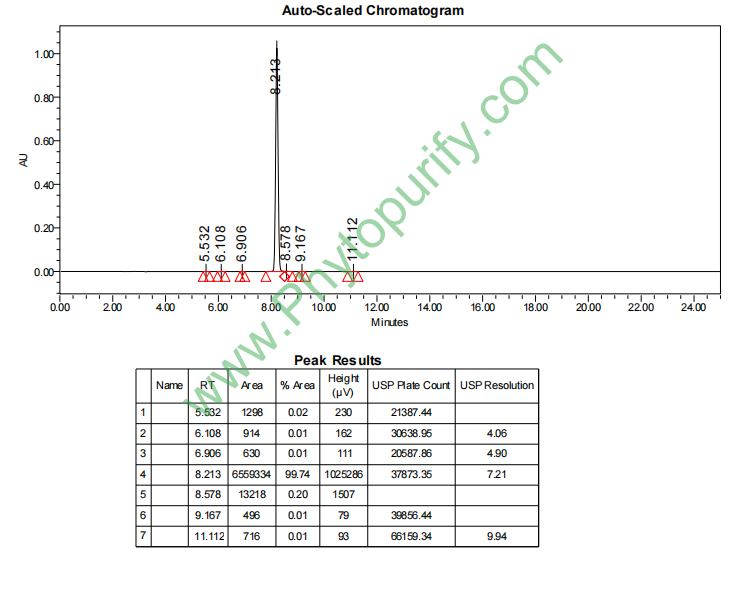
Purity: 95%~99%
Analysis Method: HPLC-DAD or/and HPLC-ELSD
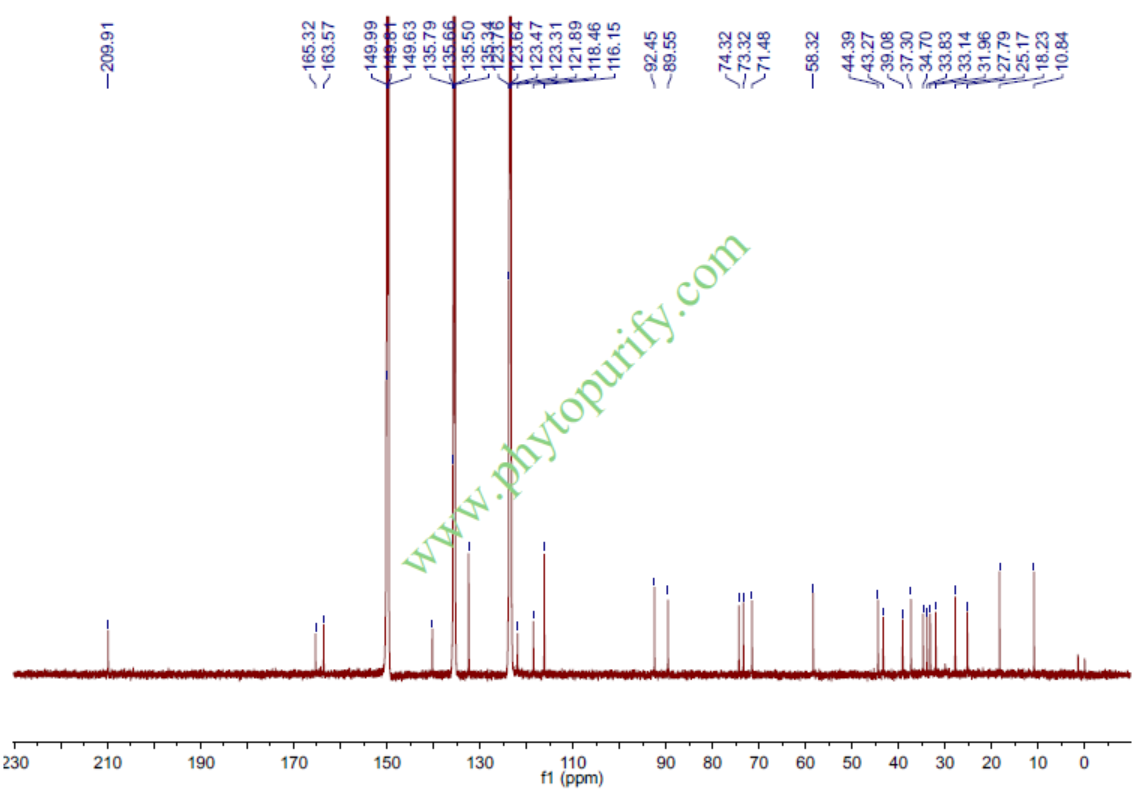
Identification Method: Mass, NMR
Packing: Brown vial or HDPE plastic bottle
Can be supplied from milligrams to grams.
For Reference Standard and R&D, Not for Human Use Directly.
Inquire for bulk scale.
Description:
Qingyangshengenin is a a glycoside from the roots of Cynanchum otophyllum.
References:
J Asian Nat Prod Res. 2013;15(1):71-7.
Chemical constituents of Arisaema franchetianum tubers.
A novel pyrrolidine alkaloid, (2R*,3S*,5S*)-N,2-dimethyl-3-hydroxy-5-(10-phenyldecyl)pyrrolidine (1), and 17 known compounds were isolated from Arisaema franchetianum Engl. (Araceae) tubers. The 17 compounds were bergenin (2), emodin (3), caffeic acid (4), nobiletin (5), 3-O-β-d-galactopyranosyl-hederagenin 28-O-β-d-xylopyranosyl(1 → 6)-β-d-galactopyranosyl ester (6), coniferin (7), Qingyangshengenin (8), methylconiferin (9), syringaresinol 4'-O-β-d-glucopyranoside (10), gagaminine (11), perlolyrine (12), (S)-1-(1'-hydroxyethyl)-β-carboline (13), 1-(β-carboline-1-yl)-3,4,5-trihydroxy-1-pentanone (14), 1-methoxycarbonyl-β-carboline (15), indolo[2,3-α]carbazole (16), 4-hydroxycinnamic acid methyl ester (17), and methyl 4-[2-hydroxy-2-(4-hydroxy-3-methoxyphenyl)-1-(hydroxymethyl)ethyl] ferulate (18).
METHODS AND RESULTS:
The inhibitory activities of compound 1 and its N-methyl derivative (1a) against porcine respiratory and reproductive syndrome virus (PRRSV), human leukemic K562 cells, and human breast cancer MCF-7 cells were evaluated. Compounds 1 [50% inhibited concentration (IC(50)) = 12.5 ± 0.6 μM] and 1a (IC(50) = 15.7 ± 0.9 μM) were cytotoxic against K562 cells. Compound 1a also had a weak effect on PRRSV with an IC(50) value of 31.9 ± 6.0 μM [selectivity index (SI) = 18.7].
HPLC of Cynanchagenin
NMR of Cynanchagenin
Storage conditions:Short-term storage at 2~8℃, long-term storage at -20 ~ -80℃
144.5200
1.9955
1.9917
.0815
.9745
2.3136
Low
79.6016
4.7338
No
No
No
No
No
No
0.0
Yes
No
Yes
Yes
Natural products have long been an important source of innovative drug discovery, and their structural diversity and unique biological activity provide valuable lead compounds for treating various diseases. Cynanchagenin, a steroid compound isolated from traditional medicinal plants, has gradually entered the field of pharmacology researchers in recent years due to its various potential pharmacological activities. This compound is mainly derived from Cynanchum otophyllum Schneid., a plant in the family Loricaceae and the genus Cynanchum. This plant has a long history of application in folk medicine in Yunnan and other places, and is commonly used to treat diseases such as epilepsy and rheumatism. Qingyang ginseng glycoside, as one of the key active ingredients for its pharmacological effects, belongs to the chemical structure of C21 steroidal sapogenin, which is known for its wide range of biological activities. Although its related research is still in the early stages compared to some star natural products such as paclitaxel and artemisinin, existing in vitro and in vivo research data have preliminarily revealed its potential in neuroprotection, anti-inflammatory, anti-tumor, and immune regulation. This article aims to systematically review the chemical properties, plant sources, pharmacological activities, potential mechanisms of action, pharmacological characteristics, and clinical application prospects of Qingyang ginseng glycoside, in order to provide comprehensive academic references for the in-depth research and future development of this compound.
The chemical name of Cynanchagenin is (3 β, 5 α, 8 β, 9 α, 10 α, 11 α, 12 α, 14 β, 17 β) -3,8,12,14,17-pentahydroxypregnen-20-one, and its CAS registration number is 84745-94-8. Structurally, it is a typical C21 steroidal sapogenin with the basic skeleton of the steroid nucleus.
Its core structural features include:
1. Mother nucleus and stereoconfiguration A steroid parent nucleus with cyclopentane and phenanthrene. The A/B rings are cis coupled (5 α - H), while the B/C and C/D rings are both trans coupled. This configuration is common in natural C21 steroids. Multiple chiral centers (such as 3 β, 5 α, 8 β, 9 α, 10 α, 11 α, 12 α, 14 β, 17 β) endow molecules with specific three-dimensional spatial conformations, which are crucial for their interaction with biological targets.
2. functional group The molecule contains five hydroxyl groups (located at positions C-3, C-8, C-12, C-14, C-17) and one ketone group (located at position C-20). The C-3 hydroxyl group is usually in the β configuration and often serves as a glycosylation site, forming various Qingyang ginseng glycosides present in Qingyang ginseng (such as Qingyang ginseng glycosides I and II). The abundant hydroxyl groups give it high polarity and may participate in hydrogen bonding formation.
3. sidechain The C-17 position is connected to a β - configured hydroxyl group, and the C-20 position is a ketone group, which is an important characteristic that distinguishes it from other types of steroids such as cardiac glycosides.
Based on its structure, Qingyang ginseng glycoside exhibits the following key physicochemical properties and calculated pharmacological parameters:
* molecular weight:500.5880 Da, Belonging to medium-sized molecules.
* Lipid water partition coefficient (LogP)The calculated value is approximately 1.9955, indicating that the compound has moderate lipophilicity, which theoretically facilitates penetration of cell membranes, but does not lead to excessive distribution or increased toxicity due to high lipophilicity.
* Topological Polarity Surface Area (TPSA)Up to 144.5200 Å ², mainly attributed to its five hydroxyl groups and one ketone group in the molecule. High TPSA usually implies strong polarity, which may affect its transmembrane permeability, especially its ability to cross the blood-brain barrier through passive diffusion.
* Water solubility The predicted water solubility value is relatively low (about 0.0815 mg/mL), belonging to the category of slightly soluble or insoluble. This may seem contradictory to its high TPSA, but it actually reflects that polyhydroxysteroid molecules may form strong intermolecular hydrogen bonding networks in crystal stacking, resulting in high lattice energy and difficulty in dissolving in water. In practical research, it is often necessary to use cosolvents (such as DMSO) or make formulations to improve their bioavailability.
* Blood-brain barrier permeability Predicted as' low '. This is consistent with its higher TPSA and polarity characteristics, suggesting that the prototype drug may have difficulty freely entering the central nervous system. However, its traditional use in antiepileptic drugs suggests that its activity may be mediated through indirect mechanisms such as peripheral immune regulation or metabolic products.
* Preliminary warning of hERG inhibition and genetic toxicity The predicted data shows "hERG inhibition: no" and "Ames test: 0.0", which preliminarily suggests that Qingyang ginseng glycoside may have lower risks of cardiac toxicity and mutagenicity, providing favorable preliminary information for subsequent safety evaluation. However, it must be emphasized that these are calculated or preliminary predicted values that require rigorous experimental verification.
Qingyang ginseng glycoside mainly comes from plants in the Asclepiadaceae family, Cynanchum genus Qingyang ginseng The rhizome of Cynanchum otophyllum Schneid. Qingyang ginseng, also known as "Xiao Bai Jian" or "Bai Yao", is a unique folk medicinal plant in southwestern China (especially Yunnan). It is used in the medicine of ethnic minorities such as Naxi and Yi to treat epilepsy, convulsions, rheumatism, and pain, and has a long history.
In the plant body, Qingyang ginseng glycosides do not exist in large quantities in free form, but rather act as aglycones that combine with different sugar chains (such as digitalis sugar, Canadian sesame sugar, etc.) to form a series of structurally similar compounds Qingyang ginseng glycoside compounds(such as Cynanosides). These glycosides are considered to be the main active substances in Qingyang ginseng medicinal materials. Therefore, there are usually two ways to obtain Qingyang ginseng glycosides:
1. Extract and isolate directly from plants Although the content is low, free aglycones can be directly isolated from plant extracts by chromatographic methods.
2. Acid hydrolysis or enzymatic hydrolysis of glycoside components This is a more commonly used and efficient way of obtaining. Firstly, crude extracts were obtained from the roots and stems of Qingyang ginseng through alcohol extraction (such as methanol and ethanol). Then, specific Qingyang ginseng glycosides (such as Qingyang ginseng glycoside I) were isolated and purified using macroporous adsorption resin, silica gel column chromatography, and preparative high-performance liquid chromatography. Subsequently, the purified glycoside is hydrolyzed under mild acidic conditions (such as dilute hydrochloric acid or sulfuric acid) or by the action of specific enzymes, breaking the glycosidic bond and releasing the aglycone (Qingyang ginseng aglycone) and glycosyl moiety. High purity Qingyang ginseng glycoside can be obtained by further purification through extraction, recrystallization and other methods.
The optimization of extraction process, such as solvent selection, extraction temperature, time, hydrolysis conditions control, etc., is crucial for improving the yield of Qingyang ginseng glycoside and maintaining its structural integrity. Modern technologies such as ultrasound assisted extraction, microwave-assisted extraction, and high-speed countercurrent chromatography have also been applied to the separation of related glycoside components, providing more possibilities for the large-scale preparation of Qingyang ginseng aglycones.
In recent years, research on the pharmacological activity of Qingyang ginseng glycosides has revealed several noteworthy aspects, although most studies are still in the preclinical stage.
Neuroprotection and antiepileptic activity This is the traditional pharmacological effect of Qingyang ginseng glycoside that has received the most attention. In vivo experiments have shown that the total glycosides and their aglycones of Qingyang ginseng have protective effects on various experimental epilepsy models, such as maximal electroconvulsive seizures, pentylenetetrazol ignitions, and folliculitis induced seizures. They can prolong the latency period of seizures, reduce seizure severity and mortality rate. Its characteristic of action is different from traditional antiepileptic drugs such as phenytoin sodium, and may have multi-target properties. In addition, research suggests that it has a protective effect on neuronal oxidative stress damage and glutamate excitotoxicity, demonstrating potential neuroprotective value.
Anti inflammatory and immune regulatory activity Qingyang ginseng glycoside exhibits significant anti-inflammatory effects. In the lipopolysaccharide (LPS) - induced macrophage (such as RAW264.7) inflammation model, it can dose dependently inhibit the production of nitric oxide (NO), prostaglandin E2 (PGE2), and pro-inflammatory cytokines (such as TNF - α, IL-1 β, IL-6). Its anti-inflammatory effect has also been confirmed in acute inflammation models such as carrageenan induced paw swelling in rats and acetic acid induced increased intra-abdominal capillary permeability in mice. In addition, studies have suggested that it may regulate the proportion and function of T lymphocyte subsets, suggesting its potential for immune regulation.
Antitumor activity: Preliminary in vitro studies have shown that Qingyangshen aglycone can inhibit the proliferation of some human tumor cell lines (such as HepG2, breast cancer MCF-7, lung cancer A549, etc.), and can induce apoptosis and cell cycle arrest. Its anti-tumor mechanism may involve activation of mitochondrial pathways, increased generation of reactive oxygen species (ROS), and regulation of expression of apoptosis related proteins (such as changes in Bax/Bcl-2 ratio and caspase-3 activation). However, its in vivo anti-tumor effect and selectivity still need to be further evaluated.
Other potential activities Scattered studies have also reported the potential role of Qingyang ginseng glycoside in anti fibrosis and protection against myocardial ischemia-reperfusion injury, but the evidence in these areas is still insufficient and requires further research to confirm.
The specific mechanism of action of Qingyang ginseng glycosides has not been fully elucidated, but existing research has pointed to multiple possible signaling pathways and molecular targets, reflecting the multi-target nature of natural products.
Regulating the nuclear factor kappa B (NF - κ B) signaling pathway This is currently a mechanism that has been studied relatively extensively. Under inflammation and stress, NF - κ B is activated and translocated into the nucleus, initiating the transcription of numerous inflammatory factors and mediators. Research has shown that Qingyang ginseng glycoside can inhibit LPS induced degradation of I κ B α protein, thereby preventing nuclear translocation of NF - κ B p65 subunit and ultimately downregulating the expression of iNOS, COX-2, and various inflammatory cytokines. This is likely one of the core mechanisms by which it exerts anti-inflammatory and partially neuroprotective effects.
Regulating the mitogen activated protein kinase (MAPK) pathway The MAPK family (such as p38, JNK, ERK) plays a crucial role in cellular stress, inflammation, and apoptosis. There is evidence to suggest that Qingyang ginseng glycoside can inhibit the phosphorylation activation of p38 and JNK in LPS induced macrophages, but the effects on the ERK pathway have been reported differently. By regulating the MAPK pathway, it may affect downstream transcription factor activity and cell fate determination.
Affects Nrf2/ARE antioxidant pathway Nuclear factor E2 related factor 2 (Nrf2) is the central regulator of cellular antioxidant response. Under oxidative stress, Nrf2 is activated and promotes the expression of antioxidant enzymes such as HO-1 and NQO1. Some studies suggest that the neuroprotective effect of Qingyang ginseng glycoside may be related to its activation of the Nrf2 pathway and enhancement of cellular antioxidant defense ability.
Mitochondrial apoptosis pathway In anti-tumor research, Qingyang ginseng glycoside has been observed to induce a decrease in mitochondrial membrane potential, release of cytochrome c, and activate the caspase cascade reaction, leading to tumor cell apoptosis. Meanwhile, it may regulate the balance of Bcl-2 family proteins, promote the expression of apoptotic protein Bax or inhibit the expression of anti apoptotic protein Bcl-2.
Other potential targets Given its steroid structure, there is speculation that it may interact weakly with certain nuclear or membrane receptors in a hormone like manner, but there is no direct evidence yet. Its impact on ion channels such as GABA_A receptors and voltage-gated ion channels, as a possible mechanism of its antiepileptic effect, also needs further exploration.
Based on computational parameters and limited experimental data, a preliminary evaluation of the pharmacological properties of Qingyang ginseng glycoside is conducted
At present, there are very few research reports on the pharmacokinetics of Qingyang ginseng glycoside system, which is a key knowledge gap for its progress towards drug development. In the future, it is necessary to establish sensitive and specific biological analysis methods (such as LC-MS/MS) and conduct in-depth research on their ADME (absorption, distribution, metabolism, excretion) characteristics in animal models (rats, dogs, etc.).
As a natural steroid compound with multiple pharmacological activities, the clinical application prospects of Qingyang ginseng glycoside mainly depend on the focus on its advantageous directions and breakthroughs in key bottlenecks.
Potential application directions:
1. Adjuvant therapy for neurological disorders Based on its antiepileptic and neuroprotective activities, the development of adjuvant therapy drugs for refractory epilepsy, or for the regulation of neuroinflammation and oxidative stress in neurodegenerative diseases such as stroke, Alzheimer's disease, and Parkinson's disease, is a promising direction. Its multi-target effect may be beneficial for neurological diseases with complex etiologies.
2. Anti inflammatory and autoimmune diseases Its powerful anti-inflammatory and immune regulatory effects make it potentially applicable in chronic inflammatory diseases such as rheumatoid arthritis, inflammatory bowel disease, dermatitis, etc. The possibility of exploring it as a novel anti-inflammatory lead compound can be explored.
3. Antitumor adjuvant therapy Although the activity still needs to be enhanced, it can be chemically modified as a lead structure to optimize its anti-tumor activity and selectivity, or used in combination with existing chemotherapy drugs to enhance sensitivity and reduce toxicity.
Challenges and Future Prospects:
1. Activity optimization and structural modification The activity intensity of Qingyang ginseng glycoside itself may not be sufficient for direct medicinal use. Through Medicinal Chemistry The key strategy to enhance its activity and improve its pharmacokinetic properties is to modify its structure through methods such as esterification, etherification of hydroxyl groups, and introduction of other functional groups, such as increasing its lipophilicity to enhance its ability to enter the brain or increasing its water solubility to improve the formulation. We can draw on the experience of modifying other successful steroid drugs, such as adrenal cortex hormones and cardiac glycosides.
2. Formulation technology development It is crucial to develop a new drug delivery system to address the issue of poor water solubility. For example, making it nanocrystal、liposome、micelle or Solid dispersion It can significantly improve its solubility and oral bioavailability. For targeting the central nervous system, research can be conducted Intranasal administration Or nanocarriers carrying targeted ligands.
3. In depth mechanism and target research Using chemical biology methods such as affinity fishing, molecular docking, gene knockout/knockdown techniques to more accurately identify its direct target and elucidate the upstream and downstream relationships of its signaling network will provide a solid foundation for rational drug design and clinical applications.
4. System preclinical and clinical research It is necessary to complete the pharmacological (more disease models), pharmacokinetic, and toxicological research data of the system, clarify its effective dose range and safety, which is a prerequisite for promoting any clinical translation.
As the key active steroid glycoside of traditional medicinal plant Qingyang ginseng, Qingyang ginseng glycoside carries the combination of folk medicine experience and modern scientific exploration. Its unique C21 steroid structure endows it with the potential to regulate multiple important signaling pathways such as NF - κ B, MAPK, Nrf2, etc., thus exhibiting promising biological activities in neuroprotection, anti-inflammatory, anti-tumor, and other fields. Although it faces challenges such as poor water solubility and low blood-brain barrier permeability in terms of drug properties, computational predictions show that it has low risks of cardiac and genetic toxicity, providing a favorable starting point for its further development. In the future, through the modification of medicinal chemical structures and the application of new formulation technologies, combined with in-depth exploration of its molecular mechanism of action and systematic preclinical evaluation, Qingyang ginseng glycoside is expected to develop from a potential natural lead compound into a new candidate drug for the treatment of inflammatory diseases of the nervous system, autoimmune diseases and other fields, continuing and enhancing the valuable value of natural products in drug discovery.
