


Synonym name:
Catalogue No.: BP0325
Cas No.: 38395-02-7
Formula: C28H42O7
Mol Weight: 490.637
Botanical Source: Cynanchum caudatum
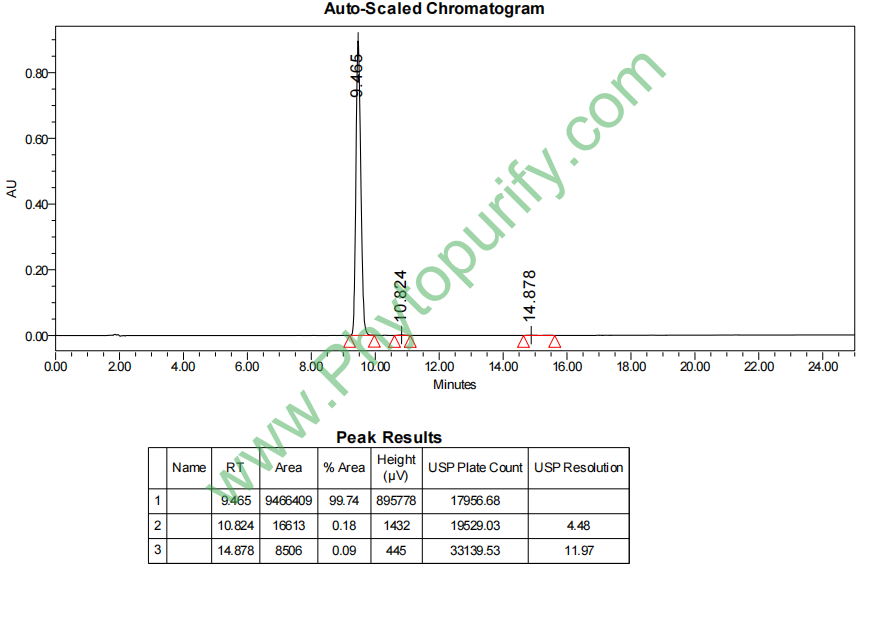
Purity: 95%~99%
Analysis Method: HPLC-DAD or/and HPLC-ELSD
Identification Method: Mass, NMR
Packing: Brown vial or HDPE plastic bottle
Can be supplied from milligrams to grams.
For Reference Standard and R&D, Not for Human Use Directly.
Inquire for bulk scale.
HPLC of Caudatin
Storage conditions:Short-term storage at 2~8℃, long-term storage at -20 ~ -80℃
Caudatin is a steroid natural product derived from the traditional Chinese medicine Cynanchum caustum. In recent years, it has received widespread attention for its significant anti-tumor and anti angiogenic activities. As a natural compound with multi-target effects, Gadotidine has shown great potential for application in the treatment of malignant tumors such as lung cancer. Lung cancer is one of the malignant tumors with the highest incidence rate and mortality in the world. Its complex pathological mechanism and diverse molecular targets provide a rich research direction for the development of new drugs. Gaoda Ting exhibits multiple anti-tumor mechanisms by regulating the cell cycle, inducing cell apoptosis, and inhibiting tumor angiogenesis, especially in regulating signaling pathways such as BCL2, STAT3, MAPK, etc. This article provides a systematic review of the chemical structure, origin, pharmacological activity, mechanism of action, and pharmacological evaluation of Guadating, aiming to provide a theoretical basis and research direction for its clinical translation.
The molecular formula of Gao Da Ting is C29H42O6, with a molecular weight of 490.63, and it belongs to the steroid class of compounds. Its chemical structure contains a typical steroid skeleton with multiple hydroxyl and ester modifications, endowing it with high polarity and biological activity. The LogP value of Gaoda Ting is 3.9, indicating that it has moderate lipid solubility, which is beneficial for cell membrane penetration. Its topological polar surface area (TPSA) is 111.83 Å ², indicating that it has certain advantages in biofilm penetration and oral absorption. Gaoda Ting has 7 hydrogen bond receptors, which help it form stable binding with protein targets. According to pharmacokinetic predictions, the permeability of the blood-brain barrier is low, and the risk of hepatotoxicity and cardiotoxicity is small. It does not inhibit hERG channels, demonstrating good safety characteristics.
Gaoda Pavilion mainly exists in Cynanchum caudum, a perennial herbaceous plant widely distributed in southern China and Southeast Asia. In traditional Chinese medicine, Niupi Xiao is used to treat various diseases such as tumors, inflammation, and skin diseases. The extraction of Gao Da Ting is usually carried out using organic solvent extraction combined with chromatographic separation technology. The specific methods include:
In recent years, ultrasound assisted extraction and microwave-assisted extraction techniques have also been introduced to improve extraction efficiency and purity.
Gaoda Ting has shown significant anti proliferative effects in various tumor cell lines, especially with outstanding inhibitory effects in lung cancer cells. In vitro cell experiments have shown that Gaoda Ting can induce cell cycle arrest in lung cancer cells (such as A549, H1299), mainly in the G0/G1 or S phase, blocking the cell cycle progression and inhibiting cell proliferation. At the same time, the ability of Gaoda Ting to induce cell apoptosis is significant, accompanied by the regulation of apoptosis related protein expression, such as downregulation of BCL2 family proteins and activation of Caspase family proteins.
The growth and metastasis of tumors are highly dependent on angiogenesis, and Gaodatang exhibits good anti angiogenic activity by inhibiting the proliferation, migration, and lumen formation of endothelial cells. In vivo experiments have shown that Gaoda Ting can reduce the number of new blood vessels in tumor tissues, inhibit the expression of angiogenic factors such as VEGF (vascular endothelial growth factor) in the tumor microenvironment, and thus limit the nutritional supply and growth of tumors.
In addition to anti-tumor effects, Gaoda Ting also exhibits certain anti-inflammatory and immune regulatory effects, which may indirectly participate in the regulation of the tumor microenvironment and enhance anti-tumor immune response by regulating inflammatory factors and immune cell activity.
The anti lung cancer effect of Gao Da Ting involves multiple signaling pathways and key molecular targets, mainly including:
BCL2 family proteins Gaoda Ting downregulates the expression of anti apoptotic protein BCL2, promotes mitochondrial mediated apoptosis, activates the cascade reaction of Caspase-9 and Caspase-3, and leads to programmed cell death.
STAT3 signaling pathway STAT3 plays an important role in the proliferation, survival, and immune evasion of lung cancer cells. Gaoda Ting inhibits the phosphorylation and nuclear translocation of STAT3, blocks its transcriptional activity, reduces the expression of tumor promoting genes, and inhibits tumor growth.
MAPK pathway (MAPK1, MAPK8)Gaoda Ting regulates the MAPK signaling pathway, affecting cell proliferation and stress response. By regulating the activity of ERK (MAPK1) and JNK (MAPK8), Gadotidine promotes cell apoptosis and inhibits tumor cell migration.
PI3K/AKT pathway (PIK3CG)This pathway plays a critical role in tumor cell survival and drug resistance. Gaoda Ting inhibits the activity of PI3K γ, blocks downstream AKT signaling, induces cell apoptosis, and enhances chemotherapy sensitivity.
NF - κ B pathway (RELA)Gaoda Ting inhibits the NF - κ B signaling pathway, reduces the expression of pro-inflammatory and anti apoptotic genes, and promotes tumor cell apoptosis.
Estrogen receptor beta (ESR2)Gaoda Ting may affect hormone dependent growth of lung cancer cells by regulating ESR2 activity.
Microtubule associated protein Tau (MAPT)The effect of Gaoda Ting on microtubule stability may be involved in its mechanism of inhibiting cell proliferation and inducing apoptosis.
Peroxisome proliferator activated receptor gamma (PPARG)The activation of PPARG helps to induce tumor cell differentiation and apoptosis, and Gadotidine may enhance anti-tumor effects by regulating PPARG signaling.
In summary, through the synergistic effect of multiple targets and pathways, Gaodatang regulates the proliferation, apoptosis, and angiogenesis of tumor cells, demonstrating a complex and effective anti-tumor mechanism.
The pharmacological evaluation of Gaoda Ting shows that it has good potential for drug development. Its molecular weight of 490.63 conforms to Lipinski's rule, and its LogP value of 3.9 shows moderate lipid solubility, which is beneficial for oral absorption. Although the TPSA value of 111.83 is slightly higher, it is still within an acceptable range, indicating that it has a certain ability to penetrate cell membranes. The number of hydrogen bond receptors in Gaodatang is 7, which is suitable for stable binding with protein targets.
In terms of safety, Gaoda Ting has no significant hepatotoxicity or cardiac toxicity, and does not inhibit hERG channels, reducing the risk of arrhythmia. Its blood-brain barrier permeability is low, indicating minimal side effects on the central nervous system.
Pharmacokinetic studies are still in the preliminary stage, and the metabolic pathways in vivo mainly involve the liver enzyme system. The activity and toxicity of metabolites need further evaluation. In the future, systematic pharmacokinetic and toxicological studies are needed to clarify its in vivo behavior and safe dose range.
As a natural steroidal anti-tumor drug, Gaodatang has multi-target effects and good safety, and has broad clinical application prospects. Its potential in the treatment of lung cancer is mainly reflected in:
Monotherapy By inducing apoptosis of tumor cells and blocking the cell cycle, Gadotidine has the potential to serve as an adjuvant or alternative therapy for lung cancer, especially for drug-resistant or recurrent patients.
combination therapy Gaoda Ting can be used in combination with chemotherapy drugs, targeted drugs, or immunotherapy to enhance efficacy, reduce the risk of drug resistance, and alleviate chemotherapy related toxic side effects.
Anti angiogenic therapy By inhibiting tumor angiogenesis, Gaodatang can limit tumor nutrient supply, inhibit tumor growth and metastasis, and is suitable for comprehensive treatment of various solid tumors.
personalized treatment Based on molecular targets in precision medicine, Gaodatang can provide personalized treatment plans for lung cancer patients with specific pathway abnormalities such as STAT3 and BCL2.
Future research should focus on:
As a natural steroid product derived from cowhide extract, Gaodatang exhibits excellent pharmacological activity and drug properties due to its unique chemical structure and multi-target anti-tumor mechanism. Its application potential in the treatment of lung cancer is increasingly prominent, especially in regulating the cell cycle, inducing apoptosis, and inhibiting angiogenesis, showing significant effects. Although the pharmacokinetics and clinical research of Gadotidine are still limited, its good safety and multiple mechanisms of action have laid a solid foundation for it to become a new type of anti-tumor drug. In the future, through in-depth mechanism research and clinical validation, Gaodatang is expected to become an important candidate drug in the treatment of lung cancer and other malignant tumors, providing new ideas and directions for the development of natural product pharmacology.
