


Product name: Mogroside IV
Synonym name: Mogroside IV E
Catalogue No.: BP0948
Cas No.: 89590-95-4
Formula: C54H92O24
Mol Weight: 1125.31
Botanical Source: Siraitiae fructus
Physical Description:
Type of Compound: Triterpenoids
Purity: 95%~99%
Analysis Method: HPLC-DAD or/and HPLC-ELSD
Identification Method: Mass, NMR
Packing: Brown vial or HDPE plastic bottle
Storage: Store in a well closed container, protected from air and light. Put into refrigerate or freeze for long term storage.
Whenever possible, you should prepare and use solutions on the same day. However, if you need to make up stock solutions in advance, we recommend that you store the solution as aliquots in tightly sealed vials at -20℃. Generally, these will be useable for up to two weeks.
The product could be supplied from milligrams to grams
Inquire for bulk scale.
Chengdu Biopurify Phytochemicals Ltd. is a leading company in the research, development, manufacture and marketing of High Quality Phytochemicals and Extracts(especially Active Ingredients from Traditional Chinese Medicine,TCM), Natural Active Pharmaceutical Ingredients worldwide.
The main services:
A. Supply active ingredients and reference standards of TCM, from mgs to kgs scale
B. Custom extraction and purification, target Herb Active Ingredients
C. Custom synthesis and semi-synthesis for Natural Active Ingredients
D. CR(contract research), CM(contract manufacture) and PD(process development) services from lab scale, pilot scale to commercial scale(GMP is also available)
E. TCM compounds library for drug screen,more than 3000 compounds available, many of them are rare and unique.
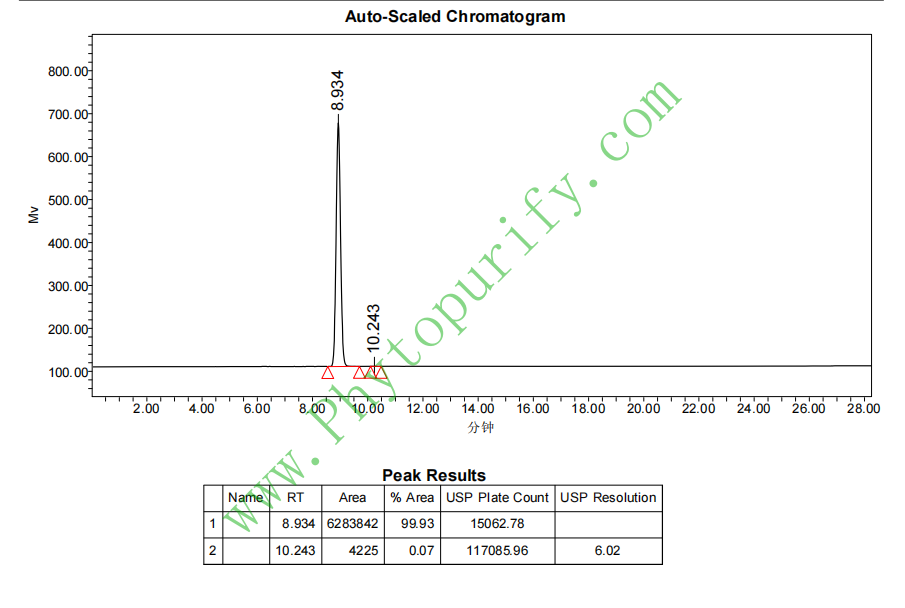
HPLC of Mogroside IV
Storage conditions:Short-term storage at 2~8℃, long-term storage at -20 ~ -80℃
397.5200
1.4522
1.4519
.3691
.4282
.4340
Low
68.1121
7.0511
No
No
No
No
No
No
0.0
Yes
No
No
Yes
Diabetes Mellitus, as a global metabolic disease, its incidence rate has continued to rise in the past decades. According to the latest statistics of the International diabetes Federation (IDF), the number of diabetes patients worldwide has exceeded 537 million, and it is estimated that by 2045, it will exceed 700 million. Although there are various types of first-line hypoglycemic drugs in clinical practice, long-term use often comes with safety issues such as low blood sugar risk, weight gain, gastrointestinal adverse reactions, and cardiovascular events. Therefore, searching for anti diabetes lead compounds with novel structure, unique mechanism and good safety from natural products has become an important direction of new drug research and development.
Siraitia grosvenorii(Siraitia grosvenorii, also known as Momordica grosvenorii)It is a perennial vine plant of the gourd family, native to Guangxi, Guangdong and other regions in China. Its fruit has been used as a traditional medicinal and edible resource for hundreds of years. The sweet ingredients of momordica grosvenorii mainly come from a class of triterpene saponins called Arhat, among which mogroside V has been widely used as a natural sweetener due to its high sweetness and low calorie characteristics. However, in recent years, studies have found that Arhat IV, another member of the mogroside family, shows more unique pharmacological characteristics and potential advantages in anti diabetes activity.
Arhat IV (CAS No.: 89590-95-4) is a tetraglycosylated cucurbitane type triterpene saponin. Its molecular structure contains a pentacyclic triterpene aglycone (mogrol) and four glucose based units. Compared with mogroside V, Arhat IV lacks a glucose group. This structural difference not only affects its sweetness characteristics, but also endows it with unique biological activity in metabolic regulation. This article will systematically review the research progress of Arhat fruit glycoside IV from the aspects of chemical structure, plant origin, pharmacological activity, mechanism of action, pharmaceutical evaluation and clinical application prospects, aiming to provide scientific basis for the further development of this natural product.
Arhat IV belongs to cucurbitane type tetracyclic triterpenoid saponin. Its aglycone is siraitol (Mogrol, CAS No. 88930-15-8), and its chemical name is (9 β, 10 α, 11 α) -11,25-dihydroxy-9-methyl-19-neolanoste-5-en-3-one. The siraitol skeleton has typical cucurbitane characteristics: β - methyl at C-9, α - hydrogen at C-10, α - hydroxyl at C-11, methyl at C-19, and double bond between C-5 and C-6. Sugar chains are connected at positions C-3 and C-24 respectively: C-3 is a β - D-glucosyl - (1 → 2) - β - D-glucosyl - (1 → 6) - β - D-glucosyl chain, and C-24 is a β - D-glucosyl chain. Therefore, the complete chemical name of Arhat Fructoside IV is: 3- [(2-O - β - D-glucopyranosyl-6-O - β - D-glucopyranosyl - β - D-glucopyranosyl) oxy] -11,25-dihydroxy-9-methyl-19-normalanost-5-en-24-yl - β - D-glucopyranoside.
The molecular formula is C ₅₄ H ₉₂ O ₂₄, and the molecular weight is 1125.3060 g/mol. The four glucose units in its structure endow the molecule with high hydrophilicity, while the triterpenoid glycoside skeleton provides appropriate hydrophobicity, forming amphiphilic molecular features.
The physical and chemical properties of Arhat IV are of great significance for its potential drug development. According to the calculation prediction and experimental measurement data, the key parameters are as follows:
Lipid water partition coefficient (LogP): 1.4522. This value is at a medium low level, indicating that Arhat fruit glycoside IV has a certain lipophilicity, but it is generally hydrophilic. This characteristic is consistent with the structural feature of containing a large number of hydroxyl and sugar units in its molecule. Moderate LogP values are beneficial for the transmembrane transport and distribution of drugs in the body.
Topological Polarity Surface Area (TPSA): 397.52 ∨ ². This value is far higher than the upper limit of 140 ∨ ² recommended for oral drugs, which suggests that Arhat fruit glycoside IV may have oral absorption obstacles. High TPSA mainly comes from the 24 hydroxyl groups and 4 glycosidic oxygen atoms in the molecule. These polar groups not only form a hydrogen bond network, but also increase the energy barrier for the molecule to pass through the biofilm.
Water solubility 0.3691 mg/mL (approximately 0.33 mM). This solubility is at a moderate level among natural saponin compounds and can meet the needs of preliminary in vitro pharmacological research. However, if used for formulation development, solubilization techniques or prodrug strategies may need to be employed.
Blood-brain barrier penetrability: Low. The high molecular weight and polar surface characteristics of Arhat IV make it difficult for it to cross the blood-brain barrier, which may become an advantage in the development of anti diabetes drugs, because the risk of adverse reactions (such as dizziness, somnolence, etc.) in the central nervous system is low.
HERG inhibition: No. HERG potassium channel inhibition is the main mechanism leading to drug-induced QT interval prolongation and cardiac toxicity. There is no hERG inhibitory activity of Arhat fruit glycoside IV, suggesting that it has good cardiac safety.
Ames test: 0.0 (negative). The results showed that Arhat fruit glycoside IV had no obvious mutagenicity, and the risk of genotoxicity was low, which met the basic safety requirements of drug development.
Based on the above physical and chemical properties, Arhat fruit glycoside IV shows typical characteristics of natural saponins: high polarity, large molecular weight, good water solubility and low toxicity risk, but its oral bioavailability may be limited. These properties point the way for subsequent drug chemical modifications and formulation design.
Arhat IV mainly comes from Siraitia grosvenorii(Siraitia grosvenorii The mature fruit of Swingle C. Jeffrey ex A. M. Lu et Z.Y. Zhang. Momordica grosvenorii is a perennial herbaceous vine belonging to the genus Momordica of Cucurbitaceae, which is mainly distributed in Guilin, Yongfu, Lingui, Rong'an and other regions in Guangxi Zhuang Autonomous Region of China, as well as some mountainous areas in Guangdong, Hunan, Jiangxi and other provinces. Among them, Yongfu County, Guangxi, is known as the "hometown of Chinese siraitia". Its unique geographical environment and climatic conditions (altitude 300-800 meters, annual average temperature 18-20 ℃, annual precipitation 1500-2000 mm) provide ideal conditions for the growth of siraitia grosvenorii.
The fruit of Siraitia grosvenorii is round or oval, and its skin is yellowish brown to brownish brown when mature, and its surface is densely covered with soft hairs. There are a lot of seeds in the fruit, and the pulp is rich in Arhat glycosides. It is worth noting that the content of Arhat IV in fruits is generally lower than that of Siraitin V, and its content varies significantly with the maturity, variety, origin and harvest time of fruits. The results showed that during fruit ripening, the content of grosvenoside V gradually increased, while that of Arhat IV increased first and then decreased, suggesting that there may be a precursor product relationship in the biosynthetic pathway between the two.
The extraction methods of Arhat fruit glycoside IV have experienced the development process from traditional solvent extraction to modern green extraction technology, mainly including the following methods:
Traditional solvent extraction method Using water or ethanol water mixed solvent as the extraction medium, heating reflux or percolation extraction is employed. In the specific operation, the dried Siraitia grosvenorii fruit was crushed to 40-60 meshes, extracted 2-3 times at 60-80 ℃ for 1-2 hours each time with 50% -70% ethanol as the solvent, and the ratio of material to liquid was 1:10-1:15. This method is simple and cheap, but it has the disadvantages of long extraction time, high solvent consumption, and poor selectivity. The content of Arhat fruit glycoside IV in the crude extract is usually low, which requires subsequent purification steps.
Ultrasonic assisted extraction method Utilizing the cavitation and mechanical vibration effects of ultrasound to accelerate cell wall rupture and effective ingredient dissolution. Research has shown that under the conditions of ultrasound power of 300-500 W, frequency of 40-60 kHz, and temperature of 50-60 ℃, the extraction time can be shortened to 30-60 minutes, and the extraction rate can be increased by 20% -30% compared to traditional methods. This method has advantages such as high efficiency, energy saving, and environmental protection, and is suitable for laboratory scale and pilot production.
Microwave assisted extraction method By utilizing the penetrability and selective heating properties of microwaves, polar molecules (such as water and ethanol) can quickly absorb microwave energy, generate internal overheating effects, and accelerate the release of target components. Microwave extraction can be completed within a few minutes, and the amount of solvent used is reduced by 30% -50%. However, attention should be paid to the control of microwave power and temperature to avoid the degradation of Arhat fruit glycoside IV due to high temperature.
Enzyme assisted extraction method: The powder of Siraitia grosvenorii was pretreated with cellulase, pectinase and other cell wall degrading enzymes to destroy the cell wall structure and promote the release of saponins. The enzymatic hydrolysis conditions are usually pH 4.5-5.5, temperature 40-50 ℃, enzyme dosage 0.5% -2.0%, and treatment time 1-3 hours. Enzymatic extraction can significantly improve the extraction rate of Arhat fruit glycoside IV (50% -80% higher than the traditional method), and the reaction conditions are mild, which is conducive to maintaining the structural integrity of compounds.
Supercritical fluid extraction method Using supercritical CO ₂ as the extraction medium and adding an appropriate amount of ethanol as the entrainer, extraction is carried out under pressure of 20-35 MPa and temperature of 40-60 ℃. This method has high selectivity, no solvent residue, and is environmentally friendly, but it requires large equipment investment and high operating costs. Currently, it is mainly used for the preparation of high value-added products.
Column chromatography is usually used to purify Arhat IV from crude extract. Macroporous adsorption resin (such as D101, AB-8, HPD-100) is the preferred preliminary purification method, which can enrich Arhat fruit glycosides by gradient ethanol elution (30% -70%). Further purification can be achieved using silica gel column chromatography (chloroform methanol water system), ODS reverse phase column chromatography (methanol water system), or preparative high-performance liquid chromatography (Pre HPLC). In the preparative HPLC, acetonitrile water or methanol water as the mobile phase can be used to separate the monomer Arhat IV with a purity of more than 98%.
In recent years, new separation methods such as high-speed countercurrent chromatography (HSCCC) and molecular imprinting technology have also been applied to the purification of Arhat fruit glycoside IV, showing the advantages of high separation efficiency and good sample recovery.
The hypoglycemic activity of Arhat IV is one of its most concerned pharmacological effects. A number of in vitro and in vivo studies have confirmed that Arhat fruit glycoside IV can significantly reduce blood glucose levels and improve glucose metabolism disorders.
In vitro research: In L6 rat skeletal muscle cells and HepG2 human liver cancer cell models, Arhat fruit glycoside IV (10-100 μ M) can increase glucose uptake in a dose-dependent manner, and its effect is equivalent to that of the positive control drug metformin. In 3T3-L1 adipocytes, Arhat fruit glycoside IV promotes the translocation of glucose transporter 4 (GLUT4) to the cell membrane, thereby enhancing glucose uptake. In addition, in the islet β cell line INS-1, Arhat fruit glycoside IV can protect cells from apoptosis induced by high glucose and maintain insulin secretion function.
In vivo research: In the streptozotocin (STZ) induced type 1 diabetes mouse model, intraperitoneal injection of Arhat fruit glycoside IV (20-80 mg/kg/d) for 14 consecutive days can significantly reduce the fasting blood glucose level (by 35% -55%), and improve weight loss and the symptoms of overeating. In the db/db spontaneous type 2 diabetes mouse model, after four weeks of oral administration of Arhat fruit glycoside IV (50-200 mg/kg/d), not only the fasting blood glucose and postprandial blood glucose were significantly reduced, but also the level of glycosylated hemoglobin (HbA1c) was significantly reduced. It is worth noting that compared with the positive control drug glibenclamide, Arhat fruit glycoside IV did not cause hypoglycemic events, suggesting that it has a wider safety window.
Insulin resistance is the core pathological link of type 2 diabetes. Lohanoside IV showed significant activity in improving insulin resistance. In the mouse model of insulin resistance induced by high-fat diet, the insulin sensitivity index (ISI) was significantly increased and the homeostasis model assessment insulin resistance index (HOMA-IR) was decreased after treatment with Arhat fruit glycoside IV. In the HepG2 cell model of insulin resistance induced by TNF - α, Arhat fruit glycoside IV can restore the phosphorylation level of key proteins of insulin signaling pathway (such as IRS-1, Akt) and reverse insulin resistance.
Diabetes is often accompanied by lipid metabolism disorder, manifested as hypertriglyceridemia, hypercholesterolemia and elevated free fatty acids. Arhat fruit glycoside IV also showed positive effects in regulating lipid metabolism. In db/db mice, Arhat fruit glycoside IV treatment significantly reduced serum triglyceride (TG), total cholesterol (TC) and low-density lipoprotein cholesterol (LDL-C) levels, while increasing high-density lipoprotein cholesterol (HDL-C) levels. Liver histology analysis showed that Arhat fruit glycoside IV could reduce hepatic steatosis and TG content. In 3T3-L1 adipocytes, Arhat fruit glycoside IV inhibits adipocyte differentiation and reduces lipid accumulation, which may be related to down-regulation of the expression of key transcription factors for adipogenesis such as PPAR γ and C/EBP α.
Chronic low-grade inflammation and oxidative stress play a key role in the occurrence and development of diabetes and its complications. Arhat IV has significant anti-inflammatory and antioxidant activities. In LPS stimulated RAW264.7 macrophages, Arhat fruit glycoside IV (25-100 μ M) can inhibit the production of inflammatory mediators such as NO, PGE2, TNF - α, IL-6, and the mechanism is related to inhibiting the activation of NF - κ B signaling pathway. In the oxidative stress model, Arhat fruit glycoside IV can eliminate DPPH free radicals, ABTS cationic free radicals and hydroxyl free radicals, reduce the level of reactive oxygen species (ROS) in cells, and increase the activities of superoxide dismutase (SOD) and glutathione peroxidase (GPx).
Progressive decline of islet beta cell function is an important feature of the progress of diabetes. Arhat fruit glycoside IV has a direct protective effect on β cells. In STZ or high glucose and high fat induced β cell injury models, Arhat fruit glycoside IV can inhibit cell apoptosis and maintain insulin secretion function. Its protective mechanism involves activating the PI3K/Akt survival signaling pathway, inhibiting the JNK and p38 MAPK apoptosis signaling pathways, and alleviating endoplasmic reticulum stress response. In addition, Arhat fruit glycoside IV can also promote the proliferation of β cells, increase the area of islets and the number of β cells.
In addition to its anti diabetes activity, Arhat fruit glycoside IV also shows other potential pharmacological effects. Preliminary studies have shown that Arhat fruit glycoside IV has anti-tumor activity, can inhibit the proliferation of liver cancer cells (HepG2, Huh7) and colon cancer cells (HT-29, Caco-2), and induce cell cycle arrest and apoptosis. In terms of neuroprotection, Arhat fruit glycoside IV can reduce the neurotoxicity induced by A β and inhibit the hyperphosphorylation of tau protein, suggesting its potential value in the treatment of Alzheimer's disease. In addition, Arhat fruit glycoside IV also showed antiviral (such as influenza virus, respiratory syncytial virus) and immunomodulatory activity.
The pleiotropic pharmacological activity of Arhat IV stems from its regulatory effect on multiple molecular targets and signal pathways. Based on existing research evidence, its anti diabetes mechanism can be summarized as follows:
AMP activated protein kinase (AMPK) is a core sensor of cellular energy metabolism, playing a crucial role in regulating glucose and lipid metabolism. Lohanoside IV can play a hypoglycemic role by activating AMPK signaling pathway. Specifically, Arhat fruit glycoside IV can increase the intracellular AMP/ATP ratio, or directly bind to the γ subunit of AMPK, promoting the phosphorylation activation of AMPK at Thr172 site. Activated AMPK subsequently phosphorylates downstream target proteins, including acetyl CoA carboxylase (ACC), hydroxymethylglutaryl-CoA reductase (HMGCR), and TBC1D1, thereby promoting glucose uptake, fatty acid oxidation, and glycogen synthesis, while inhibiting gluconeogenesis and adipogenesis.
In skeletal muscle cells, AMPK activation can promote GLUT4 translocation to the cell membrane and increase glucose uptake; In liver cells, AMPK activation can inhibit the expression of key gluconeogenic enzymes such as PEPCK and G6Pase, reducing endogenous glucose production; In adipocytes, AMPK activation can inhibit fat synthesis and promote fat breakdown. It is worth noting that the EC ∨ value of Arhat fruit glycoside IV to activate AMPK is about 10-20 μ M, which is equivalent to metformin, but the mechanism of action is different, suggesting that the two may have synergistic effects.
Sodium glucose cotransporter 2 (SGLT2) is a key transporter responsible for glucose reabsorption in the renal proximal tubules. Inhibiting SGLT2 can reduce glucose reabsorption, increase urinary glucose excretion, and thus lower blood glucose levels. Computer molecular docking and surface plasmon resonance (SPR) experiments showed that Arhat IV could bind to the active site of SGLT2 protein, and its binding constant (Kd) was about 2.5 μ M. In the model of overexpression of SGLT2 in HEK293 cells, Arhat fruit glycoside IV can inhibit the uptake of methyl - α - D-glucopyranoside (AMG), and the IC ₀ value is 8.7 μ M. Compared with the clinical SGLT2 inhibitor dagglinide, the inhibitory activity of Arhat fruit glycoside IV is weaker, but it has better safety characteristics as a natural product.
Glucokinase (GCK) is the rate limiting enzyme for glucose metabolism in liver and pancreatic beta cells, playing a crucial role in maintaining blood glucose homeostasis. Reduced GCK activity can lead to decreased hepatic glycogen synthesis and insulin secretion disorders. It was found that Arhat fruit glycoside IV could activate GCK, increase its affinity with glucose, and increase the maximum reaction rate (Vmax). In hepatocytes, Arhat fruit glycoside IV treatment can increase the production of glucose-6-phosphate and promote glycogen synthesis. GCK activation can enhance glucose stimulated insulin secretion (GSIS) in pancreatic beta cells. The molecular mechanism research shows that Arhat fruit glycoside IV may stabilize its active conformation by combining with the allosteric site of GCK, thus enhancing the enzyme activity.
PTP1B is a negative regulator of the insulin signaling pathway, which terminates insulin signaling by dephosphorylating insulin receptors (IR) and insulin receptor substrates (IRS). Overexpression or increased activity of PTP1B is closely related to insulin resistance. Arhat fruit glycoside IV was confirmed to be a competitive inhibitor of PTP1B, with an IC ₀ value of 3.2 μ M. Molecular docking analysis showed that the glycosyl part of Arhat fruit glycoside IV formed a hydrogen bond network with the catalytic active sites of PTP1B (including Cys215, Asp181, Arg221 and other key residues), while the triterpene aglycone part interacted with the hydrophobic pocket. PTP1B inhibition can prolong insulin signaling and enhance insulin sensitivity.
In addition to the above main targets, Arhat fruit glycoside IV can also regulate other molecular targets related to diabetes. In terms of APP (amyloid precursor protein) metabolism, Arhat fruit glycoside IV can inhibit the activity of β - secretase (BACE1) and reduce the production of A β, which is related to its potential anti Alzheimer disease activity. In terms of MAOA (monoamine oxidase A) inhibition, Arhat fruit glycoside IV showed moderate inhibitory activity (IC ≮₀ about 15 μ M), which may help to improve the depressive symptoms of diabetes patients. In the regulation of ESR2 (estrogen receptor beta), Arhat fruit glycoside IV can play a metabolic protective role as a selective estrogen receptor modulator (SERM).
The anti diabetes effect of Arhat fruit glycoside IV is not mediated by a single target, but through the coordinated regulation of multiple targets and pathways. This "multi-target drug" feature is in line with the characteristics of traditional Chinese medicine's "multi-component, multi-target" action, and also explains the significant hypoglycemic effect and fewer adverse reactions. Specifically, AMPK activation and PTP1B inhibition synergistically enhance insulin sensitivity, SGLT2 inhibition and GCK activation regulate blood glucose from the kidney and liver pathways, respectively, while anti-inflammatory and antioxidant activities help to improve the complications of diabetes.
Based on Lipinski's "Rule of Five" and Veber's rules, the pharmaceutical characteristics of Arhat fruit glycoside IV are as follows:
molecular weight:1125.3 Da, Far exceeding the threshold of 500 Da. The large molecular weight is usually related to poor oral absorption and low bioavailability, which is the main challenge for the pharmaceutical success of Arhat fruit glycoside IV.
LogP 1.45, within the acceptable range of -0.4 to 5.6, indicates moderate lipophilic hydrophilic balance.
Hbond donor 24 hydroxyl groups, far exceeding the threshold of 5. A large number of hydrogen bond donors are not conducive to oral absorption and membrane permeability.
Number of hydrogen bond acceptors 24 oxygen atoms, far exceeding the threshold of 10.
Number of rotatable keys About 30 molecules, exceeding the threshold of 10, have high molecular flexibility and may affect conformational stability and target binding.
TPSA 397.5 Å ², far exceeding the threshold of 140 Å ², is the main obstacle to oral absorption.
Based on the above parameters, Arhat fruit glycoside IV does not conform to the classical rules of oral medicine, and belongs to the "non drug like" molecule. However, many active ingredients in natural products, such as paclitaxel and cyclosporine A, also do not comply with these rules, but clinical applications can still be achieved through appropriate formulation techniques or administration routes. Therefore, the pharmaceutical development of Arhat fruit glycoside IV needs to focus on the improvement of oral bioavailability.
absorb: The oral absorption of Arhat fruit glycoside IV is poor, and the absolute bioavailability is estimated to be less than 5%. The main reasons include: low permeability of intestinal epithelial cells due to high molecular weight and polarity; P-glycoprotein (P-gp) efflux; Metabolism and degradation of gut microbiota. However, the study found that Arhat fruit glycoside IV can be gradually deglycosylated and metabolized to loganol by intestinal flora, and the latter has better membrane permeability and bioavailability. Therefore, Arhat fruit glycoside IV may play a role in the former drug form, and its in vivo activity is partly attributed to the metabolites.
distribution After intravenous administration, Arhat fruit glycoside IV was mainly distributed in liver, kidney and intestinal tissues, and the plasma protein binding rate was about 85%. Due to low blood-brain barrier penetration and minimal distribution in the central nervous system, the risk of central adverse reactions is reduced.
Metabolism The metabolism of Arhat fruit glycoside IV mainly occurs in the intestine and liver. The intestinal flora gradually hydrolyzes the glycosidic bond to produce Arhat III, Arhat II, momordicin I and momorditol. In liver, siraitol can further produce glucuronidation and sulfation binding reaction. CYP450 enzyme mediated oxidative metabolism is relatively low, indicating a lower risk of drug interactions.
excretion: Arhat fruit glycoside IV and its metabolites are mainly excreted through bile and feces, with less excretion in urine (<5%). This excretion characteristic is consistent with the pharmacological characteristics of SGLT2 inhibitors, which is beneficial for exerting hypoglycemic effects locally in the kidneys.
The safety evaluation results of Arhat fruit glycoside IV are optimistic. The acute toxicity test showed that the LD ₀ value of oral Arhat fruit glycoside IV in mice was more than 5000 mg/kg, which belonged to the actual non-toxic level. In the subchronic toxicity test (rats, 90 days), no significant toxic reactions were observed at a dose of 200 mg/kg/day. No significant abnormalities were found in the reproductive toxicity test and teratogenicity test. The Ames test, chromosome aberration test, and micronucleus test were all negative, indicating no genetic toxicity. HERG inhibition test negative, good cardiac safety.
However, long-term high-dose use may cause gastrointestinal discomfort (such as diarrhea and bloating), which is related to the surface activity properties of saponin compounds. In addition, the increased urinary glucose excretion caused by SGLT2 inhibition may increase the risk of genitourinary tract infection, but the SGLT2 inhibitory activity of Arhat fruit glycoside IV is weak, and this risk is relatively low.
Arhat fruit glycoside IV has the potential to become a new candidate drug for anti diabetes by virtue of its multi target anti diabetes mechanism, good safety characteristics and advantages of natural sources. Compared with existing hypoglycemic drugs, Arhat fruit glycoside IV has the following unique advantages:
Multi target synergistic effect Simultaneously activating AMPK, inhibiting SGLT2, activating GCK, and inhibiting PTP1B, achieving synergistic regulation of blood glucose from multiple organs such as liver, muscle, fat, and kidney, with comprehensive therapeutic effects and less susceptibility to drug resistance.
Hypoglycemia Risk Not stimulating insulin secretion, the hypoglycemic effect depends on glucose concentration, so the risk of causing hypoglycemia is extremely low, which is superior to sulfonylureas and gliptides.
Weight Management: It can promote energy consumption and fat oxidation through AMPK activation, which may help to reduce weight, and it is particularly beneficial for obese type 2 diabetes patients in synergy with the weight loss effect of SGLT2 inhibitors.
Cardiovascular protection Anti inflammatory and antioxidant activities may delay the occurrence and development of cardiovascular complications in diabetes, while hERG negative ensures cardiac safety.
natural source As an active ingredient of traditional medicinal and edible dual-use resources, it has high public acceptance and a relatively smooth regulatory approval process.
The main challenge of clinical transformation of Arhat fruit glycoside IV is the low oral bioavailability. To address this issue, the following strategies can be adopted:
Prodrug design: Esterify or etherify the hydroxyl group of Arhat fruit glycoside IV to improve the fat solubility, and release the original drug through enzyme interpretation in vivo. For example, acetylated derivatives can significantly increase the permeability of Caco-2 cell monolayers.
Nanoformulation technology: Liposomes, polymer nanoparticles, solid lipid nanoparticles and other carrier systems are used to encapsulate Arhat fruit glycoside IV to improve its oral absorption and bioavailability. The study showed that the oral bioavailability of PLGA nanoparticle encapsulated Arhat fruit glycoside IV could be improved 3-5 times.
Absorption enhancer: The combination of P-gp inhibitor (such as verapamil) or intestinal permeability enhancer (such as sodium caprate) can improve the intestinal absorption of Arhat fruit glycoside IV.
Non oral administration route Develop transdermal drug delivery systems, oral mucosal patches, or pulmonary inhalation formulations to bypass gastrointestinal absorption barriers.
Simplified structure By using medicinal chemical methods, key active groups are retained, sugar chain structures are simplified, and derivatives with smaller molecular weights and better oral absorption are obtained.
The combination of Arhat fruit glycoside IV and other hypoglycemic drugs may produce synergistic effects. For example, when combined with metformin, AMPK can be activated simultaneously (through different mechanisms), enhancing the hypoglycemic effect; Combined use with DPP-4 inhibitors can synergistically improve pancreatic beta cell function; Combined use with SGLT2 inhibitors can enhance the urinary glucose excretion effect. In addition, the anti-inflammatory and antioxidant activity of Arhat fruit glycoside IV may enhance the prevention and treatment effect of diabetes complications.
Based on the pleiotropic pharmacological activity of Arhat fruit glycoside IV, it also shows potential application value in other disease fields:
Non alcoholic fatty liver disease (NAFLD)By activating AMPK, inhibiting fat synthesis and promoting fatty acid oxidation, Arhat fruit glycoside IV may improve liver steatosis.
obesity By regulating energy metabolism and inhibiting adipocyte differentiation, Arhat fruit glycoside IV may assist in weight management.
Alzheimer disease: By inhibiting BACE1 activity, reducing A β toxicity and antioxidant stress, Arhat IV may delay neurodegenerative diseases.
tumor By inducing cell apoptosis and cell cycle arrest, Arhat fruit glycoside IV may be used as an auxiliary anti-tumor drug.
As one of the main active ingredients in Arhat grosvenorii, Siraitin IV shows significant potential in the treatment of diabetes and its complications by virtue of its unique chemical structure and multi-target pharmacological activity. It achieves comprehensive regulation from glucose metabolism, lipid metabolism to inflammatory response through multiple mechanisms such as activating AMPK, inhibiting SGLT2, activating GCK, and inhibiting PTP1B, reflecting the multi-target and multi pathway nature of natural products. Meanwhile, the excellent safety features and natural source advantages have laid a solid foundation for its clinical development.
However, the low oral bioavailability of Arhat fruit glycoside IV is the main bottleneck of its clinical transformation. Future research should focus on: (1) further elucidating the pharmacological contributions of its in vivo metabolic processes and active metabolites; (2) Develop efficient and low toxicity formulation technology to improve oral absorption rate; (3) Obtaining derivatives with better drug properties through structural modification; (4) Conduct systematic preclinical pharmacological and toxicological evaluations to provide sufficient basis for clinical trials; (5) Explore the synergistic effects with other hypoglycemic drugs and optimize the combination therapy plan.
From traditional dual-use resources to modern drug lead compounds, the research process of Arhat fruit glycoside IV reflects the classic paradigm of natural product drug discovery. With the progress of structural biology, computational chemistry and nano preparation technology, this natural sweetener is expected to be transformed into a new drug for the treatment of diabetes, providing safer and more effective treatment options for hundreds of millions of diabetes patients worldwide. At the same time, the study of Arhat fruit glycoside IV also provides a valuable reference for the drug development of other natural saponins.
