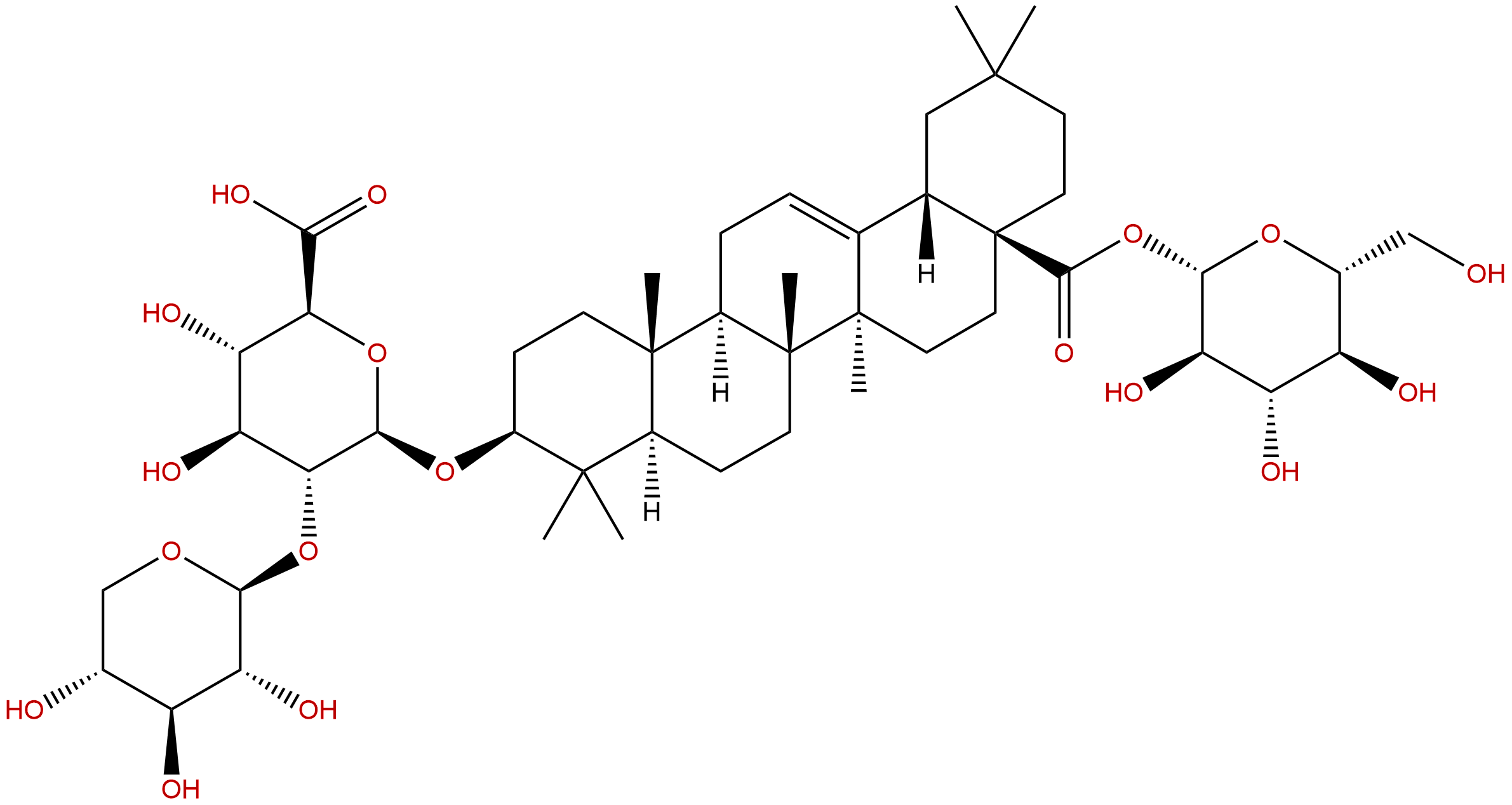
Research progress on personified ginsenoside RT1: a multi-target anti-aging natural product derived from ginseng
1. Overview
Pseudoginsenoside RT1 is a natural triterpenoid saponin compound with unique biological activity. Its CAS number is 98474-74-9, molecular formula is C47H74O18, and molecular weight is approximately 927.09 g/mol. This compound was initially isolated from the Rania siamensis plant in the Rubiaceae family and has been reported to have fish toxin activity. However, further research reveals that its main and more valuable source is the traditional precious medicinal plant - ginseng (Panax ginseng C.A. Mey.). Ginseng, as the "king of all herbs", has a history of thousands of years of application in traditional East Asian medicine, mainly used for tonifying qi, promoting diuresis, and calming the mind. As one of the many saponin components in ginseng, the research value of anthropomorphic ginsenoside RT1 has gradually become prominent in recent years.
Existing pharmacological studies have shown that the anthropomorphic ginsenoside RT1 has complex multi-target action characteristics. It can cause a decrease in blood pressure, an increase in heart rate, and enhance the spontaneous contractions of the uterus. What is even more remarkable is that modern molecular pharmacology research has linked it to a series of key aging related targets, including SIRT1, TERT, TP53, MTOR, and FOXO3, demonstrating enormous potential in the forefront of anti-aging research. With the increasing aging of the global population, finding safe and effective anti-aging intervention strategies has become a research hotspot in life sciences and pharmacy. As a natural candidate molecule, the multi-target mode of action of anthropomorphic ginsenoside RT1 may provide new ideas for the development of novel anti-aging drugs or functional products. This article will systematically elaborate on its chemical structure, origin, pharmacological mechanism, drug properties, and research prospects.
2. Chemical structure and physicochemical properties
The anthropomorphic ginsenoside RT1 belongs to the Damane type tetracyclic triterpenoid saponin, which is a typical skeleton of ginsenosides. The SMILES string provides a detailed description of the connection order and stereoconfiguration of atoms, revealing a highly modified complex structure. The molecular core is a steroid like tetracyclic damalane skeleton (composed of cyclopentane and phenanthrene), with multiple hydroxyl groups connected to the skeleton, enhancing the hydrophilicity of the molecule. In addition, the molecule is linked to multiple sugar groups (possibly glucose, xylose, etc. based on the molecular formula) through glycosidic bonds, forming a highly hydrophilic sugar chain portion. The introduction of these sugar groups is key to the surface activity and diverse biological activities of saponin compounds.
Analyzing its physicochemical properties from the parameters of drug properties:
* Molecular weight (MW):927.09 g/mol, Significantly exceeding the range of conventional small molecule drugs (usually<500 Da), which may affect their transmembrane absorption and distribution.
* Topological Polarity Surface Area (TPSA)As high as 291.82 Å ², it reflects the presence of a large number of hydrogen bond donors and acceptors in the molecule (mainly hydroxyl groups on sugar and skeleton), indicating strong polarity and good water solubility.
* Lipid water partition coefficient (LogP and LogD)The calculated LogP is 2.24, indicating that the molecule as a whole has a certain degree of lipophilicity; However, the LogD measured at physiological pH was -0.41, indicating that the ionized or strongly polar portion was dominant in the solution, and the actual lipophilicity was low, consistent with the results of high TPSA.
* Water solubility The value is 0.1510 (usually measured in mg/mL or mol/L, not specified here, but relative values can be referred to), combined with high TPSA and negative LogD, it can be inferred that it has moderate or good solubility in water.
* Membrane permeability The permeability (0.1110) and effective permeability (Peff, 0.5825) values of Caco-2 cells are both low, confirming the difficulty of cross intestinal epithelial cell membrane absorption caused by their high molecular weight and polarity. The blood-brain barrier (BBB) penetration is predicted to be 'low', meaning it is difficult to enter the central nervous system.
* Protein binding rate (PPB)84.09%, indicating a high degree of binding between it and plasma proteins (mainly albumin) in the blood, which affects its free drug concentration, distribution volume, and clearance rate.
In summary, the anthropomorphic ginsenoside RT1 is a natural product with high molecular weight, high polarity, good water solubility, but poor membrane permeability. The hydrophilic sugar chains in its structure are the key to determining these properties and are also important functional groups for its interaction with the target.
3. Plant sources and traditional applications
The main plant source of anthropomorphic ginsenoside RT1 is ginseng, a star species of the Panax genus in the Araliaceae family. Ginseng is mainly distributed in Northeast China, the Korean Peninsula, and the Far East of Russia. Its dried roots and rhizomes are used as medicinal herbs, known as the famous "ginseng". In traditional Chinese medicine theory, ginseng has a slightly warm nature, a sweet taste, and a slightly bitter taste. It belongs to the spleen, lung, heart, and kidney meridians and has the effects of tonifying vital energy, restoring meridians, strengthening the spleen and benefiting the lungs, generating fluids and nourishing blood, and calming the mind and improving intelligence. Commonly used for treating diseases such as body deficiency and desire to leave, cold limbs and weak meridians, spleen deficiency and insufficient food intake, lung deficiency, wheezing and cough, fluid damage and thirst, internal heat and thirst, qi and blood deficiency, chronic illness and deficiency, palpitations and insomnia, impotence and uterine coldness. Thousands of years of clinical application have accumulated rich experience and established its position as a "nourishing and superior product".
Modern plant chemistry research has isolated and identified hundreds of saponin components from ginseng, which are mainly divided into three categories based on their glycoside structures: panaxadiol type (such as Rb1, Rc, Rd), panaxatriol type (such as Re, Rg1), and oleanolic acid type. The anthropomorphic ginsenoside RT1 belongs to the Damane type saponins, and its specific classification depends on its glycoside structure and glycosyl linkage. Traditionally, the overall efficacy of ginseng is believed to be the result of the synergistic effects of various saponins, polysaccharides, volatile oils, and other components. As one of them, the unique active contribution of anthropomorphic ginsenoside RT1 is gradually being revealed. The report of isolating this compound from Randia siamensis also suggests that its distribution in the plant kingdom may not be limited to ginseng, but ginseng is undoubtedly its most important and stable source, providing resource guarantee for further research and development.
4. Pharmacological activity and mechanism of action
The known pharmacological activities of the anthropomorphic ginsenoside RT1 include its effects on cardiovascular and uterine smooth muscle, but current research focuses more on its potential anti-aging effects by regulating multiple key targets. Aging is a complex biological process that involves multiple characteristics such as genomic instability, telomere depletion, epigenetic changes, loss of protein homeostasis, dysregulation of nutrient sensing, mitochondrial dysfunction, cellular aging, stem cell exhaustion, and changes in intercellular communication. The target of anthropomorphic ginsenoside RT1 precisely covers several core pathways:
-
SIRT1 (silencing information regulatory factor 2 related enzyme 1)SIRT1 is an NAD+- dependent histone deacetylase that is a core regulatory factor in cellular metabolism and stress response. It promotes mitochondrial biosynthesis, enhances antioxidant defense, regulates autophagy, and inhibits inflammation by deacetylating various substrates such as PGC-1 α, FOXOs, p53, etc., thereby delaying aging and extending healthy lifespan. If the anthropomorphic ginsenoside RT1 can activate SIRT1, it may simulate the effect of calorie restriction and bring extensive anti-aging benefits.
-
TERT (telomerase reverse transcriptase)Telomeres are protective structures at the ends of chromosomes that shorten during cell division and serve as the "molecular clock" for cellular aging. TERT is the catalytic subunit of telomerase, which can prolong telomeres and maintain genomic stability. Activating TERT/telomerase activity is considered a potential strategy for anti-aging. The effect of anthropomorphic ginsenoside RT1 on this target suggests that it may help delay cellular replicative aging.
-
TP53 (tumor protein p53)P53 is a well-known tumor suppressor that plays a critical role in DNA damage repair, cell cycle arrest, and apoptosis. However, sustained or excessive activation of p53 can also promote cellular aging and tissue aging. Therefore, precise regulation of p53 (rather than simply inhibition or activation) is a subtle topic in anti-aging research. The interaction between anthropomorphic ginsenoside RT1 and p53 may involve regulating its activity levels or downstream pathways to balance its dual effects of anti-cancer and anti-aging.
-
MTOR (mammalian target protein of rapamycin)MTOR is the main regulatory hub for cell growth and metabolism, integrating nutrient, energy, and growth factor signals. Overactive mTOR signaling can inhibit autophagy, promote synthetic metabolism, and is associated with aging and various age-related diseases. Inhibition of mTOR (such as rapamycin) has been shown to prolong the lifespan of various model organisms. The anthropomorphic ginsenoside RT1 acts on mTOR, possibly by moderately inhibiting its activity, inducing autophagy, improving metabolism, and thus exerting anti-aging effects.
-
FOXO3 (forkhead box protein O3)The FOXO transcription factor family, especially FOXO3, is a longevity related gene. They are activated by low insulin signaling and oxidative stress, thereby upregulating the expression of antioxidant enzymes (such as SOD, CAT), DNA repair proteins, and survival promoting genes, enhancing the stress resistance and survival ability of cells. The anthropomorphic ginsenoside RT1 may enhance the self maintenance and repair ability of cells by activating FOXO3.
Integration of mechanism of action The anthropomorphic ginsenoside RT1 may act as a multi-target regulator, simultaneously or synergistically affecting the aforementioned network. For example, it may activate SIRT1 deacetylation and activate FOXO3, while SIRT1 may also negatively regulate p53 activity; Inhibition of mTOR can induce autophagy and produce a synergistic effect with SIRT1 activation; The potential regulation of TERT is approached from the perspective of telomere maintenance. This multi-target characteristic enables it to simultaneously intervene in multiple aspects of aging, which may produce more comprehensive and robust anti-aging effects than single target drugs, but also makes its mechanism research more complex.
The activity of "causing a decrease in blood pressure and an increase in heart rate" may be related to the direct effect of saponin components on vascular smooth muscle, the influence on ion channels, or the regulation of the autonomic nervous system. The specific mechanism needs to be elucidated. The activity of "increasing spontaneous uterine contractions" suggests that it may have potential applications or related effects that need attention in the field of obstetrics and gynecology.
5. Evaluation of drug properties
Based on the provided pharmacological parameters, we can conduct a preliminary evaluation of the potential for the development of ginsenoside RT1 as an oral drug, and refer to the well-known Lipinski's Five Rules("Five Principles of Similar Drugs"):
- Molecular weight (MW)<500 Da The MW of anthropomorphic ginsenoside RT1 is 927.09, far exceeding the standard of 500.violate。
- Lipid water partition coefficient (LogP)<5 The calculated LogP is 2.24, which meets the standard.Comply with。
- The number of hydrogen bond donors (HBDs) is less than 5 According to its structure (multiple sugar groups), the number of HBDs (mainly hydroxyl groups) far exceeds 5.violate。
- The number of hydrogen bond acceptors (HBAs) is less than 10 There are numerous oxygen atoms (18 O) in the molecule, and the number of HBA far exceeds 10.violate。
- Number of rotatable keys Usually requiring less than 10, its complex structure results in an extremely large number of rotatable keys.violate。
Obviously, the anthropomorphic ginsenoside RT1 seriously violates several of Lipinski's rules (it is generally believed that violating two or more rules may result in poor oral bioavailability), which is in contrast to High molecular weight, high TPSA, low Caco-2 permeability, and low BBB permeability The parameter results are completely consistent. These characteristics collectively point to a conclusion:As a traditional oral small molecule drug, the absorption and bioavailability of anthropomorphic ginsenoside RT1 may face significant challenges.
Analysis of other pharmacological parameters:
* toxicity Preliminary genetic toxicity and cardiac toxicity data such as Ames test (0.0, usually negative), chromosomal aberration (none), hERG inhibition (no), etc. indicate that its safety may be good. But respiratory sensitization (Resp_Sens) indicates "yes", which is a potential adverse reaction signal that requires caution. Serum biochemical indicators (ALT, AST, etc.) did not show significant liver injury signals.
* pharmacokinetics High plasma protein binding rate (PPB, 84%) can affect drug efficacy and clearance. Low membrane permeability is the main obstacle for it to become a drug.
Comprehensive Assessment Anthropomorphic ginsenoside RT1 itself is more likely to serve as a lead compound or research tool But not directly as medicine. Its development strategy may need to consider:
1. Structural modification Simplify sugar chains, prepare aglycones or small molecule derivatives through medicinal chemical methods to reduce molecular weight, decrease polarity, and improve membrane permeability, but may alter their multi-target properties.
2. Innovation in drug delivery routes Develop non oral dosage forms, such as injections, transdermal patches, nasal administration, etc., to bypass the intestinal absorption barrier.
3. Prodrug strategy Prepare it as a lipophilic prodrug to improve absorption and convert it into its active form in the body.
4. Advanced Delivery System Using carriers such as liposomes, nanoparticles, and micelles to encapsulate, improve their solubility, stability, and targeting, and enhance their bioavailability.
5. As a functional food or health supplement ingredient Develop anti-aging related health products by utilizing its multi-target mild regulation characteristics at lower doses.
6. Research Status and Application Prospects
At present, there is relatively limited public research literature on ginsenoside RT1, and most of the data comes from plant chemical isolation, identification, and preliminary activity screening databases. The known activities associated with lowering blood pressure, increasing heart rate, uterine contractions, and multi-target anti-aging have pointed out the direction for further in-depth research. However, the vast majority of the mechanisms of action are still in the stage of target prediction and association analysis, lacking in-depth functional validation at the cellular, animal model, and molecular levels.
Research status:
* Weak basic research It is urgent to validate its anti-aging effect in clear aging models (such as premature aging cells, aging related secretory phenotype cells, elderly animals, etc.), and clarify its specific regulatory mechanisms (activation/inhibition) and upstream and downstream pathways for targets such as SIRT1 and mTOR.
* Unclear pharmacology In addition to anti-aging, the specific mechanisms, dose-response relationships, and associations or contradictions between cardiovascular and uterine activities, as well as their anti-aging effects, all require systematic research.
* Pharmacokinetic blank The absorption, distribution, metabolism, and excretion processes of it in the body are almost unknown, which is the key to evaluating its development value.
Application Prospects:
1. Lead compounds of anti-aging drugs Despite its poor medicinal properties, its unique Potential of multi-target anti-aging network regulation It is its greatest value. Through rational structural optimization, it is expected to develop new anti-aging candidate molecules with better drug properties.
2. Aging Biology Research Tools Can be used as a probe to study the interaction dialogue (Crosstalk) of pathways such as SIRT1, mTOR, FOXO3 during aging.
3. Examples of Modernization Research on Traditional Chinese Medicine Extracting specific components from ginseng, a traditional medicinal herb, and explaining its mechanism of action on complex networks such as aging networks in modern scientific language is an effective path for the modernization and internationalization of traditional Chinese medicine.
4. High end functional cosmetics or health products In terms of topical application (such as anti skin aging) or as a dietary supplement, even with limited bioavailability, its natural source and multi-target properties may still bring certain market appeal, but strict efficacy and safety evaluations are required.
Future research directions:
* In depth mechanism research Validate efficacy in various aging models and confirm key targets using techniques such as gene knockout/knockdown.
* Study on Structure Activity Relationship (SAR)Systematically study the relationship between various parts of its sugar chain, glycoside modifications, and different activities to guide rational drug design.
* Pharmacokinetic and Formulation Research Early intervention in ADME research and exploration of novel delivery technologies.
* Security system evaluation Especially conduct a thorough assessment of potential risks such as respiratory sensitization.
Summary The anthropomorphic ginsenoside RT1 is a natural product discovered from the traditional medicinal herb ginseng, which has a complex chemical structure and multi-target action characteristics. It is like a 'multi toothed key' with the potential to simultaneously act on multiple key nodes in the aging regulation network, demonstrating remarkable anti-aging application prospects. However, its inherent physicochemical properties determine that its path as an oral small molecule drug is full of challenges. Future research needs to solidify its biological mechanisms and cleverly utilize medicinal chemistry and pharmaceutical strategies to transform it from a "natural pearl" into a "technological treasure" that may benefit human health. Its research process also reflects the opportunities and challenges faced in the development of precision medicine from traditional herbs to modern ones.