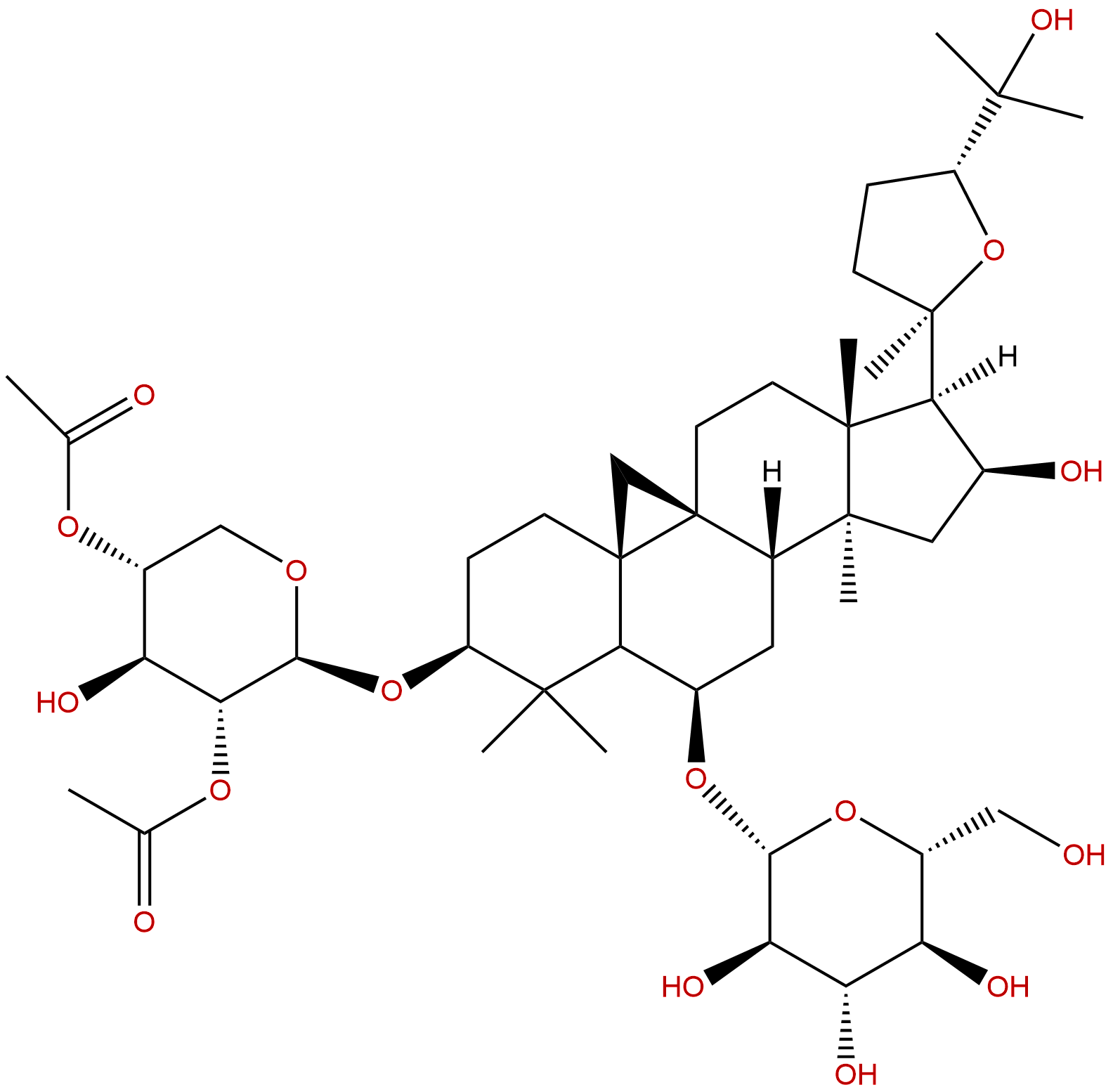


Product name: Isoastragaloside I
Synonym name:
Catalogue No.: BP1719
Cas No.: 84676-88-0
Formula: C45H72O16
Mol Weight: 869.055
Botanical Source: Astragalus membranaceus
Physical Description:
Type of Compound: Triterpenoids
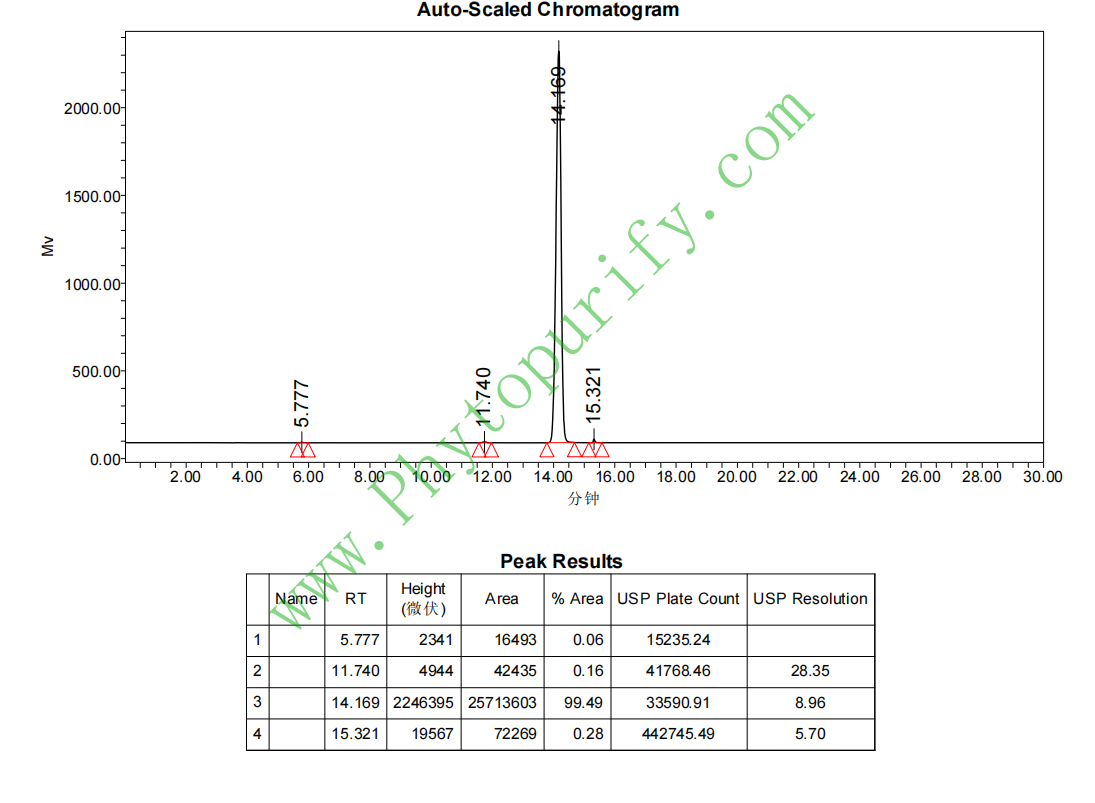
Purity: 95%~99%
Analysis Method: HPLC-DAD or/and HPLC-ELSD
Identification Method: Mass, NMR
Packing: Brown vial or HDPE plastic bottle
The product could be supplied from milligrams to grams. Inquire for bulk scale.
We provide solution to improve the water-solubility of compounds, thereby facilitating the variety of activity tests and clinic uses.
For Reference Standard and R&D, Not for Human Use Directly.
Description:
Isoastragaloside I may be promising in modulating CCl4-induced lethality and most of its toxic effects. Astragaloside II and Isoastragaloside I are sufficient to ameliorate insulin resistance, they may provide the lead as a novel class of therapeutics for obesity-related diseases.
References:
J. Med. Sci., 2002,2(3):119-23.
Phytochemical Investigation of Biologically Active Fractions of Astragalus spinosus Roots Grown in Egypt
The research work was undertaken to asses activity directed isolation of plant extracts, column fractions and isolated glycosides of Astragalus spinosus roots (Fabaceae) in the treatment of induced hepatic, renal and cardiac toxicities.
METHODS AND RESULTS:
A single subcutaneous dose of CCl4 (5.93 ml kg-1 b.wt. which represents 24h LD100) served as a toxicant, was used during this study. Ethyl acetate fraction was the most active fraction, then butanol, aqueous and dichloromethane fraction. By subjecting the ethyl acetate fraction to column chromatography (CC) it afforded two column fractions A and B which have effect in reducing CCl4-induced mortalities. Rechromatography of fractions A and B on medium pressure liquid chromatography (MPLC) and CC, respectively, afforded (a mixture of Isoastragaloside I and trigonoside I) and cycloastragenol-6-0-glucoside. The structure of the isolated glycosides was determined by 1H, 13C NMR, EIMS and FABMS spectral data, together with co-TLC with reference materials. The efficacy of the isolated glycosides (Isoastragaloside I and trigonoside I), cycloastragenol-6-0-glycoside and adsurgenic acid (recently isolated from the ether extract) in reducing CCl4-induced mortalities and some disturbances in biochemical parameters (liver transaminases AST, ALT and creatine kinase CK activities, serum urea and serum creatinine) were investigated in adult female Bufo regularis (Egyptian toads). The bioassay studies revealed that the effect of the glycosides on reducing CCl4-induced mortality have the following order (cycloastragenol-6-0-glycoside > Isoastragaloside I and trigonoside I > adsurgenic acid. The biochemical studies confirmed the bioassay studies.
CONCLUSIONS:
This is the first report on the identification of trigonoside I in Astragalus spinosus plant and the presence of Isoastragaloside I and cylcoastragenol-6-0-glycoside in A. spinosus roots. This suggested that these saponin glycosides may be promising in modulating CCl4-induced lethality and most of its toxic effects.
HPLC of Isoastragaloside I
Storage conditions:Short-term storage at 2~8℃, long-term storage at -20 ~ -80℃
240.3600
2.5799
2.5796
.0482
.6464
.4277
Low
68.8002
6.9745
No
No
No
No
No
No
0.0
Yes
No
No
No
Natural products, as an important source of drug discovery and development, have played an irreplaceable role in the long history of human fight against diseases. Huangqi, as an important traditional Chinese medicine for "tonifying qi and strengthening the surface", has been revealed to contain rich bioactive components through modern pharmacological research. Among them, Huangqi saponins are one of its main active substance groups. Isoastragaloside I, as a member of the astragaloside family, has attracted much attention in recent years due to its unique biological activity. Early studies have found that it has the activity of increasing adiponectin levels, suggesting its potential value in metabolic diseases. However, more in-depth research reveals that this compound shows complex pharmacological effects of multi target and multi pathway intervention in the field of anti-tumor, especially breast cancer, which makes it stand out from many natural products. The purpose of this paper is to systematically review the chemical properties, plant sources and pharmacological activities of isoastragaloside I, and focus on in-depth analysis of its mechanism of action and molecular targets in breast cancer, while evaluating its pharmaceutical properties, in order to provide a comprehensive scientific reference for the in-depth research and future development of this compound.
Isoastragaloside I, chemical name (3 β, 6 α, 16 β, 20R, 24S) -20,24-Epoxy-16,25-dihydroxy-9,19-cyclolanostan-3-yl O-6-deoxy - α - L-mannopyranosyl - (1 → 2) - O - β - D-glucopyranosyl - (1 → 2) - β - D-glucopyranoside, CAS number 84676-88-0. Structurally speaking, it belongs to the cycloaltane type triterpenoid saponin and is an isomer of astragaloside IV (also known as astragaloside IV), with the main difference being the connection position or configuration of the sugar chain. Its parent nucleus is a cycloaltane structure of tetracyclic triterpenes, with oligosaccharide chains attached at the C-3 and/or C-6 positions. The sugar chain of Astragaloside I is usually composed of monosaccharides such as glucose and rhamnose connected by specific glycosidic bonds. This unique glycosylation pattern has a decisive impact on its biological activity and solubility.
Its molecular weight is 869.0550, which is a medium to large molecule. The calculated lipid water partition coefficient (LogP) is 2.5799, indicating that the compound has a certain degree of lipophilicity, but not high lipid solubility. The topologically polar surface area (TPSA) is as high as 240.3600 Å ², mainly attributed to the abundant oxygen atoms on multiple hydroxyl and sugar rings in the molecule, resulting in strong polarity. Consistent with this, its theoretical water solubility value is relatively low (0.0482 mg/mL), indicating poor solubility in water, which may be a limiting factor for its oral bioavailability. Preliminary pharmacokinetic predictions indicate that its ability to penetrate the blood-brain barrier is relatively low, which is related to its larger molecular weight and higher polarity. In the preliminary safety screening, the hERG inhibition risk was "no", and the Ames test result was 0.0 (negative), indicating a low potential risk of cardiac toxicity and genetic toxicity, providing preliminary safety evidence for its further development.
Isoastragaloside I mainly comes from the dried roots of leguminous plants such as Astragalus membranaceus (Fisch.) Bge. var. mongholicus (Bge.) Hsiao or Astragalus membranaceus (Fisch.) Bge., which are the authentic medicinal materials of traditional Chinese medicine Astragalus membranaceus. Its content in Astragalus membranaceus is usually lower than its isomer Astragaloside IV, which is one of the trace saponin components in Astragalus membranaceus, which requires high requirements for its separation and purification.
The extraction of astragaloside I usually follows the general process of natural product separation. Firstly, alcohol solvents (such as methanol, ethanol) or alcohol water mixed solvents are used for reflux extraction or ultrasonic extraction of Huangqi medicinal materials to fully extract saponin components. Subsequently, the crude extract was enriched and purified using macroporous adsorption resins such as D101 and AB-8. Different concentrations of ethanol aqueous solutions were used for gradient elution, and saponin components were usually concentrated in the 30% -70% ethanol elution site. After obtaining the saponin enrichment site, it is necessary to further use modern chromatographic separation techniques for monomer preparation. Positive phase silica gel column chromatography and reverse phase silica gel column chromatography (such as ODS-C18) are commonly used separation methods, often using chloroform methanol water or methanol water systems for gradient elution. High performance liquid chromatography (HPLC), especially preparative HPLC, is the key technology for obtaining high-purity monomers of Astragaloside I from Astragalus membranaceus. In recent years, liquid-liquid distribution chromatography techniques such as high-speed countercurrent chromatography have also been applied in the separation and purification of astragalus saponins due to their high recovery rate and avoidance of irreversible adsorption. The optimization of extraction and separation processes aims to improve the yield and purity of target compounds to meet the needs of subsequent pharmacological activity research and quality standard establishment.
The pharmacological activity research of isoastragaloside I has expanded from the initial metabolic regulation to anti-tumor, immune regulation and other fields, among which the research on anti breast cancer is the most in-depth and systematic.
1. Anti breast cancer activity: A large number of in vitro studies have shown that isoastragaloside I has significant proliferation inhibition and apoptosis promoting effects on a variety of human breast cancer cell lines (such as MCF-7, MDA-MB-231, T47D, etc.). Its effect exhibits concentration and time dependence. In vivo experiments, Isoastragaloside I can effectively inhibit the growth of xenograft tumor of breast cancer in mice, and it shows synergistic effect when used in combination with some chemotherapy drugs, and can reduce some side effects caused by chemotherapy, such as myelosuppression.
2. Metabolic regulatory activity: Early studies have found that Astragaloside I has the activity of increasing adiponectin levels. Adiponectin is an adipokine secreted by adipocytes, which has insulin sensitizing, anti-inflammatory and anti atherosclerosis effects. By up regulating adiponectin, isoastragaloside I may indirectly improve insulin resistance and regulate glycolipid metabolism, which provides a theoretical basis for its application in type 2 diabetes, non-alcoholic fatty liver and other metabolic diseases.
3. Other activities: In addition, the study suggests that Astragaloside I may have cardiovascular protection (such as anti myocardial ischemia), neuroprotection, and certain immune enhancement effects, which are consistent with the traditional "qi tonifying" effect of Astragalus membranaceus. However, its specific mechanism of action and material basis still need further clarification.
The anti breast cancer effect of astragaloside I involves complex signal network regulation, and its multi target feature is the core of its efficacy. Existing research has revealed its interactions with multiple key target proteins:
1. Energy metabolism and apoptosis regulatory hub - AMPK (PRKAA1): AMPK is a core sensor for cellular energy metabolism. It has been confirmed that Astragaloside I can activate the AMPK signaling pathway. The activation of AMPK inhibits the mammalian target protein (mTOR) pathway of rapamycin, thereby suppressing protein synthesis and cell proliferation; On the other hand, it can phosphorylate and regulate downstream proteins related to apoptosis, such as p53, thereby inducing cell cycle arrest (such as G1 phase arrest) and apoptosis.
2. Key regulators of apoptosis balance - Bcl-2 family (MCL1, BCL2): Bcl-2 and Mcl-1 are important anti apoptotic proteins. Research has shown that Astragaloside I can downregulate the expression levels of MCL1 and BCL2, thereby disrupting mitochondrial membrane stability, promoting the release of cytochrome C, activating the caspase cascade reaction, and ultimately leading to tumor cell apoptosis.
3. Stem cell characteristics and resistance related pathways - NOTCH1 and STAT3: NOTCH1 signaling pathway plays a key role in maintaining the characteristics of breast cancer stem cells and promoting epithelial mesenchymal transformation (EMT). Astragaloside I can inhibit the activation of the NOTCH1 pathway, reduce the expression of downstream target genes (such as Hes1), and weaken the stemness of tumor cells. Meanwhile, it can also inhibit the phosphorylation and nuclear translocation of signal transduction and transcription activator 3 (STAT3). The sustained activation of STAT3 is closely related to tumor proliferation, survival, angiogenesis, and immune escape. Inhibiting the STAT3 pathway is one of the important mechanisms by which Astragaloside I exerts its anti-tumor effects.
4. Hormone receptors and enzyme targets - ESR2 and TYR: For estrogen receptor positive breast cancer, isoastragaloside I may affect estrogen signaling pathway by regulating estrogen receptor beta (ESR2). In addition, some studies suggest that it may inhibit tyrosinase (TYR) activity, although it is more directly related to anti melanoma, it may also affect the metabolic process of some breast cancer cells.
5. Multidrug resistance proteins - ABCB1 and ABCG2: ABCB1 (P-gp) and ABCG2 (BCRP) are the main efflux pump proteins mediating multidrug resistance in tumors. Preliminary studies have shown that astragaloside I may have the potential to inhibit these efflux pump functions, thereby reversing tumor cell resistance to chemotherapy drugs and improving chemotherapy sensitivity.
6. Protein kinase C-PRKCA: Protein kinase C alpha (PKC alpha) is involved in regulating cell proliferation, differentiation, and apoptosis. The regulatory effect of Astragaloside I on PKC α (PRKCA) activity has also been reported, which may affect downstream signaling pathways such as MAPK/ERK.
In summary, Astragaloside I forms a multidimensional and networked anti-tumor mode of action by synergistically targeting multiple targets such as AMPK, apoptosis related proteins (MCL1, BCL2), stem cell related pathways (NOTCH1, STAT3), and drug-resistant proteins (ABCB1, ABCG2). It can directly inhibit tumor cell growth and induce apoptosis, as well as potentially reverse drug resistance and inhibit tumor stem cells, demonstrating promising development prospects.
Although Astragaloside I has shown significant pharmacological activity in vitro and animal models, its pharmacological development still faces challenges, and its pharmacokinetic properties are one of the key factors determining its successful development.
Based on its physicochemical properties, isoastragaloside I belongs to class IV compounds (low solubility, low permeability) in the Biopharmaceutical Classification System (BCS). Its high molecular weight (869 Da) and polar surface area (TPSA>140 Å ²) are the main reasons for its poor membrane permeability and potential poor oral absorption. It is predicted that the permeability of its blood brain barrier is low, which limits its application in central nervous system diseases. However, it may not be a disadvantage for the treatment of peripheral tumors such as breast cancer.
At present, there are relatively limited reports on the pharmacokinetic studies of the Astragaloside I system. The limited animal experimental data suggests that the oral bioavailability of the prototype drug in vivo may be low. This is mainly attributed to: ① poor solubility in the gastrointestinal tract; ② The permeability of intestinal epithelial cells is limited; ③ May undergo first pass metabolism in the intestine and liver, including hydrolysis reactions such as deglycosylation, to convert into aglycones or other secondary glycosides. Further research is needed on its metabolic profile and main excretion pathways (bile or urine).
To enhance its pharmacological properties, future research strategies may include:
1. Formulation improvement: By using preparation technologies such as nanocrystals, liposomes, solid dispersions, and cyclodextrin inclusion complexes, the solubility and dissolution rate of the product can be improved.
2. Pre medication strategy: Chemical modification of its sugar or hydroxyl groups to prepare prodrugs with higher lipid solubility, improving absorption and then converting them into active forms in vivo.
3. Exploration of administration routes: In addition to oral administration, injection (such as liposomal injections) or local administration can be considered to bypass absorption barriers.
4. Pharmacokinetic optimization study: The system conducts research on its ADME (absorption, distribution, metabolism, excretion) in animals and humans, clarifies its pharmacokinetic characteristics, and provides a basis for dosage form design and administration plan formulation.
As a multi target anti breast cancer natural compound, isoastragaloside I has broad clinical application prospects, but the road of transformation still needs solid research work.
1. As an adjuvant treatment drug or sensitizer for breast cancer: Given its ability to inhibit the NOTCH1/STAT3 pathway (targeting tumor stem cells), downregulate anti apoptotic proteins, and potentially reverse ABC transporter mediated drug resistance, the combination of Astragaloside I with conventional chemotherapy drugs (such as paclitaxel and doxorubicin) or endocrine therapy drugs is expected to improve the efficacy of existing therapies, overcome drug resistance, and potentially reduce the dosage and toxic side effects of chemotherapy drugs. It is a clear direction to develop it as a new class of Chinese medicine or health care products for adjuvant treatment of breast cancer.
2. Potential application in metabolic diseases: It improves the activity of adiponectin, providing clues for the development of drugs for diabetes, its complications and metabolic syndrome. Further validation of its efficacy is needed in animal models of metabolic diseases, and the specific upstream mechanism of its upregulation of adiponectin needs to be elucidated.
3. Combination therapy and "cocktail" therapy: Natural products are often characterized by the synergistic effects of multiple components. The combination of Astragaloside I with other Astragalosides (such as Astragaloside IV) or other active ingredients in Astragalus (such as Astragalus polysaccharides and flavonoids) may produce better overall therapeutic effects, which is in line with the concept of traditional Chinese medicine compound compatibility. Studying its interactions with other active ingredients is of great significance.
Challenges and future research directions:
* Deep exploration of the mechanism of action: At present, research on targets is mostly related, and it is necessary to use surface plasmon resonance (SPR), cell thermal shift analysis (CETSA) and other techniques to directly verify their interaction with target proteins, and to confirm the necessity of targets using gene knockout/knockdown techniques.
* Systematic drug evaluation: It is necessary to complete its comprehensive preclinical pharmacokinetic and toxicological research data, which is a prerequisite for promoting its entry into clinical trials.
* Structural optimization and derivative development: Using it as a lead compound for structural modification aimed at enhancing activity and improving pharmacokinetic properties is an important topic in the field of medicinal chemistry.
* Clinical study design: If clinical research is to be conducted in the future, it is necessary to carefully design the trial protocol, especially in the context of combining with existing therapies, to clarify the optimal population, timing of administration, and dosage.
Yihuangqi saponin I is a natural triterpenoid saponin with significant research value discovered from the traditional Chinese medicine Huangqi. From the initial metabolic regulation activity to the multi target and multi pathway inhibition characteristics shown in the field of anti breast cancer, its research value has become increasingly prominent. It plays a comprehensive role in inhibiting tumor cell proliferation, inducing apoptosis, weakening stem cell characteristics, and potentially reversing drug resistance by regulating key targets such as AMPK, MCL1, BCL2, NOTCH1, STAT3, etc. Despite challenges such as solubility and permeability in its pharmacological properties, these obstacles are expected to be overcome through modern pharmaceutical, medicinal chemistry, and pharmacokinetic research strategies. In the future, in-depth mechanism research, systematic preclinical development and clinical exploration based on the concept of precision medicine will jointly promote the transformation of isoastragaloside I from laboratory to clinic, which is expected to provide breast cancer patients with a new, natural multi-target treatment option, and also open up a new path for the prevention and treatment of metabolic diseases, fully reflecting the huge potential of modern research of Chinese medicine.
