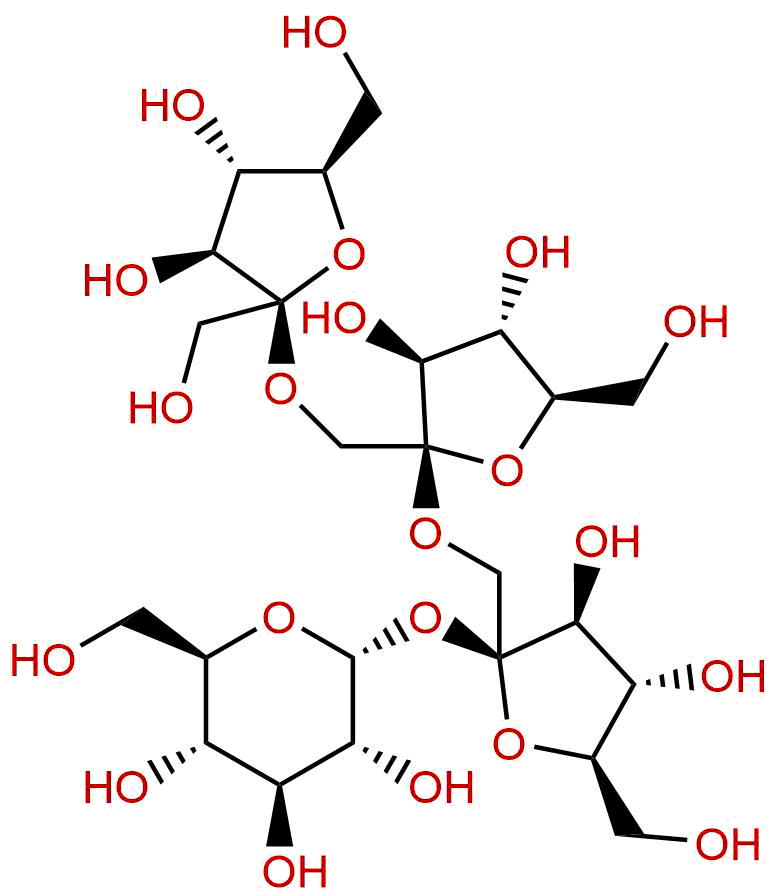


Product name: Nystose
Synonym name: Fungitetraose
Catalogue No.: BPF8574
Cas No.: 13133-07-8
Formula: C24H42O21
Mol Weight: 666.579
Botanical Source: Morindae Officinalis Radix
Physical Description:
Type of Compound: Miscellaneous
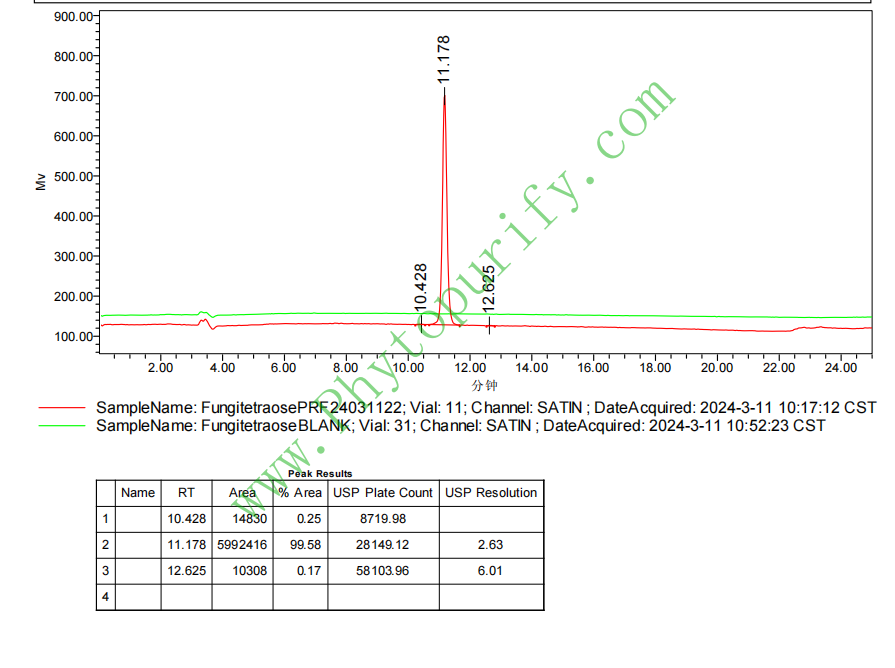
Purity: 95%~99%
Analysis Method: HPLC-DAD or/and HPLC-ELSD
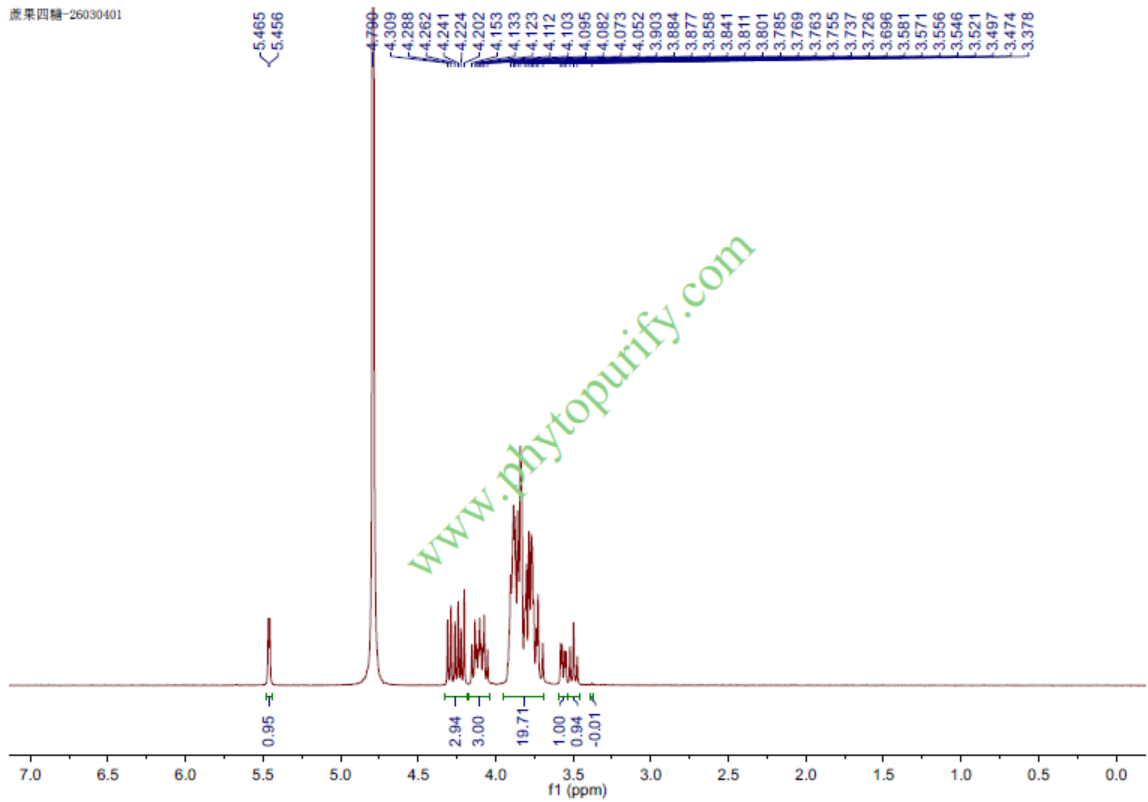
Identification Method: Mass, NMR
Packing: Brown vial or HDPE plastic bottle
Storage: Store in a well closed container, protected from air and light. Put into refrigerate or freeze for long term storage.
The product could be supplied from milligrams to grams
Inquire for bulk scale.
For Reference Standard and R&D, Not for Human Use Directly.
Description:
Nystose has antioxidant capacity. Nystose and 1-Kestose can modulate the intestinal Microorganisms flora, a high content of kestose and nestose in the diet can cause a decrease in ileal and cecal pH (to 5.42 and 5.49, respectively)of turkeys, which may promote digestion.
References:
Int. J. Food Sci. Tech., 2014, 49(6):1500-5.
In vitro anti‐hydroxyl radical activity of the fructooligosaccharides 1‐kestose and nystose using spectroscopic and computational approaches
Fructooligosaccharides (FOS) are bioactive oligosaccharide fructans with beneficial health effects. Anti‐hydroxyl radical activity is an important factor in the description of antioxidant capacity of any natural product.
METHODS AND RESULTS:
The aim of this study was to estimate in vitro anti‐hydroxyl radical activity of the FOS 1‐kestose and Nystose by electron paramagnetic resonance spectroscopy (EPR) and fluorescence spectroscopy (FS) followed by a theoretical approach based on quantum chemistry calculations. A significant anti‐hydroxyl radical potential of both compounds was observed (72% and 78% by EPR and 69% and 74% by FS, respectively), indicating the Nystose to be a more active natural product. In addition, the computational results have confirmed that Nystose follows the same pattern previously shown for 1‐kestose, that is, that carbohydrates can react with hydroxyl radical.
CONCLUSIONS:
It is well known that FOS belong to cardioprotective nutraceuticals, so the study may be of some interest to research in heart disease.
Poult Sci. 2007 Jun;86(6):1133-9.
Effect of a kestose and nystose preparation on growth performance and gastrointestinal tract function of turkeys.
The aim of the present study was to determine the effects of dietary administration of a fructooligosaccharide preparation rich in kestose and nestose on growth performance and gastrointestinal parameters in young turkeys.
METHODS AND RESULTS:
The kestose and nestose preparation was obtained through bioconversion of sucrose using fungi fructosyl transferase and contained in DM 39.9% of kestose, 17.6% of Nystose, as well as 26.5% of glucose and 14.7% of sucrose. Three dietary levels of the sum of kestose and Nystose (0.3, 0.6, and 1.2%) were fed to growing turkeys for 8 wk. When compared with the control treatment, addition of the kestose and nestose preparation had no effect on feed intake, feed conversion, and BW. The kestose and nestose-supplemented diet, especially the medium level of kestose and Nystose, influenced microbial metabolism, especially in the ceca. Compared with the control group, the medium level of kestose and nestose decreased relative weight of gizzard (from 18.67 to 16.51 g/kg of BW) and weight of small intestine tissue (from 23.3 to 19.6 g/kg of BW) and increased weight of ceca digesta (from 3.51 to 4.77 g/kg of BW) as well as activities of microbial beta-glucosidase (an increase from 0.22 to 0.38 U/g) and alpha-galactosidase (an increase from 0.90 to 1.61 U/g), pH of digesta (a decrease from 6.13 to 5.79), concentration of NH3 (an increase from 0.60 to 0.98 mg/g), and concentration of total short-chain fatty acids (an increase from 81.1 to 107.7 micromol/g) in the cecal digesta. A high content of kestose and nestose in the diet caused a decrease in ileal and cecal pH (to 5.42 and 5.49, respectively).
J. Appl. Glycosci., 2006, 53(3):175-80.
Effects of 1-Kestose and Nystose on the Intestinal Microorganisms and Immune System in Mice.
METHODS AND RESULTS:
We investigated the effects of the major short chain fructooligosaccharides, 1-kestose and Nystose, on the intestinal microorganisms and on the intestinal and systemic immune responses of mice. Both 1-kestose and Nystose promoted intestinal Lactobacillus number. However, the balance of Lb. reuteri and Lb. intestinalis, the major Lactobacillus species in the mice was not altered. The IgA content in the feces of mice treated with both 1-kestose and Nystose increased from day 4 to day 7 after starting the administration and returned to the same level of control mice on day 14. Splenocyte responses to Con A, anti-CD3 plus anti-CD28 antibodies and LPS were reduced by 1-kestose and Nystose. Nystose lowered IL-2, IFN-γ, IL-12 and IL-4 secretion from the splenocytes more than 1-kestose.
CONCLUSIONS:
These results suggested that both 1-kestose and Nystose can influence the microorganisms as well as the intestinal and systemic immune responses, but to different degrees.
HPLC of Nystose
HNMR of Nystose
Storage conditions:Short-term storage at 2~8℃, long-term storage at -20 ~ -80℃
347.8300
-3.7340
-3.7356
56.7068
.4120
.1736
Low
16.4228
5.7056
Yes
No
No
No
Yes
No
0.6
Yes
Yes
Yes
Yes
In the long process of human pursuit of health and disease prevention, natural products have always played an indispensable role. With the changes in modern lifestyle, the trend of high-fat, high sugar, and low fibrosis in dietary structure is becoming increasingly significant. This has led to chronic diseases such as metabolic syndrome, gut microbiota imbalance, osteoporosis, and immune dysfunction, which have become global public health challenges. In this context, functional oligosaccharides have attracted much attention due to their unique physiological regulatory functions. Nystose, also known as cane fruit tetrasaccharide, is a naturally occurring functional tetrasaccharide. With its clear prebiotic properties, immune regulatory activity, and positive effects on bone metabolism, it is gradually moving from behind the scenes to the forefront, becoming a new star in the fields of natural product pharmacology and functional food research.
Naisi sugar is not a newly discovered compound. As an important member of the oligofructose family, it is widely present in various plants, especially in the Asteraceae family such as taro and burdock. However, for a long time, the research community's attention to oligofructose has mainly focused on the low degree of polymerization of cane fruit trisaccharide (1-Kestose) or the high degree of polymerization of inulin type fructooligosaccharides, while systematic research on the intermediate degree of polymerization of Nais sugar is relatively lagging behind. In recent years, with the advancement of analytical chemistry technology and the deepening understanding of the complex interactions between gut microbiota and host health, the unique biological functions of Nissin have gradually been revealed. Especially its key discovery of activating the Wnt/β - catenin signaling pathway in promoting bone mineralization has opened up a new perspective for its application in the field of osteoporosis prevention and treatment.
This review aims to systematically sort out the chemical nature, sources, pharmacological activities, mechanisms of action, and potential for drug formation of Nissin, in order to provide a comprehensive and in-depth professional interpretation of this natural product with important development value, and to look forward to its application prospects in the future pharmaceutical and health industries.
The chemical nature of Nissin determines the basis of its biological function. Structurally, Nissin (CAS number: 13133-07-8) is a typical oligofructose with a molecular formula of C ₂₄ H ₄₂ O ₂ ₁ and a molecular weight of 666.5790 Da. Structurally, it consists of a sucrose molecule (glucose fructose disaccharide) as the core skeleton, with two additional fructose molecules connected by β (1 → 2) glycosidic bonds on the fructose residue of its fructose moiety. Therefore, the complete structure of Nissin can be described as: O - β - D-fructofuranyl - (2 → 1) - O - β - D-fructofuranyl - (2 → 1) - β - D-fructofuranyl - (2 → 1) - α - D-glucopyranose. This linear, non reducing structure exhibits a high degree of chemical stability.
In terms of physical and chemical properties, the physicochemical parameters of Nissin provide important references for its application. The calculated LogP value is -3.7340, which is an extremely low value indicating that the compound has strong hydrophilicity and is almost insoluble in lipid solvents. This characteristic is directly related to the abundance of hydroxyl (- OH) groups in its molecular structure. The extremely high polarity is also reflected in its topologically polar surface area (TPSA) of up to 347.8300 Å ², which is much higher than the threshold commonly believed to be able to penetrate the cell membrane (approximately 140 Å ²). Therefore, Nissin is difficult to passively diffuse through biofilms, and its biological effects mainly rely on interactions with receptors or transporters on the surface of intestinal epithelial cells, or indirectly through regulating intestinal microbiota. Its water solubility is as high as 56.7068 mg/mL, which provides convenience for its application in oral preparations such as beverages and oral liquids. In addition, Nissin is relatively stable in acidic environments and high temperatures, but strong acid or prolonged high temperature treatment may lead to hydrolysis of glycosidic bonds.
From the perspective of drug development, the hERG inhibition risk of Nissin is "no", the Ames test result is 0.6 (usually considered negative below 0.5, and 0.6 is at the critical value, indicating extremely low genetic toxicity risk), and the blood-brain barrier penetration ability is "low". These data preliminarily outline a candidate molecule profile with good safety, low oral bioavailability, but significant local intestinal effects.
Naisi sugar is not an artificially synthesized product, but a functional component naturally present in various plants. The biosynthetic pathway mainly involves fructosyltransferase (FT) or sucrose: cane candy glycosyltransferase (SST) in plants, which catalyze the fructosyl transfer reaction between sucrose molecules, gradually generating oligofructose with increasing polymerization degree. Nissin, as a product with a polymerization degree of 4, is a key intermediate in this synthetic pathway.
In the plant kingdom, the most abundant source of raffinose is mainly concentrated in Asteraceae plants. among which,Helianthus tuberosus L The tubers are widely recognized as a high-quality source of raffinose, with raffinose accounting for 10% -30% of the total oligofructose component.Burdock (Arctium lappa L.) The root is also traditionally used as a raw material for extracting oligofructose, with a considerable content of Nespresso. In addition,Snow lotus fruit (Smallanthus songchifolius)、Asparagus officinalis、Onion (Allium cepa)、Garlic (Allium sativum) And some Poaceae plants The presence of Nissin was also detected in the stems and leaves of the plant. Plants from different sources, growth stages, and harvest seasons exhibit significant differences in their S-resistant sugar content.
The method of extracting Nissin mainly follows the classic route of "extraction purification".Extraction stage Usually, hot water or dilute ethanol is used as the solvent to extract using the high water solubility of Nissin. After cleaning, slicing, drying, and crushing, the raw materials are subjected to multiple extractions at 60-80 ℃, and the extracted solutions are combined.Purification stage It is the key to obtaining high-purity Nissin. Traditional methods include:
1. Precipitation method Organic solvents such as ethanol or acetone are used to precipitate polysaccharides, but the selectivity is poor and it is difficult to separate oligosaccharides with different degrees of polymerization.
2. Ion exchange chromatography Used to remove protein, pigment, and ion impurities from the extraction solution.
3. Activated carbon column chromatography Preliminary separation using the adsorption differences of oligosaccharides with different degrees of polymerization on activated carbon.
4. Gel filtration chromatography The use of fillers such as Bio Gel P-2 or Sephadex G-15 for precise separation based on molecular size is currently a common method for preparing high-purity Nissin in laboratories.
5. High performance liquid chromatography (HPLC)Especially when using amino or sugar analysis columns, combined with differential refractive index detector (RID) or evaporative light scattering detector (ELSD), efficient separation and quantitative analysis of Nissin can be achieved.
In recent years, membrane separation technologies such as nanofiltration and ultrafiltration have shown great potential in the purification of industrial grade raffinose due to their advantages of simple operation, low energy consumption, and easy amplification. They can effectively enrich oligofructose with different degrees of polymerization.
The pharmacological activity research of Nissin mainly focuses on its intestinal regulatory function as a prebiotic, immune regulatory effect, and direct impact on bone metabolism, forming the scientific basis for its multidimensional health benefits.
The most classic and extensively studied function of Nissin is its prebiotic properties. As a soluble dietary fiber, Nissin cannot be hydrolyzed by digestive enzymes in the human digestive tract and can reach the colon intact. In the colon, it is surrounded by specific beneficial bacterial communities, especially Bifidobacterium and Lactic acid bacteria Selective fermentation utilization. Numerous in vitro and in vivo studies have confirmed that Nissin can significantly promote the proliferation of bifidobacteria (i.e. BIFIDO effect), while inhibiting the growth of potential pathogenic bacteria such as Clostridium perfringens and Escherichia coli. The ability to selectively regulate gut microbiota is the basis for the subsequent health effects of Nissin. Through fermentation, Nissin produces short chain fatty acids (SCFAs), mainly acetic acid, propionic acid, and butyric acid. These SCFAs not only provide energy for colonic epithelial cells, but also lower intestinal pH and improve the solubility of minerals such as calcium and magnesium, thereby promoting their absorption.
The immunomodulatory activity of Nissin is closely related to its prebiotic effects, but there is also direct evidence of immune cell regulation. Research has shown that Nissin or its fermented products SCFAs can regulate the host immune system through multiple pathways:
- Enhance intestinal barrier function Nissin promotes the growth of beneficial bacteria such as Bifidobacterium, upregulates the expression of tight junction proteins (such as OCLN, ZO1, CLDN1) in intestinal epithelial cells, and promotes the secretion of mucins (such as MUC2), thereby strengthening the intestinal physical barrier, preventing bacterial translocation and endotoxemia.
- Regulating immune cell activity:SCFAs, Especially butyric acid can regulate the function of macrophages, dendritic cells, and T cells by inhibiting histone deacetylase (HDAC) or activating G protein coupled receptors (such as GPR41, GPR43). For example, activation of GPR43 can promote the differentiation of regulatory T cells (Tregs), inhibit inflammatory Th17 cells, and maintain intestinal immune homeostasis.
- Inducing antimicrobial peptides and cytokines SCFAs produced by Nissin fermentation or through microbiota host interactions can induce intestinal epithelial cells to secrete antimicrobial peptides (such as RegIII γ) and cytokines (such as IL-22), the latter of which play a key role in maintaining intestinal barrier integrity and anti infection. Meanwhile, by regulating the signaling of pattern recognition receptors such as TLR4 and TLR2, Nissin helps balance pro-inflammatory and anti-inflammatory responses, and has potential therapeutic value for diseases such as inflammatory bowel disease.
The activity of Nissin in metabolic regulation has also attracted much attention. Multiple animal experiments and human clinical trials have shown that supplementing with Nissin or oligofructose rich in Nissin can improve glucose and lipid metabolism. The mechanism mainly includes:
- Regulating appetite and energy intake By promoting the secretion of glucagon like peptide-1 (GLP-1) and peptide YY (PYY) by intestinal L cells, gastric emptying is delayed, satiety is increased, and total energy intake is reduced.
- Improve insulin sensitivity By regulating the composition of gut microbiota, reducing the production of endotoxins (LPS), and lowering chronic low-grade inflammation, insulin signaling can be improved.
- Regulating lipid metabolism:SCFAs, Especially propionic acid, it can inhibit the synthesis of cholesterol in the liver and promote the oxidation of fatty acids in adipose tissue.
In recent years, the promoting effect of Nissin on bone health has become a research hotspot, which is also a significant feature that distinguishes it from other oligofructose. The traditional view is that oligofructose indirectly promotes bone mineralization by promoting intestinal calcium absorption. However, the latest research has found that Nissin may have a direct effect on bone synthesis metabolism. A key study has confirmed that Nissin can directly act on osteoblasts,By activating the classic Wnt/β - catenin signaling pathway Promote the differentiation and mineralization of osteoblasts. The Wnt/β - catenin pathway is one of the most critical pathways regulating bone formation, and its activation can promote the expression of osteoblast specific transcription factors Runx2 and Osterix, thereby upregulating the synthesis of bone matrix proteins such as osteocalcin and type I collagen. This discovery elevates Nissin from a simple "calcium absorption promoter" to a potential "bone formation promoter", providing a new molecular target and theoretical basis for the development of novel anti osteoporosis drugs or functional foods.
The biological effects of Nissin cannot be explained by a single mechanism, but are achieved through the synergy of "indirect mechanisms mediated by gut microbiota" and "molecular mechanisms directly acting on host cells". The core molecular target network can be summarized as follows:
This is the main pathway through which Nissin exerts its prebiotic effects.
- Target: Bifidobacterium bifidum (BIFIDO)Naisi sugar, as the exclusive "food" of Bifidobacterium, is hydrolyzed and utilized by its β - fructosidase to promote its growth. The proliferation of bifidobacteria itself can inhibit pathogenic bacteria and produce SCFAs.
- Target: GPR41/GPR43 SCFAs (mainly acetic acid and propionic acid) produced by Nissin fermentation are natural ligands for GPR41 and GPR43. GPR43 is highly expressed in intestinal epithelial cells, immune cells, and adipocytes. After binding to GPR43, SCFAs can activate downstream signaling pathways such as ERK1/2 and p38 MAPK, regulating cell proliferation, differentiation, and inflammatory response. For example, in immune cells, activation of GPR43 can promote the production of anti-inflammatory cytokine IL-10 and inhibit pro-inflammatory cytokine TNF - α.
- Target: TLR4/TLR2 Nissin improves gut microbiota and reduces the release of lipopolysaccharides (LPS) from Gram negative bacteria, thereby reducing excessive activation of TLR4 and alleviating endotoxemia and chronic low-grade inflammation. Meanwhile, certain beneficial bacterial components may induce tolerant immune responses by activating TLR2.
- Target: MUC2, OCLN, ZO1, CLDN1 Nissin enhances intestinal physical barrier function by upregulating the expression of genes encoding key intestinal barrier proteins. This process may be mediated by SCFAs (especially butyric acid) by inhibiting HDAC or activating GPR109A receptors.
- Target: IL-22 Nissin can induce intestinal innate lymphocytes (ILC3) and Th17 cells to produce IL-22. IL-22 acts on intestinal epithelial cells, promoting the production of antimicrobial peptides (such as RegIII γ) and mucins, and promoting epithelial cell proliferation and repair. It is a key cytokine that maintains intestinal homeostasis.
Although Nissin is difficult to absorb, a small amount of unfermented Nissin or its high concentration in the intestinal tract may directly interact with receptors on the surface of intestinal epithelial cells or immune cells.
- Target: Wnt/β - catenin signaling pathway This is the core mechanism by which Nissin promotes bone mineralization. Research has shown that Nissin can directly act on osteoblasts (or precursor cells), stabilizing the β - catenin protein in the cytoplasm and promoting its entry into the nucleus through a membrane receptor that is not yet fully understood (possibly involving LGR5 or Frizzled receptors). β - catenin in the nucleus binds to TCF/LEF transcription factors, initiating the transcription of downstream target genes (such as c-Myc, Cyclin D1, Runx2), thereby driving osteoblast differentiation and bone matrix mineralization. This discovery extends the target of Nissin from the intestine to the skeletal system.
In summary, the mechanism of action of Nissin is a complex network of multiple targets, levels, and pathways. Its prebiotic effect indirectly affects systemic metabolism and immunity by regulating the microbiota and SCFAs; And its role in promoting bone mineralization may be achieved by directly activating the Wnt signaling pathway, demonstrating its unique charm as a multifunctional natural product.
From the perspective of drug development, the pharmacological properties of Nissin exhibit distinct "double-edged sword" characteristics.
Advantage aspects:
1. Extremely high security As a naturally occurring dietary ingredient, Nespresso has a long history of consumption. Toxicological evaluation shows that it has no genetic toxicity (Ames test negative), no cardiac toxicity (low risk of hERG inhibition), and no significant acute or chronic toxicity. Its safe dosage range is wide, usually up to 10-20 grams per day, and it may only cause mild gastrointestinal bloating.
2. Good physical and chemical properties High water solubility makes it easy to make into oral liquids, granules, or tablets. The chemical properties are relatively stable, making it easy to prepare and store.
3. Clear intestinal targeting The extremely low LogP value and high TPSA determine that it is almost not absorbed, making it an ideal intestinal local acting drug or prebiotic. Its target of action (gut microbiota, intestinal epithelial cells) is highly consistent with the route of administration (oral), achieving the strategy of "local administration, local efficacy" or "local administration, systemic regulation".
Challenges and limitations:
1. Extremely low bioavailability This is the biggest obstacle to its use as a systemic drug. Nissin cannot passively diffuse through intestinal epithelial cells, nor can it be effectively absorbed by active transport systems. Therefore, it can hardly enter the bloodstream, let alone reach distant target organs such as bones. If its promotion of bone mineralization relies entirely on direct activation of osteoblasts, it faces significant challenges in terms of drug delivery pathways. The current research findings suggest that its bone protective effect may rely more on indirect mechanisms mediated by gut microbiota, such as promoting calcium absorption and regulating immunity, rather than directly acting on bones.
2. Pharmacokinetic characteristics After oral administration of Nissin, its pharmacokinetic process mainly occurs in the gastrointestinal tract. It is not digested in the upper gastrointestinal tract and reaches the colon intact. In the colon, it is fermented by the microbiota, and its half-life depends on the fermentation rate. Its metabolites SCFAs are absorbed and utilized by colonic epithelial cells, partially entering the portal circulation, metabolized in the liver, and ultimately excreted in the form of CO ₂ and ketone bodies. Nissin itself is almost undetectable in plasma.
3. Formulation and delivery challenges In order to maximize its prebiotic effect or achieve indirect regulation of distal organs, it is necessary to develop dosage forms that can protect it from gastric acid degradation (although its stability is still acceptable) and control its release in the colon. For the idea of direct bone targeting, it is necessary to develop non oral drug delivery systems such as nanocarriers, liposomes, etc., but this is still in the very early stages of exploration.
Summary of Drug Evaluation Naisi Sugar as Functional food or health product raw materials Its medicinal properties are extremely high, and its safety, efficacy, and consumer acceptance are all very good. but as Systemic therapeutic drugs Its medicinal properties face fundamental challenges, namely the issue of bioavailability. Future drug development strategies should focus on: 1) utilizing their local intestinal effects to develop drugs for treating intestinal diseases (such as IBD, constipation) or metabolic disorders; 2) Conduct in-depth research on the mechanism of indirectly regulating bone metabolism through gut microbiota, and develop new intervention strategies based on this; 3) Explore new drug delivery systems to achieve direct delivery to target organs.
Based on the unique pharmacological activity and good safety of Nissin, its clinical application prospects are very broad, mainly concentrated in the following directions:
This is the most direct and mature application field of Nissin. As a new generation of prebiotics, Nissin can be widely used in:
- Intestinal health products Used to improve constipation, diarrhea, irritable bowel syndrome (IBS), etc.
- Immune enhancement products By regulating the gut microbiota, it enhances the body's immunity, especially suitable for people with weakened immunity.
- Metabolic regulation products As a low calorie sweetener and dietary fiber, it is used to control body weight, improve blood sugar and lipids, and assist in the treatment of type 2 diabetes and obesity.
- Bone Health Products By combining its promotion of calcium absorption and potential bone formation, a new type of "bone healthy" functional food can be developed, especially suitable for postmenopausal women and the elderly.
Despite the bright prospects, the research on Nissin still faces many challenges and unsolved mysteries:
1. Mechanism digging deep What is the membrane receptor that directly activates the Wnt/β - catenin signaling pathway with Nissin? What is the synergistic mechanism of its interaction with SCFAs, a metabolic product of gut microbiota, in bone metabolism regulation? Further molecular biology research is needed to clarify.
2. structure-activity relationship Are there differences in prebiotic effects and bone metabolism regulation of oligofructose with different degrees of aggregation (such as cane trisaccharide, raffinose, and cane pentose)? What are the unique advantages of Nissin? A systematic comparative study is needed.
3. clinical translation Currently, most research is still at the cellular and animal level. We need to design rigorous, large-scale, and long-term human clinical trials to validate the efficacy of Nissin in osteoporosis IBD、 The exact efficacy and safety in diseases such as metabolic syndrome.
4. Innovation in delivery system: The development of new drug delivery systems (such as nanoparticles and hydrogels) that can target the delivery of nisose or its active metabolites to bones or other distal organs is the key to breaking through the bottleneck of its drug formation.
5. Individualized application The composition of gut microbiota varies from person to person, and there may be significant individual differences in the prebiotic effects of Nissin. Future research should explore precise interventions for glucose tolerance based on individual gut microbiota characteristics.
Naisi sugar, a seemingly simple natural tetrasaccharide, showcases the subtlety and profundity of nature through its unique chemical structure and multidimensional biological activity. From the classic prebiotic function to the recently discovered immunomodulatory and bone metabolism promoting effects, the research process of Nissin reflects the paradigm shift of natural product pharmacology from "single target" to "network regulation". It is not only a "cleaner" that maintains the balance of gut microbiota, but also a "messenger" that connects the gut with bones, immunity, and metabolism.
Although its extremely low bioavailability constitutes a natural barrier for its development as a systemic drug in terms of drug efficacy, this has not weakened its enormous potential in the fields of functional foods and intestinal local therapeutic drugs. On the contrary, it is precisely this "gut targeting" characteristic that makes it an ideal candidate for intervening in modern chronic diseases such as metabolic syndrome, osteoporosis, and immune dysfunction. With the continuous deepening of understanding of the interaction mechanism between gut microbiota and host, as well as the continuous innovation of drug delivery technology, we have reason to believe that Nissin and its derivatives will play a more important role in the fields of precision nutrition and medicine in the future. The in-depth study of Nissin will not only bring new solutions to human health, but also deepen our scientific understanding of the ancient proposition of "what to eat and why it is healthy".
