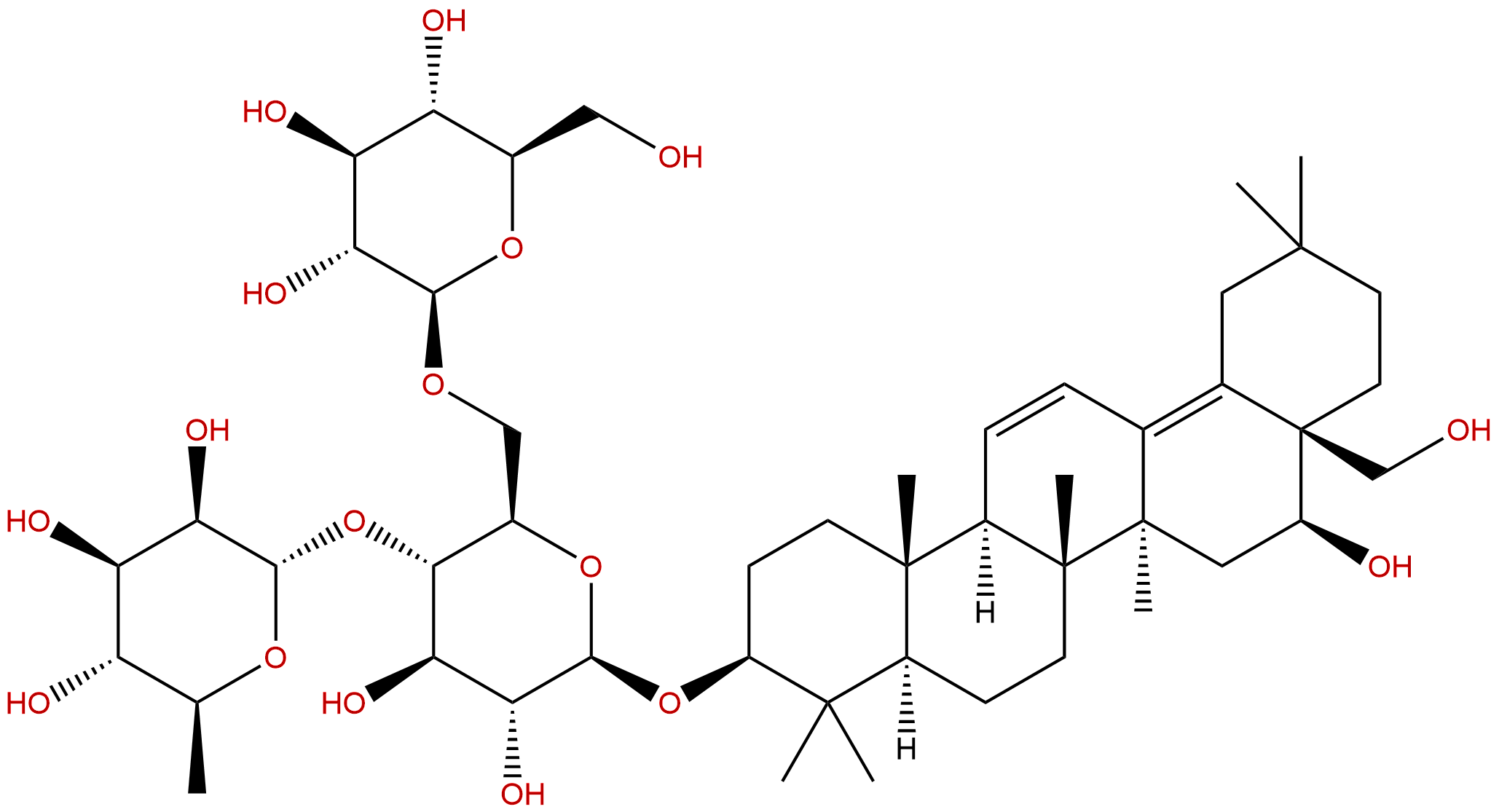
Chaihu saponin H: a natural active molecule derived from traditional herbs
1. Overview
Saikosaponin H is a traditional Chinese medicine derived from Chaihu(Bupleurum chinense)The natural triterpenoid saponins extracted from the roots have a CAS number of 91990-63-5, a molecular formula of C48H78O17, and a molecular weight of approximately 927.14 g/mol. As an important member of a series of bioactive saponins in Bupleurum chinense, saikosaponin H, along with saikosaponin A, D, etc., constitute the core material basis of the pharmacological effects of Bupleurum chinense. Chaihu, as an essential medicine for "harmonizing Shaoyang", has been used in traditional Chinese medicine clinical practice for more than two thousand years. It is mainly used to treat fever, liver depression and qi stagnation, chest and rib distension and pain. Modern pharmacological research is dedicated to revealing its specific active ingredients and mechanisms of action, and saikosaponin H is one of the molecules that has received much attention.
Although its content is relatively low in total saponins of Chaihu, Chaihu saponin H has become a hot topic in natural product chemistry and pharmacology research due to its unique chemical structure and potential biological activity. Existing studies have shown that it exhibits potential in antipyretic, anti-inflammatory, and immunomodulatory effects by acting on multiple key biological targets, such as estrogen receptor 1 (ESR1) and prostaglandin endoperoxide synthase 2 (PTGS2, COX-2). This article will provide a systematic professional popularization of this natural compound from the aspects of its chemical structure, plant origin, pharmacological mechanism, medicinal evaluation, and research prospects.
2. Chemical structure and physicochemical properties
Chaihu saponin H belongs to the oleanane type pentacyclic triterpenoid saponin, and its complex chemical structure is accurately described by SMILES strings and molecular formulas. The molecular formula C48H78O17 indicates that it is a high oxygen content macromolecular compound with a molecular weight of 927.1350 g/mol, which exceeds the scope of many conventional small molecule drugs.
Its physicochemical properties provide key information for us to understand its biological behavior:
- Lipid water partition coefficient (LogP/LogD)The LogP value is 2.6093 and the LogD value is 2.6095, indicating that the compound has moderate to high lipophilicity. This is beneficial for its penetration through the cell membrane, but it may also affect its dissolution and distribution in aqueous body fluids.
- Topological Polarity Surface Area (TPSA)Up to 277.91 Å ², mainly attributed to the abundant hydroxyl (- OH) groups in the molecule and oxygen atoms in glycosidic bonds. High TPSA usually means that the molecule has strong polarity, which is not conducive to passive transmembrane transport, especially through the blood-brain barrier (BBB).
- Water solubility The value is 0.0534 (usually measured in mg/mL or mol/L, which is not specified in the database here, but a low value indicates poor solubility), which is consistent with the properties suggested by high TPSA and moderate LogP, namely poor water solubility.
- Molecular weight (MW):927.1350 g/mol, Significantly exceeding the empirical upper limit of 500 Da for conventional oral medications.
Structurally, saikosaponin H is composed of a hydrophobic triterpenoid sapogenin (glycoside) and multiple hydrophilic glycosides (such as glucose, rhamnose, etc.) connected by glycosidic bonds. This amphiphilic structure is the basis for its ability to interact with biological membranes and produce various pharmacological activities, but it also poses challenges for its drug development.
3. Plant sources and traditional applications
The plant source of Chaihu saponin H is the Apiaceae plant Chaihu, specifically referring to its dried root, and the medicinal herb is called "Thorowax Root". In the Chinese Pharmacopoeia, the main source is Bupleurum chinense(Bupleurum chinense)Narrow leaved Bupleurum chinense(Bupleurum scorzonerifolium)Waiting for varieties.
The application history of Chaihu has a long and rich history, first recorded in the "Shennong Bencao Jing" and listed as a top grade. In traditional Chinese medicine theory, Chaihu is bitter and slightly cold in nature, returning to the liver and gallbladder meridians. Its core functions are "dispersing and reducing fever, soothing the liver and relieving depression, and elevating yang qi". Its classic formulas include Minor Bupleurum Decoction(Treatise on Cold Damage), used to treat the "Shaoyang Disease" where the evil is half external and half internal. Symptoms include cold and heat exchange, chest and rib pain, restlessness and nausea, reflecting its excellent antipyretic and regulating effects.Xiaoyao San The "Taiping Huimin Heji Fang" utilizes its function of soothing the liver and relieving depression to treat liver depression, blood deficiency, and spleen weakness. In addition, in Bu Zhong Yi Qi Tang In the middle, Chaihu has the effect of lifting and clearing yang.
Although traditional applications are based on whole herbs and compound formulas, modern research has confirmed that saponins from Bupleurum chinense are their active ingredients Antipyretic, anti-inflammatory, hepatoprotective, antiviral, immunomodulatory The main material basis for modern pharmacological effects. As one of the members, the isolation, identification, and activity research of Chaihu saponin H is an important bridge connecting traditional experience with modern science, providing specific chemical molecular basis for elucidating the scientific connotation of Chaihu's "reconciliation and antipyretic" effect.
4. Pharmacological activity and mechanism of action
The pharmacological activity of saikosaponin H is closely related to its known molecular targets. The five targets suggested by the database (ESR1, PGR, PTGS2, PGE2, OXT) provide clues for their main mechanisms of action, with a particular focus on Antipyretis This core related disease.
1. Core antipyretic and anti-inflammatory mechanisms: targeting the PTGS2/PGE2 pathway
- PTGS2 (prostaglandin endoperoxide synthase 2, also known as COX-2)This is a key enzyme in the process of inflammation and fever. When the body is infected or damaged, cells induce the expression of COX-2, catalyzing the production of prostaglandins (PGs) from arachidonic acid, especially PGE2 (prostaglandin E2)PGE2 acts on the hypothalamic thermoregulatory center, raising the temperature setting point and causing fever.
- mechanism of action Research has shown that saikosaponin compounds can significantly inhibit the enzymatic activity or expression of COX-2, thereby reducing the synthesis of PGE2. Chaihu saponin H is likely to block the production of thermogenic mediators through this pathway, achieving Relieve fever effect. This is the main scientific basis for its ability to combat fever caused by bacterial endotoxins (LPS) and other factors.
2. Hormone receptor regulation: ESR1 and PGR
- ESR1 (estrogen receptor alpha) and PGR (progesterone receptor)These two targets suggest that saikosaponin H may have steroid like or regulatory hormone receptor activity. Research has shown that some triterpenoid saponins can interact with estrogen receptors, producing selective estrogen receptor modulator (SERM) - like effects.
- Association and Meaning This activity may be related to the traditional use of Chaihu in treating gynecological diseases such as menstrual disorders and liver depression and qi stagnation. By regulating ESR1 and PGR signals, it may affect the hypothalamic pituitary gonadal axis and indirectly participate in the regulation of physiological processes such as body temperature. However, this pathway has a weak direct correlation with antipyretic effects and more reflects its multi-target and multi effect characteristics.
3. Neuropeptide regulation: OXT (Oxytocin)
- OXT (Oxytocin)A neuropeptide synthesized by the hypothalamus and released by the posterior pituitary gland. Traditionally, it is believed to be related to childbirth, breastfeeding, and social behavior. Recent studies have found that OXT is also involved in temperature regulation, stress response, and pain modulation.
- underlying mechanism Whether saikosaponin H regulates body temperature and emotional state by affecting the release or signaling of OXT is a frontier direction worth exploring. This may partially explain the overall regulatory role of Chaihu in "reconciling" emotional and physical symptoms.
Comprehensive mechanism explanation:
The antipyretic effect of Chaihu saponin H,The main and most direct pathway is likely to be through inhibiting COX-2 and reducing the production of PGE2, the core thermogenic mediator Meanwhile, its regulatory effect on hormone receptors such as ESR1 and PGR may help stabilize the internal environment of the body and alleviate the stress state associated with fever; The potential impact on the OXT system may involve more advanced neuroendocrine regulatory networks. This reflects the characteristic of multi-component and multi-target synergistic effects of natural products: saikosaponin H is not a single and potent COX-2 inhibitor (such as celecoxib), but achieves a "harmonious" antipyretic effect by gently regulating multiple related pathways, which may be similar to the traditional Chinese medicine concept of "harmonizing Shaoyang".
5. Evaluation of drug properties
Based on the provided pharmacological parameters, we combine Lipinski's Rule of Five (Ro5)Objective evaluation of the potential of Chaihu Saponin H as a single chemical entity for developing into oral medication based on standards:
1. Compliance analysis with Lipinski's five rules:
- Rule 1: Molecular weight MW<500 Da The MW of Chaihu saponin H is 927.14, severely exceeding the standard (>500).
- Rule 2: Lipid water partition coefficient LogP<5 LogP is 2.61, which is consistent.
- Rule 3: The number of hydrogen bond donors (HBDs) is less than 5 From its structural formula, it can be inferred that the molecule contains a large number of hydroxyl groups, and the HBD number far exceeds 5.
- Rule 4: The number of hydrogen bond acceptors (HBAs) is less than 10 There are numerous oxygen atoms in the molecule, and the number of HBAs far exceeds 10.
- Rule 5: Number of rotatable keys Usually requiring<10, its complex structure results in a very high number of rotatable keys.
Conclusion Chaihu Saponin H Severe violation At least three of Lipinski's five rules (MW, HBD, HBA) have been identified, which strongly suggests their Oral bioavailability is likely to be extremely low Ro5 is an empirical rule for evaluating drug properties. Violation does not necessarily mean absolute inactivity, but it indicates that it will face significant challenges in terms of absorption, distribution, metabolism, and excretion (ADME) in the body.
2. Interpretation of key ADME/Tox parameters:
- absorb The permeability of Caco-2 cells is 0.5253, which is a low value indicating poor intestinal absorption. The effective permeability (Peff) of 0.5833 is also low. This is consistent with the analysis of poor membrane permeability caused by high MW and high TPSA (277.91).
- distribution The plasma protein binding rate (PPB) is 72.10%, which is moderately high. This means that about 72% of drugs in the blood bind to proteins, which may affect their free concentration and tissue distribution.BBB penetration is' low 'This is completely consistent with high TPSA, indicating that it is difficult for it to enter the central nervous system, which may be a disadvantageous factor for antipyretic effects (acting on the hypothalamus), but its antipyretic effect may mainly be achieved through peripheral inhibition of PGE2 production.
- Metabolism and toxicity:
-Ames test (0.0) and chromosome aberration (none) results are negative, preliminary indication No genetic toxicity。
-HERG inhibition (No), indicating Low risk of cardiac toxicity。
-No skin, respiratory sensitization, or phototoxicity.
-Serum biochemical indicators: suggesting possible effects Alkaline phosphatase (Ser_LK: Yes) and alanine aminotransferase (Ser_LT: Yes)It has an impact, which requires attention Potential hepatotoxicity This is consistent with the liver injury risk reported by some Chaihu saponins and is an aspect that needs to be closely monitored during development.
Conclusion of comprehensive drug evaluation:
Chaihu Saponin H as a Natural active lead compounds It has clear pharmacological activity (especially antipyretic and anti-inflammatory) and relatively good preliminary safety signals (without genetic toxicity and cardiac toxicity). However, it Drug similarity is very poor The main symptoms include oversized molecules, strong polarity, difficulty in oral absorption, and potential risk of liver toxicity. Therefore, it Not suitable for direct development as traditional oral small molecule chemical drugs。
Its future development strategy may include:
1. As a prodrug or for structural modification Simplify sugar chains, modify hydroxyl groups to reduce MW and TPSA, improve lipid solubility and membrane permeability.
2. Study its active metabolites in vivo Perhaps after some of its glycosides are hydrolyzed in the intestine, aglycones or secondary glycosides are the true active forms.
3. As a standard component or quality control marker for traditional Chinese medicine formulas In Chaihu or compound preparations, when it works synergistically with other ingredients, its bioavailability may be improved by other ingredients (such as absorption aids).
4. Developed as an injection or special drug delivery system To bypass absorption barriers, but its safety and metabolic behavior in the body need to be fully evaluated.
6. Research Status and Application Prospects
Research status:
At present, research on saikosaponin H is still in progress Basic research stage This is far less than the research on saikosaponin A and D. The existing literature mainly focuses on:
1. Separation and identification Isolation and purification from different varieties of Bupleurum chinense, and structural confirmation.
2. In vitro activity screening Validate its anti-inflammatory, immune regulatory, antiviral and other activities on cell models, and preliminarily explore its effects on the COX-2/PGE2 pathway.
3. As one of the indicator components for quality control of Bupleurum chinense In the quality control of traditional Chinese medicine, the content of multiple saikosaponin is often measured simultaneously.
However, regarding its Detailed in vivo pharmacodynamics, pharmacokinetics, toxicology, and precise molecular target binding patterns The research is still very lacking. The interactions between it and targets such as ESR1, PGR, OXT are mostly predicted or preliminarily validated, and require further biochemical and structural biology research to confirm.
Application Prospects:
1. Probe molecules for elucidating the scientific connotation of traditional Chinese medicine In depth study of the multi-target action network of Chaihu saponin H can help to interpret the micro mechanisms of traditional Chinese medicinal effects such as "harmonizing Shaoyang" and "soothing liver and relieving depression" from a modern pharmacological perspective, and promote the modernization of traditional Chinese medicine.
2. Developing lead compounds for novel anti-inflammatory and antipyretic drugs Despite its poor pharmacological properties, its unique chemical framework and activity provide valuable templates for medicinal chemists. Through reasonable structural optimization It is expected to derive a series of COX-2/inflammatory pathway modulators with better drug properties, high efficiency and low toxicity.
3. Quality upgrade of traditional Chinese medicine compound preparations Using it as a formula for Chaihu and related compounds (such as Xiaochaihu granules and Xiaoyao pills)One of the key active ingredient biomarkers Establish more precise quality control standards to ensure the stability and consistency of the efficacy of the formulation.
4. Exploring the potential in immune related diseases and hormone regulated diseases Based on its multi-target characteristics, its application value in autoimmune diseases, menopausal syndrome and other fields can be expanded and studied.
In summary, saikosaponin H is a typical molecule that connects traditional wisdom with modern science. It not only carries the therapeutic code of Chai Hu's thousand year application, but also presents challenges and opportunities to modern pharmacy due to its complex structure and multi-target characteristics. Future research needs to respect the natural product characteristics and utilize multidisciplinary approaches such as chemical biology, computational pharmacy, and new drug delivery technologies to fully tap into its value, ultimately achieving a leap from "herbal ingredients" to "modern drugs" or "precise quality control biomarkers".