| Catalog No | Package | Original Price | Price | Inventory | Quantity | Operating |
|---|---|---|---|---|---|---|
| BP5135-5mg | 5mg | $590.00 | Sign in |
|


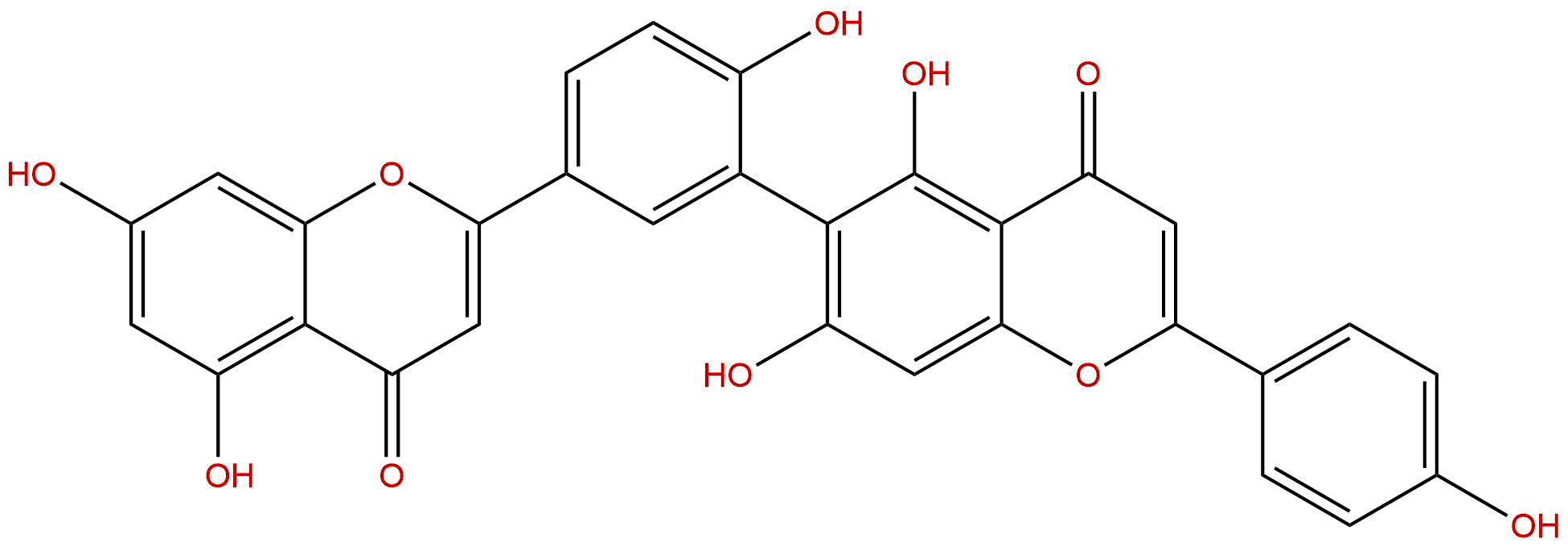
Product name: Robustaflavone
Synonym name:
Catalogue No.: BP5135
Cas No.: 49620-13-5
Formula: C30H18O10
Mol Weight: 538.464
Botanical Source:
Type of Compound: Flavonoids,Biflavones
Purity: 95%~99%
Analysis Method: HPLC-DAD or/and HPLC-ELSD
Identification Method: Mass, NMR
Packing: Brown vial or HDPE plastic bottle
Storage: Store in a well closed container, protected from air and light. Put into refrigerate or freeze for long term storage.
Whenever possible, you should prepare and use solutions on the same day. However, if you need to make up stock solutions in advance, we recommend that you store the solution as aliquots in tightly sealed vials at -20℃. Generally, these will be useable for up to two weeks.
The product could be supplied from milligrams to grams
Inquire for bulk scale.
For Reference Standard and R&D, Not for Human Use Directly.
Storage conditions:Short-term storage at 2~8℃, long-term storage at -20 ~ -80℃
184.7800
3.5000
No
Unknown
Unknown
Unknown
Unknown
Unknown
Unknown
Unknown
Unknown
Natural products have always been an important source of drug discovery and development, especially in the fields of anti-tumor, antiviral, and cardiovascular disease treatment. Plant secondary metabolites exhibit unique chemical diversity and biological activity. Biflavonoids, as dimers of flavonoids, have received continuous attention due to their unique molecular structure and extensive pharmacological activities. Robustaflavone (CAS number: 49620-13-5) is a typical flavonoid compound formed by oxidative coupling of two apigenin molecules to form a C-3 ′ - C-6 ″ bond. This compound was initially isolated from the fern plant Doradilla and subsequently discovered in various plants such as Platycladus orientalis and Rhus accedanea.
The discovery of rosuvastatin can be traced back to the 1970s, when researchers noticed that certain fern extracts had significant diuretic effects during systematic chemical screening of traditional medicinal plants, which led to the isolation and identification of active ingredients. With the deepening of research, the biological activity spectrum of Robusta flavonoids continues to expand, and it has been confirmed that they have various pharmacological effects such as antioxidant, cytotoxic, anti hepatitis B virus (HBV), and diuretic sodium. These findings make it one of the research hotspots in the interdisciplinary field of natural product chemistry and pharmacology.
From a chemical classification perspective, Roposta flavonoids belong to the "Biapigenin type" of flavonoids, characterized by the direct connection of two flavonoid units through carbon carbon bonds rather than ether bonds or methylene bridges. This unique connection method endows the molecule with a special spatial configuration and electronic distribution, which in turn affects its interaction mode with biological targets. In recent years, with the development of structural biology and computational chemistry, the study of the mechanism of action of rosuvastatin has deepened from phenotype observation to molecular target recognition, providing a theoretical basis for its further optimization as a lead compound.
The chemical structure of Robusta flavonoids is composed of two apigenin (5,7,4 '- trihydroxyflavone) units connected by a C-3' - C-6 "bond. Specifically, the C-3 'position of the B ring (hydroxyphenyl ring) of one apigenin molecule forms a carbon carbon bond with the C-6 "position of the A ring (selene ring) of another apigenin molecule. This connection method results in a non planar conformation of the molecule, with a certain dihedral angle between two flavonoid units, thus forming a unique "V" - shaped or "twisted" spatial structure. From a system naming perspective, its IUPAC name is 8- [5- (5,7-dihydroxy-4-oxo-4H-chromene-2-yl) -2-hydroxyphenyl] -5,7-dihydroxy-2- (4-hydroxyphenyl) -4Hchromene-4-one.
The molecular formula is C ∝₀ H ₁₈ O ₁₀, and the molecular weight is 538.46 g/mol. This molecule contains 10 hydroxyl groups (including 8 phenolic hydroxyl groups and 2 alcohol hydroxyl groups), which not only endow the molecule with good hydrogen bond donor ability, but also serve as the structural basis for its antioxidant activity. In terms of physical and chemical properties, Robusta flavonoids are yellow to brown crystalline powders with a melting point above 280 ° C (accompanied by decomposition). They have good solubility in methanol, ethanol, and dimethyl sulfoxide (DMSO), but lower solubility in water (<0.1 mg/mL), which is related to their polyphenol structure and larger molecular size.
From the perspective of medicinal chemical parameters, the lipid water partition coefficient (LogP) of Ropostat flavonoids is 3.50, indicating that they have a certain lipophilicity and can penetrate biological membranes, but may be limited by molecular weight and polarity. The topological polar surface area (TPSA) is 184.78 Å ², which is much higher than the recommended upper limit of 140 Å ² for oral drugs, indicating that its oral absorption may be limited. The number of hydrogen bond acceptors is 10, which meets the critical value of no more than 10 hydrogen bond acceptors in Lipinski's five rules, but the molecular weight (538.46) exceeds the threshold of 500. Overall, there are certain challenges to the drug like properties of rosuvastatin flavonoids, but as a natural product lead compound, its structural modification space is relatively large.
In terms of spectroscopic characteristics, UV visible absorption spectra show typical absorption bands for flavonoids: band I (300-380 nm, corresponding to the B-cyclic cinnamoyl system) and band II (240-280 nm, corresponding to the A-cyclic benzoyl system). In the infrared spectrum, the strong absorption peak at 1640-1660 cm ⁻¹ is attributed to the C=O stretching vibration, and the broad peak at 3200-3400 cm ⁻¹ corresponds to the O-H stretching vibration of phenolic hydroxyl groups. In the nuclear magnetic resonance hydrogen spectrum (¹ H NMR), the phenolic hydroxyl proton signal appears at δ 12-13 ppm (5-OH, forming intramolecular hydrogen bonds with C=O), and the aromatic proton signal is distributed in the δ 6-8 ppm region. In the mass spectrometry analysis, the electrospray ionization mass spectrometry (ESI-MS) showed the [M-H] ⁻ ion peak m/z 537.1, and the secondary mass spectrometry fragments can provide the structural information of the junction sites.
Lobosta flavonoids are relatively widely distributed in nature, but their content is usually low, mainly found in ferns, gymnosperms, and some angiosperms. The earliest reported source is the Selaginellaceae plant Doradilla (scientific name Selaginella lepidophylla), which is used in traditional medicine to treat urinary system diseases. Its diuretic sodium activity led to the discovery of rosuvastatin. Subsequently, the presence of the compound was detected in the branches, leaves, and seeds of Platycladus orientalis, a member of the cypress family, as well as in the fruits and bark of Rhus accedanea, a member of the lacquer tree family.
Other reported sources of plants include various species of the genus Juniperus, such as Selaginella tamariscina、Selaginella doederleinii、Selaginella involvens)、 The leaves of Ginkgo biloba, Arhat species and some lichens. It is worth noting that the content of rosuvastatin varies significantly among different plants. For example, in the genus Juniperus, its content can account for 0.01% -0.5% of dry weight, while in Platycladus, it is usually less than 0.05%. This difference in content is closely related to plant species, growth environment, harvest season, and tissue location.
The choice of extraction method directly affects the yield and purity of rosuvastatin flavonoids. The traditional extraction method mainly relies on organic solvent extraction, with commonly used solvents including methanol, ethanol, acetone, and their aqueous solutions. Due to the presence of multiple phenolic hydroxyl groups in the compound, it can form phenolic salts under alkaline conditions to increase water solubility. Therefore, the alkaline extraction and acid precipitation method has also been used for preliminary enrichment. In specific operations, dried plant materials are usually crushed and refluxed with 70% -95% ethanol for 2-3 times. The extracted solutions are then concentrated under reduced pressure and subjected to liquid-liquid extraction using petroleum ether, ethyl acetate, and n-butanol in sequence. Rhobosta flavonoids are mainly enriched in the ethyl acetate extraction site.
Modern extraction techniques have significantly improved extraction efficiency and selectivity. Ultrasound assisted extraction (UAE) utilizes cavitation effect to destroy cell walls and can complete extraction within 30-60 minutes, with a yield increase of 20% -40% compared to traditional methods. Microwave assisted extraction (MAE) generates internal heating through the rapid vibration of polar molecules in a microwave field, shortening the extraction time to 10-20 minutes. Supercritical fluid extraction (SFE) uses CO ₂ as the solvent and adjusts the polarity by adding co solvents such as ethanol. High purity extracts can be obtained under mild conditions, avoiding the problem of residual organic solvents.
Column chromatography is the most commonly used method for separation and purification. Silica gel column chromatography using chloroform methanol or ethyl acetate methanol systems for gradient elution can preliminarily separate flavonoids. Polyamide column chromatography utilizes the hydrogen bonding between amide groups and phenolic hydroxyl groups, exhibiting good selectivity for flavonoids. Preparation type high performance liquid chromatography (Prep HPLC) uses a C18 reverse phase column and acetonitrile water (containing 0.1% formic acid) as the mobile phase to prepare high-purity (>98%) Robusta flavonoids in milligrams to grams. In recent years, high-speed countercurrent chromatography (HSCCC) and molecular imprinting technology (MIT) have also been applied to the efficient separation of this compound, demonstrating promising application prospects.
The antioxidant activity of Robusta flavonoids is one of its most fundamental and widely studied pharmacological effects. Its molecular structure contains multiple phenolic hydroxyl groups, which can effectively scavenge free radicals, chelate transition metal ions, and inhibit lipid peroxidation. In vitro experiments have shown that the scavenging ability of Robusta flavonoids on 1,1-diphenyl-2-trinitrophenylhydrazine (DPPH) free radicals is concentration dependent, with an IC50 value of approximately 12.5-25.0 μ M, comparable to standard antioxidants vitamin C and quercetin. In the 2,2 '- bis (3-ethylbenzothiazole-6-sulfonic acid) (ABTS) radical scavenging experiment, its Trolox equivalent antioxidant capacity (TEAC) value is approximately 2.5-3.0.
In cell models, Robusta flavonoids can significantly reduce oxidative stress damage induced by hydrogen peroxide (H ₂ O ₂). Using human liver cell line L02 as a model, pretreatment with rosuvastatin (10-50 μ M) can reduce intracellular reactive oxygen species (ROS) levels by 40% -60%, while increasing the activities of superoxide dismutase (SOD) and glutathione peroxidase (GPx). In addition, the compound can also inhibit iron ion/ascorbic acid induced microsomal lipid peroxidation, with an IC ₅₀ of about 8.0 μ M, indicating its potential application in protecting biofilms.
Ropostat flavonoids exhibit selective cytotoxicity against various tumor cell lines. In human liver cancer cell lines HepG2 and Huh7, the IC50 values were 15.3 μ M and 18.7 μ M, respectively (after 48 hours of treatment), while the toxicity to normal liver cell L02 was lower (IC50>100 μ M), indicating a certain selectivity index. Similar selective toxicity was also observed in breast cancer cell MCF-7 (IC ∨ ₀=22.5 μ M) and colon cancer cell HT-29 (IC ∨ ₀=28.0 μ M).
Mechanism studies have shown that rosuvastatin induces tumor cell apoptosis through multiple pathways. Firstly, it can activate caspase-3 and caspase-9, cleave poly (ADP ribose) polymerase (PARP), thereby initiating mitochondrial pathway apoptosis. Secondly, the compound can upregulate the expression of pro apoptotic protein Bax and downregulate the expression of anti apoptotic protein Bcl-2, leading to loss of mitochondrial membrane potential and release of cytochrome c. In addition, Robusta flavonoids can inhibit the activation of nuclear factor kappa B (NF - κ B), reduce the transcription of anti apoptotic genes, and further enhance apoptotic signals.
It is worth noting that rosuvastatin also exhibits activity against drug-resistant tumor cells. In doxorubicin resistant human breast cancer cell MCF-7/ADR, the compound can reverse drug resistance, and its mechanism may be related to the inhibition of P-glycoprotein (P-gp) efflux function. This discovery suggests that rosuvastatin or its derivatives may be used to overcome multidrug resistance in tumors.
The anti HBV activity of Robusta flavonoids is one of its most clinically translational potential pharmacological effects. In vitro experiments were conducted using HepG2.2.15 cells (a liver cancer cell line stably expressing the HBV genome), and Robusta flavonoids dose dependently inhibited the secretion of HBV surface antigen (HBsAg) and e antigen (HBeAg) within the concentration range of 10-100 μ M. At a concentration of 50 μ M, the inhibition rates of HBsAg and HBeAg reached 65% and 58%, respectively, and had little effect on cell viability (inhibition rate<15%).
Further research has found that rosuvastatin can inhibit the replication of HBV DNA. Real time quantitative PCR detection showed that after 72 hours of treatment with 50 μ M, the intracellular HBV DNA level decreased by about 70%. In terms of mechanism of action, this compound may exert antiviral effects by interfering with the activity of HBV polymerase or inhibiting the packaging of viral pregenomic RNA (pgRNA). Compared with the first-line clinical drug lamivudine, rosuvastatin is equally effective against lamivudine resistant strains (such as YMDD mutant strains), suggesting that its target of action may be different from nucleoside analogues.
The diuretic sodium activity of rosuvastatin was initially discovered as its pharmacological action. Animal experiments have shown that intravenous injection of rosuvastatin (5-20 mg/kg) can dose dependently increase urine output and sodium excretion in rats, while having a small effect on potassium excretion, demonstrating the characteristics of potassium retention and diuresis. Compared with the classic diuretic furosemide, the diuretic effect of rosuvastatin is slower in onset but lasts longer (about 4-6 hours).
Mechanism studies suggest that rosuvastatin may exert diuretic effects by inhibiting the Na ⁺ - K ⁺ -2Cl ⁻ cotransporter (NKCC2) in the ascending branch of the renal medullary loop or affecting the expression of aquaporin (AQP) in renal tubular epithelial cells. In addition, the compound can also inhibit aldosterone secretion induced by angiotensin II, further promoting sodium excretion. These findings provide candidate compounds for the development of novel diuretics.
In addition to the main activities mentioned above, Robusta flavonoids also exhibit anti-inflammatory, neuroprotective, and antibacterial effects. In macrophages RAW264.7 stimulated by lipopolysaccharide (LPS), this compound can inhibit the production of nitric oxide (NO) and prostaglandin E ₂ (PGE ₂), downregulate the expression of inducible nitric oxide synthase (iNOS) and cyclooxygenase-2 (COX-2). In terms of neuroprotection, Robusta flavonoids can alleviate the neurotoxicity induced by β - amyloid protein (A β), reduce intracellular calcium overload and oxidative stress levels. In terms of antibacterial activity, its minimum inhibitory concentration (MIC) against Staphylococcus aureus and Bacillus subtilis is about 50-100 μ g/mL, but its activity against Gram negative bacteria is weak.
The pharmacological activity of Robusta flavonoids originates from their interactions with various biological targets. At the molecular level, its polyphenolic structure enables it to bind to proteins, nucleic acids, and enzymes through hydrogen bonding, π - π stacking, and hydrophobic interactions, thereby regulating signaling pathways and cellular functions.
The antioxidant mechanism of Robusta flavonoids involves two pathways: direct and indirect. In the direct pathway, phenolic hydroxyl groups act as hydrogen atom donors and can neutralize free radicals such as · OH, O ₂⁻ · ROO·), Forming relatively stable phenoxide free radicals, thereby terminating the chain reaction of free radicals. Quantum chemistry calculations indicate that the B-ring 4 '- OH and A-ring 7-OH have the lowest O-H bond dissociation energy (BDE) and are the main active sites for free radical scavenging. In the indirect pathway, this compound can activate the nuclear factor E2 related factor 2 (Nrf2) signaling pathway, promoting downstream gene expression driven by antioxidant response elements (ARE), including SOD, GPx, glutathione S-transferase (GST), and heme oxygenase-1 (HO-1).
The anti-tumor effect of Robusta flavonoids involves the regulation of multiple signaling pathways. In terms of cell cycle regulation, this compound can induce G ₂/M phase arrest, and its mechanism is related to the downregulation of the expression of Cyclin B1 and cyclin dependent kinase 1 (CDK1). In terms of apoptotic signaling, Robusta flavonoids promote mitochondrial outer membrane permeabilization by activating the p38 mitogen activated protein kinase (p38 MAPK) and c-Jun N-terminal kinase (JNK) pathways, releasing cytochrome c and apoptosis inducing factor (AIF). In addition, the compound can also inhibit the phosphatidylinositol 3-kinase/protein kinase B (PI3K/Akt) signaling pathway, reduce mTOR activity, thereby inhibiting tumor cell proliferation and promoting autophagic cell death.
The anti HBV mechanism of Robusta flavonoids has not been fully elucidated, but several possible modes of action have been proposed in previous studies. Firstly, molecular docking simulations showed that the compound can bind to the reverse transcriptase domain of HBV polymerase, which may interfere with the binding of dNTP substrates or the localization of primer template. Secondly, Robusta flavonoids may affect the correct folding and capsid assembly of HBV core proteins by inhibiting the activity of heat shock protein 90 (Hsp90). In addition, the compound can upregulate the expression of interferon stimulated genes (ISGs) and enhance the host cell's antiviral innate immune response.
The diuretic effect of sodium is closely related to the regulation of renal ion transporters by rosuvastatin flavonoids. Electrophysiological experiments showed that the compound can inhibit the transport activity of NKCC2 expressed in Xenopus laevis oocytes, with an IC ₅₀ of approximately 30 μ M. In addition, rosuvastatin can also reduce the expression level of AQP2 in the renal medulla and decrease water reabsorption. In terms of molecular mechanism, this compound may reduce the phosphorylation and membrane translocation of AQP2 by inhibiting the activation of protein kinase A (PKA), thereby lowering the water permeability of the collecting tube.
Based on the aforementioned physicochemical parameters, there are certain challenges to the pharmacological properties of rosuvastatin flavonoids. Its molecular weight (538.46) exceeds 500, TPSA (184.78 Å ²) exceeds 140 Å ², and the number of hydrogen bond receptors (10) reaches the upper limit, suggesting that its oral bioavailability may be low. LogP is 3.50, which is within a moderate range, but considering the large molecular size, its membrane permeability may be limited. In addition, the predicted result of the blood-brain barrier is "No", indicating that the compound is not easily able to enter the central nervous system, which to some extent limits its application in the field of neurological diseases.
In terms of safety prediction, liver toxicity, cardiac toxicity, hERG inhibition, and Ames test results are all "unknown", indicating a lack of systematic toxicological data. Considering the polyphenolic structure of flavonoids, they may have potential liver metabolic burden and drug interaction risks. Therefore, the preclinical safety evaluation of the system is a key step in advancing its development.
At present, research on the pharmacokinetics of rosuvastatin flavonoids is relatively limited. Animal experiments have shown that after oral administration to rats, the absolute bioavailability of the compound is relatively low (about 5% -10%), mainly attributed to poor intestinal absorption and first pass metabolism. After intravenous administration, the plasma elimination half-life (t ₁/₂) is about 2-3 hours, and the distribution volume (Vd) is relatively large (>5 L/kg), indicating widespread tissue distribution. In terms of metabolism, rosuvastatin is mainly catalyzed by phase II metabolic enzymes (such as UGT and SULT) in the liver to undergo glucuronidation and sulfation binding reactions, forming water-soluble metabolites that are excreted through bile and urine.
To improve its pharmacokinetic properties, researchers have attempted various strategies. In terms of prodrug design, acetylation or methylation of phenolic hydroxyl groups can improve lipid solubility and membrane permeability. In terms of nanomaterials, encapsulation of polylactic acid hydroxyacetic acid copolymer (PLGA) nanoparticles and liposomes can improve their oral absorption and targeted delivery. In addition, when combined with bioavailability enhancers such as piperine, the blood concentration of rosuvastatin can be increased by inhibiting the activity of glucuronosyltransferase in the intestine and liver.
The anti HBV activity of Robusta flavonoids makes them potentially valuable for the treatment of chronic hepatitis B. At present, first-line clinical drugs include nucleoside analogues (such as entecavir and tenofovir) and interferons, but there are problems such as drug resistance, adverse reactions, and recurrence after discontinuation. As a natural product, Robusta flavonoids have multi-target activity characteristics and may inhibit HBV replication through different mechanisms, especially effective against drug-resistant strains. In addition, its antioxidant and anti-inflammatory activities help alleviate liver oxidative stress and inflammatory damage caused by HBV infection, which may delay the progression of liver fibrosis and cirrhosis.
Based on diuretic sodium and antioxidant activity, rosuvastatin flavonoids have potential applications in cardiovascular diseases such as hypertension and heart failure. Compared with existing diuretics, its potassium preserving properties can reduce the risk of hypokalemia, while antioxidant activity may have an improving effect on hypertension related endothelial dysfunction. However, the issues of low oral bioavailability and limited diuretic intensity need to be addressed, and it may be more suitable as an adjuvant therapy or lead compound for structural optimization.
The selective cytotoxicity and reversal of multidrug resistance activity of rosuvastatin flavonoids make them promising for adjuvant therapy in tumors. When used in combination with chemotherapy drugs, this compound may enhance chemotherapy sensitivity by inhibiting the NF - κ B and PI3K/Akt pathways, while reducing normal tissue damage caused by chemotherapy through antioxidant activity. But more in vivo experiments are needed to verify its efficacy and safety, especially the impact of long-term administration on normal tissues.
Based on the natural skeleton of Robusta flavonoids, their medicinal properties can be improved through structural modification. Possible strategies include: 1) introducing nitrogen-containing heterocycles or alkaline side chains to enhance water solubility and targeting; 2) Selective methylation or glycosylation to regulate metabolic stability; 3) Constructing dimers or hybrid molecules to enhance multi-target activity. In addition, structure based drug design (SBDD) and computer-aided drug design (CADD) can be used to predict the binding mode between modified molecules and targets, accelerating the optimization process of lead compounds.
Despite exhibiting various pharmacological activities, the development of Robusta flavonoids still faces many challenges. Firstly, the production of natural sources is limited, and the development of chemical synthesis or semi synthesis routes is the key to achieving large-scale supply. At present, literature has reported synthesis strategies based on oxidative coupling reactions, but the yield is low (<30%), and further optimization of reaction conditions is needed. Secondly, the pharmacokinetic and toxicological studies of the system are not yet sufficient, especially in the evaluation of long-term toxicity, reproductive toxicity, and carcinogenicity. Finally, its mechanism of action still needs to be further elucidated, especially the confirmation of molecular targets and the integration analysis of signal networks.
Future research should focus on: 1) using omics techniques (such as transcriptomics and proteomics) to systematically reveal the molecular mechanism of rosuvastatin flavonoids; 2) Develop efficient and green extraction and synthesis processes; 3) Design and synthesize derivatives with better drug like properties; 4) Conduct systematic preclinical pharmacological and safety evaluations; 5) Explore its potential applications in combination therapy and precision medicine.
Roposta flavonoids, as a natural flavonoid compound, have become an important molecule in the field of natural product research due to their unique C-3 ′ - C-6 ″ connection and rich pharmacological activity. From the initial discovery of the diuretic effect of sodium, to the subsequent confirmation of antioxidant, anti-tumor, and anti HBV activities, this compound exhibits multi-target and multi pathway pharmacological characteristics. Despite challenges such as high molecular weight and poor oral absorption in drug development, these issues are expected to be resolved through structural modification, formulation optimization, and combination therapy strategies.
In the long history of natural product drug development, many challenging molecules have ultimately been clinically transformed through innovative technologies. The research process of Robusta flavonoids reminds us that the value of natural products lies not only in their direct medicinal potential, but also in their scientific significance as lead compounds and chemical probes. With the synergistic development of synthetic chemistry, pharmacology, and medicinal chemistry, rosuvastatin flavonoids and their derivatives are expected to play an important role in the fields of antiviral, anti-tumor, and cardiovascular disease treatment. Future research requires interdisciplinary collaboration to comprehensively promote the translation from basic mechanisms to applications, ultimately realizing the clinical value of this natural molecule.
Batch can search by a CAS number,one per line
