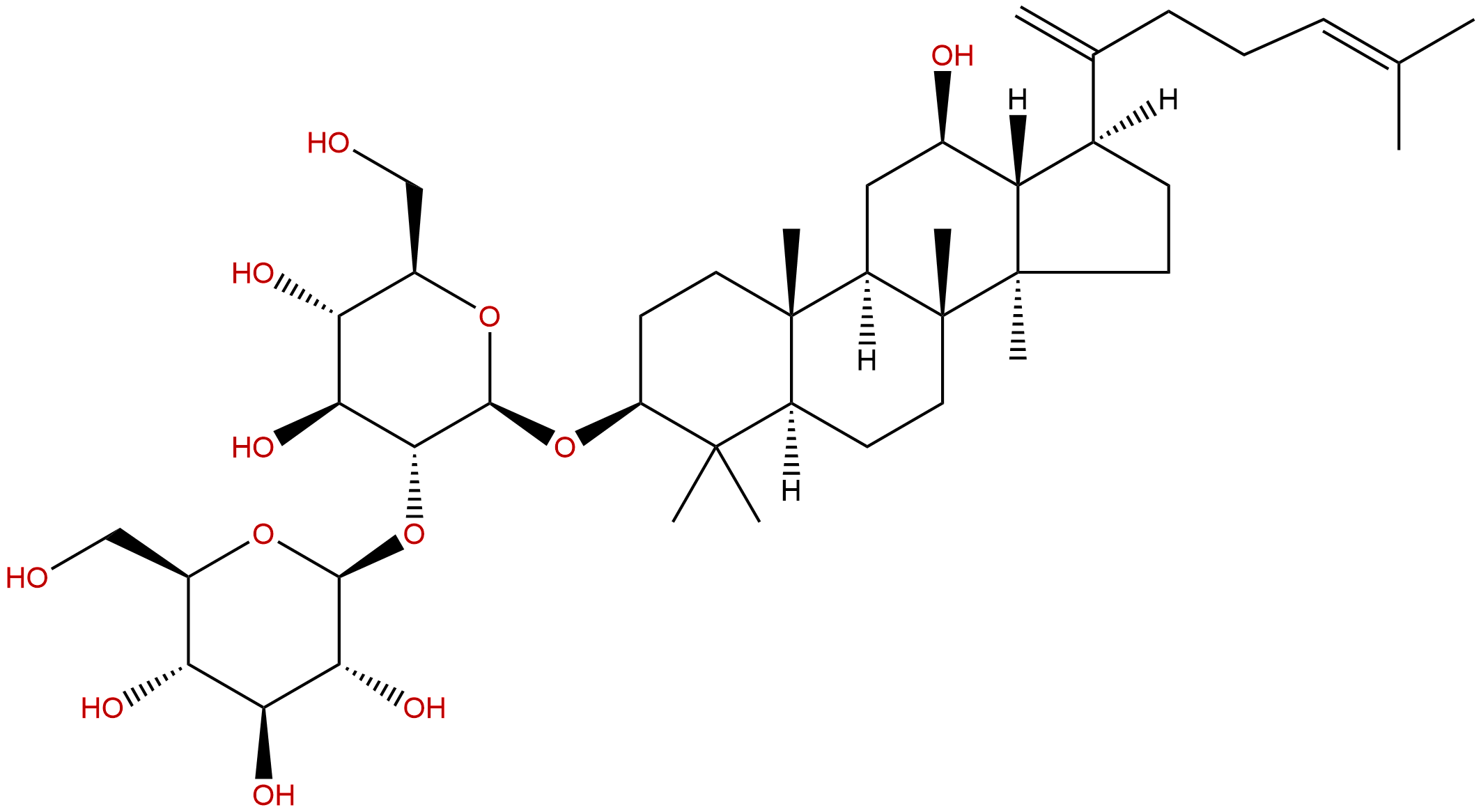


Product name: Ginsenoside RK1
Synonym name: Ginsenoside RK1:Ginsenoside Rz1=5:2
Catalogue No.: BP1474
Cas No.: 494753-69-4
Formula: C42H70O12
Mol Weight: 767.01
Botanical Source: Ginseng Radix Et Rhizoma
Physical Description:
Type of Compound: Triterpenoids
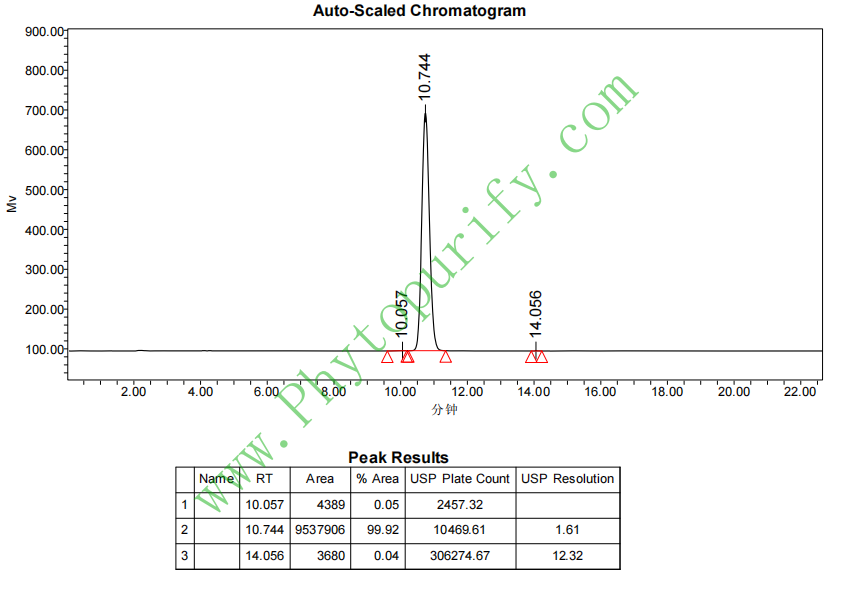
Purity: 95%~99%
Analysis Method: HPLC-DAD or/and HPLC-ELSD
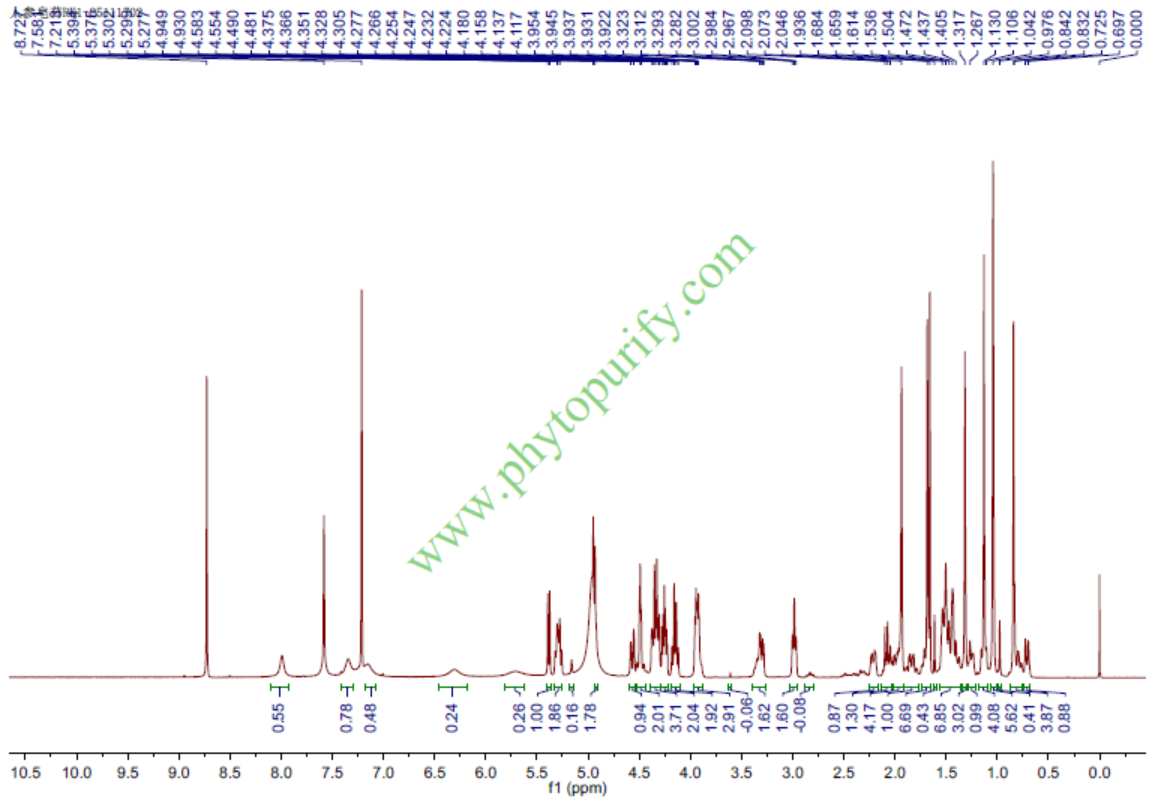
Identification Method: Mass, NMR
Packing: Brown vial or HDPE plastic bottle
Storage: Store in a well closed container, protected from air and light. Put into refrigerate or freeze for long term storage.
The product could be supplied from milligrams to grams
Inquire for bulk scale.
Description:
Ginsenoside Rk1, one of the main elements of Sung Ginseng, has been confirmed as a new endothelial barrier enhancer recently and has anti-cancer activity, the mechanism involves coordination between inhibition of telomerase activity and induction of apoptosis.
References:
Arch Pharm Res. 2012 Mar;35(4):717-22.
Induction of apoptosis by ginsenoside Rk1 in SK-MEL-2-human melanoma.
Ginsenosides are active compounds isolated from Panax ginseng Meyer. Among these ginsenosides, less polar ginsenosides such as ginsenoside Rg3 and ginsenoside Rh2 have been demonstrated to have tumor inhibitory effects because of their cytotoxicity.
METHODS AND RESULTS:
In this study, we evaluated the apoptotic effects of Ginsenoside Rk1 in SK-MEL-2 human melanoma. Ginsenoside Rk1 isolated from red ginseng is one of the novel ginsenosides that shows strong cytotoxicity compared to ginsenoside Rg3 in dose- and time-dependent manners. The results of DNA fragmentation, 4',6-diamidino-2-phenylindole staining, and flow cytometric analysis are corroborated that Ginsenoside Rk1 induced apoptosis in SK-MEL-2 cells. Western blot analysis revealed up-regulation of Fas, FasL, and Bax protein expression and down-regulation of procaspase-8, procaspase-3, mutant p53 and Bcl-2 protein expression.
CONCLUSIONS:
These findings suggest that Ginsenoside Rk1 might be a promising compound to induce apoptosis through both extrinsic and intrinsic pathways in SK-MEL-2 cells.
Biol Pharm Bull. 2008 May;31(5):826-30.
Anti-tumor activity of the ginsenoside Rk1 in human hepatocellular carcinoma cells through inhibition of telomerase activity and induction of apoptosis.
The Ginsenoside Rk1 is one of major components of heat-processed Panax ginseng C. A. MEYER, Sun Ginseng (SG).
METHODS AND RESULTS:
Here, we investigated the mechanisms underlying the anti-tumor activity of Ginsenoside Rk1 in human hepatocellular carcinoma HepG2 cells in vitro. Rk1 markedly inhibited telomerase activity and cell growth along with significant morphological change. The expression levels of telomerase reverse transcriptase (hTERT) and c-Myc mRNA were obviously decreased with Ginsenoside Rk1treatment, while that of telomerase RNA (hTR) was not. Furthermore, Ginsenoside Rk1 induced apoptosis through activation of caspases-8 and -3. However, Fas-associated death domain (FADD) expression decreased with Ginsenoside Rk1 treatment, though it was known that the signaling cascade of FADD was associated with caspase-8 activity. Interestingly, activation of extracellular-regulated kinase (ERK) increased with Ginsenoside Rk1 treatment.
CONCLUSIONS:
In conclusion, these results represent the first identification of the biological activity of Ginsenoside Rk1 against HepG2 cell growth and show that the mechanism underlying the anti-tumor activity of Ginsenoside Rk1 involves coordination between inhibition of telomerase activity and induction of apoptosis.
HPLC of Ginsenoside RK1
HNMR of Ginsenoside RK1
Storage conditions:Short-term storage at 2~8℃, long-term storage at -20 ~ -80℃
198.7600
3.3360
3.3361
.0205
.6383
.2865
Low
76.8259
5.7994
No
No
No
No
No
No
0.0
Yes
No
No
No
Ginseng(Panax ginseng C. As a traditional precious medicinal herb, the study of its pharmacological active substance, ginsenosides, has always been a hot topic in the field of natural product pharmacology. There are various types of ginsenosides, which are mainly classified into damaane type and oleanane type based on their glycoside structures. Traditionally, research on ginsenosides has focused on prototype saponins such as Rb1, Rg1, etc. However, with the deepening of research, it has been found that during the processing of ginseng (such as steaming and heating), its prototype saponins undergo structural transformations such as deglycosylation, dehydration, and isomerization, generating a series of rare ginsenosides. These rare ginsenosides often exhibit different or even stronger biological activities than the original saponins. Ginsenoside Rk1 (CAS number: 494753-69-4) is a rare ginsenoside produced under high-temperature processing conditions. Its unique chemical structure endows it with extensive and significant pharmacological activities, including anti-inflammatory, anti-tumor, neuroprotective, metabolic regulation, etc. In recent years, it has become a highly promising star molecule in this field. This article aims to systematically review the chemical properties, plant sources, pharmacological activities, mechanisms of action, and medicinal properties of ginsenoside Rk1, in order to provide comprehensive scientific references for the in-depth research and development of this compound.
Ginsenoside Rk1 belongs to the Damane type tetracyclic triterpenoid saponin, with a molecular formula of C42H70O12 and a molecular weight of 767.0100. Compared with common prototype ginsenosides such as Rb1 and Rg1, the structural feature of Rk1 is that its aglycone C-20 is in the S configuration, and a double bond is formed between C-20 and C-21. At the same time, its sugar moiety has also undergone significant changes. Specifically, its glycoside is 20 (S) - protopanaxadiol (PPD), which is linked to a glucose group at C-3 and a glucose group and an arabinose (pyran type) group at C-20. This dehydration and glycosylation combination makes it a rare ginsenoside that is 20, 21 unsaturated.
From the analysis of physical and chemical properties, the calculated lipid water partition coefficient (LogP) is 3.3360, indicating that the compound has moderate lipophilicity. Its topological polar surface area (TPSA) is 198.7600 Å ², which is a large value mainly attributed to multiple hydroxyl groups and oxygen atoms on the sugar ring in the molecule. The water solubility parameter is 0.0205, indicating that its solubility in water is low and it belongs to insoluble compounds. These physical and chemical parameters collectively determine its absorption and distribution characteristics in the organism, and are the key physical and chemical basis that affects its medicinal properties.
Ginsenoside Rk1 is not a native component of Panax plants in the Araliaceae family, such as ginseng and American ginseng. Its content is extremely low or almost undetectable in fresh or sun dried medicinal materials. Its main source is generated by high-temperature heat treatment (usually above 120 ° C) of ginseng (especially red ginseng, which is processed by steaming) or total ginsenosides. During the processing of red ginseng, prototype saponins such as ginsenosides Rb1, Rb2, Rc undergo a series of deglycosylation, dehydration, and isomerization reactions under humid and hot conditions. Rk1 is one of the important transformation products, often co generated with another rare ginsenoside Rg5.
At present, the main methods for obtaining ginsenoside Rk1 include:
1. Directly extract and separate from processed products Using red ginseng or red ginseng extract as raw materials, conventional natural product separation and purification techniques such as macroporous adsorption resin column chromatography, silica gel column chromatography, reverse phase preparative high-performance liquid chromatography (HPLC), etc. are used for separation and purification. This method can obtain Rk1 from natural sources, but the process is complex and the yield is low.
2. Chemical or biological transformation method Using abundant prototype saponins (such as ginsenoside Rb1) as substrates, directed conversion to Rk1 is achieved through acid catalysis, thermal catalysis, or enzyme catalysis (such as specific glycosidase). This method has high efficiency and is a research hotspot for the large-scale preparation of Rk1 and its structural analogues.
3. artificial synthesis Prepared through fully synthetic or semi synthetic pathways, but due to its structural complexity, it is still in the research stage and is not the mainstream method of acquisition.
Numerous in vitro and in vivo pharmacological studies have shown that ginsenoside Rk1 has multiple biological activities and exhibits broad therapeutic potential.
The multiple pharmacological effects of ginsenoside Rk1 stem from its regulation of multiple key signaling pathways within cells. The core mechanism of action and molecular target network revealed by existing research are as follows:
Regulating inflammatory signaling pathways:
Inducing tumor cell apoptosis and inhibiting survival pathways:
Metabolic related mechanisms In terms of metabolic regulation, Rk1 may activate the AMPK pathway to regulate transcription factors such as PPAR γ and SREBP-1c, affecting glucose uptake, fatty acid oxidation, and synthesis, thereby improving insulin resistance and lipid metabolism disorders. In osteoclasts, its inhibitory effect may be related to interference with the RANKL/RANK signaling axis and downstream NF - κ B and MAPK pathways.
Based on its physicochemical properties and preliminary research, a preliminary evaluation of the pharmacological properties of ginsenoside Rk1 is conducted
* Absorption and permeability Moderate LogP values and large TPSA suggest that oral absorption may face challenges and belong to the low solubility, low permeability, or high solubility, low permeability compounds in the Biopharmaceutical Classification System (BCS). Its blood-brain barrier (BBB) permeability is predicted to be "low", which is consistent with the characteristics of most saponin components. However, some studies have shown its effectiveness in neurological disease models, and the specific central distribution needs further experimental verification.
* Distribution and Metabolism As a saponin component, its distribution in the body may be widespread, but specific tissue distribution data is not yet sufficient. It is expected to undergo extensive phase I (such as hydrolysis and oxidation) and phase II (such as glucuronidation and sulfation) metabolism in the body.
* Preliminary Safety Assessment The existing data shows that the risk of hERG channel inhibition is "no", indicating a low potential risk of arrhythmia. The Ames test result is 0.0, indicating that there is no mutagenicity in this testing system. However, a comprehensive toxicological evaluation (such as acute toxicity, long-term toxicity, reproductive toxicity, etc.) still needs to be systematically carried out.
* pharmacokinetics Currently, there are relatively limited reports on pharmacokinetic studies of the Rk1 system. Some existing animal pharmacokinetic studies have shown that its oral bioavailability may not be high and it can be eliminated quickly in vivo. This suggests that in future formulation development, it may be necessary to use nano formulations, phospholipid complexes, prodrug strategies, or appropriate routes of administration (such as injection) to improve their bioavailability and efficacy.
The multi-target and multi pathway properties of ginsenoside Rk1 make it widely applicable in the prevention and treatment of various diseases
1. Inflammatory diseases As a potent natural anti-inflammatory agent, Rk1 is expected to be developed for the treatment of chronic inflammatory diseases such as rheumatoid arthritis, inflammatory bowel disease, asthma, and neuroinflammatory related diseases (such as Alzheimer's disease).
2. neoadjuvant therapy Its clear anti-tumor activity and potential synergistic effect with chemotherapy drugs make it a candidate drug for adjuvant therapy or chemoprevention of tumors, especially suitable for tumor types that are resistant to traditional chemotherapy or require multi-target intervention.
3. Metabolic diseases In the prevention and treatment of metabolic diseases such as obesity, type 2 diabetes, nonalcoholic fatty liver and osteoporosis, the regulatory role of Rk1 provides a new idea for its drug development.
4. Neurological disorders Its neuroprotective and cognitive enhancing effects have brought hope for the treatment of cognitive disorders such as Alzheimer's disease and vascular dementia.
However, to achieve its conversion into clinical drugs, there are still many challenges and future research directions:
* In depth mechanism research Further use of chemical biology methods (such as molecular docking, affinity fishing, proteomics) is needed to clarify its direct target and draw more accurate signal network maps.
* Optimization of drug properties in the system It is necessary to systematically address issues such as poor water solubility, poor oral absorption, and rapid metabolism. The development of new drug delivery systems, such as nanoparticles, liposomes, and micelles, is crucial.
* Preclinical and clinical research It is necessary to complete standardized preclinical pharmacological, pharmacokinetic, and toxicological studies, and ultimately advance them to clinical trials to verify their safety and efficacy in humans.
* Structural modification and development of analogues Reasonable chemical modification based on the parent nucleus structure of Rk1 may result in derivatives with stronger activity and better drug properties.
Ginsenoside Rk1, as a rare ginsenoside produced during high-temperature processing of ginseng, has become an important molecule in natural product pharmacology research due to its unique chemical structure and extensive and significant pharmacological activity. Its outstanding performance in anti-inflammatory, anti-tumor, neuroprotective, and metabolic regulation reveals its enormous potential as a multi-target therapeutic drug. Despite the challenges in drug development, with the continuous in-depth analysis of its mechanism of action and the rapid development of modern pharmaceutical formulation technology, ginsenoside Rk1 is expected to gradually move from an active natural product to a candidate drug with clear clinical application value, providing new strategies and choices for the treatment of related diseases. Future research should focus on both in-depth exploration of mechanisms and improvement of drug development systems, accelerating their transition from laboratory to clinical use.
