


Product name: Trans Sodium Crocetinate
Synonym name: Disodium trans-crocetinate; Disodium transcrocetinate; Transcrocetinate sodium; Sodium crocetinate
Catalogue No.: BP2023
Cas No.: 591230-99-8
Related CAS No.: 591230-99-8 (Trans-crocetinate sodium, 1:2)
27876-94-4 (Trans-crocetin, free acid)
64603-92-5 (Trans-crocetinate sodium, 1:x)
Formula: C20H22Na2O4
Mol Weight: 372.372
Botanical Source: Crocus sativus L.
Physical Description:
Type of Compound:
Purity: 95%~99%
Analysis Method: HPLC-DAD
Identification Method: Mass, NMR
Packing: Brown vial or HDPE plastic bottle
The product could be supplied from milligrams to grams, up to kilograms.
Inquire for bulk scale.
Description: Trans Sodium Crocetinate(TSC), also known as Disodium trans-crocetinate or Sodium crocetinate, is potentially for the treatment of glioblastoma. Trans Sodium Crocetinate improves amyloid-β degradation in monocytes from Alzheimer's Disease patients. trans-crocetin inhibit glutamatergic synaptic transmission in rat cortical brain slices. Crocetin inhibits invasiveness of MDA-MB-231 breast cancer cells via downregulation of matrix metalloproteinases.
References:
1: Tiribuzi R, Crispoltoni L, Chiurchiù V, Casella A, Montecchiani C, Del Pino AM, Maccarrone M, Palmerini CA, Caltagirone C, Kawarai T, Orlacchio A, Orlacchio A. Trans-crocetin improves amyloid-β degradation in monocytes from Alzheimer's Disease patients. J Neurol Sci. 2017 Jan 15;372:408-412. doi: 10.1016/j.jns.2016.11.004. PubMed PMID: 27865556.
2: Lautenschläger M, Sendker J, Hüwel S, Galla HJ, Brandt S, Düfer M, Riehemann K, Hensel A. Intestinal formation of trans-crocetin from saffron extract (Crocus sativus L.) and in vitro permeation through intestinal and blood brain barrier. Phytomedicine. 2015 Jan 15;22(1):36-44. doi: 10.1016/j.phymed.2014.10.009. PubMed PMID: 25636868.
3: Lautenschläger M, Lechtenberg M, Sendker J, Hensel A. Effective isolation protocol for secondary metabolites from saffron: semi-preparative scale preparation of crocin-1 and trans-crocetin. Fitoterapia. 2014 Jan;92:290-5. doi: 10.1016/j.fitote.2013.11.014. PubMed PMID: 24321578.
4: Berger F, Hensel A, Nieber K. Saffron extract and trans-crocetin inhibit glutamatergic synaptic transmission in rat cortical brain slices. Neuroscience. 2011 Apr 28;180:238-47. doi: 10.1016/j.neuroscience.2011.02.037. PubMed PMID: 21352900.
5: Sánchez AM, Carmona M, Zalacain A, Carot JM, Jabaloyes JM, Alonso GL. Rapid determination of crocetin esters and picrocrocin from saffron spice (Crocus sativus L.) using UV-visible spectrophotometry for quality control. J Agric Food Chem. 2008 May 14;56(9):3167-75. doi: 10.1021/jf703725e. PubMed PMID: 18407652.
6: Inoue K, Tanada C, Nishikawa H, Matsuda S, Tada A, Ito Y, Min JZ, Todoroki K, Sugimoto N, Toyo'oka T, Akiyama H. Evaluation of gardenia yellow using crocetin from alkaline hydrolysis based on ultra high performance liquid chromatography and high-speed countercurrent chromatography. J Sep Sci. 2014 Dec;37(24):3619-24. doi: 10.1002/jssc.201400793. PubMed PMID: 25296622.
7: Valle García-Rodríguez M, Serrano-Díaz J, Tarantilis PA, López-Córcoles H, Carmona M, Alonso GL. Determination of saffron quality by high-performance liquid chromatography. J Agric Food Chem. 2014 Aug 13;62(32):8068-74. doi: 10.1021/jf5019356. PubMed PMID: 25075549.
8: Carmona M, Zalacain A, Pardo JE, López E, Alvarruiz A, Alonso GL. Influence of different drying and aging conditions on saffron constituents. J Agric Food Chem. 2005 May 18;53(10):3974-9. PubMed PMID: 15884826.
9: Maggi L, Carmona M, Zalacain A, Tomé MM, Murcia MA, Alonso GL. Parabens as agents for improving crocetin esters' shelf-life in aqueous saffron extracts. Molecules. 2009 Mar 16;14(3):1160-70. doi: 10.3390/molecules14031160. PubMed PMID: 19325516.
10: Zalacain A, Ordoudi SA, Díaz-Plaza EM, Carmona M, Blázquez I, Tsimidou MZ, Alonso GL. Near-infrared spectroscopy in saffron quality control: determination of chemical composition and geographical origin. J Agric Food Chem. 2005 Nov 30;53(24):9337-41. PubMed PMID: 16302744.
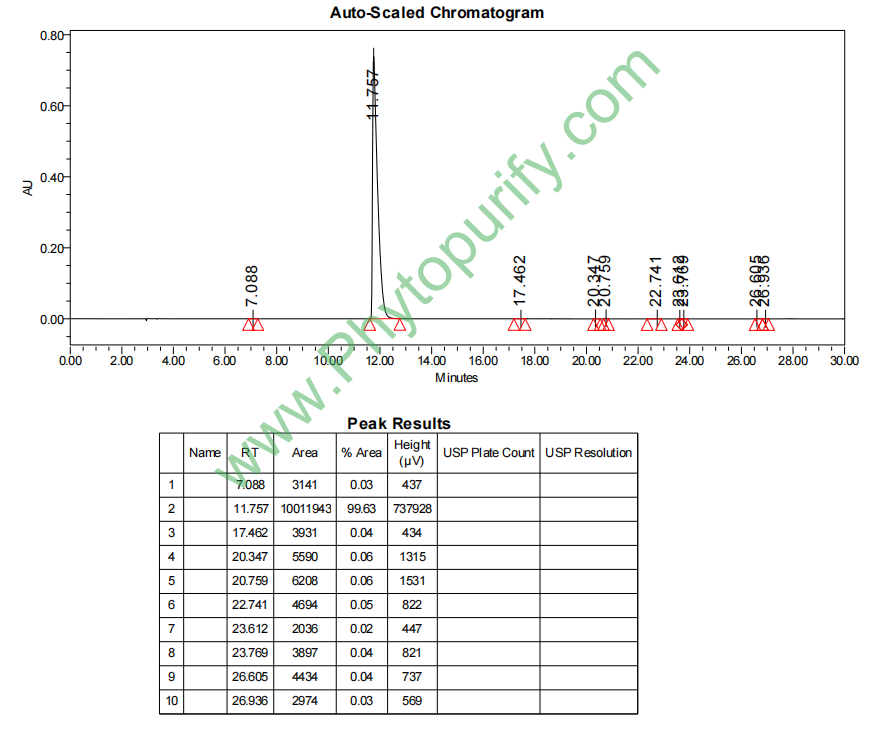
HPLC of Disodium trans-crocetinate
Storage conditions:Short-term storage at 2~8℃, long-term storage at -20 ~ -80℃
74.6000
3.5387
.8521
.0655
2.4502
6.9763
Low
93.8902
4.2412
Yes
Yes
No
No
No
No
0.0
No
Yes
Yes
Yes
Natural products, as an important source of drug discovery, play an irreplaceable role in the long history of human fight against diseases. Among numerous natural compounds with biological activity, crocetin and its derivatives have attracted much attention due to their unique chemical structure and significant pharmacological activity. Saffron acid is a naturally occurring carotenoid dicarboxylic acid, mainly derived from the iris family plant saffron(Crocus sativus L. The dried stigma of saffron, also known as the precious Chinese medicinal herb saffron (saffron). Saffron, as a traditional medicinal herb, has been used for thousands of years in traditional Chinese medicine, Persian medicine, and Ayurvedic medicine. It is mainly used to treat various diseases such as depression, anxiety, menstrual disorders, and liver disease.
Trans Sodium Crocetinate (TSC) is the water-soluble sodium salt form of crocetinic acid, with a CAS number of 591230-99-8. This compound significantly improves its water solubility and thus enhances its bioavailability by converting two carboxyl groups in crocetin molecules into sodium salts. TSC not only retains the original biological activity of crocetin, but also becomes a hot candidate molecule for drug development due to its excellent physicochemical properties. In recent years, with the continuous rise of the incidence rate of neuropsychiatric diseases and the limitations of the existing therapeutic drugs such as limited efficacy and significant side effects, TSC, as a natural source compound with multi target regulatory effects, has shown remarkable application potential in the fields of antidepressant, neuroprotection, etc.
This article will provide a systematic review of the research progress of disodium crocetin from multiple dimensions, including chemical structure and physicochemical properties, plant sources and extraction methods, pharmacological activity research, mechanism of action and molecular targets, pharmacological evaluation and pharmacokinetics, clinical application prospects and prospects, in order to provide reference for the in-depth study and clinical translation of this compound.
The chemical structure of disodium crocetin is based on its parent compound crocetin. Crocetin (molecular formula C ₂₀ H ₂₄ O ₄) is a dicarboxylic acid carotenoid containing 20 carbon atoms. Its core structure is a polyene chain consisting of seven conjugated double bonds and four single bonds alternately connected, with one methyl substituted carboxyl group at each end. This conjugated polyene system endows crocetin with unique UV visible absorption spectral characteristics, making it appear bright red to orange yellow in nature.
There are multiple conjugated double bonds in the molecule of crocetin, and theoretically there are multiple cis trans isomers. The naturally occurring crocetin is mainly in the all trans configuration, i.e. trans crocetin. Citric acid disodium salt (TSC) is a salt formed by the two carboxyl groups of crocetin and sodium ions. Its molecular formula is C ₂ ₀ H ₂ ₂ Na ₂ O ₄, and its molecular weight is 328.4080. The formation of sodium salts not only changes the ionic state of compounds, but more importantly significantly enhances their solubility and dispersibility in aqueous systems.
The physicochemical properties of TSC have a decisive impact on its pharmacological properties. According to calculations and experimental data, the lipid water partition coefficient (LogP) of TSC is 3.5387, indicating that the compound has a certain degree of lipophilicity and can penetrate biological membranes to a certain extent. The topological polar surface area (TPSA) is 74.6000 Å ², which is within the acceptable range for oral medication (usually TPSA<140 Å ²), indicating its good oral absorption potential.
Water solubility is the most significant improvement of TSC compared to crocetin. The solubility of crocetin itself in water is extremely low (about 0.02 mg/mL), while the water solubility of TSC has increased to 0.0655 mg/mL. Although the absolute value is still limited, it has significantly improved its usability in aqueous environments. It is worth noting that TSC can partially dissociate and form ionized forms under physiological pH conditions, which facilitates its dissolution and absorption in the gastrointestinal tract.
The blood-brain barrier (BBB) penetration ability of TSC is evaluated as' low ', which has dual significance in the treatment of neurological and psychiatric disorders. On the one hand, low BBB penetration may limit the direct action of drugs in the central nervous system; On the other hand, for certain peripheral target mediated diseases, low central exposure can actually help reduce central nervous system side effects. However, an increasing number of studies suggest that TSC and its metabolites may reach effective concentrations in brain tissue through mechanisms such as active transport or increased BBB permeability under disease conditions.
In addition, TSC showed negative results in hERG potassium channel inhibition assay, indicating a low risk of cardiac toxicity. The Ames test result is 0.0, indicating that the compound does not have significant mutagenicity and the genetic toxicity risk is controllable. These security data have laid a solid foundation for the further development of TSC.
The main natural source of crocetin and its salt forms is saffron(Crocus sativus L. The column head. Saffron is a perennial herbaceous plant in the Iris family, native to the Mediterranean region and Asia Minor. It is widely planted in Iran, Spain, India, Greece, and China. Saffron, as the most expensive spice and medicinal herb in the world, contains various active ingredients in its dried stigma, including crocin, crocetin, safranal, and picrocrocrocin.
Saffron acid mainly exists in the form of glycosides in plants - crocin. Saffron is a disaccharide ester formed by crocetin and gentiobiose, which has better water solubility and stability. During processing or in vivo metabolism, crocin can hydrolyze and remove the glycosyl portion, releasing free crocetin acid. Therefore, the preparation of TSC typically involves extracting crocin from saffron, followed by hydrolysis and salt formation reactions to obtain it.
Besides saffron, some other plants such as gardenia(Gardenia jasminoides Ellis' fruit also contains crocetin and its derivatives. The crocin compounds in gardenia are highly similar to those in saffron and can serve as an alternative source of crocetin acid, but there are differences in content and composition ratio.
Traditionally, the extraction of crocetin acid is carried out using solvent extraction method. After crushing the dried saffron stigma, it is repeatedly extracted with methanol, ethanol, or a mixture of water and ethanol solvents at room temperature or under heating conditions. After concentration, the extract is preliminarily purified by liquid-liquid extraction or column chromatography. Common chromatographic methods include silica gel column chromatography, C18 reverse phase column chromatography, and macroporous adsorption resin chromatography.
Modern extraction technology provides a new approach for efficient extraction of crocetin. Ultrasound assisted extraction (UAE) utilizes the cavitation effect of ultrasound to destroy plant cell walls, promote the release of active ingredients, significantly shorten extraction time, and improve extraction efficiency. Microwave assisted extraction (MAE) vaporizes intracellular water through microwave heating, generating pressure to rupture the cell wall, and also has the characteristics of high efficiency and speed. Supercritical fluid extraction (SFE) uses CO ₂ as the extraction medium and achieves selective extraction by adjusting pressure and temperature. The resulting product has high purity and no solvent residue, making it particularly suitable for preparing high-purity crocetin acid.
The key step in preparing crocetin from crocin is hydrolysis reaction. Acid hydrolysis (such as hydrochloric acid hydrolysis) or enzymatic hydrolysis (such as β - glucosidase) can break the glycosidic bond of crocetin, releasing free crocetin acid. The hydrolysis product is subjected to neutralization, extraction, crystallization and other steps to obtain crude crocetin, which is then purified by recrystallization or preparative high-performance liquid chromatography (pre HPLC) to obtain high-purity crocetin.
The preparation of crocus acid disodium salt is relatively simple: suspend the purified crocus acid in water, add equal molar amount of sodium hydroxide solution, stir until completely dissolved, adjust the pH to neutral, and obtain TSC solid powder through freeze drying or spray drying. The salt formation process not only improves water solubility, but also allows the compound to exist in a stable solid form, making it easy to store and develop formulations.
Depression is a common and severe mental disorder, with a global prevalence of over 3%, and is one of the leading causes of disability. The existing antidepressant drugs have problems such as slow onset, low efficacy, and significant side effects, so the development of new antidepressant drugs has important clinical significance. The pharmacological activity research of TSC in the field of antidepressant has achieved encouraging results.
Animal behavior experiments are a classic method for evaluating antidepressant activity. In the forced swimming test (FST) and tail suspension test (TST), TSC was able to significantly shorten the immobility time of mice, demonstrating clear antidepressant like effects. It is worth noting that the antidepressant effect of TSC is dose-dependent and has a wide range of effective doses, indicating that it has a good therapeutic window. In the chronic unpredictable mild stress (CUMS) model, long-term administration of TSC can reverse stress-induced depression like symptoms such as decreased sugar preference, weight loss, and reduced exploratory behavior, indicating that TSC has a therapeutic effect on chronic stress-induced depression.
Compared to the classic antidepressant fluoxetine, TSC exhibits some unique advantages. Firstly, the onset time of TSC may be shorter, as some studies have observed antidepressant like effects after a single dose, while fluoxetine typically requires 2-4 weeks of continuous administration to show significant efficacy. Secondly, the spectrum of side effects of TSC is narrower, with no significant weight changes, sexual dysfunction, or gastrointestinal reactions observed within the effective dose range of common antidepressants. In addition, TSC has a relatively small impact on cognitive function and may even improve depression related cognitive impairments.
In addition to its antidepressant effect, TSC has shown neuroprotective activity in various neurological disease models. In the model of cerebral ischemia-reperfusion injury, TSC can reduce infarct volume, alleviate brain edema, and improve neurological function scores. Its protective mechanism involves multiple aspects such as antioxidant stress, anti-inflammatory response, and anti apoptosis. TSC can eliminate free radicals, inhibit lipid peroxidation, upregulate antioxidant enzyme activities such as superoxide dismutase (SOD) and glutathione peroxidase (GPx), thereby reducing oxidative stress damage. At the same time, TSC can inhibit the activation of microglia, reduce the release of pro-inflammatory factors such as tumor necrosis factor - α (TNF - α), interleukin-1 β (IL-1 β), and interleukin-6 (IL-6), and exert anti-inflammatory effects.
In the Alzheimer's disease (AD) model, TSC can reduce the aggregation and deposition of beta amyloid protein (A β), inhibit tau protein hyperphosphorylation, and improve cognitive function. These effects may be related to multiple mechanisms such as TSC regulation of autophagy, promotion of A β clearance, inhibition of oxidative stress and inflammatory response. In the Parkinson's disease (PD) model, TSC has a protective effect on dopaminergic neuron damage induced by 6-hydroxydopamine (6-OHDA) or 1-methyl-4-phenyl-1,2,3,6-tetrahydropyridine (MPTP), and can increase striatal dopamine levels and improve motor dysfunction.
In addition to its application in the field of neurological and psychiatric disorders, TSC also exhibits various other pharmacological activities. In the cardiovascular system, TSC has the effects of lowering blood lipid, anti atherosclerosis, and protecting myocardial ischemia reperfusion injury. In terms of metabolic diseases, TSC can improve insulin resistance, regulate blood glucose metabolism, and alleviate non-alcoholic fatty liver disease. In addition, TSC exhibits various biological activities such as anti-inflammatory, antioxidant, anti-tumor, and retinal protection, which together constitute its broad pharmacological spectrum of effects.
The pharmacological mechanism of TSC exhibits typical multi-target and multi pathway regulatory characteristics. This "multi-target drug" characteristic gives it a unique advantage in treating complex diseases such as depression, as it can simultaneously act on multiple key nodes in the disease network, producing synergistic therapeutic effects. Based on existing research, the targets of TSC can be classified into multiple levels, including neurotransmitter systems, signal transduction pathways, neurotrophic factors, and epigenetic regulation.
Monoamine oxidase (MAO) is a key enzyme that degrades monoamine neurotransmitters such as serotonin, norepinephrine, and dopamine, including two subtypes: MAOA and MAOB. MAOA mainly metabolizes serotonin and norepinephrine, while MAOB mainly metabolizes phenylethylamine and dopamine. TSC has inhibitory effects on both MAOA and MAOB, but there are differences in selectivity. In vitro enzyme activity assays showed that TSC had stronger inhibitory activity against MAOA than MAOB, and this selective inhibition mode was similar to classical MAO inhibitors such as chloroquine.
MAO inhibitory activity is one of the important mechanisms of TSC's antidepressant effect. By inhibiting MAO activity, TSC can reduce the degradation of monoamine neurotransmitters, increase the concentration of serotonin, norepinephrine, and dopamine in synaptic cleft, thereby enhancing monoamine neurotransmission and producing antidepressant effects. Compared with irreversible MAO inhibitors, the inhibitory effect of TSC may be reversible, which helps reduce the risk of "cheese effect" (i.e. hypertensive crisis caused by co administration with casein containing foods).
Glycogen synthase kinase-3 β (GSK3B) is a multifunctional serine/threonine protein kinase involved in regulating various physiological processes such as cell proliferation, differentiation, apoptosis, and metabolism. In the pathological mechanism of depression, abnormally elevated GSK3B activity is closely related to impaired synaptic plasticity, reduced neurogenesis, and emotional regulation disorders. TSC can inhibit GSK3B activity, which may be achieved by activating the phosphatidylinositol-3-kinase/protein kinase B (PI3K/Akt) signaling pathway.
GSK3B inhibition is considered one of the key mechanisms underlying the antidepressant and neuroprotective effects of TSC. By inhibiting GSK3B, TSC can promote nuclear translocation of β - catenin, activate the Wnt signaling pathway, and promote neural stem cell proliferation, neuronal differentiation, and synapse formation. In addition, GSK3B inhibition can also reduce excessive phosphorylation of tau protein and alleviate the formation of neurofibrillary tangles, which has potential value in the treatment of Alzheimer's disease.
The serotonin (5-HT) system plays a central role in emotion regulation and is the main target of most antidepressant drugs. The impact of TSC on the 5-HT system involves multiple levels. Firstly, TSC can upregulate the expression and function of 5-HT1A receptor (HTR1A). The 5-HT1A receptor is an important receptor on the presynaptic and postsynaptic membranes, whose activation can inhibit the discharge of 5-HTergic neurons, regulate 5-HT release, and participate in the regulation of emotions, anxiety, and cognitive function. Secondly, TSC can affect the activity of the 5-hydroxytryptamine transporter (SLC6A4, SERT) and regulate the reuptake process of 5-HT.
It is worth noting that the regulatory mode of TSC on the 5-HT system is different from that of selective serotonin reuptake inhibitors (SSRIs). SSRIs mainly increase the concentration of 5-HT in the synaptic cleft by blocking SERT, while TSC achieves precise regulation of the 5-HT system through multi-target synergistic effects, including MAO inhibition, receptor expression regulation, and transporter activity regulation. This difference may explain the clinical advantage of TSC being more effective and having fewer side effects.
Brain derived neurotrophic factor (BDNF) is an important member of the neurotrophic factor family, playing a crucial role in neuronal survival, synaptic plasticity, and neurogenesis. The levels of BDNF in the serum and brain tissue of patients with depression are significantly reduced, while antidepressant treatment can upregulate BDNF expression. TSC can promote BDNF gene transcription and protein expression by activating the cAMP response element binding protein (CREB) signaling pathway. CREB is an important transcription factor that, upon phosphorylation activation, binds to the cAMP response element (CRE) in the BDNF gene promoter region, initiating BDNF transcription.
The activation of the CREB-BDNF pathway by TSC is one of the core mechanisms underlying its antidepressant and neuroprotective effects. After binding to its receptor TrkB, BDNF can activate downstream mitogen activated protein kinase/extracellular signal regulated kinase (MAPK/ERK) and PI3K/Akt signaling pathways, promoting neuronal survival, synaptic formation, and neuroplasticity. In addition, BDNF can promote neurogenesis in the dentate gyrus of the hippocampus, which is considered the cellular basis for the long-term efficacy of antidepressant drugs.
Gamma aminobutyric acid (GABA) is the main inhibitory neurotransmitter in the central nervous system, and dysfunction of the GABAergic system is closely related to mental illnesses such as depression and anxiety. TSC can upregulate the expression of GABRA1 (GABAA receptor alpha 1 subunit) and enhance GABAergic neurotransmission. GABAA receptors are ligand gated chloride ion channels, and their activation leads to neuronal hyperpolarization, producing inhibitory postsynaptic potentials.
The regulation of the GABA system by TSC may be achieved through two pathways: one is to directly regulate the expression and function of GABAA receptors; The second is to indirectly enhance GABAergic transmission by affecting the synthesis, release, or metabolism of GABA. The enhancement of the GABAergic system helps to restore excitation/inhibition balance, alleviate anxiety and stress responses, and improve sleep quality, which are closely related to the antidepressant and anti anxiety effects of TSC.
Catechin-O-methyltransferase (COMT) is a key enzyme that degrades catecholamine neurotransmitters such as dopamine and norepinephrine, and plays an important role in maintaining neurotransmitter homeostasis in brain regions such as the frontal cortex. Abnormal COMT activity is associated with various mental illnesses such as depression, schizophrenia, and cognitive impairment. TSC can inhibit COMT activity, reduce the degradation of dopamine and norepinephrine, thereby enhancing dopaminergic transmission in the prefrontal cortex.
COMT inhibition and MAO inhibition together constitute a dual mechanism of TSC regulation of monoamine neurotransmitter metabolism. This dual inhibitory effect enables TSC to comprehensively increase the concentration of various monoamine neurotransmitters in synaptic cleft, resulting in a wider range of antidepressant effects. Meanwhile, COMT inhibition may have a positive impact on cognitive function, as dopamine levels in the prefrontal cortex are closely related to cognitive processes such as working memory and executive function.
Drug efficacy evaluation is a crucial step in the process of new drug development, aimed at assessing whether candidate compounds meet the basic conditions for developing into clinical drugs. The pharmacological parameters of TSC exhibit certain advantages and disadvantages, and require comprehensive analysis.
In terms of molecular weight, TSC has a molecular weight of 328.4080, which is within the ideal range for oral medication (<500 Da) and is beneficial for gastrointestinal absorption and biofilm penetration. The LogP value is 3.5387, which falls within the moderate lipophilic range (LogP 2-4), ensuring sufficient membrane penetration ability while avoiding solubility and metabolic issues caused by excessive lipophilicity. The TPSA is 74.6000 Å ², which is lower than the commonly used threshold for oral medication (140 Å ²), indicating its good oral absorption potential.
Water solubility is one of the main limitations of TSC. Although the water solubility has improved after salt formation, the solubility of 0.0655 mg/mL still belongs to the category of low water soluble compounds. Low water solubility may lead to issues such as low oral bioavailability and high absorption variability, which need to be improved through formulation techniques such as nanocrystals, solid dispersions, lipid formulations, etc. In addition, TSC has low blood-brain barrier penetration, which may limit the central nervous system's function, but may also reduce central side effects during peripheral administration.
In terms of safety evaluation, TSC exhibits good safety characteristics. HERG inhibition test negative, indicating low risk of cardiac toxicity; The Ames test is negative, indicating no genetic toxicity. These data support further development of TSC, but comprehensive preclinical safety evaluations are still needed, including studies on acute toxicity, chronic toxicity, reproductive toxicity, and carcinogenicity.
Pharmacokinetic studies serve as a bridge between preclinical research and clinical applications, and are of great significance in determining dosing regimens, predicting efficacy and safety. At present, there is relatively limited systematic research on the pharmacokinetics of TSC, but existing data has revealed some of its basic characteristics.
In terms of absorption, TSC can be absorbed in the gastrointestinal tract after oral administration, but the absorption rate and degree are limited by its water solubility. Animal experiments have shown that TSC has low oral bioavailability and may require the use of solubilization technology in formulation design. Intravenous administration can avoid absorption problems and directly enter the systemic circulation, but the convenience of administration is poor. Non invasive routes of administration such as nasal and transdermal administration are also being explored, which may provide more options for the clinical application of TSC.
In terms of distribution, TSC is widely distributed in the body and can be found in major organs such as the liver, kidneys, lungs, and heart. Due to the presence of the blood-brain barrier, the concentration of TSC in brain tissue is low, but the increased permeability of the blood-brain barrier in disease states may promote its distribution within the brain. Further research is needed on the binding rate between TSC and plasma proteins, as protein binding rate affects free drug concentration and pharmacological effects.
In terms of metabolism, TSC mainly undergoes metabolic transformation in the body, including reduction, oxidation, and binding reactions. The reduction of conjugated double bonds can generate dihydro or tetrahydro metabolites, and carboxyl groups can combine with glucuronic acid or sulfuric acid to form water-soluble complexes. It is not clear whether TSC is metabolized through the cytochrome P450 enzyme system, but considering its carotenoid structure, it may be mainly metabolized through non P450 pathways.
In terms of excretion, TSC and its metabolites are mainly excreted through bile and urine. Due to its moderate molecular weight and polar functional groups, TSC may be cleared through both hepatic enteric circulation and renal excretion. The elimination half-life is a key parameter that determines the frequency of administration. Currently, there is insufficient data on the half-life of TSC, and further research is needed.
The clinical treatment of depression faces many challenges, including delayed onset, limited efficacy, significant side effects, and high recurrence rates. TSC, as a natural compound with multi-target regulatory effects, has shown unique application prospects in the field of antidepressant therapy.
Firstly, the multi-target mechanism of TSC enables it to simultaneously regulate multiple pathways related to the onset of depression, such as the monoamine system, neurotrophic factors, signal transduction pathways, and GABA system. This "multi-target synergy" model may produce more comprehensive therapeutic effects, especially for patients with refractory depression who have poor response to traditional single target drugs. Secondly, the rapid onset of TSC may shorten treatment waiting time, alleviate patient pain, and lower the risk of suicide. In addition, the excellent safety features of TSC, particularly its lack of cardiotoxicity, genotoxicity, and low risk of drug interactions, make it advantageous for use in special populations such as the elderly and patients with concomitant cardiovascular disease.
However, the clinical translation of TSC still faces some challenges. Low water solubility and low bioavailability need to be improved through formulation technology, and insufficient blood-brain barrier penetration may require exploration of central targeted drug delivery strategies. In addition, key issues such as the pharmacokinetic characteristics, optimal dosing regimen, long-term safety, and efficacy of TSC in the human body need to be clarified through clinical trials.
In addition to depression, the application of TSC in neurodegenerative diseases such as Alzheimer's disease and Parkinson's disease is also worth paying attention to. The common feature of these diseases is progressive neuronal loss and dysfunction, and there is currently a lack of effective disease modifying therapeutic drugs. The neuroprotective, antioxidant, anti-inflammatory, and anti apoptotic effects of TSC make it a potential neuroprotective agent.
In the treatment of Alzheimer's disease, TSC may exert protective effects through various mechanisms such as reducing A β aggregation, inhibiting tau phosphorylation, promoting autophagy, and improving mitochondrial function. In the treatment of Parkinson's disease, TSC may delay disease progression through pathways such as antioxidant stress, inhibition of microglial activation, and promotion of dopaminergic neuron survival. In addition, the improvement of cognitive function by TSC may also have application value in other types of dementia such as vascular dementia and frontotemporal dementia.
Given the multi-target mechanism of action and good safety characteristics of TSC, combination therapy strategies may become an important direction for its clinical application. The combination of TSC with existing antidepressants such as SSRIs and SNRIs may enhance efficacy, accelerate onset, and reduce side effects through complementary mechanisms. For example, the MAO inhibition of TSC can enhance the 5-HT response of SSRIs, while the GSK3B inhibition of TSC can compensate for the deficiency of SSRIs in the neurotrophic factor pathway.
The combined application of TSC and non pharmacological therapies (such as psychotherapy, transcranial magnetic stimulation, exercise therapy, etc.) is also worth exploring. The synergistic effect of psychotherapy and drug therapy has been widely recognized, and TSC may enhance the efficacy of psychotherapy by promoting neural plasticity and neurogenesis. Exercise therapy can upregulate BDNF levels and promote neurogenesis, which highly overlaps with the mechanism of action of TSC. The combination of the two may produce overlapping or synergistic effects.
Formulation development is a crucial step in the clinical translation of TSC. Multiple formulation strategies can be used to improve its low water solubility and low bioavailability. Nanocrystal technology can significantly improve oral absorption by reducing drug particle size to the nanometer level, increasing specific surface area and saturation solubility. Solid dispersion technology disperses drugs in water-soluble carrier materials to form high-energy amorphous dispersions, which can improve dissolution rate and bioavailability. Lipid preparations, such as self emulsifying drug delivery systems and lipid nanoparticles, can increase drug solubility and lymphatic absorption, reducing first pass effects.
Nasal administration is an important pathway for central targeted drug delivery. After being absorbed through the nasal mucosa, drugs can bypass the blood-brain barrier and directly enter brain tissue, increasing the concentration of drugs in the brain. Nasal administration of TSC (such as nasal gel and nasal spray) may achieve targeted treatment of central nervous system diseases, while reducing systemic exposure and side effects. Transdermal drug delivery systems (such as patches and gel) can provide continuous and stable drug release, avoid fluctuation of blood drug concentration for oral administration, and improve patient compliance.
Sodium crocetin (TSC), as an active ingredient derivative derived from the traditional natural medicine saffron, has shown remarkable potential in the treatment of neurological and psychiatric disorders. Its unique chemical structure endows it with pharmacological characteristics of multi-target regulation, which can simultaneously act on multiple molecular targets related to depression, such as MAOA, MAOB, GSK3B, SLC6A4, HTR1A, GABRA1, CREB, BDNF, and COMT. By regulating various mechanisms such as monoamine neurotransmitter system, neurotrophic factor signaling pathway, GABAergic system, and oxidative stress response, it produces rapid, comprehensive, and safe antidepressant effects.
From the perspective of drug development, TSC has favorable characteristics such as moderate molecular weight, reasonable LogP, no hERG inhibition, and no genotoxicity. However, its main challenges are low water solubility and low blood-brain barrier penetration. Through advanced formulation technologies (such as nanocrystals, solid dispersions, lipid formulations, nasal delivery systems, etc.) and rational administration route design, these limitations are expected to be overcome.
Looking ahead, the clinical translation of TSC still needs to overcome many obstacles. The systematic study of human pharmacokinetics, dose exploration, long-term safety and efficacy evaluation are the necessary steps to promote its clinical application. Meanwhile, the potential applications of TSC in neurodegenerative diseases, cerebrovascular diseases, metabolic diseases, and other fields are also worth exploring in depth. With the continuous deepening of understanding of the pharmacological mechanism of TSC and the continuous advancement of formulation technology, this naturally occurring multi-target compound is expected to bring new treatment options for patients with neurological and psychiatric disorders such as depression, achieving a successful transition from traditional natural drugs to modern innovative drugs.
In the context of precision medicine and personalized treatment, the multi-target nature of TSC makes it particularly suitable as a candidate drug for the treatment of complex diseases. Future research should focus on clinical efficacy validation, biomarker discovery, and patient stratification strategies for TSC, in order to achieve precise medication and maximize treatment outcomes. We have reason to believe that with the continuous deepening of research, the modern derivative of crocetin disodium salt, an ancient natural product, will shine new in the field of neuropsychiatric disease treatment.
