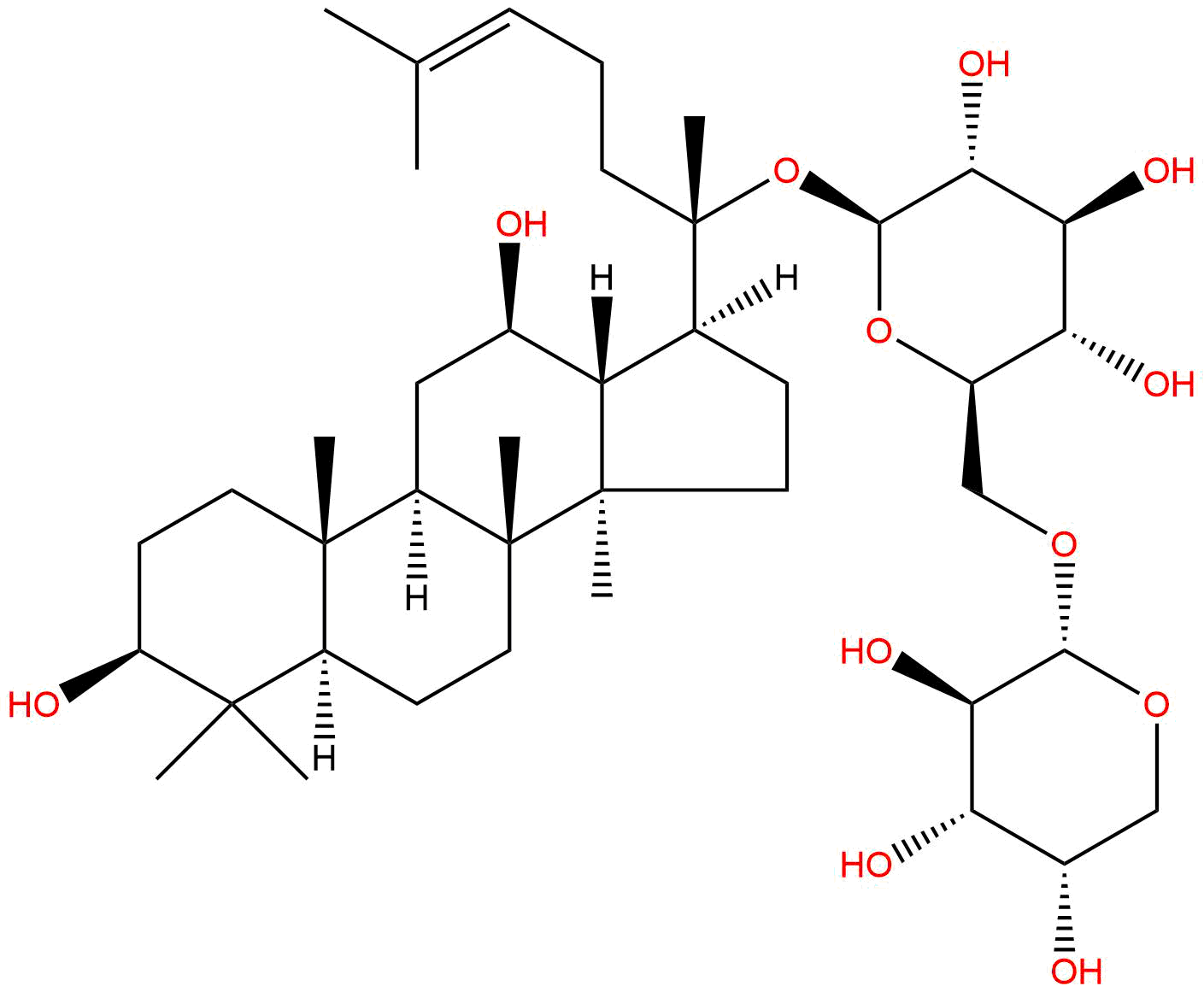


Product name: Ginsenoside CY
Synonym name: Ginsenoside Y; Ginsenoside compound Y;3-O-Dideglucosylginsenoside Rb2
Catalogue No.: BP2180
Cas No.: 83480-65-3
Formula: C41H70O12
Mol Weight: 754.999
Botanical Source: Ginseng Radix Et Rhizoma
Type of Compound: Triterpenoids
Purity: 95%~99%
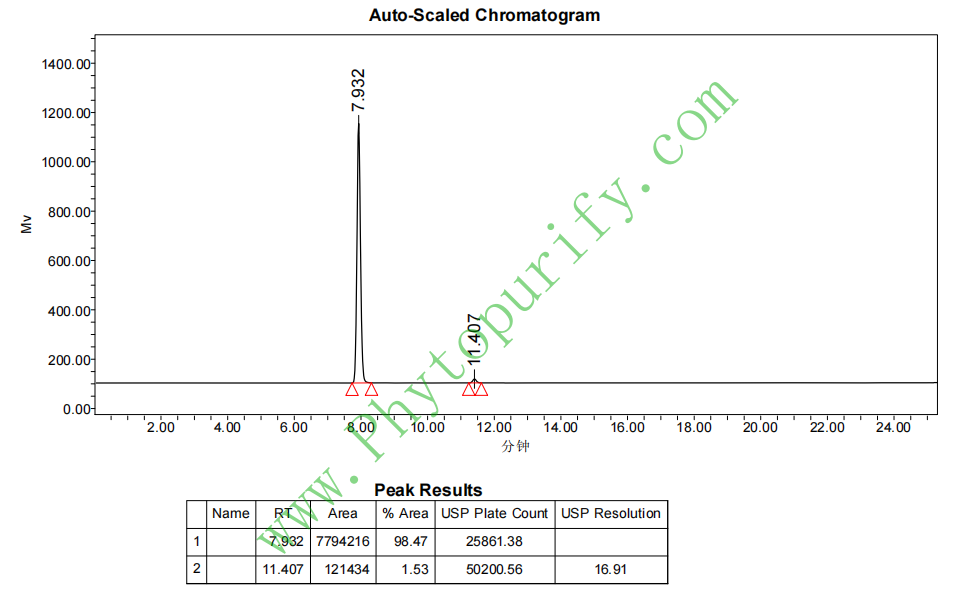
Analysis Method: HPLC-DAD or/and HPLC-ELSD
Identification Method: Mass, NMR
Packing: Brown vial or HDPE plastic bottle
Storage: Store in a well closed container, protected from air and light. Put into refrigerate or freeze for long term storage.
Whenever possible, you should prepare and use solutions on the same day. However, if you need to make up stock solutions in advance, we recommend that you store the solution as aliquots in tightly sealed vials at -20℃. Generally, these will be useable for up to two weeks.
The product could be supplied from milligrams to grams
Inquire for bulk scale.
For Reference Standard and R&D, Not for Human Use Directly.
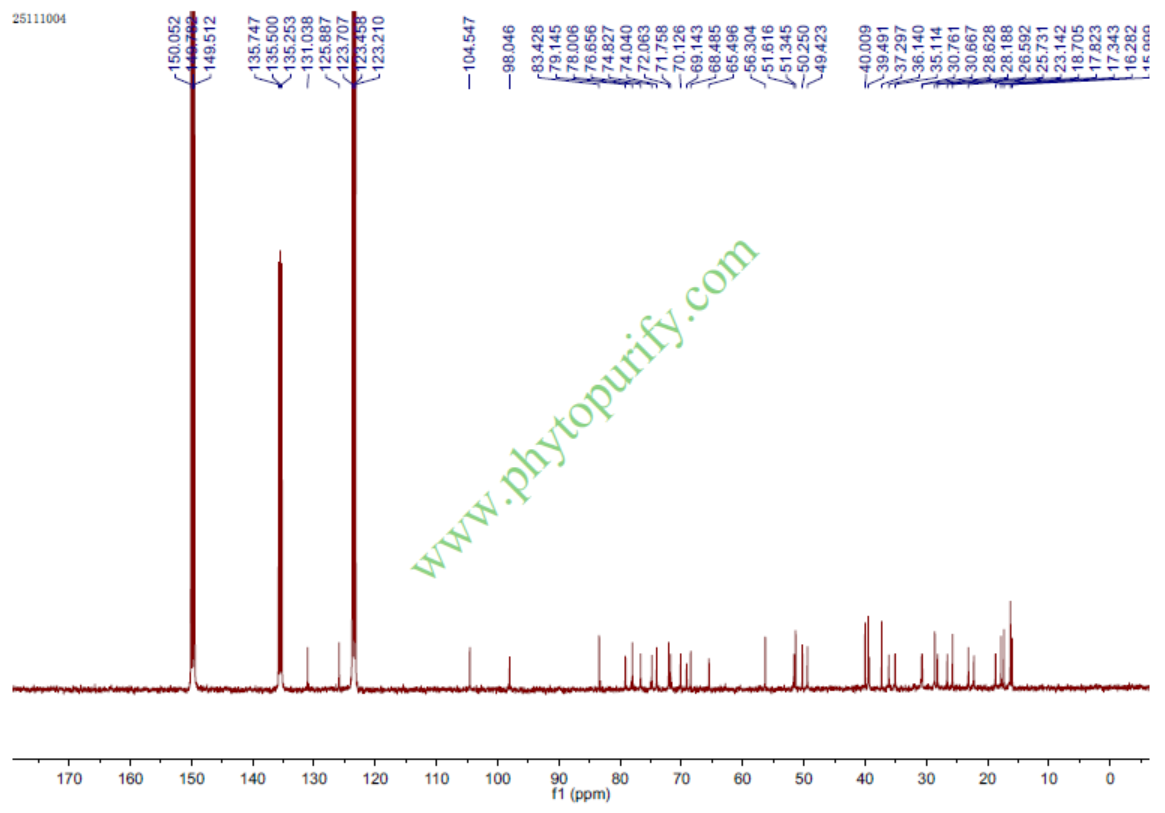
NMR of Ginsenoside CY
HPLC of Ginsenoside CY
Storage conditions:Short-term storage at 2~8℃, long-term storage at -20 ~ -80℃
198.7600
3.5008
3.5008
.0113
.6173
.2920
Low
79.9615
5.8757
No
No
No
No
No
No
0.0
Yes
No
No
No
Ginseng(Panax ginseng C. As a traditional precious medicinal herb, the core pharmacological active ingredient of A. Mey., ginsenosides, has always been a hot topic in modern pharmacological research. There are various types and structures of ginsenosides, which form the material basis for their multi-target and multi pathway effects. Ginsenoside CY (CAS number: 83480-65-3) is one of the dammarane type triterpenoid saponins with unique chemical modifications. In recent years, with the advancement of separation and identification techniques, ginsenoside CY has gradually emerged from numerous homologs, especially in the study of neurodegenerative diseases, especially Alzheimer's Disease (AD), showing remarkable pharmacological activity. Its role involves multiple key aspects such as energy metabolism regulation, balance of cell apoptosis, inhibition of neuroinflammation, and intervention in the pathological process of β - amyloid protein (A β), suggesting its potential as a multi-target anti AD candidate drug. This article aims to systematically review the chemical structure, plant origin, pharmacological activity, mechanism of action, pharmacological characteristics, and clinical application prospects of ginsenoside CY, in order to provide comprehensive scientific references for the in-depth research and development of this compound.
Ginsenoside CY belongs to the derivative of protopanaxadiol type saponins. Its basic skeleton is a damaane type tetracyclic triterpene, which is replaced by hydroxyl groups at positions 3 β, 12 β, and 20 (S). Its structural uniqueness lies in two points: firstly, a disaccharide chain, namely α - L-arabinopyranosyl - (1 → 6) - β - D-glucopyranoside, is connected to the hydroxyl group at position C-20; Secondly, a double bond (Δ 24 (25)) was introduced between the C-24 and C-25 positions of the side chain. This glycosylation mode and side chain unsaturation have a decisive impact on its biological activity, solubility, and membrane permeability.
According to the analysis of drug parameters, its molecular weight is 754.9990, which belongs to the category of medium to large molecular compounds. The calculated lipid water partition coefficient (LogP) is 3.5008, indicating that it has a certain degree of lipophilicity, but not high lipid solubility. The topologically polar surface area (TPSA) is as high as 198.7600 Å ², mainly attributed to the abundant oxygen atoms on hydroxyl and sugar groups in its molecules, which are potential hydrogen bond donors and acceptors. The combination of high TPSA and moderate LogP determines its low water solubility, with a calculated value of approximately 0.0113 mg/mL, which may be one of the limiting steps for its oral absorption and in vivo distribution. Preliminary computer simulation predictions indicate that its ability to cross the blood-brain barrier (BBB) is low, which poses a challenge for the development of central nervous system drugs. However, it also suggests that it may need to improve brain targeting through formulation techniques such as nanodelivery systems or prodrug modifications. In addition, preliminary toxicity predictions showed no significant inhibitory risk on hERG potassium channels (hERG inhibition: No), and the Ames test predicted a negative result (0.0), suggesting that it may have good cardiac safety and low genetic toxicity risk, but experimental verification is needed.
Ginsenoside CY mainly comes from plants of the Panax genus in the Araliaceae family, including ginseng(Panax ginseng)Western ginseng(Panax quinquefolius)And Sanqi(Panax notoginseng)Wait. There are significant differences in its content among plants of different species, different parts (such as main roots, fibrous roots, stems and leaves), and different growth years. Usually, the content of certain rare ginsenosides is relatively high in the fibrous roots of ginseng and red ginseng (steamed processed products). Ginsenoside CY, as one of them, may accumulate due to the effects of deglycosylation and structural transformation caused by heat treatment during processing.
Its extraction and separation follow the conventional process of natural product chemistry, but the technical requirements are higher. Firstly, alcohol solvents (such as methanol, ethanol) or alcohol water mixed solvents are used for reflux extraction or ultrasound assisted extraction of dried and crushed plant materials. After vacuum concentration, the obtained crude extract is preliminarily enriched using macroporous adsorption resins (such as D101, AB-8) to remove impurities such as polysaccharides and proteins, and to enrich saponin components. Subsequently, efficient chromatographic separation techniques are required for purification. Positive or reverse phase silica gel column chromatography is a commonly used preliminary separation method, and the final high purity of ginsenoside CY relies heavily on preparative high-performance liquid chromatography (HPLC), usually using C18 reverse phase chromatography column with acetonitrile water or methanol water as mobile phase for gradient elution. In recent years, liquid-liquid distribution chromatography techniques such as high-speed counter current chromatography (HSCCC) have also been applied in the separation and purification of ginsenoside homologues due to their high recovery rate and avoidance of irreversible adsorption by solid adsorbents. Structural identification involves the comprehensive use of spectroscopic methods such as mass spectrometry (MS) and nuclear magnetic resonance (NMR, including 1H NMR, 13C NMR, 2D NMR).
A large number of in vitro and in vivo pharmacological studies have shown that ginsenoside CY has a wide range of biological activities, and its research focus is highly concentrated on neuroprotection, especially in the fight against Alzheimer's disease.
1. Neuroprotection and anti Alzheimer's disease activity
This is the core activity of ginsenoside CY that has received the most attention. In cell models, ginsenoside CY can significantly increase the cell viability of PC12 cells or primary neurons induced by A β 25-35 or H2O2 damage, and reduce lactate dehydrogenase (LDH) leakage rate. In AD transgenic mouse models (such as APP/PS1 mice), long-term gavage of ginsenoside CY can improve spatial learning and memory abilities in mice (such as Morris water maze experiment), reduce A β plaque deposition in the brain, and alleviate neuronal loss and synaptic structural damage. Its neuroprotective effect is not a single pathway, but a multi pronged approach.
2. Anti apoptotic effect
Apoptosis is an important pathway for neuronal death in Alzheimer's disease. Research has found that ginsenosides CY can upregulate the expression of anti apoptotic proteins Bcl-2 and Mcl-1, while downregulating the expression of pro apoptotic protein Bax, thereby inhibiting the apoptotic cascade reaction of the mitochondrial pathway, reducing the activation of caspase-3, and maintaining neuronal survival.
3. Anti inflammatory effect
Chronic neuroinflammation is a key pathological feature of AD. Ginsenoside CY can inhibit excessive activation of microglia and astrocytes. The mechanism involves downregulating the expression of Toll like receptor 4 (TLR4) and its downstream nuclear factor kappa B (NF - κ B) signaling pathway, thereby reducing the release of pro-inflammatory factors such as tumor necrosis factor - α (TNF - α), interleukin-1 β (IL-1 β), and nitric oxide (NO).
4. Regulating autophagy and energy metabolism
Autophagy is an important mechanism for cells to clear abnormal protein aggregates (such as A β). Ginsenoside CY has been shown to activate the AMP dependent protein kinase (AMPK) signaling pathway. The activation of AMPK not only promotes autophagy flow in cells and accelerates the clearance of toxic proteins such as A β, but also regulates the energy homeostasis of cells and improves the energy metabolism disorders commonly present in AD brains.
5. Other potential activities
In addition to AD related research, preliminary exploration also suggests that ginsenoside CY may have potential value in other fields, such as affecting cell differentiation by regulating the RAR α signaling pathway, or participating in cholesterol reverse transport by affecting ABCA1 expression. However, its activity in anti-tumor and cardiovascular protection still needs systematic research.
The core of the pleiotropic pharmacological effects of ginsenoside CY lies in its interactions with multiple key biomolecules, forming a synergistic network. Based on existing research, its mechanism of action and molecular targets can be summarized as follows:
1. The core regulatory target of energy metabolism and autophagy: AMPK (PRKAA1)
AMPK is the energy receptor of cells. Ginsenoside CY can directly or indirectly activate AMPK. Activated AMPK initiates autophagy by phosphorylating ULK1 and enhances the clearance of A β; On the other hand, by inhibiting pathways such as mTORC1, it comprehensively regulates cell growth, metabolism, and survival, providing protection for neurons.
2. Key targets of apoptosis balance: Bcl-2 family (BCL2, MCL1)
Bcl-2 and Mcl-1 are important endogenous anti apoptotic proteins. Ginsenoside CY can promote its expression, thereby stabilizing mitochondrial outer membrane permeability, preventing cytochrome C release, and blocking the activation of apoptosis executing protein caspase, which is the molecular basis for its direct anti neuronal apoptosis.
3. The initiating target of neuroinflammation: TLR4
TLR4 is a key pattern recognition receptor that recognizes endogenous danger signals, such as A β aggregates. Ginsenoside CY may inhibit the excessive activation of downstream MyD88/NF - κ B pathway by interfering with the binding of A β to TLR4 or downregulating the expression of TLR4, thereby alleviating neuroinflammatory response from the source.
4. Related targets for A β generation and clearance: APP, BACE1, ABCA1
In terms of A β production, ginsenoside CY may mildly inhibit the activity of β - secretase 1 (BACE1) or affect the processing of amyloid precursor protein (APP) through non-specific means, reducing the production of A β. In terms of clearance, it may promote cholesterol efflux from the brain by upregulating the expression of ATP binding cassette transporter A1 (ABCA1), indirectly affecting the metabolism and clearance of A β, as cholesterol homeostasis is closely related to APP processing.
5. Other potential interacting targets
* Notch1 The Notch signaling pathway plays an important role in neural development and homeostasis, and its dysregulation is associated with AD. Ginsenoside CY may regulate the cleavage or activity of Notch1, affecting neurogenesis and synaptic plasticity.
* RARα(RARA)Retinoic acid receptor alpha is involved in gene transcription regulation. Ginsenoside CY may act as a regulator to affect the transcription program mediated by RAR α, thereby affecting neuronal differentiation and survival.
* IDO1 Indoleamine 2,3-dioxygenase 1 is a key enzyme in tryptophan metabolism, associated with immune tolerance and neuroinflammation. It is still speculated whether it is a target of ginsenoside CY and may be associated with its immunomodulatory effects.
These targets are not isolated, but intertwined with each other. For example, activation of AMPK can inhibit inflammation and promote autophagy; Inhibition of TLR4 can reduce inflammation and indirectly affect apoptosis. Ginsenoside CY achieves synergistic intervention in the complex pathological circuit of AD through this multi-target and networked regulatory mode.
Despite its significant pharmacological activity, the pharmacological development of ginsenoside CY faces a series of challenges, and its pharmacokinetic characteristics urgently need to be further studied.
Absorption, distribution, metabolism, and excretion (ADME) characteristics:
* absorb As a highly polar molecule, its oral bioavailability may be low. High TPSA and molecular weight affect its passive diffusion through intestinal epithelial cells. It may be a substrate for efflux transporters such as P-glycoprotein (P-gp), further limiting its absorption. The gut microbiota may hydrolyze its glycosides and convert them into deglycosylated secondary saponins (such as PPT type saponins), which have increased lipophilicity and may be more easily absorbed with altered activity.
* distribution The predicted low BBB permeability is the biggest obstacle to its application in brain diseases. Even if it enters the systemic circulation, key parameters such as its binding rate to plasma proteins and tissue distribution volume are still unknown. Experimental research is needed to investigate its distribution in key tissues such as the heart, liver, kidney, and brain.
* Metabolism The liver is its main metabolic site and may undergo phase I metabolism (such as oxidation of hydroxyl groups) and phase II metabolism (such as glucuronidation and sulfation). The hydrolysis of the sugar moiety may occur in both the intestine and liver. Clarifying its main metabolites and their activities is crucial for a comprehensive understanding of its efficacy and toxicity.
* excretion The prototype drug and its metabolites may be mainly excreted through bile and kidneys. The kinetic parameters such as elimination half-life and clearance rate need to be determined through in vivo experiments.
Optimization strategy for drug properties:
1. Formulation technology Developing new drug delivery systems is the key to breaking through the bottleneck of drug development. For example, preparing it into liposomes, nanoparticles, micelles, or solid dispersions can significantly improve its solubility, stability, and oral absorption. Especially brain targeted delivery systems, such as nanocarriers modified with BBB penetrating peptides such as TfR or Angiopep-2, can actively deliver drugs to brain lesions.
2. Structural modification Optimize its structure through synthetic chemical methods, such as esterification, alkylation, or preparation of sugar or hydroxyl groups as prodrugs, to regulate its LogP and TPSA, balance water solubility and membrane permeability, and improve BBB penetration ability.
3. Pharmacokinetic study It is necessary to systematically conduct preclinical pharmacokinetic studies, establish sensitive and specific biological analysis methods (such as LC-MS/MS), quantitatively analyze their concentrations in biological matrices, obtain complete ADME data, and provide a basis for dosage form design and administration plan formulation.
Ginsenoside CY, as a natural small molecule with clear multi-target anti AD activity, has broad clinical application prospects, but the road ahead is long and full of challenges.
Potential application directions:
1. Prevention and Treatment of Alzheimer's Disease As a core direction, ginsenoside CY is expected to be developed into a drug or functional food ingredient for early intervention or adjuvant therapy of AD. Its multi-target properties are superior to many single target drugs, which may have a more comprehensive improvement effect on the complex pathology of AD.
2. Other neurodegenerative diseases The common mechanisms of neuroprotection, anti-inflammatory, and anti apoptotic effects suggest that it may also have potential applications in other neurodegenerative diseases such as Parkinson's disease, Huntington's disease, and amyotrophic lateral sclerosis.
3. combination therapy Considering the complexity of AD treatment, ginsenoside CY may be used in combination with other drugs with different mechanisms of action (such as A β monoclonal antibodies, cholinesterase inhibitors, NMDA receptor antagonists, etc.) in the future to produce synergistic effects or reduce the dosage and side effects of a single drug.
Challenges and future research directions:
1. Deep analysis of the mechanism of action At present, the understanding of targets is still largely based on correlation studies and pathway inhibition experiments. It is necessary to use surface plasmon resonance (SPR), cell thermal shift analysis (CETSA), drug affinity reaction target stability (DARTS) and other techniques to directly verify its interaction with targets such as AMPK and TLR4, and clarify whether it is directly excited/antagonized or indirectly regulated.
2. Systematic evaluation of drug properties It is necessary to fill in the gaps in preclinical pharmacokinetics and toxicology research as soon as possible. Conducting safety evaluations on acute toxicity, long-term toxicity, reproductive toxicity, and other aspects of the system is a necessary step towards clinical practice.
3. Efficient green preparation process Extracting and isolating ginsenosides CY from plants has high cost and low yield. In the future, we can explore biosynthetic pathways and use synthetic biology techniques for targeted production in microorganisms or plant cells, or develop efficient chemical/enzymatic semi synthetic routes to solve the problem of raw material sources.
4. Clinical translational research Based on sufficient preclinical research, designing rigorous clinical trial protocols and gradually advancing Phase I (safety), Phase II (efficacy exploration), and Phase III (confirmatory) clinical trials is the final step in verifying their clinical value.
Ginsenoside CY, as a structurally unique Damaran type saponin in ginseng, has become a highlight molecule in the field of natural product anti Alzheimer's disease research due to its synergistic pharmacological activity in regulating AMPK energy metabolism, balancing Bcl-2 family mediated cell apoptosis, inhibiting TLR4 triggered neuroinflammation, and intervening in A β pathology and other core AD processes. Its multi-target mode of action provides new ideas for addressing the complex etiology of AD. However, its low water solubility and predicted brain permeability, as well as incomplete pharmacokinetic and toxicological profiles, constitute the main obstacles to its translation into clinical drugs. Future research needs to integrate multidisciplinary technologies such as natural product chemistry, pharmacology, pharmacy, and synthetic biology. While delving into the precise molecular mechanisms, efforts should be made to improve its pharmacokinetic properties through formulation engineering and structural optimization strategies, and establish stable and economical large-scale preparation methods. Only through systematic and rigorous preclinical and clinical research can this active molecule derived from traditional Chinese medicine truly benefit patients with neurodegenerative diseases, achieving a leap from the laboratory to the bedside.
