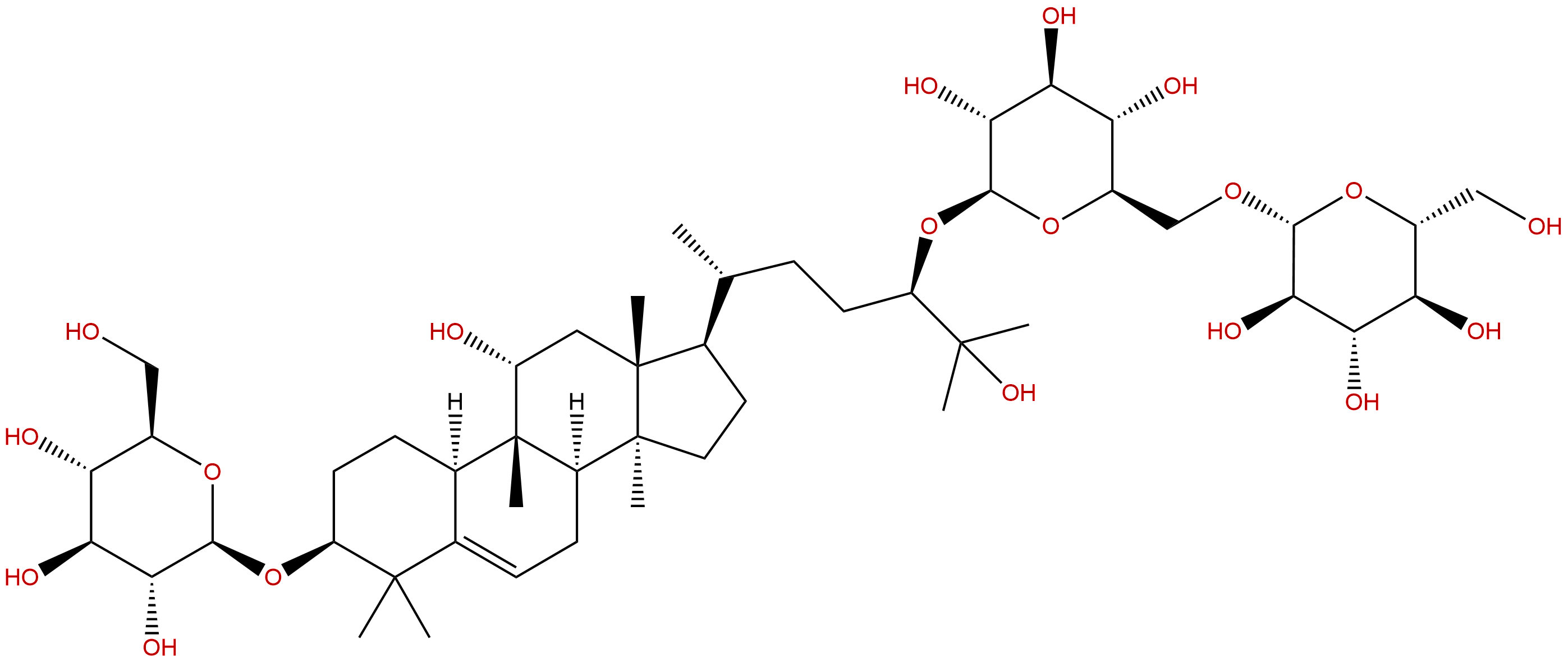


Product name: Mogroside III
Synonym name:
Catalogue No.: BP0950
Cas No.: 130567-83-8
Formula: C48H82O19
Mol Weight: 963.165
Botanical Source: Siraitiae fructus
Physical Description:
Type of Compound: Triterpenoids
Purity: 95%~99%
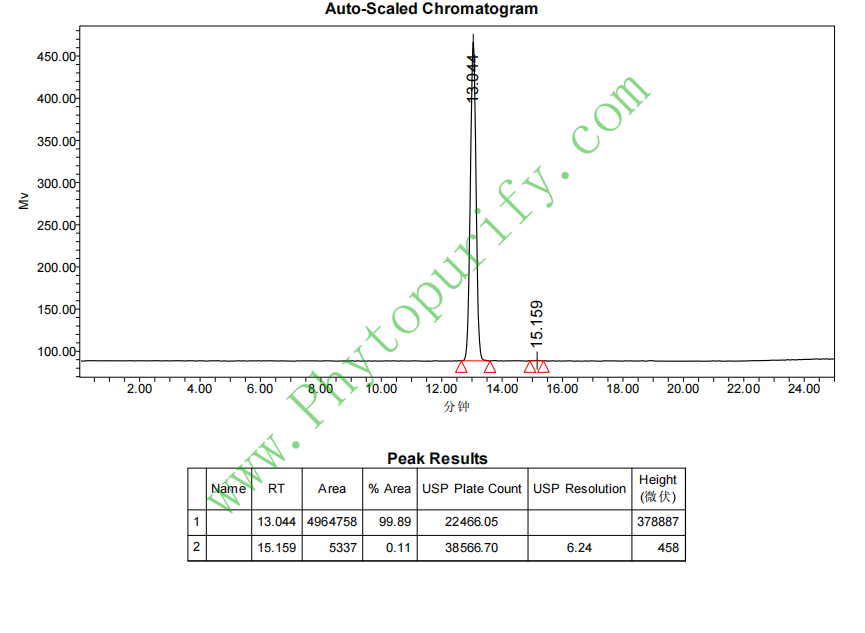
Analysis Method: HPLC-DAD or/and HPLC-ELSD
Identification Method: Mass, NMR
Packing: Brown vial or HDPE plastic bottle
Storage: Store in a well closed container, protected from air and light. Put into refrigerate or freeze for long term storage.
Whenever possible, you should prepare and use solutions on the same day. However, if you need to make up stock solutions in advance, we recommend that you store the solution as aliquots in tightly sealed vials at -20℃. Generally, these will be useable for up to two weeks.
The product could be supplied from milligrams to grams
Inquire for bulk scale.
Chengdu Biopurify Phytochemicals Ltd. is a leading company in the research, development, manufacture and marketing of High Quality Phytochemicals and Extracts(especially Active Ingredients from Traditional Chinese Medicine,TCM), Natural Active Pharmaceutical Ingredients worldwide.
The main services:
A. Supply active ingredients and reference standards of TCM, from mgs to kgs scale
B. Custom extraction and purification, target Herb Active Ingredients
C. Custom synthesis and semi-synthesis for Natural Active Ingredients
D. CR(contract research), CM(contract manufacture) and PD(process development) services from lab scale, pilot scale to commercial scale(GMP is also available)
E. TCM compounds library for drug screen,more than 3000 compounds available, many of them are rare and unique.
HPLC of Mogroside III
Storage conditions:Short-term storage at 2~8℃, long-term storage at -20 ~ -80℃
318.3700
1.9725
1.9725
.1335
.4621
.5605
Low
70.3222
6.5813
No
No
No
No
No
No
0.0
Yes
No
No
Yes
Natural products, as an important source of drug discovery, have always held a central position in the history of human disease prevention and treatment. With the deep integration of modern pharmacology and chemical biology, more and more natural compounds are exhibiting biological activities beyond their traditional uses, providing new chemical entities and paradigms for the treatment of complex diseases. Arhat III is one of the typical representatives of this kind of "old medicine for new use".
Arhat III belongs to the cucurbitane type triterpene glycoside family, and it is Siraitin(Siraitia grosvenorii, also known as Momordica grosvenorii)One of the low polarity glycosides with relatively abundant content. For a long time, Momordica grosvenorii has been widely used as a natural sweetener because of its high sweetness and low calorie, especially for patients with diabetes and people who have lost weight. However, recent studies have revealed that Arhat fructoside III and its homologues not only have sweet taste characteristics, but also show significant pharmacological activities at multiple biological levels, such as regulation of glucose and lipid metabolism, inhibition of inflammation, and regulation of autophagy. In particular, its inhibition of maltase, enhancement of oocyte development potential by promoting cumulus cell autophagy, and improvement of insulin resistance as the core active ingredient of low polar glycoside component (L-SGgly) have made it a new hot molecule in the research field of type 2 diabetes and assisted reproductive technology.
The purpose of this paper is to systematically review the research progress in chemical structure characteristics, plant origin, pharmacological activity spectrum, mechanism of action and pharmaceutical evaluation of Arhat fruit glycoside III, and explore its potential application value as a multi-target natural product in metabolic diseases and reproductive medicine, with a view to providing reference for subsequent basic research and clinical transformation.
The chemical structure of Arhat III belongs to the glycosylated derivative of cucurbitane type tetracyclic triterpene skeleton. Cucurbitane triterpenoids are the characteristic secondary metabolites of Siraitia plants. Their basic skeleton consists of 30 carbon atoms, including four ring systems A, B, C and D, of which C-9 and C-11 often have double bonds or carbonyl modifications. The aglycone of Arhat III is mogrol, and its C-3 and C-24 positions are respectively linked to the sugar chain to form a disaccharide chain glycoside structure.
Specifically, the molecular formula of Arhat fruit glycoside III is C ₄₈₈₈₈₈₈₁₉, with a molecular weight of 963.1650 Da. Its sugar chain composition is generally: C-3 connects β - D-glucose - (1 → 2) - β - D-glucose, and C-24 connects β - D-glucose. This glycosylation pattern determines the balance between its polarity and biological activity. Compared with high polar glycosides such as Arhat fruit glycoside V (mogroside V, containing 5 glucose groups), Arhat fruit glycoside III has a smaller number of sugar bases and is one of the main components of low polar glycosides (L-SGgly).
In terms of physical and chemical properties, Arhat fruit glycoside III shows typical hydrophilic characteristics, and its calculated lipid water partition coefficient (LogP) is 1.9725, indicating that it has a certain lipophilicity, but it is still hydrophilic in general. The topological polar surface area (TPSA) is as high as 318.3700 Å ², which is much higher than the recommended upper limit of 140 Å ² for oral drugs, indicating that its transmembrane permeability may be limited. The water solubility parameter is 0.1335 mg/mL, which belongs to the category of slight solubility. It is worth noting that the blood-brain barrier penetration ability of Arhat fruit glycoside III is evaluated as low, which is closely related to its high polar surface area and molecular weight. In addition, the hERG inhibition risk assessment was negative, and the Ames test result was 0.0, indicating a low genetic toxicity risk and preliminary good safety.
These physical and chemical characteristics determine the absorption, distribution, metabolism and excretion behavior of Arhat fruit glycoside III in vivo, and also provide an important basis for its subsequent dosage form design and route selection.
Arhat III mainly comes from Siraitia grosvenorii(Siraitia grosvenorii Dry ripe fruit of Swingle C. Jeffrey ex A. M. Lu et Z.Y. Zhang. Momordica grosvenorii is native to Guangxi, Guangdong, Hunan and other southern provinces in China, among which Yongfu, Lingui and other places in Guangxi have the best quality of cultivated products. This plant is a perennial vine with round or oval shaped fruits. When mature, the outer skin is yellow brown and contains a large number of seeds and sweet tasting flesh.
The sweet ingredient in Momordica grosvenorii is mainly cucurbitane type triterpene glycosides, collectively known as Arhat. According to the difference in the number of glycosyl groups and the connection mode, a variety of homologues of Arhat fruit glycoside II, III, IV, V, VI, etc. have been identified. Among them, siraitin V has the highest content and the highest sweetness (about 250-300 times of sucrose), while Arhat III has a relatively low content, but as the core component of low polar glycosides (L-SGgly), it has unique advantages in pharmacological activity.
The extraction and separation of Arhat III usually follow the following technical route:
It is worth noting that the content of Arhat fruit glycoside III in natural fruits is greatly affected by variety, place of origin, harvest date and processing method. The research shows that the proportion of low polar glycosides in Momordica grosvenorii treated by "post ripening" process may be increased, which provides a possible process regulation way for the directional enrichment of Arhat grosvenorii glycoside III.
The activity of Arhat III in the regulation of glucose metabolism is one of the most concerned research directions. The existing evidence shows that Arhat fruit glycoside III can play a hypoglycemic role in a variety of ways.
First of all, Arhat fructoside III has been proved to be an α - glucosidase inhibitor, especially a selective inhibitor of maltase. Its half inhibitory concentration (IC ≮₀) is 1.6 mM. α - glucosidase is located at the brush border of the small intestine and is responsible for hydrolyzing oligosaccharides into monosaccharides for absorption. Inhibiting the activity of this enzyme can delay the digestion and absorption of carbohydrates, thereby reducing postprandial blood glucose peak. This mechanism of action is similar to acarbose, a commonly used clinical hypoglycemic drug, but as a natural product, Arhat fruit glycoside III may have more advantages in safety.
Secondly, as the core active ingredient of the low polar glycoside component (L-SGgly), Arhat fruit glycoside III shows a more comprehensive metabolic improvement effect in the overall animal model. Research has found that L-SGgly can improve insulin resistance by increasing serum levels of glucagon like peptide-1 (GLP-1). GLP-1 is an intestinal insulinotropic hormone that can promote insulin secretion, inhibit glucagon release, delay gastric emptying, and increase satiety. The mechanism by which L-SGgly upregulates GLP-1 may involve direct stimulation of intestinal L cells or inhibition of dipeptidyl peptidase-4 (DPP-4) activity, but the specific molecular mechanism remains to be elucidated.
In addition, L-SGgly can significantly reduce serum interleukin-6 (IL-6) levels. IL-6 is an important pro-inflammatory cytokine that plays a critical role in obesity related chronic low-grade inflammation and insulin resistance. By reducing the level of IL-6, Arhat fruit glycoside III may indirectly improve the transmission efficiency of insulin signaling pathway. In a word, Arhat fruit glycoside III has multiple functions of reducing blood sugar, regulating lipid and anti inflammation, which makes it have potential application value in the comprehensive management of type 2 diabetes.
The discovery of Arhat fruit glycoside III in the field of reproductive medicine is quite innovative. Studies have shown that Arhat fruit glycoside III can enhance the developmental potential of oocytes by promoting autophagy of cumulus cells. Cumulus cells are granulosa cells surrounding the oocyte, which exchange substances and transmit signals with the oocyte through gap junctions. They are crucial for the maturation, fertilization, and early embryonic development of the oocyte.
Autophagy is a conservative process in which cells self degrade and recycle intracellular components, playing an important role in maintaining cellular homeostasis, coping with nutritional stress, and clearing damaged organelles. During follicular development, moderate autophagy activity helps cumulus cells provide energy substrates and nutrients to oocytes, while clearing oxidative damage products. Arhat fruit glycoside III may enhance the metabolic support function of cumulus cells by activating the autophagy pathway of cumulus cells, thereby improving the quality and developmental potential of oocytes.
This discovery has important implications for assisted reproductive technology (ART). In clinical procedures such as in vitro fertilization (IVF) and intracytoplasmic sperm injection (ICSI), the quality of oocytes is one of the key factors determining success rates. At present, drugs such as gonadotropins are commonly used in clinical practice for superovulation, but poor oocyte quality remains a bottleneck that restricts pregnancy outcomes. As a natural small molecule, Arhat fruit glycoside III may provide a new candidate compound for improving the in vitro maturation (IVM) system of oocytes.
In addition to the above activities, Arhat III also showed some anti-inflammatory effects. The effect of L-SGgly on reducing IL-6 levels has been described previously. In addition, based on the structure-activity relationship of cucurbitane triterpene glycosides, it is speculated that Arhat fruit glycoside III may reduce the production of proinflammatory factors by inhibiting nuclear factor kappa B (NF - κ B) signaling pathway or mitogen activated protein kinase (MAPK) pathway. However, at present, the cellular and molecular evidence of the direct anti-inflammatory effect of Arhat fruit glycoside III is still insufficient, and further research is needed.
The pharmacological activity of Arhat fruit glycoside III involves multiple molecular targets and signal pathways, showing typical characteristics of multi target action. The following will elaborate from two levels: known targets and potential pathways.
Alpha glucosidase (maltase): The direct inhibition of Arhat fructoside III on maltase is the basis of its hypoglycemic effect. Molecular docking studies suggest that the sugar chain of Arhat fruit glycoside III may form a hydrogen bond network with the amino acid residues at the active site of maltase, thereby competitively inhibiting the binding of substrate (maltose). Its IC ₅₀ is 1.6 mM, which is weaker than acarbose (IC ₅₀ is about μ M level), but considering its natural source and low toxicity, it still has development value.
GLP-1 related pathway The mechanism by which L-SGgly increases serum GLP-1 levels is not fully understood. Possible pathways include: (1) directly stimulating intestinal L cells to secrete GLP-1; (2) Inhibit DPP-4 activity and delay GLP-1 degradation; (3) Indirectly affecting GLP-1 secretion by regulating gut microbiota composition. At present, there is no direct evidence that the monomer of Arhat fruit glycoside III binds to DPP-4 with high affinity, so the first two mechanisms still need experimental verification.
Based on the research reports on the cucurbitane type triterpene skeleton structure of Arhat III and its homologues (such as Siraitin V), the following targets and pathways deserve attention:
AMPK(PRKAA1/AMPK)AMP activated protein kinase (AMPK) is a core sensor of cellular energy metabolism, playing a critical role in regulating glucose uptake, fatty acid oxidation, and mitochondrial biosynthesis. Many studies have shown that siraitin V can improve insulin resistance and lipid metabolism by activating AMPK signaling pathway. In view of the structural similarity between Arhat III and mogroside V, it is speculated that it may also play a role in metabolic regulation through AMPK pathway. Activation of AMPK can promote the translocation of GLUT4 to the cell membrane, increase glucose uptake, while inhibiting acetyl CoA carboxylase (ACC) activity and reducing fatty acid synthesis.
SGLT2 Sodium glucose cotransporter 2 (SGLT2) is a key transporter for glucose reabsorption in the renal proximal tubules. SGLT2 inhibitors (such as dapagliflozin and empagliflozin) have become representatives of new hypoglycemic drugs. At present, there is no direct evidence that Arhat fruit glycoside III is an SGLT2 inhibitor, but the effect of cucurbitane triterpene glycosides on glucose transporters is worth exploring.
GCK Glucokinase (GCK) is a key enzyme in glucose metabolism in liver and pancreatic beta cells, and its activity directly affects glucose stimulated insulin secretion. GCK agonists can enhance the sensitivity of beta cells to glucose and promote insulin release. It is not clear whether Arhat III affects GCK activity, but it can be used as the direction of follow-up research.
Autophagy pathway The mechanism of Arhat fruit glycoside III promoting cumulus cell autophagy may involve the inhibition of mTOR signaling pathway. MTOR is a negative regulator of autophagy, and its activity is regulated by nutritional status and growth factor signaling. Arhat III may release the inhibition of autophagy initiation complex (ULK1/2-ATG13-FIP200) by inhibiting the activity of mTORC1, thus starting the autophagy process. In addition, the activation of AMPK can also inhibit mTORC1 by phosphorylating TSC2 and Raptor, so AMPK autophagy axis may be an important node in the action of Arhat fruit glycoside III.
Other potential targets According to the target list provided, Arhat fruit glycoside III may also involve APP (amyloid precursor protein), PTPN1 (protein tyrosine phosphatase 1B), MAOA (monoamine oxidase A) and ESR2 (estrogen receptor beta). Among them, PTPN1 is a negative regulator of the insulin signaling pathway, and its inhibitors can enhance insulin sensitivity; MAOA is related to neurotransmitter metabolism; ESR2 is related to reproductive endocrine regulation. The correlation of these targets suggests that Arhat fruit glycoside III may have more extensive biological effects, but all of them need experimental verification.
Based on the Lipinski's Rule of Five and the subsequent extended rules, a preliminary evaluation of the drug readiness of Arhat III was carried out:
In a word, Arhat fruit glycoside III does not conform to the five rules of traditional drugs, and it is a natural product "beyond the rules". However, a large number of active compounds in natural products do not strictly follow these rules, especially glycoside compounds. Although their oral bioavailability is low, they can be overcome through gut microbiota metabolism, prodrug design, or non oral administration routes (such as injection, transdermal administration).
In terms of safety, the Ames test result was 0.0, indicating no mutagenicity; The hERG inhibition risk is negative, indicating a low risk of cardiac toxicity. These preliminary data support the security foundation for its further development.
At present, the systematic study on the pharmacokinetics of Arhat III monomer is not sufficient, but the study based on the total glycosides of Siraitin and Siraitin V can provide reference:
It is worth noting that, as the active ingredient of L-SGgly, the overall efficacy of Arhat fruit glycoside III may result from the synergistic effect of multiple ingredients. The effect of L-SGgly on increasing serum GLP-1 levels may be partially attributed to its direct regulation of gut microbiota composition or stimulation of intestinal L cells, rather than relying on systemic absorption.
Arhat fruit glycoside III has broad application prospects in the field of type 2 diabetes. Its multi target action characteristics - inhibiting α - glucosidase, up regulating GLP-1, reducing IL-6, improving insulin resistance - make it have the potential to intervene in the pathological process of diabetes from multiple aspects. Compared with existing drugs, Arhat fruit glycoside III, as a natural product, may have better safety, especially for early intervention in patients with pre diabetes or mild type 2 diabetes.
However, its low oral bioavailability is the main bottleneck restricting its clinical application. Future research directions include: (1) developing novel drug delivery systems such as nano formulations, liposomes, or phospholipid complexes to improve oral absorption rates; (2) Explore non oral routes such as transdermal administration and oral mucosal administration; (3) Using prodrug strategy to reversibly modify polar groups and improve membrane permeability; (4) Conduct in-depth research on the metabolites of gut microbiota and search for more active secondary metabolites.
The discovery that Arhat fruit glycoside III promotes the autophagy of cumulus cells and enhances the developmental potential of oocytes has opened up a new direction for its application in the field of assisted reproduction. In vitro fertilization (IVF) cycles, in vitro maturation (IVM) of oocytes can avoid or reduce the use of gonadotropins and lower the risk of ovarian hyperstimulation syndrome (OHSS). The use of Arhat fruit glycoside III as an additive in IVM culture system may help to improve oocyte maturation rate and embryo development quality.
In addition, for patients with decreased oocyte quality due to age and metabolic diseases (such as diabetes and obesity), Arhat fruit glycoside III may play a protective role by improving cumulus cell function. However, research in this direction is still in its early stages and requires more animal experiments and preclinical studies to validate its effectiveness and safety.
Based on its anti-inflammatory and metabolic regulation activities, Arhat fruit glycoside III may also play a role in other disease fields, such as non-alcoholic fatty liver disease (NAFLD), polycystic ovary syndrome (PCOS), obesity, etc. These diseases are closely related to insulin resistance, chronic low-grade inflammation and lipid metabolism disorder, and the multi-target characteristics of Arhat fruit glycoside III just fit these pathological characteristics.
Despite the attractive prospect, the research of Arhat fruit glycoside III still faces many challenges:
In the future, the following work should be focused on: (1) establishing the large-scale preparation process of Arhat III to ensure adequate supply of samples for research; (2) Conduct systematic pharmacokinetic and metabolomic studies to elucidate their in vivo fate; (3) Using gene knockout animal models or target specific tool drugs to verify the functional relevance of key targets; (4) To explore the synergistic effect of Arhat fruit glycoside III and other hypoglycemic drugs (such as metformin, DPP-4 inhibitor), and provide basis for combined drug use.
As an important member of the cucurbitane triterpene glycoside family, Arhat III is changing from a traditional natural sweetener to a multi target metabolic regulator. Its inhibitory effect on maltase, its unique activity of enhancing oocyte development potential by promoting cumulus cell autophagy, and its comprehensive effect of improving insulin resistance and anti-inflammatory as the core component of L-SGgly, all together outline the application blueprint of this natural product in the field of type 2 diabetes and assisted reproductive technology.
Despite the challenges of high molecular weight and low oral bioavailability in developing medicinal properties, the history of natural product drug development shows that these obstacles are not insurmountable. Through preparation innovation, prodrug design or active metabolite mining, Arhat fruit glycoside III is expected to become a bridge molecule connecting traditional natural medicine and modern precision medicine. In the future, with the in-depth understanding of its mechanism of action, structure-activity relationship and fate in vivo, Arhat fruit glycoside III and its derivatives may bring new therapeutic options for metabolic diseases and reproductive health.
