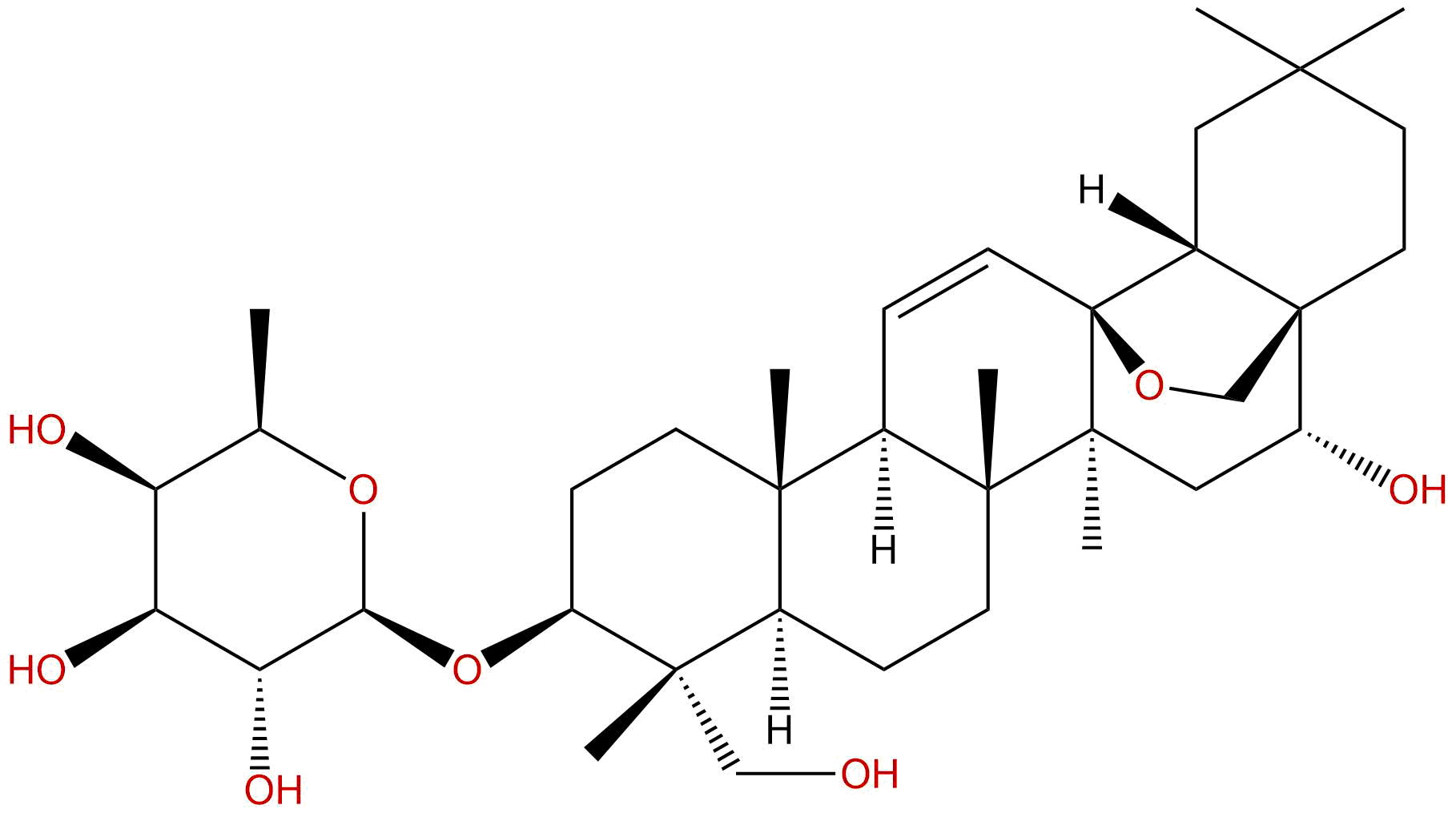


Product name: Prosaikogenin G
Synonym name: Prosapogenin G;Prosaikosaponin G
Catalogue No.: BP2117
Cas No.: 99365-23-8
Formula: C36H58O8
Mol Weight: 618.852
Botanical Source: Bupleuri Radix
Type of Compound: Triterpenoids
Purity: 95%~99%
Analysis Method: HPLC-DAD or/and HPLC-ELSD
Identification Method: Mass, NMR
Packing: Brown vial or HDPE plastic bottle
Storage: Store in a well closed container, protected from air and light. Put into refrigerate or freeze for long term storage.
Whenever possible, you should prepare and use solutions on the same day. However, if you need to make up stock solutions in advance, we recommend that you store the solution as aliquots in tightly sealed vials at -20℃. Generally, these will be useable for up to two weeks.
The product could be supplied from milligrams to grams
Inquire for bulk scale.
For Reference Standard and R&D, Not for Human Use Directly.
Storage conditions:Short-term storage at 2~8℃, long-term storage at -20 ~ -80℃
128.8400
4.2399
4.2399
.0044
.8032
2.3913
Low
81.9742
6.8272
No
No
No
No
No
No
0.0
Yes
No
No
No
Prosaikogenin G (CAS number: 99365-23-8) is a natural triterpenoid saponin compound isolated from the roots of traditional Chinese medicine Bupleurum spp. As one of the important active ingredients in Bupleurum chinense, saikosaponin G is not only a metabolic derivative of Saikosaponin d in the gastrointestinal tract, but also highly regarded for its significant biological activity. In recent years, with the in-depth study of the pharmacological effects of natural products, saikosaponin G has shown unique potential in anti-inflammatory, antiviral, and renal protection, especially in inhibiting the proliferation of rat mesangial cells induced by angiotensin II (Ang II), indicating its application value in the prevention and treatment of chronic kidney disease.
This review aims to systematically summarize the chemical structure and physicochemical properties, plant sources and extraction methods, pharmacological activity and mechanism of action, pharmacological evaluation and pharmacokinetic characteristics of saikosaponin G, and explore its potential prospects in clinical applications. By reviewing the current research progress, provide theoretical basis and research direction for the drug development of saikosaponin G, and promote its clinical translation.
Chaihu saponin G belongs to the triterpenoid saponin class, with a molecular weight of 618.8520. Its chemical structure is based on a pentacyclic triterpenoid skeleton, with multiple sugar residues connected. Its molecular structure embodies typical saponin characteristics, namely a lipophilic triterpenoid core and a hydrophilic sugar chain, making it both hydrophobic and hydrophilic. The LogP value of saikosaponin G is 4.2399, indicating its strong lipid solubility, which facilitates penetration of cell membranes, but its low water solubility (0.0044) limits its solubility and bioavailability in aqueous phase. Its topological polar surface area (TPSA) is 128.8400, indicating the presence of many polar groups in its molecule, which may affect its membrane permeability and pharmacokinetic performance.
In terms of safety, saikosaponin G did not exhibit hERG channel inhibitory activity, reducing the potential risk of cardiac toxicity; The Ames test result is 0.0, indicating no significant genotoxicity. In addition, the blood-brain barrier penetration ability of saikosaponin G is relatively low, indicating that its effect is mainly limited to peripheral tissues, reducing the possibility of central nervous system side effects.
Chaihu saponins G mainly come from the roots of Chaihu, and plants of the Chaihu genus are widely distributed in East Asia. They are commonly used in traditional Chinese medicine as surface clearing and liver qi regulating medicines. The content of saikosaponin G, a gastrointestinal metabolite of Saikosaponin d, is greatly influenced by factors such as plant variety, growth environment, harvesting time, and processing technology.
The extraction of saikosaponin G is usually carried out using organic solvent extraction combined with column chromatography separation technology. Common steps include:
In recent years, the application of ultrasound assisted extraction and microwave-assisted extraction technologies has improved the extraction efficiency and purity of saikosaponin G, and has more environmental advantages.
The pharmacological effects of saikosaponin G include anti-inflammatory, antiviral, anti renal fibrosis, and cell proliferation regulation, especially in the fields of kidney protection and antiviral effects.
Chaihu saponin G has a significant inhibitory effect on Ang II induced proliferation of rat mesangial cells. Ang II, as a key pro fibrotic factor in renal pathology, promotes mesangial cell proliferation and extracellular matrix deposition, thereby exacerbating glomerular injury. Chaihu saponin G exhibits good renal protective potential by intervening in cell cycle and signal transduction pathways, inhibiting excessive proliferation of mesangial cells, slowing down the process of renal fibrosis.
Chaihu saponins G exhibit certain inhibitory activity against influenza virus related targets. Its targets include neuraminidase (NA), hemagglutinin (HA), M2 ion channel protein, as well as viral RNA polymerase subunits PB2 and PA. These targets play a key role in virus replication and infection, and saikosaponin G blocks virus invasion and replication through multi-target synergistic effects, with potential anti influenza virus effects.
In addition to the main activities mentioned above, saikosaponin G also exhibits anti-inflammatory, immunomodulatory, and antioxidant effects. It reduces tissue inflammation and promotes tissue repair by regulating the expression of inflammatory factors and signaling pathways. In addition, there have been preliminary reports on the protective effects of saikosaponin G on the liver and gastrointestinal tract, indicating its broad pharmacological effects.
The mechanism of action of saikosaponin G involves multiple signaling pathways and molecular targets, reflecting its pharmacological characteristics of multi-target and multi pathway.
Chaihu saponins G block Ang II induced cell proliferation signals by regulating cell cycle related proteins (such as Cyclin D1, CDK4/6) and apoptosis related factors. It may inhibit the MAPK/ERK and PI3K/Akt signaling pathways, alleviate cell proliferation and fibrosis responses, and protect glomerular structure and function.
Regarding influenza virus, saikosaponin G blocks virus release and cell invasion by binding and inhibiting NA and HA proteins. At the same time, inhibiting the function of M2 ion channels, interfering with the acidification process within the virus, and affecting virus replication. In addition, saikosaponin G inhibits the viral RNA polymerase subunits PB2 and PA, further blocking viral gene expression and replication, forming a multiple antiviral barrier.
Chaihu saponins G can inhibit the activation of NF - κ B signaling pathway, reduce the release of pro-inflammatory cytokines (such as TNF - α, IL-6), and alleviate inflammatory response. It may also regulate the function of T cells and macrophages, enhancing the body's immune regulatory ability.
The pharmacological parameters of saikosaponin G show certain advantages and challenges.
The molecular weight of saikosaponin G is relatively high (618.8520), but its water solubility is low (0.0044), which poses certain obstacles to its oral absorption and bioavailability. The LogP value is 4.2399, indicating good lipid solubility and facilitating membrane penetration, but the high polarity TPSA value (128.8400) may limit its passive diffusion. Its blood-brain barrier penetration ability is relatively low, indicating that it mainly acts on peripheral targets and reduces the risk of central nervous system toxicity.
Chaihu saponins G did not exhibit hERG channel inhibition, reducing the risk of arrhythmia. The Ames test is negative, indicating no significant genotoxicity and good safety. No significant toxic side effects have been observed in existing in vitro and animal experiments, but further systematic toxicological evaluation is needed.
At present, the pharmacokinetic studies of saikosaponin G are relatively limited. As a metabolite of Saikosaponin d, its stability and conversion rate in the gastrointestinal tract affect its in vivo concentration and duration of action. In the future, it is necessary to conduct in vitro and in vivo pharmacokinetic studies to clarify its absorption, distribution, metabolism, and excretion (ADME) characteristics, providing a basis for dosage form design and optimization of dosing regimens.
Chaihu saponins G, with its multi-target and multifunctional pharmacological activities, have demonstrated broad clinical application potential.
The inhibitory effect of saikosaponin G on Ang II induced mesangial cell proliferation provides a new approach for the prevention and treatment of chronic kidney diseases, especially glomerulosclerosis and renal fibrosis. Combining its anti-inflammatory and antioxidant effects, it is expected to become a natural drug candidate for kidney protection.
The multi-target inhibition mechanism against influenza virus endows saikosaponin G with the potential to be developed as an anti influenza drug. Especially in the context of increasing virus resistance, natural products provide new drug structures and modes of action.
The immunomodulatory and anti-inflammatory effects of saikosaponin G suggest its potential applications in autoimmune diseases, inflammatory diseases, and liver protection. In the future, combining modern drug delivery technologies such as nanocarriers and liposomes to optimize their bioavailability will further expand their clinical value.
The low water solubility and oral bioavailability of saikosaponin G are the main bottlenecks for its clinical translation. Systematic pharmacokinetic and toxicological studies are needed to clarify the safe dose range and in vivo metabolic pathways. At the same time, in-depth analysis of its molecular mechanism of action and target network, combined with structural modification and dosage form innovation, can improve its efficacy and safety. The implementation of multicenter clinical trials will be the key to verifying their clinical efficacy and safety.
Chaihu saponin G, as an important natural triterpenoid saponin derivative in Chaihu, has become a hot topic in natural product pharmacology research due to its unique chemical structure and significant pharmacological activity, especially in the fields of kidney protection and antiviral activity. The multi-target and multi pathway mechanism of action provides valuable scientific basis for the development of new natural medicines. In the future, by optimizing extraction and purification processes, improving drug formulations, and conducting in-depth pharmacokinetic and toxicological studies, saikosaponin G is expected to become an important candidate drug for clinical treatment of chronic kidney disease and viral infections. Continuous basic and clinical research will drive the drug development process of saikosaponin G and promote its application and promotion in modern medicine.
