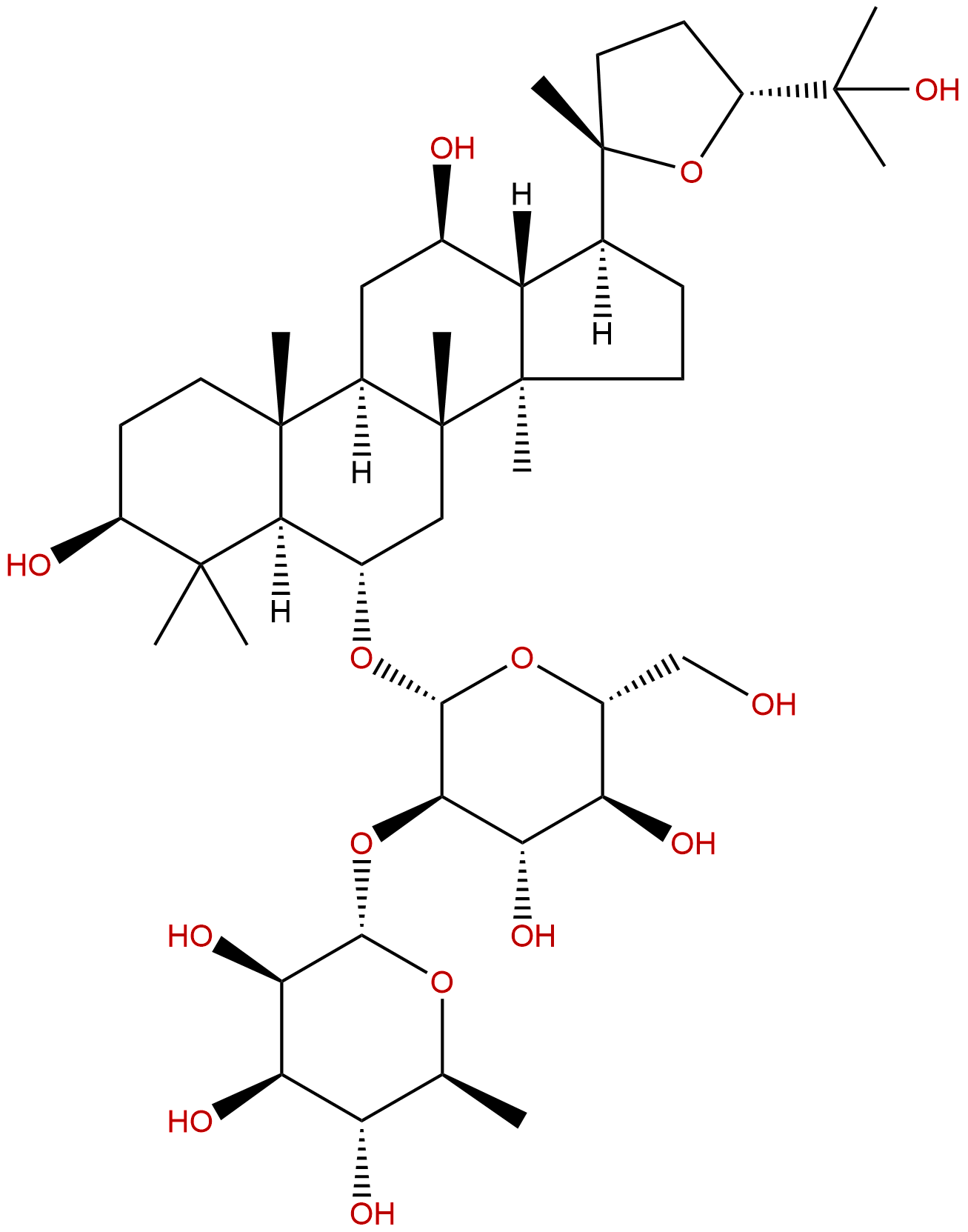


Synonym name: Ginsenoside A1
Catalogue No.: BP1164
Cas No.: 69884-00-0
Formula: C42H72O14
Mol Weight: 801.013
Botanical Source: Panax ginseng
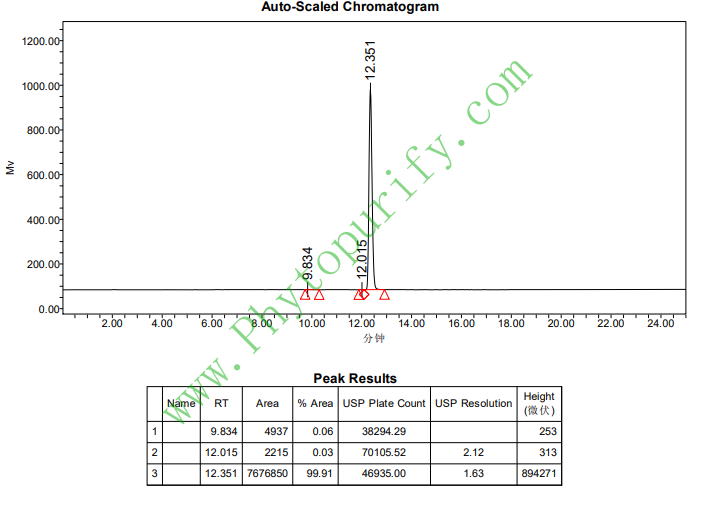
Purity: 95%~99%
Analysis Method: HPLC-DAD or/and HPLC-ELSD
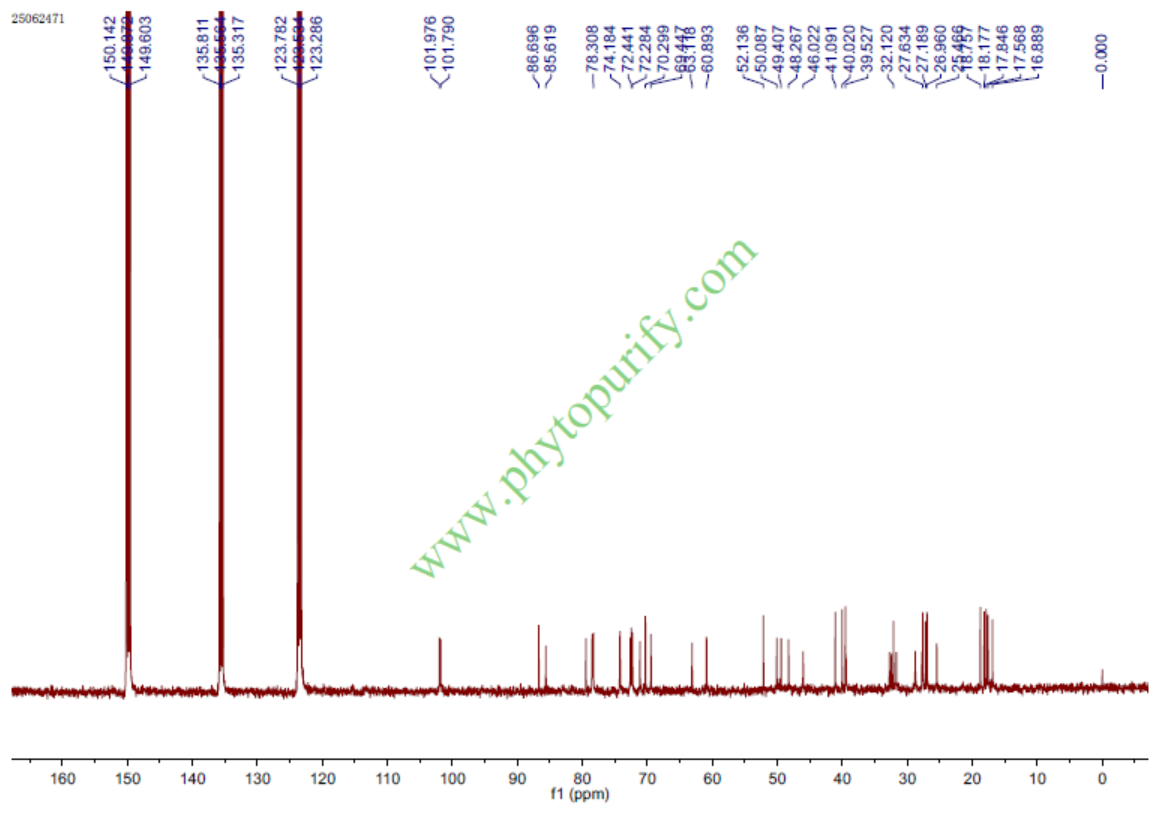
Identification Method: Mass, NMR
Packing: Brown vial or HDPE plastic bottle
Can be supplied from milligrams to grams. Inquire for bulk scale.
For Reference Standard and R&D, Not for Human Use Directly.
Description:
Pseudoginsenoside F11, a novel partial PPAR γ agonist, can promote adiponectin oligomerization and secretion in 3T3-L1 adipocytes and inhibit obesity-linked phosphorylation of PPAR γ at Ser-273 by Cdk5. It possesses significant neuroprotective activity, has been demonstrated to antagonize the learning and memory deficits induced by scopolamine, morphine and methamphetamine in mice; it also antagonizes the development of analgesia tolerance to morphine and blocks the development of morphine-induced behavioral sensitization via its effect, at least partially, on the glutamatergic system in the mPFC.
References:
Neuropharmacology. 2014 Apr;79:642-56.
Pseudoginsenoside-F11 (PF11) exerts anti-neuroinflammatory effects on LPS-activated microglial cells by inhibiting TLR4-mediated TAK1/IKK/NF-κB, MAPKs and Akt signaling pathways.
Pseudoginsenoside-F11 (PF11), an ocotillol-type ginsenoside, has been shown to possess significant neuroprotective activity. Since microglia-mediated inflammation is critical for induction of neurodegeneration, this study was designed to investigate the effect of PF11 on activated microglia.
METHODS AND RESULTS:
PF11 significantly suppressed the release of ROS and proinflammatory mediators induced by LPS in a microglial cell line N9 including NO, PGE2, IL-1β, IL-6 and TNF-α. Moreover, PF11 inhibited interaction and expression of TLR4 and MyD88 in LPS-activated N9 cells, resulting in an inhibition of the TAK1/IKK/NF-κB signaling pathway. PF11 also inhibited the phosphorylation of Akt and MAPKs induced by LPS in N9 cells. Importantly, PF11 significantly alleviated the death of SH-SY5Y neuroblastoma cells and primary cortical neurons induced by the conditioned-medium from activated microglia. At last, the effect of PF11 on neuroinflammation was confirmed in vivo: PF11 mitigated the microglial activation and proinflammatory factors expression obviously in both cortex and hippocampus in mice injected intrahippocampally with LPS.
CONCLUSIONS:
These findings indicate that PF11 exerts anti-neuroinflammatory effects on LPS-activated microglial cells by inhibiting TLR4-mediated TAK1/IKK/NF-κB, MAPKs and Akt signaling pathways, suggesting its therapeutic implication for neurodegenerative disease associated with neuroinflammation.
Sci Rep. 2014 May 16;4:4986.
The pseudoginsenoside F11 ameliorates cisplatin-induced nephrotoxicity without compromising its anti-tumor activity in vivo.
The clinical use of cisplatin was severely limited by its associated nephrotoxicity. In this study, we investigated whether the Pseudoginsenoside F11 had protective effects against cisplatin-induced nephrotoxicity.
METHODS AND RESULTS:
To clarify it, one in vivo model of cisplatin-induced acute renal failure was performed. The results showed that pretreatment with F11 reduced cisplatin-elevated blood urea nitrogen and creatinine levels, as well as ameliorated the histophathological damage. Further studies showed that F11 could suppress P53 activation, inverse the ratio of Bax/Bcl2 and the anti-oxidative and free radical levels induced by cisplatin, which in turn inhibited tubular cell apoptosis. Importantly, F11 enhanced rather than inhibited the anti-tumor activity of cispaltin in murine melanoma and Lewis lung cancer xenograft tumor models.
CONCLUSIONS:
Our findings suggested that administering F11 with cisplatin might alleviate the associated nephrotoxicity without compromising its therapeutic efficiency. This finding provides a novel potential strategy in the clinical treatment of cancer.
Pharmacol Biochem Behav. 2007 Apr;86(4):660-6.
Pseudoginsenoside-F11 decreases morphine-induced behavioral sensitization and extracellular glutamate levels in the medial prefrontal cortex in mice.
Morphine produces a variety of behavioral and biochemical changes related to its abuse. Our previous studies showed that Pseudoginsenoside-F11 (PF11), an ocotillol-type saponin existing in American ginseng, can antagonize pharmacological effects of morphine.
METHODS AND RESULTS:
To further investigate the effects of PF11 on morphine abuse and the underlying mechanisms, we tested the effects of PF11 on morphine-induced development of behavioral sensitization and alterations in glutamate levels in the medial prefrontal cortex (mPFC) in freely moving mice by using in vivo microdialysis.
CONCLUSIONS:
As the results shown, PF11 antagonized the development of behavioral sensitization and decrease of glutamate in the mPFC induced by morphine. Therefore, these findings suggest that PF11 may block the development of morphine-induced behavioral sensitization via its effect, at least partially, on the glutamatergic system in the mPFC.
HPLC of Pseudoginsenoside F11
NMR of Pseudoginsenoside F11
Storage conditions:Short-term storage at 2~8℃, long-term storage at -20 ~ -80℃
228.2200
2.4911
2.4911
.0493
.6181
.2908
Low
62.2808
6.0838
No
No
No
No
No
No
0.0
Yes
No
No
No
Neurodegenerative diseases such as Alzheimer's disease and Parkinson's disease, as well as acute neurological injuries such as stroke and traumatic brain injury, are increasingly becoming major global public health challenges. One of the core pathological features of these diseases is irreversible damage and loss of neurons, therefore, the search for lead compounds with neuroprotective activity is an important direction for drug development. Natural products have always been an important source of new drug discovery due to their structural diversity and rich biological activity. As a traditional precious traditional Chinese medicine, ginseng's core active ingredient - ginsenosides - has been widely proven to have multiple pharmacological effects such as enhancing immunity, anti fatigue, anti-tumor, and neuroprotection. However, there are various types of ginsenosides, and their structure and activity relationships are complex. In depth research on the effects and mechanisms of specific monomeric saponins is of great significance for the development of highly selective and effective neuroprotective drugs. Anthropomorphic ginsenoside F11, also known as ginsenoside A1, is a rare saponin component found in American ginseng. Early research has found that it can significantly counteract the learning and memory impairment induced by chemicals such as scopolamine, morphine, and methamphetamine in mice, suggesting its unique potential in the central nervous system, especially in regulating cognitive function. With the development of modern molecular pharmacology techniques, research on ginsenoside F11 has delved from behavioral phenotypes to cellular and molecular levels, revealing its complex network of neuroprotective effects through regulating multiple pathways such as apoptosis, oxidative stress, tau protein phosphorylation, and amyloid protein production. This article aims to systematically review the chemical properties, plant sources, pharmacological activities, molecular mechanisms of action, pharmacological characteristics, and clinical application prospects of the anthropomorphic ginsenoside F11, in order to provide comprehensive academic references for the in-depth research and future development of this compound.
The chemical name of anthropomorphic ginsenoside F11 is (3 β, 12 β) -12-hydroxydamam-24-ene-3,20-diol 3-O - [β - D-glucopyranosyl - (1 → 2) - β - D-glucopyranoside], and its CAS registration number is 69884-00-0. Structurally, it belongs to the Damane type tetracyclic triterpenoid saponin, which is a typical skeleton of ginsenosides. Its molecular formula is C42H72O14 and its molecular weight is 801.0240. The structural feature is that the C-3 position of its glycoside (anthropomorphic ginsenoside) is connected to a disaccharide chain, which is composed of one molecule of β - D-glucose linked to another molecule of β - D-glucose through a (1 → 2) glycosidic bond. This specific glycosylation pattern has a decisive impact on its biological activity and physicochemical properties.
In terms of physicochemical properties, the calculated coefficient of lipid water partition (LogP) of anthropomorphic ginsenoside F11 is 2.4911, indicating that it has a certain degree of lipophilicity, but not high lipid solubility. Its topological polar surface area (TPSA) is as high as 228.2200 Å ², mainly attributed to the abundant hydroxyl groups and oxygen atoms on the sugar ring in the molecule, which are potential hydrogen bond donors and acceptors. High TPSA and moderate LogP values jointly affect its solubility and permeability. According to the predicted data, its water solubility value is 0.0493 (unit may be mg/mL or log mol/L, usually indicating poor solubility), which belongs to insoluble compounds. This characteristic is a common challenge faced by most saponin components and is also one of the main reasons for their low oral bioavailability. Another key pharmacokinetic parameter is that its blood-brain barrier permeability is predicted to be "low", which means that the prototype drug has limited ability to directly enter the central nervous system and may require structural modifications or delivery systems to improve its brain targeting. In the preliminary safety prediction, the compound showed no inhibition on hERG potassium channels ("no"), reducing the potential risk of inducing QT interval prolongation in the heart; The Ames test predicted a value of 0.0, indicating that it may not be mutagenic, providing preliminary safety signals for subsequent development.
The anthropomorphic ginsenoside F11 mainly comes from plants of the Panax genus in the Araliaceae family, with American ginseng being the main source. Compared with Asian ginseng, the content of certain rare saponins in American ginseng is relatively high, and the anthropomorphic ginsenoside F11 is one of its characteristic components. In addition, trace amounts have also been detected in related plants such as Panax notoginseng and Panax ginseng. Its content in the plant body is significantly affected by the place of origin, cultivation period, harvest season, and medicinal parts (main roots, fibrous roots, stems and leaves), and is usually low in content. It belongs to rare saponins, which increases the difficulty and cost of its isolation and purification.
Extracting ginsenoside F11 from plant materials usually follows the general extraction and purification process for saponin components. Firstly, solvent extraction method is adopted, commonly using methanol, ethanol or ethanol water mixed solvents for reflux extraction or ultrasound assisted extraction of dried and crushed American ginseng raw materials. The crude extract was obtained by vacuum concentration of the extraction solution. Due to the extremely complex composition of the crude extract, which contains various saponins, polysaccharides, volatile oils, etc., further separation and purification are required. The conventional preliminary separation methods include macroporous adsorption resin column chromatography, gradient elution using ethanol water solutions of different concentrations, and enrichment of saponin sites. Subsequently, for the precise separation of anthropomorphic ginsenoside F11, techniques such as normal or reverse phase silica gel column chromatography and preparative high-performance liquid chromatography are commonly used. The combination of reverse phase C18 chromatography column and acetonitrile water or methanol water mobile phase system is an effective method for separating and preparing high-purity anthropomorphic ginsenoside F11. In recent years, preparative chromatography techniques such as high-speed counter current chromatography have also been applied for the separation of rare saponins due to their high recovery rate and avoidance of irreversible adsorption by solid adsorbents. The entire extraction and separation process requires tracking and detection using thin-layer chromatography or high-performance liquid chromatography to ensure the yield and purity of the target components. With the development of synthetic biology, the heterologous synthesis of rare ginsenosides using microbial cell factories has become a research hotspot, providing a potential new pathway for the large-scale and sustainable acquisition of ginsenoside F11 in the future.
The pharmacological activity research of anthropomorphic ginsenoside F11 mainly focuses on the nervous system, especially its neuroprotective and cognitive improvement effects, which is consistent with its initial discovery of resistance to chemically induced learning and memory loss.
1. Improve learning, memory, and cognitive function: This is the core pharmacological activity of anthropomorphic ginsenoside F11. It has been confirmed in various animal models. For example, in a rodent model of memory impairment induced by scopolamine, pretreatment with anthropomorphic ginsenoside F11 significantly improved the animals' performance in behavioral tests such as Morris water maze and passive avoidance experiments, reducing defects in memory acquisition, consolidation, and retrieval stages. Its ability to counteract cognitive impairment caused by addictive drugs such as morphine and methamphetamine suggests its potential value in protecting against neurotoxicity associated with drug addiction.
2. Neuroprotective effect: At the cellular level, the anthropomorphic ginsenoside F11 exhibits clear protective effects against neuronal death induced by various injury factors. In neuronal injury models established by glutamate excitotoxicity, β - amyloid oligomers, hydrogen peroxide, or hypoxia/reoxygenation, this compound can significantly improve cell survival rate, reduce lactate dehydrogenase leakage, and maintain cell morphological integrity. At the overall animal level, it has also been shown to reduce cerebral infarction volume, decrease neuronal loss, and improve synaptic plasticity in transgenic mouse models of cerebral ischemia/reperfusion injury and Alzheimer's disease.
3. Anti inflammatory and antioxidant: Neuroinflammation and oxidative stress are key pathological processes in neurodegenerative diseases. Research has shown that ginsenoside F11 can inhibit the excessive activation of microglia and astrocytes, reduce the expression and release of pro-inflammatory cytokines (such as TNF - α, IL-1 β, IL-6) induced by lipopolysaccharides or A β. At the same time, it can enhance the endogenous antioxidant defense system of cells, increase the activity of enzymes such as superoxide dismutase and glutathione peroxidase, reduce the level of lipid peroxidation products such as malondialdehyde, and thus alleviate oxidative damage.
4. Other potential activities: In addition to neuroprotection, some preliminary studies suggest that ginsenoside F11 may also have anti myocardial ischemia, anti-tumor and other activities. However, research in these areas is not yet in-depth, and its strength and specificity of action need to be further confirmed.
The neuroprotective effect of anthropomorphic ginsenoside F11 is not achieved through a single target, but acts on a complex signaling network. Its core mechanism involves multiple aspects such as anti apoptosis, reducing oxidative damage, inhibiting tau protein hyperphosphorylation, and regulating amyloid precursor protein processing, interacting with multiple key molecular targets.
1. Regulating the apoptotic pathway and exerting anti apoptotic effects: Apoptosis is an important pathway for neuronal loss. Anthropomorphic ginsenoside F11 can upregulate the expression of anti apoptotic protein Bcl-2 and downregulate the expression of pro apoptotic proteins such as Bax, thereby maintaining mitochondrial membrane stability and inhibiting the release of cytochrome c. Subsequently, it can also inhibit the activation of downstream apoptotic executors Caspase-9 and Caspase-3, blocking the cascade of apoptotic reactions. This process may be related to the activation of survival promoting signaling pathways.
2. Activate endogenous antioxidant and cellular defense systems: Nuclear factor E2 related factor 2 is a key transcription factor in antioxidant response. Research has shown that the anthropomorphic ginsenoside F11 can promote the translocation of Nrf2 from the cytoplasm to the nucleus, activate the expression of downstream antioxidant enzyme and phase II detoxifying enzyme genes (such as HO-1, NQO1), and systematically enhance the cell's ability to resist oxidative stress.
3. Inhibit the excessive phosphorylation of tau protein and the generation of amyloid protein: In the pathology of Alzheimer's disease, anthropomorphic ginsenoside F11 exhibits multiple intervention potentials. On the one hand, it can inhibit the activity of glycogen synthase kinase-3 β, which is one of the key kinases involved in tau protein hyperphosphorylation. Inhibiting its activity helps maintain the normal function of tau protein. On the other hand, it may reduce the production of A β by downregulating the expression or activity of β - site amyloid precursor protein cleaving enzyme 1. Meanwhile, it may also have a regulatory effect on the metabolism of amyloid precursor proteins.
4. Regulating cellular signaling pathways: The mitogen activated protein kinase pathway is the core of cellular stress response. Anthropomorphic ginsenoside F11 has been reported to regulate the phosphorylation status of kinases such as MAPK1, affect the activity of downstream transcription factors, and thereby regulate gene expression related to cell survival and inflammatory response. In addition, the deacetylase SIRT1, as an important regulatory factor in energy metabolism and stress response, is also considered one of the potential targets of the action of ginsenoside F11. The activation of SIRT1 helps improve mitochondrial function, inhibit inflammation, and reduce oxidative damage.
In summary, the anthropomorphic ginsenoside F11 forms a multi-target, multi pathway synergistic neuroprotective network by acting on multiple targets such as BCL2, CASP9, NFE2L2, GSK3B, BACE1, APP, MAPT, SIRT1, MAPK1, etc. This may be the molecular basis for its effective fight against complex neurodegenerative processes.
Although anthropomorphic ginsenoside F11 has shown good pharmacological activity in preclinical studies, its pharmacological development still faces a series of challenges, mainly due to its inherent physicochemical properties and pharmacokinetic characteristics.
Pharmacokinetic characteristics: As a saponin compound, the oral bioavailability of anthropomorphic ginsenoside F11 is generally low. This is mainly attributed to: ① poor water solubility, difficult dissolution in the gastrointestinal tract; ② High molecular weight and containing multiple polar groups, with weak passive transmembrane diffusion ability; ③ Easy to be hydrolyzed by gastrointestinal microbiota, undergo deglycosylation reaction, and be converted into aglycones or other secondary saponins, whose activity may be altered or lost; ④ May serve as a substrate for efflux transporters (such as P-glycoprotein) and be actively pumped into the ileal lumen, reducing absorption. After the prototype drug enters the bloodstream, its blood-brain barrier permeability is predicted to be "low", which limits its efficiency in directly acting on the central nervous system. The distribution, metabolism, and excretion research in the body is currently insufficient, and more systematic pharmacokinetic studies are needed to elucidate its ADME process.
Optimization strategy for drug properties: In order to overcome the above bottlenecks and improve the pharmacological properties of ginsenoside F11, researchers are exploring various strategies:
1. Structural modification: By chemically modifying sugar or glycoside groups, such as preparing prodrugs, esterified derivatives, etc., to improve their lipid solubility and membrane permeability, or to enhance their metabolic stability.
2. New drug delivery system: The development of delivery systems using nanotechnology is a highly promising direction. For example, preparing it into liposomes, solid lipid nanoparticles, polymer nanoparticles, or micelles can significantly improve its solubility, protect it from premature metabolism, and promote brain targeted delivery by enhancing osmotic retention effects or surface modifying targeted ligands (such as transferrin receptor antibodies).
3. Precursor compounds or biotransformation: Explore precursor compounds that can be converted into anthropomorphic ginsenoside F11 in the body, or utilize the positive effects of gut microbiota metabolism to design a rational dosing regimen.
Preliminary safety evaluation: Existing predictive data and limited toxicological studies indicate that the anthropomorphic ginsenoside F11 exhibits good safety within the effective dose range. The absence of hERG inhibition and negative Ames test are important positive signals. However, comprehensive preclinical safety evaluation, including acute toxicity, long-term toxicity, reproductive toxicity, etc., is still an indispensable link in its clinical translation.
As a natural small molecule with clear neuroprotective activity, the clinical application prospects of anthropomorphic ginsenoside F11 mainly focus on the prevention and treatment of neurological related diseases.
Potential indications:
1. Alzheimer's disease and related cognitive impairments: Given its multiple effects of improving memory, inhibiting A β production, and tau phosphorylation, it is expected to be developed as a disease modifying therapy or adjuvant therapy for AD, for patients with mild to moderate AD or mild cognitive impairment.
2. Stroke (ischemic brain injury): Its anti apoptotic, antioxidant, and anti-inflammatory effects make it potentially applicable in neuroprotection and later rehabilitation during acute cerebral ischemia, and may serve as an adjuvant drug for thrombolysis or thrombectomy therapy.
3. Other neurodegenerative diseases: In models such as Parkinson's disease and Huntington's disease, their roles need to be explored, but based on their common neuroprotective mechanisms, there is potential application value.
4. Chemotherapy induced cognitive impairment or postoperative cognitive dysfunction: Its ability to counteract chemical induced cognitive impairment may be applicable for neuroprotection in these specific contexts.
Future research directions and challenges:
1. In depth mechanism research: More precise elucidation of their direct molecular targets (such as whether they are direct agonists or inhibitors of SIRT1 and GSK3B) is needed, and the use of omics techniques to systematically reveal their global network of action.
2. Drug breakthrough: How to effectively solve the problems of low solubility, low permeability, and low brain exposure through pharmaceutical or chemical methods is the key to determining whether it can enter clinical practice. The development of new brain targeted delivery systems is crucial.
3. Preclinical and clinical translation: It is necessary to conduct effectiveness validation in animal models that are more in line with human disease pathology, such as humanized genetically modified animals and neuromorphic organs, and strictly follow the new drug development standards to complete systematic preclinical safety and pharmacokinetic studies, providing a solid basis for clinical trial applications.
4. Multi component collaborative research: As an active ingredient in traditional Chinese medicine, studying its compatibility with other saponins or active ingredients, exploring the development of compound preparations, may achieve better overall therapeutic effects.
Anthropomorphic ginsenoside F11 is a rare dammarane type saponin derived from American ginseng. With its multi-target and multi pathway properties, it exhibits significant pharmacological activity in improving learning and memory, resisting neuronal damage, reducing neuroinflammation and oxidative stress, and has become a promising natural lead compound in the field of neuroprotective drug development. Its mechanism of action involves the regulation of multiple key nodes such as the apoptosis pathway, Nrf2 antioxidant system, GSK3 β/tau pathway, and BACE1/A β pathway, forming a synergistic neuroprotective network. However, its inherent pharmaceutical bottlenecks such as poor water solubility, low oral bioavailability, and poor blood-brain barrier permeability are the main obstacles restricting its clinical application. Future research should focus on improving its pharmacokinetic properties through structural optimization and innovative formulation strategies, especially brain targeted nano drug delivery systems, while conducting in-depth preclinical efficacy and safety evaluations of the system. With the gradual resolution of these key scientific and technological issues, anthropomorphic ginsenoside F11 is expected to provide new candidate drugs for the treatment of major neurological diseases such as Alzheimer's disease and stroke, demonstrating the sustained vitality and value of natural products in modern drug development.
