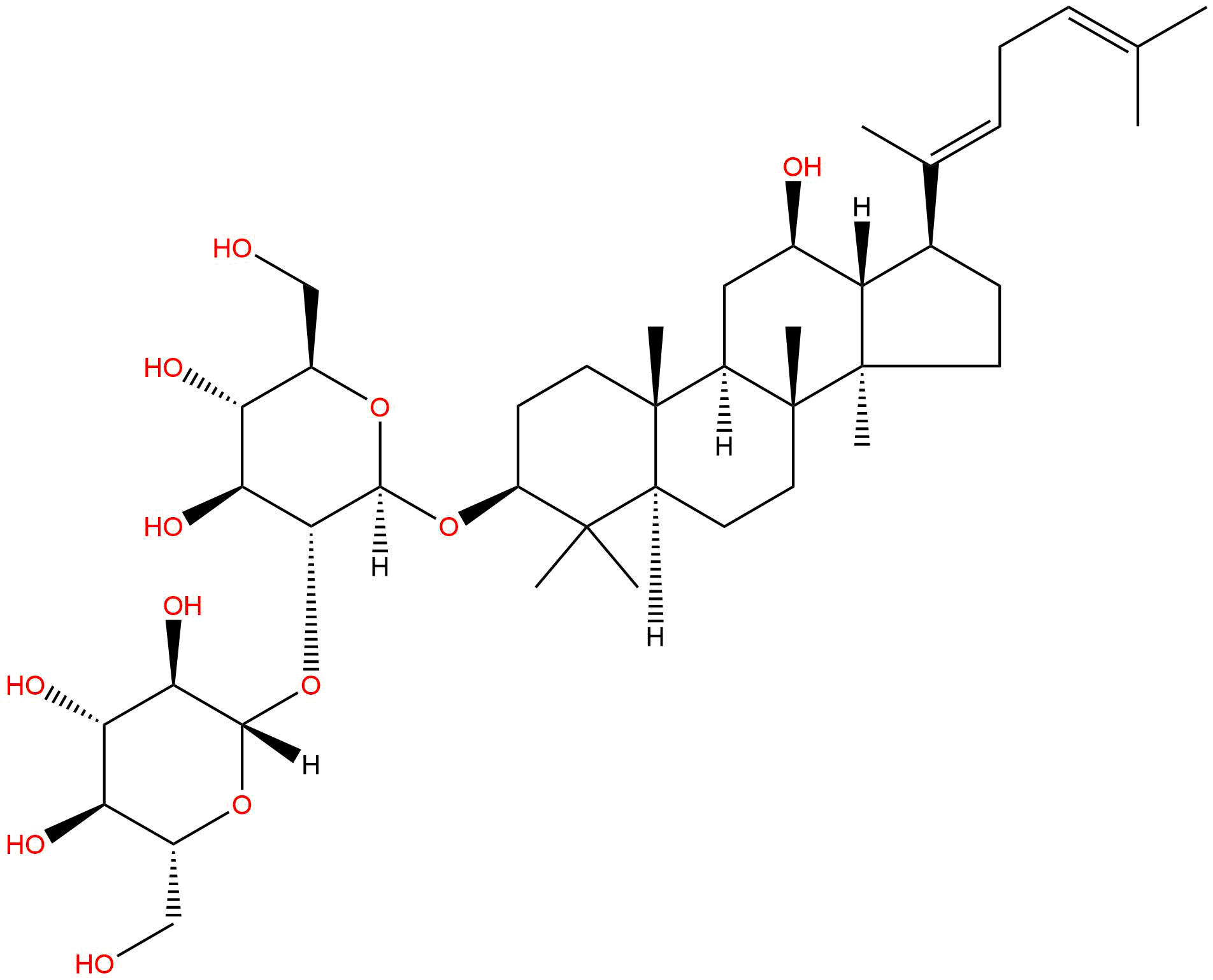


Product name: Ginsenoside Rg5
Synonym name: Ginsenoside Rg5E
Catalogue No.: BP1651
Cas No.: 186763-78-0
Formula: C42H70O12
Mol Weight: 767.01
Botanical Source:
Physical Description: Powder
Type of Compound: Triterpenoids
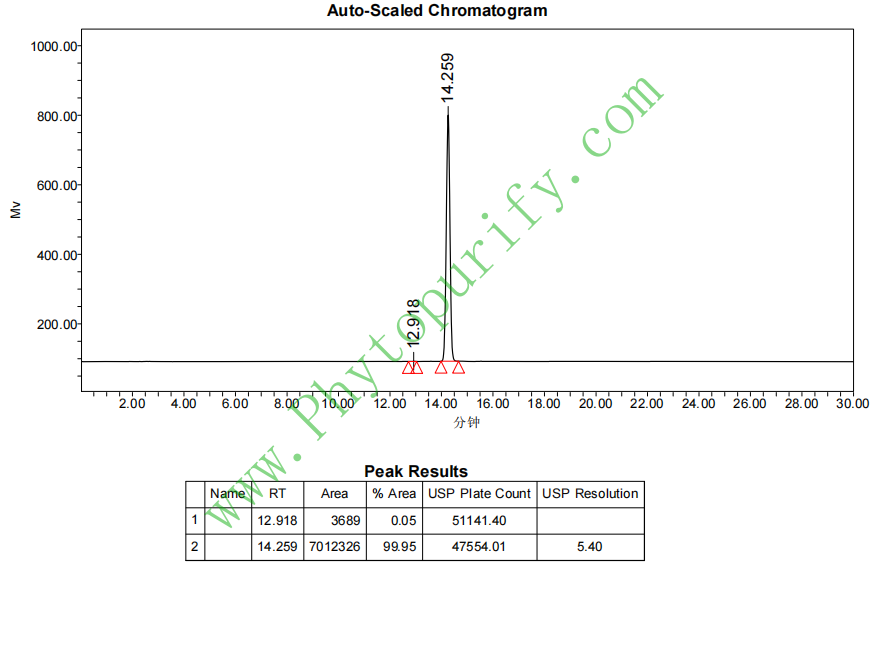
Purity: 95%~99%
Analysis Method: HPLC-DAD or/and HPLC-ELSD
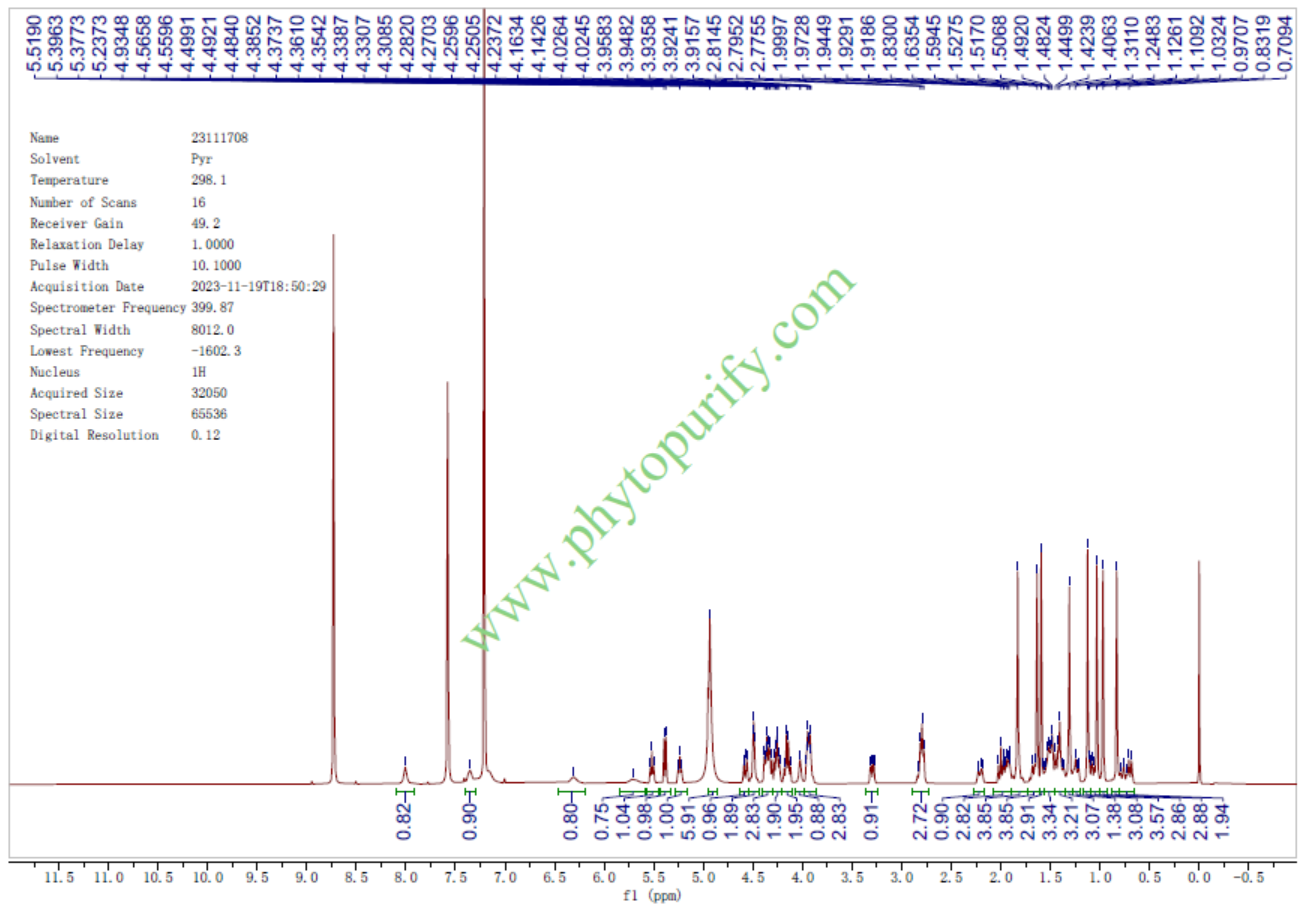
Identification Method: Mass, NMR
Packing: Brown vial or HDPE plastic bottle
The product could be supplied from milligrams to grams. Inquire for bulk scale.
We provide solution to improve the water-solubility of compounds, thereby facilitating the variety of activity tests and clinic uses.
For Reference Standard and R&D, Not for Human Use Directly.
Description:
Ginsenoside Rg5 plays a novel role as an IGF-1R agonist, promoting therapeutic angiogenesis and improving hypertension without adverse effects in the vasculature, it can ameliorate lung inflammation possibly by inhibiting the binding of LPS to toll-like receptor (TLR)-4 on macrophages. Ginsenoside Rg5 blocks cell cycle of SK-HEP-1 cells at the Gl/S transition phase by down-regulating cyclin E-dependent kinase activity and that the down-regulation of cyclin E-dependent kinase activity is caused mainly by induced CDK2 inhibitor, p21Cip/WAF1 and decreased levels of cyclin E.
References:
Int Immunopharmacol. 2012 Jan;12(1):110-6.
Ginsenoside Rg5 ameliorates lung inflammation in mice by inhibiting the binding of LPS to toll-like receptor-4 on macrophages.
Heating and steaming processes have been applied to various natural medicines for either enhancing or altering their pharmacological activities, and the chemical compositions of the active components. While ginsenoside Rb1, which is the major constituent of raw ginseng, has been studied extensively for its anti-inflammatory effect, the biological activity of Ginsenoside Rg5, a major constituent of steamed ginseng, remains to be explored.
METHODS AND RESULTS:
Here, we isolated Rg5 and examined anti-inflammatory effect in lipopolysaccharide (LPS)-stimulated macrophages and on LPS-induced lung inflammation. Rg5 inhibited the expression of proinflammatory cytokines, IL-1β and TNF-α, as well as inflammatory enzymes, COX-2 and iNOS in LPS-stimulated alveolar macrophages. Rg5 also reduced LPS-induced phosphorylation of IL-1 receptor-associated kinases (IRAK)-1 and IKK-β, as well as the degradation of IRAK-1 and IRAK-4. Rg5 inhibited the phosphorylation of NF-κB as well as the translocation of p65 into the nucleus. When macrophages were treated with Alexa Fluor 594-conjugated LPS in the presence of Rg5, the fluorescence intensity of LPS observed outside the cell membrane was lower than that in LPS-stimulated alveolar macrophages alone. Rg5, inhibited the levels of protein and neutrophils in bronchoalveolar lavage fluid of LPS-stimulated mice, as well as pro-inflammatory cytokines, TNF-α and IL-1β. Rg5 also inhibited iNOS and COX expressions, and NF-κB activation in LPS-stimulated lung inflammation of mice. The inhibitory effect of Rg5 (10 mg/kg) was comparable to that of dexamethasone (5 mg/kg).
CONCLUSIONS:
Based on these findings, Rg5 can ameliorate lung inflammation possibly by inhibiting the binding of LPS to toll-like receptor (TLR)-4 on macrophages.
Int Immunopharmacol. 2014 Apr;19(2):317-26.
Ginsenoside Rg5 improves cognitive dysfunction and beta-amyloid deposition in STZ-induced memory impaired rats via attenuating neuroinflammatory responses.
Neuroinflammatory responses play a crucial role in the pathogenesis of Alzheimer's disease (AD). Ginsenoside Rg5 (Rg5), an abundant natural compound in Panax ginseng, has been found to be beneficial in treating AD.
METHODS AND RESULTS:
In the present study, we demonstrated that Ginsenoside Rg5 improved cognitive dysfunction and attenuated neuroinflammatory responses in streptozotocin (STZ)-induced memory impaired rats. Cognitive deficits were ameliorated with Ginsenoside Rg5 (5, 10 and 20mg/kg) treatment in a dose-dependent manner together with decreased levels of inflammatory cytokines TNF-α and IL-1β (P<0.05) in brains of STZ rats. Acetylcholinesterase (AChE) activity was also significantly reduced by Ginsenoside Rg5 whereas choline acetyltransferase (ChAT) activity was remarkably increased in the cortex and hippocampus of STZ-induced AD rats (P<0.05). Western blot analysis also demonstrated that Ginsenoside Rg5 increased remarkably BDNF and IGF-1 expressions whereas decreased significantly Aβ deposits (P<0.05). Furthermore, it was observed that the expressions of COX-2 and iNOS were significantly up-regulated in STZ-induced AD rats and down-regulated strongly (P<0.05) by Ginsenoside Rg5 compared with control rats. These data demonstrated that STZ-induced learning and memory impairments in rats could be improved by Ginsenoside Rg5, which was associated with attenuating neuroinflammatory responses.
CONCLUSIONS:
Our findings suggested that Ginsenoside Rg5 could be a beneficial agent for the treatment of AD.
J Biol Chem. 2015 Jan 2;290(1):467-77.
Specific activation of insulin-like growth factor-1 receptor by ginsenoside Rg5 promotes angiogenesis and vasorelaxation.
Ginsenoside Rg5 is a compound newly synthesized during the steaming process of ginseng; however, its biological activity has not been elucidated with regard to endothelial function.
METHODS AND RESULTS:
We found that Rg5 stimulated in vitro angiogenesis of human endothelial cells, consistent with increased neovascularization and blood perfusion in a mouse hind limb ischemia model. Rg5 also evoked vasorelaxation in aortic rings isolated from wild type and high cholesterol-fed ApoE(-/-) mice but not from endothelial nitric-oxide synthase (eNOS) knock-out mice. Angiogenic activity of Rg5 was highly associated with a specific increase in insulin-like growth factor-1 receptor (IGF-1R) phosphorylation and subsequent activation of multiple angiogenic signals, including ERK, FAK, Akt/eNOS/NO, and Gi-mediated phospholipase C/Ca(2+)/eNOS dimerization pathways. The vasodilative activity of Rg5 was mediated by the eNOS/NO/cGMP axis. IGF-1R knockdown suppressed Rg5-induced angiogenesis and vasorelaxation by inhibiting key angiogenic signaling and NO/cGMP pathways. In silico docking analysis showed that Rg5 bound with high affinity to IGF-1R at the same binding site of IGF. Rg5 blocked binding of IGF-1 to its receptor with an IC50 of ∼90 nmol/liter. However, Rg5 did not induce vascular inflammation and permeability.
CONCLUSIONS:
These data suggest that Rg5 plays a novel role as an IGF-1R agonist, promoting therapeutic angiogenesis and improving hypertension without adverse effects in the vasculature.
HPLC of Ginsenoside Rg5
HNMR of Ginsenoside Rg5
Storage conditions:Short-term storage at 2~8℃, long-term storage at -20 ~ -80℃
Ginsenoside Rg5, as an important active ingredient in red ginseng, has received widespread attention in recent years due to its significant biological activity and potential medicinal value. Red ginseng is a type of ginseng that has been steamed and processed, and is widely used in traditional Chinese medicine due to its unique chemical composition and pharmacological effects. Ginsenoside Rg5 not only exhibits multi-target and multi pathway regulatory abilities as a natural product, but also demonstrates good pharmacological activities in anti-tumor, anti-inflammatory, and immune regulation. Especially in the treatment research of malignant tumors such as lung cancer, ginsenoside Rg5 exhibits unique therapeutic potential by competitively inhibiting insulin-like growth factor 1 receptor (IGF-1R) and regulating related signaling pathways.
This article aims to systematically review the chemical structure and physicochemical properties, plant sources and extraction methods, pharmacological activity and mechanism of action, pharmacological evaluation and pharmacokinetic characteristics of ginsenoside Rg5. Combined with its molecular targets in lung cancer and other related diseases, it explores its clinical application prospects and development trends, providing theoretical basis and reference for subsequent research and clinical translation.
Ginsenoside Rg5 belongs to the triterpenoid saponin class of ginsenosides, with a molecular formula of C42H72O13 and a molecular weight of 767.0100. Its structural core is a tetracyclic triterpenoid skeleton, connecting multiple sugar groups to form a typical glycoside structure. Rg5 is derived from the heat treatment of ginsenosides Rb1, Rg1, etc. during the processing of red ginseng, and has high stability and biological activity.
In terms of physical and chemical properties, the LogP value of ginsenoside Rg5 is 3.5287, indicating its moderate lipid solubility, which is beneficial for membrane penetration; The polar surface area (TPSA) is 198.76 Å ², indicating that its molecules have strong polarity characteristics, which may affect its water solubility and bioavailability. Low water solubility (0.0208 mg/mL) suggests limited solubility in vivo. The low permeability of the blood-brain barrier indicates that it is difficult to directly act on the central nervous system. The negative result of hERG channel inhibition experiment indicates a low risk of cardiac toxicity. The Ames test result is 0, indicating no significant mutagenicity and high safety.
Ginsenoside Rg5 is mainly present in red ginseng (steamed processed ginseng). Red ginseng undergoes steaming, drying, and other processing techniques on fresh ginseng to transform the original structure of ginsenosides, producing various specific saponin components including Rg5. The processing technology of red ginseng not only increases the content of its active ingredients, but also improves its pharmacological activity.
In terms of extraction methods, commonly used techniques include organic solvent extraction, ultrasound assisted extraction, microwave-assisted extraction, etc. Ethanol or methanol are usually used as extraction solvents to obtain crude extracts through reflux extraction or ultrasound assisted extraction. Subsequently, high-purity ginsenoside Rg5 was isolated and purified using methods such as silica gel column chromatography and reverse phase high-performance liquid chromatography (RP-HPLC). In recent years, supercritical fluid extraction technology and membrane separation technology have also been applied to improve extraction efficiency and purity, reduce the use of organic solvents, and comply with the principles of green chemistry.
Ginsenoside Rg5 exhibits various significant pharmacological activities, covering multiple aspects such as anti-tumor, anti-inflammatory, antioxidant, and immune regulation, and has made important progress in the research of malignant tumors such as lung cancer.
Numerous in vitro and in vivo experiments have shown that ginsenoside Rg5 significantly inhibits the growth of lung cancer cells by regulating signaling pathways related to apoptosis, proliferation, migration, and invasion. Its mechanism of action involves multiple key molecular pathways, including BCL2, STAT3, RELA (NF - κ B p65 subunit), MAPK family members (MAPK1, MAPK8), etc. Rg5 can induce mitochondrial dependent apoptosis in lung cancer cells, regulate BCL2 family protein expression, promote CASP9 activation, and thus initiate the apoptosis program.
In addition, Rg5 inhibits the activity of the STAT3 signaling pathway, reducing tumor cell proliferation and immune escape. By inhibiting the DNA binding activity of RELA, reducing the mRNA expression of COX-2, alleviating tumor associated inflammatory responses, and further inhibiting tumor progression. Rg5 also regulates PIK3CG in the PI3K/AKT pathway, affecting cell metabolism and survival, and enhancing anti-tumor efficacy.
Ginsenoside Rg5 exerts significant anti-inflammatory effects by inhibiting the NF - κ B signaling pathway and reducing the expression of inflammatory mediators such as COX-2. It has a direct inhibitory effect on the DNA binding activity of NF - κ B p65 subunit, blocking the transduction of inflammatory signals and reducing tissue inflammatory damage. In addition, Rg5 regulates PPARG expression, participates in the metabolism and functional regulation of immune cells, and promotes immune homeostasis in the body.
Rg5 also exhibits antioxidant activity, which can clear free radicals and alleviate cellular damage caused by oxidative stress. Its role in neurological diseases is still in the preliminary research stage, as its blood-brain barrier permeability is low, which may limit the direct action of the central nervous system.
The pharmacological mechanism of ginsenoside Rg5 is complex, involving synergistic regulation of multiple targets and pathways, mainly focusing on the IGF-1R signaling pathway and its downstream effector molecules.
Ginsenoside Rg5, as a competitive agonist of IGF-1R, can compete for the binding site of IGF-1R and block the binding of IGF-1 to IGF-1R, with an IC50 of approximately 90 nM. This competitive binding inhibits the activation of IGF-1R, blocks its downstream signaling, and thus affects cell proliferation, differentiation, and survival. IGF-1R is highly expressed in various tumor cells and is a key driving factor for tumor occurrence and development. Rg5 exerts anti-tumor effects by inhibiting this receptor.
Rg5 inhibits the DNA binding activity of NF - κ B p65 subunit, reduces COX-2 mRNA expression, and alleviates inflammatory response. As a core transcription factor in inflammation and tumorigenesis, the inhibition of NF - κ B activity helps to control the inflammatory state in the tumor microenvironment and block pro tumor signaling.
The synergistic effect of these targets constitutes the complex and effective anti-tumor and anti-inflammatory mechanism of Rg5.
The pharmacological evaluation of ginsenoside Rg5 shows that it has certain advantages and challenges. The high molecular weight (767.01 Da) and polar surface area (TPSA 198.76) limit its oral absorption and bioavailability. A moderate LogP value (3.53) is beneficial for cell membrane permeability, but its low water solubility (0.0208 mg/mL) limits its dissolution and distribution in vivo.
The low permeability of the blood-brain barrier indicates that it is difficult to directly act on the central nervous system, which may limit its application in neurological diseases. The hERG channel inhibition test is negative, indicating a low risk of cardiac toxicity and good safety. The Ames test showed no mutagenicity, further supporting its safety.
In terms of pharmacokinetics, existing studies have shown that the metabolism of Rg5 in the body is relatively complex, mainly through the liver metabolic enzyme system, and some metabolites may have biological activity. Its half-life is moderate, and its distribution in the body is mainly concentrated in organs such as the liver, lungs, and kidneys. Due to its low water solubility, the oral bioavailability of Rg5 is limited, and its efficacy needs to be improved through formulation modification or optimization of administration routes.
Ginsenoside Rg5, as a natural product, has demonstrated broad clinical application potential due to its multi-target and multi mechanism anti-tumor and anti-inflammatory activities. Especially in the field of lung cancer treatment, Rg5 can effectively inhibit tumor cell proliferation and migration, promote tumor cell apoptosis, and has the potential to become an adjuvant or combination therapy drug by inhibiting the IGF-1R signaling pathway and related molecular targets.
The key to future clinical applications lies in improving the bioavailability and targeting of Rg5. The development of new drug delivery systems such as nanocarriers, liposomes, and solid dispersions is expected to solve the problems of poor water solubility and insufficient oral absorption. In addition, in-depth analysis of its metabolic pathways and the activity of metabolites will help optimize dosage and administration regimens.
Meanwhile, the role of Rg5 in immune regulation and anti-inflammatory provides new ideas for its application in chronic inflammatory diseases, autoimmune diseases, and other fields. More preclinical and clinical studies are needed in the future to systematically evaluate its safety, efficacy, and pharmacokinetic characteristics, and promote its clinical translation.
Ginsenoside Rg5, as an important active ingredient in red ginseng, exhibits excellent anti-tumor and anti-inflammatory potential due to its unique chemical structure and multi-target pharmacological effects. It exerts multi-level biological effects by competitively inhibiting IGF-1R and regulating signaling pathways such as NF - κ B, especially showing significant application value in the treatment of lung cancer.
Although there are certain challenges in its pharmacological development, with the continuous advancement of extraction and purification technologies and drug delivery systems, the clinical development prospects of Rg5 are broad. Future research should focus on mechanism analysis, pharmacokinetic optimization, and safety evaluation, promoting their translation into clinical applications and supporting the development and innovation of natural product drugs.
