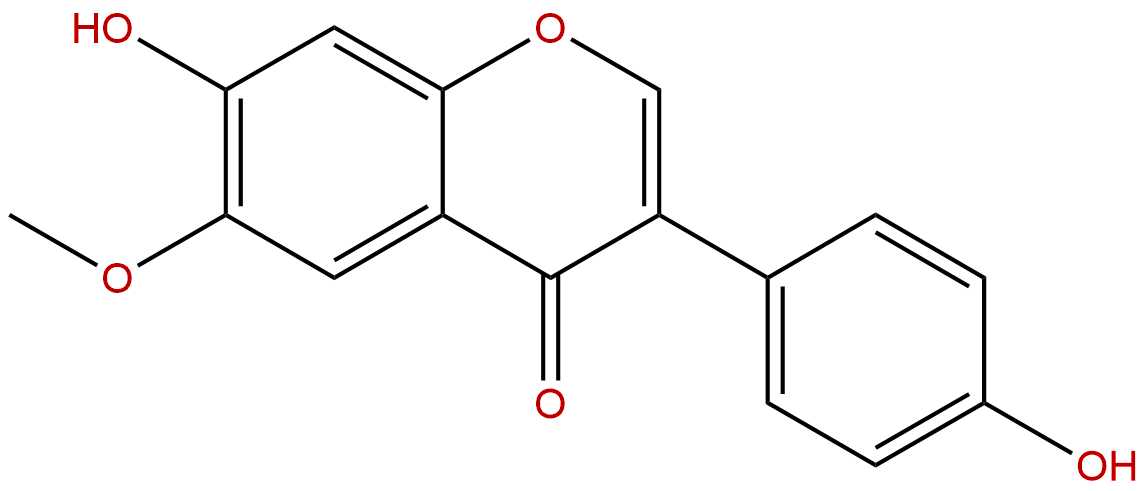


Product name: Glycitein
Synonym name: 4′,7-Dihydroxy-6-methoxyisoflavone
Catalogue No.: BP0679
Cas No.: 40957-83-3
Formula: C16H12O5
Mol Weight: 284.267
Botanical Source: Centrosema haitense, Centrosema pubescens, Glycine max and Mildbraediodendron excelsa
Physical Description: Yellow Powder
Type of Compound: Flavonoids
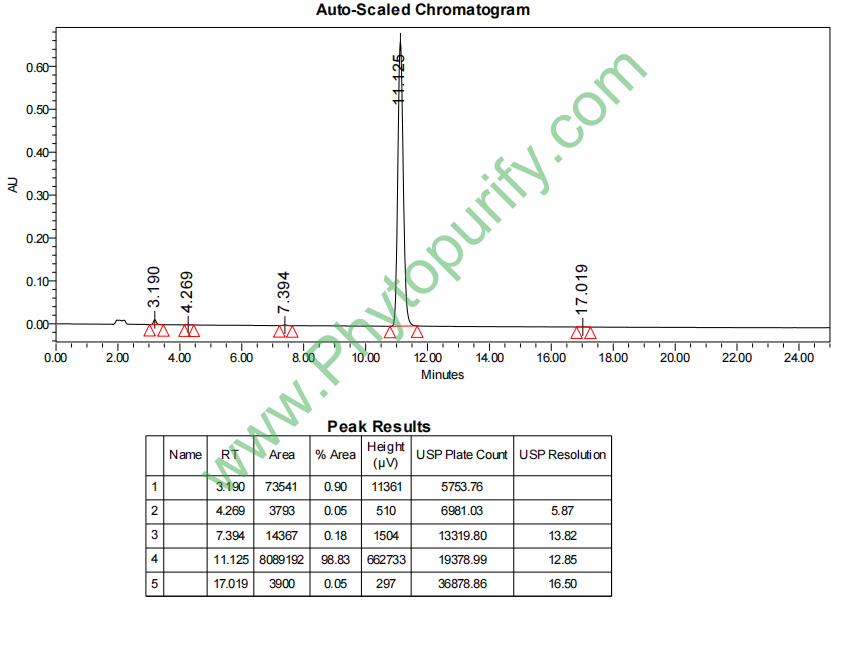
Purity: 95%~99%
Analysis Method: HPLC-DAD or/and HPLC-ELSD
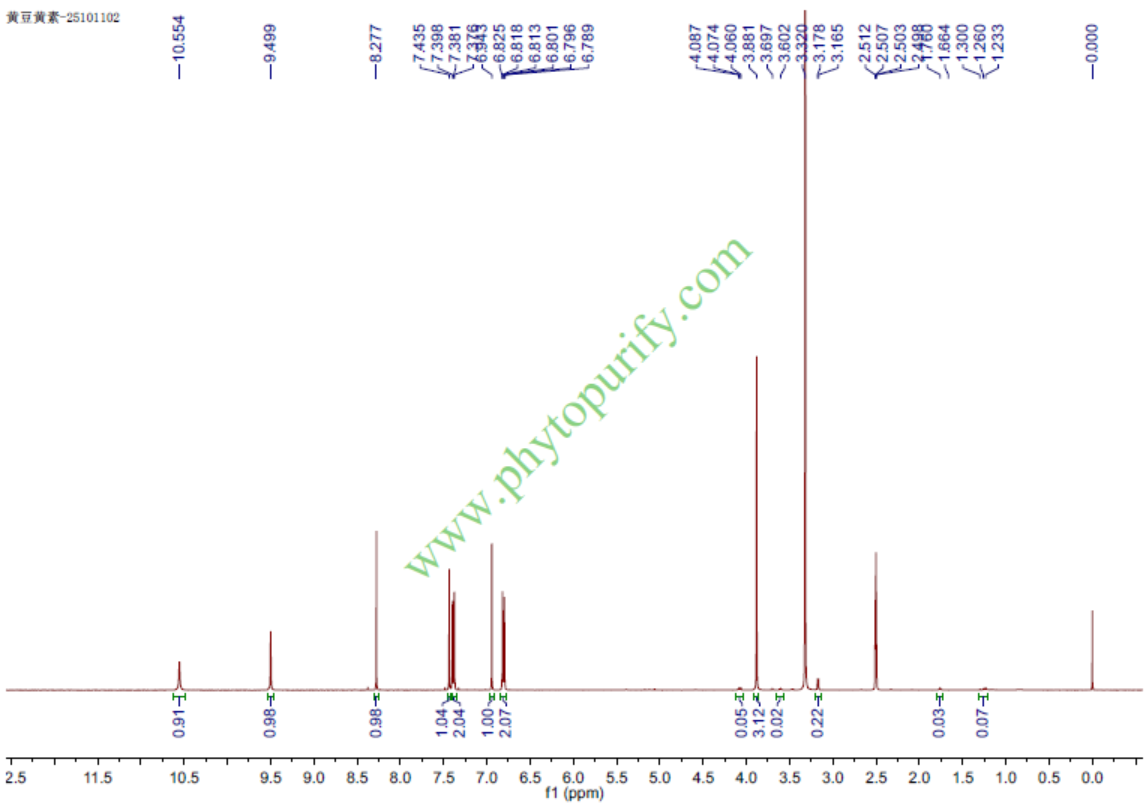
Identification Method: Mass, NMR
Packing: Brown vial or HDPE plastic bottle
Storage: Store in a well closed container, protected from air and light. Put into refrigerate or freeze for long term storage.
Whenever possible, you should prepare and use solutions on the same day. However, if you need to make up stock solutions in advance, we recommend that you store the solution as aliquots in tightly sealed vials at -20℃. Generally, these will be useable for up to two weeks.
The product could be supplied from milligrams to grams, up to kilograms
Inquire for bulk scale.
Descriptions:
Glycitein accounts for 5-10% of the total isoflavones in soy food products, has weak estrogenic activity, comparable to that of the other soy isoflavones but much lower than that of DES and 17beta-estradiol.[1]
Glycitein, daidzein and glenistein, with their inhibitory effects on natural and PDGF-BB-induced SMC proliferation, may be useful in attenuating such proliferation, a basic mechanism involved in atherosclerotic vascular change, thereby preventing atherosclerotic cardiovascular diseases.[2]
Glycitein has antioxidant effects, may suppress Abeta toxicity through combined antioxidative activity and inhibition of Abeta deposition, thus may have therapeutic potential for prevention of Abeta associated neurodegenerative disorders.[3]
Glycitein has inhibitory effects on hydrogen peroxide induced cell damage by scavenging reactive oxygen species and inhibiting c-Jun N-terminal kinase.[4]
Glycitein, the most potent activator of ERK1/2, decreases RWPE-1 cell proliferation by 40% ; it induces ERK1/2 activation was dependent, in part, on tyrosine kinase activity associated with vascular endothelial growth factor receptor (VEGFR). [5]
Glycitein suppresses PMA-induced phosphorylation of three types of MAP kinases, which are upstream signaling molecules in MMP gene expressions and NF-kappaB and AP-1 activities in glioma cells, therefore, the inhibition of MMP-3 and MMP-9 expression by glycitein may have therapeutic potential for controlling invasiveness of malignant gliomas.[6]
References:
[1] T. Song T, Suzanne Hendrich A, Murphy P A. J Agr Food Chem, 1999, 47(4):1607-10.
[2] Pan W, Ikeda K, Takebe M, et al. J Nut, 2001, 131(4):1154-8.
[3] Gutierrez-Zepeda A, Santell R, Wu Z, et al. Bmc Neurosci, 2004, 6(3):1-9.
[4] Kang K A, Zhang R, Piao M J, et al. Free Radical Res, 2007, 41(6):720-9.
[5] Clubbs E A, Bomser J A. J Nut Biochem, 2007, 18(8):525-32.
[6] Lee E J, Kim S Y, Hyun J W, et al. Chem Biol Interact, 2010, 185(1):18-24.
[7] César I D C, Braga F C, Vianna-Soares C D, et al. Rev.Bras.Farmacogn, 2007, 17(4):616-25.
HPLC of Glycitein
HNMR of Glycitein
Storage conditions:Short-term storage at 2~8℃, long-term storage at -20 ~ -80℃
79.9000
2.0938
2.0163
.0377
3.6627
28.7448
Low
90.7046
2.1556
Yes
No
Yes
No
Yes
Yes
2.1
Yes
No
Yes
No
Natural products, as an important source of drug discovery and development, play an irreplaceable role in the history of human disease prevention and treatment. Isoflavones, as a class of secondary metabolites widely present in leguminous plants, have attracted much attention due to their diverse biological activities. Glycitin, also known as 7-hydroxy-4 '- methoxyflavone, is one of the members of the soy isoflavone family with relatively low content but unique biological activity. Compared with the well-known genistein and daidzein, the research on daidzein started relatively late. However, recent studies have shown that daidzein exhibits significant activities in bone health, antioxidant, anti-inflammatory, and potential anti-cancer fields, especially in targeting osteoporosis. Emodin is not only present in soybeans and their products, but also isolated from the mycelium of the medicinal fungus Cordyceps sinensis, indicating the diversity of its biological sources and potential ecological significance. This article aims to systematically review the chemical properties, sources, pharmacological activities, molecular mechanisms of action, pharmacological evaluation, and clinical application prospects of daidzein, in order to provide comprehensive scientific references for the in-depth research and development of this natural product.
Isoflavones (CAS number: 40957-83-3) are a type of methoxy isoflavone with a chemical structure centered around 3-phenylchromenone as the parent nucleus. Specifically, hydroxyl groups are substituted at positions 7 and 4 'of the isoflavone skeleton, while methoxy groups are substituted at position 6. Its molecular formula is C ₁₆ H ₁₂ O ₅, and its molecular weight is 284.2670. This specific substitution pattern determines its unique physicochemical properties and biological activity.
From the analysis of physical and chemical properties, the lipid water partition coefficient (LogP) of genistein is 2.0938, indicating that it has a certain lipophilicity, but not highly hydrophobic, which is conducive to its penetration of cell membranes. Its topological polar surface area (TPSA) is 79.9000 Å ², reflecting the number of hydrogen bond donors and acceptors in the molecule, which is related to its solubility and biofilm permeability. The water solubility of daidzein is relatively low, about 0.0377 mg/mL, which to some extent limits its bioavailability and is a difficult point to overcome in formulation development. In terms of spectroscopic characteristics, daidzein has characteristic absorption in the ultraviolet region, and its nuclear magnetic resonance hydrogen spectrum and carbon spectrum data are the key basis for identifying its structure. As a plant estrogen, its structure shares some similarities with endogenous estrogen 17 β - estradiol, allowing it to interact with estrogen receptors, which is the structural basis for many of its pharmacological activities.
The main source of daidzein is leguminous plants, especially soybean (Glycine max). In the total amount of soy isoflavones, daidzein accounts for about 5% -10%, and its content is usually lower than that of genistein and daidzein. In addition to soybean seeds, their content and form in bean sprouts and fermented soy products (such as natto and miso) may vary depending on the processing method. A noteworthy source is that soybean yellow pigment has also been reported to be isolated from the mycelium of the precious medicinal fungus Cordyceps sinensis, which expands the understanding of its biological origin and suggests that it may play a specific role in fungal secondary metabolites, but its biosynthetic pathway and physiological function in Cordyceps sinensis remain to be elucidated.
Organic solvent extraction is commonly used to extract soybean yellow pigment from raw materials. Common solvents include methanol, ethanol, acetone, or their aqueous solutions. In order to improve extraction efficiency and selectivity, modern extraction techniques such as ultrasound assisted extraction, microwave-assisted extraction, and pressurized liquid extraction have been widely used. These methods accelerate solvent penetration and compound dissolution through the action of physical fields, which can effectively shorten extraction time and improve yield. The crude extract after extraction usually requires further separation and purification steps. Column chromatography techniques, such as silica gel column chromatography, polyamide column chromatography, and reverse phase C18 column chromatography, are conventional methods for separating isoflavone monomers. High performance liquid chromatography, especially preparative HPLC, is a key technology for obtaining high-purity daidzein standards. In recent years, liquid-liquid distribution chromatography techniques such as high-speed countercurrent chromatography have also been used for efficient preparation and separation of natural products due to their high recovery rate and avoidance of losses caused by solid adsorbents.
A large number of in vitro and in vivo pharmacological studies have revealed various biological activities of genistein, among which the bone protective effect is the most prominent and in-depth.
1. Anti osteoporosis activity: Osteoporosis is characterized by reduced bone mass and destruction of bone microstructure. Soy isoflavones have shown clear bone protective effects in various osteoporosis models, such as ovariectomy rat models and glucocorticoid induced models. It can significantly increase bone density, improve bone biomechanical properties (such as increasing maximum load and bone stiffness), and improve bone microstructural parameters (such as the number and thickness of bone trabeculae, reducing separation). Its function involves dual regulation of promoting bone formation and inhibiting bone resorption.
2. Antioxidant and anti-inflammatory activities: Soybean flavonoids have significant ability to scavenge free radicals, such as DPPH free radicals, ABTS free radical cations, and superoxide anions, and their antioxidant activity is directly related to their phenolic hydroxyl structure. In cell models, it can reduce the level of reactive oxygen species induced by oxidative stress and upregulate the activity of endogenous antioxidant enzymes such as superoxide dismutase and glutathione peroxidase. Meanwhile, soybean yellow pigment can inhibit the production of inflammatory mediators induced by stimuli such as lipopolysaccharides, such as tumor necrosis factor alpha, interleukin-6, and prostaglandin E2. Its anti-inflammatory mechanism is related to the inhibition of inflammatory signaling pathways such as nuclear factor kappa B. Oxidative stress and chronic inflammation are important driving factors for various pathological processes such as osteoporosis and neurodegenerative diseases, therefore, this activity is the basis for its multi effect pharmacological effects.
3. Other potential activities: The study also suggests that daidzein has potential in other fields. For example, in cancer research, it can induce cell cycle arrest and apoptosis in certain cell lines. In terms of metabolism, it may be beneficial for improving glucose and lipid metabolism disorders. In addition, there have been preliminary reports on its protective effects on the skin, such as anti photoaging. However, most of these activities are in the preclinical research stage and require more evidence to support them.
The pharmacological effects of genistein, especially its anti osteoporosis effect, are achieved by acting on multiple molecular targets and regulating complex signaling networks. Based on existing research, its core mechanism of action is closely related to the following key targets:
1. Estrogen receptor 1 (ESR1): As a classic plant estrogen, soybean yellow pigment can bind to estrogen receptor alpha (ESR1) with low affinity, exerting a selective estrogen receptor modulator like effect. In bone tissue, this effect can activate downstream signals, promote osteoblast proliferation, differentiation, and survival, while inhibiting osteoclast differentiation and activity, thereby maintaining bone metabolism balance.
2. Osteogenic transcription factors and biomarkers: Soy yellow pigment can upregulate key transcription factors involved in osteoblast differentiation RUNX2 and SP7(Osterix)Their expression is necessary for determining and maturing the osteoblast lineage. Meanwhile, it can promote osteoblast synthesis COL1A1(Type I collagen, the main component of bone matrix) and BGLAP Osteocalcin, a bone formation marker, directly promotes bone matrix formation and mineralization.
3. Targets related to osteoclast differentiation and bone resorption: In terms of inhibiting bone resorption, soybean yellow pigment can downregulate osteoclast differentiation induced by nuclear factor kappa B receptor activator ligand. It may be achieved through inhibition MMP9(Matrix metalloproteinase-9, involved in bone matrix degradation) and CTSK The activity of protease K, a key enzyme in osteoclast bone resorption, is used to weaken the bone resorption function of osteoclasts. In addition, it can promote TNFRSF11B The expression of osteoprotegerin (OPG), as a bait receptor, can competitively bind to RANKL, thereby blocking the RANKL/RANK signaling pathway and inhibiting osteoclastogenesis.
4. Other important targets: The study also found that soybean yellow pigment can interact with vitamin D receptors(VDR)Interactions may synergistically regulate calcium and phosphorus metabolism as well as bone homeostasis. At the same time, it can be lowered SOST The expression of sclerosing protein (SOST) is a potent inhibitor of bone formation, and its downregulation helps to alleviate the inhibition of the Wnt/β - catenin signaling pathway, thereby promoting osteogenesis.
In summary, soybean flavonoids exert anti osteoporosis effects on multiple levels, including promoting bone formation, inhibiting bone resorption, and improving bone matrix quality, through multi-target and multi pathway synergistic effects, forming a relatively comprehensive bone protection mechanism network.
The systematic pharmacological evaluation of daidzein is a key step in assessing its potential for development as a drug.
1. Basic pharmacological parameters: As mentioned earlier, its molecular weight is moderate (284 Da), which conforms to the five rules of class drugs. The LogP value is about 2.09, indicating that it has good membrane permeability. Lower TPSA also supports its passive diffusion absorption. However, its poor water solubility is the main physical and chemical limitation. Preliminary safety screening showed that its Ames test value was 2.1, indicating a low risk of mutagenicity; There is no significant inhibitory effect on hERG potassium channels, indicating a low potential risk of cardiac toxicity. The low permeability of the blood-brain barrier limits its direct effects on central nervous system diseases, but may also reduce related central side effects.
2. Pharmacokinetic characteristics: The pharmacokinetic study of daidzein is mainly based on animal experiments. After oral administration, it is absorbed in the gastrointestinal tract, but its bioavailability is generally low, which is related to its low water solubility, first pass metabolism (mainly in the intestine and liver), and possible metabolism by gut microbiota. Soy isoflavones mainly undergo glucuronidation and sulfation binding reactions in the body, forming corresponding bound metabolites, which is a typical metabolic pathway of isoflavone compounds. The prototype drug and its metabolites are widely distributed in various tissues. The main routes of excretion are through urine and bile. Its half-life is relatively short and may require multiple administrations or formulation modifications to maintain effective blood drug concentration.
3. Formulation strategy and structural modification: Researchers are exploring various strategies to improve the bioavailability and therapeutic efficacy of daidzein. Nanoformulation technology, such as nanocrystals, liposomes, polymer nanoparticles, etc., can effectively improve their solubility and dissolution rate, and may achieve targeted delivery. Phospholipid complexes and cyclodextrin inclusion complexes are also commonly used methods to improve their hydrophilicity. In addition, rational structural modification of daidzein and synthesis of its derivatives or prodrugs is another important direction for optimizing its pharmacokinetic properties and efficacy.
As a natural product with clear bone protective activity, the clinical application prospects of daidzein mainly focus on the prevention and treatment of osteoporosis, especially postmenopausal osteoporosis. Its SERM like properties make it possible to combine benefits for bones while avoiding excessive stimulation of the breast and endometrium, which is a potential advantage over traditional hormone replacement therapy. It is expected to be developed as a functional food additive, health food, or prescription drug.
However, successfully pushing it into clinical practice still faces many challenges and future research directions:
1. Lack of high-level clinical evidence: At present, the vast majority of research is still at the stage of cell and animal experiments. It is urgent to design rigorous randomized controlled clinical trials to confirm the effectiveness, optimal dosage, and long-term safety of its anti osteoporosis effect in humans.
2. Improved bioavailability: The core bottleneck problem of poor oral absorption and low bioavailability must be solved through advanced pharmaceutical methods or structural optimization.
3. Research on the synergistic effect of multiple components: Soy isoflavones often coexist with other isoflavones in nature. Studying its synergistic or antagonistic effects with dyes such as genistein and daidzein is of great significance for developing compound products based on full extract or scientific ratios.
4. Deep exploration of the mechanism of action: Using omics technologies such as proteomics and metabolomics, as well as gene editing tools, to more systematically and finely elucidate their functional networks and cell specific effects.
5. Expand new indications: Based on its basic activities such as antioxidant and anti-inflammatory, explore its potential applications in metabolic syndrome, neurodegenerative diseases, skin diseases, and other fields.
As an important member of the soy isoflavone family, daidzein has demonstrated remarkable pharmacological activity in fields such as osteoporosis due to its unique chemical structure and multi-target mechanism of action. The wide range of biological sources from fungi to plants also adds to their research value. Despite the challenges of water solubility and bioavailability in drug formulation, modern pharmaceutical and medicinal chemistry technologies provide feasible solutions for this. Currently, the transition from basic research to clinical application is a crucial stage in the development of daidzein. In the future, through interdisciplinary collaboration, in-depth clinical research, and active exploration of its new biological activities and application scenarios, genistein is expected to develop from a highly anticipated natural product into an innovative drug or functional health product for the prevention and treatment of diseases such as osteoporosis, contributing to human bone health and overall health.
