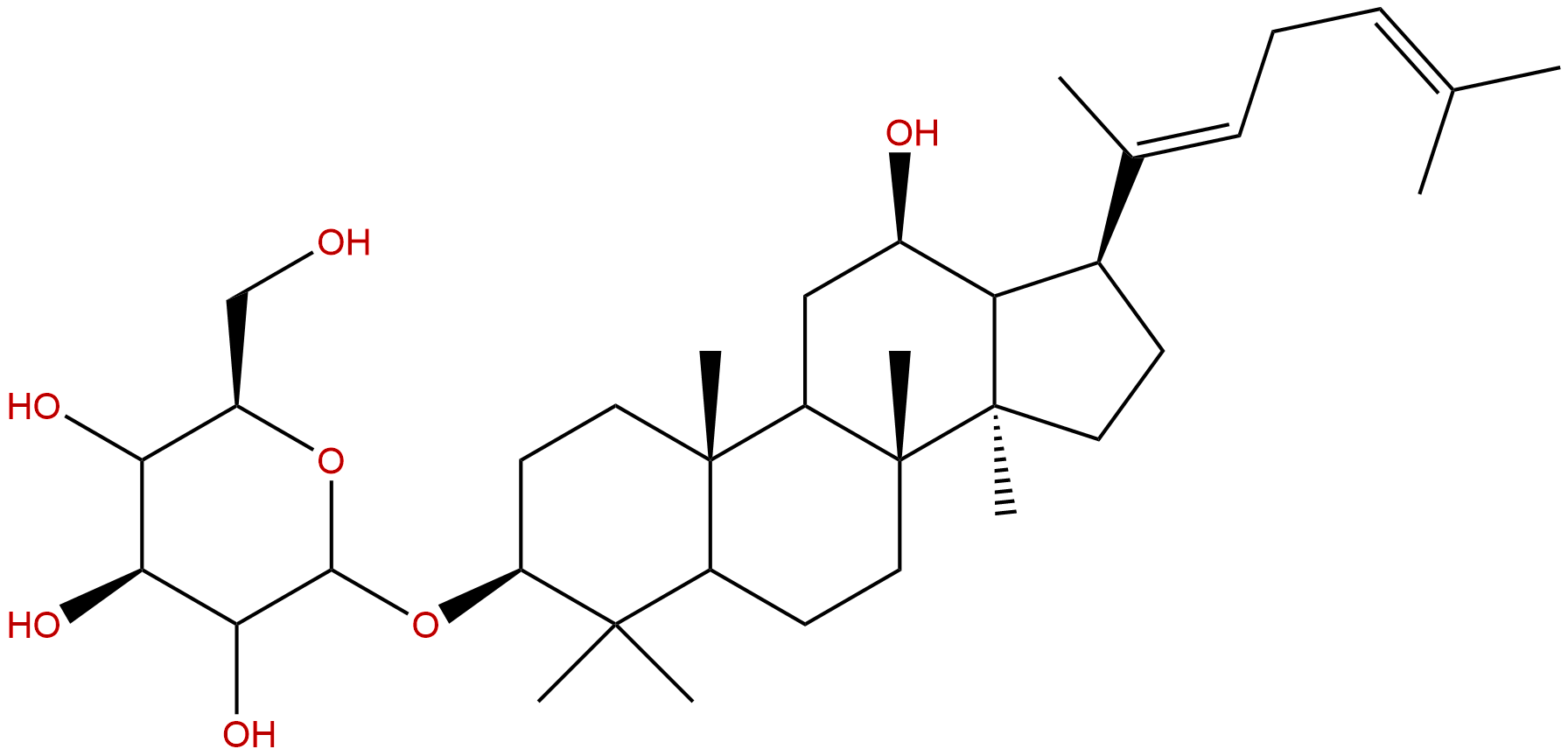


Product name: Isoginsenoside Rh3
Synonym name: (20E)-Ginsenoside Rh3
Catalogue No.: BP1652
Cas No.: 166040-90-0
Formula: C36H60O7
Mol Weight: 604.869
Botanical Source:
Physical Description:
Type of Compound: Triterpenoids
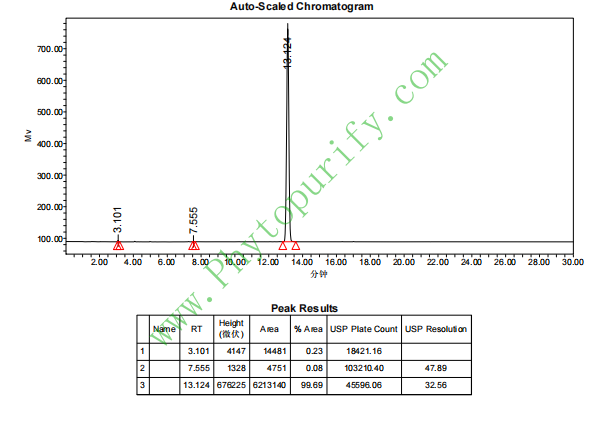
Purity: 95%~99%
Analysis Method: HPLC-DAD or/and HPLC-ELSD
Identification Method: Mass, NMR
Packing: Brown vial or HDPE plastic bottle
The product could be supplied from milligrams to grams. Inquire for bulk scale.
We provide solution to improve the water-solubility of compounds, thereby facilitating the variety of activity tests and clinic uses.
For Reference Standard and R&D, Not for Human Use Directly.
HPLC of Isoginsenoside Rh3
Storage conditions:Short-term storage at 2~8℃, long-term storage at -20 ~ -80℃
119.6100
4.9564
4.9564
.0042
.7684
.6438
Low
87.9188
5.3302
No
No
No
No
No
No
0.0
Yes
No
No
No
Ginseng (Panax ginseng C.A. Mey), as a traditional precious Chinese medicinal herb, is well-known for its effects of "strengthening the body and strengthening the foundation" and "tonifying qi and calming the mind". Modern pharmacological research has revealed that the physiological activity of ginseng is mainly attributed to its rich variety of saponin components, namely ginsenosides. Ginsenosides can be mainly divided into two categories based on their glycosidic skeleton: dammarane type and oleanane type. Among them, dammarane type saponins are the core material basis for ginseng to exert pharmacological effects. With the rapid development of separation and identification technology, more and more rare saponins with novel structures and unique activities have been discovered from different parts of ginseng, such as roots, stems, leaves, flower buds, and fruits, greatly expanding the depth and breadth of ginseng's medicinal value. Isoginsenoside Rh3 (CAS No. 166040-90-0) is a new dammarane triterpene saponin isolated from ginseng fruit in recent years. Compared with the well-known prototype ginsenosides such as Rh2, its subtle structural differences have led to a unique biological activity spectrum, especially in the field of anti-tumor research, showing remarkable potential and becoming a new hotspot in natural product pharmacology research. This article aims to systematically review the chemical structure, plant origin, pharmacological activity, mechanism of action, pharmacological evaluation, and clinical application prospects of alloginsenoside Rh3, in order to provide comprehensive scientific references for the in-depth research and development of this compound.
Heterologous ginsenoside Rh3 is a type of dammarane triterpenoid saponin. Its molecular formula is C36H60O8 and its molecular weight is 604.8690. Its basic skeleton consists of tetracyclic triterpenoid glycosides (Damane type) and sugar chains. Its structural feature is that the glycoside is Protopanaxadiol (PPD), which is connected to a monosaccharide group at the C-3 and C-20 positions of the glycoside. Specifically, its sugar chain connection is as follows: a molecule of β - D-glucopyranose (Glc) is attached to the C-3 hydroxyl group, while a molecule of α - L-arabinopyranose (Ara) is attached to the C-20 hydroxyl group. The configuration of connecting arabinose at position C-20 is the key to distinguishing it from other ginsenosides (such as ginsenoside Rh2, which has a free hydroxyl group at position C-20 or connects to other sugar groups), and it is also the origin of the name "Yi".
From the analysis of physical and chemical properties, the lipid water partition coefficient (LogP) of alloginsenoside Rh3 is 4.9564, indicating that the compound has high lipophilicity. Its topological polar surface area (TPSA) is 119.6100 Å ², reflecting the size of the polar regions in the molecule (mainly derived from sugar and hydroxyl groups). Based on the comprehensive LogP and TPSA values, this compound meets the relevant parameters in the five rules for generic drugs. However, a higher LogP value indicates poor water solubility, with a calculated water solubility of approximately 0.0042 mg/mL, which may pose challenges in formulation development. In terms of distribution within the organism, its ability to penetrate the blood-brain barrier (BBB) is predicted to be "low", indicating that its application in the treatment of central nervous system diseases may be limited, but it may also reduce the associated risk of neurotoxicity. Preliminary safety predictions indicate that it has no significant inhibitory risk on hERG potassium channels (hERG inhibition: No), and the Ames test predicted a value of 0.0, suggesting that it may not be mutagenic and has good preliminary safety characteristics.
The alloginsenoside Rh3 mainly comes from the fruit of the Panax ginseng C.A. Mey plant in the Araliaceae family. Ginseng fruit, also known as ginseng seed, is a reproductive organ in the growth cycle of ginseng. Its saponin composition is significantly different from that of root, leaf and other parts, and usually contains a higher proportion of low sugar or rare saponins. This has opened up new avenues for the comprehensive utilization and value enhancement of ginseng resources.
The following process is usually used to extract and separate alloginsenoside Rh3 from ginseng fruit:
1. Extract: Use alcohol solvent (such as methanol, ethanol) to carry out reflux extraction or ultrasonic assisted extraction of dried ginseng fruit powder to fully extract saponins. The water extraction and alcohol precipitation method can also be used for preliminary enrichment.
2. Enrichment and Coarse Separation After the extraction solution is concentrated under reduced pressure, it is separated by column chromatography using macroporous adsorption resins (such as D101, AB-8 type), commonly eluted with a water ethanol gradient, to preliminarily enrich the saponin fraction.
3. Separation and purification Further separate the saponin rich fraction by regular phase silica gel column chromatography and reverse phase silica gel column chromatography (such as ODS, C18) repeatedly. Gradient elution is often performed using solvent systems such as chloroform methanol and methanol water.
4. Refining and identification Combined with preparative high-performance liquid chromatography (Prep HPLC) for final purification, high-purity Rh3 monomer of alloginsenoside was obtained. Its structure was confirmed by nuclear magnetic resonance spectroscopy (NMR, including 1H-NMR, 13C-NMR, 2D-NMR), mass spectrometry (MS), and comparison with literature data.
It is worth noting that the content of alloginsenoside Rh3 in plants is relatively low, and it can also be prepared by biotransformation or chemical modification using high content ginsenosides (such as Rb1, Rc, Rd, etc.) as precursors through specific enzymes (such as β - glucosidase) or chemical methods for selective glycosylation hydrolysis and transformation. This provides an alternative strategy for obtaining this rare saponin on a large scale.
A large number of in vitro and in vivo pharmacological studies have shown that alloginsenoside Rh3 has a wide range of biological activities, among which the most prominent is its anti-tumor effect, especially showing significant effects in prostate cancer models.
1. Antitumor activity
* prostate cancer Heterogeneic ginsenoside Rh3 exhibits significant proliferation inhibition and pro apoptotic effects on various prostate cancer cell lines (such as LNCaP, PC-3, DU145). Its activity is stronger than some common ginsenosides, indicating its structural specificity.
* Other cancers Research also shows that it can inhibit the growth of breast cancer, lung cancer, colon cancer, liver cancer and other cancer cells, showing a broad spectrum of anti-tumor potential.
* Function characteristics Its anti-tumor effect is not limited to directly killing cancer cells, but also involves inhibiting cell migration and invasion (anti metastasis), inducing cell cycle arrest (often blocking cells in G0/G1 or G2/M phases), and reversing tumor multidrug resistance.
2. Other pharmacological activities
In addition to its core anti-tumor effect, preliminary studies also suggest that alloginsenoside Rh3 may have other beneficial biological activities, such as antioxidant, anti-inflammatory, neuroprotective, etc. However, research in these areas is still in its infancy and requires more evidence to support it.
The anti-tumor effect of alloginsenoside Rh3, especially its effect on prostate cancer, involves a complex regulatory network of multiple targets and pathways. According to existing research, its mechanism of action mainly revolves around the following key targets and signaling pathways:
Inducing cell apoptosis This is one of the core mechanisms of its anti-tumor effect.
Inhibit cell proliferation, invasion and metastasis:
Regulating hormones and stress response:
Overcoming multidrug resistance:
Other potential targets:
In summary, the alloginsenoside Rh3 synergistically acts on multiple targets mentioned above, forming a multi-layered anti-tumor network that collectively leads to inhibition of cancer cell growth, increased apoptosis, decreased invasion ability, and may reverse drug resistance.
Based on its physicochemical parameters and preliminary research, a preliminary evaluation of the pharmacological properties of alloginsenoside Rh3 is conducted
Advantage:
1. Clear activity and multi-target mechanism It has clear in vitro and in vivo activity against tumors such as prostate cancer, and its mechanism of action involves multiple validated tumor related targets, reducing the risk of treatment failure due to single target failure.
2. Good preliminary safety prediction The absence of hERG inhibition and Ames mutagenicity warning provides a positive start for its safety assessment.
3. Natural product sources As an active ingredient of ginseng, it has a long history of consumption/medicinal use and relatively high public acceptance.
challenge:
1. Poor water solubility The main drawback is its low solubility (0.0042 mg/mL), which can seriously affect its oral bioavailability and the difficulty of injectable formulations.
2. Pharmacokinetic properties unknown Currently, there is a lack of systematic research on its absorption, distribution, metabolism, and excretion (ADME) in the body. Its high LogP value suggests that it may be easily metabolized and may face strong first pass effects and low bioavailability after oral administration. The specific metabolic products, half-life, tissue distribution, and other key pharmacokinetic parameters urgently need to be elucidated.
3. Low blood-brain barrier permeability This limits its application in brain tumors or central nervous system diseases, but as mentioned earlier, it may also avoid potential central side effects.
improvement strategy:
To overcome the bottleneck of drug development, future research can focus on:
* Formulation technology Develop new drug delivery systems, such as nanoparticles (liposomes, polymer micelles), solid dispersions, cyclodextrin inclusion complexes, self microemulsions, etc., to significantly improve their solubility and bioavailability.
* Structural modification By rational drug chemistry design, the glycosylation or aglycone can be modified to improve its water solubility and metabolic stability while maintaining its activity.
* Systematic pharmacokinetic study Conduct comprehensive preclinical ADME studies to clarify its in vivo fate and provide a basis for dosage form design and dosing regimen formulation.
As a natural product with novel structure and multi-target anti-tumor activity, alloginsenoside Rh3 has broad clinical application prospects, but also faces many challenges.
Potential application directions:
1. Adjuvant or combination therapy for prostate cancer Given its specific sensitivity to prostate cancer cells and multi-target mechanism of action, it is the most promising natural source drug or adjuvant drug for the treatment of prostate cancer, especially castration resistant prostate cancer. It can be used in combination with existing chemotherapy, endocrine therapy, or targeted drugs to enhance efficacy, reverse drug resistance, and reduce side effects.
2. Tumor multidrug resistance reversal agent Based on its inhibitory effect on ABCB1 pump function, it can be explored as a chemotherapy sensitizer to overcome the common problem of tumor multidrug resistance in clinical practice.
3. Cancer chemoprevention Its potential antioxidant, anti-inflammatory, and Nrf2 pathway regulating effects suggest that it may be used for cancer prevention in high-risk populations, but long-term epidemiological and intervention studies are needed to confirm this.
4. Other disease areas Further exploration of its anti-inflammatory and neuroprotective activities may expand its potential applications in chronic inflammatory or neurodegenerative diseases.
Future research focus and prospects:
1. In depth mechanism research By utilizing technologies such as proteomics, metabolomics, and network pharmacology, the panoramic network of its effects is systematically revealed, and new key targets and biomarkers are discovered.
2. Pharmacodynamic and pharmacokinetic optimization Strengthen in vivo pharmacological validation and make every effort to overcome the challenges of drug formation. By combining formulation and structural modification, candidate compounds with ideal pharmacokinetic properties can be obtained.
3. Preclinical Safety Systematic Review Complete standardized GLP toxicology research, comprehensively evaluate its acute toxicity, long-term toxicity, reproductive toxicity, etc., to ensure its clinical safety.
4. Explore combination therapy regimens Systematically study its synergistic effect with first-line anti prostate cancer drugs such as enzalutamide, abiraterone, docetaxel, etc., to provide theoretical basis for clinical combination therapy.
5. Promote clinical translation After completing sufficient preclinical research, actively promote its entry into clinical trials to verify its safety and efficacy in humans.
Isoginsenoside Rh3 is a dammarane type triterpenoid saponin with unique chemical structure and significant pharmacological activity, which was excavated from ginseng fruit. Its outstanding performance in the field of anti prostate cancer, as well as its multidimensional anti-tumor effect exerted by regulating multiple key targets such as BCL2, STAT3, ABCB1, MMP2, make it a highly promising candidate molecule in the research and development of natural anti-tumor drugs. Despite facing challenges such as poor water solubility and missing pharmacokinetic data, these bottlenecks are expected to be overcome one by one with the continuous advancement of modern pharmaceutical, medicinal chemistry, and pharmacology research methods. In the future, through interdisciplinary and in-depth research and development, the heterophyl ginsenoside Rh3 is expected to move from the laboratory to clinical practice. It not only provides new treatment options for patients with malignant tumors such as prostate cancer, but also provides a new perspective for further explaining the scientific connotation of ginseng's "tonifying deficiency and strengthening the body" anti-tumor effect, further demonstrating the enormous value of traditional Chinese medicine treasure trove in modern medicine.
