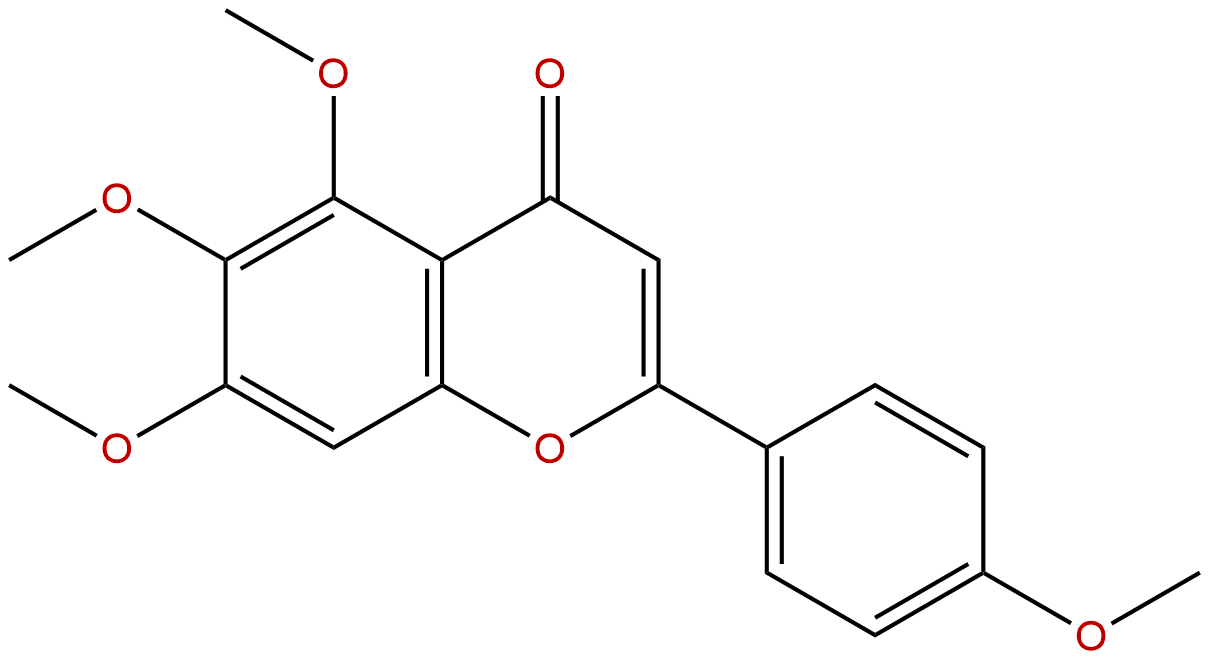


Product name: Tetramethylscutellarein
Synonym name: Scutellarein 5,6,7,4'-tetramethyl ether; 5,6,7,4′-Tetramethoxyflavone
Catalogue No.: BP1847
Cas No.: 1168-42-9
Formula: C19H18O6
Mol Weight: 342.347
Botanical Source: Citrus sinensis
Physical Description:
Type of Compound: Flavonoids
Purity: 95%~99%
Analysis Method: HPLC-DAD or/and HPLC-ELSD
Identification Method: Mass, NMR
Packing: Brown vial or HDPE plastic bottle
The product could be supplied from milligrams to grams. Inquire for bulk scale.
We provide solution to improve the water-solubility of compounds, thereby facilitating the variety of activity tests and clinic uses.
For Reference Standard and R&D, Not for Human Use Directly.
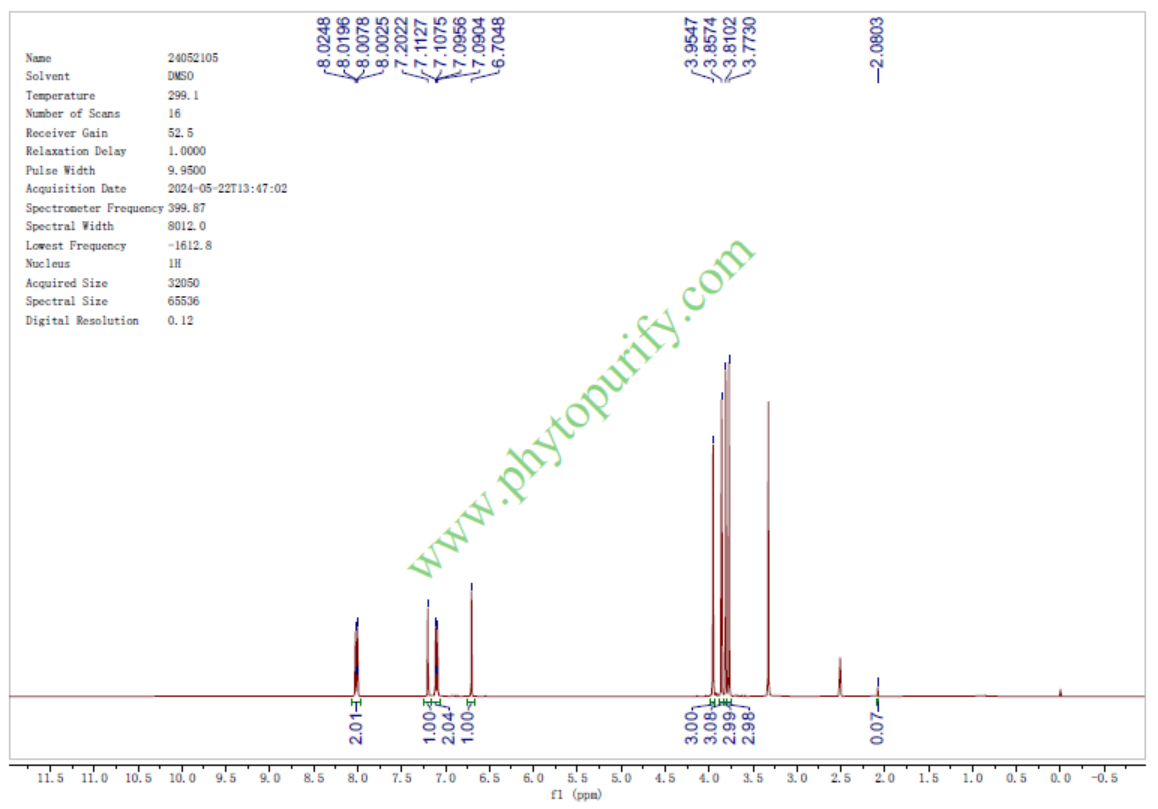
HNMR of Tetramethylscutellarein
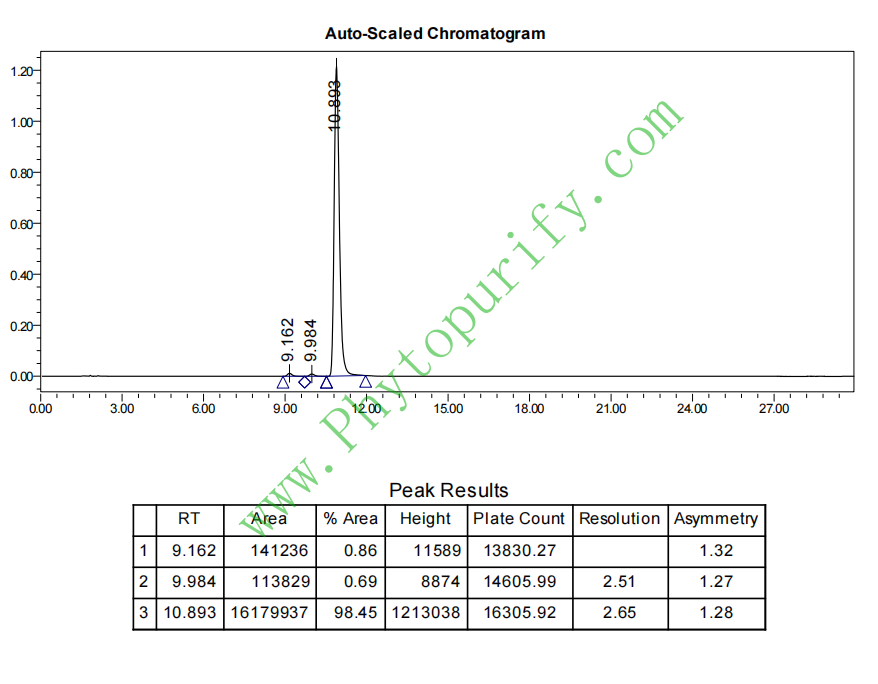
HPLC of Tetramethylscutellarein
Storage conditions:Short-term storage at 2~8℃, long-term storage at -20 ~ -80℃
67.1300
2.9347
2.9349
.0019
2.9806
34.8252
High
87.5723
2.1506
Yes
No
Yes
No
Yes
No
0.9
No
No
No
Yes
Tetramethylscutellarein (TMS), also known as 4 ', 5,6,7-tetramethoxyflavone, is a natural flavonoid compound found in the plant kingdom. Its CAS number is 1168-42-9, molecular formula is C19H18O6, and molecular weight is 342.3470 g/mol. This compound is a tetra-O-methylated derivative of Scutellaria baicalensis, which is an important active flavonoid component in the traditional Chinese medicine Scutellaria baicalensis, such as the core skeleton of scutellarein. Therefore, tetramethylscutellarin is closely related in function to a series of bioactive flavonoids in Scutellaria baicalensis.
Modern pharmacological studies have shown that tetramethylscutellarin not only exists as a secondary metabolite in plants, but also exhibits significant biological activity, particularly identified as a potential Anti mutagen The research background is closely related to the long history of medicinal use of Scutellaria baicalensis. As a traditional Chinese medicine, Scutellaria baicalensis root is commonly used for clearing heat and dampness, purging fire and detoxifying. Modern research has revealed that its anti-inflammatory, antioxidant, antiviral, and anti-tumor pharmacological effects are mainly attributed to its flavonoid components. As a methylated derivative of this type of ingredient, tetramethylscutellarin has gradually become a focus of research in natural product medicinal chemistry and pharmacology in recent years due to its potential changes in physicochemical properties and biological activity after modification. In particular, database information suggests that its target involves multiple key inflammatory factors such as TNF and IL6, and is associated with chronic obstructive pulmonary disease (COPD), providing important clues for its application research in the treatment of inflammatory diseases.
The chemical structure of tetramethylscutellarin is based on the flavonoid nucleus (2-phenylchromone), characterized by four methoxy (- OCH3) substituents on the benzene ring (B ring) and chromone rings (A, C rings). Specifically, the methoxy groups are located at positions 5, 6, and 7 of the A ring and 4 'of the B ring, respectively. Their SMILES representation (COc1ccc (- c2cc (=O) c3c (OC) c (OC) c (OC) c (OC) cc3o2) cc1) clearly reflects this substitution mode. This highly methylated structure has a decisive impact on its physicochemical properties.
According to the provided pharmacokinetic parameters, its molecular weight (MW) is 342.35 g/mol, which falls within the common range of small molecule drugs (usually<500 Da). The calculated logarithm of the lipid water partition coefficient (LogP) is 2.93, indicating that the compound has moderate lipophilicity and tends to be distributed in a lipid environment, which facilitates its penetration into cell membranes. The topological polar surface area (TPSA) is 67.13 Å ², which is relatively low and is usually associated with better membrane permeability. These parameters work together to make tetramethylscutellarin exhibit higher levels of activity Caco-2 cell permeability(34.83 × 10 ⁻⁶ cm/s), indicating that it may have good intestinal absorption characteristics. More noteworthy is that it Blood-brain barrier (BBB) penetrability Predicted as' high ', this suggests that the compound may enter the central nervous system, providing a structural basis for the treatment of neuroinflammatory related diseases.
However, its water solubility is extremely low (0.0019 mg/mL), which is the inevitable result of high LogP values and multiple methoxy hydrophobic substituents, and may become a challenge to overcome in its formulation development and in vivo bioavailability. In plasma, its binding rate (PPB) to plasma proteins is as high as 87.57%, indicating that most of it exists in a bound form in the bloodstream, which may affect its free concentration and efficacy.
The main known plant sources of tetramethylscutellarin are Scutellaria baicalensis(Scutellaria baicalensis Georgi), Also known as Huangcen or Camellia root, it belongs to the Lamiaceae family. Scutellaria baicalensis is mainly distributed in China, the Far East region of Russia, Mongolia, North Korea, and Japan. In China, it is widely produced in Hebei, Shanxi, Inner Mongolia, and other places. Its dried root is a famous traditional Chinese medicinal herb with a history of over two thousand years. It was first recorded in the "Shennong Bencao Jing" and is classified as a medium grade.
In traditional Chinese medicine theory, Scutellaria baicalensis is cold in nature, bitter in taste, and belongs to the meridians of the lungs, gallbladder, spleen, large intestine, and small intestine. Its core function is Clearing heat and dampness, purging fire and detoxifying, stopping bleeding, and preventing miscarriage In clinical practice, it is commonly used to treat conditions such as dampness, heat, dampness, chest tightness, nausea and vomiting, damp heat and fullness, diarrhea, jaundice, lung heat and cough, high fever and thirst, blood heat and vomiting, abscesses, sores and toxins, and fetal instability. Classic prescriptions such as Huangqin Tang, Huanglian Jiedu Tang, Xiaochaihu Tang, etc. all contain Huangqin, which is used to synergistically exert the effect of clearing heat and purging fire.
Although traditional applications do not directly target the single component of tetramethylscutellarin, modern plant chemistry research has confirmed that the medicinal value of Scutellaria baicalensis is closely related to the flavonoids it contains, including baicalin, baicalin, scutellarin (scutellarin) and its aglycones (such as scutellarin). Tetramethylbaicalein, as a fully methylated derivative of baicalein, is likely to be generated in plants by the corresponding aglycones catalyzed by methyltransferases, and is a member of the complex metabolic network of Scutellaria baicalensis. Its existence further enriches the chemical diversity of active ingredients in Scutellaria baicalensis and may contribute to the overall pharmacological activity spectrum of Scutellaria baicalensis medicinal materials.
The database information reveals that tetramethylscutellarin acts on five key molecular targets:TNF (tumor necrosis factor), PTGS2 (prostaglandin endoperoxide synthase 2, COX-2), NFKB1 (nuclear factor kappa B p105 subunit), IL6 (interleukin-6), and IL1B (interleukin-1 β)These targets, without exception, are core signaling molecules that regulate inflammation and immune response, collectively forming a complex inflammatory signaling network. This strongly suggests that the core pharmacological activity of tetramethylscutellarin is Multi target anti-inflammatory。
Tetramethylscutellarin is likely to intervene in this network directly or indirectly. For example, it may inhibit the activity of I κ B kinase (IKK) and prevent the activation of NF - κ B; Or directly bind to the active site of COX-2 to inhibit its enzymatic activity; Or by inhibiting the production and release of TNF - α and IL-1 β through upstream signaling. This multi-target mode of action may be more effective in blocking the cascade amplification effect of inflammation compared to single target inhibitors, and has potential advantages in treating complex inflammatory diseases.
This powerful anti-inflammatory activity, as suggested by the database Chronic obstructive pulmonary disease (COPD) Highly correlated. COPD is a chronic inflammatory disease characterized by persistent airflow limitation. Its pathological process involves chronic inflammation of the airway, lung parenchyma, and pulmonary blood vessels, infiltration of neutrophils, macrophages, T lymphocytes, and the release of large amounts of the aforementioned inflammatory mediators (TNF - α, IL-6, IL-1 β, COX-2 products), leading to lung tissue destruction and airway remodeling. The NF - κ B pathway plays a central regulatory role in the expression of inflammatory genes in COPD. Therefore, tetramethylscutellarin, which can simultaneously inhibit TNF - α, IL-6, IL-1 β, COX-2 and intervene in the NF - κ B pathway, theoretically can inhibit the inflammatory process of COPD in multiple stages, alleviate symptoms, and delay disease progression, and has important research value. In addition, its high BBB penetration also suggests that it is worth exploring in the treatment of diseases accompanied by neuroinflammation, such as Alzheimer's disease and multiple sclerosis.
Based on the provided pharmacological parameters, we can conduct a preliminary evaluation of the characteristics of tetramethylscutellarin as a potential drug lead compound. Firstly, referring to the famous Lipinski's Five Rules("Five Principles of Similar Drugs"):
1. Molecular weight (MW)<500 Da:342.35 Da, Compliant.
2. Lipid water partition coefficient LogP<5 2.93, compliant.
3. The number of hydrogen bond donors (HBDs) is less than 5 There are no free hydroxyl groups in the molecule (all methylated), and the HBD number is 0, which is much better than the standard.
4. The number of hydrogen bond acceptors (HBAs) is less than 10 There are 6 oxygen atoms in the molecule (both methoxy and carbonyl oxygen), and the HBA number can be calculated as 6, which is consistent.
5. Number of rotatable keys Usually requires<10. The molecular structure is relatively rigid and has a moderate number of rotatable bonds.
Therefore, tetramethylscutellarin fully complies with Lipinski's rules and has a good pharmacological basis.
Further analysis of other key parameters:
- Absorption and penetration The high Caco-2 permeability (34.83) and effective permeability coefficient (Peff: 2.98) predict good oral absorption potential. High BBB penetration is its prominent feature.
- distribution High plasma protein binding rate (87.57%) can affect its free blood drug concentration and tissue distribution, which needs to be considered in pharmacological studies.
- Metabolism and toxicity:
- Ames test A value of 0.9 (usually<1.0 is considered negative) suggests no direct bacterial mutagenicity, which is a favorable signal.
-However,chromosome aberration The test shows' yes', which requires high vigilance Genotoxicity Risk signals, which may be related to their chemical structure or metabolites, are key safety issues that must be thoroughly evaluated and addressed in subsequent development.
- HERG inhibition'No' indicates a lower risk of causing QT interval prolongation in the heart.
- Maximum Recommended Treatment Dose (MRTD) Mark as' Yes', indicating that there may be a therapeutic window within an acceptable dose range.
- Respiratory sensitization Marked as' Yes', there is a potential risk of respiratory allergies that require attention.
- Serum alanine aminotransferase (ALT) Raise the flag to 'Yes', indicating possible presence liver injury Risk, and AST, GGT, and ALK are all "no", requiring a comprehensive assessment of liver toxicity.
- Feasibility of synthesis The synthetic accessibility index (SyneAccess) is 2.15, indicating that its chemical synthesis has moderate difficulty, but due to the known structure, both derived from natural products and fully synthesized have feasible pathways.
Summary Tetramethylscutellarin exhibits excellent pharmacological properties, oral absorption potential, and central nervous system permeability, and its multi-target anti-inflammatory mechanism is also attractive. However, it Extremely low water solubility The primary challenge in formulation development may require the use of nanomaterials, solid dispersions, prodrugs, and other means to improve. The most severe challenge comes from the aspect of security Potential genetic toxicity (chromosomal aberration) and hepatotoxicity (elevated ALT) signals This must be rigorously validated and risk assessed through more comprehensive in vitro and in vivo toxicology experiments (such as micronucleus test, comet assay, repeated dose toxicity test) in preclinical studies. Respiratory sensitization also needs attention.
At present, specialized research on tetramethylbaicalein is still relatively limited compared to its parent compound baicalein and other major flavonoids in Scutellaria baicalensis, such as baicalin and baicalein. Current research mainly focuses on its chemical identification, confirmation of plant sources, and pharmacological activity prediction based on database mining and preliminary in vitro experiments. As a methylated derivative of baicalein, its research value lies in exploring The effect of methoxy modification on the biological activity, metabolic stability, and in vivo distribution of flavonoids Methylation typically increases the lipid solubility and metabolic stability of compounds (against glucuronidation and sulfation binding), which may explain the high BBB penetration predicted by tetramethylscutellarin.
The future research and application prospects may focus on the following directions:
In summary, tetramethylscutellarin, as a natural flavonoid derivative derived from traditional Chinese medicine Scutellaria baicalensis, has shown great potential for further research due to its drug like structure, multi-target anti-inflammatory mechanism, and unique high BBB penetration. However, the main obstacles on its path - solubility issues and particularly potential safety risks (genetic toxicity and hepatotoxicity) - must be overcome through rigorous and systematic scientific research. In the future, it is expected to become a bridge connecting the wisdom of traditional Chinese medicine with the development of modern innovative drugs, providing new candidate molecules for the treatment of inflammatory diseases.
