Research progress on flavonoids II from Scutellaria baicalensis: from natural flavonoids to multi-target pharmacological active molecules
Introduction/Overview
Natural products, as an important source of drug discovery, play an irreplaceable role in human health maintenance and disease treatment. Flavonoids, as important components of plant secondary metabolites, have attracted much attention due to their structural diversity and wide range of biological activities. Scutellaria baicalensis(Scutellaria baicalensis As a medicinal plant with a long history of application in traditional Chinese medicine, the study of its active ingredients has always been a hot topic in the fields of natural product chemistry and pharmacology. Scutellaria baicalensis contains abundant flavonoids, including baicalin, baicalein, baicalein, etc. These components have been proven to have various pharmacological activities such as anti-inflammatory, antioxidant, antibacterial, and anti-tumor effects.
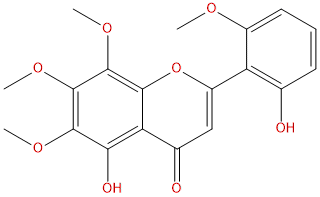
Skullcapflavone II is a flavonoid compound with unique structural characteristics found in Scutellaria baicalensis. Its chemical name is 5,7,2 ', 5' - tetrahydroxy-6,8-dimethoxyflavone. Since its discovery, this compound has gradually attracted the attention of researchers due to its significant biological activity. Compared with the main flavonoids with higher content in Scutellaria baicalensis, although the content of flavonoids II in Scutellaria baicalensis is relatively low in plants, its unique substitution pattern endows it with special pharmacological properties. In recent years, studies have revealed that Scutellaria baicalensis flavonoids II not only excel in classic anti-inflammatory and antibacterial properties, but also demonstrate potential application value in bone metabolism regulation, antioxidant stress, and other fields.
With the deepening of precise pharmacological research on natural products, the multi-target action characteristics of Scutellaria baicalensis flavonoids II are gradually becoming clear. It can act on multiple signaling pathways and molecular targets simultaneously, and this multi-target synergistic mode of action gives it unique advantages in the intervention of complex diseases. This article will systematically review the research progress of Scutellaria baicalensis flavonoids II from the aspects of chemical structure, plant origin, pharmacological activity, mechanism of action, pharmacological evaluation, and clinical application prospects, in order to provide reference for the in-depth research and development of this natural product.
Chemical structure and physicochemical properties
The chemical structure of Scutellaria baicalensis flavonoids II belongs to the typical flavonoid nucleus, and its basic skeleton is 2-phenylchromen-4-one. The systematic name of this compound is 5,7,2 ', 5' - tetrahydroxy-6,8-dimethoxyflavone, with a molecular formula of C ₁₇ H ₁₄ O ₈ and a molecular weight of 374.3450 g/mol. From the structural characteristics, the C-5 and C-7 positions on the A ring of Scutellaria baicalensis flavonoids II are hydroxyl substituted, while the C-6 and C-8 positions are methoxy substituted; The C-2 'and C-5' positions on the B ring are substituted with hydroxyl groups. This complex substitution mode of polyhydroxy and methoxy groups is particularly unique in flavonoids, endowing the molecule with unique physicochemical properties and biological activity.
From the perspective of structure-activity relationship, multiple phenolic hydroxyl groups in the structure of Scutellaria baicalensis flavonoids II are key functional groups for their antioxidant activity. Phenolic hydroxyl groups can provide hydrogen atoms, effectively eliminate free radicals, and thus exert antioxidant effects. Meanwhile, the methoxy substitution at positions C-6 and C-8 enhances the lipophilicity of the molecule, facilitating its interaction with biofilms and hydrophobic targets. The hydroxyl substitution patterns at the 2 'and 5' positions on the B ring are different from the common 4 '- hydroxyl substitution, and this particular substitution pattern may be related to its selective action on specific targets.
In terms of physicochemical properties, the lipid water partition coefficient (LogP) of Scutellaria baicalensis flavonoids II is 2.2647, indicating that the compound has moderate lipophilicity and can achieve a balance between lipid and aqueous environments. The topological polar surface area (TPSA) is 107.5900 Å ², which reflects the surface area of polar atoms (oxygen and hydrogen atoms) in the molecule and is an important parameter for evaluating drug oral absorption and blood-brain barrier permeability. The water solubility of Scutellaria baicalensis flavonoids II is 0.0918 mg/mL, which is a poorly soluble compound, which to some extent limits its bioavailability. It is worth noting that the compound has a low blood-brain barrier permeability, indicating that its application in the treatment of central nervous system diseases may be limited, but it also reduces the risk of central nervous system toxicity.
From a medicinal chemistry perspective, the molecular weight of Scutellaria baicalensis flavonoids II (374.3450 Da) meets the requirement of Lipinski's Rule of Five for molecular weight less than 500, and the LogP value is also within a reasonable range. However, its poor water solubility and the number of hydrogen bond donors/acceptors may affect oral absorption. These physicochemical properties provide important references for subsequent drug design and formulation development.
Plant sources and extraction methods
The flavonoids II in Scutellaria baicalensis mainly come from plants of the Scutellaria genus in the family Lamiaceae, among which Scutellaria baicalensis is the main source(Scutellaria baicalensis Georgi is the main source. Scutellaria baicalensis, as a traditional Chinese medicinal herb, can be traced back to the "Shennong Bencao Jing" for its medicinal history. It has the effects of clearing heat and dampness, purging fire and detoxifying, stopping bleeding and stabilizing pregnancy. Modern plant chemistry research has confirmed that Scutellaria baicalensis roots contain over 40 flavonoids, among which baicalin, baicalein, and baicalein are the main components, while Scutellaria baicalensis flavonoids II belong to the lower content trace components.
In addition to Scutellaria baicalensis, Scutellaria baicalensis flavonoids II have also been found in other plants of the Scutellaria genus, such as Scutellaria amoena、Scutellaria viscidula Wait. There are significant differences in the content of flavonoids II in Huangqin from different sources, origins, and harvest periods. Research has shown that the content of this compound in Scutellaria baicalensis roots is usually higher than in the aboveground parts, and its content shows a trend of first increasing and then decreasing with the increase of plant growth years. In addition, environmental factors such as light, temperature, soil conditions, etc. can also affect the biosynthesis and accumulation of flavonoids II in Scutellaria baicalensis.
In terms of extraction methods, traditional solvent extraction remains the main means of obtaining flavonoids II from Scutellaria baicalensis. Due to the moderate polarity of the compound, commonly used extraction solvents include methanol, ethanol, ethyl acetate, etc. Research has shown that when 70% -80% ethanol aqueous solution is used as the extraction solvent, the extraction efficiency of Scutellaria baicalensis flavonoids II is relatively high. During the extraction process, factors such as temperature, time, and solid-liquid ratio can all affect the extraction efficiency. Usually, reflux extraction or ultrasound assisted extraction is used, and ultrasound extraction is widely adopted due to its high efficiency, short time, and controllable temperature.
In order to improve extraction efficiency and purity, modern separation and purification techniques have been applied to the preparation of Scutellaria baicalensis flavonoids II. Macroporous adsorption resin column chromatography is a commonly used method for the separation and purification of flavonoids. By selecting appropriate resin types (such as HPD-100, AB-8, etc.) and elution conditions, preliminary enrichment of flavonoids II in Scutellaria baicalensis can be achieved. Further purification can be carried out by silica gel column chromatography, polyamide column chromatography, Sephadex LH-20 gel column chromatography and other methods. High performance counter current chromatography (HSCCC) and preparative high-performance liquid chromatography (pre HPLC) are suitable for the preparation of high-purity Scutellaria baicalensis flavonoids II.
It is worth noting that due to the low content of flavonoids II in Scutellaria baicalensis (usually less than 0.1%), the cost of directly extracting large amounts from natural plants is relatively high. In recent years, biotechnology methods such as hairy root culture and cell suspension culture have provided new avenues for the production of Scutellaria baicalensis flavonoids II. By optimizing the cultivation conditions and adding precursor substances or inducers, the production of Scutellaria baicalensis flavonoids II in Scutellaria baicalensis cell cultures can be increased. In addition, the development of synthetic biology techniques has also provided possibilities for the heterologous biosynthesis of this compound.
Pharmacological activity research
anti-inflammatory activity
The anti-inflammatory activity of Scutellaria baicalensis flavonoids II is one of its earliest pharmacological effects discovered and studied. Inflammation is the body's defense response to harmful stimuli, but excessive or sustained inflammation can lead to tissue damage and the occurrence of various diseases. Research has shown that Scutellaria baicalensis flavonoids II can significantly inhibit lipopolysaccharide (LPS) - induced macrophage inflammatory response and reduce the expression levels of pro-inflammatory factors such as tumor necrosis factor - α (TNF - α), interleukin-6 (IL-6), and interleukin-1 β (IL-1 β). In animal models, Scutellaria baicalensis flavonoids II showed significant anti-inflammatory effects on acute inflammation models (such as carrageenan induced toe swelling) and chronic inflammation models (such as adjuvant arthritis).
Antibacterial activity
The antibacterial activity of Scutellaria baicalensis flavonoids II is another important pharmacological characteristic. Of particular note is that the compound exhibits strong inhibitory activity against bacteria of the genus Mycobacterium. Research shows that Scutellaria baicalensis flavonoids II have an effect on Mycobacterium smegmatis(Mycobacterium aurum)Mycobacterium bovis BCG(Mycobacterium bovis BCG has significant antibacterial activity, with its minimum inhibitory concentration (MIC) at the micromolar level. This discovery has important implications for the development of new anti tuberculosis drugs, as Mycobacterium tuberculosis and Mycobacterium bovis BCG have a high degree of genetic similarity. In addition, Scutellaria baicalensis flavonoids II also exhibit certain inhibitory effects on common pathogenic bacteria such as Staphylococcus aureus and Escherichia coli.
Bone metabolism regulation activity
In recent years, the role of Scutellaria baicalensis flavonoids II in regulating bone metabolism has attracted the attention of researchers. Osteoclasts are the main cells responsible for bone resorption, and their excessive activation can lead to bone metabolism diseases such as osteoporosis and rheumatoid arthritis. Research has found that Scutellaria baicalensis flavonoids II can regulate the differentiation, survival, and function of osteoclasts. In the osteoclast differentiation model induced by receptor activator of nuclear factor kappa B ligand (RANKL), Scutellaria baicalensis flavonoids II dose dependently inhibited osteoclast formation and bone resorption activity. Further research has shown that the compound exerts anti bone resorption effects by interfering with the downstream signaling pathway of RANKL, inhibiting the expression of osteoclast specific genes such as TRAP, CTSK, MMP9, etc.
antioxidant activity
The antioxidant activity of Scutellaria baicalensis flavonoids II is closely related to the multiple phenolic hydroxyl groups in its molecular structure. Research has shown that this compound can effectively scavenge various free radicals, including 1,1-diphenyl-2-trinitrophenylhydrazine (DPPH) free radical, 2,2 '- diazobis (3-ethylbenzothiazoline-6-sulfonic acid) (ABTS) free radical, and hydroxyl free radical. In the cellular oxidative stress model, Scutellaria baicalensis flavonoids II can reduce reactive oxygen species (ROS) levels and protect cells from oxidative damage. Its antioxidant mechanism involves two aspects: direct clearance of free radicals and indirect activation of intracellular antioxidant defense system.
Other pharmacological activities
In addition to the main activities mentioned above, Scutellaria baicalensis flavonoids II also exhibit various other pharmacological effects. Research has reported that this compound has certain anti-tumor activity, which can inhibit the proliferation of various cancer cells and induce cell apoptosis. In addition, Scutellaria baicalensis flavonoids II have a protective effect on liver injury, can reduce serum transaminase levels, alleviate liver oxidative stress and inflammatory reactions. In terms of neuroprotection, although the blood-brain barrier permeability of Scutellaria baicalensis flavonoids II is relatively low, there are still studies suggesting that it may indirectly exert neuroprotective effects by regulating peripheral inflammatory responses.
Mechanism of action and molecular targets
Antioxidant related targets
The antioxidant effect of Scutellaria baicalensis flavonoids II involves multiple molecular targets. Nuclear factor E2 related factor 2 (NFE2L2/NRF2) is a key transcription factor in the cellular antioxidant defense system, regulating the expression of various antioxidant enzymes. Research has shown that Scutellaria baicalensis flavonoids II can activate the NRF2 signaling pathway, promote nuclear translocation, and upregulate the expression of downstream target genes. These target genes include heme oxygenase-1 (HMOX1), superoxide dismutase 1 (SOD1), superoxide dismutase 2 (SOD2), catalase (CAT), glutathione peroxidase 1 (GPX1), etc. These antioxidant enzymes work together to form a defense network for cells to resist oxidative stress.
In addition, Scutellaria baicalensis flavonoids II directly act on tyrosinase (TYR) and matrix metalloproteinases (MMP1, MMP3). Tyrosinase is a key enzyme in melanin synthesis, and the regulation of its activity by Scutellaria baicalensis flavonoids II may be related to its potential applications in skin whitening and pigmentation diseases. Matrix metalloproteinases participate in the degradation of extracellular matrix and play an important role in inflammation and tissue remodeling. The regulatory effect of Scutellaria baicalensis flavonoids II on MMP1 and MMP3 may be related to its anti-inflammatory and tissue protective activities.
Anti inflammatory signaling pathway
The anti-inflammatory effect of Scutellaria baicalensis flavonoids II is mainly achieved by inhibiting the nuclear factor kappa B (NF - κ B) and mitogen activated protein kinase (MAPK) signaling pathways. NF - κ B is the core transcription factor of inflammatory response, regulating the expression of various pro-inflammatory factors. Huangqin flavonoids II can inhibit the phosphorylation and degradation of I κ B α, prevent the nuclear translocation of NF - κ B, and thus reduce the production of inflammatory mediators. Meanwhile, the compound can also inhibit the phosphorylation of p38 MAPK, JNK, and ERK, blocking the activation of the MAPK signaling pathway.
Regulation of osteoclast differentiation
In terms of bone metabolism regulation, the target of Scutellaria baicalensis flavonoids II mainly focuses on the RANKL signaling pathway. After binding to its receptor RANK, RANKL activates downstream tumor necrosis factor receptor associated factor 6 (TRAF6), NF - κ B, and MAPK signaling pathways, ultimately inducing the expression of osteoclast specific transcription factor NFATc1. Huangqin flavonoids II can interfere with this signaling cascade reaction, inhibit the activation and nuclear translocation of NFATc1, thereby blocking the differentiation program of osteoclasts. In addition, the compound can regulate signaling molecules related to osteoclast survival, such as AKT and Bcl-2 family proteins, and induce osteoclast apoptosis.
Antibacterial mechanism
The antibacterial mechanism of Scutellaria baicalensis flavonoids II against mycobacteria has not been fully elucidated, but existing research suggests that it may involve multiple aspects. Flavonoids can typically exert antibacterial effects by disrupting bacterial cell membrane integrity, inhibiting bacterial nucleic acid synthesis, and interfering with energy metabolism. For Scutellaria baicalensis flavonoids II, multiple phenolic hydroxyl groups in its molecular structure may participate in interactions with bacterial cell membranes or key enzymes. In addition, the compound may also exert antibacterial activity by inhibiting enzymes related to the synthesis of mycobacterial cell walls or interfering with their redox balance.
Evaluation of drug properties and pharmacokinetics
Analysis of drug properties parameters
The pharmacological evaluation of Scutellaria baicalensis flavonoids II is based on multiple medicinal chemical parameters. Its molecular weight is 374.3450 Da, which meets the requirement of molecular weight less than 500 in the five rules of generic drugs. The LogP value is 2.2647, which is within the ideal range of oral drug lipophilicity (1-3). The TPSA is 107.5900 Å ², slightly higher than the recommended upper limit of 140 Å ² for oral medications, which may affect its membrane permeability. The water solubility is 0.0918 mg/mL, which is a low solubility compound and one of the main factors limiting its oral bioavailability.
In terms of safety evaluation, the hERG inhibition prediction result was negative, indicating that the compound has a low risk of causing QT interval prolongation in the heart. The Ames test result is 0.6, indicating a low risk of genetic toxicity. The assessment of blood-brain barrier permeability is low, which limits the application of central nervous system diseases but also reduces the risk of central nervous system toxicity.
Pharmacokinetic characteristics
The pharmacokinetic studies on flavonoids II from Scutellaria baicalensis are relatively limited. Based on its physicochemical properties, it is speculated that the oral absorption of this compound may be limited by its low water solubility. The metabolism of flavonoids in the body mainly occurs through phase II metabolic enzymes (such as UDP glucuronosyltransferase and sulfotransferase), which undergo binding reactions to generate glucuronic acid complexes or sulfate complexes. The multiple phenolic hydroxyl groups in the flavonoid II structure of Scutellaria baicalensis are potential sites for phase II metabolism, and these metabolites may be excreted through bile or urine.
Pharmacokinetic studies have shown that flavonoids typically have shorter half lives and higher clearance rates. Further research is needed on the metabolic stability, plasma protein binding rate, distribution volume, and other parameters of Scutellaria baicalensis flavonoids II. It is worth noting that the low blood-brain barrier permeability of this compound may be related to its higher polar surface area and multiple hydrogen bond donors/acceptors in the molecule.
Formulation development strategy
Multiple formulation strategies can be used to improve the bioavailability of Scutellaria baicalensis flavonoids II due to its poor water solubility. Cyclodextrin inclusion technology can improve the solubility and stability of flavonoids. Phytosome technology enhances the lipid solubility and membrane permeability of drugs by forming drug phospholipid complexes. Nanoformulations such as liposomes, nanoemulsions, solid lipid nanoparticles, etc. are also effective means of improving the bioavailability of poorly soluble drugs. In addition, prodrug design strategies such as converting phenolic hydroxyl groups into phosphate or amino acid esters can improve the water solubility and oral absorption of drugs.
Clinical application prospects and prospects
Anti inflammatory related diseases
Based on the significant anti-inflammatory activity of Scutellaria baicalensis flavonoids II, it has potential application value in the treatment of inflammation related diseases. Chronic inflammatory diseases such as rheumatoid arthritis, inflammatory bowel disease, and dermatitis are important application directions. In particular, the regulatory effect of this compound on osteoclast differentiation and function gives it a unique advantage in the treatment of bone destruction related to rheumatoid arthritis. Compared with traditional anti-inflammatory drugs, the multi-target mode of action of Scutellaria baicalensis flavonoids II may provide better efficacy and lower side effects.
Bone metabolism disorders
The inhibitory effect of Scutellaria baicalensis flavonoids II on osteoclasts suggests its potential application in the treatment of osteoporosis. Osteoporosis is a metabolic bone disease characterized by reduced bone mass and destruction of bone microstructure, mainly caused by bone resorption exceeding bone formation. Although the anti bone resorption drugs currently used in clinical practice, such as bisphosphonates and denosumab, are effective, long-term use may have certain side effects. As a natural product, Scutellaria baicalensis flavonoids II may provide a safer alternative or adjuvant treatment option. In addition, this compound also has potential application value in bone destruction related diseases such as periodontitis and aseptic loosening of artificial joints.
infectious diseases
The antibacterial activity of Scutellaria baicalensis flavone II against Mycobacterium provides a possibility for its application in the treatment of tuberculosis. Tuberculosis is still one of the main causes of death of infectious diseases in the world. the emergence of drug-resistant strains of tuberculosis makes the development of new anti tuberculosis drugs extremely urgent. The unique chemical structure and mechanism of action of Scutellaria baicalensis flavonoids II may provide new ideas for overcoming drug resistance in existing drugs. However, the transformation from in vitro activity to in vivo efficacy still faces many challenges, including bioavailability, in vivo metabolism, tissue distribution, and other issues.
Antioxidant related diseases
Oxidative stress is involved in the occurrence and development of many diseases, including cardiovascular diseases, neurodegenerative diseases, diabetes complications, etc. The antioxidant activity of Scutellaria baicalensis flavonoids II and its activation effect on the NRF2 pathway make it potentially valuable in the prevention and treatment of oxidative stress-related diseases. However, due to its low blood-brain barrier permeability, its application in central nervous system diseases may be limited. In peripheral tissue diseases such as cardiovascular disease, liver injury, and kidney disease, Scutellaria baicalensis flavonoids II may play a better protective role.
Future research directions
Although Scutellaria baicalensis flavonoids II exhibit various pharmacological activities, there are still many challenges from basic research to clinical application. Future research directions should include: firstly, in-depth study of the mechanism of action of Scutellaria baicalensis flavonoids II, especially its target recognition and signal network regulation at the molecular level; Secondly, conduct systematic pharmacokinetic studies to clarify their absorption, distribution, metabolism, and excretion characteristics; Thirdly, develop suitable drug delivery systems to improve their bioavailability and targeting; Fourth, conduct a comprehensive toxicological evaluation to ensure the safety of clinical applications; Fifth, explore the synergistic effect of Scutellaria baicalensis flavonoids II with other drugs and develop a combination therapy plan.
In addition, structural modification and structure-activity relationship research are also important research directions. By using chemical synthesis or biotransformation methods to optimize the structure of Scutellaria baicalensis flavonoids II, it is possible to obtain derivatives with stronger activity, higher selectivity, and better pharmacokinetic properties. The development of synthetic biology technology has also provided new possibilities for the large-scale production of Scutellaria baicalensis flavonoids II.
Conclusion
As a flavonoid compound with unique structural characteristics in Scutellaria baicalensis, the various pharmacological activities of Scutellaria baicalensis flavonoids II have attracted widespread attention from researchers. From anti-inflammatory and antibacterial effects to bone metabolism regulation and antioxidant properties, this compound exhibits multi-target and multi pathway action characteristics. The multiple phenolic hydroxyl and methoxy substitution modes in its molecular structure endow it with unique physicochemical properties and biological activity. Despite the challenges of poor water solubility and low bioavailability in drug development, these issues are expected to be resolved through rational formulation design and structural modification.
With the deepening of natural product pharmacology research and the progress of drug development technology, scutellaria flavone II is expected to play an important role in the treatment of inflammatory diseases, bone metabolic diseases and infectious diseases. Future research needs to continue to deepen in mechanism elucidation, pharmacokinetic optimization, and clinical translation to fully explore the medicinal value of this natural product. The study of Huangqin flavonoids II not only enriches our understanding of the biological activity of flavonoids, but also provides valuable examples for discovering new drugs from traditional Chinese medicine.