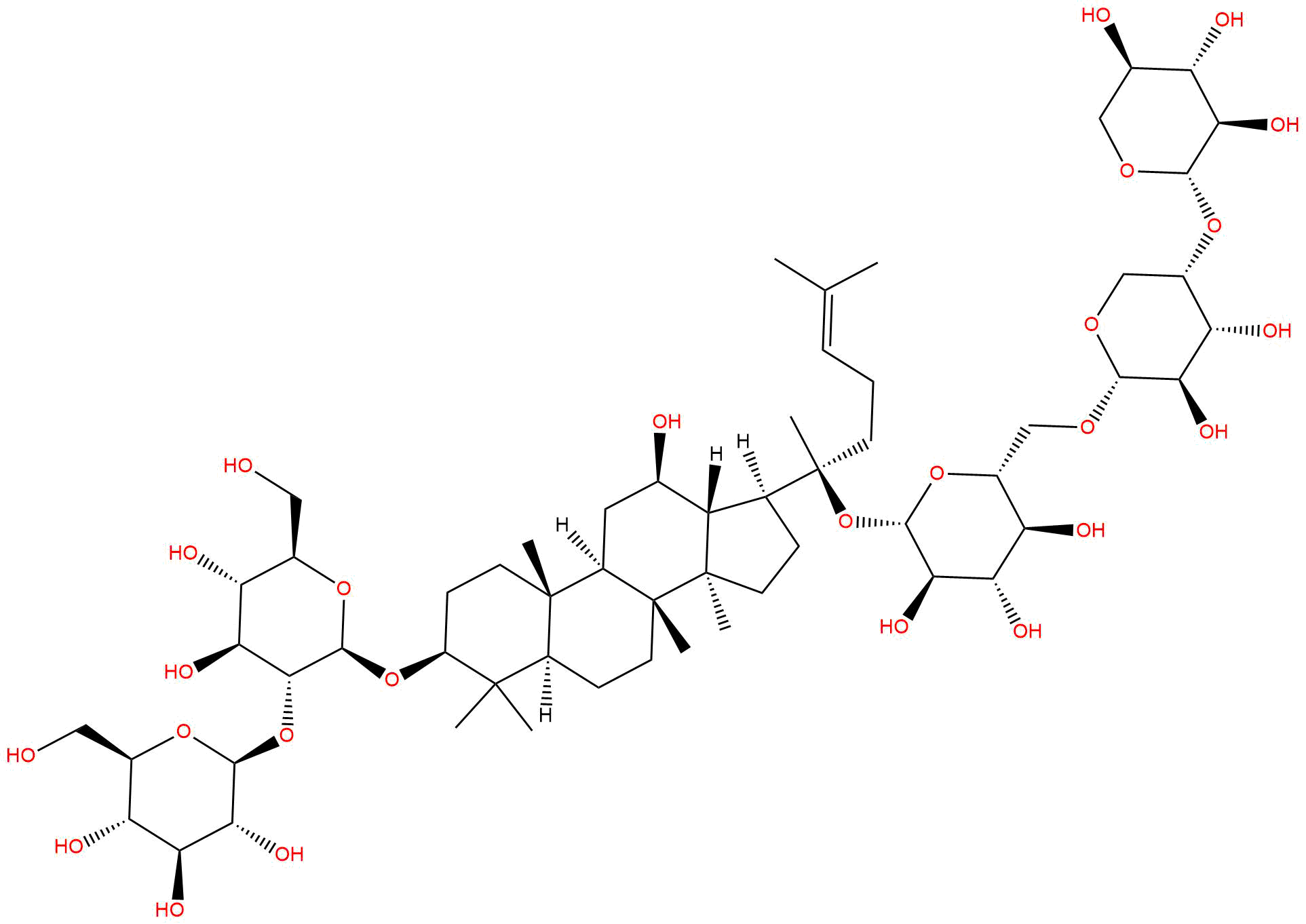


Product name: Ginsenoside Ra1
Synonym name:
Catalogue No.: BP3456
Cas No.: 83459-41-0
Formula: C58H98O26
Mol Weight: 1211.4
Botanical Source:
Physical Description:
Type of Compound: Triterpenoids
Purity: 95%~99%
Analysis Method: HPLC-DAD or/and HPLC-ELSD
Identification Method: Mass, NMR
Packing: Brown vial or HDPE plastic bottle
Storage: Store in a well closed container, protected from air and light. Put into refrigerate or freeze for long term storage.
Whenever possible, you should prepare and use solutions on the same day. However, if you need to make up stock solutions in advance, we recommend that you store the solution as aliquots in tightly sealed vials at -20℃. Generally, these will be useable for up to two weeks.
The product could be supplied from milligrams to grams
Inquire for bulk scale.
For Reference Standard and R&D, Not for Human Use Directly.
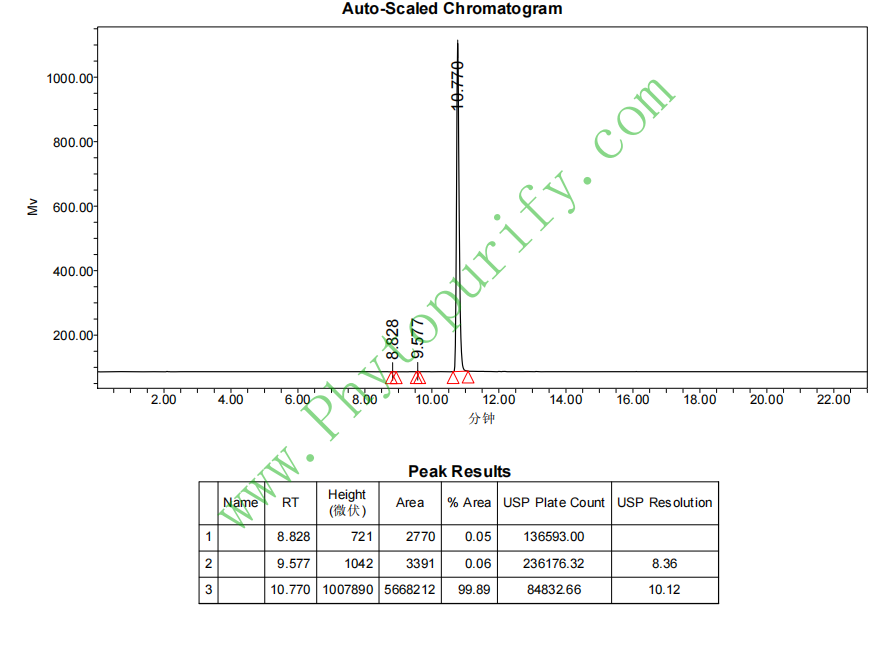
HPLC of Ginsenoside Ra1
Storage conditions:Short-term storage at 2~8℃, long-term storage at -20 ~ -80℃
415.9800
1.7187
1.7187
.2898
.4524
.0853
Low
67.5190
7.2735
Yes
No
No
No
No
No
0.0
Yes
No
No
No
Ginsenoside Ra1 is a natural triterpenoid saponin compound isolated and extracted from the traditional precious medicinal herb Panax ginseng C.A. Meyer. Its CAS number is 83459-41-0, molecular formula is C58H98O26, and molecular weight is as high as 1211.4000 g/mol. It belongs to one of the complex molecular structures and relatively large molecular weight protopanaxadiol saponins in ginsenosides. Among the numerous active ingredients in ginseng, although the content of ginsenoside Ra1 is relatively low, its unique biological activity has gradually attracted the attention of natural product pharmaceutical researchers in recent years.
Existing pharmacological studies have shown that ginsenoside Ra1 can significantly inhibit the activation of protein tyrosine kinase (PTK) induced by hypoxia/reoxygenation (H/R). This discovery suggests that it may have a protective effect in ischemia-reperfusion injury and oxidative stress-related diseases. Further in-depth research reveals that the action of ginsenoside Ra1 involves multiple key signaling molecules and transcription factors, including STAT3, IL2, TGFB1, IL10, and FOXP3, all of which are related to immunomodulation This core physiological and pathological process is closely related. Therefore, ginsenoside Ra1 is considered a potential immunomodulatory agent, providing a new natural compound candidate for the development of treatments for autoimmune diseases, inflammatory diseases, or adjuvant anti-tumor immunotherapy.
This article will systematically review and interpret the scientific data of ginsenoside Ra1 from its chemical structure, plant origin, pharmacological mechanism, pharmacological evaluation, and research prospects, aiming to provide professional, rigorous, and easy to understand popular science materials for researchers in related fields.
The chemical structure of ginsenoside Ra1 is complex, and its SMILES string is several hundred characters long, which intuitively reflects its highly glycosylated characteristics. According to its molecular formula C58H98O26, the compound is composed of 58 carbon atoms, 98 hydrogen atoms, and 26 oxygen atoms, with a molecular weight of up to 1211.4000 g/mol. Such a large molecular weight is particularly prominent in natural products, mainly due to the connection of multiple sugar groups (such as glucose, arabinose, etc.) to its aglycone (protopanaxadiol), forming a large hydrophilic sugar chain.
Its physicochemical properties provide important clues for us to understand its biological behavior:
- Lipid water partition coefficient (LogP/LogD)All are 1.7187. This value indicates that ginsenoside Ra1 has a certain lipophilicity, but due to its large molecular size and rich hydroxyl and sugar groups, its overall properties are more inclined towards hydrophilicity. A LogP value greater than 0 but less than 5 suggests that it may have some membrane permeability potential, but is limited by its high molecular weight and polarity.
- Topological Polarity Surface Area (TPSA)Up to 415.98 Å ². TPSA is an important parameter for predicting molecular membrane permeability, and compounds with TPSA>140 Å ² typically have poor membrane permeability. The extremely high TPSA value of ginsenoside Ra1 directly reflects the presence of a large number of hydrogen bond donors and acceptors on its surface (mainly from hydroxyl groups on the sugar group), indicating that its oral bioavailability may be low and difficult to freely penetrate cell membranes or blood-brain barriers.
- Water solubility The calculated value is approximately 0.2898 mg/mL, which belongs to the category of slight solubility. This is consistent with its structural characteristics of high TPSA and multiple hydrophilic glycosides.
- Other pharmacological parameters Caco-2 cells have extremely low permeability (0.0853 × 10 ⁻⁶ cm/s), and blood-brain barrier (BBB) permeability is predicted to be "low", which is directly related to its high molecular weight and polarity. The plasma protein binding rate (PPB) is approximately 67.52%, which is at a moderate level, indicating that a portion of it exists in free form in the blood and can be distributed to tissues.
In summary, ginsenoside Ra1 is a typical natural saponin with high molecular weight, high polarity, and low permeability. Its chemical structure determines that it may be more inclined to act on the cell membrane surface or enter cells through specific transporters in vivo, which has a decisive impact on its pharmacological mechanism of action and the choice of administration method.
The plant source of ginsenoside Ra1 is single and clear, originating from the famous medicinal plant of the Araliaceae family, Panax ginseng C.A. Meyer. Ginseng is mainly produced in Northeast China, the Korean Peninsula, and the Far East of Russia. It is known as the "King of Herbs" and has a history of over two thousand years of application in traditional Chinese medicine.
In traditional Chinese medicine theory, ginseng has a slightly warm nature, a sweet and slightly bitter taste, and belongs to the spleen, lung, heart, and kidney meridians. It has Great tonifying of vital energy, restoration of meridians, strengthening of spleen and benefiting of lungs, generation of fluids and nourishing of blood, calming the mind and enhancing intelligence Its efficacy. In clinical practice, it is commonly used to treat symptoms such as body deficiency and desire to leave, cold limbs and weak meridians, spleen deficiency and insufficient food intake, lung deficiency, wheezing and cough, fluid damage and thirst, internal heat and thirst reduction, qi and blood deficiency, chronic illness and deficiency, palpitations and insomnia, impotence and uterine coldness. Its functions of "strengthening the body and consolidating the foundation" and "regulating yin and yang" are highly consistent with the concepts of "enhancing body adaptability", "immune regulation", and "maintaining homeostasis" in modern medicine.
The medicinal parts of ginseng are mainly its dry roots and rhizomes. Modern plant chemistry research has isolated and identified over 200 types of ginsenosides from ginseng, which are mainly divided into three categories based on their glycoside structures: protopanaxadiol type (such as Ra1, Rb1, Rc, Rd), protopanaxatriol type (such as Re, Rg1, Rf), and oleanolic acid type. Ginsenoside Ra1 belongs to the protopanaxadiol type saponin, which is usually present in the main and lateral roots of ginseng and is one of the material basis for the overall pharmacological effect of ginseng. The traditional method of decoction or alcohol extraction allows multiple saponins, including Ra1, to be ingested by the human body, exerting their "nourishing" and "regulating" effects through the synergistic action of multiple components and targets. The specialized research on Ra1 is a scientific practice that combines the overall efficacy of traditional Chinese medicine with the precise molecular mechanism analysis of modern pharmacy.
The pharmacological activity research of ginsenoside Ra1 is currently in its early stages, but it has shown clear and interesting immunomodulatory properties. Its core activity is reflected in the inhibition of PTK activation induced by hypoxia/reoxygenation, as well as its role in regulating multiple key immune related targets.
4.1 Core activity: Inhibit PTK activation
Protein tyrosine kinase (PTK) is a type of enzyme that can transfer the phosphate group of ATP to protein tyrosine residues, playing a key role in cellular signal transduction, especially in downstream pathways of growth factors and cytokine receptors. Hypoxia/reoxygenation (H/R) is a common pathological process in diseases such as ischemia-reperfusion injury, stroke, and myocardial infarction, which can induce severe oxidative stress and inflammatory reactions, leading to abnormal activation of signaling pathways such as PTK, and subsequently causing cell apoptosis, necrosis, and tissue damage. Ginsenoside Ra1 can significantly inhibit H/R-induced PTK activation, suggesting that it may have potential value in cardiovascular and cerebrovascular protection by intervening in this early signaling event, reducing cellular damage caused by oxidative stress and inflammation.
4.2 Key targets and immune regulatory mechanisms
The database information indicates that ginsenoside Ra1 is associated with five targets: STAT3, IL2, TGFB1, IL10, and FOXP3. These targets form a closely interconnected immune regulatory network:
4.3 Integration of Mechanism of Action and Disease Association
By linking these five targets, a panoramic view of the possible immune regulatory mechanism of ginsenoside Ra1 can be outlined: it may inhibit over activated pro-inflammatory signaling pathways such as PTK/STAT3, while upregulating or promoting the expression of anti-inflammatory factors such as TGFB1 and IL10, and may promote the differentiation and function of regulatory T cells (Tregs) with immunosuppressive function by affecting FOXP3. Ultimately, this multi-target regulatory effect shifts the immune system from a pro-inflammatory state to an anti-inflammatory and tolerant state, restoring immune homeostasis.
This is related to“immunomodulation”The description of this related disease/physiological process is completely consistent. Therefore, ginsenoside Ra1 has potential therapeutic applications in the following fields:
- Autoimmune diseases The pathological essence of diseases such as rheumatoid arthritis, systemic lupus erythematosus, and multiple sclerosis is that the immune system mistakenly attacks its own tissues. The immunosuppressive and tolerance promoting properties of Ra1 may help control the condition.
- Inflammatory diseases Such as inflammatory bowel disease, chronic hepatitis, etc.
- organ transplantation As an immunosuppressant, it assists in anti rejection therapy.
- Tumor immunotherapy adjuvant In some cases, regulating the immunosuppressive state in the tumor microenvironment (such as enhancing Treg function, which requires careful evaluation), or in combination with immune checkpoint inhibitors, may produce synergistic effects.
Based on the provided pharmacological parameters, we can conduct a preliminary evaluation of the development prospects of ginsenoside Ra1 as a potential drug. Evaluation usually refers to empirical rules such as Lipinski's Rule of Five (Ro5), but it should be noted that these rules are more applicable to small molecule chemical drugs, and there are often exceptions for natural products, especially saponins.
Lipinski's Five Rules Analysis:
Interpretation of key parameters:
Summary of potential for drug development:
Ginsenoside Ra1 as a Lead compounds with clear activity and low toxicity risk The biggest development bottleneck lies in Poor quality of drug like properties Especially difficult to absorb orally. This does not mean that it has no pharmaceutical value, but rather indicates that its development strategy may need to be different from traditional small molecule drugs:
Research status:
At present, there are relatively few public research literature on ginsenoside Ra1, and its popularity is far less than that of ginsenosides Rg1, Rb1, etc. The existing data mainly focuses on its chemical identification, content analysis, and preliminary activity screening (such as PTK inhibition). The study of its mechanism of action, especially how to specifically regulate targets such as STAT3, IL2, TGFB1, IL10, FOXP3, etc., still lacks in-depth validation at the cellular and animal levels. The detailed pharmacokinetic, in vivo pharmacodynamic, and safety evaluation data are almost blank. This not only indicates that the compound is an untapped "potential stock", but also means that there is still a long way to go from the compound to the drug.
Application prospects and future directions:
1. In depth mechanism research The primary task of future research is to use techniques such as gene knockout, reporter genes, and chromatin immunoprecipitation to confirm the direct or indirect interaction between Ra1 and the aforementioned targets in cell models, and to elucidate the specific signaling pathways that regulate the differentiation and function of immune cells (such as T cells, macrophages, and dendritic cells).
2. Disease model validation Evaluate the in vivo immunomodulatory activity and therapeutic effect of Ra1 in appropriate animal models, such as autoimmune encephalomyelitis, collagen induced arthritis, colitis models, etc., and determine its effective dose window.
3. Pharmacokinetic and Formulation Research Systematically study its absorption, distribution, metabolism, and excretion processes under different administration routes. Key research will focus on developing new drug delivery systems, such as colon targeted formulations for treating intestinal inflammation or injectable lipid nanoparticles for systemic immune regulation.
4. Research on Structure Activity Relationship Using it as the parent nucleus, synthesize a series of structurally simplified or modified derivatives, and search for candidate molecules with similar or better activity but significantly improved drug properties.
5. Collaborative effect research Exploring the combined effects of Ra1 and other immunomodulatory drugs (including chemical drugs and natural products) may lead to the discovery of enhanced efficacy and reduced toxicity.
Conclusion:
Ginsenoside Ra1 is a typical representative derived from traditional Chinese medicine ginseng, which carries the wisdom of ancient medicine and also faces scientific challenges in modern drug development. Its clear immune regulatory targets point to a wide range of therapeutic fields, but the daunting bottleneck of drug development requires researchers to adopt more innovative and pragmatic development strategies. With the cross fusion of natural product chemistry, immunopharmacology, and drug delivery technology, ginsenoside Ra1 is expected to gradually develop from an active compound into an innovative drug or high-end functional ingredient for treating immune related diseases, bringing new choices to human health. Its research process once again proves that delving into the treasure trove of traditional Chinese medicine, combined with modern scientific technology for interpretation and reconstruction, is an important way to discover new drugs.
