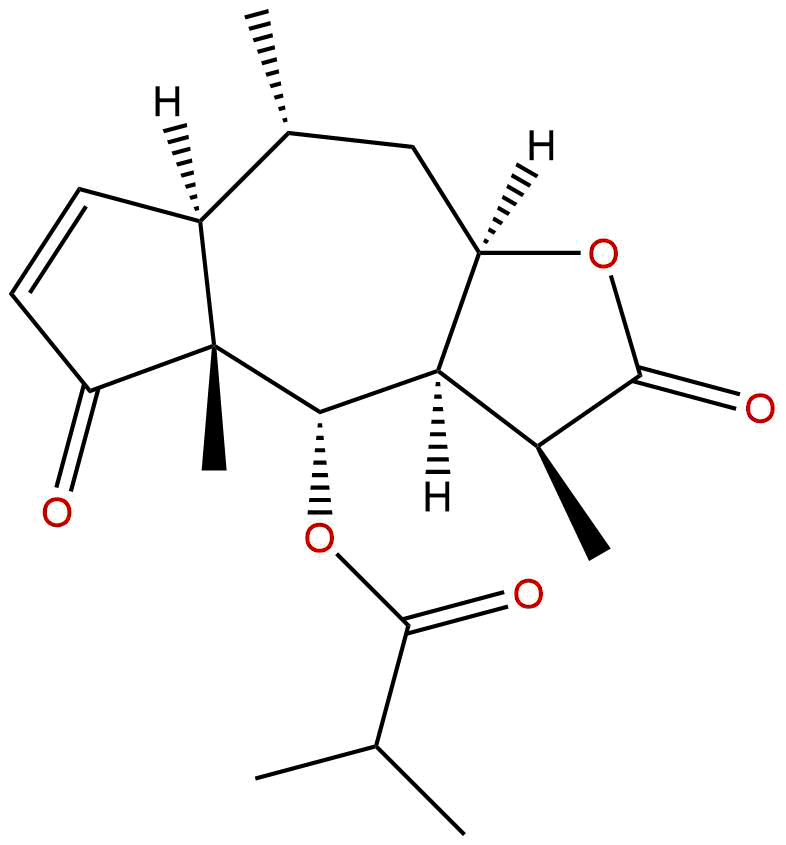


Product name: Arnicolide C
Synonym name: Isobutyroylplenolin
Catalogue No.: BP4031
Cas No.: 34532-67-7
Formula: C19H26O5
Mol Weight: 334.412
Botanical Source: Centipeda minima(L.)A.Br.et Aschers.
Physical Description:
Type of Compound: Terpenoids
Purity: 95%~99%
Analysis Method: HPLC-DAD or/and HPLC-ELSD
Identification Method: Mass, NMR
Packing: Brown vial or HDPE plastic bottle
Storage: Store in a well closed container, protected from air and light. Put into refrigerate or freeze for long term storage.
Whenever possible, you should prepare and use solutions on the same day. However, if you need to make up stock solutions in advance, we recommend that you store the solution as aliquots in tightly sealed vials at -20℃. Generally, these will be useable for up to two weeks.
The product could be supplied from milligrams to grams
Inquire for bulk scale.
For Reference Standard and R&D, Not for Human Use Directly.
Storage conditions:Short-term storage at 2~8℃, long-term storage at -20 ~ -80℃
Arniclide C, CAS number 34532-67-7, is a species derived from the Asteraceae plant genus Arniclide(Arnica The natural product isolated from spp belongs to the class of sesquiterpene lactones. In recent years, with the rapid development of natural product pharmacology, coumarin C has gradually become a research hotspot due to its significant anti-inflammatory activity and excellent pharmacokinetic properties. Inflammatory response plays a central role in the pathogenesis of various diseases, including autoimmune diseases, chronic inflammatory diseases, and certain neurodegenerative diseases. The development of new drugs with efficient anti-inflammatory effects and good safety is an important direction for current drug research and development. Shanjin Chelide C exhibits broad-spectrum anti-inflammatory potential by regulating various inflammation related molecular targets, and has good blood-brain barrier penetration ability, indicating its potential application in central nervous system inflammatory diseases. This article provides a systematic review of the chemical structure, plant origin, pharmacological activity, mechanism of action, pharmacological evaluation, and clinical application prospects of Shan Jin Che lactone C. The aim is to provide theoretical basis and research direction for further research and drug development of this natural product.
Shan Jin Che lactone C is a sesquiterpene lactone compound with a molecular formula of C20H26O5 and a molecular weight of 334.4120. Its structural features include a typical lactone ring and multiple unsaturated bonds, endowing it with unique biological activity. The LogP value of this compound is 2.5255, indicating that it has moderate lipid solubility, which is beneficial for membrane penetration and in vivo distribution. The topological polar surface area (TPSA) is 69.67 Å ², indicating that it has a certain polarity that facilitates binding with biomolecule targets. The low water solubility (0.0751 mg/mL) suggests that it may require appropriate dosing optimization in vivo to improve bioavailability. It is worth noting that Shan Jin Che lactone C has a high blood-brain barrier penetration ability, which provides the possibility for its application in central nervous system related diseases. In addition, the hERG channel inhibition experiment showed a negative result, indicating a low risk of cardiac toxicity; The Ames mutagenicity test result is 0.0, indicating no significant genetic toxicity risk and good safety.
Shanjinche lactone C mainly exists in plants of the Shanjinche genus, especially Arnica montana Among flowers and leaves of related species. Plants of the genus Shanjinche are widely used in traditional medicine for anti-inflammatory, analgesic, and wound healing promotion purposes. Due to the pharmacological activity of its sesquiterpene lactones, coumarin C has become a focus of research.
The extraction method usually uses organic solvent extraction combined with column chromatography separation technology. The specific steps include: crushing the dried camellia flowers or leaves, refluxing with ethanol or methanol for extraction, concentrating the extract, separating it by silica gel column chromatography, and using gradient elution to obtain components rich in camellia lactone C. High performance liquid chromatography (HPLC) and mass spectrometry (MS) techniques are used for purity detection and structural confirmation. In recent years, green extraction technologies such as ultrasound assisted extraction and supercritical CO2 extraction have also been applied to improve extraction efficiency and purity, reduce the use of organic solvents, and conform to the modern concept of green chemistry for natural products.
The main pharmacological activity of Shan Jin Che lactone C is its anti-inflammatory effect. Both in vitro cell models and in vivo inflammation models have confirmed that it significantly inhibits the production of inflammatory mediators and the activation of inflammatory cells. In macrophages and monocytes, coumarin C can significantly inhibit the expression of pro-inflammatory cytokines such as tumor necrosis factor alpha (TNF - α), interleukin-6 (IL-6), and nitric oxide synthase type 2 (NOS2), reducing inflammatory response. In the acute inflammation model of mice, oral or local administration can effectively reduce inflammatory indicators such as edema, redness and swelling, and infiltration of inflammatory cells.
Due to its excellent blood-brain barrier penetration, Shan Jin Che lactone C has shown potential neuroprotective effects in models of neuroinflammation and neurodegenerative diseases. By regulating neuroinflammation related ion channels such as TRPV1 and TRPA1, neuropathic pain and inflammatory response can be alleviated. In addition, its regulation of the neuronal apoptosis related protein CASP1 suggests that it may exert a protective effect by inhibiting inflammation mediated cell death mechanisms.
Partial studies have shown that Shan Jin Che lactone C also has antioxidant and immune regulatory effects, which can regulate the nuclear factor kappa B (NF - κ B) signaling pathway, alleviate oxidative stress damage, and promote immune homeostasis. These effects provide theoretical support for its application in various inflammation related diseases.
The anti-inflammatory mechanism of Shan Jin Che lactone C involves the synergistic regulation of multiple signaling pathways and molecular targets:
IL-6/STAT3 pathway IL-6 is a key pro-inflammatory cytokine that mediates inflammatory responses through the STAT3 signaling pathway. Shanjin Chelide C can inhibit the expression of IL-6 and the phosphorylation of STAT3, block the transmission of inflammatory signals, and reduce the release of inflammatory mediators.
NF - κ B signaling pathway As a core regulatory factor of inflammatory response, NF - κ B regulates the expression of various inflammatory genes. Shanjin Chelide C inhibits the activation of NF - κ B, reduces the expression of pro-inflammatory factors such as TNF - α and PTGS2 (COX-2), and thus alleviates the inflammatory response.
CASP1 regulation CASP1, as a key component of inflammasomes, participates in the maturation and release of pro-inflammatory cytokines. Shanjin Chelide C inhibits the activity of CASP1, reduces the production of cytokines such as IL-1 β, and suppresses the inflammatory cascade reaction.
TRPV1 and TRPA1 ion channels These two channels play important roles in inflammatory pain and neuroinflammation. Shan Jin Che lactone C alleviates the transmission of pain and inflammatory signals by regulating the activity of these two channels.
PTGS1 (COX-1) and PTGS2 (COX-2)The regulation of these two cyclooxygenases by Shan Jin Che lactone C helps to inhibit the synthesis of prostaglandins, alleviate inflammation and pain.
NOS2 inhibition By inhibiting inducible nitric oxide synthase (NOS2), excessive production of nitric oxide is reduced, oxidative stress and inflammatory damage are lowered.
In summary, Shan Jin Che lactone C achieves effective regulation of inflammatory response through multi-target and multi pathway synergistic effects, demonstrating broad-spectrum and precise anti-inflammatory effects.
The pharmacological evaluation of Shan Jin Che lactone C shows that it has good potential for drug development. Its molecular weight (334.4 Da) and LogP (2.53) comply with Lipinski's rules, indicating good oral bioavailability. TPSA (69.67 Å ²) is moderate and beneficial for cell membrane penetration and target binding. Although the water solubility is low, it can be improved through formulation technology.
The high penetrability of the blood-brain barrier gives it a unique advantage in the treatment of central nervous system inflammatory diseases. The hERG channel inhibition experiment was negative, reducing the risk of cardiac toxicity. The Ames mutagenicity test result is negative, indicating good safety.
Pharmacokinetic studies have shown that Shan Jin Che lactone C is rapidly absorbed orally, has a moderate plasma half-life, and is widely distributed in the body, especially at high concentrations in brain tissue. The main metabolic pathways are liver enzyme mediated oxidation and hydroxylation, and the metabolites have no significant toxicity. The main excretion pathways are bile and urine.
Shan Jin Che lactone C has broad clinical application prospects due to its excellent anti-inflammatory activity and good drug properties. Firstly, in chronic inflammatory diseases such as rheumatoid arthritis and inflammatory bowel disease, coumarin C can serve as a new candidate for anti-inflammatory drugs, replacing or assisting traditional nonsteroidal anti-inflammatory drugs (NSAIDs) to reduce side effects. Secondly, given its excellent blood-brain barrier penetration ability, Shan Jin Che lactone C has shown potential advantages in the treatment of neuroinflammation, neurodegenerative diseases (such as Alzheimer's disease, multiple sclerosis), and neuropathic pain. In addition, its ability to regulate multiple targets is suitable for multidimensional interventions in complex diseases.
Future research should focus on optimizing its formulation form, improving bioavailability and targeting; Thoroughly analyze its mechanism of action, especially the molecular networks related to immune regulation and neuroprotection; Conduct systematic toxicological evaluation and preclinical research to lay the foundation for clinical trials. At the same time, combining modern drug design techniques such as structural modification and nanocarrier delivery can enhance its efficacy and safety.
Shan Jin Che lactone C, as a typical natural sesquiterpene lactone, has shown great potential as a new type of anti-inflammatory drug due to its significant anti-inflammatory activity, multi-target regulatory mechanism, and good drug properties. Its modern scientific research based on traditional medicine provides an important example for the development of natural product pharmacology. In the future, through interdisciplinary collaboration and deepening research on its pharmacological mechanisms and clinical applications, Shan Jin Che lactone C is expected to become an effective drug for treating various inflammation related diseases, contributing new strength to human health.
