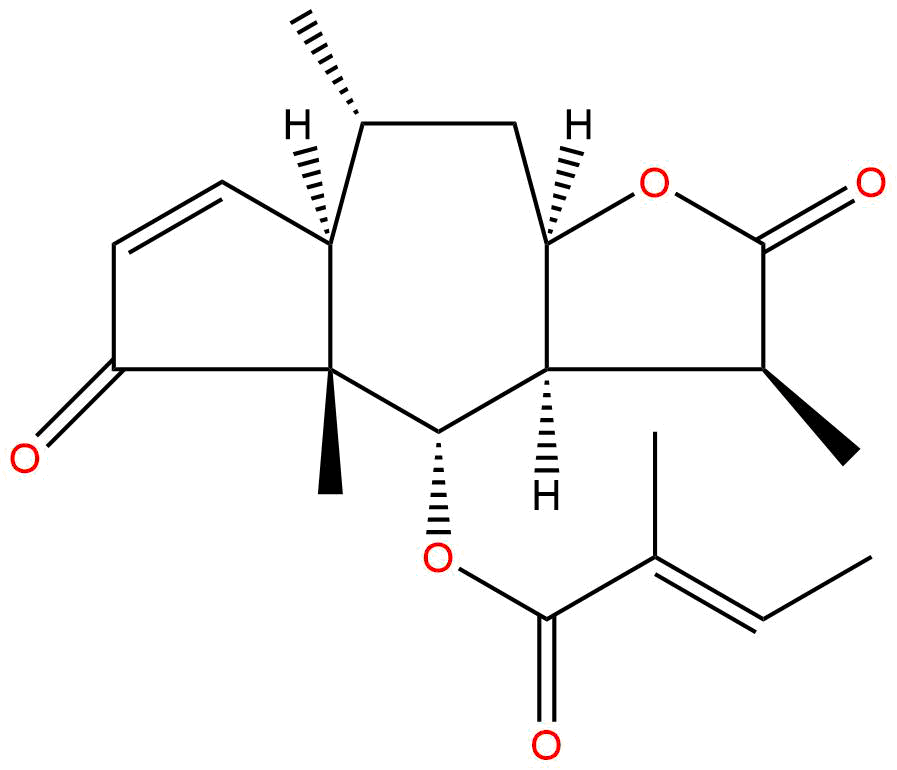


Product name: Microhelenin C
Synonym name: 11,13-Dihydrohelenalin tiglate; 6-O-Tigloyl-11,13-dihydrohelenalin
Catalogue No.: BP4468
Cas No.: 63569-07-3
Formula: C20H26O5
Mol Weight: 346.423
Botanical Source:
Type of Compound:
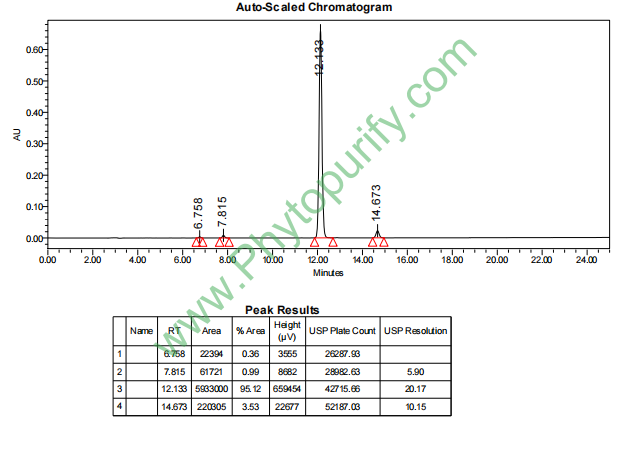
Purity: 95%~99%
Analysis Method: HPLC-DAD or/and HPLC-ELSD
Identification Method: Mass, NMR
Packing: Brown vial or HDPE plastic bottle
Storage: Store in a well closed container, protected from air and light. Put into refrigerate or freeze for long term storage.
Whenever possible, you should prepare and use solutions on the same day. However, if you need to make up stock solutions in advance, we recommend that you store the solution as aliquots in tightly sealed vials at -20℃. Generally, these will be useable for up to two weeks.
The product could be supplied from milligrams to grams
Inquire for bulk scale.
For Reference Standard and R&D, Not for Human Use Directly.
HPLC of Microhelenin C
Storage conditions:Short-term storage at 2~8℃, long-term storage at -20 ~ -80℃
69.6700
2.7324
2.7324
.0638
4.3336
18.7988
High
63.5337
4.8709
No
Yes
No
No
Yes
No
0.0
Yes
Yes
Yes
Yes
Natural products have long been an important source of innovative drug discovery, among which sesquiterpene lactones have attracted much attention due to their structural diversity and significant biological activity. Microhelenin C (CAS number: 63569-07-3) is an outstanding representative of this type of compound. As a plant derived from the Asteraceae family Helenium microcephalum The sesquiterpene lactone obtained from the separation not only exhibits classic anti-inflammatory and anti-tumor activities, but also its unique anti malaria potential makes it a star molecule in multi-target pharmacological research. Early studies revealed its in vivo inhibitory activity against Walker 256 carcinosarcoma and clarified its molecular basis for inhibiting the production of pro-inflammatory cytokines by regulating key signaling pathways such as JAK/STAT and ERK. In recent years, with increasing attention to the issue of drug resistance in malaria parasites, the potential effects of Scutellaria baicalensis C on multiple malaria parasite targets (such as PFCRT, PFMDR1, PFDHFR, etc.) have given it new research dimensions. This article aims to provide a systematic review of the chemical properties, plant sources, pharmacological activities, mechanisms of action, pharmacological properties, and application prospects of Scutellaria baicalensis C in cancer, inflammation, and anti malaria fields, in order to provide comprehensive academic references for the in-depth development and interdisciplinary research of this compound.
The molecular formula of Xiaoduixin C is C20H26O5, with a molecular weight of 346.4230 Da. Its core structure is a typical sesquiterpene lactone skeleton, usually containing a cyclopentane cycloheptane (guaiane type) or similar core ring system, and connected to the key pharmacophore of α - methylene - γ - lactone. This group is an important structural basis for many sesquiterpene lactones to exert biological activities, especially anti-inflammatory and anti-tumor activities, as it can act as a Michael reaction receptor and covalently bind with biomolecules such as thiol groups in proteins.
In terms of physical and chemical properties, the calculated lipid water partition coefficient (LogP) of Scutellaria baicalensis C is 2.7324, indicating its moderate lipophilicity, which facilitates its penetration into cell membranes. Its topological polar surface area (TPSA) is 69.6700 Å ², which is relatively low, further supporting its good membrane permeability. The water solubility data (0.0638 mg/mL) shows that it belongs to insoluble compounds, which are commonly found in natural sesquiterpene lactones and are also one of the challenges that need to be overcome in their formulation development. It is worth noting that its predicted blood-brain barrier permeability is "high", indicating that the compound may have the potential to act on central nervous system related diseases, such as brain tumors or inflammation. Preliminary safety predictions indicate that the risk of hERG inhibition is' no ', and the Ames test result is 0.0 (indicating no mutagenicity), providing early support for its relatively good safety profile.
Xiaoduixin C mainly comes from plants in the Asteraceae family, the genus Duixin Helenium microcephalum(Often referred to as Xiaotouduixin Chrysanthemum). This genus of plants has been used in traditional medicine, and modern plant chemistry research has isolated a series of structurally similar microhelicin sesquiterpene lactones from it.
Its extraction and separation usually follow the standard process of natural product chemistry. Firstly, collect the aboveground parts of plants (such as whole plants or inflorescences), dry and crush them. The commonly used preliminary extraction solvents include methanol, ethanol, or a mixture of dichloromethane and methanol, which are carried out through methods such as impregnation, percolation, or heating reflux. After obtaining the crude extract, solvent partitioning (such as liquid-liquid extraction) is used for preliminary fractionation, often using solvent systems with increasing polarity such as petroleum ether, ethyl acetate, n-butanol, and water. Xiaoduixin C is mostly enriched in the moderately polar ethyl acetate fraction.
Further purification relies on various chromatographic techniques. Silica gel column chromatography is commonly used for preliminary separation, with different ratios of petroleum ether ethyl acetate or chloroform methanol gradient elution. Subsequently, high-purity small core chrysanthemum C monomer compounds were obtained through methods such as reverse phase silica gel column chromatography (using C18 packing with methanol water or acetonitrile water as mobile phase), high performance liquid chromatography (HPLC), or preparative thin layer chromatography (PTLC) for fine purification. Structural identification involves the comprehensive use of techniques such as nuclear magnetic resonance (NMR, including 1H, 13C, 2D-NMR), mass spectrometry (MS), infrared spectroscopy (IR), and X-ray single crystal diffraction.
Xiaoduixin C exhibits various pharmacological activities, mainly focused on anti-inflammatory, anti-tumor, and antiparasitic fields.
anti-inflammatory activity This is one of the earliest activities of Xiaoduixin C that has been extensively studied. Research has shown that in a macrophage inflammation model induced by stimuli such as lipopolysaccharides (LPS), Scutellaria baicalensis C can significantly inhibit the production of various key pro-inflammatory cytokines, including interleukin-6 (IL-6), interleukin-1 β (IL-1 β), tumor necrosis factor - α (TNF - α), and chemokine CXCL1. This broad inhibitory effect suggests that it acts on key nodes upstream of the inflammatory signaling pathway.
Antitumor activity Xiaoduixin C exhibits anti-tumor potential both in vitro and in vivo. The most representative study is its in vivo inhibitory activity against Walker 256 carcinosarcoma in rats. Walker 256 carcinosarcoma is a classic model that grows rapidly and can be used to evaluate the efficacy of anti-tumor drugs. The activity of Xiaoduixin C in this model confirms its ability to directly or indirectly inhibit the growth of solid tumors. Its anti-tumor mechanism may be related to its induction of cell apoptosis, inhibition of cell proliferation, and regulation of inflammatory responses in the tumor microenvironment.
Antimalarial activity This is a highly promising research direction for Xiaoduixinsu C. Although direct anti malaria activity data has not been fully reported in public literature, its known chemical structure and pharmacological properties, combined with computational simulations and target association analysis, suggest that it may act on multiple key targets of malaria parasites. These potential targets include: those associated with chloroquine resistance PfCRT(Chloroquine resistance transporter) and PfMDR1(multidrug resistance protein 1), dihydrofolate reductase(PFDHFR The target of ethylamine pyrimidine, Kelch13 protein(PFK13 Artemisinin resistance related), sarcoplasmic reticulum/endoplasmic reticulum calcium ATPase(PFATP6 Traditional targets, cytochrome bc1 complex(PFCYTb Atorvastatin targets, as well as those involved in parasitic autophagy processes PfATG8 Wait. Its inhibitory effect on inflammatory pathways may also help alleviate pathological damage caused by malaria infection.
The pharmacological mechanism of Xiaoduixin C is multi-level and multi-target, mainly involving the regulation of key signaling pathways within cells.
Anti inflammatory and immune regulatory mechanisms The core mechanism is to inhibit the JAK/STAT and MAPK signaling pathways. Research has shown that Scutellaria baicalensis C can effectively inhibit tyrosine phosphorylation of JAK1 and JAK2, thereby blocking the activation and nuclear translocation of downstream transcription factors STAT1 and STAT3. STAT3 is an important hub connecting chronic inflammation and tumorigenesis. At the same time, it can also inhibit the phosphorylation of extracellular signal regulated kinase (ERK), which is a key link in the MAPK pathway. By synergistically inhibiting these pathways, Xiaoduixin C suppresses the expression of cytokine genes such as IL-6 and TNF - α at the transcriptional level, thereby exerting a powerful anti-inflammatory effect. The α - methylene - γ - lactone group in its structure may undergo Michael addition reactions with key cysteine residues in these kinases or upstream adapter proteins, achieving covalent modification and functional inhibition.
Antitumor mechanism In addition to indirectly inhibiting tumors through the anti-inflammatory microenvironment mentioned above, Xiaoduixin C may directly act on tumor cells. Inhibition of sustained activation of STAT3 can directly lead to inhibition of tumor cell proliferation and increased apoptosis. In addition, sesquiterpene lactones can often induce the production of reactive oxygen species (ROS), disrupt mitochondrial function, activate caspase cascade reactions, and thus trigger the intrinsic apoptotic pathway of tumor cells. Its activity against Walker 256 carcinosarcoma may be the result of the combined action of these mechanisms.
Potential antimalarial mechanisms Its anti malarial potential may stem from interference with multiple essential survival targets of malaria parasites. For example, as a hydrophobic compound, it may competitively inhibit PfCRT or PfMDR1 The function is to reverse drug efflux, thereby creating a synergistic effect with existing antimalarial drugs. Its structure may also be similar to some known ones PFDHFR or PFCYTb Inhibitors that interfere with the folate metabolism or electron transport chain of malaria parasites. Correct PfATG8 The potential impact may interfere with the autophagy process of parasites, which is a relatively new anti malaria strategy. Its excellent blood-brain barrier permeability has special significance for the treatment of malignant malaria parasite infections that may cause cerebral malaria.
Based on its physicochemical parameters and preliminary biological activity, a preliminary evaluation of the pharmacological properties of Xiaoduixin C was conducted
Absorption and distribution Moderate LogP value (2.73) and lower TPSA indicate good intestinal absorption and cell membrane permeability potential. The prediction of high blood-brain barrier permeability is a significant advantage, providing the possibility for treating central nervous system related diseases such as brain tumors, sequelae of cerebral malaria, or neuroinflammation. However, its low water solubility may limit its oral bioavailability, which needs to be improved through formulation techniques such as nanocrystals, solid dispersions, liposomes, or cyclodextrin inclusion complexes.
Metabolism and excretion As a sesquiterpene lactone, its lactone ring may be hydrolyzed by esterases in vivo to form an inactive ring opening acid form, which is a common metabolic pathway for this type of compound. In addition, potential sites on its structure, such as double bonds and methyl groups, undergo oxidative metabolism by the cytochrome P450 enzyme system. At present, there is a lack of detailed in vivo metabolism and excretion research data, which is a gap that must be filled in future preclinical development.
Preliminary Safety Assessment The calculation prediction shows no risk of hERG inhibition and mutagenicity (Ames test negative), which is a positive starting point. However, many sesquiterpene lactones have potential cytotoxicity and irritability, and their therapeutic window (the range between effective dose and toxic dose) needs to be rigorously evaluated through systematic acute toxicity, subchronic toxicity, and genotoxicity experiments. The α - methylene - γ - lactone group, while exerting pharmacological effects, may also lead to non-specific protein alkylation, causing potential off target toxicity and allergic reactions.
Prospects of pharmacokinetics Future pharmacokinetic studies require comprehensive evaluation of blood drug concentration time curves, absolute bioavailability, tissue distribution (especially brain tissue), plasma protein binding rates, major metabolites, and excretion pathways (bile, urine) through intravenous and oral administration in small animals (rats, mice). These data are the key cornerstone for pushing it towards clinical research.
The diverse biological activities of Xiaoduixin C have brought broad application prospects in multiple therapeutic fields, but also face challenges.
cancer treatment As a dual inhibitor of STAT3 and inflammatory pathway, small acellin C has potential in the treatment of cancers closely related to chronic inflammation (such as liver cancer, colon cancer, pancreatic cancer). It can be considered as a sensitizer for chemotherapy or radiotherapy, or used to improve the tumor immune microenvironment. The effectiveness of the Walker 256 model provides preliminary evidence for its further development of anti solid tumor drugs. Future research should focus on its combined efficacy with existing anticancer drugs and explore its activity in more cancer cell lines and animal models.
Inflammatory diseases For autoimmune and chronic inflammatory diseases such as rheumatoid arthritis, inflammatory bowel disease, psoriasis, etc., the strong cytokine inhibitory ability of Xiaoduixin C is worth further exploration. Its high BBB permeability also makes it a candidate molecule for treating neuroinflammatory diseases such as multiple sclerosis and Alzheimer's disease.
Research and development of antimalarial drugs In the severe situation where malaria parasites have developed resistance to first-line drugs such as artemisinin, the multi-target potential of Xiaoduixin C is particularly valuable. It may be developed as a lead compound for a new generation of antimalarial drugs or used as a resistance reversal agent. It is urgent to conduct in vitro anti malaria activity testing (targeting sensitive and drug-resistant strains) and validate the efficacy in vivo in a mouse malaria model.
Challenges and Strategies:
Xiaoduixin C is a natural sesquiterpene lactone molecule with rich biological value. from Helenium microcephalum It has not only laid a solid pharmacological foundation in the fields of anti-inflammatory and anti-tumor by effectively inhibiting the JAK/STAT and MAPK signaling pathways, but also demonstrated new hope in the global fight against malaria due to its potential effects on multiple key targets of malaria parasites. Although there are challenges in drug formulation, especially in terms of water solubility and metabolic stability, modern medicinal chemistry and pharmaceutical technology provide multiple solutions to these problems. Future research should focus on further elucidating the specific mechanisms of its antimalarial activity, systematically completing preclinical pharmacological and pharmacokinetic evaluations, and enhancing its drug like properties through rational structural optimization. The research process of Xiaoduixin C once again confirms the importance of natural products as the source of innovative drugs. Its activity characteristics across multiple disease fields also reflect the value of multi-target therapy strategies in modern drug development. With the continuous deepening of research, Xiaoduixin C is expected to gradually grow from an excellent research tool molecule to a candidate drug for treating major diseases such as cancer, inflammation, and parasitic infections.
