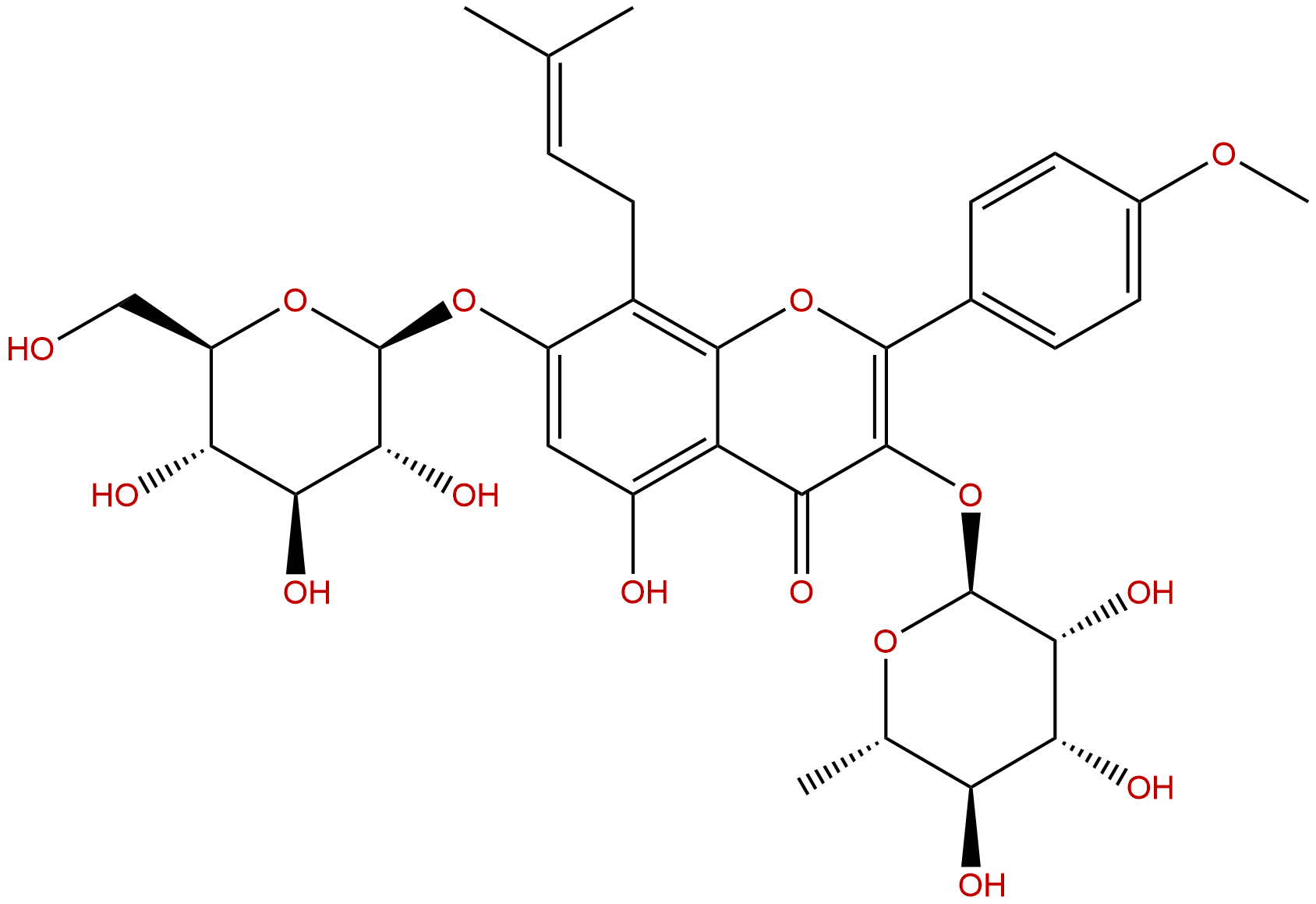


Product name: Icariin
Synonym name:
Catalogue No.: BP0757
Cas No.: 489-32-7
Formula: C33H40O15
Mol Weight: 676.668
Botanical Source: Epimedii folium
Physical Description:
Type of Compound: Flavonoids
Purity: 95%~99%
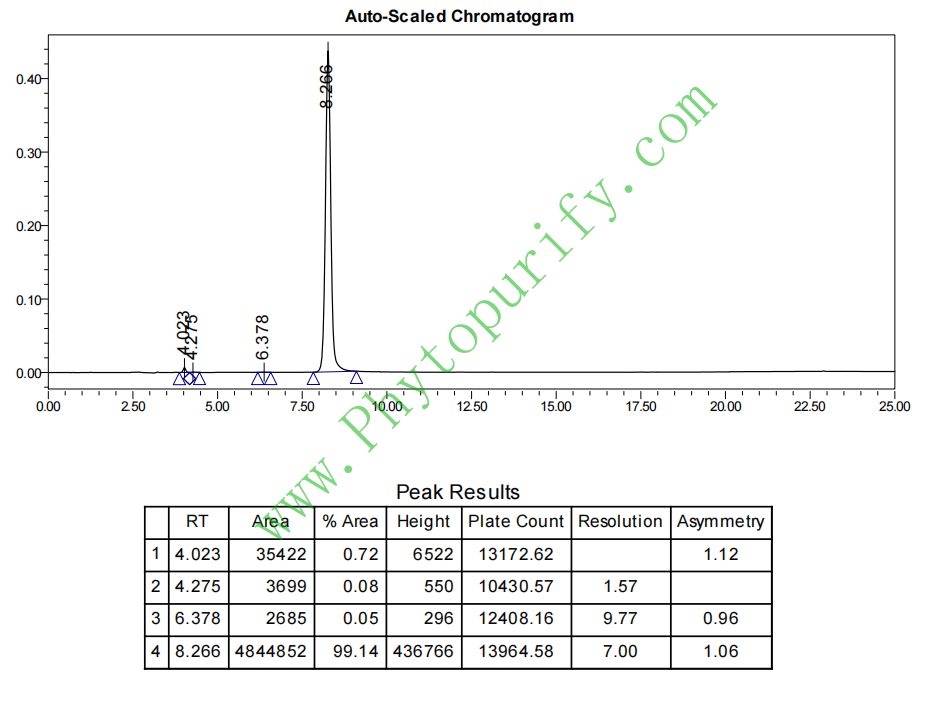
Analysis Method: HPLC-DAD or/and HPLC-ELSD
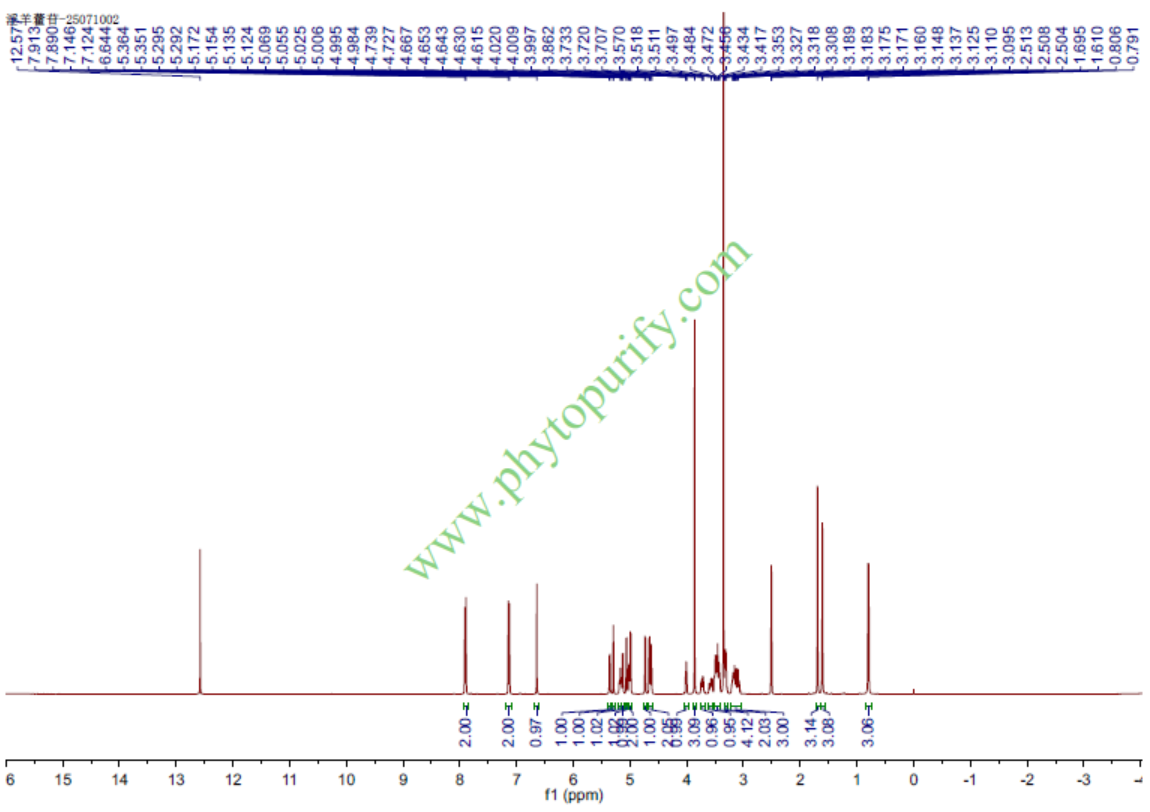
Identification Method: Mass, NMR
Packing: Brown vial or HDPE plastic bottle
The product could be supplied from milligrams to grams
Inquire for bulk scale.
Description:
Icariin inhibits PDE5 and PDE4 activities with IC50s of 432 nM and 73.50 μM, respectively. Icariin also is a PPARα activator. Icariin has been reported to have anti-hypoxic, phytoestrogenic, anti-osteoporotic, anti-inflammatory, neuroprotective, and anti-depressant-like activities. Icariin is effective in the attenuation of AHR and chronic airway inflammatory changes in OVA-induced murine asthma model, and this effect is associated with regulation of Th17/Treg responses. Icariin inhibited NF-κB signaling activation and the NLRP3-inflammasome/caspase-1/IL-1β axis.
References:
J Cell Biochem. 2015 Apr;116(4):580-8.
Icariin inhibits foam cell formation by down-regulating the expression of CD36 and up-regulating the expression of SR-BI.
Icariin is an important pharmacologically active flavonol diglycoside that can inhibit inflammation in lipopolysaccharide (LPS)-stimulated macrophages. However, little is known about the molecular mechanisms underlying the inhibitory effect of Icariin in the formation of foam cells.
METHODS AND RESULTS:
In this study, macrophages were cultured with LPS and oxidized low-density lipoprotein (oxLDL) in the presence or absence of Icariin. RT-PCR and western blot were used to detect the levels of mRNA and protein expression of CD36, scavenger receptor class B type I (SR-BI) and the phosphorylation of p38MAPK. It was demonstrated that 4 μM or 20 μM Icariin treatment significantly inhibited the cholesterol ester (CE)/total cholesterol (TC) and oxLDL-mediated foam cell formation (P < 0.05). The binding of oxLDL to LPS-activated macrophages was also significantly hindered by Icariin (P < 0.05). Furthermore, Icariin down-regulated the expression of CD36 in LPS-activated macrophages in a dose-dependent manner and CD36 over-expression restored the inhibitory effect of Icariin on foam cell formation. The phosphorylation of p38MAPK was reduced by Icariin, indicating that Icariin reduced the expression of CD36 through the p38MAPK pathway. In addition, Icariin up-regulated SR-BI protein expression in a dose-dependent manner, and SR-BI gene silencing restored the inhibitory effect of Icariin on foam cell formation. These data demonstrate that Icariin inhibited foam cell formation by down-regulating the expression of CD36 and up-regulating the expression of SR-BI.
CONCLUSIONS:
Therefore, our findings provide a new explanation as to why Icariin could inhibit atherosclerosis.
Immunobiology. 2015 Jun;220(6):789-97.
Regulation of Th17/Treg function contributes to the attenuation of chronic airway inflammation by icariin in ovalbumin-induced murine asthma model.
Icariin which is a flavonoid glucoside isolated from Epimedium brevicornu Maxim, has been reported to have anti-osteoporotic, anti-inflammatory and anti-depressant-like activities.
METHODS AND RESULTS:
In this study, we observed the effect of Icariin on airway inflammation of ovalbumin (OVA)-induced murine asthma model and the associated regulatory mode on T-helper (Th)17 and regulatory T (Treg) cell function. Our data revealed that chronic OVA inhalation induced a dramatic increase in airway resistance (RL) and decrease in the lung dynamic compliance (Cdyn), and Icariin and DEX treatment caused significant attenuation of such airway hyperresponsiveness (AHR). BALF cell counts demonstrated that Icariin and DEX led to a prominent reduction in total leukocyte as well as lymphocyte, eosinophil, neutrophil, basophil and monocyte counts. Histological analysis results indicated that Icariin and DEX alleviated the inflammatory cells infiltrating into the peribronchial tissues and goblet cells hyperplasia and mucus hyper-production. Flow cytometry test demonstrated that Icariin or DEX administration resulted in a significant percentage reduction in CD4+RORγt+ T cells and elevation of CD4+Foxp3+ T cells in BALF. Furthermore, Icariin or DEX caused a significant reduction in IL-6, IL-17 and TGF-β level in BALF. Unfortunately, Icariin had no effect on IL-10 level in BALF. Western blot assay found that Icariin or DEX suppressed RORγt and promoted Foxp3 expression in the lung tissue. qPCR analysis revealed that Icariin and DEX resulted in a notable decrease in RORγt and increase in Foxp3 mRNA expression in isolated spleen CD4+ T cell.
CONCLUSIONS:
In conclusion, our results suggested that Icariin was effective in the attenuation of AHR and chronic airway inflammatory changes in OVA-induced murine asthma model, and this effect was associated with regulation of Th17/Treg responses, which indicated that Icariin may be used as a potential therapeutic method to treat asthma with Th17/Treg imbalance phenotype.
Int Immunopharmacol. 2016 Jan;30:157-162.
Icariin attenuates cerebral ischemia-reperfusion injury through inhibition of inflammatory response mediated by NF-κB, PPARα and PPARγ in rats.
Icariin (ICA), an active flavonoid extracted from Chinese medicinal herb Epimedii, has been reported to exhibit many pharmacological effects including alleviating brain injury. However, little is known about the protection of ICA on ischemic stroke. Hence, this study was designed to investigate the neuroprotective effect of ICA and explore its underlying mechanisms on ischemic stroke induced by cerebral ischemia-reperfusion (I/R) injury in rats.
METHODS AND RESULTS:
The animals were pretreated with ICA at doses of 10, 30mg/kg twice per day for 3 consecutive days followed by cerebral I/R injury induced by middle cerebral artery occlusion (MCAO) for 2h and reperfusion for 24h. Neurological function and infarct volume were observed at 24h after reperfusion, the protein expression levels of interleukin-1β (IL-1β), transforming growth factor-β1 (TGF-β1), PPARα and PPARγ, inhibitory κB-α (IκB-α) degradation and nuclear factor κB (NF-κB) p65 phosphorylation were detected by Western blot, respectively. It was found that pretreatment with ICA could decrease neurological deficit score, diminish the infarct volume, and reduce the protein levels of IL-1β and TGF-β1. Moreover, ICA suppressed IκB-α degradation and NF-κB activation induced by I/R. Furthermore, the present study also showed that ICA up-regulated PPARα and PPARγ protein levels.
CONCLUSIONS:
These findings suggest that ICA has neuroprotective effect on ischemic stroke in rats through inhibition of inflammatory responses mediated by NF-κB and PPARα and PPARγ.
HPLC of Icariin
HNMR of Icariin
Storage conditions:Short-term storage at 2~8℃, long-term storage at -20 ~ -80℃
238.2000
1.0204
1.0147
1.3320
.4718
.3892
Low
81.1544
4.9122
Yes
No
Yes
No
No
No
0.0
Yes
Yes
Yes
Yes
Icariin (ICA), also known as 8-isoprenyl kaempferol-3,7-O - α - L-rhamnosyl-4 ′ - O - β - D-glucoside, is a flavonol glycoside with an isoprenyl structure. Its CAS number is 489-32-7. As the most abundant and representative active ingredient in traditional Chinese medicine Epimedium spp., icariin has been used since ancient times to treat diseases such as kidney yang deficiency and muscle and bone weakness due to its "nourishing essence and qi, strengthening muscles and bones" effects. Modern pharmacological research has revealed that icariin exhibits a wide range of biological activities, especially in the field of anti osteoporosis research, which is the most in-depth and systematic, demonstrating enormous therapeutic potential. Its mechanism of action involves multi-target and multi pathway regulation, including but not limited to regulating nuclear receptors, affecting key signaling pathways of bone metabolism, and regulating inflammatory factors. In addition, studies have found that icariin has inhibitory effects on phosphodiesterase (PDE) and can activate peroxisome proliferator activated receptor alpha (PPAR alpha), suggesting that it may also play a role in cardiovascular, metabolic, and neurological diseases. This article aims to systematically review the chemical structure, plant origin, pharmacological activity, molecular mechanism of action, pharmacological characteristics, and clinical application prospects of icariin, in order to provide comprehensive scientific references for the in-depth research and development of this natural product.
The molecular formula of icariin is C33H40O15, with a molecular weight of 676.6680. Its chemical structure is composed of Kaempferol as the aglycone, with an isopentenyl group attached to the 8th position of the A ring. This is a key structural feature that distinguishes it from most flavonoids and is believed to be closely related to its unique biological activity. The isopentenyl group enhances the lipophilicity of the molecule and may affect its binding mode with target proteins. In terms of glycosylation, the 3rd and 7th hydroxyl groups of kaempferol are respectively linked to an α - L-rhamnose to form a di rhamnose group; And the 4 'hydroxyl group is connected to a β - D-glucose group. This complex glycosylation structure determines its water solubility and bioavailability characteristics.
From the perspective of pharmacological parameters, the theoretical lipid water partition coefficient (LogP) of icariin is about 1.02, indicating its lipophilicity but not high lipid solubility. Its topological polar surface area (TPSA) is as high as 238.20 Å ², which is mainly attributed to the numerous hydroxyl and glycosyl oxygen atoms in the molecule, leading to its strong ability to form hydrogen bonds. The water solubility data is 1.332 mg/mL, which belongs to the category of slight solubility. The high TPSA and glycosylation structure make it difficult for it to efficiently penetrate the blood-brain barrier (BBB permeability is low), which limits its direct effects on central nervous system diseases, but may also reduce potential neurological side effects. In the early safety evaluation, icariin did not show significant hERG potassium channel inhibitory activity (low risk of arrhythmia), and the Ames test result was negative (no mutagenicity), providing preliminary favorable evidence for its safety.
Epimedium glycoside is mainly derived from various plants in the Epimedium L. genus of the Berberidaceae family, such as E. koreanum Nakai, E. sagittatum Maxim, E. pubescens Maxim, and E. wushanense T.S. Ying. Its content varies significantly depending on the species, place of origin, harvest season, and medicinal parts (mainly leaves), usually ranging from 0.1% to 1.5%. It is the main indicator component for evaluating the quality of Epimedium medicinal materials.
Traditionally, solvent extraction is commonly used to extract icariin from plant materials. Ethanol and methanol have become commonly used solvents due to their good solubility in flavonoid glycosides, with ethanol being more suitable for industrial production due to its high safety and low cost. Common extraction methods include hot reflux extraction, ultrasound assisted extraction, and microwave-assisted extraction, the latter two of which can effectively shorten extraction time and improve extraction efficiency. After concentration, the extract needs to be further purified to obtain high-purity icariin. Purification techniques include:
1. Macroporous adsorption resin chromatography method The most commonly used preliminary enrichment method is to use resins (such as AB-8, D101, HPD series) to adsorb icariin and gradient elution with different concentrations of ethanol solution, which can effectively remove impurities such as polysaccharides and proteins.
2. Silica gel column chromatography Commonly used for further separation and purification, gradient elution is performed using chloroform methanol or dichloromethane methanol systems as mobile phases.
3. Preparation type high-performance liquid chromatography method Used to obtain high-purity (>98%) icariin standard or control samples, but the cost is relatively high.
In recent years, some new technologies such as high-speed countercurrent chromatography (HSCCC) have also been applied for the separation and purification of icariin due to their advantages of no solid adsorbent and high sample recovery rate.
Epimedium glycoside has a wide range of pharmacological activities, among which its anti osteoporosis effect is the most prominent and clear.
Anti osteoporosis effect Numerous in vitro and in vivo studies have confirmed that icariin can effectively prevent and treat various types of osteoporosis models, such as ovariectomy, glucocorticoid induction, and aging. Its characteristic function is "bidirectional regulation": it can promote bone formation and inhibit bone resorption. Specifically, it is manifested as significantly increasing bone density (BMD), improving bone microstructure (such as the number and thickness of bone trabeculae), and enhancing bone biomechanical strength (maximum load, elastic modulus). At the cellular level, icariin can promote the proliferation, differentiation, and mineralization of osteoblasts (such as MC3T3-E1, hFOB1.19), while inhibiting the differentiation and bone resorption function of osteoclasts (such as RAW264.7 cells induced by RANKL).
Inhibition of phosphodiesterase Epimedium glycoside is an inhibitor of PDE5 and PDE4, with IC50 values of 432 nM and 73.50 μ M, respectively. By inhibiting PDE5 and reducing the degradation of cyclic guanosine monophosphate (cGMP), the effect of nitric oxide (NO) can be simulated, which has potential value in relaxing blood vessels and improving erectile function. Inhibition of PDE4 may increase the level of cyclic adenosine monophosphate (cAMP), thereby exerting anti-inflammatory and neuroprotective effects.
PPAR α activation effect As an activator of PPAR α, icariin may be involved in regulating lipid metabolism, glucose homeostasis, and inflammatory response, providing a theoretical basis for its application in metabolic syndrome, non-alcoholic fatty liver disease, and other diseases.
Other activities Research has also shown that icariin has various pharmacological activities such as anti-inflammatory, antioxidant, anti-tumor, antidepressant, improving cognitive function, and protecting cardiovascular and neurological systems, demonstrating multi-target effects.
The anti osteoporosis and other pharmacological effects of icariin are achieved by regulating a complex molecular network involving multiple key targets and signaling pathways.
1. Regulating osteogenic targets and pathways:
* Nuclear receptors and transcription factors Epimedium glycoside can upregulate the expression or activity of estrogen receptor alpha (ESR1), partially mimicking the bone protective effect of estrogen. It can significantly promote the expression of key osteogenic transcription factors Runt related transcription factor 2 (RUNX2) and Osterix (SP7), the latter of which is the core switch for initiating osteoblast differentiation and transcription of bone matrix genes (such as type I collagen alpha 1 chain, COL1A1). Meanwhile, icariin also activates the vitamin D receptor (VDR), synergistically promoting bone metabolism balance.
* Wnt/β - catenin signaling pathway This is an important mechanism by which icariin promotes bone formation. It can downregulate the expression of osteopontin (SOST, an antagonist of the Wnt pathway), relieve its inhibition of the Wnt pathway, stabilize β - catenin incorporation into the nucleus, and activate the transcription of downstream osteogenic genes (such as BGLAP, also known as osteocalcin).
* Bone formation markers Epimedium glycoside can promote the synthesis and secretion of COL1A1 (the main component of bone matrix) and BGLAP (a marker of bone mineralization).
2. Regulating osteoclast related targets and pathways:
* RANKL/RANK/OPG system Epimedium glycoside can upregulate the expression of osteoprotegerin (OPG, TNFRSF11B) and downregulate the expression of receptor activator of nuclear factor kappa B ligand (RANKL), thereby reducing the RANKL/OPG ratio and inhibiting RANKL induced differentiation of osteoclast precursors into mature osteoclasts.
* Osteoclast specific enzyme It can inhibit the activity of tissue protease K (CTSK), which is a key enzyme for osteoclasts to degrade bone organic matrix, thereby directly weakening bone resorption function.
* Inflammation and matrix degradation Epimedium glycoside can inhibit the expression of matrix metalloproteinase 9 (MMP9), which is involved in osteoclast migration and bone matrix degradation. In addition, by inhibiting inflammatory pathways such as NF - κ B and reducing the production of osteoclasts (such as TNF - α, IL-1 β, IL-6), bone resorption is indirectly inhibited.
3. Other mechanisms of action:
*By inhibiting PDE5, enhancing the NO/cGMP pathway, improving endothelial function and blood flow.
*By activating PPAR α, regulating target gene expression, affecting lipid oxidation and energy metabolism.
*Through mechanisms such as antioxidant (activation of Nrf2 pathway) and anti apoptotic (regulation of Bcl-2/Bax, PI3K/Akt), it exerts cellular protective effects.
Although the pharmacological activity of icariin is clear, its pharmacological properties, especially oral bioavailability, are the main bottleneck restricting its clinical translation.
The clinical application prospects of icariin are broad, but it also faces challenges.
1. Main application directions:
* Prevention and treatment of osteoporosis This is the most promising indication for icariin. Compared to traditional anti osteoporosis drugs such as bisphosphonates, which pose a risk of jaw necrosis, and the inconvenient administration of teriparatide, icariin has the advantages of multi-target, bidirectional regulation, natural origin, and higher safety. Can be developed as prescription drugs or functional foods/health products for the prevention or treatment of postmenopausal osteoporosis and senile osteoporosis.
* erectile dysfunction Based on its PDE5 inhibitory activity, icariin may be developed as a plant-based ED therapeutic drug, which may have a different side effect profile compared to sildenafil and other drugs.
* Cardiovascular and metabolic diseases To explore its adjunctive therapeutic value in atherosclerosis, hypertension, heart failure and metabolic syndrome by using its PDE5 inhibition (vasorelaxation), PPAR α activation (lipid regulation), anti-inflammatory and antioxidant properties.
* Neuropsychiatric disorders Although BBB penetration is poor, its metabolites or indirect mechanisms such as peripheral anti-inflammatory and neurotrophic factor regulation may have an improving effect on depression, cognitive impairment, etc., which is worthy of further research.
2. Challenges and prospects:
* The issue of bioavailability Continuously optimizing new drug delivery systems or designing and synthesizing structural derivatives with higher bioavailability (prodrugs or simplified analogues) is the key to advancing the development of new drugs.
* Mechanism depth and systematicity Further use of systems biology, network pharmacology, chemical biology, and other methods is needed to comprehensively elucidate the precise network and dominant pathways of its multi-target effects, and clarify the core targets in its "Junchen Zuo Shi".
* Clinical Evidence Level Currently, most research is still in the preclinical stage. It is urgent to conduct rigorously designed and appropriately scaled randomized controlled clinical trials to provide advanced human efficacy, safety, and pharmacokinetic data.
* Quality Control and Standardization Ensure stable and controllable quality throughout the entire process from medicinal herb cultivation, extraction to formulation production, and establish quality standards that are in line with international standards.
* Potential for combination therapy Exploring the combined use of icariin with existing drugs such as calcium supplements, vitamin D, low-dose estrogen, etc., may result in synergistic effects, reducing their respective dosages and side effects.
In the future, with the continuous deepening of research on icariin and breakthroughs in formulation technology, it is expected to successfully transform from a traditional Chinese medicine active biomarker into an innovative drug with clear modern medical connotations.
Epimedium glycoside, as the core active ingredient of traditional Chinese medicine Epimedium, is a successful example of modern Chinese medicine research. From the traditional experience description of "strengthening yang and kidney, strengthening tendons and bones", to the scientific explanation of its multiple pharmacological activities such as anti osteoporosis, and the in-depth analysis of its complex molecular action network and pharmacological characteristics, it reflects the complete path of natural product research from experience to science. Its multi-target action characteristics are both advantageous and bring about the complexity of mechanism analysis. Currently, the research on icariin is in an important stage of transitioning from preclinical to clinical trials. Overcoming its bioavailability bottleneck and obtaining solid clinical evidence is the key to realizing its value as a modern drug. The development process of icariin not only provides new candidate molecules for the prevention and treatment of diseases such as osteoporosis, but also provides valuable ideas and references for innovative drug discovery based on traditional medical knowledge.
