Introduction/Overview
Natural products, as an important source of drug discovery, play an irreplaceable role in the history of human disease prevention and treatment. Chaihu, as the core medicinal plant source of traditional Chinese medicine "Chaihu", has been validated for thousands of years in clinical practice for its effects of relieving external heat, soothing the liver, and relieving depression. Modern pharmacological research reveals that the pharmacological substance basis of Bupleurum chinense mainly lies in a class of triterpenoid saponins it is rich in - saikosaponin. Saikosaponin F (SSF) is an important member of the saikosaponin family, with a CAS number of 62687-63-2. In recent years, with the rapid development of molecular biology and modern pharmacological techniques, SSF has attracted much attention due to its significant anti-inflammatory activity. Inflammation is the basic defense response of the body to injury or infection. However, uncontrolled chronic inflammation is the common pathological basis of various major diseases such as tumors, autoimmune diseases, neurodegenerative diseases, and metabolic syndrome. Therefore, the search for efficient and low toxicity new anti-inflammatory drugs is currently a research hotspot. This article aims to systematically review the chemical structure, plant origin, pharmacological activity, multi-target anti-inflammatory mechanism, pharmacological evaluation, and clinical application prospects of saikosaponin F, in order to provide comprehensive scientific references for the in-depth research and development of this compound.
Chemical structure and physicochemical properties
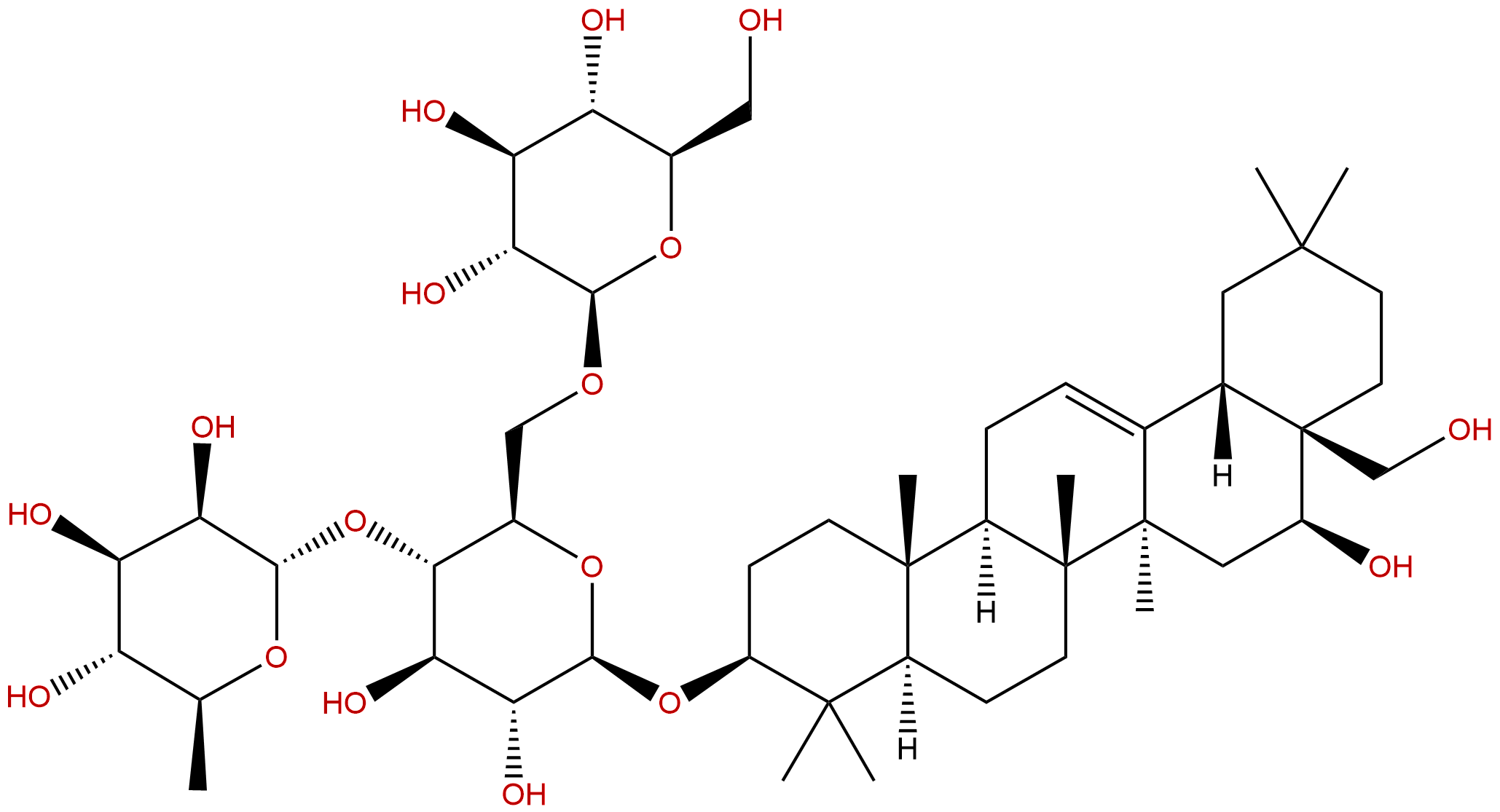
Chaihu saponin F belongs to the oleanane type pentacyclic triterpenoid saponin, with a molecular formula of C48H78O17 and a molecular weight of 929.1510. Its basic skeleton consists of hydrophobic triterpenoid glycosides (saikosaponin) and hydrophilic sugar chains. The glycoside part of SSF has a typical structure of oleane triterpenes, containing multiple hydroxyl groups and double bonds. Its sugar chain is partially connected to specific hydroxyl groups of glycosides, usually containing monosaccharide units such as glucose and fucose. This unique glycosylation pattern is a key determinant of its biological activity and physicochemical properties.
From the analysis of parameters related to drug properties, the lipid water partition coefficient (LogP) of SSF is 2.7207, indicating that it has a certain degree of lipophilicity, but not high hydrophobicity. Its topological polar surface area (TPSA) is as high as 277.9100 Å ², mainly attributed to the abundant hydroxyl groups in the molecule and oxygen atoms on the sugar chain, resulting in strong polarity. The water solubility data is 0.0355 mg/mL, which belongs to the category of slightly soluble to poorly soluble. This is a common feature of most triterpenoid saponins and one of the main challenges that need to be overcome for their oral absorption and formulation development. The prediction of blood-brain barrier permeability is "low", indicating that it is not easy to enter the central nervous system, which may reduce the risk of central nervous system side effects for anti-inflammatory drugs that mainly act on the peripheral system. In the preliminary safety screening, hERG inhibition was rated as' no ', indicating a low potential risk of cardiac toxicity; The Ames test result was 0.0, indicating that no mutagenicity was observed in this experimental system, providing preliminary safety support for its further development.
Plant sources and extraction methods
Chaihu saponin F mainly comes from various plants of the Bupleurum genus in the Umbelliferae family, including Bupleurum chinense DC. and Bupleurum scorzonerifolium Willd., which are authentic Chaihu included in the Chinese Pharmacopoeia. The content of SSF varies among different species, regions, harvest seasons, and medicinal parts (mainly roots).
Its extraction and separation usually follow the conventional process of natural product chemistry. Firstly, methanol, ethanol, or ethanol water mixed solvents are used for reflux extraction or ultrasound assisted extraction of dried roots of Bupleurum chinense to fully extract saponin components. Subsequently, the crude extract was preliminarily enriched and decolorized using macroporous adsorption resin (such as D101, AB-8) column chromatography, and polar impurities such as polysaccharides and inorganic salts were removed by water washing. Then, different concentrations of ethanol gradient elution was used to collect the saponin rich fraction. In order to further purify SSF monomer, it is necessary to use a variety of modern chromatographic techniques for combination and separation, usually using silica gel column chromatography, reverse phase silica gel column chromatography (such as ODS), dextran gel column chromatography (such as Sephadex LH-20) and high performance liquid chromatography (HPLC) to prepare chromatography. Among them, reverse phase HPLC has become a key step in obtaining high-purity SSF monomers due to its high resolution. C18 chromatography columns are commonly used, with methanol water or acetonitrile water as the mobile phase for elution. The optimization of extraction processes, such as solvent selection, temperature, time, and the application of new technologies such as microwave and supercritical fluid extraction, aims to improve the yield and purity of SSF while maintaining its biological activity.
Pharmacological activity research
The pharmacological activity research of saikosaponin F mainly focuses on the anti-inflammatory field and exhibits various effects.
1. Anti inflammatory effect: The anti-inflammatory activity of SSF is its most prominent pharmacological feature. SSF has shown significant inhibitory effects in various in vitro and in vivo inflammatory models. In the lipopolysaccharide (LPS) - induced macrophage (such as RAW264.7 cells) inflammation model, SSF can dose dependently inhibit the production of inflammatory mediators such as nitric oxide (NO) and prostaglandin E2 (PGE2). In acute inflammation models such as carrageenan or LPS induced paw swelling in mice and xylene induced ear swelling in mice, SSF administration can effectively reduce tissue edema and inflammatory cell infiltration. More importantly, in chronic autoimmune inflammatory disease models such as collagen induced arthritis (CIA) mouse models, SSF treatment can significantly improve pathological changes such as synovial hyperplasia, cartilage destruction, and bone erosion, and reduce arthritis scores.
2. Immune regulatory effect: Inflammation is closely linked to immune response. Research has shown that SSF can regulate immune cell function. It may affect the proliferation and differentiation of T lymphocytes, regulate the balance of helper T cell subsets such as Th1/Th2/Th17, and inhibit excessive B cell activation and antibody production, which may play a key role in improving autoimmune disease models.
3. Potential liver protective effects: Given that Chaihu has traditionally been used for liver and gallbladder diseases, some studies have also explored the hepatoprotective activity of SSF. In animal models of acute liver injury induced by carbon tetrachloride or acetaminophen, SSF pretreatment showed the potential to alleviate liver cell necrosis, reduce serum transaminase levels, and inhibit liver tissue inflammation, which may be related to anti-inflammatory and antioxidant mechanisms.
4. Other activities: There are also sporadic studies reporting that SSF may have antiviral, antidepressant, and other activities, but the relevant evidence chain is not yet complete and further systematic research is needed.
Mechanism of action and molecular targets
The anti-inflammatory effect of saikosaponin F is not achieved through a single pathway, but involves a complex multi-target regulatory network, mainly focusing on inhibiting the transmission of inflammatory signaling pathways and the expression of inflammatory mediators.
1. Regulating the NF - κ B signaling pathway: NF - κ B is the core transcription factor of inflammatory response. SSF can inhibit the activity of I κ B kinase (IKK, encoded by IKBKB), prevent the phosphorylation and degradation of I κ B α, and thus inhibit the nuclear translocation of NF - κ B (represented by RELA/p65 subunit). This directly leads to a decrease in transcription of a series of pro-inflammatory cytokine genes downstream, including tumor necrosis factor - α (TNF - α, encoded by TNF), interleukin-6 (IL-6), inducible nitric oxide synthase (iNOS, encoded by NOS2), and cyclooxygenase-2 (COX-2, encoded by PTGS2, whose isoenzymes PTGS1/COX-1 are also of interest).
2. Regulating the JAK-STAT signaling pathway: Especially the STAT3 pathway, which is continuously activated in chronic inflammation and cancer. SSF can inhibit the activation of JAK kinase triggered by the binding of cytokines such as IL-6 to their receptors, thereby reducing the phosphorylation (activation) of STAT3 and the transcription of downstream target genes, breaking the positive feedback loop of inflammation proliferation.
3. Inhibit NLRP3 inflammasome activation: The NLRP3 inflammasome is a key platform for sensing danger signals within cells and mediating the mature secretion of IL-1 β and IL-18. Studies have shown that SSF can inhibit the assembly and activation of NLRP3 inflammasome, specifically reducing the activation level of caspase-1 (CASP1), thereby reducing the release of mature IL-1 β, which is of great significance in inflammatory diseases such as gout and type 2 diabetes.
4. Adjusting ion channels and pain perception: SSF may have a regulatory effect on transient receptor potential vanillic acid subtype 1 (TRPV1) and transient receptor potential anchor protein subtype 1 (TRPA1) channels. These two channels are important sensors for pain and neurogenic inflammation. SSF may exert anti-inflammatory and analgesic effects by directly or indirectly inhibiting the excessive activation of these channels.
5. Affects other inflammatory mediators: SSF can also downregulate the activity of COX-1 (PTGS1) and reduce the synthesis of prostaglandins under basal conditions, which may be related to its antipyretic and analgesic effects in some models.
In summary, saikosaponin F acts on multiple key targets such as IKBKB, RELA, TNF, IL-6, STAT3, CASP1, NOS2, PTGS1, TRPV1, TRPA1, etc., forming a synergistic network to inhibit the inflammatory cascade reaction at the transcriptional, post-translational modification, and organelle functional levels. This provides a solid molecular basis for its treatment of complex and multifactorial chronic inflammatory diseases.
Evaluation of drug properties and pharmacokinetics
Although saikosaponin F exhibits excellent pharmacological activity, there are some challenges in its drug likeness, which is also a common problem faced by most natural saponin compounds.
Absorption, distribution, metabolism, excretion (ADME):
* Absorption: The high molecular weight, high TPSA, and poor water solubility of SSF severely limit its passive transmembrane diffusion, leading to potentially low oral bioavailability. It may undergo hydrolysis (deglycosylation) in the gastrointestinal tract under the action of acids and enzymes, and be converted into aglycones or other secondary saponins. The activity of these metabolites may differ from that of the prototype drug.
* Distribution: The predicted blood-brain barrier permeability is low, mainly distributed in peripheral tissues. The binding rate with plasma proteins and tissue-specific distribution data still need to be further studied and clarified through radioactive labeling or high-sensitivity mass spectrometry methods.
* Metabolism: The liver is its main metabolic site and may undergo phase I metabolism (such as oxidation and reduction) and phase II metabolism (such as glucuronidation and sulfation). The metabolism of gut microbiota also plays an important role, possibly through biotransformation through hydrolysis of sugar bonds.
* Excretion: It is speculated that its metabolites are mainly excreted through bile and kidneys.
Optimization strategy for drug properties:
1. Structural modification: By chemically modifying the sugar or glycoside groups of SSF, such as preparing prodrugs (such as esterification, forming amino acid conjugates to improve solubility or targeting), synthesizing more active analogs to improve their solubility, membrane permeability, and metabolic stability.
2. New drug delivery system: The use of pharmaceutical methods is an effective way to enhance its pharmacological properties. including:
* Nanoformulations: The preparation of liposomes, polymer nanoparticles, solid lipid nanoparticles, micelles, etc. can significantly improve their water solubility and stability, enhance cellular uptake, and may achieve passive targeting (such as EPR effect) or active targeting.
* Self microemulsion drug delivery system: Improve its oral absorption.
* Transdermal drug delivery system: Use its anti-inflammatory and analgesic activities to develop gel and patches to avoid first pass effects.
3. Pharmacokinetic studies: It is urgent to establish sensitive and specific biological analysis methods (such as LC-MS/MS) to systematically conduct complete pharmacokinetic studies on their absolute bioavailability, tissue distribution, metabolite identification, and excretion pathways in animals, providing a basis for dosage form design and clinical administration regimens.
Clinical application prospects and prospects
The in-depth study of saikosaponin F has shown broad and clear prospects for its clinical application, and also pointed out the future development direction.
Potential clinical application directions:
1. Autoimmune diseases such as rheumatoid arthritis: Based on its powerful multi-target anti-inflammatory and immune regulatory effects, as well as its precise efficacy in the CIA model, SSF is expected to be developed as a novel drug or adjuvant therapy for the treatment of rheumatoid arthritis, psoriatic arthritis, and other conditions.
2. Inflammatory pain: SSF can be used to treat chronic pain syndromes such as osteoarthritis pain and neuropathic pain by acting on pain related targets such as TRPV1/TRPA1 and inhibiting inflammatory mediators.
3. Metabolic inflammatory related diseases: Its inhibitory effect on NLRP3 inflammasome suggests that it has potential in treating chronic low-grade inflammation associated with metabolic diseases such as type 2 diabetes and non-alcoholic steatohepatitis.
4. skin disease: Topical preparations can be used to treat inflammatory skin diseases such as atopic dermatitis and contact dermatitis.
5. As a lead compound: Its unique chemical structure and clear multi-target mechanism of action make it an ideal lead compound for medicinal chemists to optimize its structure, develop a new generation of anti-inflammatory drugs with better drug properties and target selectivity.
Future research prospects:
1. In depth mechanism research: It is necessary to use technologies such as gene knockout/knock in animals and CRISPR-Cas9 to validate its key targets in more complex physiological and pathological environments, and clarify the precise weights and temporal relationships of its networked pharmacological effects.
2. System drug development: Key breakthroughs in its solubility and permeability bottlenecks, combined with computational chemistry and artificial intelligence assisted design, for rational structural modification; And vigorously promote the research and evaluation of formulations based on nanotechnology.
3. Security system evaluation: On the basis of completing preclinical pharmacology, it is necessary to strictly follow the Good Laboratory Practice (GLP) requirements for drug non clinical research, conduct comprehensive safety evaluations of acute toxicity, long-term toxicity, reproductive toxicity, genetic toxicity, etc., and clarify their treatment window.
4. Clinical translational studies: After obtaining sufficient preclinical data support, gradually advance clinical trials on human pharmacokinetics and efficacy, and explore the optimal dosing regimen for different indications.
5. Multi component collaborative research: As one of the active ingredients of traditional Chinese medicine Chaihu, studying the synergistic effects of SSF with other saponins in Chaihu (such as Chaihu saponins A and D) or with other traditional Chinese medicine components is in line with the holistic view of traditional Chinese medicine, and may also discover better efficacy safety combinations.
Conclusion
Chaihu saponin F, as the active ingredient of traditional Chinese medicine Chaihu, is a star molecule with clear multi-target anti-inflammatory activity discovered by modern science from natural treasure trove. From chemical structure to pharmacological mechanism, research has preliminarily outlined a clear map of its strong anti-inflammatory effects by regulating multiple key signaling pathways such as NF - κ B, JAK-STAT, NLRP3, and acting on a wide range of targets such as IKBKB, STAT3, CASP1, TRPV1, etc. Although it faces challenges such as poor water solubility and potential poor oral absorption in terms of drug properties, this also provides opportunities for innovation in the fields of pharmacy and medicinal chemistry. Through modern technological means such as structural modification and novel nano drug delivery systems, it is expected to overcome these obstacles and unleash its enormous therapeutic potential. In the future, with the continuous deepening of mechanism research, the gradual breakthrough of pharmaceutical bottlenecks, and the rigorous clinical evaluation, saikosaponin F is expected to move from laboratory to clinical practice, providing a new treatment option based on traditional and modern science for various major diseases such as rheumatoid arthritis, chronic pain, and metabolic inflammatory syndrome, and becoming a successful example of interpreting the modernization and internationalization of traditional Chinese medicine.