


Product name: Androsin
Synonym name: Glucoacetovanillone
Catalogue No.: BP0165
Cas No.: 531-28-2
Formula: C15H20O8
Mol Weight: 328.317
Botanical Source: Picrorhiza scrophulariiflora Pennell
Physical Description:
Type of Compound: Miscellaneous
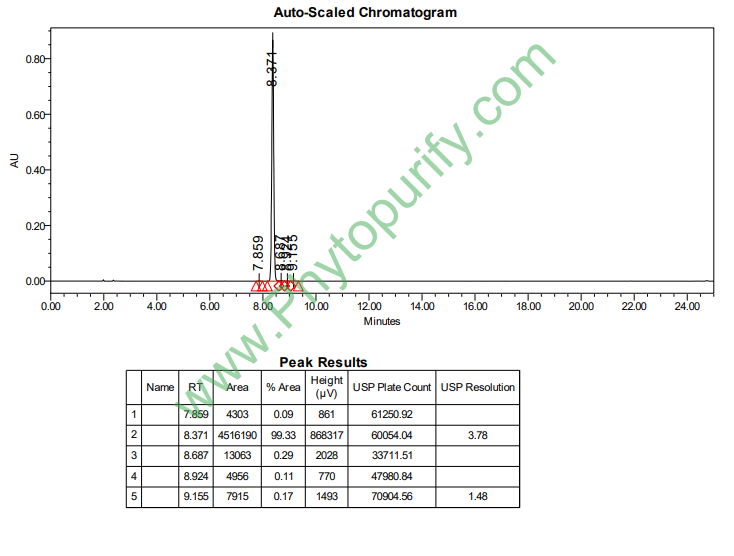
Purity: 95%~99%
Analysis Method: HPLC-DAD or/and HPLC-ELSD
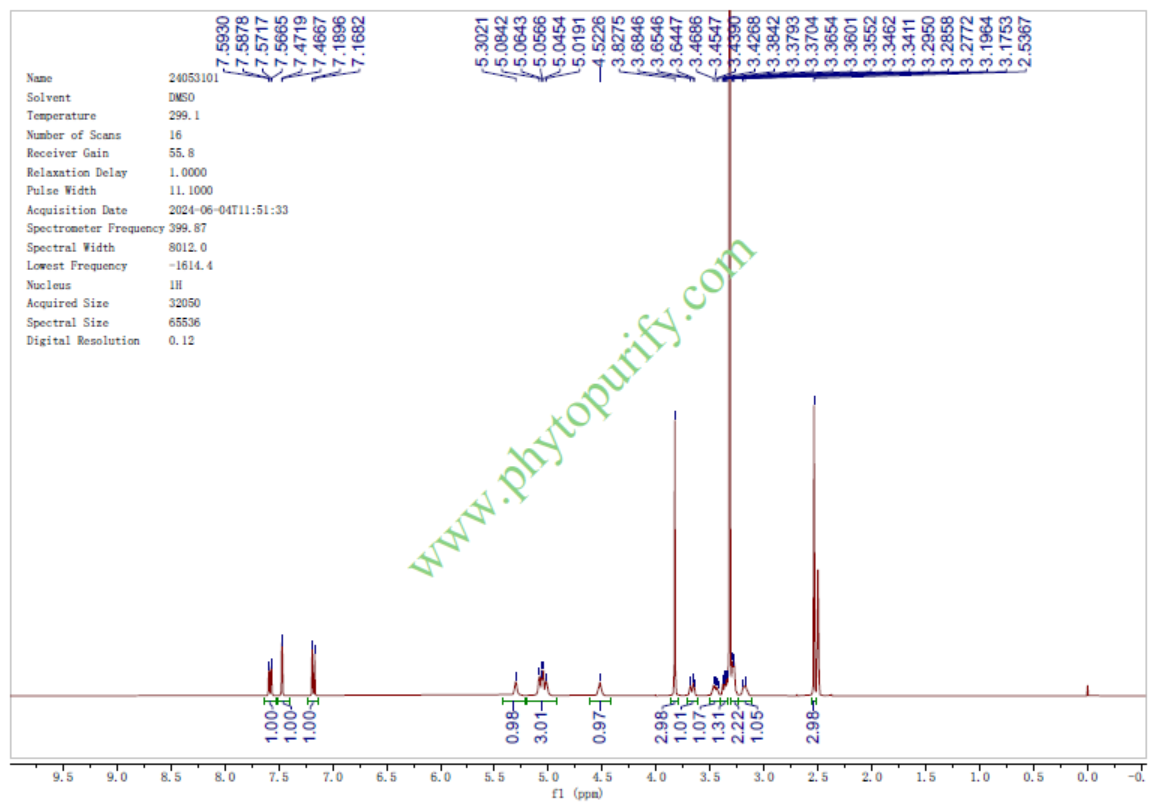
Identification Method: Mass, NMR
Packing: Brown vial or HDPE plastic bottle
Storage: Store in a well closed container, protected from air and light. Put into refrigerate or freeze for long term storage.
Whenever possible, you should prepare and use solutions on the same day. However, if you need to make up stock solutions in advance, we recommend that you store the solution as aliquots in tightly sealed vials at -20℃. Generally, these will be useable for up to two weeks.
The product could be supplied from milligrams to grams
Inquire for bulk scale.
Description:
Nomilin has immunomodulatory, antioxidant, anti-human immunodeficiency virus(HIV), cancer chemopreventive, antiangiogenic, anti-obesity and anti-hyperglycemic effects. Nomilin inhibits tumor-specific angiogenesis by downregulating VEGF, NO and proinflammatory cytokine profile and also by inhibiting the activation of MMP-2 and MMP-9. It inhibits osteoclastogenesis in vitro by suppression of NFATc1 and MAPK signaling pathways, indicates that nomilin-containing herbal preparations have potential utility for the prevention of bone metabolic diseases.
References:
Food Chemistry, 2005, 93(4):599-605.
Contents and antioxidant capacity of limonin and nomilin in different tissues of citrus fruit of four cultivars during fruit growth and maturation.
METHODS AND RESULTS:
The contents of limonin and Nomilin in different fruit tissues of Foxiangyou (Citrus grandis), Citrus unshiu, Penggan (Citrus reticulata) and Huyou (Citrus changshanensis KS Chen et CX Fu) were measured during fruit growth and maturation by HPLC (high performance liquid chromatography). Results showed that limonin and Nomilin were the predominant limonoids in the extracted samples. During fruit growth and maturation, the contents of limonin and Nomilin increased from April, peaked in early September and decreased afterwards until late October when they reached a steady low level. The antioxidant capacities of limonin and Nomilin in the four tissues of mature fruit were determined by beta-carotene bleaching assay.
CONCLUSIONS:
The results showed that the antioxidant capacities of limonin and Nomilin varied in different tissues and cultivars. In the three tissues other than albedo, the antioxidant capacities of limonin and Nomilin were high (2.9-8.3 times than that of vitamine C).
Planta Med. 2003 Oct;69(10):910-3.
Effect of limonin and nomilin on HIV-1 replication on infected human mononuclear cells.
In the last years several plant-derived natural compounds have been screened for their anti-HIV activity in order to find lead compounds with novel structures or mechanisms of action. Among these, several triterpenoids have been found to exhibit an antiretroviral activity with different mechanisms of action.
METHODS AND RESULTS:
In this study the effect of two limonoids, limonin and Nomilin, on the growth of human immunodeficiency virus-1 (HIV-1) in culture of human peripheral blood mononuclear cells (PBMC) and on monocytes/macrophages (M/M) is described. Limonin and Nomilin were found to inhibit the HIV-1 replication in all cellular systems used. A dose-dependent inhibition of viral replication was observed in PBMC isolated from healthy donors and infected with HIV-1 strain after incubation with limonin and Nomilin (EC (50) values: 60.0 microM and 52.2 microM, respectively). The two terpenoids inhibited at all concentrations studied the production of HIV-p24 antigen even when the PBMC employed were chronically infected (EC (50) values of 61.0 microM for limonin and 76.2 microM for Nomilin). Moreover, these compounds inhibited the HIV-1 replication even in infected M/M. In this cellular system the inhibitory effect was significant at the concentrations of 20 microM, 40 microM and 80 microM starting from day 14 and reached the maximum effect after 18 days of incubation. As regards the mechanism of action, limonin and Nomilin inhibit in vitro HIV-1 protease activity.
CONCLUSIONS:
In general, the results obtained point out a similar anti-HIV activity of limonin and Nomilin indicating that this activity is not drastically influenced by the structural difference between the two compounds.
Biochem Biophys Res Commun. 2011 Jul 8;410(3):677-81.
Anti-obesity and anti-hyperglycemic effects of the dietary citrus limonoid nomilin in mice fed a high-fat diet.
TGR5 is a member of the G protein-coupled receptor family and is activated by bile acids (BAs). TGR5 is thought to be a promising drug target for metabolic diseases because the activation of TGR5 prevents obesity and hyperglycemia in mice fed a high-fat diet (HFD).
METHODS AND RESULTS:
In the present study, we identified a naturally occurring limonoid, Nomilin, as an activator of TGR5. Unlike BAs, Nomilin did not exhibit the farnesoid X receptor ligand activity. Although the Nomilinderivative obacunone was capable of activating TGR5, limonin (the most abundant limonoid in citrus seeds) was not a TGR5 activator. When male C57BL/6J mice fed a HFD for 9 weeks were further fed a HFD either alone or supplemented with 0.2%w/w Nomilin for 77 days, Nomilin-treated mice had lower body weight, serum glucose, serum insulin, and enhanced glucose tolerance.
CONCLUSIONS:
Our results suggest a novel biological function of Nomilin as an agent having anti-obesity and anti-hyperglycemic effects that are likely to be mediated through the activation of TGR5.
Acs Symposium, 2000, 758:185-200.
Limonin and Nomilin Inhibitory Effects on Chemical-Induced Tumorigenesis.
The increased enzyme activity was correlated with the ability of these compounds to inhibit carcinogenesis.
METHODS AND RESULTS:
Nomilin was found to reduce the incidence and number of tumors per mouse of forestomach tumors induced by benzo[a]pyrene (BP). Topical application of the limonoids was found to inhibit both the initiation and the promotion phases of carcinogenesis in the skin of SENCAR mice. Nomilin appeared to be more effective at the initiation stage while limonin was more potent as an inhibitor at the promotion phase of carcinogenesis. Administration of Nomilin and limonin to the diet or by gavage inhibited BP-induced and 4-(methylnitrosamino)-l-(3-pyridyl)-l-butanone-induced lung tumor formations, respectively, in A/J mice.
CONCLUSIONS:
These findings suggest citrus limonoids are potential cancer chemopreventive agents.
HPLC of Androsin
HNMR of Androsin
Storage conditions:Short-term storage at 2~8℃, long-term storage at -20 ~ -80℃
125.6800
-.3166
-.3166
25.7486
.8339
.2289
Low
35.2432
3.3584
Yes
No
No
No
Yes
No
0.0
Yes
Yes
Yes
Yes
In the broad field of natural product chemistry and pharmacology research, phenylethanoid glycosides have attracted much attention due to their diverse biological activities. Androsin (CAS number: 531-28-2), as one of its members, is derived from the traditional medicinal plant Indian Coptis chinensis(Picrorhiza kurroa)The iconic active ingredient obtained through separation. This plant has been used for a long time in traditional medical systems such as Ayurveda to treat liver and gallbladder diseases, asthma, and inflammatory diseases. Its modern pharmacological research provides key clues for elucidating its scientific connotation. Early research on oleander focused on its significant anti asthmatic effect, which can effectively prevent allergen and platelet activating factor induced bronchoconstriction. With the deepening of research, its pharmacological activity spectrum continues to expand, especially in the field of metabolic diseases, showing potential for improving non-alcoholic fatty liver disease. Its mechanism of action involves the activation of the energy metabolism core regulatory factor AMPK and the inhibition of key lipid synthesis pathways, reflecting the characteristics of multi-target and multi pathway regulation. In addition, its excellent oral activity has laid an important foundation for its drug development. This article aims to systematically review the chemical structure, plant origin, pharmacological activity, molecular mechanism of action, pharmacological characteristics, and clinical application prospects of oleander, in order to provide comprehensive scientific references for the in-depth research and potential drug development of this natural product.
Grass oleander glycoside is a phenylethanoid glycoside compound, with the chemical name 4-hydroxyphenethyl - β - D-glucopyranose glycoside. Its molecular formula is C14H20O8 and its molecular weight is 328.3170. Structurally, oleander is composed of two basic units: a p-hydroxyphenylethanolic glycoside and a β - D-glucosyl group. The glucose group is connected to the alcohol hydroxyl group of the aglycone through glycosidic bonds, which is an important basis for its water solubility and certain biological activities.
Its physicochemical properties are closely related to its medicinal properties. The calculated lipid water partition coefficient (LogP) is approximately -0.3166, indicating that the compound has hydrophilicity, which is consistent with the presence of polar glucose and polyhydroxy groups in the structure. The topological polar surface area (TPSA) is as high as 125.68 Å ², further confirming its strong polarity characteristics. The water solubility data (approximately 25.75 mg/mL) is good, which is beneficial for the development and in vivo absorption of its oral formulations. In the early screening of drug safety, oleander did not show hERG potassium channel inhibitory activity (predicted as "no"), indicating a low potential risk of arrhythmia. The Ames test predicted a value of 0.0, indicating that it may not have direct genetic toxicity. However, its blood-brain barrier permeability prediction is "low", which means that the compound may have difficulty entering the central nervous system. This may reduce central side effects for asthma and liver disease, which mainly act on the peripheral system, but also limits its potential for use in central nervous system related diseases.
The main source of oleander is from the Scrophulariaceae plant Indian Coptis chinensis(Picrorhiza kurroa Roots and rhizomes of Royle ex Benth. Corydalis indica is mainly distributed in high altitude areas of the the Himalayas. It is an important traditional medicinal plant in India, Nepal and other regions. Known as the "king of bitterness", it is used in Ayurvedic medicine to treat liver disease, dyspepsia, asthma and fever.
The extraction and separation of oleander from plants usually involves solvent extraction combined with chromatographic separation techniques. The conventional process is as follows: first, the dried roots and stems of Coptis chinensis are crushed and subjected to reflux extraction or ultrasound assisted extraction using methanol, ethanol, or a mixture of methanol and water solvents to fully extract phenylethanoid glycosides and iridoid glycosides, including oleander glycosides. After vacuum concentration, the crude extract can be subjected to liquid-liquid distribution extraction using solvents such as petroleum ether, ethyl acetate, and n-butanol. Due to its high polarity, oleander is mainly enriched in n-butanol or aqueous layers. Further purification relies on column chromatography techniques, often using silica gel, macroporous adsorption resins (such as D101, AB-8), or reverse phase silica gel (such as C18) as the stationary phase, and gradient elution systems such as chloroform methanol, water methanol, or water ethanol are used for separation. High performance liquid chromatography (HPLC), especially preparative HPLC, is a key step in obtaining high-purity oleander monomers. Modern analytical techniques such as LC-MS and NMR (nuclear magnetic resonance) are used for structural identification and quality control of isolated compounds. In recent years, some green extraction technologies such as supercritical fluid extraction have also been explored to improve extraction efficiency and environmental friendliness.
The pharmacological activity research of oleander mainly focuses on respiratory and metabolic diseases, and shows multiple therapeutic potentials.
1. Asthma relief and anti-inflammatory activity:
This is the core activity of oleander, which was first recognized and studied. In vivo experiments have shown that oral administration (10 mg/kg) or inhalation (0.5 mg) can effectively prevent bronchial constriction and airway hyperresponsiveness induced by allergens such as ovalbumin or platelet activating factor (PAF) in guinea pigs or rats. Its function is not limited to bronchiectasis, but also involves the inhibition of airway inflammation. Research has shown that it can reduce the number of inflammatory cells (such as eosinophils and lymphocytes) in bronchoalveolar lavage fluid of asthma model animals, and downregulate the levels of various inflammatory mediators (such as IL-4, IL-5, IL-13, TNF - α). Its anti-inflammatory effect is related to its regulation of immune cell function and inhibition of inflammatory signaling pathways.
2. Improve non-alcoholic fatty liver disease (NAFLD):
In recent years, research has expanded the application of oleander in metabolic diseases. In high-fat diet induced or chemically induced NAFLD animal models, administration of oleander can significantly alleviate liver steatosis, ballooning, and inflammatory infiltration. It can reduce the levels of triglycerides and total cholesterol in the liver and serum, and improve insulin resistance. This hepatoprotective and lipid-lowering effect makes it a potential therapeutic candidate for NAFLD and its advanced stages of non-alcoholic steatohepatitis (NASH).
3. Other potential activities:
Based on the traditional use and modern pharmacological screening of its source plant Huhuanglian, oleander may also have antioxidant, anti fibrotic, and cardioprotective activities. For example, its antioxidant properties help alleviate the role of oxidative stress in airway remodeling and liver cell damage in asthma. Some preliminary studies also suggest that it may have a protective effect on myocardial cells, but its specific role and position in cardiovascular diseases such as heart failure still need further exploration.
The core of the multifunctional pharmacological effects of oleander lies in its precise regulation of key signaling pathways within cells. Currently, the mechanisms revealed by research mainly revolve around energy metabolism, autophagy, and lipid synthesis.
1. Activate the AMPK pathway and induce autophagy:
Adenosine activated protein kinase (AMPK) is the "main switch" of cellular energy metabolism. It has been confirmed that oleander can activate AMPK α (encoded by the PRKAA1 gene). The activation of AMPK produces a series of downstream effects:
- Promote autophagy: Activated AMPK activates the autophagy process by inhibiting mTORC1 activity and directly phosphorylating ULK1. Further research has shown that oleander can upregulate the expression of autophagy key protein Beclin-1 and promote the lipidation of microtubule associated protein light chain 3 (LC3) (LC3-I to LC3-II conversion), which is a hallmark of autophagosome formation. In asthma models, inducing autophagy in airway epithelial cells may help clear damaged organelles and misfolded proteins, reducing cellular stress; In NAFLD, enhanced autophagy of liver cells (i.e. "lipophagy") can promote the degradation of lipid droplets, thereby reducing liver lipid accumulation.
- Regulating the PI3K pathway: There is an interactive dialogue between AMPK and PI3K/Akt pathways. The activation of AMPK by oleander may indirectly affect PI3K signaling, and PI3K itself is also involved in autophagy regulation (such as through Beclin-1 complex), forming the AMPK α/PI3K/Beclin1/LC3 signaling axis that synergistically promotes autophagy.
2. Inhibition of lipid synthesis pathway:
In the NAFLD model, the lipid-lowering effect of oleander is closely related to its inhibition of hepatic lipogenesis. The mechanism involves inhibition of the sterol regulatory element binding protein-1c (SREBP-1c) and its downstream target gene fatty acid synthase (FASN) signaling pathway. SREBP-1c is a key transcription factor that regulates the expression of genes related to fatty acid and triglyceride synthesis. Oleander may inhibit the activation and nuclear translocation of SREBP-1c through AMPK dependent or non dependent pathways, thereby reducing the expression of lipid synthases such as FASN and ultimately lowering fat synthesis in the liver.
3. Other potential targets:
Based on the provided target information, oleander may interact with multiple other targets that are associated with a broader disease network
- EHMT2(G9a): A histone methyltransferase involved in epigenetic regulation. Inhibition of EHMT2 may affect the expression of genes related to inflammation and fibrosis.
- Inflammatory and oxidative related targets: ALOX15 (15 lipoxygenase) is involved in the generation of pro-inflammatory mediators such as leukotrienes; MAOA (monoamine oxidase A) is associated with oxidative stress.
- Transporter protein: ABCB1 (P-gp) and ABCG2 (BCRP) are important efflux pumps, and their interactions may affect the pharmacokinetics of oleander itself and its interactions with other drugs.
- Neuroendocrine related targets: Targets such as APP (amyloid precursor protein), ESR2 (estrogen receptor beta), PTPN1 (protein tyrosine phosphatase 1B) suggest potential research value of oleander in broader diseases such as Alzheimer's disease and metabolic syndrome, but the evidence is currently insufficient.
Overall, oleander activates the core hub AMPK and synergistically regulates autophagy and lipid metabolism, which is the main molecular basis for its treatment of asthma (reducing inflammation and cell damage) and NAFLD (promoting lipid breakdown and inhibiting synthesis).
As a promising natural active ingredient, the medicinal properties of oleander are generally favorable.
Pharmacodynamics:
Existing studies have shown that oleander has oral activity, which is a prerequisite for its development as an oral drug. Due to its good water solubility, it should have good dissolution in the gastrointestinal tract. As glycoside compounds, their absorption may involve transporters on small intestinal epithelial cells (such as SGLT1) or passive diffusion, but the specific absorption mechanism and absolute bioavailability data still need to be improved. After entering the body, glycoside compounds often undergo metabolic transformation, the most typical of which is hydrolysis under the action of β - glucosidase in intestinal microbiota or tissues, removing the glucose group to generate aglycones (p-hydroxyphenylethanol). Glycosides may have activity and metabolic fate different from the original drug, and their pharmacological contributions need to be included in the overall evaluation. There are still few systematic research reports on the distribution, metabolism (such as II binding reaction), and excretion pathways (kidney or bile) of oleander and its metabolites, and more in-depth preclinical pharmacokinetic studies are needed to clarify them.
Analysis of pharmacological parameters:
Based on computational and predictive data, good water solubility (25.75 mg/mL) and moderate LogP (-0.32) meet the requirements for solubility and lipophilicity in the "Five Rules for Drug Types", which is beneficial for oral absorption. A higher TPSA (125.68 Å ²) may have certain limitations on membrane permeability, which is consistent with the predicted "low" blood-brain barrier permeability. In terms of safety warning, the absence of hERG inhibition and Ames mutagenicity warning are positive signals, but must be confirmed through comprehensive preclinical safety evaluation (including acute toxicity, chronic toxicity, reproductive toxicity, etc.).
Challenge and Optimization:
The main challenges may lie in whether its oral bioavailability is high enough, whether its metabolism in the body is too fast, and the uncertainty of glycoside activity/toxicity. Future research may require: 1) systematic in vivo pharmacokinetic studies to clarify its ADME characteristics; 2) Exploring pharmaceutical strategies (such as solid dispersions, liposomes, nanoparticles) to improve their bioavailability or achieve targeted delivery to the lungs (for asthma); 3) Conduct identification and activity research on metabolites to clarify the true pharmacological substance basis.
The clinical application prospects of oleander are mainly based on the two indications of asthma and NAFLD/NASH, and may be expanded to related fields.
1. Asthma:
The existing anti asthmatic drugs mainly include β 2 receptor agonists, glucocorticoids, leukotriene receptor antagonists, etc., but there are still problems such as side effects, drug resistance, or poor efficacy in some patients. As a multi-target natural compound with anti-inflammatory and potential airway remodeling regulatory effects, oleander has the potential to be developed as a novel asthma control or adjuvant therapy drug, especially for allergic asthma and neutropenic asthma. The preliminary effectiveness of its inhalation administration suggests the potential for the development of inhalation formulations, which can increase local concentration in the lungs, reduce systemic exposure and side effects.
2. Non alcoholic fatty liver disease (NAFLD/NASH):
At present, there is no approved specific drug for the treatment of NASH worldwide, and there is a huge clinical demand. Oleander is activated by AMPK and regulates lipid metabolism and autophagy, acting on multiple key processes involved in the development of NAFLD (lipid degeneration, inflammation, cell damage). It has the potential to become a novel therapeutic drug for NASH. Its oral activity is suitable for long-term medication management of chronic liver disease.
3. Other potential areas:
Based on its AMPK activation and anti-inflammatory properties, oleander may also have research value in metabolic and inflammatory related diseases such as type 2 diabetes, atherosclerosis, myocardial fibrosis, etc. The potential role of epigenetic targets such as EHMT2 provides new insights into its role in fibrotic diseases or specific cancers.
Future research directions and challenges:
- Deep exploration of the mechanism of action: It is necessary to more accurately validate its direct interactions and functional consequences with potential targets such as EHMT2 and ALOX15 in cell and animal models.
- Preclinical development: Complete the pharmacological, pharmacokinetic, and safety evaluations of the system, determine the dosing regimen and treatment window for candidate compounds.
- Clinical research: Ultimately, rigorous clinical trials need to be designed to validate its effectiveness and safety in humans.
- Structural optimization: On the basis of clarifying the pharmacophore, structural modifications of oleander can be considered to improve its pharmacokinetic properties or enhance specific activities, and develop more advantageous derivatives.
- Multi component collaborative research: As one of the main components of Houttuynia cordata, studying the synergistic effect of oleander and other active ingredients in Houttuynia cordata (such as Houttuynia cordata glycoside, vanillic acid, etc.) is of great significance for the development of standardized extracts or compound preparations based on this plant.
As a phenylethanoid glycoside derived from the traditional medicinal plant Coptis chinensis, oleander is a successful example in modern natural product pharmacology research. From the initial discovery of its anti asthmatic effect to the therapeutic potential demonstrated in metabolic diseases such as NAFLD in recent years, its pharmacological activity spectrum continues to enrich. The study of its mechanism of action reveals that it synergistically regulates the autophagy pathway and inhibits lipid synthesis by activating AMPK, the cellular energy and metabolic center, which is the core molecular basis for its multi effect pharmacological effects. The excellent oral activity, favorable preliminary drug prediction parameters, and multi-target action characteristics make it a promising lead compound for the development of novel drugs for asthma and NAFLD/NASH. However, its comprehensive in vivo pharmacokinetic characteristics, the effects of metabolites, long-term safety, and exact clinical efficacy still require further and systematic research to clarify. In the future, combining modern medicinal chemistry, pharmacy, and clinical medicine research methods, oleander is expected to move from a traditional natural active ingredient to a more targeted and practical innovative drug development path, providing new treatment options for patients with related diseases.
