Introduction/Overview
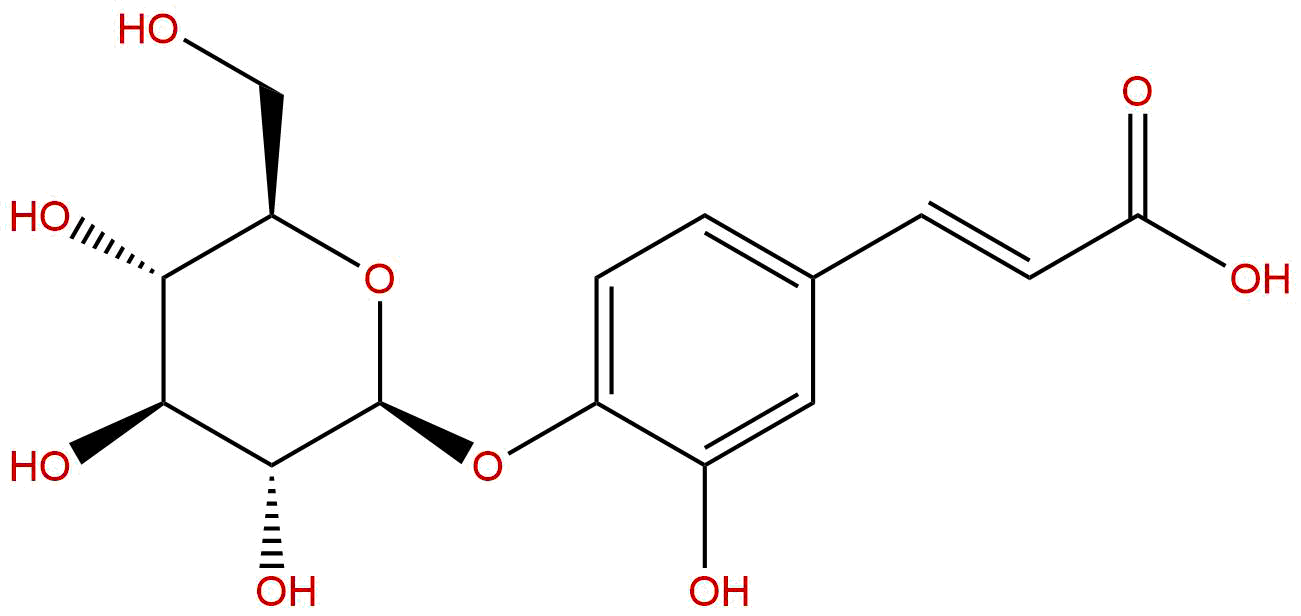
Caffeic acid-4-O-glucopyranoside (CAS number 17093-82-2) is a naturally occurring phenolic glycoside compound belonging to the family of caffeic acids and their derivatives. Caffeic acid compounds have attracted widespread attention in the field of natural product pharmacology in recent years due to their extensive biological activity and potential medicinal value. As a derivative of caffeic acid in glycoside form, caffeic acid-4-O-glucoside not only retains the antioxidant and anti-inflammatory activities of caffeic acid, but also exhibits unique pharmacokinetic properties and bioavailability advantages due to its glycosylation modification.
Cardiovascular disease (CVD) is a major public health issue worldwide that causes death and disability. In recent years, studies have shown that caffeic acid-4-O-glucoside can regulate various molecular targets associated with cardiovascular disease, such as AMPK(PRKAA1)、BACE1、PTPN1、ESR2、APEX1、PRKCA、AKR1B1、SELP、NFE2L2 And SHBG and other drugs have shown great potential as potential drugs for the prevention and treatment of cardiovascular diseases by exerting multi-target and multi mechanism protective effects.
This article will provide a systematic review of the chemical structure and physicochemical properties, plant sources and extraction methods, pharmacological activity and mechanism of action, pharmacological evaluation and pharmacokinetic characteristics of caffeic acid-4-O-glucoside, and explore its clinical application prospects and future development directions in combination with current research progress. The aim is to provide theoretical basis and research guidance for the in-depth study and drug development of this natural product.
Chemical structure and physicochemical properties
Caffeic acid-4-O-glucoside is a compound formed by a glycosidic bond between caffeic acid and glucose through a 4-hydroxy group. Its molecular formula is C15H18O9, with a molecular weight of 342.30 Da. Structurally, the caffeic acid moiety contains an ortho hydroxy benzene ring and an unsaturated carboxylic acid side chain, while the glucose moiety is β - D-glucopyranose, which are connected by ether bonds.
In terms of physical and chemical properties, the LogP value of caffeic acid-4-O-glucoside is -0.4081, indicating its good hydrophilicity, which is consistent with the characteristics of its glycoside structure. The TPSA (topological polar surface area) is 156.91 Å ², indicating its high polarity, which may affect its cell membrane permeability. The water solubility is 19.4960 mg/mL, indicating that the compound has good water solubility, which is beneficial for absorption and in vivo distribution of oral administration. Its blood-brain barrier permeability is low, indicating limited distribution in the central nervous system. The negative result of hERG channel inhibition experiment indicates a low risk of cardiac toxicity. The Ames mutagenicity test result is 0.0, indicating no significant mutagenic risk and high safety.
In summary, the physicochemical properties of caffeic acid-4-O-glucoside provide a good foundation for its use as a drug molecule, especially in terms of water solubility and safety.
Plant sources and extraction methods
Caffeic acid-4-O-glucoside is widely present in various plants, especially in the leaves, stems, roots, and other parts of certain medicinal and edible plants. Common plant sources include:
- Perilla frutescens Perilla leaves contain abundant caffeic acid and its glycoside derivatives, among which caffeic acid-4-O-glucoside is one of the important components.
- Ginkgo biloba leaves Ginkgo biloba leaf extract contains various phenolic glycosides, and caffeic acid-4-O-glucoside has been reported to exist as a secondary metabolite.
- Other herbaceous plants Compounds such as Rosmarinus officinalis and Thymus vulgaris have also been detected.
The extraction method mainly adopts water extraction or alcohol extraction combined with column chromatography separation and purification technology. The typical process flow is as follows:
- Sample Pretreatment Grind dry plant materials to the appropriate particle size.
- Extract Using 70% -80% ethanol or water as solvents, ultrasound assisted extraction or reflux extraction is generally performed for 1-3 hours.
- concentrate The extract is concentrated under reduced pressure to an appropriate volume.
- Separation and purification Purification was achieved through methods such as silica gel column chromatography and reverse phase high-performance liquid chromatography (RP-HPLC), followed by structural identification using mass spectrometry (MS) and nuclear magnetic resonance (NMR) techniques.
- dry Purified caffeic acid-4-O-glucoside is obtained in powder form through freeze-drying.
In recent years, with the development of green extraction technology, new technologies such as supercritical CO2 extraction and microwave-assisted extraction have also been attempted to improve extraction efficiency and purity.
Pharmacological activity research
The pharmacological activities of caffeic acid-4-O-glucoside mainly focus on its antioxidant, anti-inflammatory, anti diabetes and cardiovascular protection.
antioxidant activity
The adjacent hydroxyl benzene ring in the structure of caffeic acid endows it with significant free radical scavenging ability. Glycosylation modification may affect lipophilicity, but it enhances stability and distribution in body fluids by increasing water solubility. Both in vitro DPPH and ABTS free radical scavenging experiments showed that caffeic acid-4-O-glucoside has good antioxidant activity. It activates the NFE2L2 (nuclear factor erythroid 2-related factor 2) signaling pathway, promotes the expression of antioxidant enzymes, and reduces oxidative stress damage.
anti-inflammatory effect
Multiple cell and animal experiments have shown that caffeic acid-4-O-glucoside can significantly inhibit the production of inflammatory mediators, such as tumor necrosis factor alpha (TNF - α), interleukin-6 (IL-6), and nitric oxide (NO). The mechanism involves inhibiting the activation of the NF - κ B signaling pathway, reducing the transcriptional expression of pro-inflammatory factors, and thereby alleviating tissue inflammatory responses.
Cardiovascular protective effect
Caffeic acid-4-O-glucoside exhibits cardiovascular protective potential through multi-target regulation of cardiovascular signaling pathways. In vitro experiments have shown that it can activate AMPK (PRKAA1), improve cellular energy metabolism, and alleviate myocardial ischemia-reperfusion injury. Its inhibition of platelet selective protein (SELP) expression helps prevent platelet aggregation and thrombus formation. In animal models, caffeic acid-4-O-glucoside significantly reduces dyslipidemia and atherosclerosis.
Anti diabetes and metabolic syndrome
As an inhibitor of PTPN1 (protein tyrosine phosphatase 1B), caffeic acid-4-O-glucoside can enhance insulin signaling and improve insulin resistance. Its inhibitory effect on AKR1B1 (aldose reductase) is helpful to reduce the occurrence of complications of diabetes. Related studies have shown that this compound can lower blood glucose levels and improve glucose and lipid metabolism disorders.
Neuroprotective and other effects
Despite the low permeability of the blood-brain barrier, caffeic acid-4-O-glucoside still exhibits certain neuroprotective potential, possibly by regulating APEX1 (DNA repair enzyme) and BACE1 (β - secretase 1) related pathways to slow down neurodegenerative changes. In addition, its regulation of estrogen receptor beta (ESR2) suggests that it may have certain application value in hormone related diseases.
Mechanism of action and molecular targets
The multi-target mechanism of action of caffeic acid-4-O-glucoside is an important basis for its pharmacological activity. Mainly involving the following key targets and signaling pathways:
- AMPK(PRKAA1)As a cellular energy sensor, AMPK activation promotes lipid metabolism and glucose uptake, while caffeic acid-4-O-glucoside improves metabolic disorders and protects myocardial cells by activating AMPK.
- BACE1β - secretase 1 is crucial in the pathogenesis of Alzheimer's disease, and the inhibitory effect of caffeic acid-4-O-glucoside suggests potential neuroprotective function.
- PTPN1 Negatively regulating the insulin signaling pathway, caffeic acid-4-O-glucoside inhibits PTPN1 and enhances insulin sensitivity.
- ESR2 Estrogen receptor beta regulates cardiovascular and nervous system function, and caffeic acid-4-O-glucoside may mediate protective effects by modulating ESR2.
- APEX1 Participate in DNA repair and oxidative stress response, promote cell survival.
- PRKCA Protein kinase C alpha regulates cell proliferation and inflammatory response.
- AKR1B1 Aldose reductase is involved in the formation of complications of diabetes, and inhibiting its activity is conducive to the prevention and treatment of diabetes.
- SELP Platelet selective factor mediates the interaction between platelets and endothelial cells, and inhibiting SELP helps with antithrombotic effects.
- NFE2L2 Regulating the expression of antioxidant enzymes to alleviate oxidative stress.
- SHBG Sex hormone binding globulin is involved in hormone regulation.
Caffeic acid-4-O-glucoside exerts multiple effects such as antioxidant, anti-inflammatory, metabolic regulation, and cardiovascular protection by synergistically regulating the aforementioned targets, demonstrating its advantages as a multi-target drug.
Evaluation of drug properties and pharmacokinetics
The pharmacological evaluation of caffeic acid-4-O-glucoside is based on its physicochemical properties, safety, and pharmacokinetic characteristics.
Physical and chemical properties and drug compatibility
The molecular weight of 342.30 Da is within the ideal range for small molecule drugs. A negative LogP value indicates strong hydrophilicity, which is beneficial for oral absorption but may limit cell membrane permeability. A high TPSA value indicates a high polarity, which may affect oral bioavailability. Good water solubility, beneficial for formulation development.
safety evaluation
The hERG channel inhibition test was negative, indicating a low risk of cardiac toxicity. The Ames test is non mutagenic and has high safety. Further improvement is needed in in vivo toxicology research, but existing data supports its good safety foundation.
Pharmacokinetic characteristics
Currently, there is limited systematic pharmacokinetic research on caffeic acid-4-O-glucoside. Its glycosidic structure may affect intestinal absorption and metabolism, and glycosidic bonds are easily hydrolyzed by intestinal microbiota, releasing caffeic acid and affecting the active form in the body. The low permeability of the blood-brain barrier limits its application in the central nervous system. In the future, it is necessary to combine in vivo metabolic kinetics and pharmacological research to clarify its in vivo transformation pathways and active ingredients.
Route of administration and formulation development
Due to its water solubility and safety, oral administration is the preferred route of administration. Can develop oral solid, liquid or sustained-release formulations. Targeted drug delivery strategies for cardiovascular diseases are also worth exploring, such as nanocarrier systems to improve bioavailability and targeting.
Clinical application prospects and prospects
Caffeic acid-4-O-glucoside, as a natural phenolic glycoside, has shown broad clinical application potential, especially in the field of cardiovascular disease prevention and treatment, due to its multi-target and multi mechanism pharmacological activity.
Prevention and treatment of cardiovascular diseases
By activating AMPK, inhibiting SELP and regulating NFE2L2, caffeic-4-O-glucoside can improve metabolic disorder, reduce oxidative stress and inflammatory reaction, and reduce the risk of atherosclerosis. In the future, it can be used as an adjuvant therapy for cardiovascular diseases or in combination with existing drugs to improve efficacy.
Metabolic diseases and complications of diabetes
Its inhibitory effect on PTPN1 and AKR1B1 provides a new idea for the prevention and treatment of diabetes and its complications. Preclinical studies need to further validate its effectiveness in lowering blood sugar and protecting target organ function.
Neurodegenerative diseases
Although the permeability of the blood-brain barrier is limited, caffeic acid-4-O-glucoside has potential value in neuroprotection by regulating BACE1 and APEX1. It can be combined with drug delivery technology to enhance the effective concentration of the central nervous system.
Other potential applications
Its anti-inflammatory and antioxidant properties also make it of research value in fields such as inflammatory diseases and adjuvant therapy for tumors.
Future research directions
- Systematic pharmacokinetic study Clarify the metabolic pathways and active metabolites in the body.
- Structural optimization and derivative development Improve membrane permeability and bioavailability.
- Preclinical safety and efficacy evaluation Establish animal models to validate drug efficacy and toxicity.
- Combination therapy strategy Explore synergistic effects with existing cardiovascular drugs.
- New drug delivery system Nanotechnology and targeted delivery enhance therapeutic efficacy.
Conclusion
Caffeic acid-4-O-glucoside, as a natural phenolic glycoside with multiple biological activities, has shown broad application prospects in the prevention and treatment of cardiovascular diseases and related metabolic diseases due to its good physicochemical properties and safety. Its multi-target mechanism of action provides a theoretical basis for the development of new multifunctional drugs. In the future, in-depth research combining modern medicinal chemistry, pharmacology, and pharmacokinetics will help promote the clinical translation of caffeic acid-4-O-glucoside, benefiting a wide range of patients.