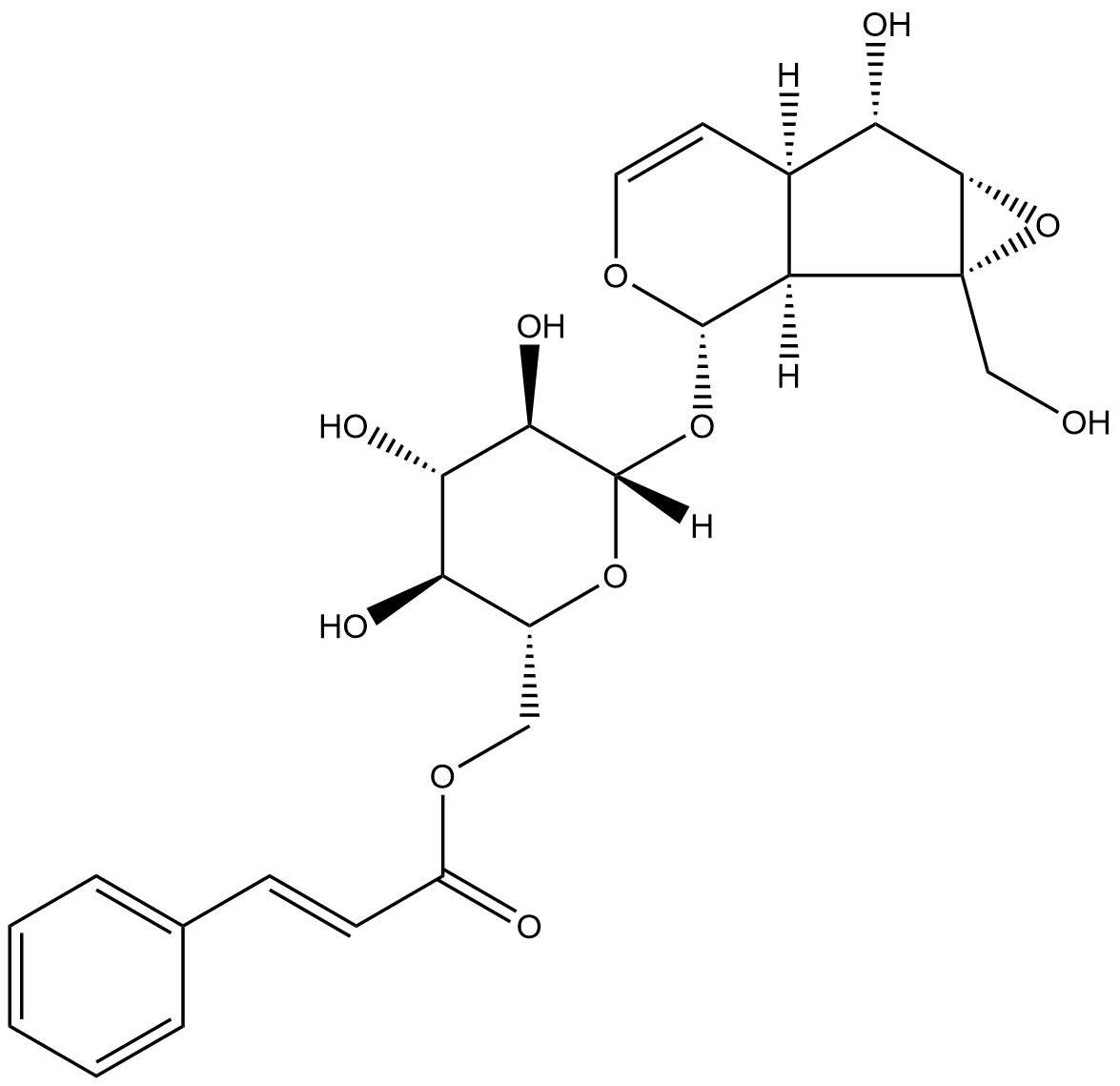


Product name: Picroside I
Synonym name: Globularicisin; Other Cas No, 76248-14-1
Catalogue No.: BP1099
Cas No.: 27409-30-9
Formula: C24H28O11
Mol Weight: 492.477
Botanical Source: Picrorhiza scrophulariiflora Pennell
Physical Description:
Type of Compound: Iridoids
Purity: 95%~99%
Analysis Method: HPLC-DAD or/and HPLC-ELSD
Identification Method: Mass, NMR
Packing: Brown vial or HDPE plastic bottle
Storage: Store in a well closed container, protected from air and light. Put into refrigerate or freeze for long term storage.
Whenever possible, you should prepare and use solutions on the same day. However, if you need to make up stock solutions in advance, we recommend that you store the solution as aliquots in tightly sealed vials at -20℃. Generally, these will be useable for up to two weeks.
The product could be supplied from milligrams to grams
Inquire for bulk scale.
Description:
Picroside I is a hepatoprotective agent which is reported to be antimicrobial and used against hepatitis B. It has antioxidant, and anti-inflammatory activities, it may be the valuable anti-invasive drug candidates for cancer therapy by suppressing Collagenases and Gelatinases. Picroside I can enhance basic fibroblast growth factor(bFGF)-, staurosporine- or dbc-mitogen-activated protein (MAP)-induced neurite outgrowth from PC12D cells.
References:
Life Sci. 2002 Aug 30;71(15):1821-35.
Picrosides I and II, selective enhancers of the mitogen-activated protein kinase-dependent signaling pathway in the action of neuritogenic substances on PC12D cells.
METHODS AND RESULTS:
Picroside I and Picroside II caused a concentration-dependent (> 0.1 microM) enhancement of basic fibroblast growth factor (bFGF, 2 ng/ml)-, staurosporine (10 nM)- and dibutyryl cyclic AMP (dbcAMP, 0.3 mM)-induced neurite outgrowth from PC12D cells. Furthermore, picrosides-induced enhancements of the bFGF-action were markedly inhibited by GF109203X (0.1 microM), a protein kinase C inhibitor. The expression of phosphorylated MAP kinase was markedly increased by bFGF (2 ng/ml) and dbcAMP (0.3 mM), whereas that was not enhanced by staurosporine (10 nM). Picrosides had no effect on the phosphorylation of MAP kinase induced by bFGF or dbcAMP and also unaffected it in the presence of staurosporine. These results suggest that Picroside I and Picroside II enhance bFGF-, staurosporine- or dbcAMP-induced neurite outgrowth from PC12D cells, probably by amplifying a down-stream step of MAP kinase in the intracellular MAP kinase-dependent signaling pathway.
CONCLUSIONS:
Picroside I and Picroside II may become selective pharmacological tools for studying the MAP kinase-dependent signaling pathway in outgrowth of neurites induced by many kinds of neuritogenic substances including bFGF.
Phytother. Res., 1993, 7(6):402-7.
Antiinflammatory activity of the iridoids kutkin, picroside-1 and kutkoside from Picrorhiza kurrooa
Powdered roots of Picrorhiza kurrooa (PK), its alcoholic extract (AEPK) and active constituents kutkin, Picroside I and kutkoside demonstrated antiinflammatory activity (AIA) in a variety of test models. Significant AIA was recorded in adjuvant-induced and formaldehyde arthritis in rats and mice. In carrageenan-induced oedema inhibitory activity was remarkably enhanced upon intraperitoneal treatment in rats and mice. Kutkin exhibited significant action in dextran-induced oedema in rats. It inhibited acetic acid induced vascular permeability in mice and leucocyte migration in rats. Kutkin lacked any analgesic, antipyretic or ulcerogenic effect.
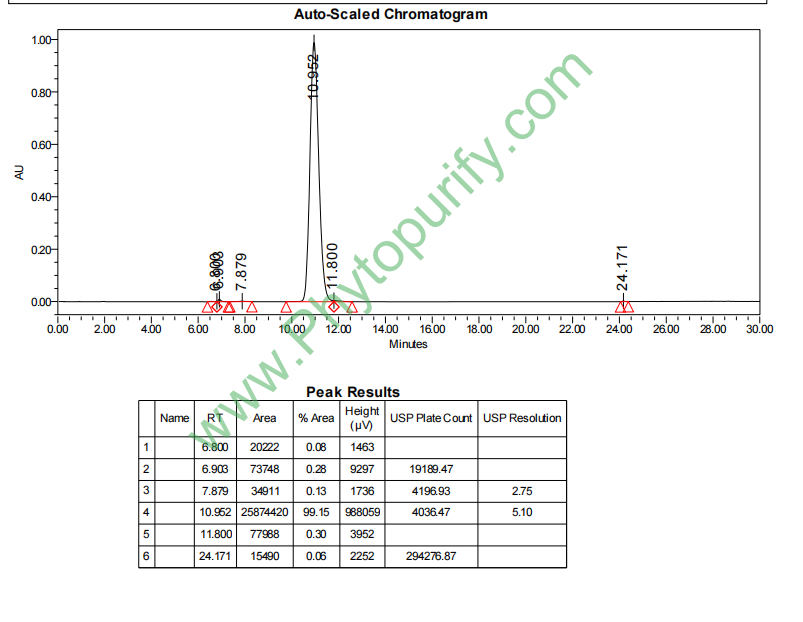
HPLC of Picroside I
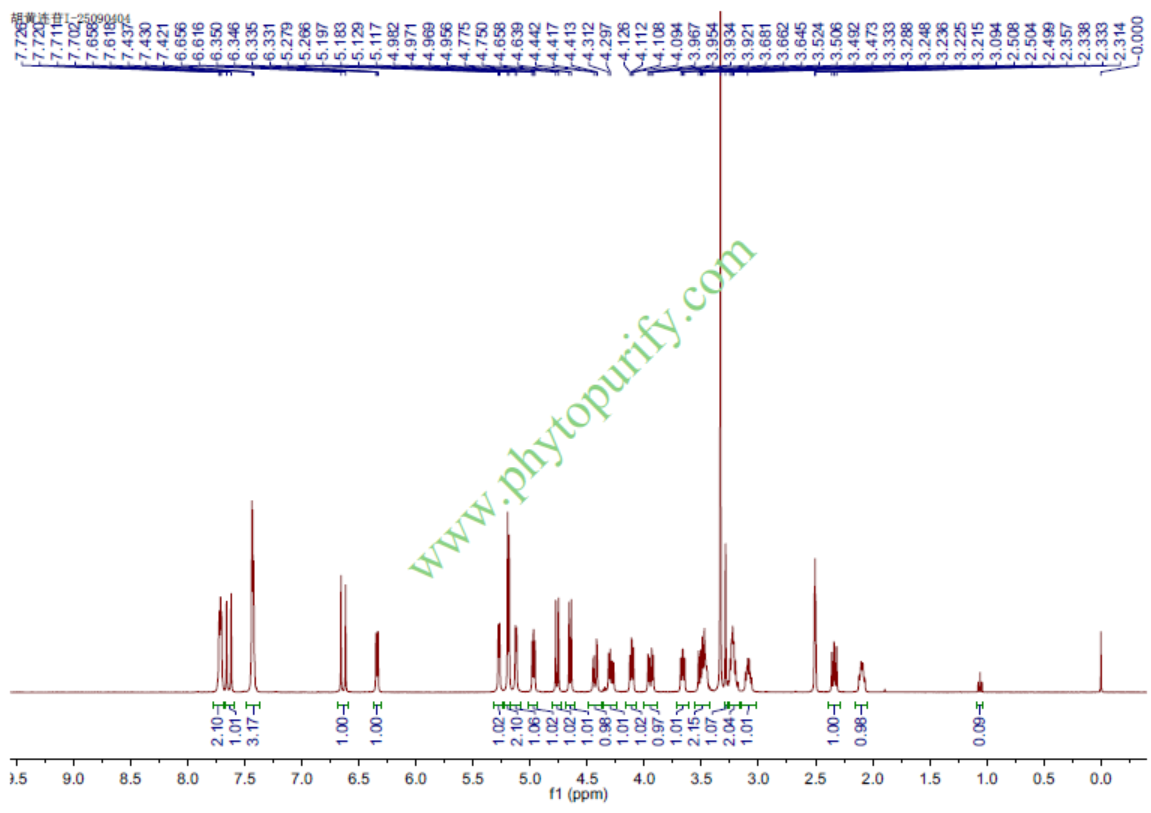
HNMR of Picroside I
Storage conditions:Short-term storage at 2~8℃, long-term storage at -20 ~ -80℃
167.6700
.1886
.1888
2.3617
.5179
.3249
Low
59.8216
4.9268
Yes
No
No
No
No
No
0.0
Yes
Yes
Yes
Yes
Natural products, as an important source of drug discovery and development, play an irreplaceable role in the history of human disease prevention and treatment. Among them, iridoid glycosides derived from traditional medicinal plants have attracted much attention due to their structural diversity and wide range of biological activities. Picroside I (CAS number: 27409-30-9), also known as 6 '- Cinnamoylcatalpol, is one of the main active ingredients in the Scrophulariaceae plant Picrorhiza scrolariiflora. Huhuanglian, as an important traditional Tibetan medicine and Ayurvedic medicine in India, is known as the "holy medicine for liver protection". Its medicinal value is mainly attributed to the presence of Huhuanglian glycoside I and its analog, Picroside II. Modern pharmacological research has revealed that Huhuanglian glycoside I not only exhibits excellent liver protective effects, but also shows significant therapeutic potential in models of inflammatory diseases, especially immune related diseases such as asthma. Its function involves regulating multiple levels such as oxidative stress, inflammatory signaling pathways, and immune balance, indicating its multi-target and multi pathway characteristics. This article aims to systematically review the chemical structure, plant origin, pharmacological activity, molecular mechanism of action, pharmacological characteristics, and clinical application prospects of Huhuanglian glycoside I, in order to provide comprehensive scientific references for the in-depth research and development of this natural product.
Huhuanglian glycoside I belongs to the iridoid glycoside class, with a molecular formula of C24H28O11 and a molecular weight of 492.4770. The core of its structure is the iridoid parent nucleus - Catalpol, which is connected to a cinnamoyl group at the 6 'hydroxyl position of the glucose group of Catalpol through an ester bond, forming 6' - cinnamoyl Catalpol. This unique acylation structure is the key that distinguishes it from other derivatives of catalpa alcohol, and has a decisive impact on its physicochemical properties and biological activity.
From the analysis of physical and chemical properties, the lipid water partition coefficient (LogP) of Huhuanglian glycoside I is 0.1886, indicating its good hydrophilicity, which is related to the abundance of multiple hydroxyl groups and glycosidic bonds in the molecule. Its topological polar surface area (TPSA) is as high as 167.6700 Å ², further confirming its strong polarity characteristics. The calculated water solubility is about 2.3617 mg/mL, indicating that it has moderate solubility in water, which poses certain challenges for its formulation development and in vivo absorption. Based on its high polarity and molecular weight, the compound's ability to penetrate the blood-brain barrier is predicted to be "low," suggesting that its main pharmacological effects may be concentrated in the peripheral organ system. In early safety screening, Huhuanglian glycoside I did not show significant hERG potassium channel inhibitory activity (predicted as "no"), and the Ames test predicted a value of 0.0, suggesting that it may not have mutagenicity and significant cardiotoxicity risks, providing favorable preliminary safety data for its further development.
Huhuanglian glycoside I mainly comes from the dried rhizomes of Picrorhiza scrophulariiflora Pennell, a plant in the family Scrophulariaceae. The plant is mainly distributed in high altitude areas of the the Himalayas (such as Nepal, northern India and Xizang, China), and is a rare perennial herb. Due to its significant medicinal value, wild resources are facing pressure from overexploitation, and therefore research on artificial cultivation and tissue culture techniques is increasingly being valued.
Efficient extraction and purification of Huhuanglian glycoside I from plant materials is the basis for studying its activity. Traditional extraction methods often use solvent extraction, with commonly used solvents including methanol, ethanol, or their aqueous solutions. In order to improve extraction efficiency, modern technologies such as ultrasound assisted extraction, microwave-assisted extraction, and pressurized liquid extraction have been widely applied. These methods destroy plant cell walls through physical means, accelerate solvent penetration and component dissolution, and can achieve higher yields of Huhuanglian glycoside I in a shorter time and at lower temperatures.
The crude extract after extraction usually needs to undergo a series of separation and purification steps to obtain high-purity Huhuanglian glycoside I. Conventional purification strategies include: first, using macroporous adsorption resins (such as D101, AB-8) for enrichment, and preliminary separation based on polarity differences; Subsequently, further separation was performed using silica gel column chromatography and reverse phase silica gel column chromatography (such as ODS-C18); The final high-purity preparation often relies on high-performance liquid chromatography, especially preparative high-performance liquid chromatography. In recent years, liquid-liquid distribution chromatography techniques such as high-speed countercurrent chromatography have also been used for the separation of berberine glycosides due to their high recovery rate and avoidance of irreversible adsorption of active ingredients by solid adsorbents. The optimization of extraction and purification processes aims to balance the purity, yield, environmental friendliness, and cost of the target product, which is the key to achieving large-scale preparation of Huhuanglian glycoside I.
Numerous preclinical studies have confirmed that Huhuanglian glycoside I has multiple pharmacological activities, with its core areas of action focused on liver protection and anti-inflammatory/immune regulation.
1. Liver protective effect:
This is the most classic and extensively studied efficacy of Huhuanglian glycoside I. In various experimental liver injury models, including acute or chronic liver injury induced by acetaminophen, carbon tetrachloride, D-galactosamine, alcohol, and adzuki bean protein A, Huhuanglian glycoside I has shown significant hepatoprotective effects. Its function is reflected in significantly reducing the levels of transaminase (ALT, AST), alkaline phosphatase (ALP), and total bilirubin in serum; Improve pathological changes in liver tissue, such as reducing hepatocyte necrosis, ballooning, inflammatory cell infiltration, and steatosis; Simultaneously promoting liver cell regeneration. In addition, in the model of cholestatic liver injury, berberine I can also exert a protective effect by regulating bile acid metabolism related pathways.
2. Anti inflammatory and immune regulatory effects:
Huhuanglian glycoside I has strong anti-inflammatory potential. In animal models of asthma, administration of Huhuanglian glycoside I can significantly reduce airway hyperresponsiveness, decrease the number of inflammatory cells (especially eosinophils) in bronchoalveolar lavage fluid, and lower the levels of Th2 cytokines (such as IL-4, IL-5, IL-13). The study specifically pointed out that it can dose dependently increase the level of interferon - γ (IFN - γ) in serum, suggesting that it may promote Th1 type immune response, thereby correcting the Th1/Th2 immune imbalance in asthma. In addition to the respiratory system, it has also shown anti-inflammatory effects in other inflammatory models such as colitis and arthritis.
3. Antioxidant stress:
Oxidative stress is a common pathological basis for liver injury and many chronic diseases. Huhuanglian glycoside I can effectively enhance the body's antioxidant defense ability, increase the activity of superoxide dismutase (SOD), catalase (CAT), glutathione peroxidase (GPx) in liver and other tissues, and increase the content of reduced glutathione (GSH), while reducing the level of lipid peroxidation product malondialdehyde (MDA).
4. Other potential activities:
Preliminary studies also suggest that Huhuanglian glycoside I may have neuroprotective, anti fibrotic, anti-tumor and other activities, but research in these areas is still in its infancy and requires more evidence to support it.
The pharmacological effects of Huhuanglian glycoside I are not achieved through a single target, but through a complex molecular network that synergistically regulates multiple biological processes such as oxidative stress, inflammation, apoptosis, and metabolism.
1. Core signaling pathway:
* Nrf2/ARE pathway: This is the pivotal mechanism by which Huhuanglian glycoside I exerts antioxidant and cell protective effects. Under oxidative stress or chemical damage, berberine I can promote the dissociation and translocation of nuclear factor E2 related factor 2 (Nrf2) from the cytoplasm to the nucleus, where it binds to antioxidant response elements (ARE), thereby initiating the transcriptional expression of a series of downstream phase II detoxifying enzymes and antioxidant proteins, including heme oxygenase-1 (HO-1), NAD (P) H: quinone oxidoreductase 1 (NQO1), glutathione S-transferase (GSTs), etc. This greatly enhances the ability of cells to clear reactive oxygen species and detoxify exogenous substances.
* NF - κ B pathway: Huhuanglian glycoside I exerts anti-inflammatory effects by inhibiting the activation of nuclear factor kappa B (NF - κ B). It can prevent the degradation of I κ B α and nuclear translocation of NF - κ B p65 subunit, thereby downregulating the expression of various pro-inflammatory mediators such as TNF - α, IL-1 β, IL-6, COX-2, iNOS.
* STAT6/GATA3 pathway: The mechanism of action of Huhuanglian glycoside I is particularly prominent in Th2 immune dominant diseases such as asthma. Research has shown that it can downregulate the expression of phosphorylated signaling and transcriptional activator 6 (pSTAT6) and GATA binding protein 3 (GATA3). STAT6 and GATA3 are key transcription factors that drive immature T cells to differentiate into Th2 cells and produce Th2 cytokines. Inhibiting this pathway directly explains the phenomenon of Huhuanglian glycoside I reducing Th2 factors such as IL-4 and IL-5, and indirectly promoting the increase of IFN - γ (Th1 characteristic factor) levels, thereby reshaping immune balance.
2. Key molecular targets:
According to the provided target information, the hepatoprotective effect of Huhuanglian glycoside I involves a refined target group:
* Antioxidant enzymes: Directly or indirectly upregulate SOD1, CAT, and GPX1, enhancing the ability to directly scavenge free radicals.
* Drug metabolizing enzymes: Regulating the cytochrome P450 enzyme system, such as inhibiting CYP2E1 (a key enzyme that produces reactive oxygen species) to reduce the production of toxic metabolites, may also regulate CYP3A4's involvement in drug metabolism.
* Detoxification enzyme: Upregulation of glutathione S-transferase family members (GSTA1, GSTP1) promotes the binding of electrophilic toxins to GSH and accelerates its excretion.
* Transporters and nuclear receptors: Affects the bile acid transporter ABCG5 and may regulate bile acid synthesis, metabolism, and transport through the farnesol X receptor (FXR), alleviating bile stasis.
In summary, Huhuanglian glycoside I activates Nrf2 mediated cellular defense, inhibits NF - κ B and STAT6 driven inflammatory responses, and synergistically regulates multiple metabolic and transport targets, forming a multidimensional and networked mechanism of liver protection and anti-inflammatory effects.
Although the pharmacological activity of Huhuanglian glycoside I is clear, its successful development as a drug largely depends on its pharmacological properties, namely "pseudo pharmacological" and pharmacokinetic characteristics.
1. Analysis of pharmacological parameters:
As mentioned earlier, the molecular weight of Huhuanglian glycoside I is close to 500 and its TPSA is high. These characteristics comply with the restrictions on hydrogen bond donors and acceptors in the "Five Laws of Drug Analogy", but also indicate that its membrane permeability may be poor. Its low LogP value and moderate water solubility make it more inclined towards the pharmacokinetic behavior of hydrophilic compounds: oral absorption may be limited, distribution volume may be small, and it is difficult to enter the central nervous system (consistent with predictions of low blood-brain barrier penetration). However, its lack of hERG inhibition and Ames mutagenicity warning is a good start.
2. Pharmacokinetic studies:
Existing animal pharmacokinetic studies have revealed some characteristics of Huhuanglian glycoside I:
* Absorption: After oral administration, the absorption rate of Huhuanglian glycoside I in the gastrointestinal tract is relatively fast, but its absolute bioavailability is generally low. This is mainly attributed to the difficulty of passive diffusion caused by its hydrophilicity, as well as the possibility that esterases in the intestine may hydrolyze its cinnamoyl ester bond, or there may be the role of efflux pumps (such as P-glycoprotein). Making it into new drug delivery systems such as phospholipid complexes, nanoemulsions, and solid dispersions is an effective strategy to improve its oral bioavailability.
* Distribution: After absorption, Huhuanglian glycoside I can quickly distribute to various tissues, with higher concentrations in organs with abundant blood flow such as the liver and kidneys, which is consistent with its pharmacological target organs. The research data on its plasma protein binding rate is not yet sufficient.
* Metabolism: Huhuanglian glycoside I mainly undergoes hydrolysis (ester bond cleavage to produce catalpol and cinnamic acid) and II binding reactions (such as glucuronidation and sulfation) in the body. Both the liver and gut microbiota are involved in its metabolic processes. The difference in activity between its prototype compounds and metabolites is one of the research focuses.
* Excretion: Huhuanglian glycoside I and its metabolites are mainly excreted through the kidneys via urine, and partially excreted through bile via feces.
Overall, poor membrane permeability and low to moderate levels of bioavailability are the main pharmaceutical challenges facing the development of Huhuanglian glycoside I. Future research needs to further elucidate its specific absorption and metabolic pathways, and optimize its delivery efficiency through pharmaceutical methods.
Based on solid preclinical evidence, Huhuanglian glycoside I demonstrates broad clinical application potential, but its transformation still needs to overcome many challenges.
1. Potential application areas:
* Liver disease adjuvant therapy: As a natural ingredient with strong hepatoprotective activity, Huhuanglian glycoside I is most promising for development as an adjuvant therapy or functional hepatoprotective product for the treatment of various chemical liver injuries, drug-induced liver injuries, alcoholic liver diseases, and even non-alcoholic fatty liver diseases.
* Inflammatory airway diseases such as asthma: Its unique mechanism of exerting anti asthma effects by regulating Th1/Th2 balance makes it a promising candidate for novel asthma treatments, especially for Th2 type asthma. Its anti-inflammatory properties are also applicable to other airway inflammations such as chronic obstructive pulmonary disease.
* Other inflammatory and immune diseases: Preliminary studies on colitis, rheumatoid arthritis, etc. suggest that they may have application value in the field of autoimmune diseases.
2. Challenges faced:
* The issue of bioavailability: This is the biggest bottleneck restricting the development of its oral formulations.
* Complexity of mechanism of action: The multi-target characteristic is both an advantage and a challenge for accurately elucidating its "core target" and potential unexpected effects.
* Lack of clinical evidence: At present, the vast majority of research is still in the stage of cell and animal experiments, and there is an urgent need to design rigorous clinical trials to verify its safety, effectiveness, and optimal dosing regimen in humans.
* Resource sustainability: The wild resources of Coptis chinensis are limited, and sustainable artificial cultivation or biosynthetic technologies (such as plant tissue culture and synthetic biology) need to be developed to ensure the supply of raw materials.
3. Future prospects:
Future research directions should focus on: ① utilizing advanced formulation methods such as nanotechnology and prodrug strategies to systematically improve their pharmacokinetic properties; ② Using techniques such as chemical biology and multi omics integration analysis to more accurately depict its functional network and direct molecular targets; ③ Initiate and complete standardized preclinical safety evaluations and early clinical trials; ④ Explore the potential of combination therapy of Huhuanglian glycoside I with other drugs (such as conventional anti asthma drugs and hepatoprotective drugs) in order to generate synergistic effects, reduce their respective dosages and side effects. Through interdisciplinary collaboration, Huhuanglian Glycoside I, an ancient natural treasure, is expected to rejuvenate in the future and contribute to the cause of human health.
Huhuanglian glycoside I, as the core active ingredient of traditional medicinal plant Huhuanglian, is a successful example of modern natural product pharmacology research. From a chemical structure perspective, it is a cinnamoyl derivative of catalpol, and its unique structure endows it with significant biological activity. At the pharmacological level, it has demonstrated clear therapeutic effects in disease models such as liver protection and asthma due to its strong antioxidant, anti-inflammatory, and immune regulatory abilities. Its molecular mechanism involves activating the Nrf2 defense pathway, inhibiting the NF - κ B and STAT6 inflammatory pathways, and regulating a series of key targets related to redox balance and metabolic detoxification, forming a synergistic network. Despite facing the challenge of low bioavailability in terms of drug efficacy, its good preliminary safety indicates potential for development. Looking ahead to the future, through innovative formulation technology, in-depth analysis of the mechanism of action, and clinical translation research, Huhuanglian glycoside I is expected to gradually develop from a promising natural lead compound into an innovative drug for the treatment of liver diseases and inflammatory diseases, fully reflecting the sustained value of natural products in drug development.
