


Product name: Picroside II
Synonym name: Amphicoside; Vanilloyl catalpol
Catalogue No.: BP1100
Cas No.: 39012-20-9
Formula: C23H28O13
Mol Weight: 512.464
Botanical Source: Picrorhiza scrophulariiflora Pennell
Physical Description:
Type of Compound: Iridoids
Purity: 95%~99%
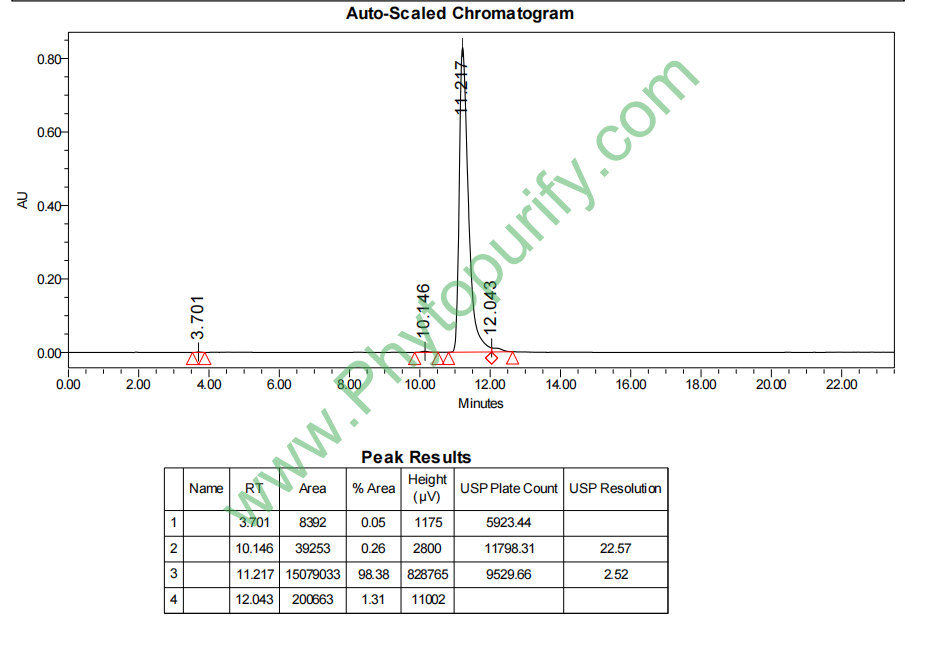
Analysis Method: HPLC-DAD or/and HPLC-ELSD
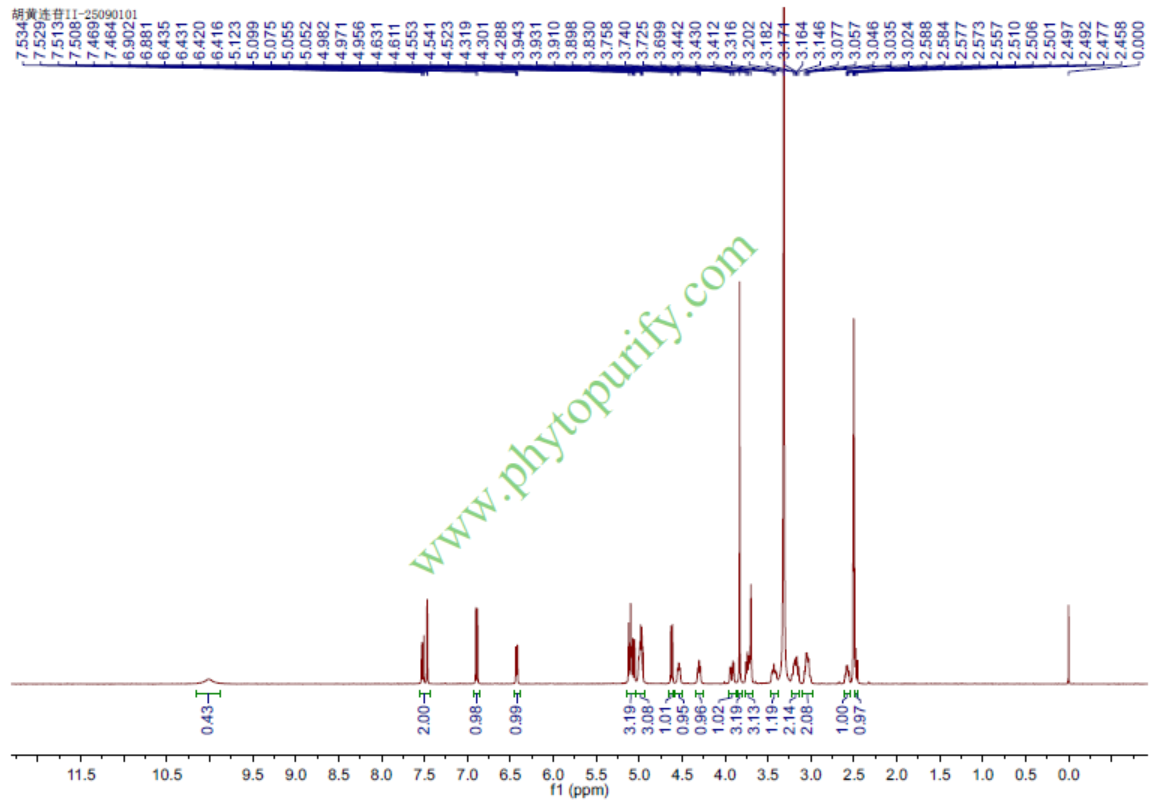
Identification Method: Mass, NMR
Packing: Brown vial or HDPE plastic bottle
Storage: Store in a well closed container, protected from air and light. Put into refrigerate or freeze for long term storage.
Whenever possible, you should prepare and use solutions on the same day. However, if you need to make up stock solutions in advance, we recommend that you store the solution as aliquots in tightly sealed vials at -20℃. Generally, these will be useable for up to two weeks.
The product could be supplied from milligrams to grams
Inquire for bulk scale.
Description:
Picroside II has antioxidant, anti-inflammatory, immune regulatory, anti-virus and other pharmacological activities. It has potent anti-apoptotic activity against renal I/R injury by suppressing the TLR4/NF-κB signaling pathway, it can protect the ischemic kidney against renal fibrosis and improve the neurological function of rats upon cerebral ischemia reperfusion injury. Picroside II enhances nerve growth factor (NGF)-induced neurite outgrowth from PC12D cells by amplifying a down-stream step of MAP kinase in the NGF receptor-mediated intracellular MAP kinase-dependent signaling pathway.
References:
Acta Pharmacol Sin. 2005 Jun;26(6):729-36.
Inhibitory effect of picroside II on hepatocyte apoptosis.
To investigate the influence of Picroside II on hepatocyte apoptosis and its mechanism.
METHODS AND RESULTS:
Morphological changes and quantification of apoptotic cells were determined under transmission electron microscopy and flow cytometry respectively. DNA fragmentation was visualized by agarose gel electrophoresis. Semi-quantitative reverse transcription-PCR (RT-PCR) was used to analyze the expression of bcl-2 and bax genes. The content of manganese-superoxide dismutase (SOD) in liver mitochondria was detected by the Marland method. The content of malonic aldehyde (MDA) and the protein level in liver tissue were determined by thiobarbituric acid colorimetry and Lowry method. Picroside II decreased the levels of alanine aminotransferase and aspartate aminotransferase in the serum resulting from acute-liver injured mice induced with D-GalN and LPS; it also reduced the content of MDA, and thus, enhanced the activity of SOD. Picroside II 10 mg/kg was found to protect hepatocytes against apoptosis in a dose-dependent manner; it up-regulated the expression of bcl-2 genes, thus increased the bcl-2/bax ratio.
CONCLUSIONS:
Picroside II can protect hepatocytes against injury and prevent hepatocytes from apoptosis. It might by upregulating the bcl-2 gene expression and antioxidation.
Exp Ther Med. 2015 Apr;9(4):1253-1258.
Picroside II protects rat kidney against ischemia/reperfusion-induced oxidative stress and inflammation by the TLR4/NF-κB pathway.
Picroside II possesses a wide range of pharmacological effects and has been demonstrated to ameliorate cerebral ischemia and reperfusion (I/R) injury. However, its effects on renal I/R injury remain unclear. In the present study, the role of Picroside II in attenuating oxidative stress and the inflammatory response in a rat model of renal I/R injury was investigated.
METHODS AND RESULTS:
Sprague Dawley rats were subjected to 45 min of ischemia followed by 24 h of reperfusion. Prior to reperfusion, the rats were treated with Picroside II or an equal volume of phosphate-buffered saline. Renal function and histological changes were compared and the relevant parameters of oxidative stress and inflammation were detected. The expression of toll-like receptor 4 (TLR4) and nuclear factor κB (NF-κB; p65) were assessed by immunohistochemistry and western blotting. It was observed that renal function was significantly improved by treatment with Picroside II. Morphological analysis indicated that Picroside II clearly reduced tissue damage and the expression of TLR4 and NF-κB. Reverse transcription-quantitative polymerase chain reaction demonstrated that Picroside II inhibited the increase of tumor necrosis factor (TNF)-α, interleukin (IL)-1β and intercellular adhesion molecule (ICAM)-1 expression induced by I/R injury. Western blot analysis indicated that the expression levels of TLR4 and NF-κB were significantly downregulated in the Picroside II group compared with those in the I/R group.
CONCLUSIONS:
These results indicate that Picroside II treatment suppressed the TLR4/NF-κB signaling pathway, protecting renal tissue against I/R-induced oxidative stress and inflammatory response.
Int J Mol Sci. 2010 Nov 16;11(11):4580-90.
Neuroprotective properties of picroside II in a rat model of focal cerebral ischemia.
The aim of this study was to explore the effect of Picroside II on neuronal apoptosis and the expression of caspase-3 and poly ADP-ribose polymerase (PARP) following middle cerebral artery occlusion/reperfusion in male Wistar rats.
METHODS AND RESULTS:
Picroside II (10 mg/kg) was administered intravenously into the tail vein of the animals. The neurological function deficits were evaluated with the Bederson's test and the cerebral infarction volume was visualized with tetrazolium chloride (TTC) staining. The apoptotic cells were counted by in situ terminal deoxynucleotidyl transferase-mediated biotinylated deoxyuridine triphosphate nick end labeling (TUNEL) assay. The immunohistochemistry stain and enzyme linked immunosorbent assay (ELISA) was used to determine the expressions of caspase-3 and PARP in brain tissue. The results indicated that rats in the control group showed neurological function deficit and cerebral infarction in ischemic hemisphere after two hours ischemia followed by 22 hours reperfusion. Caspase-3 and PARP expressions were also profound in the cortex, the striatum and the hippocampus, along with increased apoptotic cells in this group. Bederson's score, infarction volume, and expressions of caspase-3 and PARP, as well as apoptosis in the treatment group were,however, significantly decreased compared to those in the control group .
CONCLUSIONS:
Indicating that intravenous treatment with Picroside II might be beneficial to inhibit neuronal apoptosis and, thus, to improve the neurological function of rats upon cerebral ischemia reperfusion injury.
Modern Research in Inflammation, 2013, 02(3):46-53.
The anti-inflammatory effect of picroside II and the optimizing of therapeutic dose and time window in cerebral ischemic injury in rats
The aim is to optimize the anti-inflammatory effect and the therapeutic dose and time window of picrosede II by orthogonal test in cerebral ischemic injury in rats.
METHODS AND RESULTS:
The forebrain ischemia models were established by bilateral common carotid artery occlusion (BCCAO) methods in 30 Wistar rats. The successful models were randomly divided into sixteen groups according to orthogonal experimental design and treated by injecting Picroside II intraperitoneally at different ischemic time with different dose. The concentrations of aquaporins 4 (AQP4), matrix metalloproteinases9 (MMP9) and cyclooxygenase 2 (COX2) in serum and brain tissue were determined by enzyme linked immunosorbent assay to evaluate the therapeutic effect of Picroside II in cerebral ischemic injury. The best therapeutic time window and dose of Picroside II in cerebral ischemic injury were 1) ischemia 2.0 h with 20 mg/kg and 1.5 h with 20 mg/kg body weight according to the concentration of AQP4 in serum and brain tissue; 2) ischemia 1.5 h with 20 mg/kg and ischemia 2.0 h with 20 mg/kg according to the concentrations of MMP9 in serum and brain tissue; and 3) ischemia 1.5 h with 10 mg/kg and ischemia 1.5 h with 20 mg/kg according to the concentrations of COX2 in serum and brain tissue respectively. According to the principle of the lowest therapeutic dose with the longest time window, the optimized therapeutic dose and time window were injecting Picroside II intraperitoneally with 10 - 20 mg/kg body weight at ischemia 1.5 - 2.0 h in cerebral ischemic injury.
HPLC of Picroside II
HNMR of Picroside II
Storage conditions:Short-term storage at 2~8℃, long-term storage at -20 ~ -80℃
197.1300
-.3649
-.3701
7.2742
.5276
.3647
Low
59.0618
4.9238
Yes
No
No
No
Yes
No
0.0
Yes
Yes
Yes
Yes
Natural products have always been an important source of innovative drug discovery, among which iridoid glycosides have attracted much attention due to their wide range of biological activities. Picroside II, CAS number 39012-20-9, is derived from the traditional Chinese medicine Picroside II(Picrorhiza scrophulariiflora)A representative cyclohexene ether terpenoid glycoside isolated from the middle. Modern pharmacological research has revealed that Huhuanglian glycoside II is a multifunctional compound with oral activity. Its core function lies in its strong antioxidant capacity, which can effectively reduce the production of reactive oxygen species (ROS) and protect the integrity of the blood-brain barrier (BBB) after brain ischemia/reperfusion (CI/R) and other injuries, demonstrating significant neuroprotective potential. In addition, its pharmacological activity spectrum is extensive, covering multiple aspects such as immune regulation, antiviral, and inhibition of cell apoptosis. Of particular importance, berberine II can alleviate excessive inflammatory reactions in diseases such as sepsis by inhibiting the activation of NLRP3 inflammasome and nuclear factor kappa B (NF - κ B) signaling pathway. In recent years, its potential in the field of anti-tumor has gradually emerged, involving the regulation of multiple key targets such as MCL1, STAT3, and HIF1A. This article aims to systematically review the chemical properties, plant sources, pharmacological activities, molecular mechanisms of action, pharmacological evaluation, and clinical application prospects of Huhuanglian glycoside II, in order to provide comprehensive scientific references for the in-depth research and development of this compound.
The molecular formula of Huhuanglian glycoside II is C23H28O13, with a molecular weight of 512.4640. Its structure belongs to the iridoid glycoside class, consisting of a decahydronaphthalene nucleus (iridoid moiety) connected to a glucose group through a glycosidic bond. The ether bonds, multiple hydroxyl groups, and benzoyl groups in the structure are the key pharmacophores for its biological activity. These functional groups collectively endow Huhuanglian glycoside II with strong polarity and reactivity.
From the analysis of parameters related to drug properties, Huhuanglian glycoside II exhibits typical hydrophilic characteristics. The calculated lipid water partition coefficient (LogP) is -0.3649, indicating that the compound has slightly stronger hydrophilicity than lipophilicity. The topologically polar surface area (TPSA) is as high as 197.13 Å ², mainly attributed to the abundance of hydrogen bond acceptors (oxygen atoms) present in the molecule. The high TPSA and negative LogP values together explain its good water solubility (calculated value of approximately 7.27 mg/mL). However, these properties also pose challenges to their transmembrane absorption. In particular, its blood-brain barrier permeability is predicted to be "low", which may seem contradictory to its function of protecting the blood-brain barrier. However, this may suggest that its protective effect does not directly rely on high concentration central distribution, but is achieved through indirect mechanisms such as regulating peripheral inflammation, reducing endothelial damage, or more effectively entering the central nervous system when BBB permeability increases under injury conditions. In terms of preliminary safety prediction, Huhuanglian glycoside II has no risk of hERG potassium channel inhibition (indicating low risk of cardiac toxicity), and the Ames test prediction result is negative (indicating low risk of mutagenicity), providing favorable early safety signals for its further development.
Huhuanglian glycoside II is mainly derived from the Scrophulariaceae plant Huhuanglian(Picrorhiza scrophulariiflora The rhizome of Pennell. Huhuanglian, as a traditional Tibetan medicine and a commonly used Ayurvedic medicine in India, has a long history and is commonly used to treat liver disease, fever, and indigestion. Belonging to the same plant species Picrorhiza kurroa It is also an important source of Huhuanglian glycoside II.
The extraction of paeoniflorin II from plant materials is usually carried out using solvent extraction method. Due to the high polarity of the compound, methanol, ethanol, or ethanol water mixed solutions are commonly used as extraction solvents. Traditional hot reflux extraction and Soxhlet extraction are the basic methods. To improve extraction efficiency and reduce solvent consumption, modern technologies such as ultrasound assisted extraction (UAE), microwave-assisted extraction (MAE), and supercritical fluid extraction (SFE) have been widely applied. For example, ultrasound treatment can destroy plant cell walls through cavitation effect, significantly improving the dissolution rate and yield of target components.
The crude extract after extraction needs to undergo further separation and purification to obtain high-purity Huhuanglian glycoside II. Commonly used techniques include macroporous adsorption resin (such as AB-8, D101) column chromatography for initial enrichment, followed by fine separation using silica gel column chromatography, reverse phase silica gel (such as ODS) column chromatography, and high-performance liquid chromatography (HPLC) or preparative liquid chromatography. The separation process is often monitored and identified online using thin-layer chromatography (TLC) or high-performance liquid chromatography coupled with mass spectrometry (HPLC-MS). At present, Huhuanglian glycoside II can also be obtained through chemical synthesis or biosynthetic pathways, but plant extraction remains its main source.
Huhuanglian glycoside II has a wide and significant pharmacological activity, which is the basis for its potential as a therapeutic drug.
Neuroprotective effect This is one of the most highly anticipated activities of Huhuanglian glycoside II. Huhuanglian glycoside II exhibits strong protective effects in neurodegenerative diseases and injury models such as cerebral ischemia/reperfusion (CI/R) injury, Alzheimer's disease, Parkinson's disease, etc. Its core function lies in antioxidant and Protecting the blood-brain barrier It can directly eliminate ROS, enhance the activity of endogenous antioxidant enzymes such as superoxide dismutase (SOD) and glutathione peroxidase (GSH Px), and alleviate oxidative stress damage to neurons and cerebral vascular endothelium. By maintaining the expression and distribution of tight junction proteins such as Occludin and ZO-1, it can effectively reduce BBB damage after CI/R, alleviate brain edema and neuronal death.
Anti inflammatory and immune regulatory effects Huhuanglian glycoside II has inhibitory effects on both acute and chronic inflammation. In models of sepsis, arthritis, colitis, etc., it can significantly reduce the levels of pro-inflammatory cytokines such as TNF - α, IL-1 β, IL-6. Its anti-inflammatory mechanism is closely related to regulating immune cell function, such as inhibiting excessive activation of macrophages and abnormal proliferation of T lymphocytes.
Antiviral activity Research has shown that Huhuanglian glycoside II has inhibitory effects on certain viruses such as Coxsackievirus B3, which may be achieved by interfering with the virus replication cycle or regulating the host immune response.
Antitumor activity Recent studies have shown that picroside II can inhibit the growth, migration and invasion of many tumor cells (such as liver cancer, breast cancer, lung cancer, colon cancer, etc.). It can induce tumor cell cycle arrest, promote apoptosis, and inhibit angiogenesis and epithelial mesenchymal transition (EMT) processes.
Hepatoprotective effect In chemical (such as acetaminophen, carbon tetrachloride) or immunological liver injury models, berberine II effectively reduces liver cell necrosis and improves liver function through anti-inflammatory, antioxidant, and anti apoptotic effects.
Other activities It also includes heart protection, anti diabetes complications, etc., which reflects the characteristics of its multi target and multi pathway effects.
The multiple pharmacological effects of Huhuanglian glycoside II stem from its precise regulation of multiple key signaling pathways within cells.
Antioxidant and Apoptosis Pathways Huhuanglian glycoside II upregulates the expression of downstream phase II detoxifying enzymes and antioxidant proteins by activating the Nrf2/ARE pathway, which is its core mechanism in combating oxidative stress. At the same time, it can regulate the balance of Bcl-2 family proteins (such as inhibiting pro apoptotic protein Bax, upregulating anti apoptotic proteins Bcl-2 and MCL1), inhibit the activation of mitochondrial apoptosis pathways, reduce the activation of caspase-3, and thus exert anti apoptotic effects.
Anti inflammatory signaling pathway:
Anti tumor related targets and pathways The anti-tumor effect of Huhuanglian glycoside II involves complex network regulation.
Neural protection related pathways In addition to the aforementioned antioxidant and anti-inflammatory mechanisms, it also involves activating survival promoting signaling pathways such as PI3K/Akt and BDNF/TrkB, as well as inhibiting stress signaling pathways such as JNK/p38 MAPK.
Although Huhuanglian glycoside II has excellent pharmacological activity, its pharmacological properties, especially pharmacokinetic properties, are a key focus in its drug conversion process.
Existing research indicates that Huhuanglian glycoside II is rapidly absorbed after oral administration, but its absolute bioavailability is high lower This is mainly attributed to its high polarity and molecular weight, which limits its passive transmembrane diffusion ability; Meanwhile, it may serve as a substrate for efflux transporters such as P-glycoprotein (P-gp) and be actively pumped into the ileal lumen. In addition, first pass metabolism may occur in the gastrointestinal tract and liver, mainly due to the hydrolysis of its glycosidic bonds by β - glucosidase in the gut microbiota or intestinal epithelial cells, generating aglycones. The activity and metabolic pathways of aglycones may be different from those of the prototype drug.
In terms of distribution in the body, Huhuanglian glycoside II can quickly reach organs with abundant blood flow such as the liver and kidneys, but as mentioned earlier, its ability to enter the central nervous system is limited (BBB permeability is low). This suggests that for the treatment of central nervous system diseases, it may be necessary to explore nano drug delivery systems, prodrug strategies, or combination therapy to enhance their brain targeting.
In terms of metabolism, Huhuanglian glycoside II mainly undergoes phase II metabolic reactions in the liver, such as glucuronidation and sulfation, to generate more polar metabolites that are excreted through bile and kidneys. Its pharmacokinetic behavior mostly conforms to a two compartment model, with a relatively short elimination half-life, and may require multiple administrations to maintain effective blood drug concentrations.
In summary, Huhuanglian glycoside II has good safety and multiple pharmacological activities, but Low bioavailability and limited brain distribution are the main bottlenecks in its clinical development Future pharmaceutical research, such as developing self microemulsions, liposomes, solid dispersions, or cyclodextrin inclusion complexes, is a key direction to improve their solubility, stability, and permeability, thereby enhancing their drug properties.
The diverse pharmacological effects of Huhuanglian glycoside II provide broad prospects for its application in multiple disease fields.
Neurological disorders As a neuroprotective agent, it is Ischemic stroke The potential for acute phase treatment and later rehabilitation is enormous, especially its unique value in BBB protection. In Alzheimer disease、Parkinson's disease In neurodegenerative diseases, the combined effects of anti-inflammatory, antioxidant, and anti apoptotic may help delay the progression of the disease. In addition, for Sepsis related encephalopathy、multiple sclerosis The inhibitory effect of NLRP3 inflammasome on neuroinflammatory diseases provides a new therapeutic approach.
Sepsis and systemic inflammatory response syndrome (SIRS)Huhuanglian glycoside II has the potential to become a candidate drug for controlling the "inflammatory storm" of sepsis by simultaneously targeting two core inflammatory pathways, NF - κ B and NLRP3, which may improve organ function and reduce mortality.
tumor therapy The anti-tumor activity of Huhuanglian glycoside II, especially its ability to regulate "difficult to drug" targets such as STAT3 and HIF-1 α, makes it a promising candidate neoadjuvant therapy A natural choice. It may be used in combination with chemotherapy, radiotherapy, or targeted therapy to enhance sensitivity, reduce toxicity (alleviate side effects), and reverse drug resistance. For example, its combined application with topoisomerase inhibitors or anti angiogenic drugs is worth exploring.
liver disease: In Drug-induced liver injury、Autoimmune hepatitis even Liver fibrosis In the prevention and treatment of liver diseases, it can be developed as a hepatoprotective drug.
Future research directions should focus on:
* In depth mechanism exploration Using proteomics, metabolomics, and gene editing techniques to more accurately depict its functional network and discover new direct targets of action.
* structural optimization Improve its pharmacokinetic defects through chemical modification, such as synthesizing derivatives or prodrugs with higher bioavailability and stronger brain targeting.
* Development of a new delivery system Actively building targeted delivery systems based on nanotechnology (such as brain targeted liposomes and exosomes) to break through their BBB barrier and achieve precise treatment.
* Clinical translational research After completing the preclinical safety evaluation (GLP toxicology) of the system, initiate clinical trials for specific indications (such as acute ischemic stroke, chemotherapy induced liver injury) as soon as possible to verify their effectiveness and safety in humans.
Huhuanglian glycoside II, as a natural iridoid glycoside derived from traditional Chinese medicine, has become a hot molecule in modern natural product pharmacology research due to its excellent multiple pharmacological activities such as antioxidant, anti-inflammatory, neuroprotective, and anti-tumor. The study of its mechanism of action has delved into multiple key signaling pathways and targets such as NLRP3 inflammasome, NF - κ B, STAT3, HIF-1 α, revealing its multi-target and integrative regulatory characteristics. Despite facing challenges such as low oral bioavailability and poor blood-brain barrier permeability in terms of drug efficacy, these challenges are being actively addressed through methods such as formulation, structural modification, and novel drug delivery technologies. With the continuous deepening of research and the advancement of translational medicine, Huhuanglian glycoside II is expected to achieve breakthroughs in multiple clinical fields such as neurodegenerative diseases, sepsis, and tumor adjuvant therapy, gradually moving from an excellent "lead compound" to a "candidate drug" with clear clinical application value, contributing to the combination of ancient wisdom and modern science to the cause of human health.
