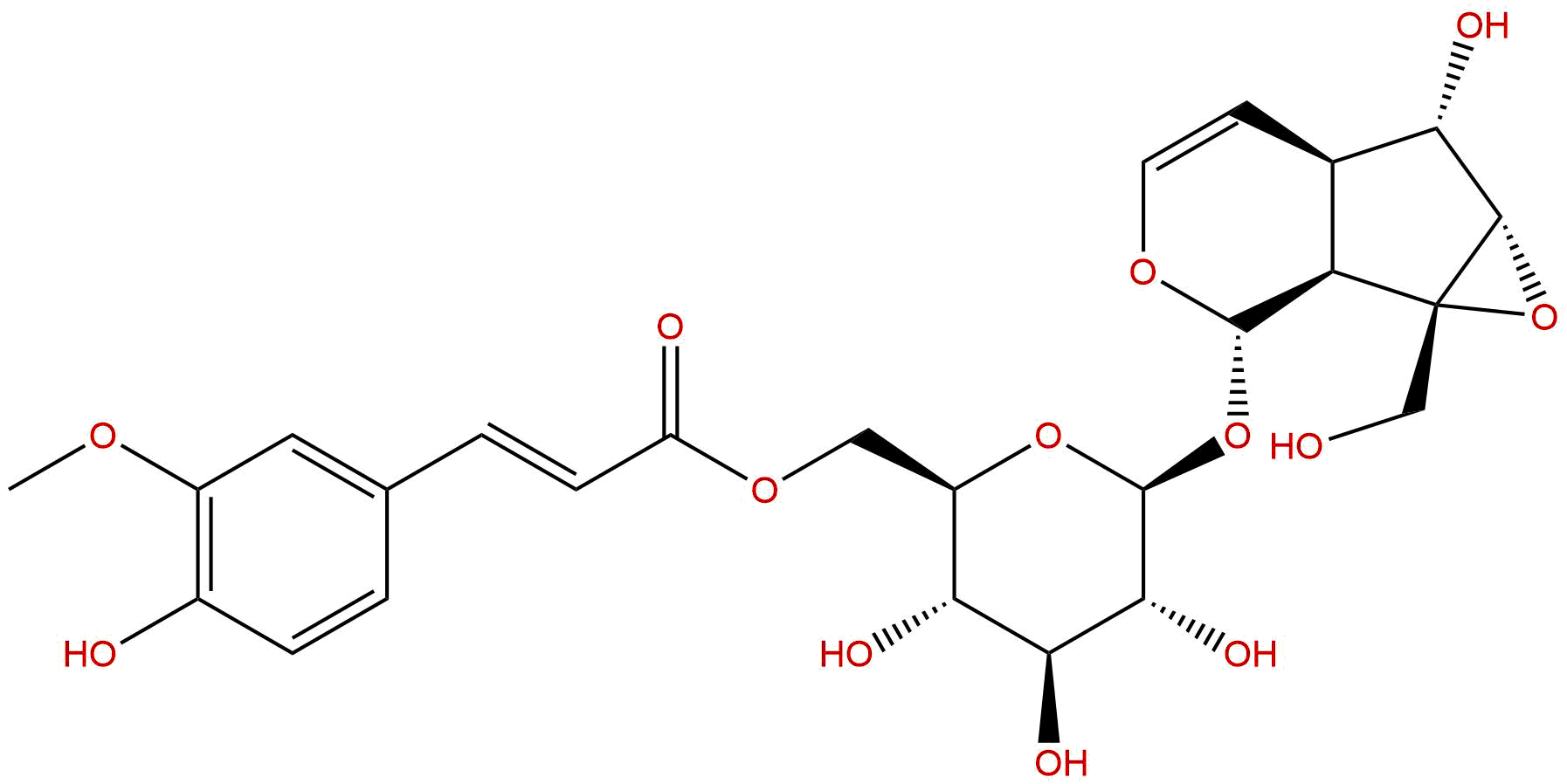


Synonym name:
Catalogue No.: BP1101
Cas No.: 64461-95-6
Formula: C25H30O13
Mol Weight: 538.502
Botanical Source: Picrorhiza kurrooa
Purity: 95%~99%
Analysis Method: HPLC-DAD or/and HPLC-ELSD
Identification Method: Mass, NMR
Packing: Brown vial or HDPE plastic bottle
Can be supplied from milligrams to grams.
For Reference Standard and R&D, Not for Human Use Directly.
Inquire for bulk scale.
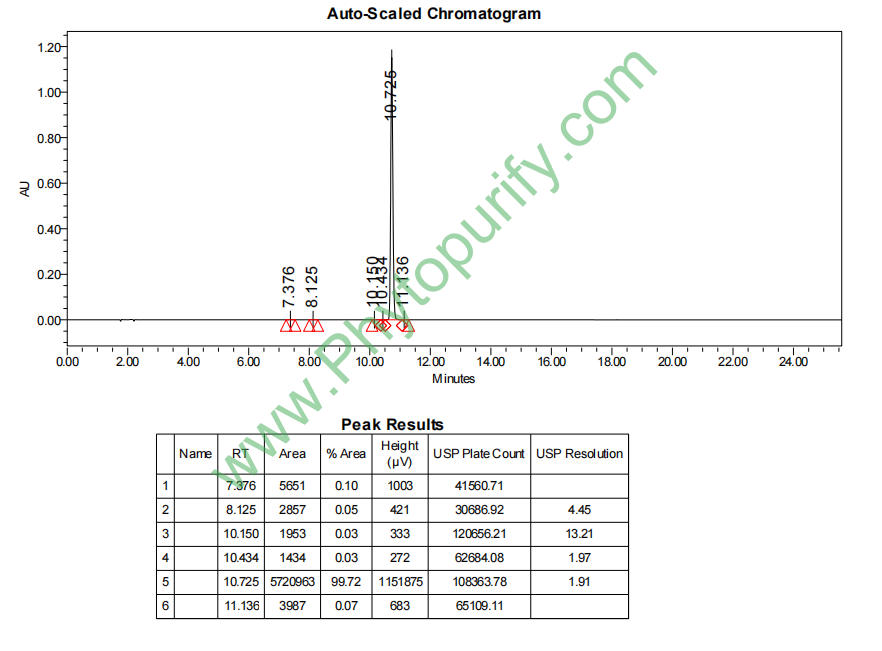
HPLC of Picroside III
Storage conditions:Short-term storage at 2~8℃, long-term storage at -20 ~ -80℃
197.1300
-.0111
-.0139
2.9758
.6270
.2585
Low
62.7739
5.0365
Yes
No
No
No
Yes
No
0.0
Yes
Yes
Yes
Yes
Natural products, as an important source of drug discovery and development, have played an irreplaceable role in the long history of human fight against diseases. Cycloterpenoid glycosides are a class of secondary metabolites widely present in the plant kingdom with significant biological activity. They have diverse structures and a wide range of pharmacological effects, and are increasingly becoming a hot topic in modern pharmacological research. Picroside III (CAS number: 64461-95-6) is one of them, which is derived from the traditional Chinese medicine Picroside(Picrorhiza scrophulariiflora A representative iridoid glycoside isolated and purified from the rhizome of Pennell (PS). Huhuanglian, also known as "Honglian" in Tibetan medicine, is commonly used in traditional Chinese medicine and Ayurvedic medicine in India to treat liver and gallbladder diseases, fever, inflammation, and viral infections. Its pharmacological substance basis research has attracted much attention.
In recent years, with the increasing threat of newly emerging and re emerging viral infectious diseases worldwide, finding highly effective and low toxicity antiviral drugs from natural products has become an urgent issue. Huhuanglian glycoside III stands out from numerous natural compounds due to its broad-spectrum antiviral potential demonstrated in various in vitro and in vivo models, particularly in research reports targeting herpes virus, human immunodeficiency virus (HIV), and others. Its function is not limited to direct virus suppression, but also involves regulating the host immune response, exhibiting multi-target and multi pathway characteristics. This article aims to systematically review the chemical structure, plant origin, pharmacological activity, mechanism of action, pharmacological evaluation, and clinical application prospects of Huhuanglian glycoside III, in order to provide comprehensive scientific references for the in-depth research and future development of antiviral drugs of this compound.
Huhuanglian glycoside III is a cyclic terpenoid glycoside compound. Its molecular formula is C24H30O13 and its molecular weight is 538.5020. Its core structure is composed of a cyclohexene ether terpene parent nucleus (usually a derivative of catalpol) and a phenylethanolic glycoside unit connected by glycosidic bonds. Specifically, its structure consists of a cyclohexene ether portion of a decahydronaphthalene skeleton, which is connected to a p-hydroxyphenylethanolic glycoside portion via a glucose group. This unique 'dual module' structure is considered the chemical basis for its various biological activities.
From the analysis of physical and chemical properties, the theoretical lipid water partition coefficient (LogP) of Huhuanglian glycoside III is about -0.0111, indicating that the compound has high hydrophilicity, which is consistent with the structural characteristics of containing multiple hydroxyl and sugar groups in the molecule. Its topological polar surface area (TPSA) is as high as 197.1300 Å ², further confirming its strong polarity characteristics. The predicted value of water solubility is 2.9758 (usually measured in mg/mL or log mol/L, indicating good water solubility), which is beneficial for its dissolution and in vivo absorption in aqueous media. However, high polarity and large TPSA also mean that its ability to penetrate lipid biofilms may be limited, and its blood-brain barrier permeability is predicted to be "low", suggesting that it may be difficult to enter the central nervous system. In terms of preliminary safety prediction, the risk of hERG inhibition is "no", indicating a low potential risk of cardiac toxicity; The Ames test predicted a value of 0.0, indicating that it may not be mutagenic, which provides favorable preliminary safety features for its subsequent development.
Huhuanglian glycoside III is mainly derived from the Scrophulariaceae plant Huhuanglian(Picrorhiza scrophulariiflora The dried rhizomes of Pennell. This plant is mainly distributed in the the Himalayas, including Xizang, Nepal, northern India and other places in China, and grows in high altitude rock crevices or meadows. In addition to paeoniflorin III, this plant is also rich in other structurally similar cyclohexene ether terpenoid glycosides such as paeoniflorin I, II, picroside I, II, as well as cucurbitacin and phenolic glycosides, which together constitute the pharmacological substance group of paeoniflorin.
The extraction and separation of Huhuanglian glycoside III usually follow the conventional process of natural product chemistry. Firstly, the dried rhizomes of Coptis chinensis are crushed and subjected to reflux extraction or ultrasound assisted extraction using methanol, ethanol, or ethanol water mixed solvents to fully extract the polar components. Subsequently, crude extract was obtained by vacuum concentration. The crude extract is often subjected to macroporous adsorption resin (such as D101, AB-8) column chromatography, and gradient elution is performed using ethanol water solutions of different concentrations to preliminarily enrich the iridoid glycoside sites. The further purification of Huhuanglian glycoside III relies heavily on preparative high-performance liquid chromatography (HPLC), which uses a reverse phase C18 column with methanol water or acetonitrile water (often containing a small amount of formic acid or acetic acid to adjust pH) as the mobile phase for isocratic or gradient elution. The target peak is collected by monitoring with a UV detector (usually with characteristic absorption at 220-280 nm), and high-purity monomer compounds are obtained after concentration and freeze-drying. Modern technologies such as high-speed countercurrent chromatography (HSCCC) have also been applied to the efficient preparation and separation of such compounds due to their advantages of irreversible adsorption and high recovery rate.
A large number of pharmacological studies have shown that Huhuanglian glycoside III has a wide range of biological activities, among which its antiviral effect is the most prominent. In addition, it has also been reported in anti-inflammatory, hepatoprotective, neuroprotective and other aspects.
1. Antiviral activity:
The antiviral spectrum research of Huhuanglian glycoside III is relatively concentrated and in-depth. Research has shown that it has a significant inhibitory effect on herpes simplex virus types 1 (HSV-1) and 2 (HSV-2). Its mechanism of action is not singular, and may involve interfering with virus adsorption/entry, inhibiting virus gene replication and protein synthesis, and other multiple processes. Huhuanglian glycoside III has been shown to inhibit the replication of the human immunodeficiency virus (HIV-1) in host cells. More meaningfully, research has found that it may act on the co receptors CCR5 and CXCR4 on the surface of host cells, thereby blocking HIV-1 from using these co receptors to enter cells. This mechanism is similar to some existing anti HIV drugs (such as Maraviro), but the source of action is natural products. In addition, studies suggest that it may have inhibitory potential against other members of the herpesvirus family, such as cytomegalovirus (CMV).
2. Anti inflammatory and immune regulatory activity:
Inflammation is an important component of the pathological process of many viral diseases. Huhuanglian glycoside III has shown good anti-inflammatory effects in various acute and chronic inflammation models. It can significantly inhibit the excessive production of nitric oxide (NO), prostaglandin E2 (PGE2), as well as pro-inflammatory factors such as tumor necrosis factor - α (TNF - α) and interleukin-6 (IL-6) in macrophages induced by lipopolysaccharides (LPS). Its anti-inflammatory effect is closely related to the inhibition of key inflammatory signaling pathways such as nuclear factor kappa B (NF - κ B) and mitogen activated protein kinases (MAPKs). This anti-inflammatory and immune regulatory property, coupled with its antiviral effect, may alleviate tissue damage by alleviating excessive inflammatory responses caused by viruses, such as cytokine storms.
3. Liver protection and neuroprotective activity:
Originating from the traditional hepatoprotective use of Huhuanglian, Huhuanglian glycoside III has shown protective effects in chemical (such as acetaminophen, carbon tetrachloride) and immune liver injury models, reducing serum transaminase levels and improving liver pathological changes. Its mechanism is related to antioxidant stress, inflammation inhibition, and anti apoptosis. In addition, some preliminary studies suggest that berberine III may have neuroprotective effects on ischemia-reperfusion brain injury and Alzheimer's disease models. Although its blood-brain barrier permeability is poor, it may exert its benefits through peripheral or indirect mechanisms.
The pharmacological effects of Huhuanglian glycoside III, especially its antiviral activity, are achieved through interactions with multiple viral and host targets, reflecting the characteristics of multi-target intervention.
Targeting virus targets:
* Herpesvirus targets: Research suggests that berberine III may affect multiple key proteins of HSV. For example, it may interfere with the function of viral DNA polymerase helper protein UL42, or affect the activity of viral immediate early protein ICP27 (an important post transcriptional regulator), thus inhibiting viral genome replication and late protein synthesis. There are also speculations about the potential role of virus thymidine kinase (TK) or DNA polymerase catalyzed subunit UL54, but further experimental confirmation is needed. In addition, some studies suggest that it may interfere with the initial adsorption of the virus to host cells by interacting with viral envelope glycoprotein D (gD).
* HIV targets: In addition to blocking virus entry by binding to host cell co receptors CCR5/CXCR4 as mentioned earlier, computer simulations and some biochemical studies suggest that berberine III may act on viral protease (HIV1-PR) or integrase (INT) with low affinity, but this is not its main mechanism of action. Its anti HIV activity is more likely to be dominated by host targets.
Targeting host targets:
* Chemokine receptors CCR5 and CXCR4: This is currently a relatively clear host target in research. Huhuanglian glycoside III can bind to these GPCRs and competitively inhibit the binding of HIV-1 gp120 protein to receptors, effectively blocking the cell invasion of R5 and X4 tropic virus strains.
* Myeloperoxidase (MPO): MPO is a key enzyme released by neutrophils during inflammation, involved in the production of reactive oxygen species (ROS) and inflammation amplification. Huhuanglian glycoside III has been shown to inhibit the activity of MPO, which is directly related to its anti-inflammatory and antioxidant effects, and helps to alleviate tissue inflammation and oxidative damage caused by viruses or other damaging factors.
* Inflammatory signaling pathway molecules: Huhuanglian glycoside III can downregulate the nuclear translocation of NF - κ B p65 subunit, inhibit the degradation of I κ B α, and inhibit the phosphorylation of MAPK family members such as JNK, ERK, and p38. Through these actions, it regulates the transcription and expression of inflammatory factors and mediators upstream, which is the molecular basis of its anti-inflammatory and immune regulatory effects.
* Apoptosis and autophagy pathway: In liver protection and neuroprotective studies, Huhuanglian glycoside III has shown the ability to regulate the Bcl-2/Bax ratio, inhibit caspase-3 activation (anti apoptosis), and regulate autophagy related proteins such as LC3-II and Beclin-1 expression, indicating its protective effect by maintaining cellular homeostasis.
Although Huhuanglian glycoside III has shown encouraging biological activity in vitro, its development into a drug still requires systematic pharmacological evaluation and pharmacokinetic studies.
Analysis of pharmacological parameters:
Based on its theoretical parameters, Huhuanglian glycoside III belongs to highly polar and water-soluble compounds, which is beneficial for the dissolution of its formulation and the dissolution after oral administration. However, its large molecular weight and extremely high TPSA are the main limiting factors for its oral bioavailability. These compounds are usually difficult to penetrate the intestinal epithelial cell membrane through passive diffusion, which may lead to poor oral absorption and low bioavailability. The low permeability of the blood-brain barrier also limits its potential for direct treatment of central nervous system viral infections. Fortunately, the preliminary prediction of its lack of hERG inhibition and mutagenic risk has laid the foundation for its safety development.
Current status of pharmacokinetic research:
At present, pharmacokinetic studies on Huhuanglian glycoside III are relatively limited and mostly focused on animal experiments. Existing data indicate that the oral absorption rate of Huhuanglian glycoside III in animals is relatively fast, but its absolute bioavailability may not be high, which is consistent with theoretical predictions. It is widely distributed in the body, but mainly concentrated in organs with abundant blood and weak membrane barriers, such as the liver and kidneys, while its distribution in brain tissue is extremely rare. In terms of metabolism, iridoid glycosides are prone to hydrolysis, oxidation, reduction, and binding reactions under the action of gut microbiota and liver metabolic enzymes, and their aglycone parts may be further converted. The prototype drug and its metabolites are mainly excreted through the kidneys and urine. There are studies indicating that the drug time curve of Huhuanglian glycoside III in vivo may exhibit a bimodal phenomenon, suggesting the presence of hepatic intestinal circulation.
Prospects for formulation strategy:
To enhance the pharmacological properties of Huhuanglian glycoside III, especially to improve its oral absorption, advanced formulation technology may be required. For example, preparing phospholipid complexes, cyclodextrin inclusion complexes, self microemulsion drug delivery systems (SMEDS), or solid dispersions to enhance their lipid solubility and membrane permeability. Nanoformulations, such as liposomes and polymer nanoparticles, can not only improve bioavailability, but may also enhance their accumulation at the site of infection or inflammation through passive or active targeting. For local virus infection (such as HSV infection of skin and mucosa), the development of topical gel or cream dosage forms can directly act on the focus, which can avoid the restriction of systemic pharmacokinetics.
As a natural compound with multi-target antiviral and anti-inflammatory properties, the clinical application prospects of Huhuanglian glycoside III are worthy of further exploration, but it also faces many challenges.
Potential application directions:
1. Antiviral therapy adjuvant drugs: Given that it exerts anti HIV effects through host targets (CCR5/CXCR4) and has a different mechanism of action from existing antiretroviral drugs, berberine III or its structurally optimized derivatives have the potential to be developed as novel HIV entry inhibitors for combination therapy, particularly effective against drug-resistant strains. For HSV infection, it can be explored as a supplement to local medication (such as topical agents for oral and genital herpes) or systemic treatment, utilizing its dual advantages of multi link virus inhibition and inflammation reduction.
2. Treatment of viral related inflammatory diseases: Its powerful anti-inflammatory and immunomodulatory effects make it potentially valuable in the treatment of acute lung injury, acute respiratory distress syndrome (ARDS) or cytokine release syndrome caused by viruses (such as influenza virus, COVID-19). By inhibiting MPO and inflammatory signaling pathways, tissue damage may be reduced and prognosis improved.
3. Liver disease adjuvant therapy: Combining traditional uses with modern research, it may have a place in the auxiliary liver protection treatment of viral hepatitis and drug-induced liver injury.
Challenges and future research directions:
1. Deepening of drug efficacy and mechanism: Existing antiviral research is mostly at the cellular level, and there is an urgent need to validate its in vivo efficacy in higher-level animal infection models, such as humanized mouse HIV models and HSV infected animal models. The mechanism of action needs to be further refined to clarify its direct binding affinity, binding site, and functional impact with each speculated target (such as UL42, ICP27).
2. Optimization of drug properties: This is the biggest bottleneck for its clinical progress. Future research should focus on: a) Structural modification Through rational medicinal chemical methods, modifications are made to glycosides, phenolic hydroxyl groups, etc. while retaining the pharmacophore to balance the lipid water partition coefficient, improve membrane permeability and metabolic stability; b) Development of a new delivery system As mentioned earlier, utilizing nanotechnology and other techniques to enhance its bioavailability and targeting.
3. System security evaluation: Comprehensive preclinical toxicology studies are needed, including acute toxicity, chronic toxicity, reproductive toxicity, etc., to clarify their safety window.
4. Clinical research exploration: After completing sufficient preclinical research, early clinical trials can be considered to first explore its safety as a local antiviral agent and gradually expand to systemic administration.
Huhuanglian glycoside III is a cyclic iridoid glycoside with significant research value discovered from the traditional Chinese medicine Huhuanglian. With its unique chemical structure, it exhibits broad-spectrum antiviral activity as its core, as well as multiple pharmacological activities such as anti-inflammatory, immune regulation, and liver protection. Its mechanism of action involves multi-target intervention on viral life cycle proteins (such as UL42 and ICP27 of HSV) and host key factors (such as CCR5/CXCR4, MPO, NF - κ B), reflecting the advantage of the complexity of natural product action. Although it currently faces challenges in developing drugs due to low oral bioavailability, this also provides space for optimization and innovation for scholars in the fields of medicinal chemistry and pharmacy. With the continuous elucidation of its mechanism of action, structural modification, and in-depth research on new delivery systems, Huhuanglian glycoside III is expected to gradually develop from an excellent pharmacological active molecule into a new therapeutic drug or lead compound for treating viral infections and related inflammatory diseases, contributing to the inheritance and development of traditional Chinese medicine treasure trove and addressing global public health challenges.
