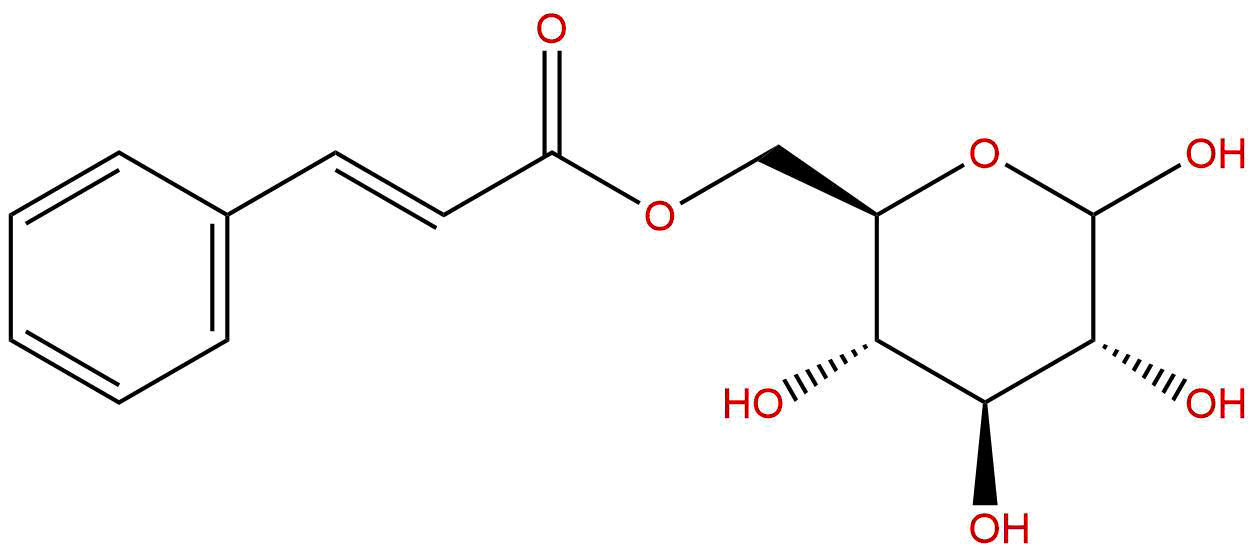


Product name: 6-O-cinnamoyl-D-glucopyranose
Synonym name: D-Glucopyranose,6-[(2E)-3-phenyl-2-propenoate]
Catalogue No.: BP2399
Cas No.: 698393-97-4
Formula: C15H18O7
Mol Weight: 310.302
Botanical Source: Picrorhiza scrophulariiflora Pennell
Type of Compound: Phenylpropanoids
Purity: 95%~99%
Analysis Method: HPLC-DAD or/and HPLC-ELSD
Identification Method: Mass, NMR
Packing: Brown vial or HDPE plastic bottle
Storage: Store in a well closed container, protected from air and light. Put into refrigerate or freeze for long term storage.
Whenever possible, you should prepare and use solutions on the same day. However, if you need to make up stock solutions in advance, we recommend that you store the solution as aliquots in tightly sealed vials at -20℃. Generally, these will be useable for up to two weeks.
The product could be supplied from milligrams to grams
Inquire for bulk scale.
For Reference Standard and R&D, Not for Human Use Directly.
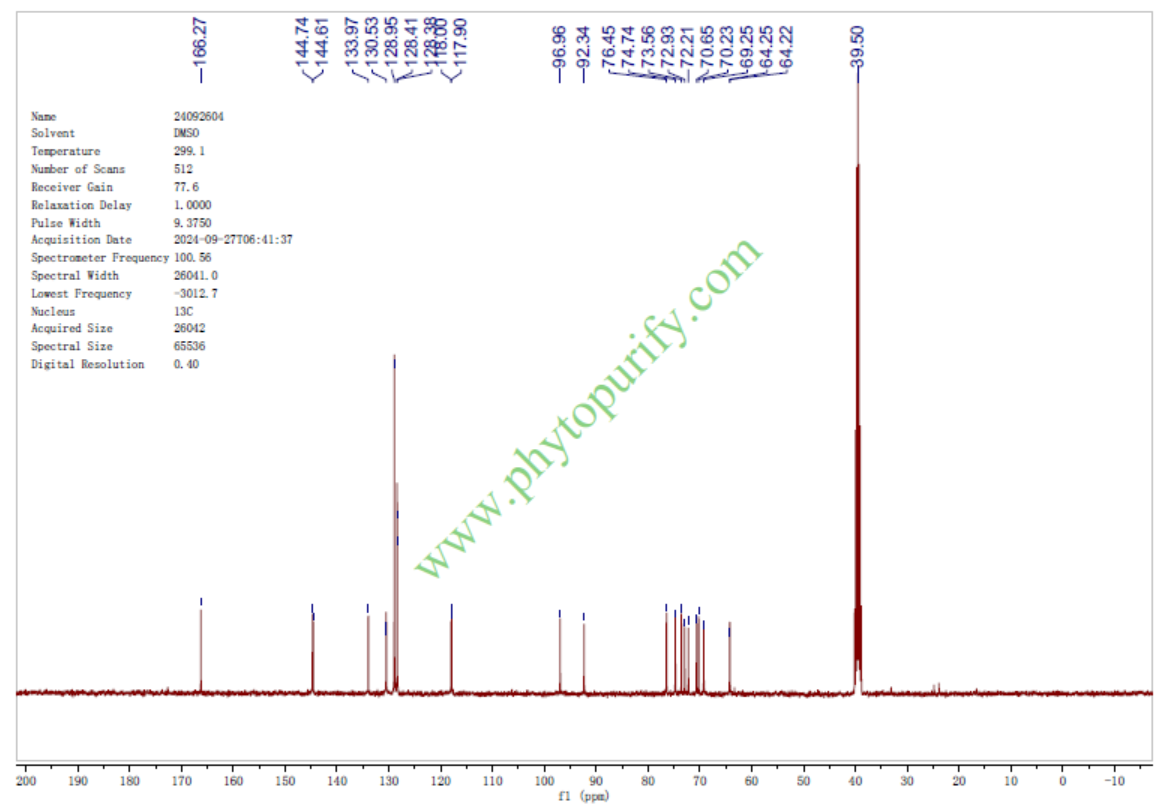
NMR of 6-O-cinnamoyl-D-glucopyranose
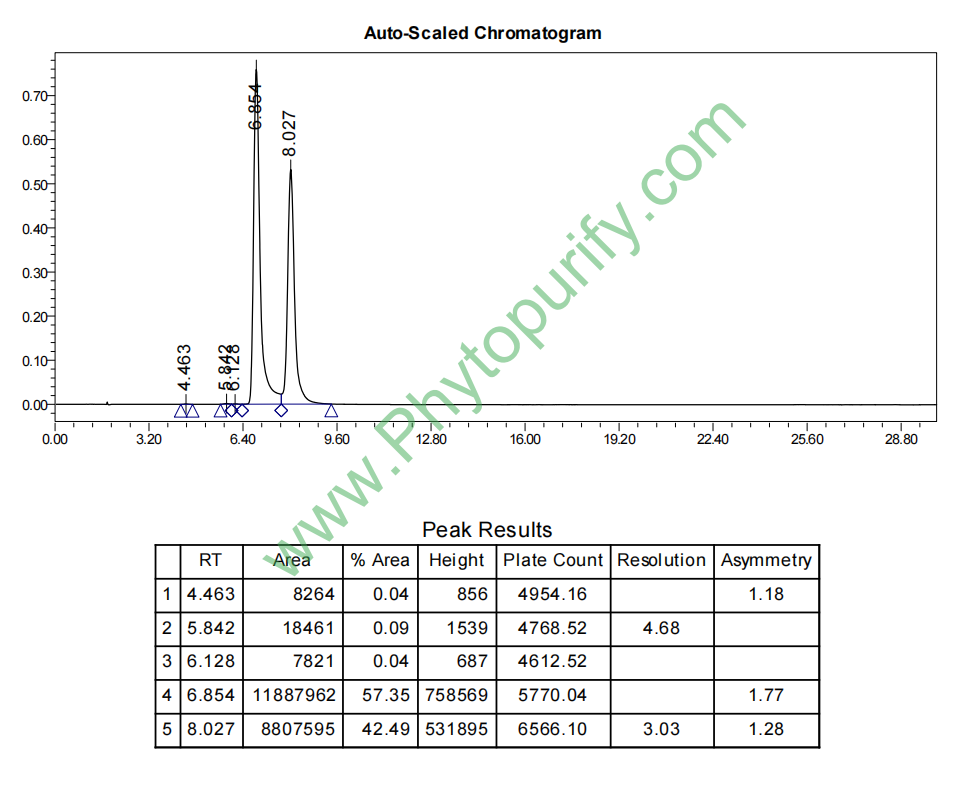
HPLC of 6-O-cinnamoyl-D-glucopyranose
Storage conditions:Short-term storage at 2~8℃, long-term storage at -20 ~ -80℃
116.4500
-.0334
-.0331
6.7995
.4459
.7799
Low
43.2938
3.4527
Yes
No
No
No
No
No
0.0
Yes
Yes
Yes
Yes
Natural products, as an important source of drug discovery, play an irreplaceable role in the long-term struggle between humans and diseases. In recent years, with the in-depth research on the active ingredients of traditional medicinal plants, a series of natural compounds with novel structures and significant activities have been discovered one after another, among which phenolic acids and their glycoside derivatives have attracted much attention due to their extensive biological activities. 6-O-cinnamoyl-D-glucopyranose (CAS number: 698393-97-4), as a natural phenolic acid glycoside formed by ester bonding between cinnamic acid and glucose, has shown unique pharmacological value in the fields of anti-inflammatory and anti arthritis in recent years.
Cinnamoyl glucoside compounds are widely present in various medicinal plants, such as cinnamon(Cinnamomum cassia)Xuanshen(Scrophularia ningpoensis)Rehmannia glutinosa(Rehmannia glutinosa)It has been found in traditional Chinese medicine. These compounds are commonly considered as secondary metabolites in plants and play important roles in plant defense responses and signal transduction. 6-O-cinnamoyl glucoside, as one of the structurally simpler compounds, has a research history dating back to the mid-20th century. However, it was not until the past two decades, with the advancement of separation and purification techniques and activity screening methods, that its anti arthritis activity was gradually revealed.
Arthritis is a chronic disease characterized by joint inflammation, pain, swelling, and functional impairment, mainly including osteoarthritis (OA) and rheumatoid arthritis (RA). Arthritis affects hundreds of millions of people worldwide and is one of the main causes of disability. The commonly used therapeutic drugs in clinical practice include nonsteroidal anti-inflammatory drugs (NSAIDs), glucocorticoids, disease modifying and anti rheumatic drugs (DMARDs), and biologics, but these drugs often come with significant side effects such as gastrointestinal injury, cardiovascular risk, immunosuppression, etc. Therefore, the search for efficient and low toxicity new anti arthritis drugs from natural products has become a research hotspot.
This article will systematically review the research progress of 6-O-cinnamoyl glucoside from the aspects of chemical structure and physicochemical properties, plant sources and extraction methods, pharmacological activity research, mechanism of action and molecular targets, pharmacological evaluation and pharmacokinetics, clinical application prospects and prospects, in order to provide reference for the in-depth research and development of this compound.
The chemical name of 6-O-cinnamoyl-D-glucopyranose is 6-O-cinnamoyl-D-glucopyranose, with a molecular formula of C ₁₅ H ₁₈ O ₇ and a molecular weight of 310.3020. Structurally, the compound consists of two parts: a D-glucose pyranose molecule and a trans cinnamoyl group. Cinnamoyl is connected to the C-6 hydroxyl group of glucose through ester bonds, forming a typical phenolic acid glycoside structure.
Specifically, the glucose moiety exists in the form of a pyran ring, with the C-1 position being a β - D-glucopyranose configuration, the C-2, C-3, and C-4 hydroxyl groups being flat bonds, the C-5 position being a hydroxymethyl group (- CH ₂ OH), and the C-6 hydroxyl group undergoing esterification with the carboxyl group of cinnamic acid to form a 6-O-cinnamoyl ester bond. The cinnamoyl moiety contains a benzene ring and an alpha, beta unsaturated carbonyl structure (- CH=CH-CO -), with the double bond typically in the trans configuration, which is a common configuration in natural cinnamic acid derivatives.
This structural feature endows the compound with unique properties: on the one hand, the glucose group provides good water solubility and biocompatibility; On the other hand, the cinnamoyl moiety endows it with lipid solubility and the ability to interact with biological targets. This "amphiphilic" structure gives it a unique pharmacokinetic behavior in vivo.
According to computational chemistry and experimental measurement data, the main physicochemical properties of 6-O-cinnamoyl glucoside are as follows:
Lipid water partition coefficient (LogP): -0.0334. This value is close to zero, indicating that the compound has a moderate balance of hydrophilicity and lipophilicity. Negative values are slightly biased towards hydrophilicity, which is related to the presence of glucose groups with multiple hydroxyl groups in the molecule. This moderate LogP value is beneficial for the absorption and distribution of drugs in the body.
Topological Polarity Surface Area (TPSA)116.45 Å ². This value reflects the total surface area of polar atoms (oxygen, nitrogen, etc.) in the molecule. According to the Lipinski Five Rules, compounds with TPSA greater than 140 Å ² typically have difficulty penetrating cell membranes, while a value of 116.45 Å ² indicates that the compound has a certain membrane permeability, but may depend on active transport or paracellular pathways.
Water solubility 6.7995 mg/mL (calculated value). This compound exhibits good water solubility, mainly due to the multiple hydroxyl groups in the glucose group. Good water solubility is beneficial for the development and in vivo administration of drug formulations.
Blood-brain barrier penetrability: Low. Due to its large molecular weight (310 Da) and high polarity, this compound is difficult to penetrate the blood-brain barrier, which to some extent limits its application in central nervous system diseases, but also reduces the risk of central nervous system related side effects.
HERG inhibition: No. HERG (human ether - à - go related gene) potassium channel inhibition is an important indicator of drug cardiac toxicity. This compound does not inhibit hERG channels, indicating a low risk of cardiac toxicity.
Ames test: 0.0. The Ames test is used to detect the mutagenicity of compounds, and a negative result indicates that the compound has no significant genetic toxicity.
6-O-cinnamoyl glucoside is widely distributed in nature and mainly exists in the following plant groups:
Lauraceae plants Cinnamon(Cinnamomum cassia)The bark and tender branches are rich in content. Cinnamon, as a traditional Chinese medicine and spice, has been studied for hundreds of years for its active ingredients, and 6-O-cinnamoyl glucoside is one of the important water-soluble components.
Scrophulariaceae plants: Black ginseng(Scrophularia ningpoensis)The compound was detected in the root. Xuanshen is used in traditional Chinese medicine to clear heat, cool blood, nourish yin, and reduce fire. Its anti-inflammatory activity is closely related to cinnamoyl glucoside components.
Orobanchaceae plants: Rehmannia glutinosa(Rehmannia glutinosa)The rhizome contains this compound. Dihuang is a commonly used traditional Chinese medicine for nourishing yin and kidney. Its chemical composition is complex, including iridoid glycosides, phenylethanolic glycosides, and phenolic acid glycosides.
Asteraceae plants Some Asteraceae plants such as Echinochloa purpurea(Echinacea purpurea)This compound also exists in.
Other plants There are also sporadic reports in plants such as Rosaceae and Fabaceae.
It is worth noting that the content of 6-O-cinnamoyl glucoside varies greatly among different plant sources and often coexists with other cinnamoyl glycoside compounds (such as 1-O-cinnamoyl glucoside, 2-O-cinnamoyl glucoside, etc.), which poses certain challenges to separation and purification.
Solvent extraction method It is the most commonly used method. According to the polarity characteristics of compounds, solvent systems with higher polarity are usually selected:
Ethanol water system Use a 50% -80% ethanol aqueous solution for reflux extraction or cold soaking extraction. Excessive ethanol concentration can lead to an increase in lipophilic impurities, while insufficient concentration can result in a decrease in extraction efficiency. The optimization conditions are usually 60% -70% ethanol, a solid-liquid ratio of 1:10-1:20, an extraction temperature of 60-80 ℃, an extraction time of 1-3 hours, and repeated extraction 2-3 times.
Methanol water system The extraction efficiency of methanol is slightly higher than that of ethanol, but its toxicity is greater and its industrial application is limited.
Water extraction method Although pure water extraction is environmentally friendly, the extract contains many impurities, making subsequent purification difficult.
Ultrasonic assisted extraction (UAE)Utilizing the cavitation effect of ultrasound to destroy cell walls and accelerate solvent penetration. Compared with traditional methods, the extraction time is shortened to 30-60 minutes, and the extraction rate is increased by 20% -30%. The optimal conditions are usually ultrasound power of 200-400W, frequency of 40-60kHz, and temperature of 40-60 ℃.
Microwave assisted extraction (MAE)By utilizing the penetrability and selective heating of microwaves, target compounds can be quickly extracted. Microwave power of 300-600W, extraction time of 5-15 minutes, low solvent consumption, high efficiency.
Supercritical fluid extraction (SFE)Use CO ₂ as the extraction medium and add an appropriate amount of ethanol as the entrainer (5% -10%). This method is environmentally friendly, but the equipment cost is high, making it suitable for laboratory research.
Enzyme Assisted Extraction (EAE)Using cellulase, pectinase, and other enzymes to degrade plant cell walls and improve extraction efficiency. Enzymatic hydrolysis conditions: pH 4.5-5.5, temperature 40-50 ℃, time 1-3 hours.
After concentration, the extraction solution is usually purified using the following methods:
Liquid-liquid extraction Extract sequentially with petroleum ether, ethyl acetate, and n-butanol, and the target compound is mainly enriched in the ethyl acetate layer and n-butanol layer.
column chromatography:
ODS reverse phase column chromatography Methanol water (30:70 → 50:50) gradient elution.
Preparation type high performance liquid chromatography (Prep HPLC)Using a C18 reverse phase column, the mobile phase is acetonitrile water (20:80 → 40:60), and the detection wavelength is 280nm or 320nm, compounds with a purity of>98% can be obtained.
The core pathological features of arthritis include synovial inflammation, cartilage degradation, and bone destruction. 6-O-cinnamoyl glucoside exhibits significant anti arthritis activity in multiple arthritis models.
Protective effect of chondrocytes In the IL-1 β - induced chondrocyte injury model, 6-O-cinnamoyl glucoside (10-100 μ M) can significantly inhibit chondrocyte apoptosis and enhance cell viability. At the same time, it can inhibit the expression of matrix metalloproteinases (MMPs), especially MMP-3 and MMP-13, which are key enzymes in cartilage matrix degradation. In addition, the compound can promote the synthesis of type II collagen and proteoglycans, maintaining the homeostasis of the extracellular matrix of chondrocytes.
Inhibition of synovial fibroblasts In rheumatoid arthritis synovial fibroblasts (RA-FLS), 6-O-cinnamoyl glucoside can inhibit TNF - α - induced cell proliferation and migration. It can also reduce the release of inflammatory mediators such as IL-6, IL-1 β, and PGE ₂, and decrease the expression of COX-2 (PTGS2).
Inhibition of osteoclast differentiation In the RANKL induced osteoclast differentiation model, this compound can inhibit osteoclast formation and bone resorption activity, indicating its protective effect against bone destruction.
Collagen induced arthritis (CIA) model In the CIA model of DBA/1 mice, oral administration of 6-O-cinnamoyl glucoside (20-80 mg/kg/d) significantly reduced joint swelling and arthritis index. Histopathological examination showed that the synovial hyperplasia, cartilage erosion, and bone destruction in the treatment group mice were significantly reduced. The levels of TNF - α, IL-6, and IL-1 β in serum were significantly reduced, while the level of anti-inflammatory factor IL-10 increased.
Osteoarthritis (OA) Model In the OA model induced by anterior cruciate ligament transection (ACLT) in rats, intra-articular injection of 6-O-cinnamoyl glucoside (1-5 mg/week) can delay cartilage degeneration and reduce OARSI score. Micro CT showed a decrease in osteophyte formation and a reduction in subchondral bone sclerosis.
Acute inflammation model In the carrageenan induced rat paw swelling model, this compound (50-100 mg/kg, orally administered) can significantly inhibit swelling, with an effect comparable to indomethacin, but with fewer gastrointestinal side effects.
anti-inflammatory activity In LPS stimulated RAW264.7 macrophages, 6-O-cinnamoyl glucoside can inhibit the production of NO, PGE ₂, and pro-inflammatory cytokines, and its mechanism is related to the inhibition of NF - κ B and MAPK signaling pathways.
antioxidant activity DPPH and ABTS radical scavenging experiments showed that the compound has moderate antioxidant activity, with an IC ₅₀ value in the range of 50-100 μ M. This may be related to its phenolic hydroxyl structure.
Analgesic activity In the acetic acid writhing test and hot plate test, the compound exhibited dose-dependent analgesic effects, which may be achieved by inhibiting inflammatory mediators and activating opioid receptors.
Immune regulatory activity In the ConA stimulated T cell proliferation experiment, this compound can inhibit T cell activation, suggesting that it may have immunosuppressive effects, which is of great significance for the treatment of rheumatoid arthritis.
Based on existing research, the anti arthritis effect of 6-O-cinnamoyl glucoside involves multiple molecular targets that are closely related to the pathogenesis of arthritis
TNF-α(TNF)TNF - α is a core pro-inflammatory factor in the pathogenesis of rheumatoid arthritis. 6-O-cinnamoyl glucoside can inhibit the gene transcription and protein secretion of TNF - α, and its mechanism may be related to the inhibition of NF - κ B activation. In the CIA model, serum TNF - α levels were significantly reduced.
IL-6(IL6)IL-6 promotes B cell differentiation, T cell activation, and acute phase response in arthritis. This compound can inhibit the expression of IL-6 and reduce the activation of the JAK/STAT3 signaling pathway.
IL-1β(IL1B)IL-1 β is a key inducer of cartilage degradation. 6-O-cinnamoyl glucoside can inhibit the production of IL-1 β and antagonize IL-1 β - induced chondrocyte damage.
COX-2(PTGS2)COX-2 is a key enzyme in prostaglandin synthesis and is highly expressed in inflammatory tissues. This compound can inhibit the expression of COX-2 and the production of PGE ₂, which is related to its anti-inflammatory and analgesic effects.
NF-κB1(NFKB1)NF - κ B is the core transcription factor of inflammatory response. 6-O-cinnamoyl glucoside can inhibit the phosphorylation and degradation of I κ B α, thereby preventing the nuclear translocation of NF - κ B p65 subunit and reducing the transcription of downstream pro-inflammatory genes.
MMP-3 (MMP3) and MMP-13 (MMP13)These two types of matrix metalloproteinases are the main executors of cartilage matrix degradation. This compound can inhibit the expression of MMP-3 and MMP-13, protecting cartilage integrity.
NF - κ B signaling pathway This is the core pathway of the anti-inflammatory effect of 6-O-cinnamoyl glucoside. This compound inhibits the activity of IKK complex, preventing the phosphorylation and degradation of I κ B α, resulting in NF - κ B being retained in the cytoplasm and unable to enter the nucleus to initiate the transcription of inflammatory genes. Specifically, it can inhibit the nuclear translocation and DNA binding activity of the p65 subunit.
MAPK signaling pathway This compound can inhibit the phosphorylation of p38 MAPK and JNK, but has a weaker inhibitory effect on ERK. The inhibition of p38 MAPK is associated with downregulation of MMP-13 expression, while the inhibition of JNK is associated with reduced cell apoptosis.
PI3K/Akt signaling pathway In chondrocytes, this compound can activate the PI3K/Akt pathway, promote cell survival and matrix synthesis. The increased phosphorylation of Akt can inhibit the activation of caspase-3 and reduce cell apoptosis.
Wnt/β - catenin signaling pathway Abnormal activation of the Wnt pathway is associated with cartilage degeneration in osteoarthritis. 6-O-cinnamoyl glucoside can inhibit the nuclear translocation of β - catenin and downregulate the expression of Wnt target genes such as MMP-13.
Molecular docking studies have shown that 6-O-cinnamoyl glucoside can form stable complexes with multiple target proteins. For example, it binds to the active site of COX-2 and forms hydrogen bonds and hydrophobic interactions with key residues such as Arg120, Tyr355, and Ser530. When bound to the catalytic domain of MMP-13, its glucose group coordinates with Zn ² ⁺ ions, while the cinnamoyl group is embedded in a hydrophobic pocket.
Structure performance relationship analysis shows that:
- Glucose group Provide water solubility and the ability to form hydrogen bonds with target proteins. Removing glucose groups (i.e. cinnamic acid) significantly reduces activity and water solubility.
- Cinnamoyl double bond The trans double bond is essential for activity, while the cis isomer has reduced activity.
- ester bond The hydrolysis of ester bonds releases cinnamic acid and glucose, but the activity of intact molecules is higher, indicating that ester bonds play an important role in maintaining molecular conformation.
Based on computational chemistry and experimental data, the pharmacological characteristics of 6-O-cinnamoyl glucoside are as follows:
Lipinski's Five Rules Evaluation:
-Molecular weight: 310.30 Da (<500, compliant)
-LogP: -0.0334 (<5, compliant)
-Hydrogen bond donors: 5 (glucose hydroxyl,<5, critical)
-Hydrogen bond receptors: 7 (<10, compliant)
This compound fully complies with Lipinski's five rules, indicating its good oral drug potential.
Other pharmacological parameters:
- Water solubility:6.80 mg/mL, Belonging to highly water-soluble compounds, it is beneficial for oral absorption and injection administration.
- Permeability Caco-2 cell experiments showed moderate permeability (Papp~5 × 10 ⁻⁶ cm/s), possibly partially dependent on active transport.
- Metabolic stability The human liver microsomal experiment showed a half-life of about 30 minutes, with the main metabolic pathways being ester hydrolysis and oxidation of glucose groups.
- Plasma protein binding rate About 70%, moderate combination level.
- safety HERG inhibition is negative, Ames test is negative, preliminary safety is good.
absorb After oral administration, 6-O-cinnamoyl glucoside is partially absorbed in the gastrointestinal tract. Due to the high polarity of the molecule, its absorption may depend on the active transport of glucose transporters such as SGLT1. The oral bioavailability of rats is about 15% -25%, and there is a significant first pass effect.
distribution After intravenous administration, the compound is widely distributed in the body, mainly in the liver, kidneys, and joint tissues. Due to low blood-brain barrier penetration, the distribution of the central nervous system is limited. Joint cavity injection can increase local drug concentration.
Metabolism The main metabolic pathways include:
1. Ester hydrolysis Hydrolyzed by esterases in the intestine and liver into cinnamic acid and glucose, cinnamic acid is further metabolized into benzoic acid derivatives.
2. Glucose group oxidation C-6 hydroxyl group is oxidized to carboxyl group, generating 6-O-cinnamoyl glucuronic acid.
3. Sulfation Sulfuric acid binding reaction of phenolic hydroxyl groups.
excretion Mainly excreted through the kidneys, the prototype drug and metabolites are detected in urine. A small amount is excreted into the intestine through bile, and some can be reabsorbed (enterohepatic circulation).
half-life The half-life of intravenous administration in rats is about 1.5 hours, and the half-life of oral administration is about 3-4 hours. In the joint cavity, due to local retention, the half-life can be extended to 6-8 hours.
To improve bioavailability and targeting, the following formulation strategies can be considered:
Compared with existing anti arthritis drugs, 6-O-cinnamoyl glucoside has the following potential advantages:
Multi-target effect Simultaneously targeting multiple key targets such as TNF - α, IL-6, COX-2, MMPs, etc., similar to the concept of "multi-target drugs", may be more effective in controlling disease progression than single target drugs.
Good security Preliminary toxicity studies have shown that the compound has no significant gastrointestinal damage, cardiovascular toxicity, or immune suppression at therapeutic doses, which is in stark contrast to traditional NSAIDs and biologics.
Cartilage protective effect Not only does it inhibit inflammation, but it also promotes cartilage matrix synthesis and has a disease modifying effect (DMOAD), which is urgently needed in the treatment of osteoarthritis.
Dual administration route It can be administered orally or injected into the joint cavity, providing flexible treatment options for different stages of the disease.
Low bioavailability Oral bioavailability is only 15% -25%, and new formulations need to be developed to improve absorption.
Metabolic instability Ester bonds are easily hydrolyzed, resulting in a short half-life and requiring frequent administration or development of sustained-release formulations.
Complex mechanism of action Although multi-target effects have obvious advantages, they also increase the difficulty of predicting side effects and require more comprehensive toxicological research.
mass production The cost of plant extraction is relatively high, and the chemical synthesis route needs to be optimized to meet clinical needs.
structural optimization Improve metabolic stability and bioavailability through chemical modification. For example, changing ester bonds to amide bonds or ether bonds, or introducing methyl groups into glucose groups.
Combination therapy research Evaluate the synergistic and attenuated effects when used in combination with DMARDs such as methotrexate and leflunomide.
Clinical translational research Conduct Phase I clinical trials to determine pharmacokinetic parameters and maximum tolerated dose in humans.
Development of new formulations Focus on developing oral nano formulations and joint cavity injection sustained-release formulations to improve treatment efficacy and patient compliance.
Indications expansion Explore the potential applications in other inflammatory diseases such as inflammatory bowel disease, psoriasis, and asthma.
Biomarker research Searching for biomarkers to predict therapeutic efficacy and monitor disease progression, achieving personalized treatment.
6-O-cinnamoyl glucoside, as a natural phenolic acid glycoside, has shown remarkable potential in the field of anti arthritis due to its unique chemical structure and multi-target mechanism of action. From the discovery of plant sources to the verification of pharmacological activity, from the elucidation of molecular mechanisms to the evaluation of drug properties, the research on this compound has achieved phased results. It has the characteristics of anti-inflammatory, cartilage protective, and immune regulatory effects, which distinguish it from traditional anti arthritis drugs, and is expected to become a candidate molecule for the new generation of disease modifying anti arthritis drugs (DMOAD).
However, there are still many challenges from laboratory research to clinical application, including low bioavailability, metabolic instability, and large-scale production. Future research needs to continue to deepen in areas such as structural optimization, formulation development, and clinical translation. With the continuous deepening of understanding of the pathogenesis of arthritis and the advancement of drug development technology, it is believed that 6-O-cinnamoyl glucoside and its derivatives will eventually play an important role in the treatment of arthritis, bringing new treatment options to billions of arthritis patients worldwide.
Natural products are the treasure trove of drug discovery, and the research process of 6-O-cinnamoyl glucoside once again proves that extracting active ingredients from traditional medicinal plants, combined with modern pharmacology and medicinal chemistry techniques, is an effective way to develop innovative drugs. We look forward to the successful conversion of this natural compound into clinical drugs in the near future, benefiting human health.
