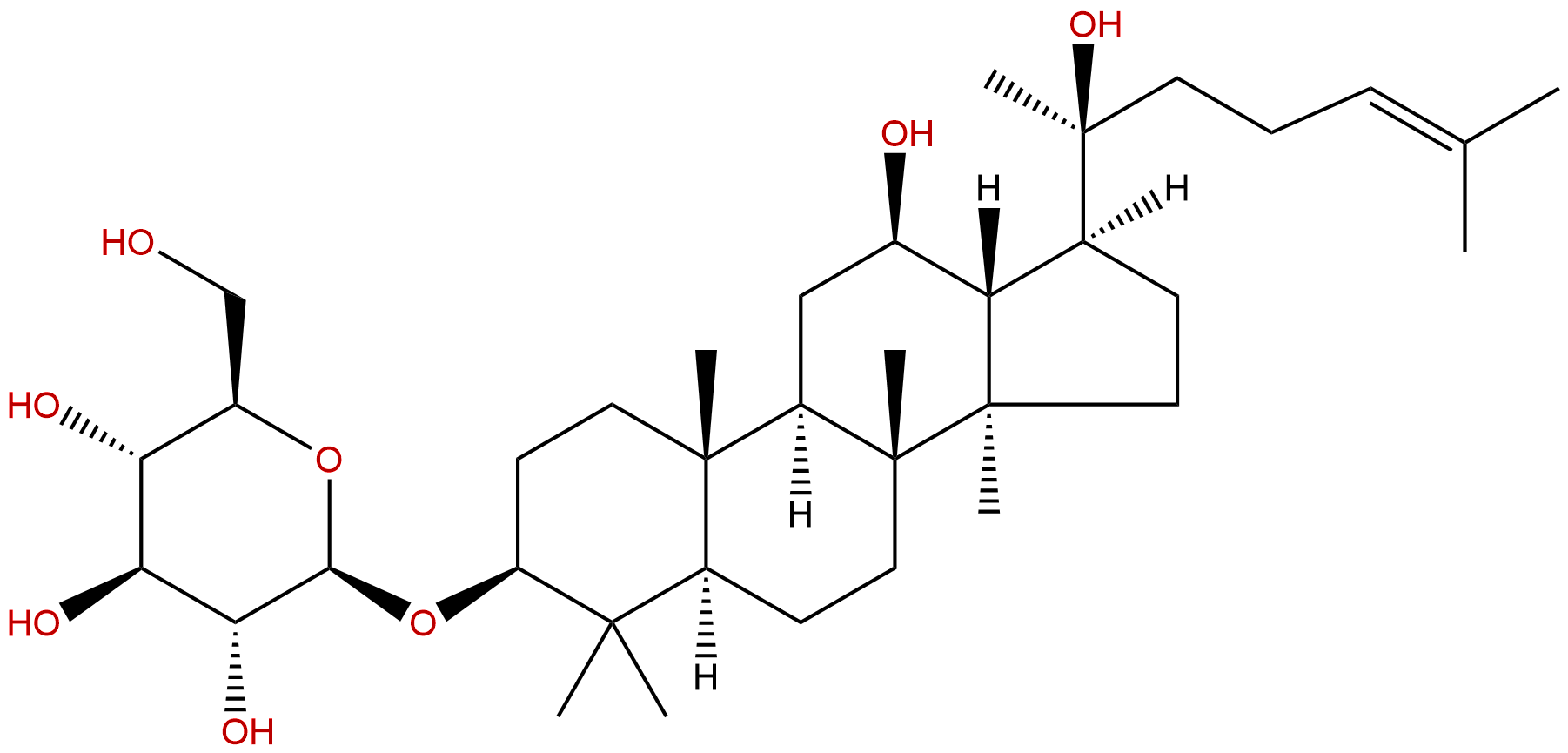


Product name: Ginsenoside Rh2
Synonym name: 20S-Ginsenoside Rh2
Catalogue No.: BP0668
Cas No.: 78214-33-2
Formula: C36H62O8
Mol Weight: 622.884
Botanical Source: Panax ginseng (ginseng)
Physical Description: White powder
Type of Compound: Triterpenoids
Purity: 95%~99%
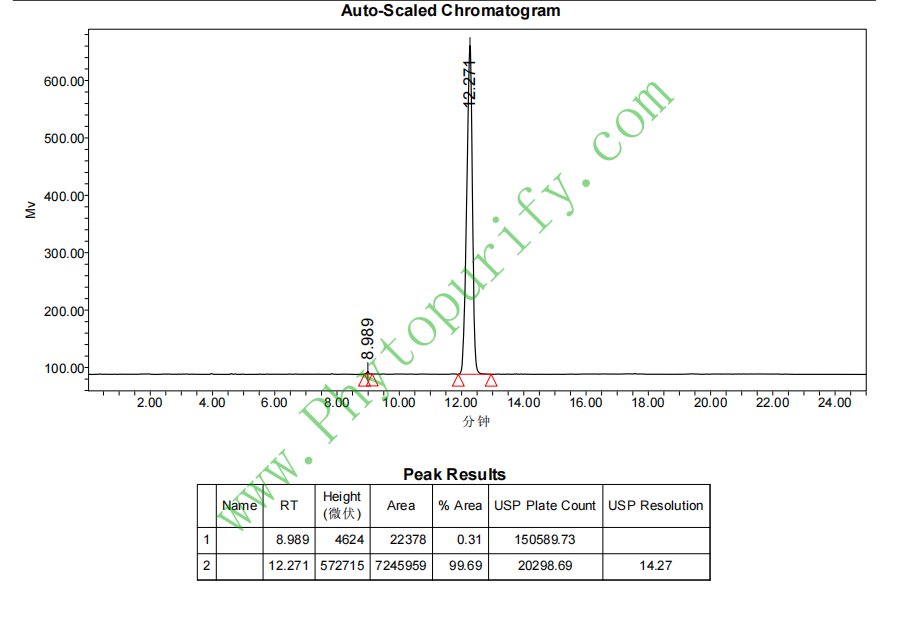
Analysis Method: HPLC-DAD or/and HPLC-ELSD
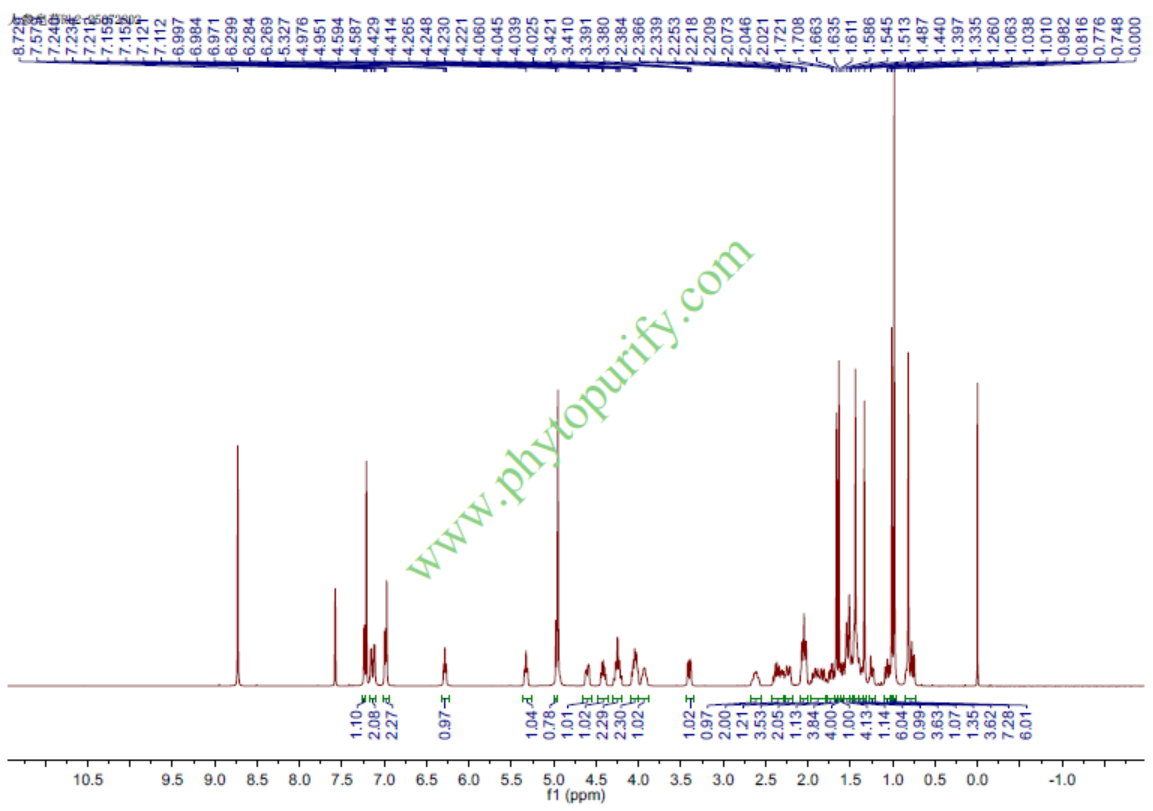
Identification Method: Mass, NMR
Packing: Brown vial or HDPE plastic bottle
Storage: Store in a well closed container, protected from air and light. Put into refrigerate or freeze for long term storage.
Whenever possible, you should prepare and use solutions on the same day. However, if you need to make up stock solutions in advance, we recommend that you store the solution as aliquots in tightly sealed vials at -20℃. Generally, these will be useable for up to two weeks.
The product could be supplied from milligrams to grams, up to kilograms
Inquire for bulk scale.
The purity(assay) of 20%, 40% and 90%, 95% is available for food, nutrition and cosmetics request, except for R&D and reference standard.
Descriptions:
Ginsenoside Rh2 is one of the most active components of red ginseng, controlling cancer and other metabolic diseases including osteoclast differentiation; ginsenoside Rh2 can suppress RANKL-induced osteoclast differentiation in vitro and in vivo through the regulation of c-Fos and NFATc1 expressions, not excluding the involvement of NF-κB and ERK, it is also suggested to be developed as a therapeutic drug for prevention and treatment of osteoporosis.[1]
Ginsenoside Rh2 has antitumor, antidiabetic, antiallergic, and anti-inflammatory effects; however, the extremely poor oral bioavailability induced by its low water solubility greatly limits the potency of Rh2 in clinical use, the sulfated modification of Rh2 improved its water solubility and the sulfated derivatives could be more potential candidates for developing as anti-inflammatory agents.[2]
Ginsenoside Rh2 potently protects ischemia-reperfusion brain injury, also inhibits prostaglandin-E_2 synthesis in lipopolysaccharide-stimulated RAW264.7 cells, suggests it can improve ischemic brain injury.[3]
Ginsenoside Rh2 potently reverses memory impairment caused by scopolamine, it might improve learning deficits, also have the memory-enhancing effects of RGB.[4]
Ginsenoside Rh2 can suppress growth of uterine leiomyoma in vitro and in vivo and may regulate ERα/c-Src/p38 MAPK activity.[5]
Ginsenoside Rh2 can inhibit the tendency of apoptosis, and reverse the impaired β-cell growth potential by modulating Akt/Foxo1/PDX-1 signaling pathway and regulating cell cycle proteins, suggests its therapeutic potential in the treatment of diabetes.[6]
References:
[1] Long He, Junwon Lee, Jae Hyuk Jang,et al. Bone, 2012, 50(6):1207-13.
[2] Fu B D, Bi W Y, He C L, et al. Fitoterapia, 2013, 84(3):303-7.
[3] Park E K, Choo M K, Oh J K, et al. Biol Pharm Bull, 2004, 27(3):433-6.
[4] Yang J H, Han S J, Ryu J H, et al. Biol Pharm Bull, 2009, 32(10):1710-5.
[5] Zhu Y, Xu J, Li Z, et al. J Funct Foods, 2015, 18:73-82.
[6] Wang Y, Wang H, Liu Y, et al. Horm Metab Res, 2012, 44(1):33-40.
[7] H Li, P Y Li, P Yong. Natural Products Chemistry & Research, 2014, 1(1):1-5.
HPLC of Ginsenoside Rh2
HNMR of Ginsenoside Rh2
Storage conditions:Short-term storage at 2~8℃, long-term storage at -20 ~ -80℃
139.8400
4.4074
4.4077
.0042
.7167
.2794
Low
81.3744
5.3410
No
No
No
No
No
No
0.0
Yes
No
No
No
Ginsenoside Rh2 (CAS: 78214-33-2) is a rare secondary metabolite derived from plants of the Panax genus in the Araliaceae family, such as ginseng and American ginseng. It belongs to the dammarane type tetracyclic triterpenoid saponins. Since its discovery, it has attracted much attention due to its excellent anti-tumor activity. Numerous studies have confirmed that it can induce apoptosis in various cancer cells through multiple pathways and targets, making it one of the hot molecules in the field of natural product anti-tumor research. In recent years, with the continuous expansion of research perspectives, the pharmacological activity spectrum of ginsenoside Rh2 has surpassed the anti-tumor category, and its potential in the prevention and treatment of metabolic diseases, especially hyperglycemia and its complications, is gradually emerging. Research shows that ginsenoside Rh2 can interfere with pathological processes such as glucose metabolism disorder, insulin resistance and diabetes related cognitive dysfunction by regulating multiple key targets such as AMPK, SGLT2, PTPN1, etc. This article aims to systematically review the chemical properties, plant sources, pharmacological activities of ginsenoside Rh2, and focus on its mechanism of action, pharmacological evaluation, and clinical application prospects in the target network related to hyperglycemia. The aim is to provide comprehensive scientific references for the deep development and transformation research of this natural product.
The chemical name of ginsenoside Rh2 is (3 β, 12 β) -12,20-dihydroxydamam-24-en-3-yl β - D-glucopyranoside, with a molecular formula of C36H62O8 and a molecular weight of 622.8840. Its structural core is a damaane type tetracyclic triterpene, with a β - D-glucopyranosyl group attached at C-3 and an S configuration (20 (S) - ginsenoside Rh2) at C-20, which is its main biologically active configuration. Compared with other ginsenosides, such as Rb1 and Rg3, Rh2 has fewer glycosides and is a rare ginsenoside. It is usually converted from the original saponin by removing some glycosides in the gastrointestinal tract or during in vitro processing.
Its physical and chemical properties significantly affect its bioavailability and medicinal properties. The calculated lipid water partition coefficient (LogP) is 4.4074, indicating that the compound has high lipophilicity. The topological polar surface area (TPSA) is 139.84 Å ², reflecting the size of the polar regions in its molecules. The water solubility is extremely low, about 0.0042 mg/mL, mainly due to its large hydrophobic triterpenoid skeleton. These properties collectively determine the absorption and distribution characteristics of ginsenoside Rh2 in the body: its high lipid solubility facilitates passive diffusion across membranes, but its extremely low water solubility limits its dissolution in gastrointestinal fluids, making it the main barrier for oral absorption. In addition, the prediction shows that its blood-brain barrier permeability is low, which may affect its direct efficacy on central nervous system targets such as APP and BACE1. It is worth noting that its hERG inhibition risk is negative, and the Ames test result is 0.0, indicating a low risk of cardiac and genetic toxicity, providing favorable early data for its safety evaluation.
Ginsenoside Rh2 is a rare saponin with extremely low content in the roots and stems of natural ginseng, American ginseng, and other plants. It is mainly obtained through two methods: one is to directly isolate and purify plant raw materials rich in ginsenosides, but this method has extremely low yield and high cost; The second method is to convert abundant prototype saponins (such as ginsenoside Rb1, Rc, Rd, etc.) into Rh2 through biological transformation or chemical hydrolysis, which is currently the main industrial production direction for obtaining Rh2.
1. Direct extraction and separation: Traditional methods include reflux extraction or ultrasound assisted extraction of ginseng raw materials using methanol, ethanol, or ethanol water solution to obtain crude total saponins extract. Subsequently, preliminary enrichment was carried out through macroporous adsorption resin (such as D101, AB-8) column chromatography, followed by fine separation and purification using techniques such as silica gel column chromatography, reverse phase high performance liquid chromatography (RP-HPLC), or high-speed countercurrent chromatography (HSCCC), ultimately obtaining high-purity ginsenoside Rh2. The entire process is cumbersome, and due to the low Rh2 content in the raw materials, the overall yield is usually not ideal.
2. Biological transformation method: The use of specific glycosidases produced by microorganisms (such as bacteria, fungi) or plant tissue culture systems to selectively hydrolyze the C-3 outer glycosyl group of the prototype saponin is an efficient and green method for producing Rh2. For example, using Aspergillus niger, Bacillus subtilis, or specific β - glucosidase to treat substrates such as total ginsenosides or Rb1 can selectively and high-yieldly obtain 20 (S) - ginsenoside Rh2. This method has mild conditions and good stereo selectivity, and has become a research hotspot and production trend.
3. Chemical hydrolysis method: Hydrolysis of prototype saponins using acids (such as dilute hydrochloric acid, acetic acid) or bases under heating conditions can remove glycosides to obtain sapogenins and secondary saponins. By controlling reaction conditions such as pH, temperature, and time, the yield of Rh2 can be optimized. However, chemical methods may produce by-products and require strict control over reaction conditions to avoid structural damage or configuration changes.
Ginsenoside Rh2 has a wide range of pharmacological activities, with early research focusing on its powerful anti-tumor effects. Recent studies have revealed its potential in metabolic diseases, neuroprotection, immune regulation, and other areas.
1. Antitumor activity: This is the most extensively studied activity of ginsenoside Rh2. A large number of in vivo and in vitro experiments have confirmed that Rh2 has significant proliferation inhibition and apoptosis induction effects on lung cancer, liver cancer, colorectal cancer, breast cancer, prostate cancer, ovarian cancer, leukemia and other malignant tumor cells. Its anti-tumor effect has multiple pathway characteristics, involving endogenous/exogenous apoptosis activation of the death receptor pathway and mitochondrial pathway, cell cycle arrest (such as G1 phase arrest), autophagy regulation, and inhibition of tumor cell invasion, metastasis, and angiogenesis.
2. Regulating blood sugar and improving insulin resistance: In the field of metabolic diseases, ginsenoside Rh2 shows the potential to improve hyperglycemia and insulin resistance. In the animal model of diabetes induced by streptozotocin (STZ) or high-fat diet combined with STZ, Rh2 intervention can significantly reduce fasting blood glucose, improve glucose tolerance, and increase insulin sensitivity. Its function is related to promoting glucose uptake and utilization in peripheral tissues such as skeletal muscle and liver, and protecting pancreatic beta cell function.
3. Neuroprotective effect: Diabetes is often accompanied by cognitive decline, which is related to pathological processes such as deposition of beta amyloid protein (A β). Studies have shown that ginsenoside Rh2 may have a protective effect on diabetes related cognitive impairment or Alzheimer's disease models by intervening in APP processing and BACE1 activity, reducing A β production and reducing A β induced neurotoxicity.
4. Other activities: It also includes anti-inflammatory, antioxidant, cardiovascular protection, and regulation of gut microbiota. For example, it can reduce chronic low-grade inflammation by inhibiting inflammatory pathways such as NF - κ B, which is a key link connecting obesity, insulin resistance and type 2 diabetes.
The pharmacological effects of ginsenoside Rh2, particularly in intervening in hyperglycemia and its complications, involve a complex multi-target regulatory network. The following will elaborate on the targets related to hyperglycemia:
1. Activate the AMPK signaling pathway: AMP activated protein kinase (AMPK) is a core regulatory factor in cellular energy metabolism. Ginsenoside Rh2 has been confirmed to be an activator of AMPK. Activated AMPK can promote the translocation of glucose transporter 4 (GLUT4) in skeletal muscle and liver, increasing glucose uptake; Inhibit the expression of key enzymes involved in hepatic gluconeogenesis, such as phosphoenolpyruvate carboxykinase and glucose-6-phosphatase, and reduce hepatic glucose output; Simultaneously promoting fatty acid oxidation and improving lipid metabolism disorders. This is one of the core mechanisms by which Rh2 improves insulin resistance and lowers blood sugar.
2. Inhibit sodium glucose cotransporter 2 (SGLT2): SGLT2 is a key transporter protein responsible for glucose reabsorption in the proximal tubules of the kidney. Inhibiting SGLT2 can increase urinary glucose excretion, thereby directly lowering blood glucose levels. Research has shown that ginsenoside Rh2 may inhibit the activity of SGLT2 directly or indirectly, exerting a hypoglycemic effect similar to SGLT2 inhibitors, and not dependent on insulin.
3. Regulating protein tyrosine phosphatase 1B (PTPN1): PTPN1 is a key negative regulator of the insulin signaling pathway, which dephosphorylates insulin receptors and their substrates, thereby interrupting insulin signaling. Inhibiting PTPN1 activity can enhance insulin sensitivity. Ginsenoside Rh2 may enhance tyrosine phosphorylation of insulin receptor substrates by inhibiting PTPN1, thereby promoting activation of the PI3K/Akt signaling pathway and improving insulin resistance.
4. Affects sugar metabolism related enzymes and proteins:
* Glucokinase (GCK): As a glucose sensor for liver and pancreatic beta cells, GCK activity is crucial for maintaining blood glucose homeostasis. Rh2 may promote timely insulin secretion and liver utilization of glucose by regulating GCK activity or expression.
* Carboxyesterase 1 (CES1): Involved in lipid metabolism and endogenous substance hydrolysis, associated with metabolic syndrome. The regulation of Rh2 may indirectly affect lipid metabolism and inflammatory status.
* Plasminogen activator inhibitor-1 (PAI1, SERPINE1): Elevated levels of PAI1 are associated with insulin resistance and increased risk of cardiovascular disease. Rh2 may prevent and treat vascular complications of diabetes by reducing PAI1 level, improving vascular endothelial function and fibrinolytic system.
* Histone lysine methyltransferase 2 (EHMT2/G9a) and ubiquitin specific protease 2 (UBP2): These are epigenetic regulatory factors. EHMT2 catalyzes histone H3K9 methylation, which is associated with gene transcription inhibition; UBP2 participates in the deubiquitination process. Rh2 may affect the epigenetic status and protein stability of genes related to glucose and lipid metabolism and insulin signaling (such as PGC-1 α, GLUT4, etc.) by regulating these targets, thus regulating metabolism at a deeper level.
5. Intervention in the β - amyloid protein generation pathway: For the risk of diabetes encephalopathy or Alzheimer's disease, the target of Rh2 involves amyloid precursor protein (APP) and beta site APP lyase 1 (BACE1). Research has shown that Rh2 may exert neuroprotective effects by downregulating the expression or activity of BACE1, reducing the breakdown of APP through the β - secretase pathway, and thus reducing the production of neurotoxic A β peptide segments.
Mechanism supplement for inducing cancer cell apoptosis through multiple pathways: In terms of anti-tumor effects, Rh2 can simultaneously activate caspase-8 (exogenous death receptor pathway) and caspase-9 (endogenous mitochondrial pathway), causing a decrease in mitochondrial membrane potential and release of cytochrome c, ultimately jointly activating downstream caspase-3 and leading to cell apoptosis. In addition, it also regulates various signaling pathways such as the proportion of Bcl-2 family proteins, PI3K/Akt, MAPK, NF - κ B.
Although ginsenoside Rh2 has a wide range of pharmacological activities, its medicinal properties face challenges mainly due to its poor solubility and complex in vivo processes.
Pharmacokinetic characteristics:
* Absorption: After oral administration, Rh2 is slowly and incompletely absorbed in the gastrointestinal tract, with low absolute bioavailability (usually<10%). Its absorption mechanism may include passive diffusion and active transport. Low water solubility is the primary factor limiting its dissolution and absorption.
* Distribution: Due to its high lipid solubility and medium molecular weight, Rh2 is widely distributed in the body and can have high concentrations in tissues such as the liver, lungs, and kidneys. But as mentioned earlier, its blood-brain barrier permeability prediction is low, which limits its distribution in the central nervous system.
* Metabolism: Rh2 undergoes extensive metabolic transformation in the body. The main metabolic pathways include: deglycosylation occurs in the gut microbiota and liver, gradually converting into aglycone 20 (S) - protopanaxadiol (PPD); And undergo phase I and phase II metabolic reactions such as hydroxylation, oxidation, glucuronic acid binding, and sulfation. The CYP450 enzyme system (such as CYP3A4) may be involved in its metabolism.
* Excretion: It is mainly excreted in the form of metabolites through bile and feces, with less excretion by the kidneys.
Optimization strategy for drug properties:
To improve the bioavailability and efficacy of Rh2, researchers have developed various formulation technologies:
1. Solubilization technology: The use of cyclodextrin (such as HP - β - CD) inclusion, phospholipid complexes, microemulsions, self microemulsion delivery systems (SMEDS), solid dispersions, etc. significantly improves their solubility and dissolution rate in aqueous media, thereby improving oral absorption.
2. Nano delivery system: Preparation of liposomes, polymer nanoparticles, micelles, nanoemulsions, etc. Nanotechnology can not only improve solubility, but also target tumor tissue through enhanced permeability and retention (EPR) effect, or achieve active targeting through surface modification.
3. Pre medication strategy: Chemical modification of the hydroxyl group of Rh2 to prepare a more water-soluble prodrug, which releases the original drug through enzymatic interpretation in vivo.
4. New administration route: Research non oral routes such as intranasal administration, transdermal administration, and pulmonary administration to bypass first pass effects, improve bioavailability, or achieve local/targeted therapy.
In terms of safety, existing toxicology studies (including acute toxicity and subchronic toxicity) have shown that within the effective dose range, ginsenoside Rh2 has no significant toxicity to experimental animals, and no significant abnormalities were observed in organ and tissue pathology examinations. Its lack of hERG inhibition and Ames mutagenicity risk further supports its relatively good safety. However, data on long-term toxicity and reproductive toxicity still need further improvement.
The clinical application prospects of ginsenoside Rh2 are broad, but the path still needs to be further explored.
1. As an adjuvant therapy for anti-tumor drugs: This is the direction closest to clinical translation. Rh2 can be used in combination with conventional chemotherapy and radiotherapy to enhance sensitivity and reduce toxicity. Its multi-target and multi pathway anti-cancer mechanism helps overcome tumor drug resistance. Developing it as a prescription drug or specialty food for adjuvant therapy of tumors has significant value.
2. As a potential drug for the prevention and treatment of metabolic diseases: For type 2 diabetes and its complications, Rh2's multi target effect (AMPK, SGLT2, PTPN1, etc.) shows unique advantages and may become a new insulin sensitizer and blood glucose regulator. Especially for diabetes patients with mild cognitive impairment, it has the dual potential of both hypoglycemic and neuroprotective. In the future, it can be explored as a drug for early intervention of diabetes and prevention and treatment of diabetes complications (such as kidney disease and neuropathy).
3. As a functional food or dietary supplement: At present, ginsenoside Rh2 has appeared on the market as a health ingredient that enhances immunity and assists in anti fatigue. With the continuous accumulation of scientific evidence on its new functions such as blood sugar lowering and neuroprotection, functional products can be developed for specific populations, such as those with high blood sugar levels and middle-aged and elderly brain health concerns.
Challenges and future research directions:
* Deep exploration of mechanisms: It is necessary to use techniques such as chemical biology, proteomics, metabolomics, etc. to more accurately identify its direct targets and elucidate its complex regulatory network, especially the role of epigenetic regulation (such as EHMT2, UBP2) in metabolic diseases.
* Optimization of drug formulation system: Continue to develop efficient, stable, and controllable new delivery systems to address the fundamental issue of low bioavailability. Strengthen its prodrug design research.
* Preclinical and clinical studies: Rigorous and large-scale preclinical pharmacological and long-term toxicological studies need to be designed. Actively promote Phase I, II, and III clinical trials that comply with international standards to obtain human efficacy, safety, and pharmacokinetic data for the treatment of tumors or metabolic diseases.
* Structural modification and development of analogues: Based on the Rh2 parent nucleus structure, rational drug design is carried out to synthesize a series of derivatives or analogues, aiming to improve activity, water solubility, and targeting, and discover candidate drugs with greater development value.
Ginsenoside Rh2, as an active ingredient of a natural product with a long history of application, has multiple values revealed in its modern scientific research, ranging from excellent anti-tumor effects to broad potential for metabolic disease intervention. It exerts regulatory effects on multiple signaling pathways by regulating key targets such as AMPK, SGLT2, PTPN1, BACE1, reflecting the multi-target and multi pathway nature of natural products. Despite the challenges posed by its inherent physicochemical properties, such as low water solubility and low bioavailability, the rapid development of modern pharmacy and drug delivery technology has provided effective solutions for drug development. In the future, through in-depth mechanism analysis, systematic pharmaceutical optimization and rigorous clinical verification, ginsenoside Rh2 is expected to be transformed from a high-profile scientific research molecule into an innovative drug or efficient functional product serving clinical needs such as adjuvant treatment of tumors, prevention and treatment of diabetes and its complications, and play a more important role in human health.
