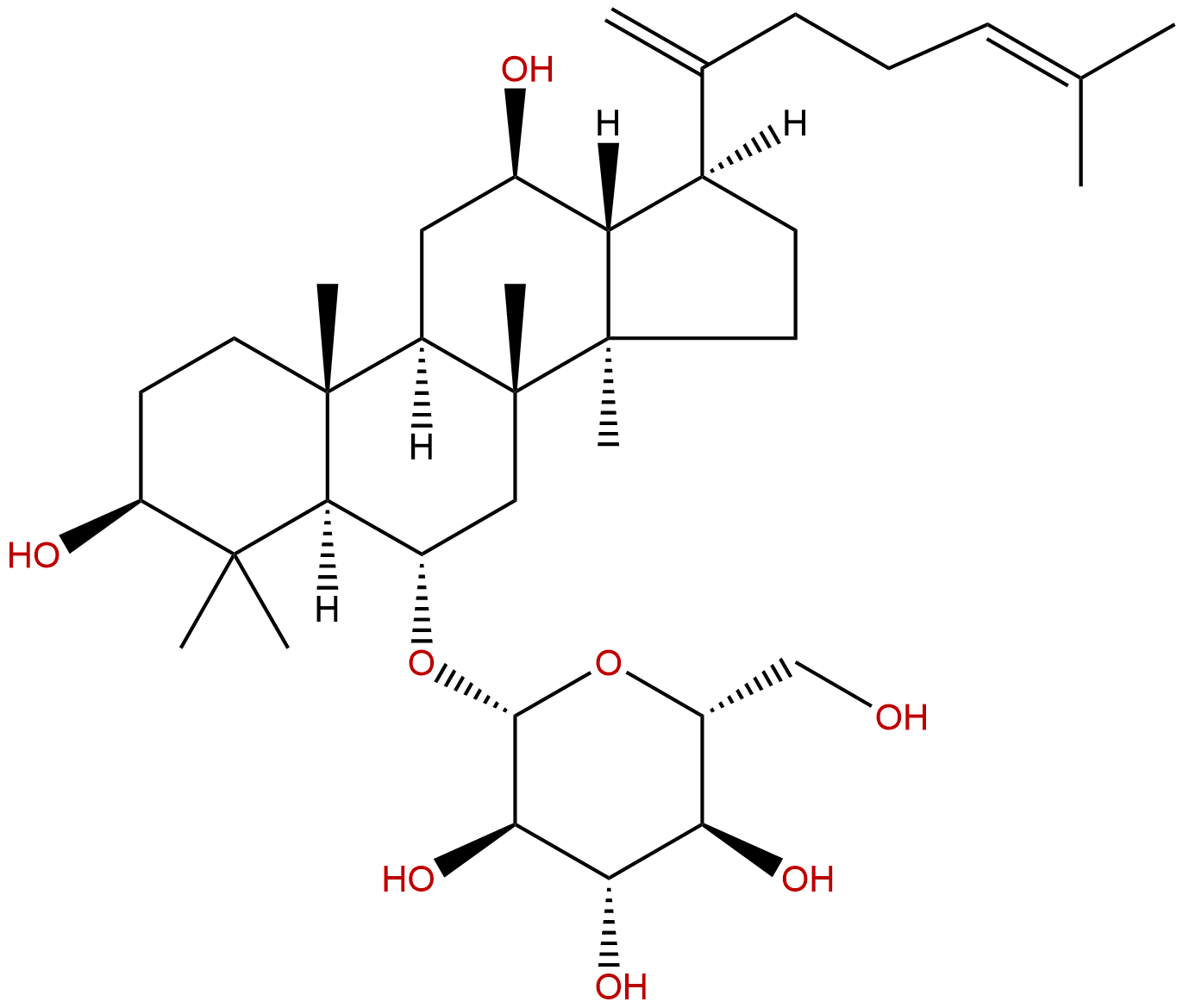


Product name: Ginsenoside Rk3
Synonym name:
Catalogue No.: BP1653
Cas No.: 364779-15-7
Formula: C36H60O8
Mol Weight: 620.868
Botanical Source:
Physical Description: Powder
Type of Compound: Triterpenoids
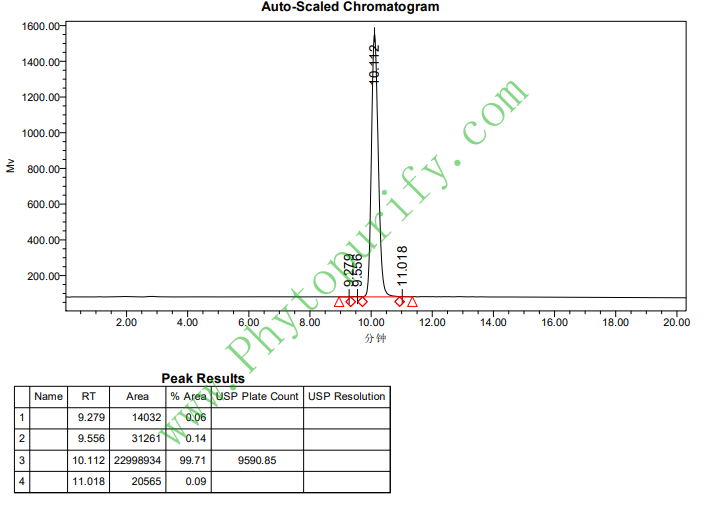
Purity: 95%~99%
Analysis Method: HPLC-DAD or/and HPLC-ELSD
Identification Method: Mass, NMR
Packing: Brown vial or HDPE plastic bottle
The product could be supplied from milligrams to grams. Inquire for bulk scale.
We provide solution to improve the water-solubility of compounds, thereby facilitating the variety of activity tests and clinic uses.
For Reference Standard and R&D, Not for Human Use Directly.
HPLC of Ginsenoside Rk3
Storage conditions:Short-term storage at 2~8℃, long-term storage at -20 ~ -80℃
139.8400
3.9505
3.9505
.0074
.6965
.5037
Low
78.4254
5.4828
No
No
No
No
No
No
0.0
Yes
No
No
No
Ginseng(Panax ginseng C. A. Meyer, as a traditional precious Chinese medicinal herb, has been validated by thousands of years of clinical practice for its nourishing effect of strengthening the body and strengthening the foundation. Modern pharmacological research reveals that the main bioactive components of ginseng are a series of structurally diverse triterpenoid saponins, collectively known as ginsenosides. Ginsenoside Rk3 is one of the important rare saponins, with a CAS number of 364779-15-7. Unlike common protopanaxadiol saponins such as Rb1 and Rg1, Rk3 is a rare ginsenoside formed by dehydration and transformation during processing (such as steaming and heating). This structural change not only alters its physicochemical properties, but also significantly enhances its biological activity, demonstrating unique potential in anti-inflammatory, anti-tumor and other fields. Preliminary studies have shown that ginsenoside Rk3 can effectively inhibit the transcription activity of nuclear factor kappa B (NF - κ B) induced by tumor necrosis factor - α (TNF - α) in HepG2 cells, with an IC50 value of 14.24 ± 1.30 μ M, indicating its core ability to intervene in inflammation and tumor related signaling pathways. Especially, multiple studies have closely linked its activity with the prevention and treatment of colorectal cancer, involving multiple key targets such as AMPK, STAT3, BCL2, etc. This article aims to systematically review the chemical properties, plant sources, pharmacological activities, molecular mechanisms, and medicinal properties of ginsenoside Rk3, in order to provide comprehensive scientific references for the in-depth research and development of this compound.
The chemical name of ginsenoside Rk3 is (3 β, 12 β) -12-hydroxydamam-24-ene-3,20-diol, which is a dehydrated derivative of the original ginsenoside type. Its molecular formula is C36H60O8 and its molecular weight is 620.8680. Structurally, the core skeleton of Rk3 is of the tetracyclic triterpenoid Damatane type, characterized by an S configuration at the C-20 position. Compared with the prototype saponin (such as Rb1), the most significant structural feature of Rk3 is that after hydrolysis of the glycosidic bond at C-20, dehydration reaction occurs between C-20 and C-24, forming a double bond (Δ 24 (25)). At the same time, a glucose group is connected to C-3, and C-20 is a free hydroxyl group. This structural modification enhances its lipophilicity.
Based on computational chemistry and experimental data, the lipid water partition coefficient (LogP) of ginsenoside Rk3 is approximately 3.9505, indicating its moderate lipophilic properties. Its topological polar surface area (TPSA) is 139.8400 Å ², reflecting the polarity brought by multiple hydroxyl and sugar groups in the molecule. The water solubility is relatively low, about 0.0074 mg/mL, which to some extent limits its bioavailability in aqueous media. These physical and chemical parameters collectively determine its absorption, distribution, and permeation characteristics within the organism. For example, its lower TPSA and moderate LogP theoretically facilitate transmembrane absorption, but its extremely low water solubility may become a bottleneck for oral administration. The sugar group in its structure is an important functional group that exerts pharmacological activity and is also a key site for its interaction with target proteins.
Ginsenoside Rk3 is mainly found in ginseng, a plant of the Panax genus in the Araliaceae family(Panax ginseng)In the roots. It is worth noting that the content of Rk3 in fresh or sun dried ginseng is usually extremely low or difficult to detect. It is mainly converted from the original ginsenosides (such as Rb1, Rb2, Rc, etc.) through a series of chemical reactions such as deglycosylation, dehydration, and isomerization during the processing of ginseng, such as high-temperature steaming (preparation of red ginseng) or heating treatment. Therefore, red ginseng is the primary natural source of Rk3, which partially explains why red ginseng differs from white ginseng in certain pharmacological activities.
The extraction and isolation of ginsenoside Rk3 from plant materials typically involves a multi-step process. Firstly, polar solvents such as methanol, ethanol, or water ethanol mixed solutions are used for reflux extraction or ultrasound assisted extraction of ginseng (especially red ginseng) powder to obtain crude total saponin extract. Subsequently, preliminary enrichment and purification were carried out using macroporous adsorption resins (such as D101, AB-8), and gradient elution was performed using ethanol water solutions of different concentrations to collect fractions rich in rare saponins. Further separation and purification are highly dependent on modern chromatographic techniques, including normal or reverse phase silica gel column chromatography, high-performance liquid chromatography (HPLC), and preparative high-performance liquid chromatography (pre HPLC). In recent years, high-speed countercurrent chromatography (HSCCC) has shown unique advantages in separating rare ginsenosides with similar structures (such as Rk3, Rg5, etc.) due to its advantages of not requiring solid phase carriers and high recovery rates. The separated Rk3 monomer needs to be structurally confirmed by techniques such as nuclear magnetic resonance (NMR) and mass spectrometry (MS). The biotransformation method, which utilizes specific enzymes or microorganisms to selectively transform abundant prototype saponins, is a promising alternative strategy for obtaining Rk3 on a large scale.
Numerous in vitro and in vivo studies have confirmed that ginsenoside Rk3 has a wide range of pharmacological activities, among which anti-tumor activity is particularly prominent, especially in colorectal cancer (CRC) models.
1. Anti colorectal cancer activity: Rk3 exhibits significant proliferation inhibition and pro apoptotic effects on various colorectal cancer cell lines, such as HCT-116, SW480, HT-29. Its function is not limited to inducing apoptosis of cancer cells, but can also inhibit the migration and invasion of cancer cells, indicating its potential for anti metastasis. In colorectal cancer mouse models induced by chemistry (such as AOM/DSS) or transplanted tumors, administration of Rk3 can effectively inhibit tumor growth, reduce tumor quantity and volume, and show a certain dose dependence.
2. Anti inflammatory activity: Inflammation is a key driving factor in the occurrence and development of tumors. The core anti-inflammatory mechanism of Rk3 is to inhibit the NF - κ B signaling pathway. As mentioned earlier, in HepG2 cells, it can inhibit TNF - α - induced NF - κ B transcriptional activity. In the macrophage model (such as RAW264.7), Rk3 can inhibit the excessive production of nitric oxide (NO), prostaglandin E2 (PGE2), and inflammatory factors (such as TNF - α, IL-6, IL-1 β) induced by lipopolysaccharide (LPS). This powerful anti-inflammatory effect lays the foundation for its application in inflammation related diseases, including inflammatory bowel disease (IBD) and its related prevention and treatment of colorectal cancer.
3. Other activities: In addition, the study suggests that Rk3 may have potential activities such as neuroprotection, liver protection, and improvement of insulin resistance, but research in these areas is still in its early stages and requires more evidence to support it.
The anti colorectal cancer effect of ginsenoside Rk3 involves synergistic regulation of multiple targets and pathways, and its mechanism network is complex and refined.
1. Inducing apoptosis and regulating apoptosis related proteins: Rk3 can upregulate the expression of pro apoptotic protein Bax, while downregulating the expression of anti apoptotic proteins Bcl-2 and Mcl-1, thereby disrupting mitochondrial membrane potential, promoting cytochrome c release, activating caspase cascade reaction, and ultimately leading to cell apoptosis. This is one of its core pathways for directly killing cancer cells.
2. Inhibit survival signals and inflammatory pathways:
* STAT3 signaling pathway: STAT3 is an important oncogenic transcription factor that is continuously activated in colorectal cancer. Rk3 can inhibit the phosphorylation (activated form) of STAT3, suppress its nuclear translocation and the transcription of downstream target genes (such as Cyclin D1, Survivor), thereby inhibiting cell proliferation and survival.
* NF - κ B signaling pathway: As a hub between inflammation and tumors, the sustained activation of NF - κ B promotes cell proliferation, inhibits apoptosis, and enhances invasion. Rk3 inhibits the degradation of I κ B α and nuclear translocation of p65 subunit, blocking the activation of NF - κ B pathway, which is the key to its anti-inflammatory and anti-tumor effects.
* AMPK signaling pathway: AMPK is a core regulatory factor in cellular energy metabolism. Rk3 has been confirmed to activate AMPK (PRKAA1). The activation of AMPK not only inhibits the mTOR pathway to suppress protein synthesis and cell growth, but also regulates processes such as autophagy and metabolic reprogramming, playing an important role in the anticancer effect of Rk3.
3. Inhibit invasion and metastasis: Rk3 can downregulate the expression and activity of matrix metalloproteinase-2 (MMP-2). MMP-2 is a key enzyme that degrades extracellular matrix and promotes tumor invasion and metastasis. By inhibiting MMP-2 and Rk3, the invasive ability of cancer cells was effectively weakened.
4. Affects drug transport and metabolism: Rk3 may have a regulatory effect on drug efflux pumps ABCB1 (P-gp) and ABCG2 (BCRP). The overexpression of these proteins is the main cause of chemotherapy multidrug resistance (MDR). Meanwhile, it may interact with carboxylesterases 1 and 2 (CES1, CES2), which are involved in prodrug activation or drug metabolism and may affect the efficacy of combination therapy. In addition, studies suggest that Rk3 may exert indirect anti-tumor effects by regulating the immune microenvironment mediated by Toll like receptor 4 (TLR4).
Based on the provided parameters and existing research, a preliminary evaluation of the pharmacological properties of ginsenoside Rk3 is conducted
Pharmacokinetic characteristics: As a saponin compound, the oral bioavailability of Rk3 is usually low, mainly due to its larger molecular weight, lower water solubility, and the possibility of hydrolysis or microbial metabolism in the gastrointestinal tract. It is expected to have moderate oral absorption, but may be partially absorbed through the intestinal lymphatic pathway or passive diffusion. After entering the bloodstream, saponin compounds often have a high binding rate with plasma proteins such as albumin. Its distribution volume may be moderate, but due to the predicted "low" blood-brain barrier permeability, the distribution of the central nervous system is limited. In terms of metabolism, Rk3 is likely to be widely metabolized in the liver through phase I (such as CYP450 enzyme system) and phase II (such as glucuronidation and sulfation) reactions, and its prototype compounds and metabolites are mainly excreted through bile and kidneys. At present, there is a lack of detailed pharmacokinetic parameters (such as Tmax, Cmax, t1/2), which is a gap that must be filled in future preclinical studies.
Preliminary safety evaluation: The existing data suggests some positive signals. The inhibition of hERG channel is' no ', indicating a low risk of potential cardiac toxicity (inducing long QT syndrome). The Ames test result is 0.0, indicating that it has no direct genetic toxicity. However, this is only a preliminary assessment, and a comprehensive safety evaluation still requires systematic preclinical safety pharmacology studies such as acute toxicity, long-term toxicity, and reproductive toxicity.
Challenges and optimization of drug development: The main challenge lies in Solubility and permeability Its low water solubility and moderate permeability may classify it as a class II or IV drug in the Biopharmaceutical Classification System (BCS). To improve its medicinal properties, the following strategies can be considered: 1)Formulation improvement Using delivery technologies such as nanocrystals, liposomes, micelles, and solid dispersions to improve solubility and bioavailability; 2)Prodrug design Modify its sugar or hydroxyl groups to prepare hydrophilic or targeted prodrugs and improve pharmacokinetic behavior; 3)Combined administration Used in combination with absorption enhancers or other anti-cancer drugs.
Ginsenoside Rk3 exhibits broad clinical application potential, but also faces many challenges.
Potential application directions:
1. Adjuvant therapy and chemoprevention for colorectal cancer: Given its multi-target and multi pathway inhibitory effects on colorectal cancer, as well as its good preliminary safety, Rk3 is the most promising adjuvant therapy for colorectal cancer. When combined with conventional chemotherapy such as 5-fluorouracil and oxaliplatin, it may have a synergistic effect of sensitization, attenuation, reversal of drug resistance, and prevention of metastasis. Its anti-inflammatory properties also make it uniquely valuable in preventing colorectal cancer associated with inflammatory bowel disease.
2. Anti inflammatory treatment: Can be used to treat chronic inflammatory diseases associated with NF - κ B overactivation, such as arthritis, chronic colitis, etc.
3. Functional foods and health products: As an active ingredient in red ginseng, Rk3 can be developed as a high-value functional food or dietary supplement for enhancing immunity, anti fatigue, and daily regulation of people at risk of chronic diseases.
Future research focus and challenges:
1. In depth mechanism exploration: It is necessary to use techniques such as gene knockout/knock in, proteomics, metabolomics, etc. to more accurately elucidate its primary target and downstream signaling network, and clarify whether it is a "multi-target fine-tuning" or the existence of a dominant target.
2. Systematic pharmacokinetic studies: Standardized ADME studies must be conducted in multiple animal models (mice, rats, dogs, etc.) to clarify their absolute bioavailability, tissue distribution, major metabolites, and elimination pathways.
3. Pharmaceutical research: Developing advanced formulations suitable for clinical administration is a crucial step in promoting their transformation.
4. Preclinical and clinical studies: Complete standardized pharmacological evaluations (more in vivo models) and comprehensive safety evaluations (GLP toxicology), and then promote clinical trials to verify its effectiveness and safety in humans.
5. Synthetic Biology Production: Explore the efficient synthesis of Rk3 in microbial cell factories through synthetic biology methods to solve the problems of limited plant extraction sources and high costs.
Ginsenoside Rk3, as a rare ginsenoside derived from traditional Chinese medicine, has become a highlight molecule in the field of natural product anti-tumor research due to its unique chemical structure and significant multiple pharmacological activities. Its ability to induce apoptosis, inhibit proliferation and invasion by regulating multiple key pathways such as AMPK, STAT3, NF - κ B, Bcl-2/Mgl-1 in colorectal cancer models reveals its enormous potential as a multi-target anti-tumor candidate drug. Despite challenges in drug formulation such as solubility, permeability, and systemic pharmacokinetic behavior, these obstacles are expected to be overcome through the optimization of modern medicinal chemistry and pharmacology methods. In the future, through in-depth interdisciplinary cooperation, based on clarifying its precise mechanism of action, improving pharmacokinetics and safety evaluation, and developing efficient delivery systems, ginsenoside Rk3 is expected to move from the laboratory to clinical practice, providing a new natural source treatment option for the prevention and treatment of major diseases such as colorectal cancer, fully reflecting the value of modernization and internationalization of traditional Chinese medicine.
