Introduction/Overview
Obesity and its associated metabolic syndrome have become a major global public health challenge, with pathological processes involving energy metabolism imbalance, chronic inflammation, and multiple organ dysfunction. Traditional drug treatments often come with side effects, therefore, exploring safe and effective active ingredients from natural products has become a research hotspot. Siraitia grosvenorii(Siraitia grosvenorii), a traditional dual-use plant, its sweetness mainly comes from a series of cucurbitane type triterpene saponins - Arhat. Among them, mogroside IVe (CAS: 88915-64-4), as one of the main active ingredients in Siraitia grosvenorii, has attracted much attention in recent years due to its significant anti obesity and metabolic regulation activities. Compared with mogroside V with high sweetness and zero calorie, mogroside IVe shows unique potential in regulating lipid metabolism, improving insulin resistance and inhibiting inflammatory reaction. Its mechanism of action involves the regulation of multiple key signaling pathways and molecular targets. The purpose of this paper is to systematically review the chemical characteristics, plant origin, pharmacological activity, molecular mechanism of action, pharmaceutical evaluation and clinical application prospects of siraitin IVe, in order to provide scientific basis for the further development and utilization of this natural product.
Chemical structure and physicochemical properties
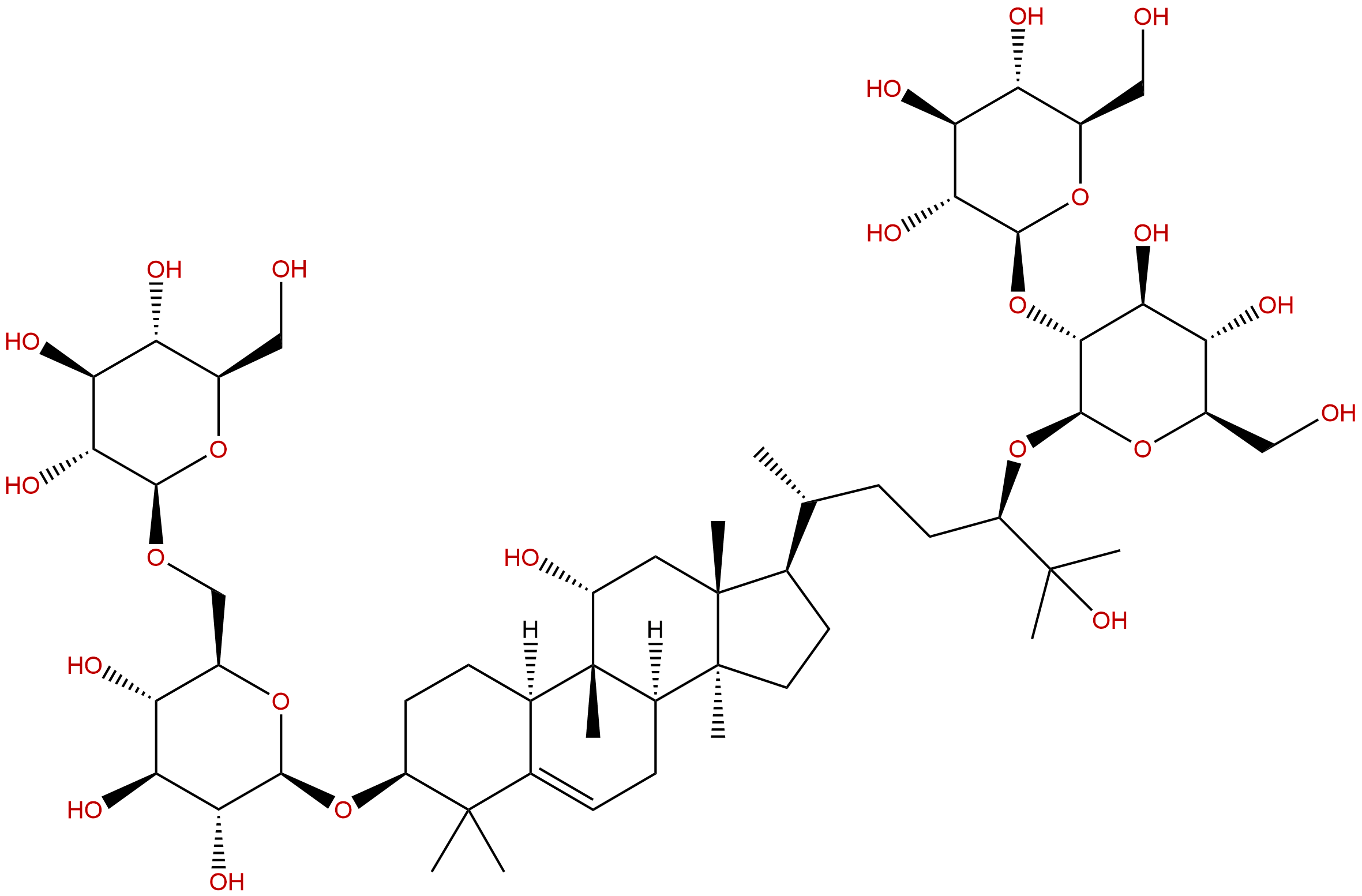
Siraitin IVe is a cucurbitane type tetraglycoside triterpene saponin with molecular formula of C54H92O24 and molecular weight of 1125.3060. Its basic skeleton is cucurbitan-5-en-3 β, 24R-diol, with sugar groups attached to the C3 and C24 hydroxyl groups, respectively. Specifically, its C3 position usually connects to one molecule of glucose, while its C24 position connects to a sugar chain composed of three molecules of glucose, forming a unique tetraglycosidic structure. This structure is the material basis of its biological activity, and the number and connection mode of sugar groups directly affect its solubility, receptor recognition, and metabolic stability.
Based on the analysis of physicochemical parameters related to drug properties, the calculated lipid water partition coefficient (LogP) is 1.4522, indicating that the compound has a certain degree of lipophilicity, but overall it still leans towards hydrophilicity. Its topological polar surface area (TPSA) is as high as 397.5200 Å ², mainly attributed to the abundant hydroxyl groups and oxygen atoms on the sugar ring in the molecule, indicating that it has more hydrogen bond donor and acceptor sites. The water solubility parameter is 0.3691, indicating that it belongs to the range of slightly soluble to soluble in water, which poses specific requirements for its formulation development. Preliminary computer simulation toxicology predictions show that the Ames test result is 0.0 (negative), indicating no mutagenic risk; There is no inhibitory activity on hERG potassium channels, indicating a low potential risk of cardiac toxicity. However, its large molecular weight (>500) and high TPSA value also suggest a "low" ability to cross the blood-brain barrier, which limits its direct effects on the central nervous system but may also reduce related central side effects.
Plant sources and extraction methods
Siraitin IVe mainly comes from Siraitia grosvenorii, a cucurbitaceae plant(Siraitia grosvenorii Mature and dried fruits of Swingle C. Jeffrey ex A. M. Lu&Zhi Y. Zhang. The content of Arhat in fruits accumulates with the increase of maturity. Siraitin V is the highest, followed by Siraitin IVe, which is an important secondary sweet and active ingredient.
The extraction and separation usually follow the following process: first, the dried Siraitia grosvenorii fruit is crushed, and solvent (commonly used water, ethanol or methanol aqueous solution) is used for heating reflux or ultrasonic assisted extraction to fully extract saponins. Subsequently, the extract was filtered and concentrated to obtain a crude extract. The crude extract is often enriched and purified with macroporous adsorption resins (such as AB-8 and D101), and gradient elution is carried out with ethanol aqueous solution of different concentrations. Siraitin IVe is usually obtained at the medium polarity elution site. To further obtain high-purity monomers, it is necessary to combine column chromatography techniques such as silica gel column chromatography, reverse phase silica gel (ODS) column chromatography, and preparative high-performance liquid chromatography (HPLC). Modern separation technologies such as high-speed countercurrent chromatography (HSCCC) are also widely used in the separation and purification of siraitin homologues due to their high efficiency and no loss of solid adsorbent. The optimization goal of the extraction process is to improve the yield and purity of the target components while maintaining their biological activity.
Pharmacological activity research
A large number of in vivo and in vitro studies have confirmed that siraitin IVe has a variety of anti obesity and related metabolic regulation activities.
1. Regulating lipid metabolism and anti fat accumulation: In the cell model, siraitin IVe can significantly inhibit the differentiation of 3T3-L1 preadipocytes and reduce the accumulation of lipid droplets in cells. In diet induced or genetically obese animal models (such as ob/ob mice and high-fat diet fed mice), long-term administration of siraitin IVe can effectively reduce the weight of white adipose tissue such as animal body weight, epididymal fat and perirenal fat, improve fatty liver, reduce serum levels of triglycerides (TG), total cholesterol (TC) and low-density lipoprotein cholesterol (LDL-C), and increase the level of high-density lipoprotein cholesterol (HDL-C).
2. Improve insulin resistance and glucose metabolism: Siraitin IVe can increase insulin sensitivity of obese or diabetes model animals, reduce fasting blood glucose and insulin levels, and improve the results of oral glucose tolerance (OGTT) and insulin tolerance (ITT) experiments. Its function may be related to promoting the uptake and utilization of glucose by peripheral tissues such as fat and muscle.
3. Adjust energy balance and heat generation: Research shows that siraitin IVe can increase energy consumption. In animal experiments, an increase in oxygen consumption and heat production was observed in the treated group of animals. This effect is closely related to the activation of brown adipose tissue (BAT) function and the induction of "browning" (i.e. the appearance of beige fat) in white adipose tissue.
4. Anti inflammatory and antioxidant effects: Obesity is often accompanied by chronic low-grade inflammation. Siraitin IVe can inhibit the infiltration of macrophages in adipose tissue, down regulate the expression of proinflammatory factors such as tumor necrosis factor - α (TNF - α) and interleukin-6 (IL-6), and increase the level of anti-inflammatory factors such as interleukin-10 (IL-10). In addition, it can enhance the body's antioxidant defense ability, reduce the content of oxidative stress markers such as malondialdehyde (MDA), and increase the activity of superoxide dismutase (SOD) and glutathione peroxidase (GSH Px).
5. Regulating gut microbiota: The latest research suggests that siraitin IVe, as a macromolecule that is difficult to be absorbed by the upper digestive tract, may indirectly exert its metabolic benefits by regulating the composition of intestinal microorganisms (such as increasing the abundance of beneficial bacteria and reducing conditional pathogens), such as affecting the production of short chain fatty acids and bile acid metabolism.
Mechanism of action and molecular targets
The anti obesity effect of siraitin IVe is not achieved through a single pathway, but through a multi-target, multi-level network regulation system. Its core mechanism involves the regulation of key genes and proteins related to fat production, breakdown, energy expenditure, and appetite regulation.
1. Inhibit fat synthesis related pathways and targets:
* PPAR γ signaling pathway: Peroxisome proliferator activated receptor gamma (PPARG) is the main regulator of adipocyte differentiation. Siraitin IVe can down regulate the expression of PPARG and its downstream target genes, such as fatty acid binding protein 4 (FABP4/aP2) and lipoprotein lipase (LPL), thereby inhibiting the differentiation of preadipocytes into mature adipocytes.
* SREBP-1c/FASN pathway: Sterol regulatory element binding protein 1c (SREBF1/SREBP-1c) is a key transcription factor that regulates the synthesis of fatty acids and triglycerides. Siraitin IVe can inhibit the activity and nuclear translocation of SREBF1, and then down regulate the expression of its downstream target gene fatty acid synthase (FASN), directly inhibiting the generation of new fat in liver and adipose tissue.
2. Promote fat breakdown and fatty acid oxidation: Siraitin IVe can activate hormone sensitive lipase (HSL) and promote the hydrolysis of stored triglycerides. Meanwhile, it may activate the AMP activated protein kinase (AMPK) pathway, promoting the entry of fatty acids into mitochondria for beta oxidation and reducing lipid accumulation.
3. Activate the pathways of heat generation and energy consumption:
* β 3-adrenergic receptor (ADRB3) and UCP1: Siraitin IVe may activate ADRB3 on the surface of adipocytes (especially brown and beige adipocytes), initiate cAMP-PKA signal cascade reaction, and finally regulate the expression of coupling protein 1 (UCP1). UCP1 releases the chemical energy of substrate oxidation in the form of thermal energy through uncoupling oxidative phosphorylation, thereby increasing energy consumption.
* PRDM16/PGC-1 α axis: This compound can promote the expression of brown adipose specific transcription factor PRDM16 and its co activator PGC-1 α, which is the core molecular event for inducing white adipose browning and enhancing brown adipose function.
4. Regulating adipokines and appetite related hormones:
* Leptin (LEP) and leptin receptor (LEPR): Siraitin IVe can improve the leptin resistance status, possibly by enhancing the LEPR signal transduction and activating the downstream JAK2/STAT3 pathway, thereby enhancing the sense of satiety, inhibiting appetite and increasing energy consumption.
* Adiponectin (ADIPOQ): It can increase the level of adiponectin secretion in adipose tissue, which has the effects of improving insulin sensitivity, anti-inflammatory, and promoting fatty acid oxidation.
* POMC: In the hypothalamus, siraitin IVe may affect POMC neurons and promote the release of its derived α - melanocyte stimulating hormone (α - MSH), which inhibits appetite by activating the melanocortin 4 receptor (MC4R).
To sum up, siraitin IVe constructs a comprehensive anti obesity network through synergistic action on multiple targets such as PPARG, SREBF1, FASN (inhibition of synthesis), ADRB3, UCP1 (promotion of thermogenesis), LEPR, ADIPOQ, POMC (regulation of energy balance and insulin sensitivity).
Evaluation of drug properties and pharmacokinetics
Although the pharmacological activity of siraitin IVe is clear, its pharmaceutical properties still face some challenges, mainly due to its large molecular weight and complex glycoside structure.
Pharmacokinetic characteristics: The existing research shows that after oral administration, Arhat fruit glycosides are poorly absorbed in the gastrointestinal tract and have low bioavailability. They are mainly metabolized by the intestinal flora in the large intestine, and gradually remove the glucose group through the hydrolysis of glycosidic bonds to generate secondary aglycones (such as Arhat fruit glycoside IIE, simon glycoside I, etc.) and the final aglycone mogrol. These metabolites may have stronger biological activity and increased lipid solubility, making them more easily absorbed into the bloodstream. Therefore, the in vivo effect of siraitin IVe can be largely attributed to its intestinal flora metabolites. After entering the bloodstream, the prototype and metabolites are widely distributed in the body, but their concentration is limited in the central nervous system due to the low permeability of the blood-brain barrier. Its excretion pathway may mainly be through bile and urine.
Challenges and strategies for drug development:
1. Solubility and permeability: The higher TPSA and molecular weight result in average membrane permeability, belonging to Class III or IV drugs in the Biopharmaceutical Classification System (BCS) (high solubility, low permeability or low solubility, low permeability). This limits its oral absorption.
2. Metabolic stability: As a glycoside, it is easily hydrolyzed by enzymes in the digestive tract and liver.
3. Formulation strategy: To improve its bioavailability, the following techniques can be considered: ① preparing phospholipid complexes or cyclodextrin inclusion complexes to increase their lipid solubility and membrane permeability; ② Develop nano delivery systems (such as liposomes, nanoemulsions, polymer nanoparticles) to protect them from degradation, promote intestinal lymphatic transport or cellular bypass/endocytic absorption; ③ Using prodrug strategies to modify its structure, improving stability and absorption.
4. Security: Based on its natural origin and preliminary toxicological prediction (Ames negative, no hERG inhibition), siraitin IVe shows a good safety basis. However, a comprehensive preclinical toxicology evaluation (acute toxicity, long-term toxicity, reproductive toxicity, etc.) still needs to be systematically carried out.
Clinical application prospects and prospects
As a multi target and multi effect natural anti obesity candidate compound, siraitin IVe has broad clinical application prospects, but its transformation still needs further exploration.
Potential application directions:
1. Functional foods and dietary supplements: As one of the standard active ingredients of Siraitia grosvenorii extract, it can be directly used to develop health food with weight management and auxiliary functions of reducing blood fat and sugar. This is currently the closest application form to the market.
2. Drug development: As a single ingredient or in combination with other active ingredients (such as other Arhat fruit glycosides, green tea polyphenols, etc.), it has been developed into a prescription drug or over-the-counter drug for the treatment of simple obesity, non-alcoholic fatty liver disease (NAFLD) or type 2 diabetes.
3. Adjuvant therapy: Combined with existing weight loss drugs (such as GLP-1 receptor agonists), it may produce synergistic effects, reduce the dosage and side effects of the latter, or be used to improve drug induced side effects.
Future research prospects:
1. In depth mechanism research: It is necessary to use models such as gene knockout animals and organoids to more accurately elucidate their core targets and the cross-talk between pathways. Especially the interaction mechanism between gut microbiota metabolism and host metabolic regulation deserves further exploration.
2. Structural optimization and derivative development: Using it as the parent nucleus, structural modifications (such as glycosylation and aglycone modifications) are carried out to improve its metabolic stability, oral bioavailability, and targeting ability, in order to obtain derivatives with better drug properties.
3. Preclinical and clinical studies: The system completes pharmacological, pharmacokinetic, and toxicological evaluations that meet the requirements for new drug registration, and gradually advances human clinical trials to clarify its effective dosage, safety window, and long-term benefit risk ratio.
4. Multi omics integration analysis: By applying technologies such as metabolomics, proteomics, and metagenomics, a panoramic view of its systemic regulatory network in whole animals or humans can be revealed.
Conclusion
Siraitin IVe is an active natural product derived from the traditional medicinal plant Siraitia grosvenorii. With its comprehensive pharmacological effects in regulating lipid metabolism, promoting energy consumption, improving insulin sensitivity and inhibiting inflammation through the regulation of multi target networks such as PPARG, SREBF1, ADRB3-UCP1, LEPR, ADIPOQ, etc., it has become a potential candidate in the field of anti obesity and metabolic disease drug research and development. Despite the challenges posed by its large molecular structure and existing pharmacokinetic properties for drug development, modern pharmaceutical techniques and structural optimization strategies have the potential to overcome these bottlenecks. In the future, with the in-depth analysis of its mechanism of action, the rational design of derivatives and the establishment of a standardized clinical evaluation system, siraitin IVe is expected to transform from a traditional sweet ingredient into a new drug or functional component to prevent obesity and related metabolic syndrome, providing a safe and effective natural solution for global metabolic health management.