Introduction/Overview
Natural products, as an important source of drug discovery, play an irreplaceable role in the long history of human fight against diseases. In the treasure trove of traditional Chinese medicine (TCM), Bupleurum chinense(Bupleurum SPP is a traditional Chinese medicine with a long history of application and extensive use. Chaihu was first recorded in the "Shennong Bencao Jing" and is classified as a top-grade medicine. It has the effects of dispersing and reducing fever, soothing the liver and relieving depression, and elevating yang qi. It is the core medicine for treating diseases such as Shaoyang syndrome and liver depression and qi stagnation. Modern pharmacological research has confirmed that Chaihu and its active ingredients exhibit significant biological activities in antipyretic, anti-inflammatory, hepatoprotective, antidepressant, and immune regulation.
The chemical composition of Bupleurum chinense is complex, among which triterpenoid saponins, namely Saikosaponins (SS), are considered as its main pharmacological substances. Since the 1960s, over 100 types of saikosaponin and its derivatives have been isolated and identified. Based on their different glycoside structures, they are mainly divided into several categories, such as epoxy ether type (such as saikosaponin a, d) and heterocyclic diene type (such as saikosaponin b1, b2). Saikosaponin E (SS-E) is one of the important natural products, with a unique chemical structure and a wide range of biological activity spectra. It has shown potential research value, especially in the fields of neurological and metabolic diseases.
Compared with the well-known saikosaponin a (SSa) and saikosaponin d (SSd), the research on SS-E started relatively late, but its unique pharmacological activity is gradually attracting attention from the academic community. Especially in recent years, with mental health problems increasingly becoming the focus of global public health, the incidence rate of depression continues to rise, while the existing antidepressants have bottlenecks such as slow onset, multiple side effects, and limited response rate. The search for efficient and low toxicity novel antidepressant lead compounds from natural products has become a research hotspot. Preliminary research suggests that SS-E may exert antidepressant effects by regulating multi-target networks such as the monoamine neurotransmitter system, neurotrophic factors, and neuroinflammatory pathways, demonstrating potential that differs from the mechanism of action of traditional monoamine drugs. In addition, there have been occasional reports on the activity of SS-E in anti-inflammatory, hepatoprotective, and anti-tumor aspects, but its systematic pharmacological evaluation and in-depth molecular mechanism research are not yet sufficient.
This article aims to provide a systematic professional review of saikosaponin E, a natural product. We will start from its chemical structure and physicochemical properties, sort out its plant origin and extraction and separation methods, focus on its pharmacological activity and molecular mechanism in antidepressant and related fields, and conduct preliminary evaluation based on its pharmacological parameters. Finally, we will look forward to its clinical application prospects and future research directions, in order to provide comprehensive scientific basis for the in-depth development and utilization of saikosaponin E.
Chemical structure and physicochemical properties
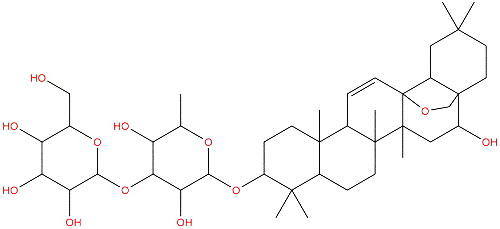
Chaihu saponin E belongs to the Oleanane type saponins of the pentacyclic triterpenoid class. Its chemical structure has typical characteristics of saikosaponin, consisting of two parts: sapogenin and glycan.
Chemical structure analysis:
The aglycone of SS-E is an epoxide ether type oleanane derivative, and its parent nucleus structure contains a characteristic 13 β, 28 epoxy oleanane skeleton. Specifically, its aglycone is 11 α - methoxy-16 β, 23 dihydroxy-13 β, 28 epoxyoleanane. Compared with saikosaponin a (SSa), SS-E is connected to a methoxy group (- OCH ∝) at the C-11 position, while SSa has a hydroxyl group (- OH) at the C-11 position; Compared with saikosaponin d (SSd), the C-16 position of SSd is a β - hydroxyl group, while the C-16 position of SS-E is also a β - hydroxyl group, but the C-23 position is a hydroxyl group, and the C-23 position of SSd is a methyl group. This subtle structural difference leads to significant differences in their physicochemical properties and biological activities.
The sugar chain of SS-E is partially connected to the C-3 hydroxyl group of the aglycone. Its sugar chain consists of two monosaccharides: β - D-glucose on the inner side and β - D-fucopyranosyl on the outer side. Therefore, the complete chemical name of SS-E can be expressed as: 3 β, 16 β, 23-trihydroxy-11 α - methoxy-13 β, 28 epoxyoleanane-3-O - β - D-glucopyranosyl - (1 → 2) - β - D-fucosyl glycoside. Its molecular formula is C ₄₂ H ₆₈ O ₁∝, and its molecular weight is 764.9940 g/mol.
Physical and chemical property analysis:
1. solubility As a triterpenoid saponin, SS-E exhibits amphiphilic characteristics. The glycoside part (triterpenoid skeleton) is lipophilic, while the sugar chain part (two hexoses) is water-soluble. However, according to the provided pharmacokinetic parameters, its water solubility is only 0.0144 mg/mL, indicating that its solubility in water is very low and it belongs to a poorly soluble compound. This low water solubility is one of the main challenges facing its oral bioavailability. SS-E is soluble in polar organic solvents such as methanol, ethanol, and n-butanol, but has poor solubility in non-polar solvents such as chloroform and ether.
2. fat-soluble The LogP value (oil-water partition coefficient) is 3.6681, indicating that SS-E has strong lipid solubility. A higher LogP value is beneficial for its penetration into the cell membrane, but it may also lead to a larger distribution volume in the body and easy binding with plasma proteins.
3. Polar Surface Area The topological polar surface area (TPSA) is 187.7600 Å ². TPSA is an important parameter for predicting drug oral absorption and blood-brain barrier (BBB) penetration ability. Typically, molecules with TPSA greater than 140 Å ² are considered difficult to penetrate the BBB. The TPSA of SS-E reaching 187.76 Å ² is completely consistent with its prediction of low blood-brain barrier penetration. This means that the ability of SS-E to exert direct effects in the central nervous system (CNS) may be limited, and its anti depressant and other CNS activities may be partially indirectly achieved through peripheral pathways (such as regulating gut microbiota, affecting peripheral immune neuroendocrine networks), or require the use of special drug delivery systems.
4. Stability The epoxy ether ring in the SS-E structure is relatively unstable under acidic conditions and is prone to undergo ring opening rearrangement, resulting in the formation of heterocyclic diene type saponins (such as saikosaponin b1, b2, etc.). Therefore, when extracting, separating, storing, and passing through the gastric acid environment after oral administration, its chemical stability needs to be considered.
Plant sources and extraction methods
Plant source:
Chaihu saponin E mainly comes from the Apiaceae family and the genus Chaihu(Bupleurum L. Plants. According to literature reports, SS-E is distributed in various plants of the Bupleurum genus, but its content is usually low, much lower than SSa and SSd. Its main sources of plants include:
- Beichaihu(Bupleurum chinense DC.)One of the authentic Bupleurum chinense recorded in the Chinese Pharmacopoeia, it is the main source of SS-E.
- Narrow leaved Chaihu(Bupleurum scorzonerifolium Willd.)Also known as South Chaihu, it is one of the authentic Chaihu and contains SS-E.
- Other plants of the Bupleurum genus Like Sandao Chaihu(B. falcatum L.)、 Yinzhou Chaihu(B. yinchowense Shan et al. (Y. Li) may also contain trace amounts of SS-E.
The distribution of SS-E varies in different parts of plants, usually with the highest content in roots and lower content in stems and leaves. In addition, the origin, harvesting season, and processing methods (such as vinegar roasting) of medicinal herbs can all affect the content of SS-E. For example, the traditional vinegar roasting process may alter the configuration of saikosaponin, resulting in changes in the content of epoxy ether saponins such as SS-E.
Extraction and Separation Methods:
Given the low content of SS-E and its coexistence with structurally similar SSa, SSd, etc., its extraction and purification require refined processes.
-
Extract:
- Solvent extraction method The most commonly used method. Usually, dried Chaihu roots are crushed and extracted by heating and refluxing with methanol or ethanol (70% -80%). After concentrating the extract, degrease it with petroleum ether or ether to remove chlorophyll and lipid soluble impurities. Subsequently, the aqueous phase was extracted with n-butanol to obtain a crude extract of total saponins.
- Ultrasonic/Microwave Assisted Extraction To improve extraction efficiency and reduce the impact of temperature on SS-E stability, ultrasound or microwave-assisted extraction techniques can be used. These methods can accelerate solvent penetration and component dissolution, and shorten extraction time.
- Supercritical fluid extraction Using CO ₂ as a solvent, extraction is carried out by adding an entrainer (such as ethanol). This method has mild conditions, no solvent residue, and is friendly to thermosensitive components, but the cost is relatively high.
-
Separation and Purification:
- Macroporous adsorption resin column chromatography The crude extract of total saponins is first passed through a macroporous adsorption resin (such as D101, AB-8) column and eluted with a water ethanol gradient. Ethanol of different concentrations can elute saponin components of different polarities, achieving preliminary group separation. SS-E is usually enriched in the 30% -60% ethanol elution site.
- Silica gel column chromatography Perform silica gel column chromatography on the enriched components, using solvent systems such as chloroform methanol water (e.g. 8:2:0.1) or dichloromethane methanol water for isocratic or gradient elution. This is a key step in separating SS-E from other structurally similar saponins such as SSa, SSd, SSc, etc. Due to the polarity of SS-E being between SSa and SSd, SS-E monomers can be obtained through multiple column chromatography and thin layer chromatography (TLC) monitoring.
- High performance liquid chromatography (HPLC)For the preparation of high-purity SS-E, preparative HPLC is commonly used. By using a reverse phase C18 column with acetonitrile water or methanol water as the mobile phase and optimizing the gradient program, baseline separation of SS-E from other trace components can be achieved. The detector is usually an evaporative light scattering detector (ELSD) or a ultraviolet detector (UV, end absorption).
- High Speed Counter Current Chromatography (HSCCC)This is a liquid-liquid distribution chromatography technique that does not require a solid stationary phase, avoiding irreversible adsorption of the sample on silica gel. By selecting a suitable solvent system (such as n-hexane ethyl acetate methanol water), HSCCC can efficiently separate SS-E with high purity in a short period of time.
Pharmacological activity research
The pharmacological activity research of saikosaponin E is still in its infancy, but existing studies have revealed its potential value in multiple fields, among which its antidepressant effect is the most prominent.
1. Antidepressant effect:
This is currently the most concentrated area of research for SS-E. Multiple in vitro and in vivo experiments have confirmed its antidepressant potential.
- behavioral experiment In classic chronic unpredictable mild stress (CUMS) or chronic social frustration stress (CSDS) mouse models, oral or intraperitoneal injection of SS-E can significantly reverse depressive like behavior observed in model animals, including increasing the sugar water preference index (improving pleasure loss), shortening immobility time in forced swimming test (FST) and tail suspension test (TST) (reducing behavioral despair), and increasing activity in open field test (OFT) (improving motor inhibition).
- Neurotransmitter regulation SS-E can increase the levels of monoamine neurotransmitters (such as serotonin, norepinephrine, dopamine) in the prefrontal cortex, hippocampus, and other brain regions of depression model animals, and reduce the content of their metabolites. This is related to the inhibition of monoamine oxidase (MAO) activity. In the provided target information, MAOA and MAOB are key enzymes for degrading monoamine neurotransmitters, and SS-E may act as a MAO inhibitor.
- Neuronutrition and synaptic plasticity SS-E can upregulate the expression of brain-derived neurotrophic factor (BDNF) in the hippocampus and prefrontal cortex, and activate its downstream receptor TrkB and signaling pathway (such as CREB). BDNF is a key factor in maintaining neuronal survival, promoting synaptic formation and plasticity, and its downregulation is considered one of the core pathological mechanisms of depression. SS-E can also increase the expression of synaptic proteins such as PSD95 and Synapsin I, and improve the stress-induced decrease in dendritic spine density of hippocampal neurons.
2. Liver protective effect:
Chaihu and its saponins have always been known for their hepatoprotective activity. SS-E also showed a certain liver protective effect.
-In acute liver injury mouse models induced by carbon tetrachloride (CCl ₄) or acetaminophen (APAP), SS-E pretreatment significantly reduced serum transaminase (ALT, AST) levels, alleviated liver cell necrosis and inflammatory infiltration.
-The mechanism may be related to antioxidant stress. SS-E can enhance the activity of superoxide dismutase (SOD) and glutathione peroxidase (GSH Px) in the liver, reduce the content of malondialdehyde (MDA), and alleviate the damage of free radicals to liver cells. In addition, SS-E may also exert its potential in combating liver fibrosis by inhibiting the activation of hepatic stellate cells (HSCs).
3. Anti inflammatory and immune regulation:
-SS-E exhibits anti-inflammatory activity in various inflammatory models. In macrophages stimulated by lipopolysaccharide (LPS), SS-E can significantly inhibit the release of pro-inflammatory factors such as tumor necrosis factor - α (TNF - α), interleukin-6 (IL-6), and IL-1 β, while promoting the expression of anti-inflammatory factor IL-10.
-Its anti-inflammatory mechanism is related to the inhibition of the activation of nuclear factor kappa B (NF - κ B) and mitogen activated protein kinase (MAPK) signaling pathways. SS-E can block the phosphorylation and degradation of I κ B α, thereby preventing the transfer of NF - κ B p65 subunit into the nucleus and reducing the transcription of inflammation related genes.
4. Antitumor effect:
-A few in vitro studies have reported the inhibitory effect of SS-E on the proliferation of certain tumor cell lines. For example, in liver cancer HepG2 cells and lung cancer A549 cells, SS-E can induce cell cycle arrest in G0/G1 phase, and upregulate Bax/Bcl-2 ratio by activating Caspase-3 and Caspase-9, inducing mitochondrial pathway apoptosis.
-However, the anti-tumor activity of SS-E is much weaker than that of SSa and SSd, and its IC50 value is usually higher, lacking in vivo experimental evidence. Therefore, its anti-tumor potential still needs further validation.
Mechanism of action and molecular targets
The pharmacological activity of SS-E, especially its antidepressant effect, is achieved through the synergistic action of multiple targets and pathways. Based on the provided target information and existing literature, the core mechanism can be summarized as follows:
1. Regulating the monoamine neurotransmitter system:
This is the most direct mechanism of SS-E's antidepressant effect.
- Inhibition of monoamine oxidase (MAO)SS-E has a certain inhibitory effect on both MAOA and MAOB. MAOA mainly metabolizes 5-hydroxytryptamine (5-HT), norepinephrine (NE), and adrenaline; MAOB mainly metabolizes phenylethylamine and dopamine (DA). By inhibiting MAO activity, SS-E reduces the degradation of monoamine neurotransmitters in synaptic cleft, thereby increasing the effective concentration of these neurotransmitters and exerting antidepressant effects similar to classical MAO inhibitors such as phenylhydrazine. But the inhibitory activity of SS-E may be relatively mild, with a lower risk of side effects.
- Regulating the 5-hydroxytryptamine system SS-E may affect the synthesis, release, and reuptake of serotonin. The target SLC6A4 encodes the 5-hydroxytryptamine transporter (SERT), which is a key protein for presynaptic membrane recycling of 5-HT. SS-E may increase synaptic gap 5-HT levels by downregulating SERT expression or function, reducing 5-HT recycling. In addition, SS-E may also act on the 5-hydroxytryptamine 1A receptor (HTR1A). HTR1A is a presynaptic and postsynaptic receptor whose activation plays a critical role in regulating emotions, anxiety, and depression. SS-E may act as an agonist or partial agonist of HTR1A, directly enhancing 5-HTergic neurotransmission.
- Regulating catecholamine metabolism The target COMT (catechol-O-methyltransferase) is another key enzyme involved in the degradation of dopamine and norepinephrine. The inhibitory effect of SS-E on COMT may further consolidate its positive regulation of monoamine neurotransmitters.
2. Activate the neural nutrition and cell survival pathways:
- BDNF CREB signal axis This is the core mechanism by which SS-E exerts long-lasting antidepressant effects. SS-E can significantly upregulate the mRNA and protein levels of BDNF in the hippocampus and prefrontal cortex. After binding to its receptor TrkB, BDNF activates downstream Ras MAPK/ERK and PI3K Akt signaling pathways. These pathways ultimately activate the transcription factor CREB (cAMP response element binding protein). The phosphorylation of CREB (p-CREB) is enhanced, further promoting the transcription of BDNF itself and other genes related to synaptic plasticity and neuronal survival (such as Bcl-2), forming a positive feedback loop. This neurotrophic effect helps to reverse stress-induced hippocampal neuronal atrophy and synaptic loss, and is the biological basis for the effectiveness of antidepressant treatment.
3. Regulating the gamma aminobutyric acid (GABA) system:
-The target GABRA1 encodes the alpha 1 subunit of the GABA_A receptor. GABA_A receptors are the main inhibitory neurotransmitter receptors in the central nervous system. Patients with depression often have dysfunction of the GABAergic system. SS-E may enhance central inhibitory neurotransmission by positively modulating GABA_A receptors (such as increasing the binding ability of GABA to its receptors or increasing the frequency of Cl ⁻ channel opening), thereby exerting anti anxiety and anti depression effects. This is similar to the mechanism of action of some benzodiazepine drugs, but SS-E may act on different subunit combinations and have different side effect profiles.
4. Inhibit glycogen synthase kinase-3 β (GSK3B):
-GSK3B is a multifunctional serine/threonine kinase involved in various cellular processes, including neurogenesis, synaptic plasticity, and apoptosis. The overactivity of GSK3B is associated with the pathophysiology of mental illnesses such as depression and bipolar disorder. SS-E may activate the Akt pathway, leading to phosphorylation of the N-terminal Ser9 site of GSK3B, thereby inhibiting its activity. Inhibition of GSK3B can protect neurons from stress damage, promote neurogenesis, and regulate circadian rhythms, all of which are associated with antidepressant effects.
5. Anti inflammatory and antioxidant mechanisms:
-Neuroinflammation is considered one of the important pathogenic hypotheses of depression. SS-E reduces the release of pro-inflammatory cytokines (TNF - α, IL-1 β, IL-6) from microglia and astrocytes by inhibiting the NF - κ B and MAPK pathways, thereby alleviating the inflammatory microenvironment of the central nervous system. Meanwhile, its antioxidant activity (clearing free radicals and enhancing endogenous antioxidant enzyme activity) also helps protect neurons from oxidative stress damage. These effects collectively provide a supportive microenvironment for the antidepressant effect of SS-E.
In summary, the antidepressant mechanism of SS-E is a complex network that covers multiple levels such as monoamine hypothesis, neurotrophication hypothesis, GABA hypothesis, neuroinflammation hypothesis, etc., reflecting its advantages as a multi-target natural product.
Evaluation of drug properties and pharmacokinetics
To develop SS-E as a clinical drug, objective evaluation of its drug like and pharmacokinetic (ADME) properties is necessary.
Drug Evaluation:
Based on the provided parameters and the Lipinski Rule of Five, the pharmacological properties of SS-E face significant challenges.
- molecular weight:764.99 Da, Far exceeding the threshold of 500 Da, it does not comply with the "Five Rules".
- LogP 3.6681, meets the requirement of LogP<5.
- Hydrogen bond donor/acceptor SS-E molecules contain multiple hydroxyl and glycosidic bonds, and the number of hydrogen bond donors (- OH, - NH) and acceptors (- O -) far exceeds the thresholds of 5 and 10.
- TPSA 187.76 Å ², much larger than 140 Å ², indicates poor oral absorption and difficulty in penetrating the blood-brain barrier.
- Water solubility:0.0144 mg/mL, Belonging to extremely insoluble compounds, it seriously affects its oral bioavailability.
- safety HERG inhibition is predicted as' no ', indicating a low risk of cardiac toxicity. The Ames test result is 0.0, indicating no significant mutagenicity and a low risk of genetic toxicity.
Overall, SS-E is a typical "non drug like" molecule, and its huge molecular weight, high polarity surface area, and extremely low water solubility are the biggest obstacles to its successful drug development. However, there are many successful drugs in natural products that go beyond the five rules, such as cyclosporine A and rapamycin. The successful development of SS-E relies on advanced formulation technology.
Pharmacokinetic characteristics (speculation and preliminary study):
- absorb Due to poor water solubility and high molecular weight, the oral absorption of SS-E is very poor. Although its LogP value is relatively high, its huge molecular weight and the presence of sugar chains make it difficult to cross intestinal epithelial cells through passive diffusion. Its oral absolute bioavailability may be extremely low (<1%). SS-E may be mainly absorbed through the intestinal lymphatic system or require the use of transporters such as P-glycoprotein (P-gp).
- distribution The binding rate between SS-E and plasma proteins (especially albumin) may be high. Its high LogP value tends to distribute it to tissues with abundant blood flow, such as the liver, lungs, and kidneys. However, due to its high TPSA, its ability to penetrate the BBB is extremely low, which limits its direct action in the central nervous system. Its antidepressant effect may be partially achieved indirectly through the gut brain axis or peripheral immune regulation.
- Metabolism SS-E mainly undergoes two metabolic pathways in the body: 1)hydrolysis Under the action of β - glucosidase and β - fucosidase produced by gut microbiota, the sugar chain of SS-E is gradually hydrolyzed to produce secondary glycosides (such as saikosaponin F) or aglycones. These metabolites may have different biological activities. 2)Liver metabolism After entering the liver, SS-E and its aglycones may undergo phase I metabolism (oxidation, reduction, hydrolysis) and phase II metabolism (glucuronidation, sulfation), generating more polar metabolites for easier excretion. The CYP450 enzyme system may be involved in its metabolism.
- excretion SS-E and its metabolites are mainly excreted into the intestine through bile and excreted with feces. A small amount may be excreted in the form of urine through the kidneys.
Improvement strategy:
To improve the pharmacokinetic properties of SS-E, the following strategies can be considered:
1. Prodrug design Chemical modification on the hydroxyl group of SS-E, such as introducing phosphate groups, amino acid esters, etc., to improve water solubility.
2. nano-formulation Preparation of liposomes, polymer nanoparticles, solid lipid nanoparticles, etc., encapsulation of SS-E to enhance its solubility and oral bioavailability, and potentially achieve brain targeted delivery.
3. Phospholipid complex Form complexes with phospholipids, increase their lipid solubility, and promote transmembrane absorption.
4. Simplified structure Study its minimum pharmacophore, attempt to remove some sugar chains or modify glycosides, and reduce molecular weight and polarity while maintaining activity.
Clinical application prospects and prospects
Despite the challenges in drug development, the unique pharmacological activity spectrum of SS-E, particularly its multi-target antidepressant effects, still holds significant potential for clinical applications and drug development.
1. Lead compounds for antidepressant drugs:
The "multi-target, multi pathway" mode of action of SS-E is in line with the current trend of antidepressant drug development shifting from "monoamine targets" to "systemic networks". It simultaneously acts on multiple targets such as MAO, SERT, HTR1A, BDNF, GSK3B, etc., and may have the advantages of fast onset, comprehensive efficacy, and few side effects (especially common SSRI side effects such as sexual dysfunction and weight gain). Future research should focus on:
- Structure Activity Relationship (SAR) Study Compare the differences in antidepressant activity between SS-E and its analogues (such as SSa, SSd, SSb1, etc.), clarify the contributions of the C-11 methoxy group, C-16 hydroxyl group, and sugar chain to the activity, and provide a basis for structural optimization.
- Metabolite activity research Exploring in depth whether the main metabolites of SS-E in the body, such as aglycones, have stronger antidepressant activity or better BBB penetration. If the metabolite is in its true active form, then SS-E can be considered a natural prodrug.
- Intestinal brain axis mechanism Given the low BBB penetration of SS-E, whether its antidepressant effect is mainly achieved by regulating gut microbiota composition, improving gut barrier function, affecting vagus nerve signaling, or regulating peripheral immune cells (such as Th17/Treg balance) is a highly exploratory direction.
2. Application in the field of liver protection and anti-inflammatory:
The hepatoprotective and anti-inflammatory activities of SS-E make it promising for the treatment of liver diseases such as non-alcoholic fatty liver disease (NAFLD), alcoholic liver disease, and hepatitis. Its anti-inflammatory effect may also be applied to chronic inflammatory diseases such as inflammatory bowel disease (IBD) and arthritis. The application of SS-E in these peripheral targets can avoid the disadvantage of poor BBB penetration and directly exert local or systemic effects.
3. As a dietary supplement or functional food ingredient:
Given its good safety prediction (without hERG inhibition and Ames toxicity), SS-E or Chaihu extract rich in SS-E has the potential to be developed as a dietary supplement or functional food for improving mood, relieving stress, and assisting sleep. Improving its bioavailability through rational formulation technology can meet the growing demand for "mental health" consumption.
Future research directions:
- Systematic pharmacokinetic study Establish a sensitive LC-MS/MS detection method to comprehensively elucidate the absorption, distribution, metabolism, and excretion (ADME) process of SS-E in animals, especially its metabolite profile and brain exposure.
- In depth molecular mechanism research Using techniques such as gene knockout, RNA interference, proteomics, and metabolomics, the direct target proteins and key signaling networks of SS-E's antidepressant effect are systematically revealed.
- toxicological evaluation Although the initial prediction of toxicity is low, systematic preclinical safety evaluations such as acute toxicity, long-term toxicity, and reproductive toxicity are still needed.
- Development of a new drug delivery system Focus on developing nano drug delivery systems that can improve the oral bioavailability of SS-E and/or achieve brain targeting, such as brain targeted liposomes, polymer micelles, exosomes, etc.
Conclusion
Saikosaponin E, a triterpenoid saponin with a low content but unique structure in plants of the Bupleurum genus, is gradually moving from behind the scenes to the forefront. This article systematically reviews its chemical structure, physicochemical properties, plant origin, extraction process, pharmacological activity, mechanism of action, and medicinal characteristics. SS-E exhibits multiple pharmacological activities with anti depression as its core, as well as liver protection and anti-inflammatory effects. Its mechanism of action involves multiple targets and pathways such as monoamine neurotransmitters, neurotrophic factors, GABAergic system, GSK3B, and neuroinflammation, reflecting the advantages of multi-target synergistic effects of natural products.
However, the clinical translation of SS-E is not a smooth road. As a natural macromolecule that transcends the five rules, it faces severe challenges in terms of drug efficacy, such as low oral bioavailability and poor blood-brain barrier penetration. The future research focus should be on: 1) in-depth elucidation of its in vivo metabolic processes and active metabolites; 2) Explore the possibility of its central role through the gut brain axis; 3) Develop efficient nano formulations or prodrug strategies to overcome their pharmacokinetic deficiencies; 4) Conduct research on the structure performance relationship of the system to provide guidance for structural optimization.
In summary, saikosaponin E is a natural product lead compound with great research value and development potential. Despite the numerous challenges, through the interdisciplinary integration of modern medicinal chemistry, pharmacy, and pharmacology, it is expected that the active ingredients in this ancient Chinese medicine can be transformed into new drugs for treating complex diseases such as depression, contributing to the cause of human health. The in-depth study of SS-E will also provide valuable experience and paradigm for the development of other structurally complex and highly active natural saponin drugs.