


Synonym name: Corylifolinin; Isobacachalcone; Isobavachalcone
Catalogue No.: BP0773
Cas No.: 20784-50-3
Formula: C20H20O4
Mol Weight: 324.376
Botanical Source: Artocarpus lowii, Psoralea corylifolia and Lonchocarpus sp. Also callus culture of Glycyrrhiza uralensis
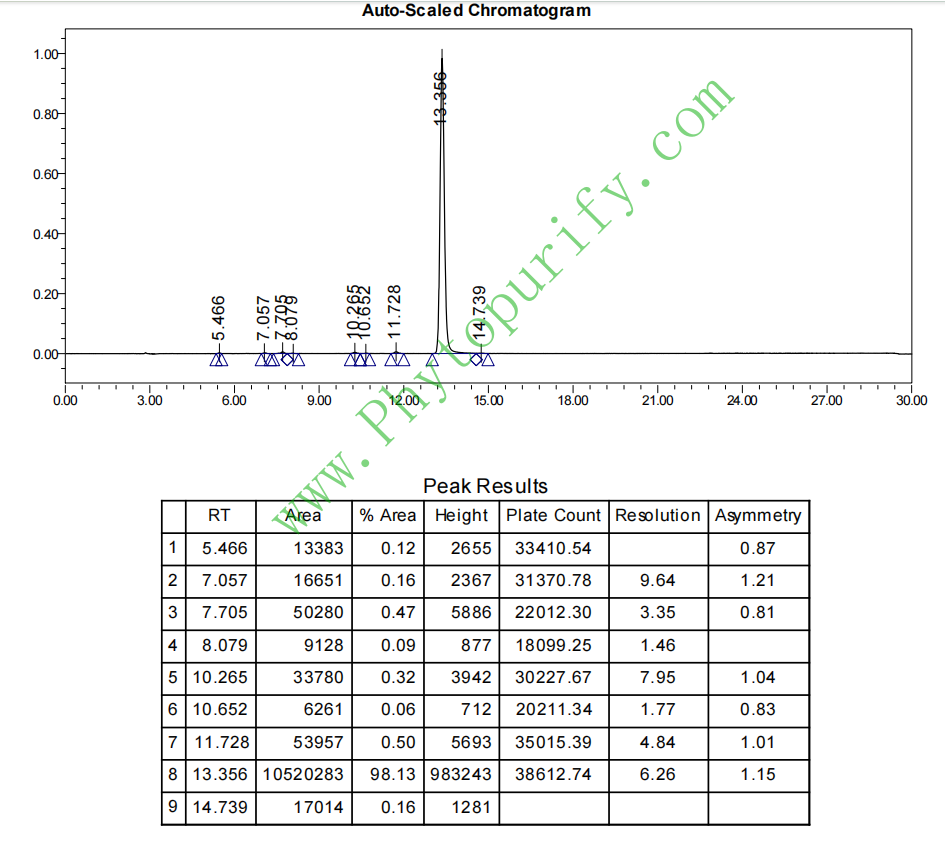
Purity: 95%~99%
Analysis Method: HPLC-DAD or/and HPLC-ELSD
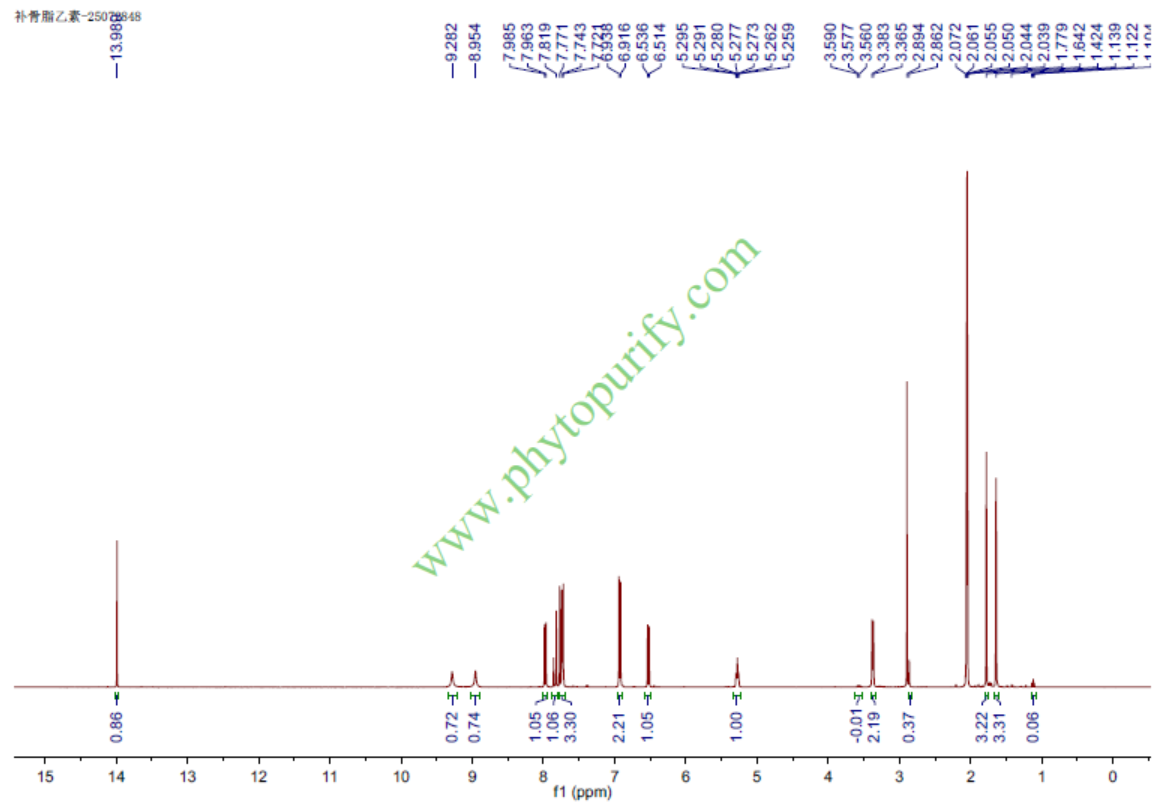
Identification Method: Mass, NMR
Packing: Brown vial or HDPE plastic bottle
Can be supplied from milligrams to grams.
For Reference Standard and R&D, Not for Human Use Directly.
Inquire for bulk scale.
Description:
Isobavachalcone has anti-cancer, anthelmintic, antibacterial, aphrodisiac, anti-inflammatory, astringent and antiplatelet activities, Isobavachalcone can induce apoptotic cell death in neuroblastoma via the mitochondrial pathway; it can significantly inhibit both oligomerization and fibrillization of Aβ42; it can suppress inducible nitric oxide synthase (iNOS) expression induced by macrophage-activating lipopeptide 2-kDa, polyriboinosinic polyribocytidylic acid, or lipopolysaccharide.
References:
Eur J Pharmacol. 2015 May 5;754:11-8.
Isobavachalcone attenuates lipopolysaccharide-induced ICAM-1 expression in brain endothelial cells through blockade of toll-like receptor 4 signaling pathways.
Inflammation has been implicated in the pathogenesis of various cerebral diseases. Thus, control of brain inflammation is regarded as one of the important therapeutic strategies for the treatment of neurodegenerative diseases such as Alzheimer׳s disease and stroke. Isobavachalcone, a flavonoid from Psoralea corylifolia, is known to possess a wide spectrum of biological activities and is expected to be useful in preventing or treating neurodegenerative diseases. However, very little is known regarding its effects on cerebral inflammation.
METHODS AND RESULTS:
In this study, we examined the effect of Isobavachalcone on leukocyte adhesion and intercellular adhesion molecule-1 (ICAM-1) expression in brain endothelial cells activated with lipopolysaccharide (LPS) and explored the possible mechanisms involved. Isobavachalcone significantly down-regulated LPS-induced ICAM-1 expression and leukocyte-endothelial cell adhesion and suppressed NF-κB activity which is implicated in the expression of ICAM-1. It attenuated ICAM-1 expression as well as NF-κB transcriptional activity induced by macrophage-activating lipopeptide 2-kDa (MALP-2) or polyriboinosinic polyribocytidylic acid (poly[I:C]). Isobavachalcone also down-regulated LPS or poly[I:C]-induced expression of IFN-β, which can indirectly activate NF-κB. These data imply that Isobavachalcone can modulate both MyD88-dependent and TRIF-dependent signaling of toll-like receptor 4 (TLR4).
CONCLUSIONS:
Taken together, our data suggest that Isobavachalcone inhibits LPS-induced ICAM-1 expression and leukocyte adhesion to brain endothelial cell by blocking TLR4 signaling and thus, has the potential to ameliorate neuronal injury in brain diseases associated with inflammation.
Int J Mol Med. 2012 Oct;30(4):939-44.
Autophagy inhibition enhances isobavachalcone-induced cell death in multiple myeloma cells.
Despite recent advancements in therapeutic drugs, multiple myeloma remains an incurable disease.
METHODS AND RESULTS:
Therefore, a more effective treatment is urgently required. In this study, we show that Isobavachalcone (IBC), a natural chalcone compound, induces apoptosis- and autophagy-related cell death in myeloma cells. The inhibition of autophagy by knocking down beclin-1 or by using autophagy inhibitors, such as 3-methyladenine, bafilomycin A and chloroquine significantly enhanced IBC-induced cell death, as demonstrated by the increased number of Annexin V-positive cells. Moreover, we demonstrate that the collapse of the mitochondrial membrane potential contributes to chloroquine and IBC-induced cell death, which is accompanied by the activation of caspase-9, and -3, the cleavage of poly (ADP-ribose) polymerase (PARP) and the proteolytic activation of protein kinase Cδ (PKCδ). Furthermore, the inhibition of the activation of PKCδ by rottlerin, an inhibitor of PKCδ, not only suppressed the activation of PKCδ, but also the apoptosis induced by the co-treatment of chloroquine and IBC, indicating the involvement of PKCδ in chloroquine plus IBC-induced cell death. Finally, the combination of chloroquine and IBC had little effect on the viability of normal peripheral blood mononuclear cells.
CONCLUSIONS:
As both chloroquine and IBC have been shown to be relatively specific for cancer cells, the combination of these two agents at non-toxic or sub-toxic concentrations represents an attractive novel regimen for myeloma treatment and warrants further investigation in preclinical and clinical studies.
Antimicrob Agents Chemother. 2010 May;54(5):1749-52.
Efflux pumps are involved in the defense of Gram-negative bacteria against the natural products isobavachalcone and diospyrone.
The activities of two naturally occurring compounds, Isobavachalcone and diospyrone, against documented strains and multidrug-resistant (MDR) Gram-negative bacterial isolates were evaluated.
METHODS AND RESULTS:
The results indicated that the two compounds exhibited intrinsic antibacterial activity against several Gram-negative bacteria, and their activities were significantly improved in the presence of an efflux pump inhibitor (MIC values decreased to below 10 microg/ml). In addition, the activities of Isobavachalcone and diospyrone against various strains exhibiting deletions of the major efflux pump components (AcrAB, TolC) were significantly increased.
CONCLUSIONS:
The overall results indicate that Isobavachalcone and diospyrone could be candidates for the development of new drugs against MDR strains and that their use in combination with efflux pump inhibitors reinforces their activity.
Cancer Lett. 2010 Aug 28;294(2):167-77.
Abrogation of Akt signaling by Isobavachalcone contributes to its anti-proliferative effects towards human cancer cells.
Akt signaling pathway has attracted much attention as a promising target for cancer therapeutics. Herein, we report that Isobavachalcone (IBC), a natural chalcone, potently abrogates Akt signaling and exerts anti-proliferative effects on several human cancer cell lines.
METHODS AND RESULTS:
Modeling results from the Sybyl/FlexiDock program suggest that IBC potentially binds to the ATP-binding pocket of Akt, which is confirmed by the observations that IBC inhibits Akt1 kinase in vitro. Further studies reveal that IBC significantly abates Akt phosphorylation at Ser-473 and Akt kinase activity in cells, which subsequently leads to inhibition of Akt downstream substrates and evokes significant levels of apoptosis associated with mitochondria pathway.
HPLC of Isobavachalcone
HNMR of Isobavachalcone
Storage conditions:Short-term storage at 2~8℃, long-term storage at -20 ~ -80℃
77.7600
4.4635
4.4107
.0692
4.9931
7.7689
Low
92.4507
2.4723
Yes
No
Yes
No
Yes
No
0.0
No
Yes
Yes
Yes
Isobavachalcone (CAS number: 20784-50-3) is a natural product belonging to the flavonoid class, mainly isolated from the traditional Chinese medicine Psoralea corylifolia L. As one of the important active ingredients in Fructus Psorale, Psoralen B has attracted widespread attention in recent years due to its significant biological activity, especially its potential in the field of anti-cancer. Numerous studies have shown that psoralen B can effectively induce apoptosis in various cancer cells by regulating multiple cellular signaling pathways, especially by inhibiting the Akt signaling pathway, exhibiting good anti proliferative and anti-tumor activities. In addition, psoralen B can also promote the production of reactive oxygen species (ROS), further enhancing its anti-cancer effect. This article provides a systematic review of the chemical structure and physicochemical properties, plant sources and extraction methods, pharmacological activity, mechanism of action, pharmacological evaluation, and potential for clinical application of psoralen B, aiming to provide a theoretical basis and reference for the in-depth research and drug development of this compound.
The molecular formula of Psoralen B is C20H20O4, with a molecular weight of 324.3760. Its chemical structure belongs to the chalcone class of flavonoids, with a typical α, β - unsaturated ketone structure that connects two aromatic rings, one of which has hydroxyl and methoxy substituents. The LogP value of psoralen B is 4.4635, indicating that it has strong lipid solubility and is conducive to penetrating cell membranes; The TPSA (topological polar surface area) is 77.76, indicating moderate polarity, which may affect its bioavailability and membrane permeability. The low water solubility (0.0692 mg/mL) to some extent limits its oral absorption and bioavailability. Psoralen B does not have hERG channel inhibitory activity, and the Ames test result is 0.0, indicating its high safety in terms of genetic toxicity.
The unsaturated ketone group in the chemical structure is an important functional group for its biological activity, which can form covalent or non covalent interactions with various protein targets and regulate cellular signaling pathways. In addition, the presence of hydroxyl and methoxy groups enhances its antioxidant capacity and binding affinity with target proteins.
Psoralea corylifolia L. is mainly derived from Psoralea corylifolia L., a legume plant widely distributed in China, India, and Southeast Asia. It has always been used as a traditional Chinese medicine to treat diseases such as osteoporosis, skin diseases, and tumors. Psoralen B, as a secondary metabolite of Psoralea, has a lower content than the main component, Psoralen, but its biological activity is more significant.
The common methods for extracting psoralen B include:
Solvent extraction method Using ethanol, methanol, or ethyl acetate as solvents, extract dried powder of Fructus Psorale by impregnation or reflux, and then separate and purify it by liquid-liquid distribution, column chromatography, and other methods. The ethanol extract has a high content of psoralen B and a good extraction efficiency.
Ultrasound assisted extraction Using ultrasound to enhance solvent penetration and cell lysis, improve extraction efficiency, shorten time, and mild conditions are beneficial for maintaining the activity of psoralen B.
Separation and Purification by High Performance Liquid Chromatography (HPLC)Through reverse phase C18 column separation, combined with UV detection and mass spectrometry confirmation, high-purity preparation of psoralen B was achieved.
In recent years, green extraction techniques such as supercritical CO2 extraction and microwave-assisted extraction have also been attempted to be applied to the extraction of psoralen B, aiming to improve yield and purity, reduce the use of organic solvents, and meet the environmental requirements of modern drug development.
The pharmacological activity research of Psoralen B mainly focuses on its anti-cancer, anti proliferative, and induction of cell apoptosis effects. Multiple in vitro cell experiments and some in vivo models have confirmed its significant anti-tumor potential.
Psoralen B exhibits inhibitory effects on various cancer cell lines, particularly ovarian cancer cell line OVCAR-8, with an IC50 value of approximately 7.92 μ M, demonstrating strong cell proliferation inhibition ability. In addition to ovarian cancer, psoralen B also has inhibitory effects on prostate cancer, breast cancer, lung cancer and other tumor cells.
Psoralen B can induce cancer cell apoptosis through various pathways. Its mechanism includes activating endogenous apoptotic pathways, regulating the expression of Bcl-2 family proteins, promoting the activation of Caspase-9 and Caspase-3, ultimately leading to programmed cell death. In addition, psoralen B also promotes the accumulation of reactive oxygen species (ROS) in cancer cells, and the increase of ROS further disrupts the intracellular redox balance, inducing cell apoptosis.
Psoralen B can interfere with cell cycle regulation, block the progression of cancer cells in G0/G1 or G2/M phases, and inhibit cell proliferation. It exerts cell cycle arrest by regulating the expression of cell cycle related proteins such as Cyclin D1, CDK4, etc.
In addition to its anti-cancer effect, psoralen B also exhibits certain anti-inflammatory and antioxidant activities. The phenolic hydroxyl groups in its structure can scavenge free radicals, alleviate oxidative stress, inhibit the expression of inflammatory factors, and indirectly support its anti-tumor effect.
The mechanism of action of psoralen B involves multiple signaling pathways, especially the inhibition of the Akt signaling pathway. The Akt pathway plays a central regulatory role in cell growth, proliferation, and apoptosis. Psoralen B inhibits Akt activation, blocks downstream signaling, and induces cancer cell apoptosis.
Psoralen B can inhibit the phosphorylation of Akt, reduce its activity, and thereby affect downstream effector molecules such as mTOR and GSK-3 β, inhibiting cell proliferation and promoting apoptosis. The inhibition of Akt pathway also leads to an imbalance in the expression of Bcl-2 family proteins, promoting the initiation of cell apoptosis program.
For tumors such as prostate cancer, psoralen affects multiple key targets:
Psoralen B exerts anti-tumor effects through multi-target synergistic regulation, forming a complex signaling network.
Psoralen B induces an increase in ROS levels in cancer cells, disrupting cellular redox balance, leading to mitochondrial dysfunction and cell apoptosis. ROS mediated oxidative stress is an important component of its anti-cancer mechanism.
The pharmacological parameters of psoralen B indicate that it has certain potential for drug development, but there are also certain challenges.
Psoralen B does not exhibit hERG channel inhibitory activity, indicating a low risk of cardiac toxicity. The Ames test result is 0.0, indicating no significant genetic toxicity risk and good safety.
At present, there is limited in vivo pharmacokinetic data on psoralen B. Its low water solubility and high fat solubility may lead to poor oral absorption and limited bioavailability. The low blood-brain barrier permeability suggests limited application in central nervous system diseases, but also reduces the risk of central toxicity.
In the future, systematic pharmacokinetic studies need to be conducted, including absorption, distribution, metabolism, and excretion (ADME) processes, to clarify their in vivo behavior and metabolites, and provide a basis for clinical applications.
Psoralen B, as a natural flavonoid compound, has shown broad clinical application prospects due to its multi-target anticancer activity and good safety.
Psoralen B has significant inhibitory effects on various solid tumor cells such as prostate cancer and ovarian cancer, especially in inhibiting the Akt signaling pathway and inducing cell apoptosis. Its multi-target regulatory characteristics help overcome the resistance problem of single target drugs and are suitable as candidate molecules for anti-tumor drugs.
Psoralen B can be used in combination with existing chemotherapy drugs to enhance anti-cancer effects, reduce the dosage and toxic side effects of chemotherapy drugs. Its regulatory effect on ABC transporter ABCB1 is expected to reverse multidrug resistance in tumor cells.
To address the issues of low water solubility and bioavailability, new drug carrier technologies such as nano formulations, liposomes, and solid dispersions can be used to improve its pharmacokinetic performance, increase in vivo exposure, and enhance therapeutic efficacy.
The preliminary safety evaluation of psoralen B is good, but systematic long-term toxicology studies and preclinical safety trials are still needed to ensure its clinical safety.
Psoralen B, as an important active ingredient in Fructus Psorale, exhibits significant anti-cancer and anti proliferative activities due to its unique chemical structure and multi-target regulatory ability. It exerts anti-tumor effects by inhibiting the Akt signaling pathway, inducing ROS generation, and regulating various tumor related targets. Although there are certain challenges in its drug development, such as low water solubility and bioavailability, its good safety and multi-target advantages make it a strong candidate for natural product drug development. In the future, through in-depth pharmacological mechanism research, pharmacokinetic optimization, and preclinical evaluation, psoralen B is expected to become an important component of new anti-cancer drugs, providing new strategies and choices for tumor treatment.
