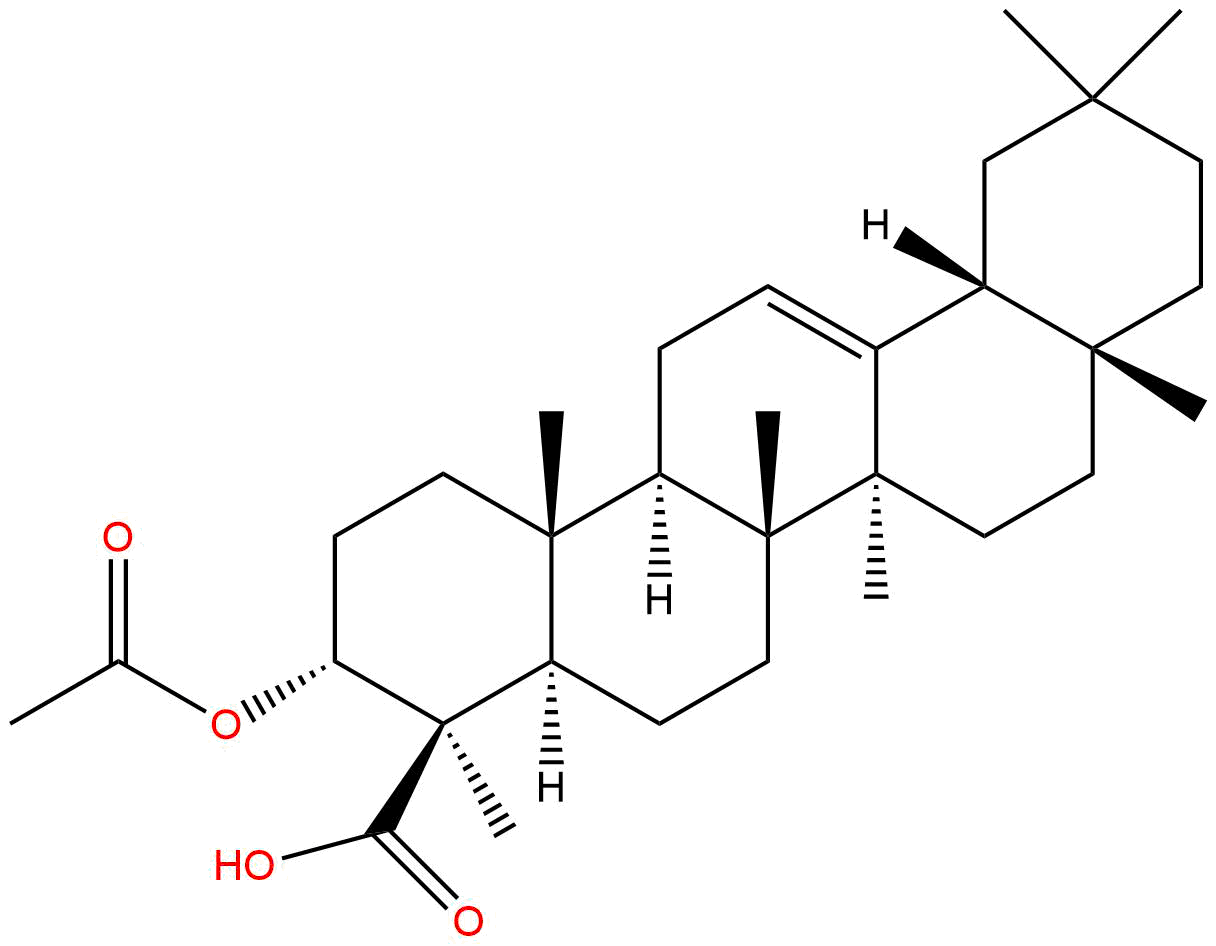


Product name: 3-O-acetyl-α-boswellic acid
Synonym name: 3-O-Acetyl-alpha-boswellic acid
Catalogue No.: BPF0529
Cas No.: 89913-60-0
Formula: C32H50O4
Mol Weight: 498.748
Botanical Source:
Physical Description:
Type of Compound: Triterpenoids
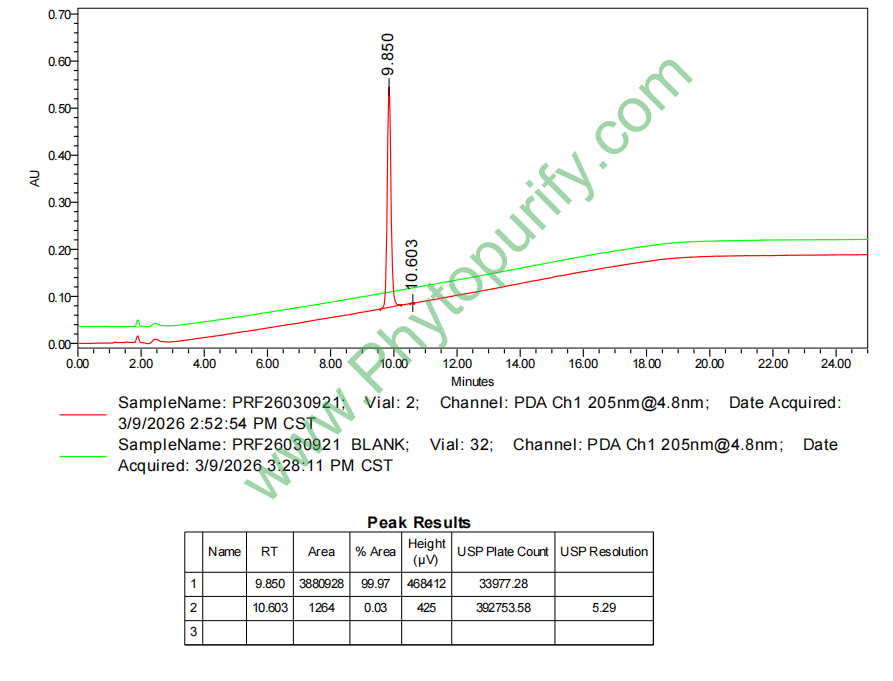
Purity: 95%~99%
Analysis Method: HPLC-DAD or/and HPLC-ELSD
Identification Method: Mass, NMR
Packing: Brown vial or HDPE plastic bottle
The product could be supplied from milligrams to grams
Inquire for bulk scale.
For Reference Standard and R&D, Not for Human Use Directly.
HPLC of 3-O-Acetyl-α-boswellic acid
Storage conditions:Short-term storage at 2~8℃, long-term storage at -20 ~ -80℃
63.6000
7.3737
5.2624
.0015
4.6326
2.7304
Low
92.4507
4.7844
No
No
Yes
No
No
No
0.0
No
No
No
No
Natural products, as an important source of drug discovery, play an irreplaceable role in the long history of human fight against diseases. Among numerous natural compounds with biological activity, frankincense acid compounds have attracted much attention due to their significant anti-inflammatory activity. Frankincense, as a traditional medicinal herb with a long history, originates from the olive family plant Frankincense genus(Boswellia)The resin of trees has been widely used in ancient Egypt, Greece, Rome, and traditional Chinese medicine. Modern pharmacological research reveals that the main active ingredients of frankincense are a class of pentacyclic triterpenoid acid compounds, collectively known as boswellic acids. Among them, β - boswellic acid (β - BA), acetyl - β - boswellic acid (A β - BA), α - boswellic acid (α - BA), and their acetylated derivatives are the most important.
3-acetyl - α - boswellic acid (abbreviated as A α - BA or 3-O-acetyl - α - boswellic acid) is an important member of the boswellic acid family, and its chemical structure is the product of acetylation modification of α - boswellic acid at the C-3 hydroxyl group. Compared with the more widely studied acetyl - β - frankincense acid, A α - BA exhibits unique characteristics in terms of biological activity, mechanism of action, and drug formation. In recent years, with the deepening of research on the structure activity relationship of natural products, the potential application value of A α - BA in anti-inflammatory, anti-tumor, neuroprotective and other fields has gradually been revealed, especially its mechanism of multi-target regulation of inflammatory signaling pathways, which provides important lead compounds for the development of new anti-inflammatory drugs.
This article will provide a systematic review of the research progress of 3-acetyl - α - frankincense acid from the aspects of chemical structure, plant origin, pharmacological activity, molecular mechanism, pharmacological evaluation, and clinical application prospects, in order to provide reference for the in-depth research and development of this natural product.
3-acetyl - α - frankincense acid belongs to the pentacyclic triterpenoid class, and its parent nucleus structure is an Ursane type pentacyclic triterpenoid skeleton. Specifically, its chemical structure consists of five rings: A, B, C, D, and E. Ring A is a six membered ring, rings B, C, and D are six membered rings, and ring E is a five membered ring. The core feature of this compound is that the hydroxyl group at position C-3 is replaced by an acetyl group (- COOH3), forming a 3-O-acetyl structure; C-24 is carboxyl (- COOH); C-20 position with methyl substitution; There is a double bond between the C-12 and C-13 positions, forming a Δ ¹² ⁻¹³ ene bond.
Compared with β - frankincense acid compounds, α - frankincense acid compounds have differences in the methyl configuration at the C-18 position. The stereochemical difference between α - frankincense acid and β - frankincense acid is 18 α - H configuration, which leads to significant differences in spatial conformation and biological activity between the two types of compounds. The molecular formula of A α - BA is C ∝₂ H ₅₀ O ₄, and the system name is 3 α - acetoxy-urs-12-en-24-oic acid. The CAS registration number is 89913-60-0.
According to the results of computational chemistry and experimental measurements, the main physicochemical properties of A α - BA are as follows:
Overall, A α - BA exhibits typical physicochemical characteristics of natural triterpenoid acid compounds, including high lipid solubility, low water solubility, and good chemical stability. The core of optimizing its medicinal properties lies in improving its water solubility while maintaining its inherent biological activity.
3-acetyl - α - frankincense acid mainly comes from the Burseraceae genus of frankincense in the olive family(Boswellia)Resin exudate from plants. There are about 25 species of frankincense plants, distributed in arid regions of East Africa, the Arabian Peninsula, and the Indian subcontinent. Among them, the most important species in business include:
There are significant differences in the composition and content of frankincense acid compounds in frankincense resins from different species, origins, and harvest seasons. Generally speaking,B. serrata The content of β - frankincense acid compounds in the resin is relatively high, while the content of α - frankincense acid compounds (including A α - BA) is relatively low. Research has shown that in B. serrata In the resin, the total content of frankincense is about 3-8%, of which the content of A α - BA usually accounts for about 1-5% of the total frankincense. In addition,B. carterii and B. sacra The resin also contains detectable A α - BA.
The extraction of A α - BA is usually carried out using organic solvent extraction method, taking advantage of its high lipid solubility. The classic extraction process includes the following steps:
Raw material pretreatment After crushing, frankincense resin is defatted with petroleum ether or n-hexane to remove low polarity impurities such as volatile oils and resin esters.
Solvent extraction Soak or reflux extract the defatted resin powder with polar organic solvents such as methanol, ethanol, or acetone. Ethanol extraction is widely used in industrial production due to its safety and scalability. Parameters such as extraction temperature, time, and solid-liquid ratio need to be optimized to improve the extraction rate of A α - BA.
Liquid-liquid extraction After concentrating the extract, perform fractional extraction using solvents of different polarities. Usually, petroleum ether, chloroform, ethyl acetate, and n-butanol are used for sequential extraction, with A α - BA mainly enriched in the chloroform or ethyl acetate extraction sites.
Column chromatography separation The crude extract was preliminarily separated by silica gel column chromatography using gradient elution systems such as chloroform methanol or petroleum ether acetone. The polarity of A α - BA and β - frankincense acid compounds is similar, making separation difficult. In recent years, high-performance liquid chromatography (HPLC) and high-speed countercurrent chromatography (HSCCC) techniques have been used for the preparation of high-purity A α - BA.
Structural Identification The purified compound was structurally confirmed by methods such as nuclear magnetic resonance (NMR), mass spectrometry (MS), and infrared spectroscopy (IR). The key features for identifying A α - BA in both H-NMR and C-NMR spectra are the methyl signal of acetyl groups (δ H~2.0 ppm, δ C~21 ppm, and 170 ppm) and the chemical shift of methyl hydrogen at the C-3 position.
It is worth noting that due to the low content of A α - BA in natural resins and the difficulty in separating it from structurally similar compounds (such as A β - BA, α - BA, etc.), the cost of obtaining high-purity samples is relatively high. In recent years, semi synthetic methods have also been used for the preparation of A α - BA, which involves using high content α - frankincense acid as raw material and obtaining A α - BA through acetylation reaction, with a yield of over 90%.
The anti-inflammatory effect is the core pharmacological activity of A α - BA. Numerous in vitro and in vivo experiments have confirmed that A α - BA can effectively inhibit inflammatory responses in various inflammatory models.
At the cellular level, A α - BA can significantly inhibit the production of pro-inflammatory cytokines in macrophages (such as RAW264.7 cells) stimulated by lipopolysaccharide (LPS). Research has shown that A α - BA can reduce the levels of tumor necrosis factor - α (TNF - α), interleukin-6 (IL-6), nitric oxide (NO), and prostaglandin E ₂ (PGE ₂). Its anti-inflammatory efficacy is comparable to the classic frankincense acid compound A β - BA, but it exhibits different selectivity in certain experimental systems.
In animal models, A α - BA exhibits inhibitory effects on acute and chronic inflammation. In the carrageenan induced rat plantar swelling model, oral or local administration of A α - BA can significantly reduce the degree of edema. In the adjuvant induced arthritis model, A α - BA can reduce joint swelling, inhibit bone erosion and cartilage damage, and its effect is comparable to the positive control drug indomethacin, but with fewer gastrointestinal side effects. In addition, A α - BA also exhibits protective effects in models such as colitis, dermatitis, and airway inflammation.
In addition to its anti-inflammatory effects, the anti-tumor activity of A α - BA has also attracted widespread attention. Research has shown that A α - BA has inhibitory effects on proliferation and induces apoptosis in various tumor cell lines, including:
It is worth noting that the anti-tumor activity of A α - BA is closely related to its anti-inflammatory effect, as chronic inflammation is an important microenvironmental factor in the occurrence and development of tumors. By inhibiting inflammation related transcription factors such as NF - κ B and STAT3, A α - BA can simultaneously block inflammation and tumor progression.
In recent years, the potential application of A α - BA in neurodegenerative diseases has received attention. Research has shown that A α - BA can alleviate the neurotoxicity induced by β - amyloid protein (A β) and protect neurons from oxidative stress damage. In the Parkinson's disease model, A α - BA reduces the loss of dopaminergic neurons by inhibiting microglial activation and neuroinflammation. In addition, A α - BA also has a protective effect on cerebral ischemia-reperfusion injury, reducing infarct size and improving neurological function scores.
The pharmacological activity of A α - BA originates from its regulation of multiple molecular targets, reflecting the characteristics of natural multi-target compounds. The following elaborates on its mechanism of action from the perspectives of key signaling pathways and target proteins.
Nuclear factor kappa B (NF - κ B) is the core transcription factor in inflammatory response, regulating the expression of various pro-inflammatory genes such as TNF - α, IL-6, COX-2, iNOS, etc. A α - BA inhibits the activation of NF - κ B through various mechanisms:
Signal transducer and activator of transcription factor 3 (STAT3) plays a critical role in both inflammation and tumors. A α - BA can inhibit the phosphorylation of STAT3 (Tyr705 site), preventing its dimerization and incorporation into the nucleus. This effect may be achieved by inhibiting upstream kinases (such as JAK2, Src) or activating protein tyrosine phosphatases (such as SHP-1). The inhibition of STAT3 leads to downregulation of downstream target genes such as Bcl-2, Cyclin D1, VEGF, thereby promoting tumor cell apoptosis and inhibiting angiogenesis.
Inflammatory bodies are an important component of the innate immune system, and their activation leads to the cleavage and activation of caspase-1 (CASP1), which in turn promotes the maturation and secretion of IL-1 β and IL-18. Research has shown that A α - BA can inhibit the assembly and activation of NLRP3 inflammasomes, reduce the activity of caspase-1, and thus decrease the production of IL-1 β. This mechanism is of great significance in inflammatory body related diseases such as gout and diabetes nephropathy.
The transient receptor potential (TRP) channel family plays a crucial role in pain perception and neurogenic inflammation. A α - BA has been confirmed to be a regulator of TRPV1 and TRPA1 channels:
This mechanism explains the rationality of using frankincense extract in traditional medicine to treat joint pain and inflammation.
Unlike traditional nonsteroidal anti-inflammatory drugs (NSAIDs) that selectively inhibit COX-1 or COX-2, A α - BA has inhibitory effects on cyclooxygenase (PTGS1/COX-1 and PTGS2/COX-2) and 5-lipoxygenase (5-LOX). This dual inhibitory property has important therapeutic significance: on the one hand, it reduces the production of PGE ₂ by inhibiting COX-2, exerting anti-inflammatory and analgesic effects; On the other hand, by inhibiting 5-LOX to reduce the production of leukotrienes, the common gastrointestinal side effects of NSAIDs were avoided (as the reduction of leukotrienes partially compensates for the protective effect of prostaglandins). The inhibitory activity of A α - BA on COX-1 is relatively weak, which further reduces the risk of gastrointestinal injury.
Inducible nitric oxide synthase (iNOS, encoded by the NOS2 gene) is highly expressed under inflammatory stimulation, producing excess nitric oxide (NO) and participating in inflammation and tissue damage. A α - BA downregulates the transcription level of iNOS by inhibiting the NF - κ B and STAT3 signaling pathways, thereby reducing the production of NO. In addition, A α - BA may directly interact with iNOS protein and inhibit its enzymatic activity.
In summary, the mechanism of action of A α - BA can be summarized as a network regulatory mode of "multi-target, multi pathway". Its core targets include: IL-6、STAT3、CASP1、TRPV1、RELA(p65)、PTGS1、TNF、TRPA1、IKBKB(IKKβ) And NOS2. These targets involve multiple levels such as inflammatory signaling, transcriptional regulation, ion channel function, enzyme activity, etc., collectively constituting the molecular basis of A α - BA's anti-inflammatory, analgesic, anti-tumor, and neuroprotective effects.
It is worth noting that there are differences in target selectivity between A α - BA and A β - BA. For example, the inhibitory activity of A α - BA on 5-LOX may be weaker than that of A β - BA, while its regulatory effect on TRPV1 may be stronger. The difference in the structure activity relationship provides clues for the development of more selective derivatives of frankincense acid.
Based on Lipinski's "Rule of Five" and Veber's rule, a systematic evaluation of the pharmacological properties of A α - BA was conducted
| parameter | Aα-BA | Ideal range | Evaluation |
|---|---|---|---|
| molecular weight | 498.75 Da | <500 Da | approaching the limit |
| LogP | 7.37 | <5 | out of range |
| Hbond donor | 1 (Carboxyl OH) | <5 | Comply with |
| Number of hydrogen bond acceptors | 4 (2 O atoms) | <10 | Comply with |
| TPSA | 63.60 Ų | <140 Ų | Comply with |
| Number of rotatable keys | 4 | <10 | Comply with |
The main pharmacological defects of A α - BA are its extremely high lipid solubility (LogP 7.37) and extremely low water solubility (0.0015 mg/mL), which severely limits its oral bioavailability. In addition, the threshold of molecular weight approaching 500 Da may also affect its transmembrane absorption. However, the compound has good safety data in hERG inhibition, Ames test, and other aspects, indicating that it has low toxicity and mutagenic risk.
The pharmacokinetic studies on A α - BA are relatively limited, but existing research has revealed the basic characteristics of its in vivo processes
absorb After oral administration, the absorption of A α - BA is poor and varies greatly among individuals. Its absolute bioavailability is estimated to be less than 5%. The main reasons include: low dissolution rate caused by poor water solubility, efflux of intestinal wall transporters (such as P-glycoprotein), and first pass metabolic effects. Combined use with lipid carriers such as phospholipid complexes and self emulsifying drug delivery systems can significantly improve their oral absorption.
distribution The binding rate of A α - BA to plasma proteins (especially albumin) is extremely high (>99%), which limits its free drug concentration but also prolongs its retention time in the body. Due to its high lipid solubility, A α - BA tends to be distributed in adipose tissue and liver. Its apparent distribution volume (Vd) is relatively large.
Metabolism A α - BA mainly undergoes oxidative metabolism in the liver through the cytochrome P450 enzyme system (mainly CYP3A4), including hydroxylation, carboxylation, and other reactions. In addition, acetyl groups may be hydrolyzed by esterases to produce alpha frankincense acid. Metabolites may still have certain biological activity.
excretion A α - BA and its metabolites are mainly excreted into the intestine through bile, partially excreted through feces, and a small amount excreted through urine. Its half-life (t ₁/₂) is approximately 4-8 hours in animal experiments, but data in humans is not yet sufficient.
Researchers have developed various formulation strategies to address the issues of low water solubility and low bioavailability of A α - BA
At present, frankincense extract (standardized to a certain content of frankincense acid) has been marketed as a dietary supplement or plant medicine in multiple countries and regions for the treatment of inflammatory diseases such as osteoarthritis, rheumatoid arthritis, and inflammatory bowel disease. However, clinical research on the single component A α - BA is still in its early stages.
A small number of completed clinical trials have shown that frankincense extract containing A α - BA is superior to placebo in reducing pain and improving joint function in patients with osteoarthritis, and has good safety. Frankincense extract has also shown certain therapeutic effects in patients with asthma and ulcerative colitis. However, most of these studies used total frankincense acid extracts, making it difficult to determine the individual contribution of A α - BA.
Based on its pharmacological activity and mechanism of action, A α - BA has the following potential clinical application directions:
Chronic inflammatory diseases Rheumatoid arthritis, osteoarthritis, inflammatory bowel disease (Crohn's disease, ulcerative colitis), psoriasis, etc. Its multi-target anti-inflammatory mechanism and lower gastrointestinal side effects make it a potential alternative or adjuvant therapy for traditional NSAIDs and glucocorticoids.
pain management Especially neuropathic pain and inflammatory pain. By regulating TRPV1 and TRPA1 channels, A α - BA may provide analgesic regimens different from opioid drugs without addictive risks.
neoadjuvant therapy As a chemotherapy sensitizer, A α - BA can enhance the efficacy of conventional chemotherapy drugs while reducing inflammation and side effects caused by chemotherapy. Its STAT3 and NF - κ B inhibitory activities make it potentially applicable in both hematological and solid tumors.
Neurodegenerative diseases Alzheimer's disease, Parkinson's disease, multiple sclerosis, etc. By inhibiting neuroinflammation and oxidative stress, A α - BA may delay disease progression.
Metabolic diseases: Non alcoholic fatty liver disease (NAFLD), diabetes nephropathy, etc. Inflammatory bodies play a crucial role in metabolic inflammation, and the CASP1 inhibitory activity of A α - BA may have therapeutic value.
Although A α - BA has various pharmacological activities and good safety, its clinical translation still faces many challenges:
The issue of bioavailability This is the most crucial bottleneck. Efficient delivery systems such as nano formulations, prodrugs, co crystals, etc. need to be developed to improve the oral bioavailability of A α - BA.
structural optimization By using semi synthetic or fully synthetic methods, A α - BA can be structurally modified to improve its water solubility, enhance target selectivity, and improve its pharmacokinetic properties. For example, introducing polar groups on the C-24 carboxyl group or ionizable groups at the C-3 position.
Enhancement of target selectivity The multi-target properties of A α - BA are both advantages and challenges. In specific diseases, it may be necessary to enhance the selectivity for a certain target while reducing the effect on other targets to reduce potential off target effects.
Accumulation of clinical evidence A rigorously designed randomized controlled clinical trial is needed to validate the efficacy and safety of A α - BA in specific indications, and to determine the optimal dosage and administration regimen.
Quality Control and Standardization Establish a standardized extraction, purification, and quality control system for A α - BA to ensure consistency and reproducibility of products from different batches.
3-acetyl - α - frankincense acid, as an important member of the frankincense acid family, has demonstrated significant value in the field of natural product drug development due to its unique chemical structure and multi-target pharmacological activity. From a chemical perspective, the Ussurine type pentacyclic triterpenoid skeleton and C-3 acetyl modification endow the molecule with unique physicochemical properties and biological activity; From a pharmacological perspective, A α - BA exerts multiple effects such as anti-inflammatory, analgesic, anti-tumor, and neuroprotective effects by regulating key targets such as NF - κ B, STAT3, inflammasome, and TRP channels; From the perspective of drug development, although facing challenges such as poor water solubility and low bioavailability, its good safety and clear mechanistic basis provide possibilities for further development.
In the future, with the advancement of formulation technology, the deepening of structural optimization, and the advancement of clinical research, A α - BA is expected to move from the laboratory to clinical practice, becoming a new natural medicine for the treatment of chronic inflammatory diseases, pain, and tumors. Meanwhile, the study of A α - BA will also provide important references and inspirations for the development of other natural triterpenoid drugs. Today, with the increasing emphasis on the concepts of "returning to nature" and "multi-target drugs", A α - BA, the active ingredient in the ancient frankincense, is showing new vitality from the perspective of modern pharmacology and medicinal chemistry.
