Introduction/Overview
Natural products, as an important source of drug discovery, play an irreplaceable role in the history of human disease treatment. Among them, active ingredients derived from traditional medicinal plants continue to provide lead compounds and innovative ideas for modern drug development due to their structural diversity and rich biological activity. Incensole acetate (IA), a unique semi branched diterpenoid compound, is an outstanding representative in this field. It mainly exists in the resin of frankincense plants such as Boswellia carterii, which is widely used in traditional medical systems such as Ayurveda and traditional Chinese medicine. It is commonly used for anti-inflammatory, analgesic, and treatment of neurological and psychiatric diseases.
In recent years, with the deepening of modern pharmacological research, the biological potential of acetaminophen, especially its neuroprotective effect in central nervous system diseases, has attracted widespread attention. Research has shown that acetaminophen has a clear protective effect on neuronal damage in traumatic and ischemic brain injury, and can significantly reduce apoptosis of human neural stem cells triggered by β - amyloid protein fragments (A β 25-35). These findings provide experimental evidence for their application in the prevention and treatment of neurodegenerative diseases such as Alzheimer's disease. More notably, the latest research network has expanded its pharmacological effects to the field of autoimmune diseases, particularly psoriasis. Its function involves multiple key targets such as AMPK, STAT3, RARs, TRPV1, indicating its potential for multi-target and multi pathway regulation of complex diseases.
This article aims to provide a systematic review of acetaminophen, from its chemical nature, plant sources, extraction methods, to detailed pharmacological activity, mechanism of action, and evaluation of drug properties. Finally, it looks forward to its clinical application prospects, in order to provide comprehensive academic references for the deep development and transformation research of this natural product.
Chemical structure and physicochemical properties
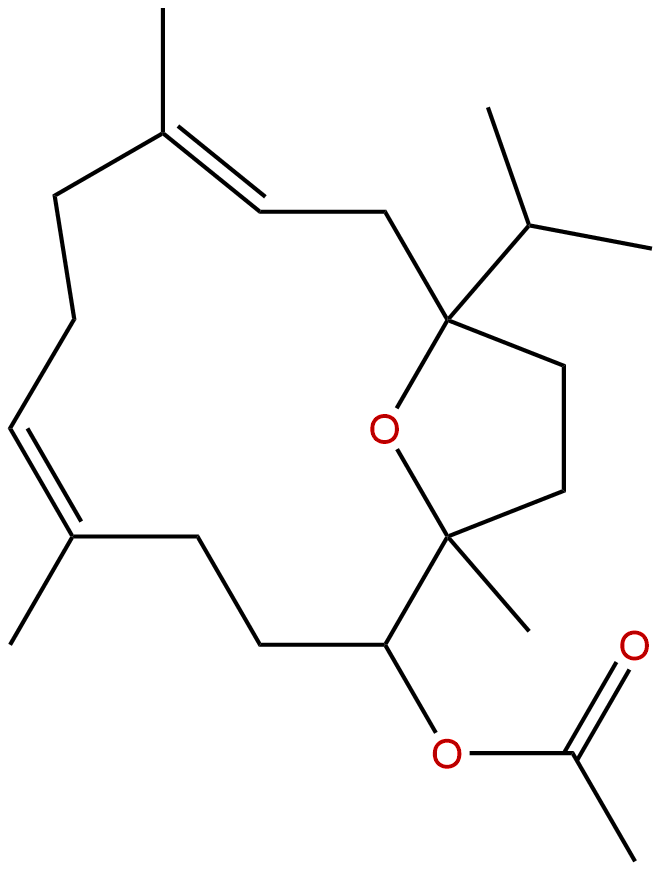
Acetylphenol (CAS number: 34701-53-6) is a labdane type diterpenoid compound with a molecular formula of C22H36O3 and a molecular weight of 348.5270. Its core structure is composed of a decahydronaphthalene skeleton (a fused bicyclic system), which is a typical feature of semi branched diterpenes. Specifically, its structure includes an extra cyclic methylene group, multiple methyl substituents, and key acetoxy and hydroxyl functional groups. These functional groups have a decisive impact on their biological activity and physicochemical properties.
From the analysis of physicochemical parameters related to drug properties, acetaminophen exhibits typical lipophilic characteristics. The calculated lipid water partition coefficient (LogP) is 5.4956, indicating that the compound has strong lipid solubility and is easy to penetrate cell membranes, but this may also lead to poor water solubility (approximately 0.0112 mg/mL). Its topological polar surface area (TPSA) is 35.5300 Å ², which is relatively small and further confirms its low molecular polarity. This combination of high LogP and low TPSA usually indicates that the compound has high membrane permeability, especially the ability to penetrate the blood-brain barrier (BBB). The existing data also clearly shows that its blood-brain barrier penetration is high, which is highly consistent with its reported neuroprotective activity and is a significant advantage as a candidate drug for central nervous system diseases.
In addition, preliminary drug safety screening showed that acetaminophen had a result of 0.0 in the standard Ames test, indicating that it had no mutagenicity under the test conditions. At the same time, it does not inhibit hERG potassium ion channels, reducing the potential risk of causing QT interval prolongation and apical torsion type ventricular tachycardia, providing preliminary positive signals for its safety.
Plant sources and extraction methods
Acetylphenol is mainly derived from the resin of various plants in the Boswellia genus of the olive family, among which Boswellia carterii Birdw. and Boswellia sacra Flueck. are the most abundant. Frankincense resin, also known as "olive fragrance" or "smoked land fragrance", is an oil gum resin secreted by the bark of these plants after injury. It has long been used as a spice, religious ritual item, and traditional medicine in history.
The extraction and separation of acetaminophen from resin usually involves a process of organic solvent extraction combined with chromatographic separation. The conventional extraction method is as follows:
1. Raw material pretreatment Crush the collected frankincense resin to increase the solvent contact area.
2. Solvent extraction The most commonly used non-polar or moderately polar solvents for cold soaking or reflux extraction. For example, the use of n-hexane, petroleum ether, or dichloromethane can effectively extract terpenoids, including acetaminophen, from resins. Sometimes gradient extraction method is also used, which first removes oil and wax with low polarity solvents, and then extracts the target diterpenes with slightly higher polarity solvents (such as ethyl acetate).
3. Concentration and Coarse Separation Concentrate the extract under reduced pressure to obtain a complex extract containing various terpenoids (such as acetyl-11-one - β - frankincense acid, other frankincense diterpenes) and volatile oils.
4. Separation and purification The crude extract needs to be purified through a series of chromatographic separation techniques. The silica gel column chromatography method is commonly used, with different ratios of petroleum ether ethyl acetate or n-hexane ethyl acetate as eluents for gradient elution. Thin layer chromatography (TLC) or high-performance liquid chromatography (HPLC) are used to monitor the separation process. To further obtain high-purity acetaminophen, it may be necessary to use preparative thin layer chromatography (PTLC) or repeated column chromatography, or even high-performance liquid chromatography (HPLC) for final purification.
5. appraisal The purified compound was structurally confirmed by spectroscopic techniques such as nuclear magnetic resonance (NMR, including ¹ H-NMR and ¹ ³ C-NMR), mass spectrometry (MS), and infrared spectroscopy (IR).
Modern extraction techniques such as supercritical CO ₂ extraction have also been applied to the extraction of active ingredients in frankincense resin due to their advantages of low temperature, no solvent residue, and adjustable selectivity, which is expected to improve the extraction efficiency and purity of acetaminophen.
Pharmacological activity research
The pharmacological activity research of acetaminophen has progressed from early traditional use validation to modern pharmacological evaluation for specific diseases, with its activity mainly focused on neuroprotection and anti-inflammatory immune regulation.
1. Neuroprotective activity
This is the most in-depth and well-documented field of research on acetaminophen. In an in vitro model, acetaminophen can significantly antagonize the apoptosis of human neural stem cells (hOBNSC) induced by β - amyloid protein (A β 25-35), indicating its potential to protect neuronal precursor cells in the pathological process of Alzheimer's disease. In animal models, its activity is more prominent: studies have shown that acetaminophen exhibits strong neuroprotective effects on traumatic brain injury (TBI) and focal cerebral ischemia (stroke model). It can alleviate brain edema, reduce infarct volume, improve neurological deficit scores, and inhibit apoptosis of hippocampal neurons after injury. These effects are closely related to their anti-inflammatory, antioxidant, and direct anti apoptotic properties.
2. Anti inflammatory and immune regulatory activity
The traditional anti-inflammatory use of frankincense resin is partly attributed to the presence of pentacyclic triterpenoid acids (such as frankincense acid). However, acetaminophen, as its main diterpenoid component, also contributes important anti-inflammatory effects. Its anti-inflammatory mechanism is different from traditional nonsteroidal anti-inflammatory drugs (which inhibit COX), but involves the regulation of key inflammatory signaling pathways such as NF - κ B and STAT3. This broad-spectrum anti-inflammatory property lays the foundation for its application in inflammation related diseases.
3. Potential activity against psoriasis
Psoriasis is a chronic autoimmune skin disease characterized by excessive proliferation, abnormal differentiation, and strong inflammatory infiltration of keratinocytes. The latest research links acetaminophen to multiple core pathological processes in psoriasis. Network pharmacology and preliminary experiments suggest that acetaminophen may exert its effects by regulating multiple targets closely related to psoriasis, such as inhibiting pro-inflammatory transcription factors STAT3 and RELA (p65/NF - κ B), regulating retinoic acid receptors (RARA, RARG) and RORC (involved in Th17 cell differentiation), and affecting AMPK, PRKCA, and other factors related to keratinocyte proliferation and differentiation. Its potential TRPV1 regulatory effect may also intervene in psoriasis related itching and neurogenic inflammation. These multi-target characteristics make it possible to intervene in psoriasis from multiple levels, such as inhibiting abnormal immunity, alleviating inflammation, and regulating epidermal cell function.
4. Other activities
In addition, studies have reported that acetaminophen has certain anti anxiety and anti depressive like activities, which may be related to its regulation of the hypothalamic pituitary adrenal axis and neural plasticity. Its antibacterial and cytotoxic activities have also been sporadically reported, but further research is needed to confirm.
Mechanism of action and molecular targets
The pharmacological effects of acetaminophen depend on its interaction with multiple cellular signaling pathways and molecular targets, reflecting the typical characteristics of multi-target effects of natural products.
The mechanism of action in neuroprotection:
1. Anti apoptotic pathway Acetylphenol can upregulate the expression of anti apoptotic protein Bcl-2, while downregulating the expression of pro apoptotic protein Bax, and inhibiting the activation of caspase-3, thereby blocking the mitochondrial dependent apoptosis pathway. This has been confirmed in both A β toxicity and cerebral ischemic injury models.
2. Anti inflammatory and NF - κ B pathway inhibition In models of brain injury and neuroinflammation, acetaminophen can effectively inhibit the activation of nuclear transcription factor kappa B (NF - κ B). It prevents the degradation of I κ B α and nuclear translocation of NF - κ B p65 subunit (RELA), thereby downregulating the expression of pro-inflammatory cytokines such as TNF - α, IL-1 β, IL-6, and reducing neuroinflammatory damage.
3. anti-oxidative stress It can enhance the intracellular antioxidant defense system, such as increasing the activity of superoxide dismutase (SOD) and glutathione peroxidase (GSH Px), reducing the level of malondialdehyde (MDA), thereby alleviating the damage of oxidative stress to neurons.
4. TRPV3 channel adjustment Studies have shown that acetaminophen is an agonist of the transient receptor potential vanillic acid subtype 3 (TRPV3) channel, and its neuroprotective effect may be partially achieved by activating TRPV3, which in turn triggers Ca ² ⁺ influx and initiates downstream neuroprotective signals.
Potential mechanisms and targets in inflammatory/autoimmune diseases such as psoriasis:
Based on the given target information, acetaminophen may exert its effects through a complex network:
* AMPK (PRKAA1) activation AMPK is a key regulator of cellular energy metabolism and inflammation. Activation of AMPK can inhibit mTOR signaling, thereby suppressing excessive proliferation of keratinocytes and exerting anti-inflammatory effects.
* STAT3 inhibition STAT3 is the core driving factor for psoriasis, promoting Th17 cell differentiation and keratinocyte proliferation. Inhibiting STAT3 phosphorylation and activation is an important strategy for treating psoriasis.
* Nuclear receptor regulation By acting on retinoic acid receptors (RARA, RARG), acetaminophen may mimic or regulate retinoic acid signaling, thereby affecting the differentiation and immune regulation of keratinocytes. The potential inhibitory effect on RORC (retinoic acid associated orphan receptor gamma t, the main regulator of Th17 cells) may directly inhibit the production of pathogenic cytokines such as IL-17.
* Regulation of inflammatory signaling Inhibition of RELA (NF - κ B pathway) and CASP1 (a key component of inflammasomes involved in IL-1 β maturation) can effectively block the activation of classical inflammatory pathways.
* Ionic Channels and Enzyme Regulation Regulating TRPV1 may affect neurogenic inflammation and itching sensation; The potential effects of PRKCA (protein kinase C alpha) and TOP2A (topoisomerase II alpha) may intervene in the regulation of cell proliferation and apoptosis.
In summary, acetaminophen promotes its overall neuroprotective and anti-inflammatory immune regulatory effects through a synergistic network of multiple targets and pathways.
Evaluation of drug properties and pharmacokinetics
Although acetaminophen has shown great potential in preclinical studies, its successful conversion into a drug depends on systematic pharmacological evaluation and pharmacokinetic studies.
Pharmaceutical advantages:
1. Good brain exposure The high lipid solubility and low polarity surface area endow it with excellent oral absorption potential and efficient blood-brain barrier penetration ability, which are its core advantages as a neuroprotective agent.
2. Preliminary safety is good The Ames test negative and absence of hERG inhibition signal provide support for its early safety.
3. Clear in vitro and in vivo activity Clear and effective pharmacological effects were observed in both cellular and animal models, with relatively clear targets.
Drug Challenge:
1. Very poor water solubility The water solubility of 0.0112 mg/mL is the primary obstacle to its formulation development. Oral administration may limit its bioavailability due to low solubility. Advanced formulation technologies such as nanocrystals, liposomes, cyclodextrin inclusion, and self microemulsion delivery systems are needed to improve its solubility and dissolution rate.
2. Metabolism and stability As an ester compound, acetaminophen is easily hydrolyzed by esterases in the body, producing its deacetylated product Incensole. There is currently very limited publicly available data on whether the latter has the same or different activities, as well as key pharmacokinetic parameters such as the metabolic pathways, major metabolic enzymes, and half-life of IA itself. Systematic ADME (absorption, distribution, metabolism, excretion) research is required.
3. Potential organizational accumulation A high LogP value suggests that it may accumulate in tissues such as fat, and long-term toxicity studies are needed to evaluate its safety.
4. Synthesis and Supply At present, it mainly relies on plant extraction, and its content is affected by plant variety, place of origin, and harvest season. To achieve large-scale production, it is necessary to develop efficient fully synthetic or semi synthetic routes.
Prospects for pharmacokinetic research:
Future research needs to focus on clarifying the absolute bioavailability of acetaminophen in animals and humans; Its distribution concentration and duration in target tissues such as the brain and skin; The main I and II phase metabolic pathways and key metabolic enzymes (such as CYP450 isoenzymes and esterases); And the excretion pathways and rates of its prototype drug and major metabolites. These data are the cornerstone for designing rational dosing regimens and conducting clinical translation.
Clinical application prospects and prospects
The clinical application prospects of acetaminophen are broad, but the road is long and interdisciplinary cooperation is needed to promote its transformation.
Potential application directions:
1. Neurological disorders:
* Ischemic stroke As an adjuvant therapy for acute phase neuroprotective agents, it reduces the death of neurons in the penumbra surrounding the infarction.
* Traumatic brain injury Used to alleviate secondary brain injury and improve long-term neurological prognosis.
* Alzheimer disease As part of disease modification therapy, it delays disease progression through anti A β toxicity, anti-inflammatory, and neuroprotective effects.
* Anxiety and Depression Disorders Developed as a novel plant-based anti anxiety/depression drug.
2. Skin diseases and autoimmune diseases:
* psoriasis: Develop topical preparations (such as cream, gel) or oral system drugs for the treatment of mild to moderate or moderate to severe psoriasis. Its multi-target effect may provide new options for patients with poor efficacy of traditional biologics.
* Other inflammatory skin diseases Such as atopic dermatitis, contact dermatitis, etc.
3. Other inflammatory diseases Such as rheumatoid arthritis, inflammatory bowel disease, etc., but their research in these fields is still in its infancy.
Future research and development strategies:
1. In depth mechanism research Using gene knockout, CRISPR, and other technologies to validate key targets in disease models such as psoriasis, and drawing more accurate "compound target pathway disease" action network diagrams.
2. Formulation innovation Prioritize solving the problem of water solubility. For brain diseases, nanoparticle targeted delivery systems can be developed; Develop a new topical formulation with good skin permeability for psoriasis.
3. Pharmacokinetic and Toxicological System Evaluation Complete systematic pharmacokinetic and long-term toxicity trials that comply with preclinical research guidelines for new drugs as soon as possible, and clarify their safety window.
4. structural optimization Using acetaminophen as the lead compound, reasonable structural modifications are carried out to improve its water solubility, metabolic stability, target selectivity or efficacy, thereby obtaining derivatives with better drug properties.
5. Exploration of clinical translation After completing sufficient preclinical research, it may be considered to first develop it into a plant-based medicine or health supplement with specific health claims, while actively preparing for clinical trial applications as an innovative drug.
Conclusion
Acetylphenol, a natural diterpenoid compound derived from aged frankincense resin, is demonstrating remarkable multiple pharmacological activities and therapeutic potential through the lens of modern scientific research. The research process from the initial star molecule of neuroprotection to the emerging multi-target regulator in complex inflammatory diseases such as psoriasis is a vivid example of the rediscovery of the value of natural products. Its clear neuroprotective effects, unique blood-brain barrier penetration ability, and extensive intervention in psoriasis related signaling networks have laid a solid theoretical foundation for its drug development in the fields of neuropsychiatric and dermatology.
However, from lead compounds to successful drugs, there are still many challenges to overcome, such as poor water solubility, unclear metabolic properties, and lack of systematic pharmacokinetic and toxicological data. Future research should focus on breaking through its physical and chemical limitations using modern pharmaceutical technologies, elucidating its complex in vivo action network using systems biology methods, and verifying its safety and effectiveness through standardized preclinical and clinical studies. I believe that with the collaborative efforts of multiple disciplines, acetaminophen has the potential to transform from a traditional incense product into a modern medicine that benefits human health, continuing to write a new chapter in the history of natural products in medicine.